If any more proof was needed as to how far the UK pop charts have declined since the mid-1990s, look no further than the fact that Genesis’s ‘Mama’ – released 40 years old this week – was their biggest hit, going all the way to #4.
Not bad for a nearly-seven-minute song without a proper chorus about a young man’s troubled relationship with a sex worker.
In my opinion, ‘Mama’ is one of the great singles of the 1980s, epic and menacing, and the last decent showing for post-Gabriel Genesis (I couldn’t/can’t get anywhere with its attendant 1983 self-titled album, nor any of their subsequent projects).
In autumn 1983, I was vaguely aware of Phil Collins, my ears having been piqued by my dad’s frequent playing of Face Value around the house. But when my uncle bought me the ‘Mama’ 12-inch single, I’m pretty sure I’d never heard of Genesis. But Uncle Jim wrote ‘Side A is the good side!’ on the front for guidance, knowing I’d love Phil’s immense drum sound (to these ears, still just as ‘shocking’ as ‘In The Air Tonight’). For me, this is the apex of Phil’s best era – roughly 1976 to 1983.
The author with his first snare drum, his dad the DJ about to put on ‘Mama’, circa autumn 1983
‘Mama’ was recorded at the band’s Farm studio near Chiddingfold, Surrey, and co-produced by Hugh Padgham. Phil set up in the new drum room modelled on the famous Townhouse Studio 2 in Shepherds Bush.
There are still so many pleasures – Phil’s sibilant, Lennon-influenced vocals (including a homage to Melle Mel), making full use of the slapback echo which went straight onto tape rather than being added later. Banks’s ominous synth layering and wacky lead tones. Mike Rutherford’s Linn drum programming, played through a guitar amp.
Also listen out for the way Phil avoids metal completely until the beginning of the fade, when his enormous crash cymbal is a huge release.
It’s hard to think of a movie that better captures an end-of-the-1970s/beginning-of-the-1980s vibe than ‘Being There’.
Directed by Hal Ashby (‘Shampoo’, ‘Harold & Maude’, ‘Coming Home’) and starring Peter Sellers, it was released on the same day as Steven Spielberg’s ‘1941’ just before Christmas 1979 and became one of the first critical and commercial successes of the ’80s.
Based on Jerzy Kosinski’s book (the Polish author became somewhat of a celebrity in the States before he committed suicide in 1991), ‘Being There’ is a political satire, the story of a simpleton who moves effortlessly to within spitting distance of the very highest echelons of American power.
Still, despite featuring one of the most famous final shots in cinema history, some classic catchphrases and Sellers’ penultimate screen performance as Chance the gardener (for which he was Oscar-nominated), ‘Being There’ inexplicably now seems somewhat forgotten.
Not round these parts. A recent re-watching was a revelation – it’s far better than I remembered it. It’s also surely another one for the relatively small ‘the film’s better than the book’ file. Here’s what I wrote in my notebook:
Shirley MacLaine
She barely gets a mention in all the literature I’ve read about ‘Being There’. A shame, because she delivers a fine comedy performance. Yes, the ‘I like to watch’ sequence is embarrassing and often subject to critical scrutiny, but it’s Sellers who is really the focus of that scene. You’ll certainly never think of Fred Rogers in the same way.
Stanley Kubrick
With its beautiful widescreen compositions, deep, rich colours, iconoclastic/irreverent humour and a brilliant central performance from Sellers, it’s surely a film of which Mr K would approve (and visitors to ‘Being There’ during Christmas 1979 would also have seen a teaser trailer for Kubrick’s ‘The Shining’). This guy’s interesting video finds a link between ‘Being There’ and ‘2001: A Space Odyssey’. Also, close viewing reveals that there’s a shot in ‘Being There’ of a TV – being watched by Chance – which doesn’t have a plugged-in cable, just like the similar shot in ‘The Shining’. Coincidence?
The Oscars
Sellers apparently channelled Stan Laurel for his blanked-out, mid-Atlantic accent, and worked diligently on line readings in the mirror. He was nominated for a Best Actor Oscar, but lost out to Dustin Hoffman for ‘Kramer vs. Kramer’. Sellers looks unwell, pale and drawn (he died just six months after the film’s release), but apparently surprises both himself and the actors around him with his wonderful comic creation.
Modern Culture
The film has a lot to say about where popular culture was headed. It’s no coincidence that Chance has been ‘brought up’ on television. When he appears on a chat show, Chance is told by the producer: ‘You’ll be seen by more people tonight than have been to the theatre in the last 40 years’. The movie relentlessly emphasises the more inane elements of TV throughout its duration.
Tom Cruise
Promoting the new ‘Mission Impossible’ film in a recent Sunday Times interview, Cruise recently said he would hitherto only make movies that audiences immediately understood – no puzzles, fables or anything demanding too much thought. No more ‘Eyes Wide Shut’s. Or ‘Being There’s. There’s not an iceberg’s chance in hell that this film would get made today.
Chance
How does Chance the gardener get so far up the totem pole so quickly? The film emphasises that you can get a very long way by ‘looking the part’ and having friends in high places. And of course there’s luck. But there are still one or two anomalies – why does he unquestioningly leave the house in which he has lived all his life just because the lawyers tell him he’s going to be evicted? Would he really have a clue what an eviction was? It seems more likely that he would stay put for as long as possible.
Washington DC
As Chance leaves his house, there’s a famous, striking montage of his sojourn through DC soundtracked by Deodato’s ‘Also Sprach Zarathustra’. We are initially shocked to realise that, despite his natty threads and luxurious pad, he’s been living in the poor part of town. We see a graffito which reads: ‘America ain’t shit cos the white man’s got a God complex’, later referenced by Public Enemy (the film in general has a lot to say about racial issues in America, superbly summarised by this video). Then there’s the famous shot of Chance walking down Pennsylvania Avenue, the moment we realise this is going to be rather a special movie.
Minor Characters
‘Being There’ is full of memorable secondary characters, each with a very specific role, from the lawyers to newspaper/magazine editors, TV producers, elevator orderlies and doctors. And fans of John Carpenter’s ‘The Thing’ will relish seeing Richard Dysart and David Clennon playing key roles.
The President
The President isn’t a sympathetic character – in fact he is a boorish, somewhat weak buffoon who doesn’t seem to have much power. But still, there’s plenty of evidence that he’s onto Chance from the beginning. The film ends with an internal cabal about to oust the president and move the government much further to the Right, possibly a portent of the upcoming Reagan years. The film also spends an inordinate amount of time on the more ‘fascistic’ elements of the US – the all-white, thrusting security detail and Secret Service operatives, the ridiculous vehicle cavalcades, the huge government properties in the countryside that look eerily like Nazi strongholds. Also watch out for the Eye of Providence on Ben Rand’s burial pyramid. A YouTube comment: ‘This movie tells us how the world really works’.
Vinnie Colaiuta
The drummer/composer released a great ‘tribute’ to Chance (or Chauncey, as he is mistakenly named by Eve Rand in the film) on his 1994 solo album, featuring Sting on bass.
Matt’s new book ‘John McLaughlin: From Miles and Mahavishnu to The 4th Dimension’ is available now and can be ordered via the links below.
‘A must-have in every aspiring musician’s personal library.’ Billy Cobham, Mahavishnu Orchestra drummer
‘A wonderful insight into a true innovator and colossus of the guitar.’ Mark King, Level 42 bassist/vocalist
‘Scrupulously researched… A fluent career overview.’ **** MOJO, December 2023
‘The most comprehensive overview of McLaughlin’s career to make it into print thus far.’ **** Shindig!, January 2024
‘Comprehensive and thoroughly researched, Phillips’ book is a revelation. A must-read for guitar aficionados and McLaughlin devotees.’ Bill Milkowski, author of ‘Jaco’ and ‘Michael Brecker’
‘Riveting… Meticulous storytelling… The book is not just a narrative, it’s a visual feast.’ Jazz In Europe
‘Paints the fullest picture yet of the guitarist’s life.’ Jazzed
‘Thorough and impassioned… The first book to fully illuminate the least-appreciated, least-documented periods in the extraordinary career of this wondrously free-spirited, prolific, perpetually questing artist.’ Booklist
It’s an exhaustive look at John’s catalogue, live career and spiritual life, with an introductory note by Robert Fripp, testimonials from Mark King, Billy Cobham and Bill Milkowski, interviews with key collaborators and lots of exclusive photographs. I cover John’s early sessions with David Bowie and Donovan, his remarkable sideman work with Tony Williams and Miles Davis, the fabled solo career fronting The Mahavishnu Orchestra and Shakti and various projects alongside the likes of Sting, Jeff Beck, Herbie Hancock and Carlos Santana.
If you’ve enjoyed this website in any capacity, please consider buying this book and getting it to the toppermost of the poppermost… Thank you!

 If any more proof was needed as to how far the UK pop charts have declined since the mid-1990s, look no further than the fact that Genesis’s ‘Mama’ – released 40 years old this week – was their biggest hit, going all the way to #4.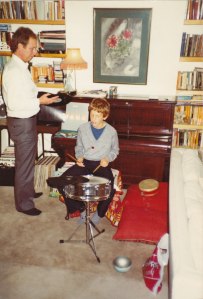
 It’s hard to think of a movie that better captures an end-of-the-1970s/beginning-of-the-1980s vibe than ‘Being There’.

 movingtheriver.com