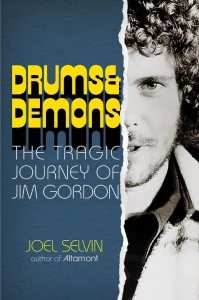
Pop quiz: what do the following tracks have in common? Beach Boys’ ‘Good Vibrations’, Derek and the Dominos’ ‘Layla’, Steely Dan’s ‘Rikki Don’t Lose That Number’, Frank Zappa’s ‘Apostrophe’, Minnie Riperton’s ‘Inside My Love’, The Incredible Bongo Band’s ‘Apache’ and Carly Simon’s ‘You’re So Vain’.
They all feature drummer/percussionist Jim Gordon, who between the mid-‘60s and mid-‘70s was probably the most recorded and celebrated studio drummer in the world (declaring an interest here too: movingtheriver basically learned how to play drums by copying Gordon’s playing on Steely’s Pretzel Logic).
He brought pinpoint time-keeping, smooth grooves, razor-sharp song sense and technical mastery to the kit, but was also a deeply troubled individual whose schizophrenia – exacerbated by drug and alcohol issues – ultimately led to a tragic and shocking crime. He was incarcerated for murdering his mother on 3 June 1983, and died in prison during 2023.
But how did this good-looking, popular, all-American kid end this way? As experienced rock journo and author of ‘Altamont’, ‘Monterey Pop’ and ‘Sly and the Family Stone: The Oral History’, Joel Selvin is perfectly placed to tell this dark tale, and he honours both Gordon’s victim(s) and the drummer himself with this sober, unflinching account.
With the counsel of Gordon’s friends, family members and associates, Slavin outlines his meteoric rise to the top of the music business, the first half of the book featuring entertaining, detailed accounts of work with various Beatles, the Everly Brothers, Joe Cocker, Frank Zappa, Brian Wilson, Jackson Browne and Carly Simon. (The section on Gordon’s tenure with Eric Clapton is particularly illuminating and shocking – the guitarist does not come out well at all…)
The second half descends into very murky waters. There’s shocking evidence of Gordon’s physical abuse of singer/songwriter Rita Coolidge (and his and Clapton’s refusal to give her songwriter credit for ‘Layla’) and great detail about his struggles to get help for schizophrenia and addiction problems.
In fact ‘Drums & Demons’ is an absolute eye-opener with regard to schizophrenia, the voices inside Gordon’s head (tragically, mostly his mother’s) apparently denying him food, amongst other things, and moderating all aspects of his lifestyle.
And if Selvin never quite technically explains why Gordon was such a drum hero (Jim Keltner, Andy Newmark and Jeff Porcaro were huge fans/advocates), the passion for his subject and respect for the drum community as a whole come through loud and clear.
‘Drums & Demons’ joins Bill Milkowski’s ‘Jaco’ and Rob Chapman’s ‘Syd Barrett: A Very Irregular Head’ in the upper echelons of books about gifted, unwell musicians finding themselves alone when the circus has left town. It also perfectly outlines the boom and bust of the studio session scene.
Although at times a difficult, disturbing read, it’s gripping and slickly-written, and highly recommended.
Michal Urbaniak (violinist with Miles Davis/Lenny White/Jaco Pastorius etc.)
Antony Price (designer for Bryan Ferry, Robert Palmer, David Bowie etc.)
Luis Jardim (Seal/Annie Lennox/FGTH/Grace Jones/George Michael percussionist and, according to Steve Lipson, he also played bass on ‘Slave To The Rhythm’…)
Hermeto Pascoal
Damien Thomas (‘Twins Of Evil’/’Tenko’/’Shogun’/’Pirates’ actor and movingtheriver’s uncle)
Jellybean Johnson (drummer and guitarist with The Time/The Family/Janet Jackson etc.)
Nicky Katt (‘Dazed And Confused’/’Insomnia’ actor)
Roy Ayers
Tony Roberts (‘Annie Hall’/’Play It Again Sam’/’Hannah And Her Sisters’/’Serpico’ actor)
Andy Bey
Tony Slattery
Rob Reiner
Richard Darbyshire (Living In A Box co-founder/vocalist/songwriter)
Clem Burke
Chris Rea
Diane Keaton
Martin Parr (photographer)
Patricia Routledge
Sheila Jordan
Peter Jason (‘They Live’/’Prince Of Darkness’/’In The Mouth Of Madness’ actor)
Brigitte Bardot
Dave Ball (Soft Cell keyboardist/co-founder)
James Prime (keyboardist with Deacon Blue/John Martyn)
Robin Smith (cricketer)
Joan Plowright
Lalo Schifrin
Sly Stone
Rick Buckler (Jam drummer)
David Thomas (Pere Ubu frontman)
Sam Moore (Sam & Dave)
Mike Ratledge (Soft Machine co-founder)
Diane Ladd
Pauline Collins
Eddie Palmieri
D’Angelo
Biddy Baxter (‘Blue Peter’ editor)
Chuck Mangione
Steve Cropper
George Wendt (Norm in ‘Cheers’)
David Lynch
Gene Hackman
Brian Wilson
Andy Peebles (radio presenter and writer, the last Brit to interview John Lennon)
Terence Stamp
Chris Jasper (Isley-Jasper-Isley keyboardist/songwriter and solo artist)
Phil Upchurch
Alex Wheatle (writer, activist and London legend)
Roberta Flack
Prunella Scales
Claudia Cardinale
Marilyn Mazur (percussionst/vocalist with Miles Davis/Jan Garbarek/Wayne Shorter etc.)
Flaco Jimenez (accordionist with Ry Cooder/Bob Dylan)
Drew Zingg (guitarist with Donald Fagen/Boz Scaggs/David Sanborn/Marcus Miller)
Barry McIlheney (Smash Hits/Q/Empire writer)
Simon House (Bowie/Thomas Dolby/Japan/Hawkwind violinist)
Rick Derringer
Dill Katz (bassist with Barbara Thompson’s Paraphernalia/District Six/Ian Carr’s Nucleus)
Henry Jaglom (film director)
John Robertson (footballer)
Ed Williams (‘Ted Olson’ in ‘Police Squad’ and the ‘Naked Gun’ movies)
Harold ‘Dickie’ Bird (cricket umpire)
Roy Estrada (Little Feat/Mothers Of Invention bassist)
Wishing all movingtheriver.com readers a happy and healthy 2026, with loads of cash.
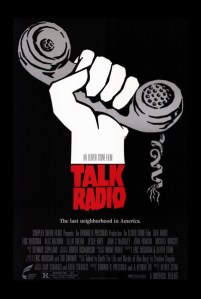
‘Talk Radio’ comes between ‘Wall Street’ and ‘Born On The Fourth Of July’ in Oliver Stone’s filmography, but seems mostly forgotten these days.
That’s a shame because arguably it’s his finest movie. It has three crackerjack acting performances, fruity dialogue, potent themes, suspenseful direction and some brilliant moments.
‘Talk Radio’ draws upon the life and death of Cleveland shock jock Alan Berg (renamed Barry Champlain in the film), superbly played by Eric Bogosian who co-wrote the screenplay with Stone and also penned the 1987 stage play of the same name.
Stone and Bogosian take a long, hard look at American popular culture at the end of the 1980s and are less than impressed. The anti-semitism explored in the movie is shocking for the time and still shocking today, but Stone and Borgosian deserve credit for going there. But is Champlain a free-speech hero or bigoted loudmouth? We must judge for ourselves.
‘Talk Radio’ was fairly cheaply made and quickly shot, Stewart Copeland adding a brooding, admirably low-key synth soundtrack. Stone and DoP Robert Richardson make superb use of the studio set, fiddling around with the mise en scene and using drastic lighting contrasts, a striking, De Palma-esque ‘circular’ dolly shot and stunning closing helicopter ride through Dallas (changed from the play’s Denver setting).
Alongside Bogosian’s superb star turn (why wasn’t he nominated for anything?), Alec Baldwin plays a blinder in a fairly thankless role, warming up for ‘Glengarry Glen Ross’. Michael Wincott gives a knockout performance as the hapless teenager Kent – amazingly, he was 30 at the time of filming. Other performances are uneven though. Ellen Greene and Leslie Hope seem miscast.
The callers into the show make for a fascinating Greek chorus of America’s modern morays (one sounds a hell of a lot like Mike Patton’s character in the Faith No More song ‘RV’). And the ‘dead air’ scene is still as spellbinding today as it must have been in 1988.
The movie gets a little bogged down in Berg’s backstory though, with a lengthy and rather superfluous flashback. Arguably we should never have left the studio.
But the silence over the end credits (after a brief bit of Penguin Café Orchestra) suggests Stone meant ‘Talk Radio’ to be an important, cautionary movie, and he could well be right about that (though he doesn’t mention it in his memoir ‘Chasing The Light’). But sadly it didn’t hit a nerve with the public, barely breaking even on its $4 million budget.
No matter – it’s well worth seeking out, a late-‘80s classic, and if you look hard enough it’s currently available to view for free on YouTube.
Continuing our look at some of the finest jazz/rock albums of the 1980s. You can find part 1 here.
Jaco Pastorius: Twins (1982)
A classic double album (an edited version was released as Invitation) recorded live in Japan just after the bass pioneer left Weather Report. Jaco’s brand of fusion took in jazz, Cuban, soul and R’n’B – no guitars here, but brilliant bass playing and powerful solos from Toots Thielemans, Lew Soloff, Jon Faddis and Bob Mintzer.
Frank Gambale: Live!(1989)
The Australian guitarist’s outrageous live debut was recorded at the Baked Potato in LA, and it finally showed just what he’s capable of – electrifying, original solos. His compositions are memorable too and there’s fantastic Latin/fusion drumming from Joey Heredia.
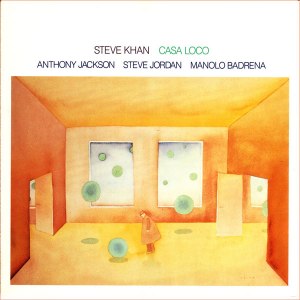
Steve Khan: Casa Loco (1983)
An album which still amazes musicians the world over. Arguably guitarist Khan, bassist Anthony Jackson, drummer Steve Jordan and percussionist Manolo Badrena have never done better work – that’s saying something considering who they’ve all played with.
Bill Bruford’s Earthworks: Dig? (1989)
Both of Bruford’s 1980s Earthworks albums were really good but this gets the nod due to Django Bates being given free reign, contributing superb keyboard solos, a cool reimagining of Petula Clark’s ‘Downtown’ and classic composition ‘Dancing On Frith Street’.
Paquito D’Rivera: Why Not! (1984)
An underrated album from the Cuban alto sax and clarinet star, also featuring Claudio Roditi on trumpet, Michel Camilo on keys and a wonderful performance from drummer Dave Weckl on the opening ‘Gdansk’.
Lyle Mays: Street Dreams(1988)
The Metheny Group keyboard player chucks in everything he knows on this big-budget project – ambient post-jazz, widescreen fuzak, big-band swing and Fagen-style fusion, and it’s all good. Some, like this writer, may also prefer the more red-blooded guitar playing of Bill Frisell to Metheny.
Pat Metheny Group: American Garage(1980)
No one is too sure if this came out in late 1979 or early 1980 but it’s this writer’s favourite Metheny album, though the guitarist himself seems to have almost disowned it. He loosens up and opens himself up to some rock and Steely Dan influences, driven along by Danny Gottlieb’s superb drums.
Level 42: A Physical Presence (1985)
A lot of it’s not strictly ‘fusion’, of course, but any album featuring such brilliant live versions of ‘Mr Pink’, ‘Foundation And Empire’ and ‘88’ has to make this list.
Mark King: Influences (1984)
The Level 42 mainman amazes with his 18-minute fusion classic ‘The Essential’, plus an eerily assured tribute to early Return To Forever called ‘There Is A Dog’. Plus he played almost everything on it.
John Patitucci: On The Corner (1989)
Both of the bassist’s 1980s solo albums were good but this gets the nod courtesy of the sheer variety of grooves from drummers Vinnie Colaiuta, Dave Weckl and Alex Acuna, and the leader’s exciting solos and excellent compositions, all memorable.
John Abercrombie: Getting There (1988)
A rare excursion into jazz/rock for ECM Records, the guitarist’s most dynamic ‘80s album featured Michael Brecker on sax, a hefty ‘rock’ mix courtesy of James Farber and arguably drummer Peter Erskine’s heaviest recorded performance to date.
Joni Mitchell: Wild Things Run Fast (1983)
She littered the album with influences from the Police but the main driver was the brilliant jazz/rock musicianship of bassist Larry Klein, drummers Colaiuta and John Guerin, saxist Wayne Shorter and keys player Russell Ferrante. ‘Moon At The Window’, ‘Be Cool’, ‘Ladies Man’ and ‘You’re So Square’ smuggled fusion into the album charts.
Miles Davis: Star People (1983)
Blues, blazing jazz/rock, chromatic funk and general weirdness combine for arguably Miles’s most exciting album of the decade, featuring all-time great guitar from Mike Stern and John Scofield.
John Martyn: Glorious Fool (1981)
John’s music was now bringing in influences from Weather Report, Latin music and spiritual jazz, and Phil Collins, keyboard player Max Middleton, percussionist Danny Cummings and bassist Alan Thompson made for a fantastic rhythm section.
Bruford: Gradually Going Tornado (1980)
Any album featuring ‘Gothic 17’, ‘Land’s End’, ‘Joe Frazier’ and ‘Palewell Park’ has to be on this list. Epochal work from bassist Jeff Berlin, keys man Dave Stewart and the drummer himself.
Bubbling under:
Terje Rypdal: The Singles Collection (1988)
Power Tools: Strange Meeting (1987)
Stanley Clarke: If This Bass Could Only Talk (1988)
Terri Lyne Carrington: Real Life Story (1989)
Chick Corea Elektric Band: Eye Of The Beholder (1988)
Bill Frisell: Before We Were Born (1989) Loose Tubes (1984) Players (Jeff Berlin, Scott Henderson, Steve Smith, T Lavitz) (1986)
(PS. If you like the sound of any of these albums, please consider buying them on physical formats to best support the artists and their families.)
If you’re looking for a good stocking-filler for the 1980s music fan in your life, you could do a lot worse than Justin Lewis’s ‘Into The Groove’.
He’s an experienced rock writer who’s come up with a deceptively simple book idea – take each day (or at least most of them) of the 1980s and document a key music event, reporting them in chronological order.
And it’s mostly fascinating stuff; he’s unearthed some really tasty morsels of 1980s music trivia. Who knew that ‘Stars On 45’ (the Dutch novelty act specialising in disco medleys) led to ‘answer’ tracks from Orange Juice, Squeeze and The Portsmouth Sinfonia? Or that Annie Lennox had to show MTV her birth certificate to prove she was not a ‘decadent transvestite’ before they permitted Eurythmics’ ‘Sweet Dreams’ video to be shown on the channel?
Or that Wham!’s biggest early influence was Level 42? (Apparently they loved Level’s combination of funk and ‘unfunky’ lyrics – presumably it was tracks like ‘Almost There’ and ‘Starchild’ that floated their boat…)
Who knew that the full-length version of George Michael’s ‘Faith’ begins with a church organ playing Wham!’s ‘Freedom’, that Adrian Edmondson was a prolific video director in the ‘80s, or that a UK top 5 from October 1986 was the first time that every song was performed by a female vocalist?
The book also serves as a good compendium of ‘making-of’ song stories. For example, we get the full background of Paul Hardcastle’s ‘19’, including all the copyright issues and the fact that Mike Oldfield, of all people, is now the recipient of a writing credit(!).
You’ll need YouTube at the ready too for fascinating curios, like Tom Waits’ disastrous appearance on live British TV in 1983 alongside Ian Hislop and Peter York. ‘Into The Groove’ also gets credit for expanding its purview beyond rock and pop – there’s interesting info about African, country and blues music too, but very little jazz.
There are some downsides – there’s no index or list of references, and Lewis tries hard to be impartial but his ‘rock snob’ credentials inevitably creep out, Costello, XTC and McCartney etc. getting the rare plaudits.
But no matter – this is a gripping read, amusing and informative, full of tasty trivia treats, a surprise on every page. Highly recommended.
1980s jazz/rock generally gets the side-eye these days.
But it wasn’t all the Chick Corea Elektric Band prancing around the stage in tracksuits or pitiful WAVE-style smooth jazz.
The 1970s jazz/rock pioneers were mostly going strong and if some were too tempted by synths and drum machines, the best music was made by sticking pretty rigorously to the tried-and-tested real drums/bass/guitar/keys lineup favoured by Miles, Weather Report, Return To Forever et al.
So here’s a selection of 1980s jazz/rock albums that have consistently gripped movingtheriver, most of which he queued up to buy at the HMV or Virgin Megastore, or found in an Our Price bargain bin. (These are not proggy or funky. So no Herbie, Brecker Brothers, David Sanborn or David Torn, but there are elements of R’n’B/Latin/soul/whatever mixed in with the jazz).
Bireli Lagrene: Foreign Affairs (1988)
Just 21 years old when he recorded it with producer Steve Khan, the French guitarist’s second Blue Note album is a cohesive gem and massive improvement on the debut, with terrific contributions from keyboardist Koono and drummer Dennis Chambers.
Ornette Coleman: Virgin Beauty (1988)
One of the most ‘accessible’ albums of the master’s career, with memorable melodies, a brilliantly expressive bassist (Al McDowell) and some decidedly odd guest appearances from Jerry Garcia.
Tribal Tech (Scott Henderson/Gary Willis): Nomad(1988)
Recorded in April 1988 but not released until early 1990, guitarists were rightly wowed by Henderson’s brilliance, a mixture of Michael Brecker, Allan Holdsworth and Stevie Ray Vaughan, while the rhythm section is groovy and propulsive and both Henderson and Willis’s compositions are excellent. And ‘Tunnel Vision’ may feature the perfect guitar solo…
John McLaughlin: Mahavishnu (1984)
OK there are some question marks in the keyboard and sax departments, and a few mediocre tracks, but Billy Cobham has rarely sounded better and John contributes three or four classic compositions and a few brilliant solos to this reunion album of sorts.
Marc Johnson’s Bass Desires: Second Sight (1987)
Wonderful interplay between guitarists John Scofield and Bill Frisell, plus some classic compositions including Scofield’s surf-rock-meets-jazz ‘Twister’, Frisell’s Monk-like ‘1951’ and Johnson’s moving ‘Hymn For Her’.
Larry Carlton: Last Nite (1987)
Guitarists of all stripes were blown away by Carlton’s playing in the 1980s, and here’s the best evidence, captured live at LA’s Baked Potato club with Alex Acuna, Abe Laboriel and JR Robinson.
Human Chain: Cashin’ In (1988)
This Brit jazz/rock classic, released on EG Records, had elements of the Canterbury sound, West Coast cool jazz, English folk music and 1980s Weather Report, featuring Django Bates’ fantastic keys and French horn and some weirdly impressive guitar and fretless bass from Stuart Hall (who he?). Also injects a healthy dose of much-needed humour to the ’80s jazz world.
Hiram Bullock: Give It What U Got (1988)
All the fun of the fair from this gifted but troubled guitarist: raunchy funk/rock, instrumental Steely Dan, Brecker Brothers horns, classic fusion and an Al Jarreau guest appearance on a Sam Cooke tune, but all shot through with jazz chords and Hiram’s lyrical playing.
Ronald Shannon Jackson: Mandance (1982)
Ornette-style harmolodics and Mingus-like ensemble work meet NYC punk-jazz on the drummer’s intriguing and powerful album, recorded live in the studio, featuring future Living Colour axeman Vernon Reid.
Weather Report: Sportin’ Life(1985)
It was a toss-up between this and Night Passage, both classics, but this gets the nod courtesy of the newly-minted rhythm section of Omar Hakim and Victor Bailey, plus a few classic Wayne Shorter tunes including ‘Face On The Barroom Floor’ which reportedly Joni Mitchell was particularly smitten by.
Wayne Shorter: Atlantis (1985)
Wayne again, fronting this fascinating, complex song-cycle featuring Alex Acuna on drums and Joni’s husband Larry Klein on bass. Takes some time to digest, but like a good wine gets better every year.
Allan Holdsworth: Secrets(1989)
A toss-up between this and Metal Fatigue, this gets in because of his delicious guitar tone and the inspired contributions of drummer Vinnie Colaiuta – ‘City Nights’, ‘Spokes’, ‘Peril Premonition’ and ‘Joshua’ are musical landmarks. Fiery, exciting, unmissable.
Steps Ahead: Modern Times (1984)
Messrs Brecker, Erskine, Mainieri, Gomez and Bernhardt were embracing some new technology but they never let it overshadow the mostly excellent compositions with telling solos, particularly from Brecker.
John Scofield: Still Warm (1985)
Take your pick between this, Blue Matter and Loud Jazz, all fantastic pieces of work, but Still Warm gets the nod courtesy of its dynamite rhythm section (Darryl Jones and Omar Hakim) and arguably John’s best writing of the ’80s.
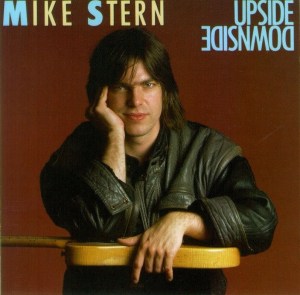
Mike Stern: Upside Downside (1986)
Produced by Hiram Bullock and featuring a crack band including Dave Weckl on drums, it showcases Stern’s finest/fieriest playing on record to date and also one of Jaco Pastorius’s last notable appearances. Still the best Stern solo album and quite extreme in its own way.
(If you’re new to any of these albums and they float your boat, please consider buying physical copies to best support the artists and their families.)
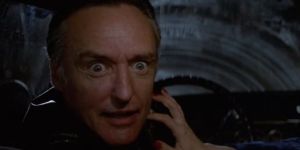
Whilst 1980s cinema was seemingly dominated by action heroes and comic actors (Bill Murray, Chevy Chase, Eddie Murphy, Steve Martin et al) who generally tended to transform projects by dint of their improvisatory skills, there were enough gifted writers around (Woody Allen, Oliver Stone, Bruce Robinson, John Carpenter, John Hughes, the Coen brothers etc.) to generate memorable, crafted lines too.
And the proliferation of comedies, horror movies and smart teen movies made for good zingers. But what makes a memorable movie quote? We present for your dubious pleasure a selection of 1980s lines and mini soliloquies that seem to hold up; some have become part of modern culture, some always provide a laugh or chill however many times one has seen the films, some are just plain weird and wonderful, and a few were probably improvised.
‘Heineken? F*ck that sh*t! Pabst Blue Ribbon!’ Blue Velvet (1986)
‘Let’s f*ck! I’ll f*ck anything that moves!’ Blue Velvet
‘Why are there people like Frank? Why is there so much trouble in this world?’ Blue Velvet
‘Better to be king for a night than schmuck for a lifetime.’ The King Of Comedy (1982)
‘I bet you’re the kind of guy that would f*ck a person in the ass and not even have the goddamn common courtesy to give him a reach-around.’ Full Metal Jacket (1987)
‘I have come here to chew bubblegum and kick ass, and I’m all out of bubblegum.’ They Live (1988)
‘Can I get ya anything? Coffee? Tea? Me?’ Working Girl (1988)
‘I have a head for business and a bod for sin.’ Working Girl
‘I am serious, and don’t call me Shirley.’ Airplane (1980)
‘What a pisser.’ Airplane (1980)
‘Into the mud, scum queen!’ The Man With Two Brains (1983)
‘You touch me, he dies. If you’re not in the air in thirty seconds, he dies. You come back in, he dies.’ Escape From New York (1981)
‘Beware the moon, lads.’ American Werewolf In London (1981)
‘We’re living in a shop. The world is one magnificent f*cking shop. And if it hasn’t got a price tag, it isn’t worth having.’ How To Get Ahead In Advertising (1989)
‘I tried to stand up and fly straight, but it wasn’t easy with that sumbitch Reagan in the White House. I dunno. They say he’s a decent man, so maybe his advisors are confused.’ Raising Arizona (1987)
‘Be the ball.’ Caddyshack (1980)
‘I’m a veg, Danny…’ Caddyshack
‘This is a cross of Kentucky Bluegrass, Featherbed Bent and Northern California Sensemilia. The amazing stuff about this is, you can play 36 holes on it in the afternoon, take it home and just get stoned to the bejeezus-belt that night.’ Caddyshack
‘The last time I was inside a woman was when I visited the Statue Of Liberty.’ Crimes And Misdemeanours (1989)
‘Showbusiness is not so much dog-eat-dog, it’s more dog doesn’t return dog’s calls.’ Crimes And Misdemeanours
‘For all my education, accomplishments, and so-called wisdom, I can’t fathom my own heart.’ Hannah And Her Sisters (1986)
‘How the hell do I know why they were Nazis? I don’t know how the can-opener works.’ Hannah And Her Sisters
‘If you build it, he will come.’ Field Of Dreams (1989)
‘It’s the best joke of all – a joke on the children…’ Halloween III (1983)
‘Get out…now!’ Halloween II (1981)
‘Listen, lady. If you don’t give Big Ed some air, he’s gonna piss…all over your half of my body.’ All Of Me (1983)
‘You can start by wiping that f*cking dumb-ass smile off your rosy f*cking cheeks. Then you can give me a f*cking automobile. A f*cking Datsun. A f*cking Toyota. A f*cking Mustang. A f*cking Buick! Four f*cking wheels and a seat.’ Planes Trains And Automobiles (1987)
‘I mean to have you even if it must be burglary.’ Withnail & I (1987)
‘My thumbs have gone weird.’ Withnail & I
‘We want the finest wines available to humanity, we want them here and we want them now!’ Withnail & I (1987)
‘Monty, you terrible c**t!’ Withnail & I
‘Flash, I love you, but we only have 14 hours to save the Earth!’ Flash Gordon (1980)
‘Get ready for greatness.’ Say Anything (1989)
‘She’s a brain trapped in the body of a game-show hostess.’ Say Anything
‘I’m incarcerated, Lloyd!’ Say Anything
‘I gave her my heart. She gave me a pen.’ Say Anything
‘Can I borrow your towel for a sec? My car just hit a water buffalo.’ Fletch (1985)
‘When you grow up, your heart dies.’ The Breakfast Club (1985)
‘I wanna be just like you. I figure all I need’s a lobotomy and some tights.’ The Breakfast Club
‘You’re a parent’s wet dream – neo-maxi-zoom-dweebie…’ The Breakfast Club
‘May I admire you again later today?’ Pretty In Pink (1986)
‘She thinks you’re sh*t, and deep down you know she’s right.’ Pretty In Pink
‘This is an incredibly romantic moment and you’re ruining it for me.’ Pretty In Pink
‘I did not achieve this position in life by having some snot-nosed punk leave my cheese out in the wind.’ Ferris Bueller’s Day Off (1986)
‘I’m obsessed, thank you very much.’ St Elmo’s Fire (1985)
‘No Springsteen is leaving this house!’ St Elmo’s Fire
‘How much more black can it be? The answer is…none.’ This Is Spinal Tap (1984)
‘What’s wrong with being sexy?’ This Is Spinal Tap
‘Hope you like our new direction.’ This Is Spinal Tap
‘I’m not gonna be ignored, Dan.’ Fatal Attraction (1987)
‘I love my dead gay son.’ Heathers (1989)
‘Be afraid. Be very afraid.’ The Fly (1986)
‘I’ll have what she’s having.’ When Harry Met Sally (1989)
‘It’s a good scream…’ Blow Out (1981)
‘Where we’re going, we don’t need roads…’ Back To The Future (1985)
‘Seize the day. Make your lives extraordinary.’ Dead Poets Society (1989)
‘They’re here.’ Poltergeist (1982)
‘Listen, and understand! That Terminator is out there! It can’t be bargained with. It can’t be reasoned with. It doesn’t feel pity, or remorse, or fear. And it absolutely will not stop… ever! Until you are dead!’ The Terminator (1984)
‘Gentlemen! Let’s broaden our minds. Lawrence?’ Batman (1989)
‘I’m of a mind to make some mookie.’ Batman
‘I…corrected them, sir.’ The Shining (1980)
‘Little pigs! Little pigs! Let me come in!’ The Shining
‘Why don’t we just… wait here for a little while. See what happens.’ The Thing (1981)
‘There’s no fog bank out there… There’s no fog bank out there… Hey, there’s a fog bank out there.’ The Fog (1980)
‘Get inside and lock your doors. Close your windows. There’s something in the fog!’ The Fog
Anthony during the recording session for Steve Khan’s ‘Eyewitness’ in 1981. Photo by David Tan
The brilliant Anthony Jackson, who has died aged 73, was a vital part of the early-1970s electric bass revolution, but arguably never got the same attention as contemporaries Stanley Clarke, Jaco Pastorius, Bootsy Collins, Louis Johnson and Alphonso Johnson (Chuck Rainey, Steve Swallow and Larry Graham are a bit older).
In a music world beset by fly-by-night chancers and one-trick ponies, he was a player of principle, something like the Allan Holdsworth of bass.
It was Anthony’s playing on Steve Khan’s ‘Guy Lafleur’ that first completely hooked movingtheriver – I remember thinking: who the hell is THAT?!
In two major ways, he changed the instrument as much as Jaco (though, in later years, pointedly called himself a ‘guitarist who plays a variation called the contrabass guitar’).
First there was his stretching of the instrument’s range below the standard low E (inspired by his love of Jimmy Smith’s Hammond organ playing) and above the standard top G, via his pioneering use of six-string basses, which he started playing exclusively in 1982 (Steve Khan thinks his superb ‘Casa Loco’ may have featured the debut of Anthony’s six-string).
Before that, Jackson had regularly detuned the low E string on his trusty Fender Precision, producing strikingly rich, deep timbres on work with Grover Washington Jr., Quincy Jones, Steely Dan, Chaka Khan and Earl Klugh, amongst hundreds of others (he prided himself on playing all kinds of music, working with everyone from Judy Collins and Peter, Paul & Mary to George Benson and Will Downing).
Then there was his use of effects, particularly the trademark flanger, often accompanied by the use of a pick, best heard on The O’Jays’ ‘For The Love Of Money’ and ‘Give The People What They Want’, and on his work with Al Di Meola. Oh, and then there’s a third factor – he ALWAYS sat down whilst playing, claiming that sitting down and wearing no strap was the way to go for bassists.
Jackson started playing music after seeing The Beatles on The Ed Sullivan Show in 1964, then became obsessed with other Brit invasion bands, Motown (via James Jamerson) and Jefferson Airplane’s Jack Casady, plus classical composers Olivier Messiaen and Paul Hindemith.
Regarding the latter two, their influence on Anthony’s playing is particularly noticeable on the live version of Khan’s ‘The Suitcase’, from 1994. Steve described this brilliant performance on his website.
One of Jackson’s first major gigs was in 1973, playing for a year in Buddy Rich’s sextet. He later called the drummer the only bona fide genius with which he had played. But then Anthony loved drummers. He enjoyed brilliant hook-ups with Steve Gadd, Buddy Williams, Steve Jordan, Harvey Mason, Simon Phillips, Steve Ferrone, Yogi Horton, Earl Young and many others.
But he lost work by refusing to ‘slap’ his bass during the disco era, and also very rarely solo’d unless he had something specific to say (to Steve Khan’s great annoyance!). Some of these concepts were laid down in his famously stern columns for Bass Player magazine.
But even Jackson wasn’t immune to some of the ‘proclivities’ of other great artists – for example, his performance was wiped from the title track of Steely Dan’s Gaucho! (Chuck Rainey’s pass got the nod instead.) But he played epochal stuff on ‘Glamour Profession’ and ‘My Rival’ from the same album, and excelled on Donald Fagen’s ‘IGY’ and ‘Ruby Baby’.
He was also fiercely loyal to artists he respected, enjoying long associations with Hiromi, Michel Camilo, Al Di Meola, Sadao Watanabe, Lee Ritenour, Grover Washington, Chick Corea, Khan and Michel Petrucciani.
In one of his rare interviews, he expressed a wish to play with Phil Collins, Ringo and Charlie Watts. Sadly it seems he didn’t achieve those ambitions. Farewell to a true pioneer and personal musical hero. Check out this playlist which brings together movingtheriver’s favourite Anthony performances.
Anthony Claiborne Jackson (23 June 1952 – 19 October 2025)
Speedily recorded 40 years ago this autumn at Newcastle’s Lynx Studios, Protest Songs was intended to be the no-frills, lo-fi, rush-released, ‘answer’ album to Prefab’s Steve McQueen.
Fans who attended the Two Wheels Good UK tour of October and November 1985 were given leaflets advertising its release on 2 December for one week only.
But then ‘When Love Breaks Down’ reached #25 at the third attempt, earning the band spots on ‘Top Of The Pops’ and ‘Wogan’, and the album was shelved (though apparently a few hundred white labels ‘escaped’ from CBS and are out there somewhere…)
Protest Songs was eventually held back until June 1989, but proved well worth the wait and reached a respectable #18 on the UK chart. This writer would put it right up there with Steve, From Langley Park To Memphis and Jordan, maybe even above them…
The album was produced by the band and – apart from the last-minute addition ‘Life Of Surprises’ – mixed by Richard Digby Smith, once a staff engineer at Island Records who served his apprenticeship under the likes of Arif Mardin, Phil Spector, Muff Winwood and Chris Blackwell.
Protest also showed that Patrick Joseph McAloon was turning into a really decent keyboard player (he later claimed that every song on Langley Park was written on keyboards) and that – massively helped by drummer Neil Conti – Prefab were becoming a really good live band.
But most importantly Protest is a moving, razor-sharp suite of songs. Paddy was operating at the absolute top of his game, with some of the anger which had initially been so attractive to Thomas Dolby (also detectable in this recently discovered interview).
The only thing tongue-in-cheek about it is its title. These were not protests against nuclear power or war, but rather against deprivation and, just six months on from the miners’ strike, the general media condescension about provincial English life (particularly in the McAloon brothers’ native North East) under Thatcher.
‘Til The Cows Come Home’ may be the killer track. If you’re in the mood, it can be a real heartbreaker. The superb lyrics deftly change perspective mid-thought and allude to how unemployment affects generations:
Aren’t you a skinny kid? Just like his poppa Where’s he workin’? He’s not workin’…
Why’re you laughin’? You call that laughin’? Wearing your death head grin Even the fishes are thin…
He can’t have his coffee with cream
Meanwhile ‘Diana’ was revamped from the ‘When Love Breaks Down’ B-side (Deacon Blue definitely listened to THAT), slowed down and with a few new chords added. Conti expertly marshals proceedings with his tasty Richie Hayward-style half-time groove.
‘Dublin’ showcases Paddy’s lovely sense of chord movement, with a little influence from bossa nova (here’s Paddy playing a different studio take). ‘Life Of Surprises’ and ‘The World Awake’ are shiny, synth-laden, mid-period 4/4 Prefab but with stings in their tails:
Never say you’re bitter, Jack Bitter makes the worst things come back
You don’t have to pretend you’re not cryin’ When it’s even in the way that you’re walkin’…
The hilarious ‘Horsechimes’ investigates school-day piss-taking, with a large dollop of Salingeresque satire. Meanwhile it’s hard to think of a more perfect marriage of words and melody than ‘Talking Scarlet’ (also drastically slowed down from the early demo), while ‘Pearly Gates’ closes out the album in moving style, like a dimly-remembered hymn from school days, a rare 1980s ‘death disc’.
The only partial misfire is the jaunty ‘Tiffany’s’, with its comically poor guitar solos, but its inclusion was totally understandable. Happy birthday to a classic.
England, 1979: punk is out, sus laws and Thatcher are in. Nightclubs are closing down and youth violence and political unrest are on the rise (as are movements like Rock Against Racism).
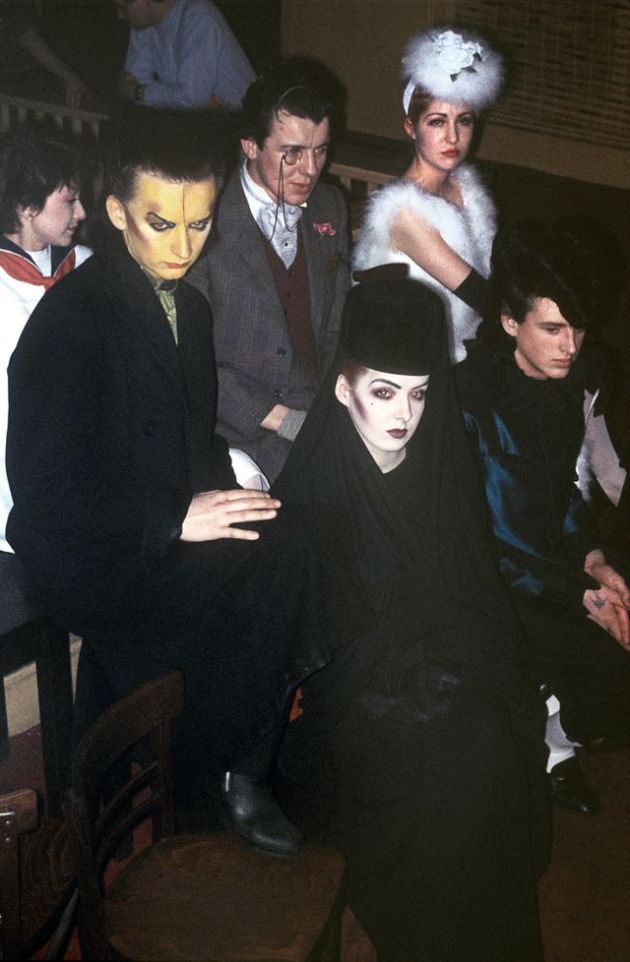
But, in a curious echo of punk five years before, something is stirring in the London suburbs. Young Roxy, Bowie and Kraftwerk fans from Bromley, Burnt Oak and Basildon are dressing up in style (Zoot and toy-soldier suits, cummerbunds, bolero hats, geometric haircuts) and flocking to clubs like Covent Garden’s famous Blitz, now the subject of an engaging exhibition running until 29 March 2026 at the Design Museum
It was the apex of a scene which encompassed fashion, graphic design, journalism, electronic dance music, squatting and a New Pop sensibility which would soon sweep the charts. In short, it’s arguably the best of the 1980s, and this fascinating exhibition neatly incorporates most of it.
Blitz Kids including Midge Ure, Steve Strange, Billy Currie and Rusty Egan
We see the original flyers and posters which wittily and stylishly trailed the Blitz club nights, and there are many items of vintage clothing. The rarely-seen photos are worth the price of admission alone, many contributed by original scenesters like Boy George, Siobahn Fahey, Robert Elms and Marilyn, including a priceless shot of David Bowie with Toni Basil (we also get the full story of Bowie’s recruitment of Strange et al for the ‘Ashes To Ashes’ video).
But the jewel in the exhibition’s crown is probably the recreation of the Blitz itself, with an AI Rusty Egan on the decks and Spandau Ballet performing ‘To Cut A Long Story Short’ on the ‘live stage’ (elsewhere Elms has donated his embarrassing handwritten poem which he used to announce their debut gig at the club).
Rusty Egan, Gary Kemp, Fiona Dealey and Robert Elms in the exhibition’s recreated Blitz. Photo by PA Media
The exhibition widens out to encompass other fascinating early 1980s artefacts, like the posters advertising Sade’s pre-fame Ronnie Scott’s gigs – well over a year before Diamond Life was released – and evidence of the media’s generally condescending attitude towards The Cult With No Name/New Romantics/Blitz Kids.
Then there are the textiles, hats and magazines galore (the exhibition dovetails slightly with the Portrait Gallery’s recent Face exhibition), and even the first all-electronic drum set, a Simmons SDS-V, as used by Kajagoogoo, Flock Of Seagulls, Ultravox etc.
This is an engaging, fun exhibition curated by people who were there and/or obviously care about this stuff. And there’s just enough social/political context for it to be educational too – it was good to see so many youngsters enjoying it with their parents. Highly recommended.

 Pop quiz: what do the following tracks have in common? Beach Boys’ ‘Good Vibrations’, Derek and the Dominos’ ‘Layla’, Steely Dan’s ‘Rikki Don’t Lose That Number’, Frank Zappa’s ‘Apostrophe’, Minnie Riperton’s ‘Inside My Love’, The Incredible Bongo Band’s ‘Apache’ and Carly Simon’s ‘You’re So Vain’.
 Anthony Jackson
 ‘Talk Radio’ comes between ‘Wall Street’ and ‘Born On The Fourth Of July’ in Oliver Stone’s filmography, but seems mostly forgotten these days.
 Continuing our look at some of the finest jazz/rock albums of the 1980s. You can find part 1
 1980s jazz/rock generally gets the side-eye these days.
  Whilst 1980s cinema was seemingly dominated by action heroes and comic actors (Bill Murray, Chevy Chase, Eddie Murphy, Steve Martin et al) who generally tended to transform projects by dint of their improvisatory skills, there were enough gifted writers around (Woody Allen, Oliver Stone, Bruce Robinson, John Carpenter, John Hughes, the Coen brothers etc.) to generate memorable, crafted lines too.


 England, 1979: punk is out, sus laws and Thatcher are in. Nightclubs are closing down and youth violence and political unrest are on the rise (as are movements like Rock Against Racism).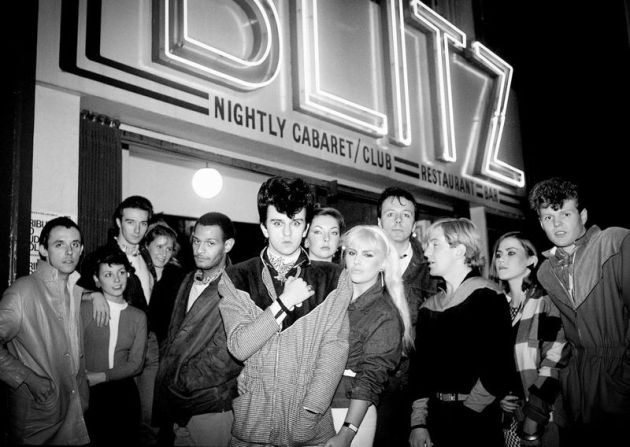

 movingtheriver.com