Despite the twin threats of streaming and AI, it’s gratifying to see that there seems to be an increasing appetite for indepth writing about the good old long player.
This is especially true if you’re into the rich catalogues of the great artists from the ‘60s, ‘70s and ‘80s.
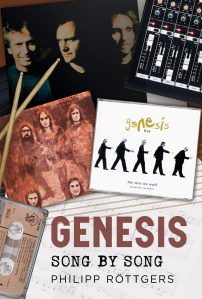
Fonthill Media have put together the latest (hardback) series of ‘song by song’ studies, covering similar territory to Sonicbond’s ‘on track’ series.
Author Philipp Rottgers (he’s also a historian and drummer with the band PARIAHLORD) now enters the fray with an enjoyable new study of pop/prog behemoths Genesis.
The book offers entries on every single song they ever recorded, plus sections on tours, album artwork and contemporaneous critical reactions. There’s also an impressive selection of colour photos, including singles covers new to this writer. There’s no index but an extensive reference section and long bibliography.
Genesis provides an interesting challenge for the discerning author, with such a weighty catalogue and two distinct eras. Rottgers preference seems to be for the 1975-1992 period, when Phil Collins fronted the band.
But the book still offers lots of tasty morsels regarding the band’s earlier Peter Gabriel period. For example, it’s interesting to note that the live debut of ‘Supper’s Ready’ took place at Brunel University, Uxbridge, on 10 November 1972 (one wonders if It Bites knew about this when they played a fantastic 16-minute version of ‘Once Around The World’ at the venue in February 1988).
And Rottgers reveals that Noel Gallagher of all people was influenced by an early track called ‘The Conqueror’.
We skim through the band members’ early biographies pretty quickly (weirdly Rottgers neglects to mention the location of each founding members’ birth) and learn a lot about the patronage and early promotion of impresario/songwriter Jonathan King (whose subsequent ‘dodgy’ dealings are skirted over completely, probably for good reason…).
There’s some great stuff about Collins’ audition for the band, though it would have been nice to know what they played on that Surrey afternoon. There are fascinating muso details about the middle period, like the fact that Banks, Rutherford and Collins were each given a CR-78 drum machine during the Japanese tour of 1978 as gifts from manufacturers Roland, and it became a key sound of the Duke album (and Collins’ Face Value).
There are some superb tidbits about the band’s mid-1980s commercial peak – the analysis of ‘Land Of Confusion’ is particularly detailed – and Rottgers reminds us that the band did a remarkable FOUR nights at Wembley Stadium in 1987.
The final chapter impressively reviews the farewell 2022 concerts in full and also explains the legacy of the band and also the contributions that Banks, Collins and Rutherford made to their instruments and songwriting in general.
Whilst ‘Genesis: Song By Song’ is a huge achievement and obviously a labour of love for Rottgers, there are some strange omissions. He generally eschews musical analysis, surprising given Genesis are famed for their top-notch playing.
And fans of the early work may occasionally scratch their heads at the lack of space given to important, complex early pieces like ‘Mad Man Moon’ and ‘Can Utility & The Coastliners – both only get three lines each! And some Lamb Lies Down tracks also get short shrift.
But all in all, this is an enjoyable and worthwhile book, doing a good job of taking one back to the music afresh. Looking forward to Rottgers’ upcoming book on Collins.
Producer Steve Lillywhite recently named Phil Collins as the best drummer he’s ever worked with, pretty high praise considering Lillywhite has also shared studios with Simon Phillips, Carter Beauford, Mel Gaynor, Mark Brzezicki, Jerry Marotta and Stewart Copeland.
And Phil’s excellent drums were all over his seriously impressive (and very long for 1981, clocking in at over 47 minutes) debut solo album Face Value, released 45 years ago this month, and a record that has fascinated this writer since the age of eight.
But by 1981 Phil had nothing to prove from a drumming perspective. It was the quality of the material and arrangements that bowled people over. And yet Face Value is so much part of the furniture these days that it’s easy to forget just how expertly crafted it is.
Many of the album’s songs started life as primitive home demos, featuring rhythm box, piano and vocals, Collins having a lot of time on his hands after separating from his first wife (‘I Missed Again’ was originally a mid-tempo shuffle with the working title of ‘I Miss You Babe’).
A few other tracks were developed in the studio with various muso friends, including L Shankar on violin, Eric Clapton and ex-Weather Report bassist Alphonso Johnson, and then there were the two famous cover versions (three if you count Phil’s almost-silent rendering of ‘Over The Rainbow’ at the end – the very first ‘secret’ track?).
The resulting material was an embarrassment of riches. Phil threw everything but the kitchen sink at Face Value: singer-songwriter balladry, Motown, Earth, Wind & Fire, jazz/rock, Beatles beats. Even a touch of Barry White (but no prog…). And all of it pretty much works.
He took full advantage of Townhouse Studios’ famous stone-clad drum room and the superb technical skills and easygoing manner of co-producer Hugh Padgham.
‘In The Air Tonight’ arguably changed the music business forever (as, arguably, did the cover – was this the first album that had the artist’s handwriting on the front?). Had there ever been a quieter album opener? Or UK #2 single (#19 in the States)?
Just a spectral Roland CR-78 rhythm box playing a loose approximation of Phil’s beat from Peter Gabriel’s ‘Intruder’ (and at exactly the same tempo) and a few synth chords (starting in D-minor, the saddest of all keys…). And then the massively compressed, mid-song fill is always louder than you think it’ll be.
In fact, compared to modern ‘pop’ music, the whole album has an enormous amount of space. Even the silence between each track (apart from the mid-record medley) seems unusually elongated and very deliberate, possibly because of the huge variety of musical styles.
Atlantic (Phil’s label in the US) boss Ahmet Ertegun said something interesting about ‘In The Air’: for years afterwards, it was always his go-to track for demonstrating a sure-fire hit – rather an extraordinary statement, when you think about it.
Phil was also becoming a more-than-useful pianist – check out his lovely voicings on ‘Hand In Hand’ and impressive rhythm playing (just the black keys!) on ‘Droned’.
The success of Face Value was a huge gamechanger for his Genesis colleagues. The ‘funny guy’ behind the kit who had always felt a bit like an outsider was now calling the shots. Newfound respect from Messrs. Rutherford and Banks. There would be no more drummer jokes.
The album revolutionised Virgin Records too. Its massive success (UK #1, US #7) was almost as seismic as Mike Oldfield’s Tubular Bells had been five years before, ushering in the label’s mega-selling pop era of Culture Club, Human League et al.
‘Phil and Peter Gabriel are delightful people. Nothing’s too much trouble for them and it’s also true that because they’d both bother to go into the office to see everyone, the staff would work their balls off for them.’ Richard Branson, 1999
If Phil’s solo career had only ever consisted of Face Value, his legacy would have been assured. (In fact many, including this writer, believe he hasn’t produced much solo stuff of worth since…)
(Postscript: my 1980s WEA CD sounds great but is apparently a bootleg, with a few funny misspellings inside the inlay card – ‘Sharokav’ on violin – and a weird Eric Clapton pseudonym: ‘Joe Partridge’…)
Despite his reputation as a sonic groundbreaker and technological wiz, Peter Gabriel arguably hasn’t done anything much good on record since 1992, even as his live shows gain popularity.
1986’s So was of course the huge pop breakthrough, and that album has been the template for his subsequent, rather predictable solo career – he generally switches between atmospheric ballads a la ‘Mercy Street’ or ‘Don’t Give Up, ‘dark’, vaguely industrial rock tracks, and ‘funky’ one-chord grooves with poppy hooks and emotional lyrics, typified by ‘Sledgehammer’.
i/o is his first album of new material since 2002 and sadly it cannot reverse the trend, despite Gabriel’s always excellent, ageless vocals. It mostly meanders by in a fog of ugly snare drums, dry guitars and keyboards (some by Eno), digital treatments/loops pitched somewhere around 1998, and not much air at all. It seems the multi-layered triumphs of ‘Lead A Normal Life’ and ‘Family Snapshot’ are long gone.
Elsewhere Tony Levin’s bass and stick parts are prominent but they can’t produce anything as immediate and catchy as ‘Sledgehammer’. ‘Four Kinds Of Horses’ sums up the problem – a fairly uninteresting half-time groove underpins a fairly uninteresting vocal melody, while a rather irritating piano loop burbles away in the background. It never should have left the rehearsal room and many other (mostly overlong) tracks replicate that formula.
But Gabriel does deliver a pretty good, harmonically-rich ballad – ‘Playing For Time’ – which some other reviewers have very generously compared to Randy Newman’s best work. It’s this album’s ‘Washing Of The Water’.
In conclusion, the main problem with i/o is that it sounds exactly like you think it will. Maybe Gabriel is working with the wrong people, maybe the wrong software. Maybe he needs to get back to recording ‘as live’, embedded in a really good five-piece band. Paging Bob Ezrin, Larry Fast, Robert Fripp and/or Hugh Padgham…
(postscript: I’ve recently invested in the definitive 2007 CD remaster of Genesis’s Lamb Lies Down On Broadway – it sounds absolutely fantastic and I feel 18 again…)
If any more proof was needed as to how far the UK pop charts have declined since the mid-1990s, look no further than the fact that Genesis’s ‘Mama’ – released 40 years old this week – was their biggest hit, going all the way to #4.
Not bad for a nearly-seven-minute song without a proper chorus about a young man’s troubled relationship with a sex worker.
In my opinion, ‘Mama’ is one of the great singles of the 1980s, epic and menacing, and the last decent showing for post-Gabriel Genesis (I couldn’t/can’t get anywhere with its attendant 1983 self-titled album, nor any of their subsequent projects).
In autumn 1983, I was vaguely aware of Phil Collins, my ears having been piqued by my dad’s frequent playing of Face Value around the house. But when my uncle bought me the ‘Mama’ 12-inch single, I’m pretty sure I’d never heard of Genesis. But Uncle Jim wrote ‘Side A is the good side!’ on the front for guidance, knowing I’d love Phil’s immense drum sound (to these ears, still just as ‘shocking’ as ‘In The Air Tonight’). For me, this is the apex of Phil’s best era – roughly 1976 to 1983.
The author with his first snare drum, his dad the DJ about to put on ‘Mama’, circa autumn 1983
‘Mama’ was recorded at the band’s Farm studio near Chiddingfold, Surrey, and co-produced by Hugh Padgham. Phil set up in the new drum room modelled on the famous Townhouse Studio 2 in Shepherds Bush.
There are still so many pleasures – Phil’s sibilant, Lennon-influenced vocals (including a homage to Melle Mel), making full use of the slapback echo which went straight onto tape rather than being added later. Banks’s ominous synth layering and wacky lead tones. Mike Rutherford’s Linn drum programming, played through a guitar amp.
Also listen out for the way Phil avoids metal completely until the beginning of the fade, when his enormous crash cymbal is a huge release.
We’ve all done it – surveyed an ad for an upcoming gig and said of a band: ‘Whoa – they’re playing not one but THREE nights at Wembley/wherever?!’.
Some acts who thrived in the 1980s have effortlessly sidestepped the nostalgia circuit to maintain a huge live following, able to tour under their own steam every four or five years and sell out arena gigs. They might lose a founder member here or gain a strange recruit (Reeves Gabrels in The Cure?!) there but basically seem to go from strength to strength.
How do they do it? Who exactly are their fans? After 40-plus years of service, who forks out 70 quid every three or four years to see their favourite band at the nearest enormo-dome? Here, in no particular order, we round up the usual suspects. We’re obviously not talking about those plucky little cult acts of the 1980s. There’s a crucial missing bit in the musical brain of yours truly which would help me understand the enduring popularity of these headliners.
Variously, we will find acts who once upon a time were self-confessed haters of live performance; those who are like the Rolling Stones of 1980s pop, pedalling their tried-and-tested formula despite not writing anything decent for 30 years; those who have lost a vital frontperson, but carried on anyway. And the acts who – inexplicably – are massive in the USA despite doing middling business in the place of their birth.
Who’s who? You decide… Other suggestions are very welcome.
The classic It Bites lineup (Francis Dunnery, John Beck, Richard Nolan, Bob Dalton) produced three excellent studio albums and of course snared one huge UK hit in the shape of ‘Calling All The Heroes’.
Then, after the band split in 1990, there was the middling best-of live collection Thankyou And Goodnight. But now there’s an excellent new limited-edition 2018 boxed set called Live In London.
It collects three complete, unedited London gigs (I was at two of them) over five CDs, including their very last major show in the capital. Whilst these are essentially desk recordings, the sound quality ranges from good to excellent. The set also features nice, previously unseen photos and some good liner notes including a long interview with Dalton, telling of their London history and details of each gig.
The Marquee concert from 21 July 1986 (at less than 40 minutes, presumably a support?) catches the band in their full-on, zingy, poppy/funky early pomp. Everything sounds a little fast and they haven’t quite settled into their groove yet but it’s still a good listen. There’s a shrill early version of ‘Black December’ and a great, rare outing for ‘Whole New World’ with Dunnery playing the horn lines on lead guitar with some aplomb.
Next is the very tangible peak of the band, a Once Around The World tour gig from 13 May 1988 at the much-missed Astoria. The sound is beefy, the tempos locked in, the backing vocals excellent and this really is the dog’s bollocks. There’s so much evidence of craft, with an extra note here and lick there, always slightly modifying the album versions.
‘Plastic Dreamer’ is a revelation, ‘Black December’ is huge, and ‘Old Man & The Angel’ ambitious and exciting. We finally get to hear what Dunnery sings in ‘Hunting The Whale’. The ‘Midnight/Wanna Shout’ medley is a knockout, complete with ‘Purple Haze’ coda, and Once Around The World’s title track is brilliant, complete with excerpt from ‘New York, New York’ which chimes rather cleverly with Dunnery and Beck’s Lamb Lies Down On Broadway fixation.
The third gig is the band’s final London show, from the Hammersmith Odeon on 7 April 1990. The intro sounds like something from Prince’s Lovesexy. The new songs sound great, ‘Let Us All Go’ is superb but Dunnery’s voice is pretty shot throughout, and some of the backing vocals are also showing signs of strain. In truth you can hear the schisms in the band developing, though there are many, many great moments.
Barely two months later Dunnery had left the group. Not long after that, this correspondent would see him skulking around the King’s Head pub in Fulham (he was rehearsing upstairs with Robert Plant, I was gigging there), not looking a particularly well or happy man. Thankfully he’s on a far more even keel now.
Live In London is a really exciting release, a must-have collection for anyone who owns any of the studio albums, and arguably a much better package than Thankyou And Goodnight.
So it’s official: old music is hugely outselling new music. And vinyl is the most popular physical format again.
Go into a record shop and likely you’ll be stunned at the price of secondhand vinyl, not to mention new catalogue LPs that can cost up to 25 quid for a posh reissue.
All of which might amuse/surprise music fans of my vintage who kept hold of their record players through the years and spent the noughties digging around the vinyl discount stores, often picking up ‘esteemed’ albums for anything between 10p and a quid (the price of a postage stamp, for readers outside the UK).
So what were those 1980s vinyls that were/are ALWAYS in secondhand shops and, by extension, still ever-present in charity shops? And why were they always there?
Most smack of the impulse buy by people who get one album a year, or the ‘difficult’ follow-ups to a smash. Some are tainted by an almost ineffable naffness. Most were deemed surplus on vinyl once CD became the format of choice, and most are weirdly genre-less.
Stacked high/sold cheap, you’d think they’d be reissue-proof, never to be seen again. But not so fast: ‘deluxe’ editions of these are probably on their way to a shop/streaming service near you, or have already arrived…
The Beautiful South: Welcome To The Beautiful South
U2: Rattle And Hum
Del Amitri: Waking Hours
Bros: Push
Hothouse Flowers: People
Michael McDonald: Sweet Freedom (The Best Of Michael McDonald)
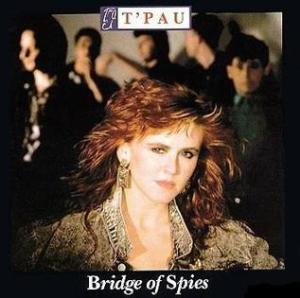
T’Pau: Bridge Of Spies
Foreigner: Agent Provocateur
Michael Bolton: Soul Provider
Meat Loaf: Dead Ringer
John Cougar Mellencamp: The Lonesome Jubilee
Enya: Watermark
Five Star: Silk And Steel
Arcadia: So Red The Rose
Sade: Diamond Life
Chris Rea: The Road To Hell
Phil Collins: No Jacket Required
Bryan Ferry: Boys And Girls
Genesis: Invisible Touch
George Michael: Faith
Tracy Chapman: Tracy Chapman
Fleetwood Mac: Tango In The Night
Wet Wet Wet: Popped In, Souled Out
Fairground Attraction: The First Of A Million Kisses
Even the most ’80s-phobic pop fan would have to concede that it was a great decade for singles.
The first 7″ I asked for was either Nick Lowe’s ‘I Love The Sound Of Breaking Glass’, Elvis Costello’s ‘Less Than Zero’ or 10CC’s ‘Dreadlock Holiday’, all from the late ’70s, but the first single I distinctly remember buying was Scritti Politti’s ‘The Word Girl’.
But many others have stayed in the head and heart. Here are a bunch of them in no particular order (apart from the #1), but I’m barely scratching the surface.
The rules: one artist per slot, and a simple ‘quality’ criterion applies: when any of these songs comes on the radio or onto a playlist, they demand to be listened to. They stand alone, retaining a magic ‘buzz’, wow-factor, presence, mood (and, pop pickers, there’s nothing from 1986…). Nothing grates, and nothing – or at least not much – could be improved upon…
85. Joan Jett & The Blackhearts: ‘I Love Rock’n’Roll’
84: UB40: ‘Food For Thought’ (1980)
83. Special AKA: ‘Free Nelson Mandela’ (1984)
82. Kid Creole And The Coconuts: ‘Annie I’m Not Your Daddy’ (1982)
81: The Clash: ‘Rock The Casbah’ (1982)
80. The Commodores: Night Shift (1985)
79. Janet Jackson: What Have You Done For Me Lately? (1986)
78. Lionel Richie: All Night Long (1983)
77. Cliff Richard: Carrie (1980)
76. James Brown: Living In America (1985)
75. Tom Tom Club: Wordy Rappinghood (1981)
74. Rolling Stones: ‘Undercover Of The Night’ (1983)
73. David Bowie: ‘Ashes To Ashes’ (1980)
72. Dire Straits: ‘Private Investigations’ (1982)
71. Afrika Bambaataa & The SoulSonic Force: ‘Planet Rock’ (1982)
70. Belinda Carlisle: ‘I Get Weak’ (1988)
Rick Astley’s ‘Never Gonna Give You Up’ kept it off the US number one spot in early ’88. Almost-perfect pop/rock from the pen of Dianne Warren.
69. The Jam: ‘Town Called Malice’ (1982)
68. Michael Jackson: ‘Billie Jean’ (1982)
Always the loudest song on any playlist.
67. Robert Wyatt: ‘Shipbuilding’ (1982)
66. The Flying Lizards: ‘Sex Machine’ (1984)
65. Joy Division: ‘Love Will Tear Us Apart’ (1980)
64. Carly Simon: ‘Why’ (1982)
63. Bros: ‘I Owe You Nothing’ (1988)
62. Dollar: ‘Videotheque’ (1982)
61. Yazoo: ‘Don’t Go’ (1982)
Difficult now to disassociate it from Alan Partridge’s early morning show, but still a brilliant slice of Basildon techno-funk.
60. Bronski Beat: ‘Smalltown Boy’ (1984)
Touching meditation on the travails of youth. Even an appallingly-played synth in the intro cannot wither it.
59. Phil Collins: ‘In The Air Tonight’ (1981)
The first showing for that ’80s staple, the Roland CR-78 rhythm box, on a single that legendary Atlantic boss Ahmet Ertegun adored…
58. Fine Young Cannibals: ‘Johnny Come Home’ (1985)
57. Robert Palmer: ‘Addicted To Love’ (1985)
No apologies for including this US number one. Imagine waking up with this buzzing around your head. Palmer apparently bumped into Chaka Khan on a New York street during the vocal sessions and asked her to harmonize the lead line – a great pairing (but was she removed from some versions? Doesn’t really sound like her… Ed.).
56. Alexander O’Neal ft. Cherelle: ‘Never Knew Love Like This’ (1987)
Producers/songwriters Jimmy Jam and Terry Lewis did a damn good job of creating a Marvin/Tammi or Marvin/Diana for the ’80s. Gorgeous harmonies and vocals.
55. Salt-N-Pepa: ‘Push It’ (1988)
The ‘Smoke On The Water’ of ’80s rap. But, according to the ladies, it’s not about sex – it’s about ‘pushing it’ on the dancefloor.
54. Talking Heads: ‘Once In A Lifetime’ (1981)
53. Don Henley: ‘Boys Of Summer’ (1984)
52. Yes: ‘Owner Of A Lonely Heart’ (1983)
51. Billy Joel: ‘Uptown Girl’ (1983)
Billy’s tribute to The Four Seasons works a treat, with a slammin’ rhythm section and melodic curveballs to make even Macca jealous.
50. Musical Youth: ‘Pass The Dutchie’ (1982)
The joyful sound of late summer 1982 and the first song by a black artist to be played on MTV.
49. Junior: ‘Mama Used To Say’ (1982)
48. Genesis: ‘Mama’ (1982)
The first ‘event’ single in their career. Epic/menacing.
47. Donna Summer: ‘Love Is In Control (Finger On The Trigger)’ (1982)
Quincy assembles his dream team (Ndugu, Swedien, Hey, Temperton, Phillinganes) to produce an underrated cracker.
46. The Police: ‘Every Little Thing She Does Is Magic’ (1981)
Sting wrote the band’s fourth UK number one in 1976. Apparently Summers and Copeland hated Jean Roussel’s keyboard playing on this – but they were wrong.
45. Japan: ‘I Second That Emotion’ (1981)
Most original cover version of the ’80s?
44. Bananarama: ‘Robert De Niro’s Waiting’ (1983)
Apparently about sexual abuse…
43. The Bangles: ‘Eternal Flame’ (1989)
42. Grandmaster Flash and the Furious Five: ‘The Message’ (1982)
41. Blondie: ‘Atomic’ (1980)
Minor/major splendour. Debbie’s voice always sends a shiver down the spine and there’s that Roland CR-78 again.
40. The Specials: ‘Ghost Town’ (1981)
39. Frankie Goes To Hollywood: ‘Two Tribes’ (1984)
No expense was spared for the all-important follow-up to ‘Relax’ – according to arranger Anne Dudley, a 60-piece orchestra featured on the intro.
38. Ultravox: ‘Vienna’ (1981)
Kept off the UK top spot by Joe Dolce’s Music Theatre’s brilliant ‘Shaddap You Face’ (which nearly made this list…).
37. OMD: ‘Souvenir’ (1981)
More like a dream than a pop song.
36. Adam And The Ants: ‘Ant Rap’ (1981)
35. Bucks Fizz: ‘Land Of Make Believe’ (1982)
34. Madonna: ‘Crazy For You’ (1985)
Featuring Rob Mounsey’s sumptuous arrangement and a winning vocal from La Ciccone.
33. The Associates: ‘Party Fears Two’ (1982)
32. Thompson Twins: ‘Hold Me Now’ (1984)
31. Young MC: ‘Know How’ (1989)
By way of tribute to Cooking Vinyl founder Matt Dike who died recently.
30. S’Express: ‘Theme From S’Express’ (1988)
29. Nik Kershaw: Wouldn’t It Be Good (1984)
28. The Passions: ‘I’m In Love With A German Film Star’ (1981)
A quintessential ’80s one-hit wonder, still beguiling after all these years, with a classic guitar performance from Clive Temperley.
27. Wham!: ‘Freedom’ (1984)
26. ZZ Top: ‘Sharp Dressed Man’ (1983)
25. George Michael: ‘Careless Whisper’ (1984)
24. Art Of Noise: ‘Close (To The Edit)’ (1984)
Allegedly built on an unused Alan White drum track recorded during Yes’s 90125 sessions.
23. Blancmange: ‘Living On The Ceiling’ (1982)
22. Paul Hardcastle: ’19’ (1985)
21. Soft Cell: ‘Tainted Love’ (1981)
20. Rick Astley: ‘Whenever You Need Somebody’ (1987)
Wacky song construction; try playing along on guitar. So many key changes. Arguably Stock/Aitken/Waterman’s best and vastly superior to ‘Never Gonna Give You Up’.
19. Hall And Oates: ‘I Can’t Go For That (No Can Do)’ (1982)
18. Freeez: ‘Southern Freeez’ (1981)
17. Kim Carnes: ‘Bette Davis Eyes’ (1981)
A classic lyric, and musically rich too.
16. MARRS: ‘Pump Up The Volume’ (1989)
15. Eric B & Rakim: ‘I Know You Got Soul’ (1988)
14. Human League: ‘Don’t You Want Me’ (1982)
13. Christopher Cross: ‘Arthur’s Theme (Best That You Can Do)’ (1981)
Hard to resist the gorgeous Bacharach-penned melody and superb drum performance from Jeff Porcaro.
12. Will Powers: ‘Kissing With Confidence’ (1983)
11. The Jones Girls: ‘Nights Over Egypt’ (1981)
10. Roxy Music: ‘Same Old Scene’ (1980)
9. ABC: ‘Poison Arrow’ (1982)
8. Joe Jackson: ‘Stepping Out’ (1982)
7. Neneh Cherry: ‘Buffalo Stance’ (1989)
You may mock…but slap on this Tim Simenon-produced corker and watch the dancefloor fill up…
6. Prince: ‘Sign ‘O’ The Times’ (1987)
5. Simple Minds: ‘Belfast Child’ (1989)
Steve Lipson and Trevor Horn cooked up this epic UK No.1, adapted from the traditional Irish song ‘She Moved Through The Fair’. Here’s an interesting live version I’d never seen before.
4. Van Halen: ‘Jump’ (1984)
3. Madness: ‘Baggy Trousers’ (1980)
It is London school life in 1980 – simple as.
2. Scritti Politti: ‘Absolute’ (1985) And – drum roll – the single I would save if my flat was on fire…
1. Grace Jones: ‘Slave To The Rhythm’ (1985)
Check out the full list, with some other classics, on Spotify
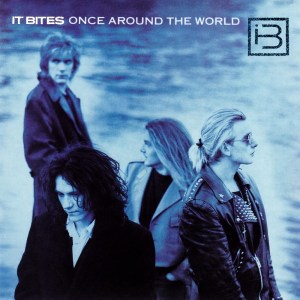
Everyone has their favourite summer music and the brilliant Once Around The World is an album I always turn to at this time of year.
It’s a feast of resplendent chord changes, audacious song structures, good grooves, blistering lead guitar lines and uplifting, unusual melodies.
As a music-mad 15-year-old, this was the album I was really waiting for. I had recently become slightly obsessed by their debut The Big Lad In The Windmill and couldn’t wait to hear what the talented Cumbrian four-piece would come up with next.
For some reason, I didn’t buy OATW on its first week of release, but my schoolmate Jem Godfrey did. I would badger him for details in the playground. Me: ‘Are there any instrumentals on it?’ Jem: ‘No.’ Me: ‘What’s it like then?’ Jem: ‘It’s bloody brilliant, just get it!’
In 1988, the world didn’t need a dose of beautifully-recorded, full-on prog lunacy, but they got it anyway and the UK music scene was all the better for it. There were murmurs of a ‘prog revival’ at the time but It Bites (and to a certain extent Marillion) were streets ahead of the pack because they blended superb musicianship with great hooks and catchy songs.
Hats off to Richard Branson and Virgin for throwing some money at this album because it turned out to be classic prog’s last hurrah. Mainly recorded at The Manor in Oxfordshire (where rumour has it singer/guitarist Francis Dunnery gained access to Richard Branson’s bountiful wine cellar on the band’s first night of recording with disastrous consequences…), OATW is essentially one side of beautifully-produced pop/rock songs (mainly helmed by Virgin prog survivor Steve Hillage), and another of completely brilliant, barmy prog/pop pieces.
The Manor
‘Midnight’ and ‘Kiss Like Judas’ are lean, mean, well-crafted pop/rock songs with good hooks and meaty grooves, but both just missed the UK Top 40.
‘Plastic Dreamer’ fits an unbelievable amount of material into its four minutes, including a vocal harmony section that would make Roy Thomas Baker drool, a stunning guitar solo from Dunnery, some spooky Alice In Wonderland atmospherics and preposterous lyrics (very much inspired by Peter Gabriel’s Genesis output).
They repeat the trick on ‘Hunting The Whale’ and make good use of the Manor swimming pool in the process. The 14-minute title track, whilst owing a few licks and lyric ideas to Genesis’s ‘Supper’s Ready’, is nevertheless astoundingly ambitious and brilliantly realised considering it was recorded in the same year as Kylie’s ‘I Should Be So Lucky’.
(There are other nods to early Genesis throughout the album: the last few minutes of ‘Old Man And The Angel’ brilliantly revisits the rhythm games of ‘The Battle Of Epping Forest’; the main hook of ‘Hunting The Whale’ is very similar to Steve Hackett’s ‘Dancing With The Moonlit Knight’ central riff; the middle-eight of ‘Midnight’ uses Tony Banks’ opening chords to ‘Watcher Of The Skies’.)
They could play all this stuff live too, and with great elan (they played the whole of OATW at the much-missed London Astoria circa May 1988, and I also caught them a few months before that at Brunel University). Their range and ability was simply stunning.
John Beck’s keyboard textures have possibly dated a bit in comparison with what, say, Trevor Horn and David Sylvian were doing with synths at the time (though his voicings and arrangement ideas are always inventive), but people often forget what an amazing rhythm section (Dick Nolan on bass, Bob Dalton on drums) It Bites had.
There’s a ‘swing’ there that suggests that they were always influenced by much more than just progressive rock, and Dunnery’s guitar playing and vocals have incredible bite. Here’s some great footage of them recording the title track:
Though It Bites were turning into a very popular live draw throughout Europe, the album stalled at #43 in the UK – a big surprise and disappointment to the band. And it didn’t even get reviewed in Q magazine.
The lads’ music subsequently took a heavier direction, but OATW is the standout in their short but excellent career, showing off a brilliant band at its peak.
7. David Bowie: ‘It’s No Game (Part 1)’ from Scary Monsters (1980)
Weird doesn’t cover it. We hear tape spooling around the reels and the machine being turned on, followed by drummer Dennis Davis whirling around a football rattle and counting us in in his best Cyborg voice. After this, Robert Fripp’s deranged solo and Michi Hirota’s strident Japanese outbursts sound almost normal.
6. De La Soul: ‘Intro’ from 3 Feet High And Rising (1989)
A whole generation of pop kids hadn’t heard anything like this before, and yet somehow it bears repeated listening. It’s just as fresh and original as anything The Small Faces or The Beatles tried 20 years before and arguably started off the whole ‘intro’ concept on hip-hop albums.
5. Genesis: ‘Behind The Lines’ from Duke (1980)
In musical theatre, I believe it’s called an overture. This bombastic piece previews many of the themes that will reverberate through the album. Tony Banks’ keys and Phil’s drums have seldom sounded brighter or tighter.
4. Lil Louis: ‘I Called U’ from From The Mind OfLil Louis (1989)
This classic piece of bunny-boiler house is funny and arresting.
3. It Bites: ‘Positively Animal’ from Eat Me In St Louis (1989)
Watch that volume dial. The underrated four-piece jolt you out of complacency with a flashy, these-go-to-11 opener. Audacious and very un-English.
2. The Police: ‘Don’t Stand So Close To Me’ from Zenyatta Mondatta (1980)
Another moody classic. A brooding Oberheim bass-throb, a fudged Andy Summers lick, a hint of click track and then that brilliant, patented half-time groove. The full-length version hints at the darker themes of the lyric.
1. Talking Heads: ‘And She Was’ from Little Creatures (1985)
Leaving behind the art-funk of Speaking In Tongues, this sprightly opener introduces a new stripped-down pop sound in no uncertain terms.

 Despite the twin threats of streaming and AI, it’s gratifying to see that there seems to be an increasing appetite for indepth writing about the good old long player.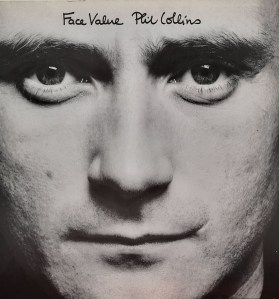

 If any more proof was needed as to how far the UK pop charts have declined since the mid-1990s, look no further than the fact that Genesis’s ‘Mama’ – released 40 years old this week – was their biggest hit, going all the way to #4.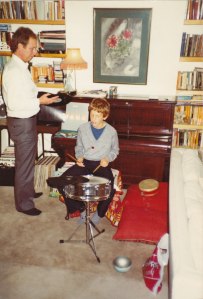
 We’ve all done it – surveyed an ad for an upcoming gig and said of a band: ‘Whoa – they’re playing not one but THREE nights at Wembley/wherever?!’.
 So it’s official: old music is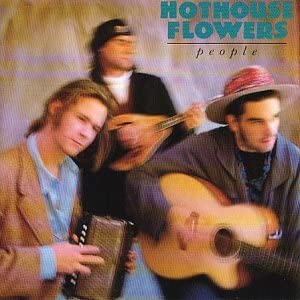
 Even the most ’80s-phobic pop fan would have to concede that it was a great decade for singles.