Eight 1980s Stock, Aitken & Waterman Tracks That Aren’t Crap

Joe Meek isn’t often compared to Stock, Aitken and Waterman but here’s an associate of the former speaking after his untimely death: ‘He was being ganged up on by the establishment. Nobody with any power in the business liked him because he was independent and successful.’

The same could be said for Mike Stock, Matt Aitken and Pete Waterman. The always-deeply-unfashionable songwriting/production/mixing/A&R team, who had over 100 UK Top 40 hits and sold over 40 million singles in the UK (35 million worldwide in 1987 alone),  found their feet in the hi-NRG scene, then detoured into classy soul before emerging with a late-‘80s formula that combined both approaches and made superstars out of Kylie, Jason and Rick Astley.

Everyone from Sigue Sigue Sputnik to Donna Summer sought SAW’s hit-making fairy dust. But many ’80s pop fans hated them. You could argue that was more down to the procedural limitations of their later work – ie. refusal to use a real rhythm section – and formulaic productions than the songwriting (reportedly mostly by Stock, with the other two supplying lyric ideas and Waterman the final mix and marketing) which often adroitely mined Motown and Philly soul and featured some of the weirdest harmonic modulations this side of Nik Kershaw.

But have their best tracks stood the test of time? Here are eight SAW singles that are not routinely turned off by movingtheriver when they come on the radio:

8. Dead Or Alive: ‘You Spin Me Round (Like A Record)’
Waterman boasted about making difficult records early in the trio’s career and this is one of their weirdest. Apparently their trick was to remove most of the bass from the mix and boost the cowbells, handclaps and sequencers to ‘trigger’ the interactive light shows, especially at ‘gay’ venues. It’s also interesting how long they wait before unleashing the first chorus…

7. Princess: ‘Say I’m Your Number One’
South London soul singer Princess – born Desiree Heslop – was a member of Osibisa before going solo in 1985. This tasty single, with its bizarre but brilliant harmonic hike into the chorus, settled at #7 as well as going top 20 in the US R&B charts.

6. Brother Beyond: ‘The Harder I Try’
Weirdly, this fine Motown pastiche was the FIFTH single released from their second album, but still made #2 in the UK.

5. The Three Degrees: ‘The Heaven I Need’
Yes it’s somewhat of a rip-off of Mai Tai’s ‘History’ (or is it? Which came out first?!) but this was the Prince Charles-approved trio’s groovy comeback after a five-year hiatus. Not much of a success though: it limped to #42.

4. Sonia: ‘You’ll Never Stop Me From Loving You’
Bear with me here. Under the house-by-numbers groove lurks a cool take on Philly soul, the verses reminiscent of both ‘Stop Look Listen’ and ‘Betcha By Golly Wow’. 18-year-old Scouser Sonia Evans was a complete unknown when she recorded this. Maybe people assumed it was Kylie. Interestingly it was SAW’s final #1 single in the UK, though they’d already had SEVEN during 1989!

3. Rick Astley: ‘Whenever You Need Somebody’
Just a brilliantly weird sequence of melodic hooks, and another strange key change going into the chorus. Astley’s vocal phrasing is a treat too.

2. Donna Summer: ‘Love’s About To Change My Heart’
Reportedly, this is SAW’s favourite of their singles and Summer’s beautiful vocal is surely a big reason why. It completely bombed in her homeland but made the UK top 20.

1. Brilliant: ‘Love Is War’
Killing Joke’s Youth and future KLF man Jimmy Cauty were involved with this great bit of post-Cupid & Psyche pop/soul, but it still stiffed in the UK.

Any other good SAW tracks? Deep cuts from Kylie albums? It’s unlikely but you never know (and no, ‘Roadblock’ is NOT a great single…).

Further reading: ‘Good Vibrations: The History Of Record Production’ by Mark Cunningham
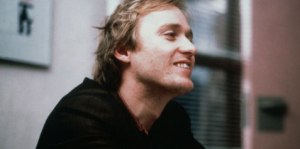
The Cult Movie Club: Honest, Decent & True/News Hounds (1986/1990)

Adrian Edmondson in ‘Honest, Decent & True’

Brit writer/director/auteur Mike Leigh is partly famous for his method of creating shooting scripts: he works with each actor in turn to develop a character, then formulates a story based on improvisations between the various characters.

But he wasn’t the only notable figure to work in that way. Les Blair, a Manchester college friend of his, was another. Blair devised and directed two superb Play For Todays for the BBC, ‘Blooming Youth’ (1973) and ‘Bet Your Life’ (1976), before embarking on a varied career including a few feature films.

But two of his most intriguing TV plays were made during the 1980s: ‘Honest, Decent & True’ (1986) and ‘News Hounds’ (1990). They make for fascinating viewing today, shining a light on two of the decade’s most lucrative and controversial industries: advertising and tabloid journalism.

Both star ‘Comic Strip’/’Young Ones’ comedy hero Adrian Edmondson, and he plays a blinder in both. In ‘Honest, Decent’ he’s a hapless, ethically-challenged ad man, in ‘News Hounds’ he’s a tabloid hack with the morals of a sewer rat. He brilliantly subverts his madcap image to play nuanced, troubling characters, and he’s clearly fond of these two films, focusing on them in some detail in his recent autobiography. It’s a shame he hasn’t been called on to play more serious roles in his career.

‘Honest, Decent’, which won a major award at the San Francisco Film Festival of 1986, also features a great cast including Arabella Weir, Gary Oldman and Richard E Grant in his first screen role and only credit before ‘Withnail’. Grant nicely embodies the kind of ‘liberated’, louche, humourless ad man you’d come across in the 1980s, into Asian architecture, yoga and new-age music, probably driving an Audi Quattro too.

Elsewhere Leigh veteran/ex-wife Alison Steadman shows up in ‘News Hounds’ to brilliantly portray a celebrity interviewer, pitched somewhere between Nina Myskow and Lynn Barber. It’s another classic performance, and reportedly one of her favourite roles.

It’s nice to revisit these amusing, almost-forgotten movies on some hot-button topics of the ’80s (and ‘News Hounds’ is still extremely relevant courtesy of the Leveson Enquiry and its reverberations). As for Les Blair, apparently he’s still teaching at the London Film School, an alumnus of which is one M. Leigh…

Peter Gabriel: i/o

Despite his reputation as a sonic groundbreaker and technological wiz, Peter Gabriel arguably hasn’t done anything much good on record since 1992, even as his live shows gain popularity.

1986’s So was of course the huge pop breakthrough, and that album has been the template for his subsequent, rather predictable solo career – he generally switches between atmospheric ballads a la ‘Mercy Street’ or ‘Don’t Give Up, ‘dark’, vaguely industrial rock tracks, and ‘funky’ one-chord grooves with poppy hooks and emotional lyrics, typified by ‘Sledgehammer’.

i/o is his first album of new material since 2002 and sadly it cannot reverse the trend, despite Gabriel’s always excellent, ageless vocals. It mostly meanders by in a fog of ugly snare drums, dry guitars and keyboards (some by Eno), digital treatments/loops pitched somewhere around 1998, and not much air at all. It seems the multi-layered triumphs of ‘Lead A Normal Life’ and ‘Family Snapshot’ are long gone.

Elsewhere Tony Levin’s bass and stick parts are prominent but they can’t produce anything as immediate and catchy as ‘Sledgehammer’. ‘Four Kinds Of Horses’ sums up the problem – a fairly uninteresting half-time groove underpins a fairly uninteresting vocal melody, while a rather irritating piano loop burbles away in the background. It never should have left the rehearsal room and many other (mostly overlong) tracks replicate that formula.

But Gabriel does deliver a pretty good, harmonically-rich ballad – ‘Playing For Time’ – which some other reviewers have very generously compared to Randy Newman’s best work. It’s this album’s ‘Washing Of The Water’.

In conclusion, the main problem with i/o is that it sounds exactly like you think it will. Maybe Gabriel is working with the wrong people, maybe the wrong software. Maybe he needs to get back to recording ‘as live’, embedded in a really good five-piece band. Paging Bob Ezrin, Larry Fast, Robert Fripp and/or Hugh Padgham…

(postscript: I’ve recently invested in the definitive 2007 CD remaster of Genesis’s Lamb Lies Down On Broadway – it sounds absolutely fantastic and I feel 18 again…)