In Memoriam: movingtheriver salutes the fallen of 2024

Marlena Shaw

Dean Brown (guitarist with Billy Cobham, David Sanborn, Brecker Bros etc.)

Gena Rowlands

Larry Willis (pianist)

Frank Auerbach (painter)

Martial Solal (jazz pianist)

Annie Nightingale

Keith LeBlanc

Aston ‘Family Man’ Barrett (Wailers bassist)

Jim Beard (keyboard player with Mike Stern, Wayne Shorter, John McLaughlin)

Gary Grant (‘Seawind’ horn section trumpeter)

Palle Danielsson (bassist with Keith Jarrett, Jan Garbarek)

TM Stevens (bassist with James Brown, Pretenders, John McLaughlin, Miles Davis)

Sergio Mendes

Michael Jayston (actor)

Michael Cuscuna (jazz record executive/writer)

Charles Cyphers (‘Assault On Precinct’/’Halloween’/’The Fog’ actor)

Casey Benjamin (Robert Glasper Experiment multi-instrumentalist)

David Sanborn

Teri Garr

Richard Lewis

John Kelman (jazz writer)

Angela Bofill

Albert ‘Tootie’ Heath

Ed Mann (Frank Zappa percussionist)

Tom Fowler (Zappa bassist)

Dame Maggie Smith

Martin Mull

Herbie Flowers (Spiders/Sky/Lou Reed bassist)

Will Jennings (‘Higher Love’/’Street Life’/’One Day I’ll Fly Away’/’Didn’t We Almost Have It All’ lyricist)

M Emmet Walsh

Benny Golson

Kris Kristofferson

Libby Titus (singer/songwriter and wife of Donald Fagen)

Martin France (drummer with Kenny Wheeler, Loose Tubes, Human Chain etc.)

Nadia Cattouse (singer/songwriter and mother of Level 42’s Mike Lindup)

Quincy Jones

Paul Auster

Tyka Nelson (singer/songwriter and sister of Prince)

Cat Glover (‘Cat’ on Prince’s Sign ‘O’ The Times/Lovesexy tours/albums)

Cindy Morgan (‘Caddyshack’/’Tron’ actress)

Susan Backlinie (‘Jaws’ actress/gymnast)

Lou Donaldson

Roy Haynes

Roger Corman

Shelley Duvall

Peter Sinfield (King Crimson lyricist)

Diva Gray (vocalist with Chic, Steely Dan, David Sanborn, George Benson)

Bernard Hill

Zakir Hussain

Dan Morgenstern (jazz writer)

Jim Abrahams (‘Kentucky Fried Movie’/’Airplane’/’Police Squad’/’The Naked Gun’ writer/director)

Graham Thorpe (cricketer)

Robert Towne (‘Chinatown’/’The Last Detail’ screenwriter)

Alfa Anderson (vocalist with Chic, Diana Ross, Odyssey, Bryan Ferry)

Donald Sutherland

Eleanor Coppola (writer of the brilliant ‘Notes: The Making of “Apocalypse Now”’ and ex-wife of Francis)

Derek Underwood (cricketer)

Terry Griffiths (snooker player)

Ray Reardon (snooker player)

Wishing all of my readers a happy, healthy 2025, with loads of cash.

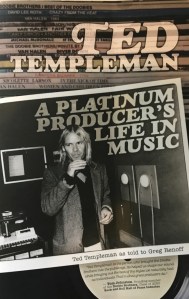
Book Review: A Platinum Producer’s Life In Music by Ted Templeman (as told to Greg Renoff)

You should never judge a person by their name.

movingtheriver assumed Ted Templeman – a favourite producer back in the day courtesy of his work with Van Halen, Little Feat, Doobie Brothers and more – was your typical seasoned/grizzled rock’n’roll journeyman.

But nothing could be further from the truth. Reading his enjoyable memoir (and looking at the cover), he turns out to be a mild-mannered jazz drumming prodigy turned pretty-boy frontman with late-‘60s baroque pop band Harpers Bizarre.

His story takes us from post-war Santa Cruz, California, to the upper echelons of the US music biz during boom time, when Templeman was a house producer for Warner Bros. (alongside Gary Katz, Michael Omartian, Jay Graydon and Lenny Waronker), becoming one of the wealthiest and best respected record execs of his era.

We learn about his youth studying the Cool School jazzers, then his pop band Harpers Bizarre gets signed by Warners and he’s mentored by Waronker, quickly learning what A&R actually means – choosing the right songs for the artist and assessing their commercial strengths and weaknesses. He also witnesses first-hand the weird action around the Doors, Beach Boys and Phil Spector.

But he quickly realises he’s not cut out for fronting a band, and moves on to being Warner Bros’s tape listener, hanging around Frank Sinatra sessions and getting the nod from Waronker to produce his pet project, the Doobie Brothers.

Then there are some fascinating sections on working with Van Morrison – he sees the frustrations of being a co-producer at first hand when they release the ‘wrong’ mix of ‘Tupelo Honey’. But he also sees Morrison’s more humorous side – during the recording of the live album It’s Too Late To Stop Now, Ted, sitting in the mobile studio outside The Rainbow, hears Van frequently saying, ‘Didja get that, Ted?’ into the mic between songs.

Templeman forges a long-term relationship with his engineer Donn Landee and starts working with Little Feat. He sparks a great friendship with their mainman Lowell George and is fascinated to find that he is a model airplane fan. But when pushed, Lowell claims he’s just learning about them so he he can fly in drugs from Mexico. He also learns a lot about drums working in Sunset Sound studio 1 with Richie Hayward.

Then there’s recording Carly Simon on Another Passenger, and her relationship with James Taylor, before Templeman first comes across Van Halen via a concert in Pasadena. They quickly become his second obsession, though he’s deeply unsure about Dave Lee Roth’s vocals and general attitude (the book is full of strikingly honest reflections, and he’s quick to admit when he’s wrong).

The main chunk of the book deals with recording Van Halen, from the classic debut to the painfully laboured 1984. He even confesses to initial scepticism about ‘Jump’, kvetching to Eddie: ‘I signed a heavy metal band’! But he somehow enlists Eddie to guest on rollerskating freak Nicolette Sheridan’s ‘Can’t Get Away From You’.

Templeman eventually becomes a great fan of Lee Roth, though advises him not to leave Van Halen and try to be a movie star (though still ends up producing Crazy From The Heat). He also worries about getting Sammy Hagar into VH, suggesting they change their name to Van Hagar, and refuses to produce 5150.

There’s an amusing meeting with Prince at Sunset Sound and the Purple One’s reaction to Templeman’s suggestion that Quincy Jones produce Purple Rain. And then there’s Allan Holdsworth, a Warner Bros. signing coming via Eddie Van Halen’s recommendation. Eddie and Templeman are contracted to co-produce Road Games, but Holdsworth refuses to allow them in the studio together while he’s recording! A baffled Eddie bows out, and then Holdsworth demands that a few tracks feature vocals against Templeman’s best advice (of course Allan has his own take on the Road Games debacle…).

The mild-mannered Michael McDonald is a regular character in the book, uncharacteristically going ballistic for not getting co-writing credit for Van Halen’s ‘I’ll Wait’. We learn about Aerosmith drummer Joey Kramer’s opinion of Templeman’s work on their comeback album Done With Mirrors, and Eric Clapton’s reaction to being told that his guitar tone sucks.

The last section of the book regards Templeman’s work on the ‘Wayne’s World’ soundtrack and then losing his job at Warners, leading to depression and alcoholism.

It’s one of those rare music books that takes you right into the process of trying to get quality, commercial performances from some of the biggest stars in the music business, and it’s full of good advice about producing/arranging and interesting musical/technical observations.

Sadly though, its message may fall on deaf ears these days when Pro Tools and bedroom recordings are all the rage, musicianship less so, but still it’s a fun, informative look at the peak of the studio scene. Highly recommended.

10 years of movingtheriver.com & The Future

It was ten years to the day that I published my inaugural articles for movingtheriver, pieces on Prefab Sprout, Marcus Miller/Miles Davis, Peter Gabriel , Keith LeBlanc, Prince and Level 42.

The site was a few years in the planning but really only became a reality during an enforced period of reclusion via illness.

Anyone who sets up a project as a labour of love knows how quickly it becomes both a lifeline and passion. Over the past ten years, it’s also been great fun sharing stories and opinions with readers, writers, musicians and bloggers alike.

I’m not sure what the future holds for the site. Substack and YouTube beckon and WordPress has its issues (some of you may have mistakenly been sent a test post by the WP backroom bods recently…).

But the keyword is enjoyment. So hope to see you in ten years…

Bill Bruford: The Comeback

Pop musicians make comebacks all the time – in jazz or jazz/rock, it’s almost unheard of.

Reading King Crimson/Yes/Genesis/Earthworks drum legend Bill Bruford’s fine autobiography, there was no doubt he’d had his fill of the music business when he officially retired from performance on 1 January 2009 (his last headlining gig took place the previous July).

Away from the kit, in recent years he’s achieved a PhD from the University of Surrey, curated an excellent YouTube channel and released the occasional reissue or compilation, the latest of which is The Best of Bill Bruford.

But, as they say in sporting circles, you’re a long time retired. So it’s thrilling to report that Bruford is making tentative steps back to public performance – in a recent interview he described his return to playing as ‘explosive, unexpected, and very sudden’.

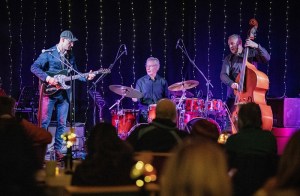
He turned up at the John Wetton tribute gig last year, performing ‘Let’s Stick Together’ alongside Phil Manzanera and Chris Difford, and now he’s joined up with his old drum tech, German ex-pat guitarist Pete Roth, plus bassist (usually on acoustic but here on electric) Mike Pratt, for some low-key trio gigs.

His recent show at the 606 was the busiest your correspondent had seen Chelsea’s treasured jazz club for years. Roth’s website describes his music as ‘jazz without borders’, and it’s a pretty good summary – they generally avoid fusion clichés like the plague, sounding more like John Abercrombie’s organ trio than anything Bruford recorded with Allan Holdsworth.

His kit was a return to his youth – two tom-toms, angled snare, two cymbals. And he still has that prodigious, propulsive technique on the hi-hats and ride cymbal, even if his snare drum no longer particularly has that distinctive ‘clang’.

‘Billie’s Bounce’ featured Bruford’s trademark figures between the tom-toms and snare drum, and Roth’s organ patch and octave pedal were a novel touch. ‘How Insensitive’ developed from a freeform rubato opening into an Abercrombie-esque mood-jazz piece, though Pratt’s strident bass seemed a little out of place.

‘If Summer Had Its Ghosts’, first recorded by Bruford with Eddie Gomez and Ralph Towner, meshed odd-time fun with the blues, Roth’s guitar at its more Scofield-like. ‘Summertime’ came with a tricky vamp which Pratt and Roth rushed somewhat – never a problem for Bruford, while a section from Dvořák’s Symphony No. 9 was a slowburn success. Meanwhile band composition ‘Trio of Five’ (or was it ‘Fun’?) was another attractive if a little harmonically inert, vamp-based piece in their favourite 5/4.

Though there were times when Bruford seems to have lost a little of the fluidity of old, it seems churlish to judge a performance thus when the performer and loyal crowd are having so much fun.

The trio play at the Oxford Spin club later this month, and for some other selected dates next year – don’t miss. What an unexpected pleasure to see Bruford back.