The Cult Movie Club: Fletch @ 40

Quentin Tarantino recently drew an interesting comparison between the 1980s careers of Chevy Chase and Bill Murray.

Both had reputations for being difficult but it was Murray who sought ‘positive’/’learning’ scripts through the decade and early 1990s. Chase didn’t: his characters generally started out as wise-cracking assholes, and ended the films the same way.

And the always amusing ‘Fletch’ – a movingtheriver favourite which premiered 40 years ago this weekend – is exhibit A. Based on the 1974 novel by Gregory McDonald (who subsequently wrote ten other Fletch books), it came into existence when Michael Douglas got on board as producer (later to be replaced by his brother Peter) and Universal finally took it on after many false starts.

McDonald had star approval though, and Burt Reynolds, Mick Jagger, Richard Dreyfuss and Jeff Bridges nearly played Irwin R Fletcher, before Chevy got the nod. After a few lean years, he was hot in 1984 after the success of ‘National Lampoon’s Vacation’. In the meantime Andrew ‘Blazing Saddles’ Bergman had written a screenplay with uncredited help from Phil ‘All Of Me’ Alden Robinson too.

Director Michael Ritchie must take a lot of credit for the success of ‘Fletch’. Helmer of bittersweet classics ‘Smile’, ‘The Candidate’, ‘Downhill Racer’ and ‘Prime Cut’ (and, after ‘Fletch’, ‘The Golden Child’ and ‘Cool Runnings’), he keeps things moving fast and reportedly encouraged Chase’s surreal ad-libs. ‘Nugent. Ted Nugent’, was the first, apparently uttered totally spontaneously by Chevy.

His stoned delivery and anti-establishment wisecracks hit the spot time and time again. This writer always giggles when someone shoots out Fletch’s back windscreen and Chevy shouts ‘Thanks a lot!’, ditto the entire ‘airplane investigation’ scene. Chase is always one step ahead of the material, sharing a joke with the audience, assuming it’s intelligent and on his side.

But watching it again, ‘Fletch’ certainly seems more suitable for adults than teenagers (borne out by the fact that when I first saw it at the Putney Odeon during school summer holidays in 1985, the teens around me mainly threw popcorn and talked amongst themselves). The plot is hard to follow and the stakes never seem very high, despite the film’s noir leanings (one key character is named Stanwyk).

The film benefits from some excellent supporting turns – female co-star Dana Wheeler-Nicholson is delightfully natural (though weirdly didn’t make another movie for five years after ‘Fletch’) and Joe Don Baker, M Emmet Walsh, Geena Davis, Richard Libertini and George Wendt (RIP) do solid, enjoyable work.

Harold Faltermeyer’s memorable synth soundtrack still raises a smile. And though ‘Fletch’ would seem to be influenced by ‘Beverly Hills Cop’, it was actually shot around the same time as that Eddie Murphy vehicle, summer 1984, in and around Los Angeles during the Olympics.

‘Fletch’ was a surprisingly big hit, grossing around $60 million against an $8 million budget. Roger Ebert and Pauline Kael quite liked it, Gene Siskel loved it. Kevin ‘Clerks’ Smith tried and failed to reinvigorate the Fletch brand in the 1990s. But Jon Hamm has just played him in 2022’s ‘Confess, Fletch’ – any good? Doubt it… Peak Chevy is a hard act to follow.

1980s Rock/Pop Acts I Should Like But Don’t

Everyone knows a few: those acts that got great reviews, named some of your favourite bands as influences and sold a few records in the process, but there was just something about their music that you couldn’t hack.
Maybe it was their vocals, their outlook, their politics, their songwriting, or a mixture of all four.

Well I know some too. Here’s a totally subjective, wildly judgemental – no offence intended – list of 1980s pop and rock artists who leave me cold, despite most being critical and commercial successes. Believe me, I’ve tried. Like they could care less…

King’s X
My muso mates waxed lyrical about their tricky riffs and tight musicianship but I’ve never got beyond the guy’s not very good singing, their weirdly unmemorable songs and rather naff pomp-rock tendencies.

World Party
Perpetually spoken about in hushed tones of reverence when I was at college but their music singularly failed to grab, despite the Beatles/XTC/Prince influences, possibly due to Karl Wallinger’s rather wimpy voice. See also: Crowded House, REM, Waterboys

The Blow Monkeys
Somehow got filed under the ‘sophistipop’ banner courtesy of their flirtation with ‘slinky’ grooves and soul influences, but for me Dr Robert’s absurd voice and the lack of songwriting imagination never got them past first base. See also: Kane Gang, Simply Red, Johnny Hates Jazz, Black, The Big Dish.

Marillion
Decade-ending Season’s End had some brilliant moments but for me most of the Fish era was a succession of quite badly-played/badly-sung rip-offs of Gabriel-era Genesis. It Bites did it better and added some much-needed pizzazz and groove. See also: IQ, Jadis, Tony Banks/Chris Squire/Mike Rutherford solo albums…

Deacon Blue
I liked the soppier/poppier elements of their debut album Raintown but the game was up when the truly irritating ‘Wages Day’ and ‘Real Gone Kid’ swept the airwaves at the end of the decade. They took Prefab Sprout’s basic concept to the bank whilst shaving off the weird edges.

Paul McCartney
Sheer melodic brilliance time and time again of course, but for me his 1980s work generally flatters to deceive, outside of a few random favourites (‘Pipes Of Peace’, ‘Once Upon A Long Ago’). Yes, even the album he did with Elvis Costello (of whom more below…).

The Style Council
Only a musical moron would deny the power of ‘You’re The Best Thing’ and ‘Walls Come Tumbling Down’ and you have to admire Paul Weller’s songcraft, politics, guitar playing and ability to laugh at himself, but generally it was hard to shake off the naffness. Mick Talbot must take a lot of the blame…

Mick Jagger
He employed some of my favourite producers and musicians (Jeff Beck, Sakamoto, Bill Laswell, Herbie Hancock, Doug Wimbish, Simon Phillips etc. etc.) but failed to produce even one memorable or interesting single or album track during the 1980s. See also: Pete Townshend, Eric Clapton, Nick Heyward, Jerry Harrison

Pages
This yacht rock supergroup had a great singer (Richard Page) and sh*t-hot musicians (Vinnie Colaiuta, Jay Graydon, Jeff Porcaro, Steve Lukather etc.) but the songs weren’t strong or memorable enough. See also: most of Toto, Mr Mister

Elvis Costello
Weirdly his ‘Less Than Zero’ was one of the first singles I loved as a kid, but his desperation to be a serious ’80s ‘artist’ fell on deaf ears despite the fact that he obviously knew a lot of chords and retained some of that new-wave angst (but even I couldn’t resist his fine run of 1990s form, from the superb ‘London’s Brilliant Parade’ to Bacharach). See also: The Cars, The The, Squeeze.

Van Morrison
To my ears his 1980s music is like Joni Mitchell and John Martyn without the melodic/harmonic/lyrical depth, apart from the sublime ‘Rave On John Donne’. People tell me he always uses great bands though, but they often barely register…

Todd Rundgren
I’m more of a fan of his 1980s producing work (Pursuit Of Happiness, XTC etc) than his solo music. Never bought into this whole ‘he’s a genius’ thing, save the wonderful ‘The Verb To Love’ – but that’s from the 1970s, innit…? See also: Lenny Kravitz.

Depeche Mode
Yes they’ve got a few pop hooks, the Mute Records cred and ‘edgy’ image but never been able to shake off an ineffable naffness for me. And despite being ‘synth pioneers’, they didn’t seem to push the sonic envelope much in the 1980s at all. ‘Everything Counts’ was superb though and I got on board later with Ultra. See also: Kraftwerk, New Musik, Visage, Ultravox, New Order, Howard Jones

Pink Floyd
If you want to put me to sleep, put on any of Pink Floyd’s 1980s work. Bring back Syd. See also: Fleetwood Mac, Pink Floyd solo projects, except Nick Mason’s Fictitious Sports, which is brilliant…

Bad Brains
Dub/thrash/funk pioneers and a huge influence on bands I really like such as Living Colour, Fishbone and 24-7 Spyz, but their music seems a little amateurish to me and, again, their singer was not blessed with a great set of pipes (unlike the singers of bands above).

Housemartins
Fondly remembered until you actually hear those singles again – ‘Build’, ‘Happy Hour’, ‘Caravan Of Love’. Annoying, a bit puny, and apparently the more irritating side of the C-86 generation.

The Jesus and Mary Chain
Bowie summed them up well for me: ‘I tried the Jesus and Mary Chain but I just couldn’t believe it. It’s awful! It was so sophomoric – like the Velvets without Lou. I just know that they’re kids from Croydon! I just can’t buy it…’

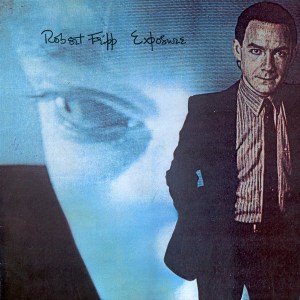
Robert Fripp: Exposure (The Definitive Edition) @ 40

Fripp’s debut solo album, originally recorded at New York’s Hit Factory between January 1978 and January 1979, has endured endless tinkering from the artist including various remixes/reversions.

But his 1985 (or should that be 1983?) remix, carried out at London’s Marcus Studios alongside Brad Davies, is the best.

But calling Fripp completists: is this version of Exposure even available on any format apart from the original cassette? (Thank goodness I still have my copy, signed by Fripp at the Virgin Megastore circa 1988, because I bought the noughties CD version to find that it featured completely different vocal takes, and the current streaming version is just as obtuse…).

The 1985 version of Exposure adds some sonic wallop to the drums, pushes Barry Andrews’ keyboards way back in the mix, comps the best of Daryl Hall and Peter Hammill’s vocals and features arguably Peter Gabriel’s best ever version of ‘Here Comes The Flood’ (with Frippertronics prelude).

It’s also a completely personal album, Fripp’s Face Value, the musings of an uptight Englishman in NYC, a prog/fusion version of ‘Annie Hall’. There are funny vocal interjections/indiscretions from his mother (‘You never remember happy things’), Fripp himself (‘Incredibly dismal, pathetic chord sequence’) and Eno (‘Can I play you some new things that I think could be commercial?’).

Gabriel fluffs the opening of ‘Here Comes The Flood’, Hall layers his vocals in strikingly avant-garde fashion, JG Bennett’s words are often layered in (with permission from his widow), arguments are eavesdropped upon and there are striking ‘audio verite’ sections. And lots of Frippertronics.

Fripp also uses silence to great effect. Don’t play this album too loud. But then there are the gorgeous ballads, ‘North Star’, featuring delightful pedal steel from Sid McGinnis and wonderful Hall vocals, and ‘Mary’, featuring Terre Roche (she also screams away on the cool reversion of Gabriel/Fripp’s title track).

And drummers: you gotta hear this album. Forget Narada Michael Walden’s playing with Weather Report, Jeff Beck, Tommy Bolin and the Mahavishnu Orchestra – this is his most outrageously brilliant drumming on record. Phil Collins plays well too, as do Allan Schwartzberg and Jerry Marotta.

1985 was a good year for Fripp. Alongside this fantastic Exposure remix, he met future wife Toyah, recorded some brilliant stuff with David Sylvian and also set up his ‘study group’ The League Of Crafty Guitarists.