The Cult Movie Club: O.C. And Stiggs (1987)

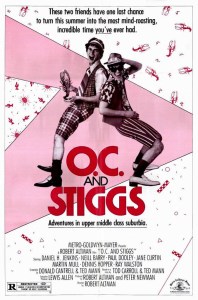
It’s an interesting pitch: Robert Altman, director of ‘The Long Goodbye’, ‘Nashville’ and ‘M*A*S*H’, does a 1980s teen movie.

And, true to form, ‘O.C. And Stiggs’ ended up as a fascinating, completely unpredictable viewing experience. It’s the ‘1941’ of teenage films.

But it was also one of the great filmmaker’s biggest flops, not helped by the fact that it inexplicably received an ‘R’ rating.

Remarkably, it was the only movie Altman made for a major studio between ‘Popeye’ in 1980 and ‘The Player’ in 1992.

Based on a series of National Lampoon magazine stories and financed by MGM, it was shot in summer 1983 (predating the first John Hughes-directed movie by almost a year) but didn’t creep out until 1987.

Presumably MGM were looking for something like ‘Porky’s’ or ‘Fast Times At Ridgemont High’, but what they got was pure Altman. In fact the film feels very much part of the 1970s rather than 1980s.

He only devotes one short paragraph to the film in the book ‘Altman On Altman’: ‘I agreed to do it because I hated teenage movies so much. I thought I’d do it as a satire of teenage movies.’

Set in Phoenix, Arizona, it concerns a couple of unhappy, smart-ass teens nicely played by Daniel Jenkins and Neill Barry who declare war on the family of finance magnate Randall Schwab for cancelling the old-age insurance of OC’s grandfather.

Inexplicably, both kids are also obsessed by the music of Nigerian bandleader/multi-instrumentalist King Sunny Ade, so we get an excellent soundtrack, a nice bit of concert footage in the style of ‘Nashville’, and a cameo from the man himself.

But mainly the movie is a pretty cutting satire of a suburban America mainly populated by Vietnam vets, self-obsessed parents, clueless teenagers and winos. And, being an Altman film, there’s also a myriad of interesting, funny details which most of the contemporary critics completely missed.

Dennis Hopper – during his full-on booze blow-out era – reprises his ‘Apocalypse Now’ role, complete with his own theme song parodying Doors’ ‘The End’ (later there’s even a silly ‘Ride Of The Valkyries’ spoof).

Other interesting cameos include Jon ‘Pretty In Pink’ Cryer making his film debut, ‘Saturday Night Live’ veteran Jane Curtin, Alan Autry reprising his role from Walter Hill’s ‘Southern Comfort’ while a teenage Cynthia ‘Sex And The City’ Dixon gets a song and dance routine. Melvin Van Peebles and Martin Mull show up too.

According to Cryer, the film was mainly improvised, with Altman encouraging long takes and free movement from the actors. It’s a joy to look at, with those beautiful, wide-angle shots a la ‘3 Women’ and ‘Nashville’, and lively, colourful production design.

A YouTube comment claims that it’s the worst movie of all time. No way. It’s not even the worst Altman movie – surely that must be ‘The Room’.

Still, obviously ‘O.C. And Stiggs’ is not the first Altman film to watch if you’re not already aware of his stuff. But if you love ‘The Player’, ‘Short Cuts’, ‘Nashville’ or ‘The Long Goodbye’, it’s well worth a look.

It’s currently available to watch for free on YouTube in very high quality.

China Crisis: Chasing The Demos

Musicians often talk about demos having a charm and freshness that are missing from the final versions.

It’s the ‘chase the demo’ syndrome – capturing an initial burst of inspiration often gets lost in translation when recording in a posh studio with almost unlimited potential for overdubbing.

It’s unlikely that Paddy McAloon’s demo of ‘Bearpark’, with its primitive drum machine, crap synth and lovely, understated vocal, could ever really be improved upon (and probably why Prefab Sprout never recorded it).

Meanwhile, David Bowie famously claimed to prefer his demo of ‘Loving The Alien’ to the finished version. Conversely, when you hear Love and Money’s Strange Kind Of Love demos, you can totally appreciate the hoops that producer Gary Katz put James Grant through to get the best possible vocal and guitar performances.

But it’s pretty rare for a band to release an official album of demos, part of what makes China Crisis’s Demos so interesting. It shows how the band were arguably not particularly well served by record company nor producers (Walter Becker notwithstanding). Virgin never seemed sure if they were Culture Club or OMD.

(Maybe the fact that they became a ‘proper’ band around 1983 was not a great commercial decision too, as excellent as their rhythm section was. Perhaps they’d have been more popular as a ‘synth duo’…)

Most of the tracks on Demos are ‘mood pieces’ without vocals. They all pretty much work as instrumentals, and also reveal Gary Daly and Eddie Lundon as top-notch melody writers and gifted synth sculptors.

The early Eno-influenced stuff is fun but the Flaunt The Imperfection era is fascinating. ‘Wall Of God’ was originally almost an ambient piece. ‘Black Man Ray’ is pure-pop comfort listening. No wonder everyone who heard the demo said ‘Hit!’. Arguably the finished version doesn’t add that much.

Meanwhile ‘Bigger The Punch I’m Feeling’ is Erik Satie meets ‘The Love Boat’, sans that lovely middle eight which was presumably put together by Becker.

The What Price Paradise stuff shows how that album was botched. They clearly got the wrong producers in (Langer and Winstanley). ‘Victims of a cruel medical experiment’, to quote the memorable Q review!

The demo of ‘Arizona Sky’ is altogether more agreeable than the final version, but shows that even then the chorus never quite worked. ‘Safe As Houses’ is charming, as is ‘Best Kept Secret’, originally without the shuffle groove.

The Diary Of A Hollow Horse stuff is all full-band demos, possibly completely live in the studio with a few keyboard overdubs. Again they demonstrate that Virgin arguably cocked up that fine album.

‘St Saviour Square’ works well without all of the ‘Aural Exciter’ rubbish used on the final version. ‘Sweet Charity’, ‘Singing The Praises’, ‘Red Letter Day’ and ‘In Northern Skies’ have complete arrangements and full lyrics – in fact it sounds like they kept Kevin Wilkinson’s drums from those demos and rerecorded everything else.

‘Stranger By Nature’ is a completely different – and inferior – song to the album version, and in straight 4/4, while the title track works superbly as an acoustic guitar ballad. Becker possibly missed a track there.

Demos is a great listen and merely confirms that China Crisis were one of the most underrated and commercially underperforming acts of the ‘80s.

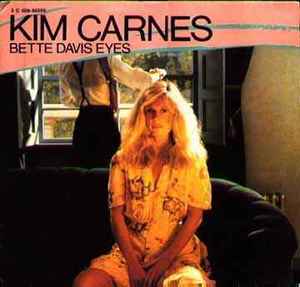
Kim Carnes: ‘Bette Davis Eyes’ @ 45

There’s a whole host of ‘I didn’t know it was a cover version’ 1980s hits but ‘Bette Davis Eyes’ may be the weirdest of all.
LA-born Kim Carnes took it to #1 in the Billboard Hot 100 45 years ago this month and created one of the decade’s most memorable singles.

But it started life as a ramshackle, country-tinged shuffle performed by singer/songwriter Jackie DeShannon on her 1974 album New Arrangement.

Co-written by DeShannon and Donna Weiss, it concerned Hollywood femme fatale Bette Davis, who was nicknamed ‘The Eyes’ at the height of her fame in the late 1930s.

The song features some novel, enigmatic lyrics like ‘All the boys think she’s a spy’, ‘She’ll turn the music on you’ and ‘She’ll unease you’ (is there such an verb?) which seem totally out of sync with DeShannon’s artless vocals and the barrelhouse piano.

But when Carnes and her producer Val Garay proposed a cover of it in late 1980 for the singer’s sixth studio album Mistaken Identity, they came up with something truly special. It was recorded at Garay’s Record One Studios in LA. He had previously worked with James Taylor, Linda Ronstadt and Bonnie Raitt.

Apparently a ‘straight’ cover version was considered, but quickly jettisoned. Instead Garay, Carnes and synth player Bill Cuomo – playing the fairly new Prophet-5 – came up with a complex, new-wave-tinged arrangement mostly centred around B-flat, D-minor and C, with unexpected drops to F.

Carnes claims the band played it completely live in the studio, and got it on the second take. There’s notable guitar from session legend Waddy Wachtel and Craig Krampf deserves plaudits for his tasty drumming. But it’s Carnes’ vocals that steal the show, truly ‘playing the part’.

Released in March ’81, the song spent nine weeks at #1 on the Billboard Hot 100 starting on 16 May 1981, and also reached #10 in the UK (her only UK top 40 hit to date).

It was the lead-off track from Mistaken Identity which also went to #1 for four weeks – remarkably it was only the second album of Carnes’ to chart after nearly ten years as a solo artist. That’s called building a career.

Bette Davis herself apparently loved the song, sending Carnes, DeShannon and Weiss a letter thanking them for making her cool in her grandson’s eyes.

‘Bette Davis Eyes’ won Song of the Year and Record of the Year at the 1982 Grammys. Carnes was still basking in its glory when she sang on ‘We Are The World’ in 1985.

Oh, and DeShannon possibly paid the ultimate compliment by doing her own take on the Carnes version (in a different key) in 2011…

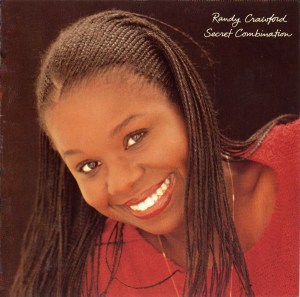
Randy Crawford: Secret Combination @ 45

In 1981, when jazz, pop and R’n’B were fusing to create a very agreeable kind of high-gloss yacht rock, us Brits went for the WEA gang (David Sanborn, Patrice Rushen, Manhattan Transfer, George Benson, Al Jarreau et al) in a big way.

But Georgia-born Randy Crawford probably sold the most records. In her own modest way, she was one of the great stars of 1980s soul, and her beautiful, flawless voice and joyful presence added a lot to the decade.

‘Street Life’, her collaboration with The Crusaders, went top 5 in autumn 1979, and movingtheriver will never forget first hearing her version of ‘Imagine’ on the radio a few years later.

But Secret Combination, released 45 years ago this month and produced by Tommy LiPuma, was Crawford’s biggest album success here, hitting #2 (though weirdly it didn’t cross over in the US, only making #12 on the Billboard R’n’B chart).

This writer’s dad didn’t buy much 1980s soul but Secret Combination was around all the time early in the decade. It seemed so lush and exotic, sheer luxury soul/pop with gorgeous arrangements/electric piano by Leon Pendarvis and the slinky Abe Laboriel/Jeff Porcaro/Dean Parks/Lenny Castro rhythm section.

But listening back today, it does seem overshadowed by three all-time classics (‘You Might Need Somebody’, ‘Rainy Night In Georgia’, ‘Rio De Janeiro Blue’), with too much filler and too many ballads (a clue is the huge amount of credited songwriters).

But even the most humdrum tracks are enlivened by striking bits of arrangement, like the superb strings/flutes and unexpected post-chorus key change on ‘That’s How Heartaches Are Made’ (also listen out for a rare Porcaro flub – wonder why they left it in…).

Crawford was a star of the 1981 Montreux Jazz Festival, documented on the classic Casino Lights live album, and then she toured the UK in early 1982 including a famous televised gig at the Theatre Royal Drury Lane (sadly currently missing from BBC iPlayer).

Her next two albums – Windsong and Nightline – repeated the Secret Combination formula (with similar issues in the songwriting department) and were fairly successful in the UK too, and then she had that freak (self-penned) massive hit ‘Almaz’ in 1986.