Book Launch: John McLaughlin (From Miles and Mahavishnu to The 4th Dimension)

Matt’s new book ‘John McLaughlin: From Miles and Mahavishnu to The 4th Dimension’ is available now and can be ordered via the links below.

‘A must-have in every aspiring musician’s personal library.’ Billy Cobham, Mahavishnu Orchestra drummer

‘A wonderful insight into a true innovator and colossus of the guitar.’ Mark King, Level 42 bassist/vocalist

‘Scrupulously researched… A fluent career overview.’ **** MOJO, December 2023

‘The most comprehensive overview of McLaughlin’s career to make it into print thus far.’ **** Shindig!, January 2024

‘Comprehensive and thoroughly researched, Phillips’ book is a revelation. A must-read for guitar aficionados and McLaughlin devotees.’ Bill Milkowski, author of ‘Jaco’ and ‘Michael Brecker’

‘Riveting… Meticulous storytelling… The book is not just a narrative, it’s a visual feast.’ Jazz In Europe

‘Paints the fullest picture yet of the guitarist’s life.’ Jazzed

‘Thorough and impassioned… The first book to fully illuminate the least-appreciated, least-documented periods in the extraordinary career of this wondrously free-spirited, prolific, perpetually questing artist.’ Booklist

UK orders:

UK Bookshops

Rowman & Littlefield (Enter discount code RLFANDF30 to save 30% off the list price)

World Of Books

Hive

Blackwell’s

Waterstones

Foyles

WHSmith

USA orders:

Rowman & Littlefield (Enter discount code RLFANDF30 to save 30% off the list price)

Barnes & Noble

BooksaMillion

It’s an exhaustive look at John’s catalogue, live career and spiritual life, with an introductory note by Robert Fripp, testimonials from Mark King, Billy Cobham and Bill Milkowski, interviews with key collaborators and lots of exclusive photographs. I cover John’s early sessions with David Bowie and Donovan, his remarkable sideman work with Tony Williams and Miles Davis, the fabled solo career fronting The Mahavishnu Orchestra and Shakti and various projects alongside the likes of Sting, Jeff Beck, Herbie Hancock and Carlos Santana.

If you’ve enjoyed this website in any capacity, please consider buying this book and getting it to the toppermost of the poppermost… Thank you!

Frank Zappa: London Symphony Orchestra @ 40

In the last ten years of his life, Frank Zappa released a series of orchestral albums, now mainly forgotten by all but his most ardent fans. But they are vital constituents of his work, and may surprise listeners who only know him as a ‘rock’ musician.

A key artefact is the self-financed London Symphony Orchestra, the first volume of which was released 40 years ago (the second followed in 1987, before both were rereleased on CD and streaming platforms in 2012) and my pick of Frank’s ‘classical’ works.

It was recorded between 12-14 January 1983 at Twickenham Film Studios in South West London, on the banks of the Thames. The night before, on 11 January, the orchestra (plus Ed Mann and Chad Wackerman from Frank’s ‘rock’ band) performed the repertoire at the Barbican. Check out how the BBC reported that here.

Zappa has spoken candidly about the difficulties he had rehearsing and recording this music (percussionist Mann reports that the orchestra had a whole week of rehearsal – almost unheard of – at the Hammersmith Odeon and that he had been given his parts a month before rehearsals so that he could practice at home), and the myriad editing and studio tricks that had to be utilised before he was happy. ‘The Big Note’ tells the fascinating full story.

The music was split into premiere works and older material. The standout is probably ‘Bogus Pomp’, which reworks much of the orchestral stuff from ‘200 Motels’ to stunning effect. ‘Envelopes’ will be familiar to fans of the previous year’s Ship Arriving Too Late album.

It’s a blast of challenging, exciting music, even if you’re not a fan of ‘classical’ music. Excited by Varese, Boulez, Messiaen, Ives, Bartok and Stravinsky, amongst others, Zappa dealt in timbre and ‘blocks’ of sound, featuring big chords and big percussion sounds, bypassing cliché and having no truck with the notion that it was ‘difficult’ music. If you liked it, bitchin’. If you didn’t, there was a lot of other stuff out there.

Another bit of good news is that these two albums sound absolutely superb in their current incarnation on streaming services and CD, leaving the following year’s Perfect Stranger in the dust. All of those post-production tricks paid off. Thanks to Frank.

Rewind & Play: Thelonious Monk

It’s a great era for jazz documentaries. The latest exhibit is Alain Gomis’s ‘Rewind & Play: Thelonious Monk’, based around some long-lost footage of the jazz piano giant filming a French TV special at the end of his 1969 European tour.

Some of the edited footage was shown on French TV as ‘Jazz Portraits: Thelonious Monk’ in 1970 (and used in Charlotte Zwerin’s classic 1989 Monk doc ‘Straight No Chaser’), but this film reinstates many outtakes.

We see a broadly-smiling Monk touching down at the airport, travelling by car to the TV studio with wife Nellie and tour manager Jules Colomby, nervously drinking in a hotel bar, petting a dog, eating a boiled egg.

Then Monk is interviewed in the studio by Henri Renaud, a section that is awkward, embarrassing, occasionally a little offensive. Monk answers the questions willingly, honestly and with no little humour. But, as endless retakes are suggested, he becomes frustrated, visibly tiring when no answer is deemed good enough without any explanation given.

(Robin D.G. Kelley has a far more sympathetic take on these proceedings in his peerless Monk biography, though he may well have not seen the outtakes we are privy too here.)

But the sections that really elevate ‘Rewind & Play: Thelonious Monk’ to classic status are the solo piano performances. There are superb renditions of ‘Reflections’, ‘Light Blue’, ‘Nice Work If You Can Get It’, ‘Blue Monk’, ‘Crepescule With Nellie’ and ‘Played Twice’.

Seen on the big screen, we get an oft-forgotten impression of the sheer weight of Monk’s playing, sweat pouring down his face. It’s moving, exciting, essential viewing if you are a fan or just a fan of great piano playing, and telling too: a few months later, he informed his wife that he was ‘really very ill’ and was never quite the same again.

Gig Review: John McLaughlin/Shakti @ Hammersmith Odeon, 28 June 2023

Late July 1976: if you were a British jazz/rock fan, all roads led to the legendary Hammersmith Odeon in West London.

The Billy Cobham/George Duke Band opened three nights of music, followed by John McLaughlin’s Shakti and then the headliners Weather Report. The encores often featured members of all three fusion supergroups.

So how apt that a reformed Shakti should appear at the same venue almost exactly 47 years on. And what a relief that they chose the Hammersmith Odeon (it’ll always be the Odeon to me, I can’t call it the ‘Apollo’…) to kick off this hugely anticipated 50th anniversary tour rather than the predictable Barbican or Royal Festival Hall. Accordingly, this was not your usual ‘jazz’ crowd after a little ‘culture’ – it was a vocal, refreshingly multicultural audience.

An attempt to marry ‘Western’/blues-influenced timbres with both North/South Indian rhythmic/melodic approaches, Shakti released three albums between 1976 and 1978, then reformed as Remember Shakti in 1998 for three more tours and subsequent live albums.

For this iteration, promoting brand new album This Moment, 81-year-old guitar master McLaughlin was joined by regular collaborators Zakir Hussain on tabla, Shankar Mahadevan on vocals and Selvaganesh Vinayakram on sundry percussion, plus youthful new recruit Ganesh Rajagopalan on violin.

There was combustive interplay on the opener ‘5 In The Morning, 6 In The Afternoon’, McLaughlin going back to his youth with some potent blues licks, bringing to mind his playing on Miles’s ‘Right Off’. Is he using an amp again, after years of firing his guitar straight through the PA?

An exquisite ‘Zakir’ came with heartfelt words from John to his friend. ‘Anna’, described as a ‘golden goldie’ by Hussain, featured flawlessly-played classical Indian lines and a brilliantly fluid solo from Rajagopalan.

John’s guitar gained a little more distortion in time for the violinist’s composition ‘Mohanam’, and by the middle of the gig he was in his element, dropping in references to ‘Lila’s Dance’ and Lee Morgan’s ‘The Sidewinder’. New track ‘Bending The Rules’ even saw John inject a lick from his 1980s classic ‘Florianapolis’. ‘Sakhi’ and ‘Lotus Feet’ were very touching, and some incendiary konnakol percussion duels closed the show on ‘Finding The Way’.

There was light and shade, fury and meditation at this excellent gig – the only downside was the incessant filming with mobile phones. Is there no privacy/immediacy at these larger concerts? The Shakti story continues. Who would have predicted that five years ago? Their tour continues through Europe and into the US during August. Don’t miss.

Book Review: Formation (Building A Personal Canon Part 1) by Brad Mehldau

There’s a history of controversial jazz autobiographies that would have to include Mezz Mezzrow’s ‘Really The Blues’, Charles Mingus’s ‘Beneath The Underdog’, Sidney Bechet’s ‘Treat It Gentle’, Billie Holiday’s ‘Lady Sings The Blues’, Dizzy Gillespie’s ‘Dizzy’ and Art Pepper’s ‘Straight Life’.

It may be somewhat of a surprise to report that the apparently mild-mannered, urbane Mehldau – modern master jazz pianist and probably best known for his majestic Radiohead and Beatles covers – joins that list with ‘Formation’, charting his musical and personal rites of passage from the mid-’70s to late 1990s.

The general fan may have heard Mehldau make vague references to his previous junkie life – here we get the full story, and it’s both revelatory and somewhat disturbing. Also, unlike some of the books listed above, ‘Formation’ is certainly not ghostwritten, hardly a surprise when one considers some of the extensive liner essays Mehldau has penned, particularly 2000’s Places.

Growing up in mid-‘70s New Hampshire, Mehldau’s young life is all very Judy Blume, soundtracked by Billy Joel, Beethoven, Fleetwood Mac, the Eagles, Steve Miller and Supertramp, with the twin undercurrents of organised religion and the Cold War.

At the turn of the new decade, piano lessons become increasingly important and he becomes a major prog fan, Pink Floyd and Rush becoming key touchstones, though he also relates the loneliness in his own life to the music of Miles, Billie Holiday and Brahms.

A move to Hartford, Connecticut, precipitates the first major instances of bullying, outlined in shocking detail, a theme that will echo throughout his time in formal education. It’s hardly surprising that alcohol and drug use become regular companions during his late-teenage life, as do doubts about his sexuality.

In the age of Reagan, Stallone and Schwarzenegger, Mehldau becomes a true ‘outsider artist’, finding solace in the works of Thomas Mann, the Beats, German philosophers and Bob Dylan. Meanwhile high school hastens the flowering of his jazz piano talent.

From there, it’s a short ride to Mehldau’s relocation to New York in the late 1980s, and his jazz piano initiation at great lost venues such as Augie’s and the Village Gate. It’s hard to think of another book which better explores that fabled NYC jazz scene of the late 1980s to mid 1990s, nor one that better explores the thought processes and doubts of a nascent jazz pianist.

There are touching tributes to his piano teachers and also contemporary ivory-ticklers such as Larry Goldings, Bill Charlap and Kevin Hays. The book closes with lengthy accounts of his time playing with Joshua Redman, David Sanchez and Pat Metheny, undertaken in the shadow of heroin addiction, though the book ends with hope and a sense of rebirth.

Though always engaging, Mehldau’s writing style is wildly unpredictable – sometimes intimate and conversational, sometimes dry and analytical, often shockingly fly, with scant consideration for political correctness. But his intelligence flies off the page, hardly a surprise to anyone who’s heard him weave magic at the piano.

He’s honest about his own faults as well as the faults of others, and there’s no getting away from it – he paints a mostly harsh, violent picture of America in the 1980s, certainly no country for old men or those of a sensitive disposition. ‘Formation’ is also graced with the author’s own sizeable photo collection.

A fine if sometimes shocking addition to the pantheon of great jazz autobiographies, we eagerly await part two of ‘Formation’. Meanwhile Brad’s playing career goes from strength to strength – I’m looking forward to the Wigmore Hall solo gig in September.

Nearly the Greatest Pop Albums of the 1980s (The One-Crap-Track Theory)

It’s been a bit of a movingtheriver obsession over the past few weeks as summer finally kicks in and the album format makes a seasonal comeback.
You’re enjoying the music, hailing a ‘classic’ record and then…damn. It’s the track you always skip, the runt of the collection, the song that tarnishes a perfectly good album.

Maybe the band was ‘letting their hair down’ after a few pints in the pub down the road. Maybe it was the drummer/producer/bass player’s vanity track. Maybe it’s the overplayed hit. Maybe the album sequencing isn’t quite right. To be honest, often it’s just something irrational that you can’t quite put your finger on.

For whatever reason, here are movingtheriver’s almost perfect 1980s ‘pop’ albums, and the tracks that just don’t quite sit right:

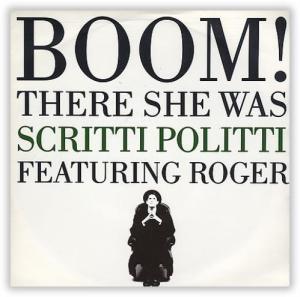
Scritti Politti: Provision (skipped track: ‘Boom! There She Was’)

Prefab Sprout: Steve McQueen (skipped track: ‘Horsin’ Around’)

Prefab Sprout: Protest Songs (skipped track: ‘Tiffany’s’)

Prefab Sprout: From Langley Park To Memphis (skipped track: ‘I Remember That’)

Talking Heads: Remain In Light (skipped track: ‘The Overload’)

Phil Collins: Face Value (skipped track: ‘I’m Not Moving’)

Propaganda: A Secret Wish (skipped track: ‘Jewel’)

Wendy & Lisa: Fruit At The Bottom (skipped track: ‘Tears Of Joy’)

China Crisis: Diary Of A Hollow Horse (skipped track: ‘Age Old Need’)

Danny Wilson: Meet Danny Wilson (skipped track: ‘Nothing Ever Goes To Plan’)

Danny Wilson: Bebop Moptop (skipped track: ‘NYC Shanty’)

Frankie Goes To Hollywood: Liverpool (skipped track: ‘Watching The Wildlife’)

David Bowie: Let’s Dance (skipped track: ‘Cat People’)

Kate Bush: Hounds Of Love (skipped track: ‘Running Up That Hill’)

The Police: Synchronicity (skipped track: ‘Every Breath You Take’, and sometimes ‘Mother’ too…)

Joni Mitchell: Wild Things Run Fast (skipped track: ‘Solid Love’)

Roxy Music: Avalon (skipped track: ‘Take A Chance With Me’, but I love the intro…)

Hue and Cry: Remote (skipped track: the title track)

Prince: Batman (skipped track: ‘Arms Of Orion’)

Swing Out Sister: It’s Better To Travel (skipped track: ‘Breakout’)

Thomas Dolby: The Golden Age Of Wireless (skipped track: ‘Windpower’)

(In the name of balance, I’ve listed my all-thriller/no-filler 1980s albums here. )

Do chime in with the tracks that, for you, muck up otherwise excellent 1980s albums.

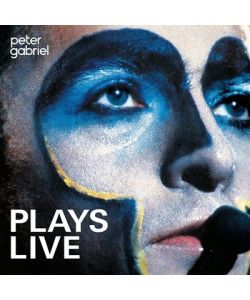
Peter Gabriel: Plays Live 40 Years On

PG’s first live album – released 40 years ago this week – touched down incongruously during 1983’s Summer of Fun, crashing into the UK chart at #9 alongside Let’s Dance and Thriller (but Japan’s posthumous live album Oil On Canvas did even better – it was the week’s highest new entry at #5).

Plays Live was ostensibly recorded during four dates of the American tour in December 1982. Gabriel had taken some choreography lessons and often ventured into the audience for ‘Lay Your Hands On Me’, sometimes ‘falling backwards’ from the stage in the manner of those corporate team-building/trust exercises.

But he was very transparent about there being a lot of ‘cheating’ on this album – many overdubs/vocal corrections were undertaken with the assistance of co-producer Peter Walsh (fresh from Simple Minds’ New Gold Dream) at Gabriel’s Ashcombe House studios near Bath.

Plays Live hangs together very well – it’s immaculately sequenced and you certainly get your money’s worth, clocking in at a shade under 90 minutes. The tracks taken from Peter Gabriel IV AKA Security are a huge improvement on the studio versions. ‘Humdrum’, ‘Not One Of Us’, ‘No Self Control’ and ‘DIY’ are similarly transformed to become radical, vital updates.

There’s even an excellent Melt outtake called ‘I Go Swimming’. And when the band are freed from the sequencers and drum machines, they really sound like a band – check out the ‘floating’ tempos of ‘Humdrum’ and a few other tracks.

Jerry Marotta’s huge drum sound and (quite advanced) used of drum machines were not everyone’s cup of tea – Bill Bruford was still kvetching about it to Modern Drummer magazine during a 1989 interview. Both Marotta and synthesist Larry Fast, a key collaborator, were given the boot by Gabriel at the end of 1983, to much consternation.

My entrée into Plays Live was the (remixed) single release of ‘I Don’t Remember’ courtesy of its video being shown on ‘The Max Headroom Show’ in 1985. Marcello Anciano’s disturbing clip featured nude dancers from the Rational Theatre Company and some figures inspired by the artist/sculptor Malcolm Poynter. It’s hardly surprising that it missed the top 40…

John Giblin (1952-2023): Seven Of The Best

Phil Collins and John, circa 1980

The period roughly between 1978 and 1985 was a golden age if you were a British or American session musician.

The mission: to sprinkle your unique brand of fairy dust over a song or album. You lived on your wits and gambled on your talent but your employers were more often than not creative artists at the top of their game.

As far as UK bassists go, Glasgow-born John Giblin, who has died at the age of 72, was always near the top of the list. He was famed for his melodic fretless bass style (though later pretty much disowned it, moving to five-string fretted and stand-up acoustic basses), starting his career with ex-Yes guitarist Pete Banks. He then hooked up with Brand X and Phil Collins and the rest is history.

After prestigious work with Kate Bush, John Martyn and Peter Gabriel, Giblin joined Simple Minds as full-time member in summer 1985 but left three years later after a falling out with producer Trevor Horn during the recording of Street Fighting Years. He also ran a much-loved rehearsal studio called Barwell Court near Chessington, Surrey.

Of course he was influenced by Jaco Pastorius but didn’t really sound like him. (Anyway, he traced that particular line from Eberhard Weber, who apparently claims Jaco ripped HIM off!) Giblin played memorable bass on tens of key tracks but here are seven that particularly registered with your correspondent, in chronological order.

7. John Martyn: ‘Some People Are Crazy’
movingtheriver’s introduction to Giblin’s work, he delivers a brilliant fretless commentary here, though I’m not even sure I realised it was a ‘bass’ circa 1985 – just superb music. It’s funky, flowing and also features those famed sliding harmonics, nicked from Ron Carter and Percy Jones. Giblin is also a talking head in the great Martyn documentary ‘Johnny Too Bad’.

6. Peter Gabriel: ‘Family Snapshot’
The whole of Gabriel III is of course a bass masterclass but Giblin and Gabriel fill in the backstory of the troubled political assassin to great effect in the moving final minute of this.

5. Kate Bush: ‘Breathing’
Just business as usual for Giblin on this classic Bush anti-nuclear ballad, weaving arch, memorable lines around her vocals. Also listen out for his closing, sepulchral E-flat.

4. Phil Collins: ‘Tomorrow Never Knows’
The much-ripped off (hello Pearl Jam) line that propelled one of the better Beatles cover versions.

3. Simple Minds: ‘Let It All Come Down’
Giblin didn’t get many composer credits but this co-write was always your correspondent’s favourite track on Street Fighting Years (Jim Kerr apparently wrote the words).

2. Kate Bush: ‘Love And Anger’
Kate again, and this time Giblin lets fly with some brilliant slap bass in the final few minutes alongside David Gilmour’s tasty guitar solo.

1. Scott Walker: ‘Tilt’
Demonstrating his post-’80s five-string style, Giblin enlivens Walker’s classic title track with some strikingly ‘out’ notes and a great sense of space.

The Cult Movie Club: Handgun (1983)

British writer/producer/director/actor Tony Garnett – who died in 2020 – was probably best known for his work with Ken Loach on groundbreaking projects like ‘Cathy Come Home’, ‘Kes’ and ‘Up The Junction’.
But his move to America in the early 1980s – after his debut, Birmingham-set feature ‘Prostitute’ – produced a quintessential ‘forbidden’ cult film, barely seen, not clipped on YouTube, poorly received/marketed and just squeaking out once on Channel 4 in the UK during the mid 1980s (the chances of it showing up on that terrestrial channel these days are precisely nil…).

But ‘Handgun’ – released 40 years ago this week – is also a fascinating, disturbing, gripping film, well worth reappraisal despite its notorious reputation. Garnett embarked on the movie after a period researching gun laws in Texas. He settled on the story of an open-hearted, homesick young teacher named Kathleen who has moved from the East Coast to Dallas. She meets a local guy – a lawyer – who rapes her at gunpoint (an attack that we don’t see). What follows is controversial but also somewhat unexpected.

The film features strikingly naturalistic performances in classic Garnett style, actors (including excellent leads Karen Young, later to turn up in ‘9 1/2 Weeks’, and Clayton Day) mingling with non-actors to disarming effect. Accordingly, Garnett mixes ‘classic’ filmmaking with near documentary footage. Meanwhile, Mike Post’s austere music adds grandeur. He’d just finished work on ‘The A Team’, ‘Magnum PI’ and ‘Hill Street Blues’!

Garnett intends to provoke. ‘Handgun’ very pointedly begins on Dealey Plaza, and the film looks at the role of the gun at the centre of American culture and its implied role in the subjugation of women and Native Americans. Note also the photo of John Lennon above Kathleen’s bed.

Some reviewers including ‘Time Out’ described ‘Handgun’ as exploitative. It’s actually a resolutely untitillating, moral movie which has resonance today in both the personal and political realms. But it certainly seems to have been let down with its marketing, including the dodgy poster above which takes it more into ‘I Spit On Your Grave’/’Ms. 45’ territory (but when did you last hear a woman’s voiceover on a movie trailer?)

‘Handgun’ got a paltry release in the UK and then crawled out a year later in the US with a strange new title ‘Deep In The Heart’, Warner Bros. focused on their other ‘rape revenge’ film, Clint Eastwood’s wretched ‘Sudden Impact’. But it lives on courtesy of a very good DVD print, one to look out for. Garnett moved back to Blighty at the end of the 1980s and went on to helm other brilliant TV shows such as ‘This Life’ and ‘The Cops’.

Further reading: ‘The Day The Music Died’ by Tony Garnett.

Prince: Sign “O” The Times Revisited

It’s possible that ‘Sign “O” The Times’ (the single) had the same effect on one generation of music lovers as ‘Waterloo Sunset’, ‘Arnold Layne’, ‘Purple Haze’ or ‘Penny Lane/Strawberry Fields’ (all released between March and May 1967) did on another.

Released on 13 March 1987, it’s hard to think of another top 10 single of the 1980s with as much as space in it (and uncharacteristically deep reverb on Prince’s vocals, presumably utilising the famous Sunset Sound echo chamber). Apart from his guitar and voice, it was all performed on a Fairlight synth/sampler.

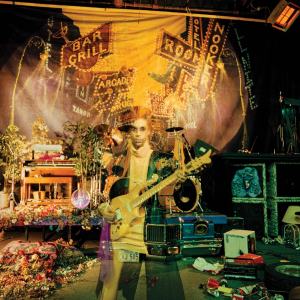
Adorned with a back cover featuring Cat Glover, the single drew lyrical inspiration from various news items read in The LA Times during the week of Monday 14 July 1986: Reagan’s ‘Star Wars’ program, the AIDS crisis, the investigation into January’s space shuttle disaster and the inner-city drug wars.

Lisa Coleman reports that she heard Prince’s amazing programmed drum groove blasting out of the venue speakers during a soundcheck in Denver in early July 1986.

Famously barred from releasing a three-album set by Warner Bros. – a process outlined in detail in Duane Tudahl’s wonderful recent book – Prince regrouped, quickly creating new material and then making the title track his new double album’s centrepiece.

Sign became the sound of summer 1987 in my corner of west London. Prince had been on my radar before – Parade was a definite sleeper – but this was it. And yet it still seems one of those ‘classic’ albums that gets talked about more than listened to.

So I listened to it. In one sitting. Probably for the first time in about five years. It’s probably even better than I remembered it. Has anyone ever captured a ‘party in the studio’ vibe better than Prince on ‘Housequake’ and ‘Play In The Sunshine’? And usually he only had Susannah Melvoin and engineer Susan Rogers for company. Of course this was in a sense a throwback to classic Little Richard and Chuck Berry, as well as James Brown tracks such as ‘Get Up Offa That Thing’.

He begins each side with groundbreaking tracks for him that took a while to record. We’ve discussed ‘Sign’. Then there was ‘It’, actually his first song exclusively using the Fairlight (apart from his guitar and vocals). Then ‘U Got The Look’, which was drastically sped up at the eleventh hour, ratcheted up a few semitones. Then ‘The Cross’, written and recorded the day after the infamous Los Angeles earthquake of 12 July 1986. Prince’s drums on this track speed up a lot – Rogers reportedly noticed but decided not to point it out.

Rogers also reports that she occasionally badgered Prince about the seemingly ‘lo-fi’ nature of these recordings, but he didn’t budge, and the album benefits from that ‘unfinished’ quality, even if it features a lot less bass than most modern music.

Sign features probably Prince’s greatest music, but we could all debate which tracks could have been left off. I could do without ‘It’, ‘Forever In My Life’, ‘Slow Love’, ‘The Cross’, ‘Adore’ (and would have preferred ‘Power Fantastic’, ‘Dream Factory’, ‘Crucial’, ‘Sexual Suicide’ and ‘Good Love’, but Prince had long jettisoned them by early 1987…).

Also why does the superb album design get short shrift? It’s a key part of the package. Hail photographer Jeff Katz and graphic designer Laura (niece of Tommy) LiPuma.