40 years ago, gay artists weren’t just occasional visitors to the British pop charts – they were leading the agenda.
A famous top three of August 1984 featured George Michael at #1, Frankie Goes To Hollywood at #2 and Bronksi Beat’s ‘Smalltown Boy’ at #3.
Remarkably, the latter was also the Bronskis’ debut single, coming from debut album The Age Of Consent. And what a trailblazing/timeless classic it is, danceable and tearjerking, with a once-in-a-lifetime vocal performance from Jimmy Somerville and that winning chord sequence.
Bernard Rose’s sombre video (which has had 121 million YouTube views at the time of writing) was obviously a huge part of the song’s success, combining the ‘realist’ style of Mike Leigh and Ken Loach with a few poetic touches to brilliant and moving effect.
Producer Mike Thorne’s role on the track is often undervalued too – there was a touch of his ‘Tainted Love’ in his bass sound and extensive use of top-end on synths and drums, and he also gets a pat on the back for leaving in a few mistakes (check out the shockingly-played synth lead line in the first 30 seconds, a section that also seems to speed up a lot).
The legacy of ‘Smalltown Boy’ is rather sad though – writers/co-founders Steve Bronski and Larry Steinbachek have both died recently, deaths that seems to have been somewhat under-reported in the media.
In this day and age, it’s weirdly reassuring to recommend an album which resolutely refuses to appear on streaming platforms or even CD.
So, at the time of writing, it has always ever been just a 1982 vinyl release for Rockin’ Jimmy & The Brothers Of The Night (widely available on Discogs).
Fronted by bespectacled Rockin’ Jimmy Byfield, they were a Tulsa-based bar band with country, blues and R’n’B influences, prowling similar territory as late Little Feat, JJ Cale, mid-‘70s Eric Clapton (who covered Byfield’s ‘Little Rachel’ on There’s One In Every Crowd), early Dire Straits, late-‘70s Ry Cooder and even ZZ Top at their most laidback.
Championed by Alexis Korner on his fabled Radio 1 show, Rockin’ Jimmy’s second and final album was one of the first ‘rock’ albums your correspondent remembers enjoying. It appeared on the small but influential, Notting Hill-based Sonet Records. Based around Byfield’s pleasant voice and Chuck DeWalt’s fat beats, the band eschewed distorted guitars and blues/rock cliches in favour of catchy, melodic songs and neat ensemble work.
The album’s beautifully recorded, with no concessions to early 1980s production (thanks to Brit helmer Peter Nicholls, best known for his work with Joe Cocker and Leon Russell). ‘Rockin’ All Nite’, ‘Angel Eyes’ and ‘It’s A Mystery’ have staying power. The rest of the album hasn’t dated much either.
Sadly the band split after this second record, but they did apparently tour a little until the end of 1982, as this clip attests, and may still occasionally play around Tulsa (correct?). The cover’s quite cool too – which meeting of which ‘brotherhood’ is Byfield about to attend? The shadow knows…
40 years ago this weekend, Madonna stunned the music biz with her premiere performance of ‘Like A Virgin’ on the MTV Awards at the Radio City Music Hall, NYC.
Not a household name at the time, she sung live in full wedding regalia, perched atop a giant cake, before shedding her shoes and veil and ending up writhing around the stage, her underwear exposed.
In terms of landmark pop TV moments, some have compared it to The Beatles on ‘The Ed Sullivan Show’ or Michael Jackson’s moonwalking on ‘Motown 25’. Others saw it as summing up the coarsening of popular culture.
But Madonna’s stylist Maripol later claimed to Classic Pop magazine that MTV ‘tried to destroy her that day…they put the camera under her skirt.’ And it’s hard to see the performance outside the context of Prince’s highly sexualised ‘Purple Rain’ movie (released in the US two months earlier) and attendant live shows.
It’s also widely forgotten that this performance came a month before ‘Like A Virgin’ was released as a single, so this was the first time most people had heard the song (‘Borderline’, from Madonna’s self-titled debut album, was only just peaking in Europe in September 1984). Bravely, Madonna refused to perform either ‘Borderline’ or ‘Holiday’ for MTV.
Still, manager Freddy DeMann was reportedly furious with Madonna, believing the performance to be career suicide. But of course it was just the opposite, helping propel her to megastardom. Happy birthday to a groundbreaking moment of 1980s pop.
(Postscript: As for the MTV Awards, they’re still going strong – Madonna spawned quite a monster…)
Val Wilmer has arguably been Britain’s leading jazz photographer (and writer of classic jazz book ‘As Serious As Your Life’) since she started taking pictures of musicians over 60 years ago.
And now Café Royal Books have issued a lovely budget paperback of Wilmer’s photos entitled ‘American Drummers 1959-1988’, which does exactly what it says on the tin (though note ‘jazz’ doesn’t appear – possibly because it’s a word with which some of the musicians therein have expressed difficulty).
To my knowledge, it’s the first book of its kind. And – befitting a truly original artist – Wilmer’s work generally defies expectations. For example it’s nothing like Francis Wolff’s meticulous, pristine, famous photos of players such as Art Blakey and Elvin Jones.
Instead her general focus is on the minutiae of the working drummer’s life – we see Andrew Cyrille and Marquis Foster unloading kits from their cars, Denis Charles practicing on the steps of a New York tenement, Zutty Singleton chatting with Count Basie outside a bar, Papa Jo Jones in a drum store, Ed Blackwell chilling with a newspaper, Blakey backstage.
But of course showmanship is one of the chief tools in the drummer’s armoury, and as such there are exciting shots of all-time great players in performance including Billy Higgins, Tony Williams, Milford Graves, Max Roach, Ronald Shannon Jackson and Kenny Clarke.
And the kicker: this wonderful book retails at around just £6.99 in the UK (as do the other Café Royal titles) – don’t miss it.
It was fascinating watching the long American cut of ‘The Shining’ recently with a packed, young crowd at the BFI Southbank.
They clapped and cheered at the end, and many flinched and jumped out of their seats during Jack’s manic outbursts. It was also fascinating to re-evaluate Shelley Duvall’s performance after her sad recent death (and re-watching her superbly odd turn in Robert Altman’s ‘3 Women’ in the same venue recently).
But, despite the doc ‘Room 237’ and terrific work by Rob Ager (most of it on his Collative Learning YT channel), what surprised me was how many aspects of the film still mystified and enthralled after numerous viewings. Here are some of my jottings (with spoilers):
The Gold Room
It’s not in Stephen King’s book. Ager has investigated the possible motivations for Kubrick including it. But unless I’m very mistaken Ager doesn’t discuss the strange photos on the sign by the entrance. What are they? The look suspiciously like late-1970s singer-songwriters rather than crooners of a 1920s vintage…
The lighting
There’s weird lighting everywhere. Lamps, blazing sun through windows, fluorescent beams. Lucifer – bringer of light?
Madness, misogyny and suggestions of child sexual abuse
The idea that a father could have malicious thoughts about his wife and son is terrifying and probably hits home to most general viewers. Plus Jack’s pure rage aimed at his wife. But possibly the film goes very much further than that – Ager’s excellent video explores even more troubling aspects. As for the misogyny, the Sunday Times recently reported that Duvall was shown the baseball bat scene during a 2016 interview, and broke down in tears, saying: ‘I can only imagine how many women go through this kind of thing.’
The shape in the river of blood
What the hell is it? A body? An octopus?
The sound design
It’s NOT perfect. During Danny’s pedal-car rides on the rugs/floors, the sound still doesn’t seem correctly sync’d…
People walking backwards
Once you first notice it, it’s quite funny clocking how many characters walk backwards during the movie…
Danny and ‘Tony’
Did Kubrick watch the 1977 BBC documentary about the Enfield Poltergeist?
Shelley Duvall
Hers is a thankless role in a way and you can be sure it was cut to shreds in the edit. She told Roger Ebert that her experience on the film was ‘unbearable’ and claimed that she had to cry for 12 hours a day for nine months straight to get what Stanley was after. But it was worth it. Watch the scene where she brings Jack lunch at his typewriter and finally realises what she’s up against. Apparently a sweetheart too if this interview is anything to go by.
Influences of ‘The Amityville Horror’ and ‘The Exorcist’?
In ‘Amityville’, a family man goes mad with an axe. And it only came out a year before ‘The Shining’. As for ‘The Exorcist’, ‘Tony’ and Captain Howdy? Then there’s the fade to black and the ‘open your eyes’ in the long US version of ‘The Shining’ – there’s an almost identical cut in ‘The Exorcist’.
Mirrors
Jack only sees ‘ghosts’ when he’s opposite a mirror. Check it out. Even his ‘rant’ as he walks down the corridor towards the Gold Room seems to be ‘activated’ by mirrors.
Two Jacks and two Gradys?
Is Jack crazy from the start? Is he the ‘chosen’ man to get the ghosts going or is he driven crazy by the hotel? Also note that during his job interview, his boss Ullman says Jack has come ‘well recommended by our people in Denver’. Sounds dodgy and taps into the strange mythology that has grown up since around Denver… And why is Grady given two names – Charles and Delbert?
Hallorann
Seeing as he’s an absolute expert ‘shiner’, why would he work at such an evil place as The Overlook? You’d think he would avoid it like the plague. Is this a piece of social commentary by King/Kubrick?
Vivian Kubrick
Stanley’s daughter was reportedly an almost daily presence on the set, helming her making-of documentary and helping out in the production office. She also has an uncredited cameo in the film and it’s a doozy. She even ‘toasts’ the camera. She’s sitting on the sofa nearest Jack when Delbert Grady spills advocaat on him.
Jack Daniel’s
Kubrick was a genius. In the first Gold Room scene, Jack asks Lloyd for a bourbon – but he doesn’t get one. He gets a Jack Daniel’s: Jack and Daniel (Danny). Geddit? Also see the baseball bat Wendy brandishes, a Louisville Slugger. What’s the symbolism of that? You can bet Kubrick didn’t include it by chance.
Working with children
What an amazing performance by Danny Lloyd as young Danny (big credit to Leon Vitali – check out ‘Filmworker’). He doesn’t blink. The troubling themes are a lot to pin on the young boy but he seems to have turned out OK.
Jack Nicholson
He wasn’t nominated for an Oscar. Why the hell not? Someone (Stanley Donen? Nicholas Ray? Jean-Luc Godard?) once said a good movie only needs three or four great scenes on which to hang its hat – Jack’s in all of them.
40 years ago this month, Van Halen were the penultimate act at Monsters Of Rock, Castle Donington, part of what is generally considered the greatest ever bill at the illustrious rock festival.
And now some sizzling side-of-stage footage from Saturday 18 August 1984 has emerged (but sadly has been removed from YouTube as of March 2025…), shot by Ross Halfin, showing the first iteration of the band at their commercial peak (they would break up in acrimony shortly after, and this was their last ever British concert).
The sound is not brilliant and some fans have complained about the setlist and length of both the Van Halen brothers’ solos, but it’s instructive and exciting to see exactly what goes down backstage/onstage.
Lee Roth is a superb master of ceremonies, singing well, dancing his tail off and firing off some amusing bits of banter: ‘Don’t stick your tongue out at me unless you’re gonna use it… If you wanna throw something at me, I’m gonna come down there and f*ck your girlfriend!’ etc. etc.
Though the footage starts off with Lee Roth and Alex Van Halen sharing a laugh (in a recent Classic Rock piece about the gig, Halfin claims the former was ‘stoned’ throughout), tensions among the band were high and nobody present was very surprised when they went their separate ways shortly after.
But it’s quite a thrill to get such a close-up view of such a legendary gig. The tempos are brisk but everything has VH’s inimitable swing and swagger.
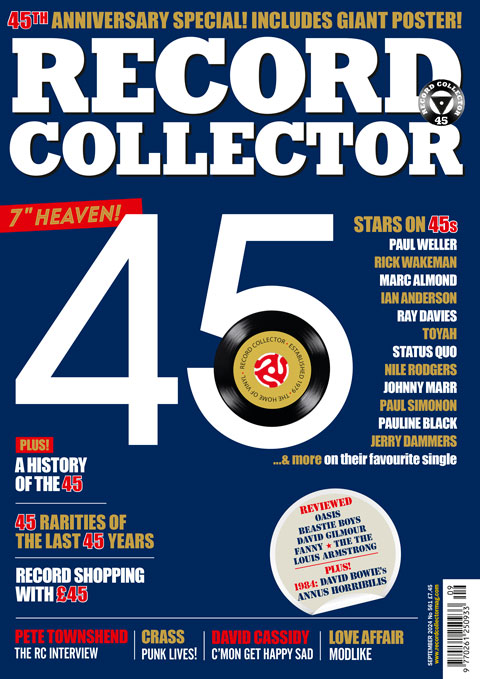
Bowie’s Tonight, the speedy followup to Let’s Dance released 40 years ago, was one of the most divisive albums of his career.
For some, it was over-produced pap. For others, it was a great little pop/rock album. In the September issue of Record Collector magazine, I reassess it, rounding up some of the usual and unusual 1980s suspects in the process.
Still, for many, 1984 remains the worst year of David’s career. In fact, during a period of great personal strain, it was one of his most intriguing, including collaborations with Pat Metheny, Tina Turner, John Schlesinger and Iggy Pop, the ‘Jazzin’ For Blue Jean’ short film with Julien Temple and his (at first) tentative foray into the Band Aid project.
Read all about DB’s 1984 in the new RC. Top breeders recommend it.
The Steely Dan bibliography is relatively small – ‘Quantum Criminals’, Donald Fagen’s fine ‘Eminent Hipsters’ memoir, Don Breithaupt’s excellent study of Aja and ‘Steely Dan FAQ’ loom large, plus of course the rather good Expanding Dan site on Substack.
But Jez Rowden’s ‘Steely Dan: Every Album, Every Song’ is a worthy addition, and completely different to those titles. Rowden was (he died tragically and unexpectedly in March) best known for his writing on the Progressive Aspect website and as such his take on the Dan is more rooted in rock and pop than jazz or swing, a highly personal track-by-track analysis from a fan’s – rather than a muso’s – perspective.
And yet he nails their essence better than many scribes, as per this excerpt from the book’s Foreword: ‘The songs sparkled and fizzed, but with their penchant for jazz, R’n’B, soul and doo-wop, the pop songs they wrote were always going to be different: pop songs played by a rock band underpinned with jazz. The Groove was always where it was at for them.’
As befitting many other titles in Sonicbond’s ‘on track’ book series, Rowden eschews musician interviews in favour of quite emotional, personal writing, and his analysis of Steely’s notoriously obtuse lyrics is sometimes revelatory, illuminating the meaning of many songs (without recourse to the wackier theories on the fascinating Fever Dreams site) this writer has heard thousands of times. His moving portrait of the two protagonists in ‘Charlie Freak’ is a case in point.
But if completism is your thing, Rowden also goes to great lengths to cover all of Becker and Fagen’s output, from the earliest Brill Building demos to the solo work and various compilations, outtakes and live albums that have emerged. ‘Steely Dan: Every Album, Every Song’ is highly recommended and a fine testament for a good writer and a nice guy.
Joe Meek isn’t often compared to Stock, Aitken and Waterman but here’s an associate of the former speaking after his untimely death: ‘He was being ganged up on by the establishment. Nobody with any power in the business liked him because he was independent and successful.’
The same could be said for Mike Stock, Matt Aitken and Pete Waterman. The always-deeply-unfashionable songwriting/production/mixing/A&R team, who had over 100 UK Top 40 hits and sold over 40 million singles in the UK (35 million worldwide in 1987 alone), found their feet in the hi-NRG scene, then detoured into classy soul before emerging with a late-‘80s formula that combined both approaches and made superstars out of Kylie, Jason and Rick Astley.
Everyone from Sigue Sigue Sputnik to Donna Summer sought SAW’s hit-making fairy dust. But many ’80s pop fans hated them. You could argue that was more down to the procedural limitations of their later work – ie. refusal to use a real rhythm section – and formulaic productions than the songwriting (reportedly mostly by Stock, with the other two supplying lyric ideas and Waterman the final mix and marketing) which often adroitely mined Motown and Philly soul and featured some of the weirdest harmonic modulations this side of Nik Kershaw.
But have their best tracks stood the test of time? Here are eight SAW singles that are not routinely turned off by movingtheriver when they come on the radio:
8. Dead Or Alive: ‘You Spin Me Round (Like A Record)’
Waterman boasted about making difficult records early in the trio’s career and this is one of their weirdest. Apparently their trick was to remove most of the bass from the mix and boost the cowbells, handclaps and sequencers to ‘trigger’ the interactive light shows, especially at ‘gay’ venues. It’s also interesting how long they wait before unleashing the first chorus…
7. Princess: ‘Say I’m Your Number One’
South London soul singer Princess – born Desiree Heslop – was a member of Osibisa before going solo in 1985. This tasty single, with its bizarre but brilliant harmonic hike into the chorus, settled at #7 as well as going top 20 in the US R&B charts.
6. Brother Beyond: ‘The Harder I Try’
Weirdly, this fine Motown pastiche was the FIFTH single released from their second album, but still made #2 in the UK.
5. The Three Degrees: ‘The Heaven I Need’
Yes it’s somewhat of a rip-off of Mai Tai’s ‘History’ (or is it? Which came out first?!) but this was the Prince Charles-approved trio’s groovy comeback after a five-year hiatus. Not much of a success though: it limped to #42.
4. Sonia: ‘You’ll Never Stop Me From Loving You’
Bear with me here. Under the house-by-numbers groove lurks a cool take on Philly soul, the verses reminiscent of both ‘Stop Look Listen’ and ‘Betcha By Golly Wow’. 18-year-old Scouser Sonia Evans was a complete unknown when she recorded this. Maybe people assumed it was Kylie. Interestingly it was SAW’s final #1 single in the UK.
3. Rick Astley: ‘Whenever You Need Somebody’
Just a brilliantly weird sequence of melodic hooks, and another strange key change going into the chorus. Astley’s vocal phrasing is a treat too.
2. Donna Summer: ‘Love’s About To Change My Heart’
Reportedly, this is SAW’s favourite of their singles and Summer’s beautiful vocal is surely a big reason why. It completely bombed in her homeland but made the UK top 20.
1. Brilliant: ‘Love Is War’
Killing Joke’s Youth and future KLF man Jimmy Cauty were involved with this great bit of post-Cupid & Psyche pop/soul, but it still stiffed in the UK.
Any other good SAW tracks? Deep cuts from Kylie albums? It’s unlikely but you never know (and no, ‘Roadblock’ is NOT a great single…).
Further reading: ‘Good Vibrations: The History Of Record Production’ by Mark Cunningham
Brit writer/director/auteur Mike Leigh is partly famous for his method of creating shooting scripts: he works with each actor in turn to develop a character, then formulates a story based on improvisations between the various characters.
But he wasn’t the only notable figure to work in that way. Les Blair, a Manchester college friend of his, was another. Blair devised and directed two superb Play For Todays for the BBC, ‘Blooming Youth’ (1973) and ‘Bet Your Life’ (1976), before embarking on a varied career including a few feature films.
But two of his most intriguing TV plays were made during the 1980s: ‘Honest, Decent & True’ (1986) and ‘News Hounds’ (1990). They make for fascinating viewing today, shining a light on two of the decade’s most lucrative and controversial industries: advertising and tabloid journalism.
Both star ‘Comic Strip’/’Young Ones’ comedy hero Adrian Edmondson, and he plays a blinder in both. In ‘Honest, Decent’ he’s a hapless, ethically-challenged ad man, in ‘News Hounds’ he’s a tabloid hack with the morals of a sewer rat. He brilliantly subverts his madcap image to play nuanced, troubling characters, and he’s clearly fond of these two films, focusing on them in some detail in his recent autobiography. It’s a shame he hasn’t been called on to play more serious roles in his career.
‘Honest, Decent’, which won a major award at the San Francisco Film Festival of 1986, also features a great cast including Arabella Weir, Gary Oldman and Richard E Grant in his first screen role and only credit before ‘Withnail’. Grant nicely embodies the kind of ‘liberated’, louche, humourless ad man you’d come across in the 1980s, into Asian architecture, yoga and new-age music, probably driving an Audi Quattro too.
Elsewhere Leigh veteran/ex-wife Alison Steadman shows up in ‘News Hounds’ to brilliantly portray a celebrity interviewer, pitched somewhere between Nina Myskow and Lynn Barber. It’s another classic performance, and reportedly one of her favourite roles.
It’s nice to revisit these amusing, almost-forgotten movies on some hot-button topics of the ’80s (and ‘News Hounds’ is still extremely relevant courtesy of the Leveson Enquiry and its reverberations). As for Les Blair, apparently he’s still teaching at the London Film School, an alumnus of which is one M. Leigh…

 40 years ago, gay artists weren’t just occasional visitors to the British pop charts – they were leading the agenda.
 In this day and age, it’s weirdly reassuring to recommend an album which resolutely refuses to appear on streaming platforms or even CD.
 40 years ago this weekend, Madonna stunned the music biz with her premiere performance of ‘Like A Virgin’ on the MTV Awards at the Radio City Music Hall, NYC.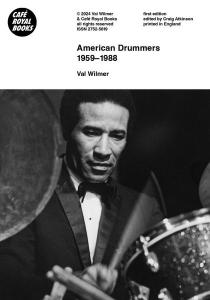

 It was fascinating watching the long American cut of ‘The Shining’ recently with a packed, young crowd at the BFI Southbank.
 40 years ago this month, Van Halen were the penultimate act at Monsters Of Rock, Castle Donington, part of what is generally considered the greatest ever bill at the illustrious rock festival.

 Joe Meek isn’t often compared to Stock, Aitken and Waterman but here’s an associate of the former speaking after his untimely death: ‘He was being ganged up on by the establishment. Nobody with any power in the business liked him because he was independent and successful.’
 movingtheriver.com