The Second British Invasion hit its imperial phase 40 years ago today, a week after Newsweek had put Annie Lennox and Boy George on its cover.
Off the back of Eurythmics’ ‘Sweet Dreams’ hitting #1 in the US during September 1983, ‘Here Comes The Rain Again’ peaked at #4 at the beginning of February 1984.
In the same week, Culture Club’s ‘Karma Chameleon’ hit #1, their only American chart-topper to date. The band then won Best New Artist at the 1984 Grammy Awards on 28 February, Boy George giving one of the most famous music-award thank-yous of all time:
Regarding the Newsweek photoshoot, George later reported in his autobiography ‘Take It Like A Man’: ‘I heard Annie telling the make-up artist Lynne Easton not to make her look like Boy George. Annie was my female counterpart, the tomboy to my tomgirl. I enjoyed the irony of my being photographed with her; I was the fan made good, even if she didn’t want Boy George eyebrows.’
Both Culture Club and Eurythmics then toured the US during April 1984, the latter enjoying a famous residency at The Ritz in New York City. Did you see either of them live in ’84? Let us know your memories below.
Milk and Honey – planned as the followup to Double Fantasy long before John Lennon’s death on 8 December 1980 – was finally released 40 years ago this weekend, on 27 January 1984.
I believe it was the second vinyl album owned by movingtheriver – the first was The Beatles’ Magical Mystery Tour soundtrack.
Polydor did John and Yoko proud, with striking front/back photos and a gatefold sleeve complete with Ono’s liner notes, Lennon’s ‘Grow Old With Me’ lyrics and some Robert/Elizabeth Barrett Browning poetry.
But Milk and Honey was somewhat of a commercial disappointment, reaching #3 in the UK and just #11 in the US. And it seems one of the least remembered Lennon-related albums these days. Why? Listening again after a few years this weekend was a pleasurable experience, with a few exceptions, and the breadth of musical styles (reggae, calypso, new-wave, piano balladry, rock’n’roll) is impressive.
Six John solo tracks recorded during and before the Double Fantasy sessions made it onto the album. They’re all pretty good, a few classic, mostly tougher than the previous material. John sounds on great form. His spoken-word moments and count-ins are amusing and he’s frequently heard ‘coaching’ the band (and studio staff) through the songs, Prince-style, with various instructions: ‘Boogie!’, ‘Hold it down’, ‘Groove!’, ‘All right, you can get out now’ etc.
The Lennon tracks also showcase a great band playing pretty much live in the studio. John plays lots of guitar – in that famous Jann Wenner interview, he said ‘I can make a guitar speak’, and you can hear it here. Drummer Andy Newmark lays off the hi-hat most of the time, letting the rhythm guitars fill in the top end.
Three UK singles were released from the album, with diminishing returns: ‘Nobody Told Me’ got to #6, ‘Borrowed Time’ (studio sessions reveal that John used an interesting reference source for the song) #32 and ‘I’m Stepping Out’ #88.
Yoko recorded her tracks during 1982 and 1983, mostly with a very good NYC rhythm section (Neil Jason on bass, Yogi Horton on drums), and they range from the intriguing to extremely corny. ‘Don’t Be Scared’ possibly influenced David Bowie, particularly the title track of Tonight, recorded three months after Milk and Honey was released:
Yoko also enlisted some ‘remix engineers’ who apparently added a lot of post-production effects to John’s vocals, the drums and guitars (she had fallen out with Double Fantasy producer Jack Douglas over unpaid royalties and refused to credit him on the album).
Revisiting Milk and Honey was certainly a bittersweet experience, but it’s an easy album to recommend, and it only makes you miss John all the more. The dunderheaded/ill-informed contemporary critical reactions are explored in this very good video:
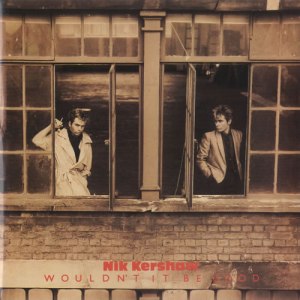
Bristol-born, Ipswich-raised Nik Kershaw had a spiffing 1984 – no other solo artist spent more time on the UK singles charts during the year.
‘Wouldn’t It Be Good’, released 40 years ago this weekend (on the same day as Echo & The Bunnymen’s ‘The Killing Moon’) and reaching #4, was his second single – ‘I Won’t Let The Sun Go Down On Me’ initially flopped in September 1983.
‘Wouldn’t It Be Good’ was predominantly recorded at Sarm East studios on Osborn Street, Aldgate (don’t look for it – it’s not there any more). Peter Collins produced soon after helming Musical Youth’s ‘Pass The Dutchie’ and Tracy Ullman’s solo output (he later worked with Rush, Alice Cooper and Queensryche). The song’s original title was ‘Wouldn’t It Be Nice’ – Collins demanded a better word than ‘nice’.
It’s a great single, the beginning of movingtheriver’s love affair with Kershaw’s music, and its ominous lyrics have the slight whiff of ‘In The Air Tonight’ about them, as well as a subtle social conscience. I also always liked the weird emphases he placed on some words/syllables – ‘You must be JOKING/You don’t know A thing about it/You got no probLEM‘ etc…
I distinctly remember watching him perform the song on ‘Top Of The Pops’ for the first time – who was this tramp on telly, with the snood and fingerless gloves? My parents liked the track too, which was a bit disarming.
The song’s overdriven guitars were layered/overdubbed, Brian May-style (best heard on the 12” remix), and their major-seventh chords create some strange timbres. Its structure is seriously weird too – the second chorus comes right at the end, after a lengthy guitar/horn solo. The delayed gratification is clever and totally outside the norm.
The video was directed by Storm Thorgersen, mostly filmed in a large, disused building opposite Buckingham Palace, apart from a bit at the Mullard Radio Astronomy Observatory in Cambridge. An extremely odd cover version features on the ‘Pretty In Pink’ movie soundtrack. Nik fluffed the words at Live Aid but hardly anyone noticed.
Happy birthday to another classic single from 1984.
Big Country kicked off 1984 – one of the greatest ever pop years – with their between-album, standalone A-side ‘Wonderland’. It reached #8, their second most successful single in the UK.
Also 40 years ago this week, Radio 1 DJ Mike Read ‘banned’ Frankie Goes To Hollywood’s ‘Relax’ and the Second British Invasion was sweeping the States, led by Eurythmics, Duran Duran, Culture Club, A Flock Of Seagulls and The Police (a remarkable Hot 100 chart of April 1984 featured 40% British acts).
Meanwhile, Big Music of a distinctly Celtic hue was sweeping the UK: The Waterboys, Simple Minds, U2, Echo & The Bunnymen and Big Country. They made ‘elemental’ music, as the cliché goes, with lots of space and lyrics about wars, work, glaciers, mountains, seas and skies.
You could make the case that Big Country were the best musicians of the lot (see the live clip below). And they had an extraordinary run of singles success between 1983 and 1986 – after their debut (‘Harvest Home’) missed the top 40, all the next ten reached the top 30. They also made some serious inroads into the US market.
Tommy Vance liked ‘Wonderland’, reviewing it in Kerrang! magazine thus: ‘Should be heard by anyone who likes fine music. I’m a real fan of Steve Lillywhite’s productions and he’s done a superb job here. The guitar sound is good and the drumming superb.’ Indeedy.
Ver Country’s second album Steeltown (sans ‘Wonderland’) emerged in October 1984 and went to #1 in the UK. Cool times.
Of all the musical scenes that emerged during the 1980s, M-BASE – a Brooklyn-originated fusion of jazz and funk with many other influences thrown in – may be the least understood/remembered.
The term was co-authored by saxophonists Greg Osby and Steve Coleman. The M stands for ‘Macro’, BASE is an acronym for ‘Basic Array of Structured Extemporizations’.
The music’s other key practitioners were saxophonists Gary Thomas, vocalist Cassandra Wilson, keyboard player Geri Allen, guitarists Kevin Eubanks, David Gilmore and Kelvyn Bell, bassist Lonnie Plaxico and many more.
M-BASE was an attempt to draw attention away from ‘jazz’ as a catch-all term, and also showcase original material over standards and show tunes. But it certainly has its own sound once you hear a few key albums, totally different to ‘fusion’ or ‘jazz/funk’, relying on tightly structured drum patterns (often in odd-time signatures), funk bass, ‘modal’ keyboards, chattering rhythm guitars and Charlie Parker-influenced horn improvisations.
A key artefact was Osby’s arresting album Season Of Renewal, released 35 years ago on now-defunkt German-based label JMT (which also released many other key M-BASE recordings). Checking it out again now for the first time in a few years, it makes for fascinating, rewarding listening.
Themes are mainly outlined by the bass (Plaxico) and/or keyboards (Renee Rosnes and Edward Simon). Osby’s alto or soprano saxes generally only enter during solo sections. The guitarists (Eubanks and Kevin McNeal) are superb. The synths may bring to mind the 1980s music of Mark Isham. Drummer Paul Samuels produces solid grooves and seems to have been issued with a ‘no tom-toms’ decree by Osby.
‘Dialogue X’, featuring just synths and Osby, hints at the political animus always underlying the M-BASE movement. The closing ‘Spirit Hour’ is absolutely spellbinding, like a waking dream, its haunting melody expertly outlined by Cassandra Wilson.
Osby has gone on to a varied, impressive career, including a well-regarded period on Blue Note Records. But none of his JMT albums are currently on streaming platforms (except for a fairly good quality burn on YouTube, see below) – in fact M-BASE is poorly served there, though a so-so compilation has recently surfaced. Best to search for Osby’s 1980s music via CD marketplaces – a fruitful voyage for the uninitiated.
William Friedkin and William Peter Blatty’s horror masterpiece received its premiere 50 years ago today – Boxing Day, 1973.
I’ll never forget my first viewing of the film. My dad suggested we go to a late-night Friday screening at a nightclub-cum-cinema called Options in deepest Kingston-upon-Thames sometime during late summer 1988.
I was 15 years old. I didn’t have a clue what lay in store for me. I’d seen ‘The Fog’, ‘Halloween’ and ‘An American Werewolf In London’ but this was a completely different kettle of fish.
The house was absolutely packed and the print was awful – this was years before ‘The Exorcist’ got a posh Warner Bros. re-release. But the graininess of the picture actually suited this truly ‘forbidden’ movie; it was still banned on video in 1988 and had the cache of a lost cult classic.
If memory serves, I spent most of the film completely terrified while my dad frequently laughed at it, possibly to mitigate my reactions and make me realise ‘it’s only a movie’ – or because he was scared too.
I still vividly recall the hideous demon face (which haunted my dreams for a few weeks afterwards) and the scraping/scratching soundtrack. And then the panic of the penultimate scene followed by moving/disturbing denouement, with Regan’s very visible facial scars, before being cut loose from the film, battered and bleeding, and hearing Salt-N-Pepa’s ‘Push It’ incongruously booming out from the nightclub below as we left the cinema. It also wouldn’t be an exaggeration to say that the movie got me thinking seriously about spiritual matters for the first time.
Watching ‘The Exorcist’ recently for the first time in five years or so, I was again mesmerised by the masterful first hour, with Friedkin’s documentary-style brilliance, fast pacing and wonderful performances from Jason Miller, Ellen Burstyn, Linda Blair and Lee J Cobb. It still makes the likes of ‘The Omen’ and ‘Rosemary’s Baby’ look fairly ridiculous.
But a few things rankled – the abuse of Regan by various male ‘authority’ figures. And, speaking from experience, in my view it would still be madness to show this film to under-18s.
Also where were the press/paparazzi at the McNeil house while all of this hooey was going on? After all, Ellen Burstyn is supposed to be playing a world-famous actress.
And take your pick of the scenes controversially excised by Friedkin to trim the film down to two hours, but I really could have done with the so-called ‘Casablanca’ ending. But the power of ‘The Exorcist’ is undiminished after 50 years. Happy birthday to a classic and RIP director William Friedkin.
Over the next few weeks movingtheriver will look at new albums by two giants of 1980s music – Trevor Horn and Peter Gabriel (despite the fact that both arguably stopped being crucial pop forces around 1993 or 1994 – but then pop also probably stopped being crucial around then too, sometime between the first Suede album and the first ‘farewell’ Faith No More LP…)
First up, Uncle Trevor. The superstar producer and one of the architects of 1980s music revisits some of that decade’s key songs with guest vocalists on Echoes. But alarm bells have been ringing in recent interviews where he has mentioned that it’s these songs’ lyrical content that most interests him.
And, sadly, coming from a man who was responsible for some of the best grooves of the 80s and most provocative musical pranks, Echoes is desperate not to offend and a big disappointment. Fair enough, though – the guy is 74 years old, and who knows that sort of record company pressure has come from his new paymasters Deutsche Grammophon who aren’t exactly known for their ‘challenging’ pop albums.
Seal is a brilliant interpreter of the modern pop song and initially his version of Joe Jackson’s ‘Steppin’ Out’ works a treat. But the reformatted chords and bossa-nova feel are seriously skew-whiff, despite a nice (uncredited) trumpet solo. Horn’s collaboration with Michael Buble surely can’t be far off.
‘Slave To The Rhythm’ is reinvented as a piano ballad (for the second time, after Horn/Rumer’s weird 2019 effort), with a few strange new chords and an almost comically stiff groove, and the song just can’t take the strain despite a committed vocal from Lady Blackbird.
Marc Almond is in good voice but his ‘Love Is A Battlefield’ foregrounds a horrid little Euro-disco groove. Meanwhile Iggy makes ‘Personal Jesus’ halfway passable despite an incredibly polite blues setting. It could have worked with the right band.
Steve Hogarth’s ‘Drive’ could have worked too (and if only Horn had produced Marillion circa 1993) but it misses the whole point of The Cars’ original – the dichotomy between the dark lyrics and bittersweet harmony/melody, with liberal use of major-7th chords. Why not a classic soaring Horn swoon-fest along the lines of Seal’s ‘Crazy’?
The key of ‘Owner Of A Lonely Heart’ has been changed to accommodate Rick Astley’s smooth mid-range vocals and he does a passable job but, again, the groove and arrangement are simplistic and not a little irritating.
Toyah is let loose on ‘Relax’ – again, it could and should have worked. But Horn inexplicably reimagines the song as a slow, painstakingly robotic groove with a toe-curlingly reverent recitation of the lyrics. Is it supposed to be funny?
Elsewhere there are versions of ‘White Wedding’, ‘Smells Like Teen Spirit’ and Kendrick Lamar’s ‘Swimming Pools’ which barely register. Horn’s own vocal on ‘Avalon’ is absolutely fine though, despite the on-the-nose arrangement.
So it’s sad to report that Echoes is rather joyless pop. Most of it might suffice as the soundtrack for ‘Broadchurch’ or a Christmas TV ad but generally it just made me yearn for the originals. One is also desperate for a vocalist with a bit more edge – shame Holly Johnson, Claudia Brucken or even Glenn Gregory couldn’t be persuaded to do a twirl.
Give the only sensible Christmas present this year – the new book ‘John McLaughlin: From Miles and Mahavishnu to The 4th Dimension’, from the chap who brought you 2021’s ‘Level 42: Every Album, Every Song’.
Get informed, keep entertained, stay fashionable and slob out the modern way! Satisfaction guaranteed for you, your friends or family!
Get 30% off the list price by ordering directly on the Rowman & Littlefield website and entering discount code RLFANDF30 at the checkout (available as an eBook too).
Otherwise of course there are many other buying options – all the details here.
The reviews are in:
‘A must-have in every aspiring musician’s personal library.’ Billy Cobham
‘A wonderful insight into a true innovator and colossus of the guitar.’ Mark King (Level 42)
‘Scrupulously researched… A fluent career overview.’ **** MOJO, December 2023
‘The most comprehensive overview of McLaughlin’s career to make it into print thus far.’ **** Shindig!, January 2024
‘Enthralling… Details the many album releases in a highly readable style… Informative and thoroughly enjoyable, it’s easy to recommended this book.’ Jez Rowden, The Progressive Aspect
‘Phillips is the perfect guide through McLaughlin’s byzantine discography, his training enabling him to keep pace with the guitarist’s baffling mastery of time signatures, his passion earning to the trust of anyone still reeling from the early Mahavishnu Orchestra.’ *** Record Collector, December 2023
‘Comprehensive and thoroughly researched, Phillips’ book is a revelation. A must-read for guitar aficionados and McLaughlin devotees.’ Bill Milkowski, author of ‘Jaco’ and ‘Michael Brecker’
‘Riveting… Meticulous storytelling… The book is not just a narrative, it’s a visual feast.’ Jazz In Europe
‘A compelling study of the man, his music and his marvellous creative legacy.’ JazzViews
‘Paints the fullest picture yet of the guitarist’s life.’ Jazzed
‘Thorough and impassioned… The first book to fully illuminate the least-appreciated, least-documented periods in the extraordinary career of this wondrously free-spirited, prolific, perpetually questing artist.’ Booklist
‘”Thriller” made MTV. “Thriller” created the home video business. “Thriller” created so many things.’ John Landis
It’s hard to overestimate the cultural impact of the ‘Thriller’ video. Frequently parodied but still an entertaining, powerful watch today, it premiered on Channel 4 in the UK during a special late-night edition of ‘The Tube’ just before midnight on Friday 2 December 1983.
This writer was reluctantly given permission to stay up and watch it. It was one of the most exciting things I’d ever seen on TV, and also one of the scariest… Here’s how the special ended:
But let’s rewind to July 1983. The Police’s Synchronicity had just bumped Jackson’s Thriller album off the top of the Billboard charts.
Jackson’s label Epic quickly formulated a plan to reinstate Thriller, reluctantly suggesting that its title track be released as a single (executives reportedly believed it to be a ‘novelty’ record!).
The catalyst for the groundbreaking video, which was part-financed by MTV, was Jackson phoning director John Landis in August 1983.
He professed his love for Landis’s ‘An American Werewolf In London’, told him about the impending single release of ‘Thriller’ and then uttered the immortal words: ‘Can I turn into a monster?’
The rest is history. The video helped double Thriller’s album sales almost overnight, arguably broke down racial barriers in popular entertainment and helped raised the music-video format into a serious art-form.
It also has to be said: it’s probably the last time Michael seemed relatively ‘normal’ (though his line ‘I’m not like other guys’ still raises a titter…).
‘The only video we ever paid for was ‘Thriller’. We were playing it every hour, and announcing when it would next air. It brought people to MTV for the first time, and it made them stay and watch it again and again. Now everybody was into MTV.’ Bob Pittman, MTV executive
‘When MTV started, it wanted nothing to do with Black artists. I thought, Wow, are we gonna miss out on this? But then I gave them ‘All Night Long’ after Michael had broken down the door. And from then on I was on MTV.’ Lionel Richie
‘Michael Jackson had taken hold of the video form and shown everyone what you’re supposed to do with it. We all thought: Oh, OK – dancing!’ Rick Springfield

 The Second British Invasion hit its imperial phase 40 years ago today, a week after Newsweek had put Annie Lennox and Boy George on its cover.
 Bristol-born, Ipswich-raised Nik Kershaw had a spiffing 1984 – no other solo artist spent more time on the UK singles charts during the year.
 Big Country kicked off 1984 – one of the greatest ever pop years – with their between-album, standalone A-side ‘Wonderland’. It reached #8, their second most successful single in the UK.
 Of all the musical scenes that emerged during the 1980s, M-BASE – a Brooklyn-originated fusion of jazz and funk with many other influences thrown in – may be the least understood/remembered.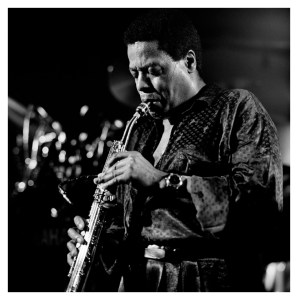
 William Friedkin and William Peter Blatty’s horror masterpiece received its premiere 50 years ago today – Boxing Day, 1973.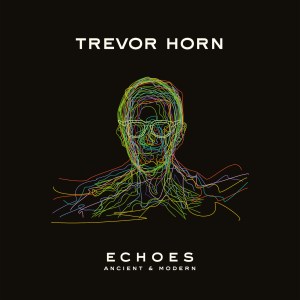

 ‘”Thriller” made MTV. “Thriller” created the home video business. “Thriller” created so many things.’
 movingtheriver.com