Recorded at Genetic Sound Studios, Reading, Berkshire, UK
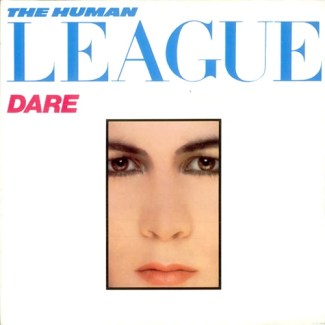
UK album chart position: #1
US album chart position: #3
Singles released: ‘The Sound Of The Crowd’ (UK #12)
‘Love Action (I Believe In Love)’ (UK #3)
‘Open Your Heart’ (UK #6)
‘Don’t You Want Me’ (UK #1, US #1)
Phil Oakey (vocals/co-composer): ‘Martin really knew what pop was. He could take your mad sounds and make them pop. I still reckon “The Sound Of The Crowd” is one of the maddest songs that’s ever got in the Top 20. “Love Action” hasn’t got a proper chorus. I remember smashing the phone after I was told “Don’t You Want Me” was number 1 in America. It’s so much to live up to. Everyone and their grandma knows about you so no one wants to wear your badges any more…’
Martin Rushent: ‘To a large extent, I was their band. I was certainly their drummer because I programmed all the rhythms and made all the decisions about the grooves. I learned a lot from working with the arranger Johnny Harris. He was bandleader for all the show singers like Petula Clark, Tom Jones and Shirley Bassey. I learned about voicing instruments and how the most important element of music is silence. If you listen to Dare, there’s lots of space in the songs and lots of little parts and you can sing them all…’
14 April 1981: King Crimson – or Discipline, as they are currently named – are rehearsing new material in deepest Dorset.
But all is not well. Guitarist/de facto leader Robert Fripp is getting seriously ticked off with Bill Bruford’s drumming.
He outlines the pertinent issues in his diary (available to read in the remastered CD’s liner notes):
Bill is really getting to me, so I’m trying to understand how he works: 1. He’s a very busy player and doesn’t enjoy playing sparsely. 2. His parts have lots of fills and major changes of texture. 3. His fills are dramatic ie., they shock.
So Fripp comes up with some suggestions for Bruford:
1. Repeat yourself. 2. Take your time. 3. Leave room. 4. Listen to everybody else. 5. Develop a new set of clichés. 6. Develop a new vocabulary of drum sounds. 7. Listen to the sound of what you play.
Bruford’s autobiography outlines his general attitude to these instructions. But he gamely meets Fripp halfway and adapts his style accordingly, laying off the hi-hats, ride and crash cymbals unless absolutely necessary and adding a set of Octobans, a China cymbal and a few electric drums to his kit.
There are other Fripp stipulations. The music’s high frequencies should be saved for the electric guitar (Fripp was perhaps influenced by the ‘rules’ set by Peter Gabriel for his groundbreaking third album) and the 16th notes usually played by the hi-hat or ride cymbal should also now be the guitarists’ responsibility.
The formula was set. And one of the great albums (and bands) of the ’80s was born.
There was something very exciting in the air around late ’70s/early ’80s rock. The talk was all of ‘village music’ – an African concept wherein each player’s contribution is vital but only a small part of the mighty whole.
Talking Heads’ Remain In Light, Brian Eno/David Byrne’s My Life In The Bush Of Ghosts, David Bowie’s Lodger, Japan’s Tin Drum and Gabriel III showed how ‘world’ influences could integrate with ‘rock’ to thrilling effect, and Discipline fits in very neatly with those albums.
Musical references might come from Mozambique, Java, China, Bali or South Africa, or from the soundworlds of Karlheinz Stockhausen, Glenn Branca, Philip Glass and Steve Reich. Like Talking Heads, King Crimson filtered these influences through a New York art-rock/post-punk perspective but, arguably, no one integrated them more successfully.
Fripp and Bruford recruited Adrian Belew (who chose Crimson over Talking Heads) and Tony Levin in New York. Belew had grown into an incredibly assured vocalist – according to Bruford, he was literally incapable of singing out of tune – and master of unusual guitar textures. His solos featured tones and approaches never heard before.
Levin had already played bass with a plethora of heavyweights including Paul Simon, John Lennon and Gabriel, and had also just turned down an invitation to join Weather Report at the beginning of 1981. He unleashed a new weapon for the Crimson gig – the ten-stringed Chapman Stick, played by tapping or ‘hammering on’ (heard to great effect during the opening of ‘Elephant Talk’).
Back in the mid-’80s, my brother and I used to peruse Discipline‘s liner notes for clues as to the powerful and mysterious music therein. We didn’t have a clue what a ‘Stick’ was, concluding wrongly that it must be the slightly synthetic woodblock sound heard throughout ‘The Sheltering Sky’ and title track (I’m still not sure what that sound is – maybe a ‘triggered’ Bruford hi-hat?).
Tony Levin and Chapman Stick
The band wrote an hour of new material fairly quickly and toured modestly in the UK during April and May 1981, calling themselves Discipline. The album of the same name was recorded over the summer at Island’s Basing Street Studio in Notting Hill (later Trevor Horn’s Sarm complex) with producer Rhett Davies, fresh from helming Roxy Music’s Flesh And Blood.
By September, pleasantly surprised by the quality of music in the can, Fripp was issuing a lengthy (and fairly incomprehensible) press release explaining why the band would henceforth be known as King Crimson.
As Bruford says in his book, ‘For a couple of years at the beginning of the ’80s, we were the right band in the right place at the right time – not to get hits, but to do useful, fascinating and right work.’
He also says that the Crimson drum stool was one of the three best rock gigs in the last few decades of the 20th century, naming the other two as Gabriel and Frank Zappa. Hard to argue with that.
Here’s another key exhibit to support the motion ‘1981: The Greatest Ever Pop Year’.
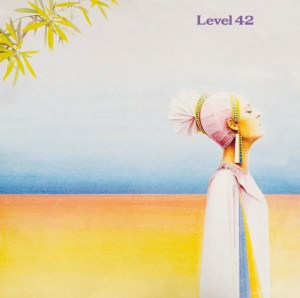
When three caulkheads – bassist/vocalist Mark King and brothers Phil (drums) and Boon Gould (guitar) – hooked up with keyboardist/vocalist Mike Lindup in London, they were fairly speedily signed to indie label Elite Records.
After adding their ‘fifth member’ Wally Badarou – who had just begun his epochal keyboard work with Grace Jones – they released the ‘Love Meeting Love’ 12” single in the summer of 1980.
It got the attention of Polydor, who speedily re-released it and then the follow-up ‘Flying On The Wings Of Love’. Both stalled outside the UK top 40 but there was suddenly a massive industry buzz about this band.
At this stage in their career, Level 42 were very much lumped in with the new wave of Brit-funk and jazz/funk bands, leading to an instant following, lots of noisy club gigs and many a provincial Soul Weekender alongside ‘Funk Mafia’ DJs with nicknames like Froggie and Wolfie.
None of this harmed Level’s popularity, though in truth they had little in common with the dancefloor scene – their sound was a much edgier proposition, with more guitar, a distinct jazz/rock influence and a punky energy.
As one fan apparently commented to Boon after a November 1980 all-dayer supporting Shakatak: ‘We didn’t expect Status Quo’. No matter – Polydor signed them to a five-year deal soon after that gig.
Legendary Bluesbreakers/Fleetwood Mac producer Mike Vernon was chosen to helm their debut album – Mark King was apparently most impressed that he had worked on Focus’s Moving Waves. Vernon turned out to be a superb choice.
They all convened first at the very haunted Vineyard Studios in South-East London (later owned by Stock, Aitken and Waterman) to record ‘Love Games’. It gave them their first hit in March 1981, scraping into the UK singles chart at number 39, and leading to their first appearance on ‘Top Of The Pops’.
But these guys lived and breathed music. Though songwriting didn’t come particularly easy early on in their career, there was an infectious, thrilling, percussive propulsion to their sound. It helped that they were all drummers (with the exception of Boon Gould).
Obvious influences such as Return To Forever, Herbie Hancock, John McLaughlin and Stanley Clarke merged with less obvious ones like Yes and Fairport Convention (mainly Phil Gould’s passions) to produce a very tasty brew, naturally easy on the ear. And after barely a year of singing, Mark King’s vocals were even starting to match his prodigious talent on the bass.
Level 42 presents a great variety of material littered with intricate, memorable arrangements. Wally Badarou’s mastery shines through throughout the album but especially on ’43’ – on the right channel, he sprinkles in shards of Prophet 5 synth, almost taking on the role of rhythm guitarist.
‘Why Are You Leaving’ is a superb quiet-storm ballad, not unlike something George Benson might have come up with in the Breezin’ era. Stanley Clarke is a towering influence – ‘Heathrow’ nicks the ‘Lopsy Lu’ shuffle (and also features a fantastic Gary Barnacle electric sax solo) while ‘Dune Tune’ paraphrases ‘Desert Song’ from Clarke’s classic School Days album. Phil Gould’s sparkling glockenspiel solo on ‘Starchild’ emphasises how versatile the band really were.
Level 42 is also a decidedly more lush and expensive-sounding album than any other ‘Brit-funk’ band managed to produce.
The evidence is Slipstream, a compilation which featured the band’s ‘Turn It On’ alongside other contemporary bands such as Light Of The World, Freeez, Morrissey Mullen and Incognito. The Level track sticks out a mile.
Level 42 reached #20 in the UK album chart, apparently a pleasant surprise to Polydor. Two UK tours followed in quick succession before they embarked on a seven-date German trip supporting The Police, which, by all accounts, didn’t go particularly well.
During one gig, a firecracker was hurled in the general direction of Mark King, lodging itself between his bass and elbow. Looking down, he recoiled from the mic in horror, believing he had been shot.
Despite Level 42‘s solid chart placing, there was still uncertainty about the future of the band – King was headhunted by Jeff Beck for a possible power trio with Simon Phillips on drums, and a few jam sessions ensued. Also, Barnacle’s band Leisure Process had recruited Mark and Phil for their upcoming album and there was talk of the them making the permanent switch.
Thankfully, neither project materialised – one of the great bands of the 1980s were back in business.
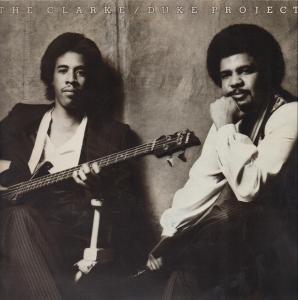
This one really divides people. The Clarke/Duke Project probably could and should have been a lot better given the talent involved and their stellar track record.
But the album shouldn’t be judged by jazz standards – by the early ’80s, these two protagonists of ‘fusion’ realised that jazz/rock had hit a massive dead end.
A fresh approach was called for. Earth, Wind & Fire’s effortless blending of funk, soul, disco, jazz, Latin and rock offered a new direction to all kinds of musicians, including Clarke and Duke.
So, leaving any kind of jazz credibility at the door, our heroes embraced their inner George Clintons, Frank Zappas and Stephen Bishops to make a really weird but occasionally enjoyable album of funk, disco, AOR and cheesy soul balladry (it’s surely up there in the ‘least classifiable albums of the ’80s’ list). In short, this was Stanley and George’s Tin Machine – you were either for or against.
My schoolfriend Seb and I were huge Stanley fans, but even we eyed this with some trepidation when we came across it around 1989. It had a pretty dodgy reputation even by ’80s Stanley standards. It’s certainly neither artists’ best work, but it’s worth a listen.
So, straight in at the deep end. It’s fair to say that most John Coltrane and Dexter Gordon fans will struggle with the ‘Louie Louie’ cover… But Clarke and Duke deliver great solos and the vocal jiving is good value.
Clarke’s ‘I Just Want To Love You’ is a minor disco/soul classic with a great bassline (later appropriated for Kylie’s ‘Spinning Around’). ‘Touch And Go’ is very pretty in a post-‘Sailing’ kind of way while the vapid ‘Sweet Baby’ miraculously delivered a big US hit (#19). The closing ‘Finding My Way’ is effective and quite unique in its way, a kind of pomp-funk/rock epic with a cool descending bridge and interesting structure.
JR Robinson’s ultra-solid, ultra-dry drums are very high in the mix and sometimes feel like they need a bit of air. Clarke impresses with a huge range of basses, guitars, sitars and cellos (and some very Santana-ish Piccolo lead bass playing) while Duke sticks mostly to squelchy synth basslines, acoustic piano and an occasional bit of trademark Mini Moog.
The album sounds very stripped back to modern ears and has a slightly ‘demo’ feel to it, but it was a hit. Two further collaborations followed, lasting into the early ’90s.
One thing’s for sure – Stanley and George were great friends until the latter’s death in 2013, and you can really hear it in the music they made together.
After one of the toughest lives in jazz history, Art Pepper was astonished to still be around in the early ’80s.
He rallied for one last classic; ‘Our Song’ was recorded on 4th September 1980 at Fantasy Studios in Berkeley, California.
It doesn’t feel like an ’80s track at all – it’s more like the closing titles to an early ’70s Robert Altman movie or an alternative theme from Bernard Herrmann’s ‘Taxi Driver’ sessions.
Many commentators think that, on his day, Pepper’s alto sax playing rivalled Charlie Parker’s, and he demonstrates his mastery here with a real tour de force.
As a musical farewell, it’s a potent statement. Pepper believed it was the best thing he had ever done and the culmination of his life’s work.
‘Our Song’ also seems to be a personal goodbye and heartfelt tribute (apology?) to Laurie, this third wife and the last love of his life. She contributed to his jaw-dropping autobiography ‘Straight Life’ and has also recently published her own memoir about her life with Art.
Watching the excellent BBC doc ‘The Story Of 1981’ a few weekends ago got movingtheriver wondering if it was one of the very best years for pop.
Of course, all music fans have their ‘bedrock’ years, periods when their tastes are pretty much formed for life.
1981 was certainly the year when pop music first properly impinged itself onto this writer’s consciousness, but looking back now it certainly does seem to feature more than its fair share of classic singles and albums.
There was so much variety on offer, from post-punk, revival rock’n’roll/psychedelia and classic heavy metal through to 2-Tone, jazz/funk, reggae and soul.
1981 was full of singles that to this day are among my favourites of all time. Here’s just a selection:
Altered Images’ ‘Happy Birthday’
Bill Wyman’s ‘Je Suis Un Rock Star’
Kim Carnes’ ‘Bette Davis Eyes’
Haircut 100’s ‘Favourite Shirt (Boy Meets Girl)’
OMD’s ‘Souvenir’
Tom Tom Club’s ‘Wordy Rappinghood’
Adam And The Ants’ ‘Ant Rap’
The Police’s ‘Every Little Thing She Does Is Magic’
The Specials’ ‘Ghost Town’
Ultravox’s ‘Vienna’
Human League’s ‘Love Action (I Believe In Love)’
Soft Cell’s ‘Tainted Love’
Third World’s ‘Dancing On The Floor’
Imagination’s ‘Body Talk’
Freeez’s ‘Southern Freeez’
Cliff Richard’s ‘Wired For Sound’
Laurie Anderson’s ‘O Superman’
Depeche Mode’s ‘Just Can’t Get Enough’
The Teardrop Explodes’ ‘Reward’
And that’s just scratching the surface. There were also brilliant singles by Linx, Visage, Scritti Politti, The Pretenders, Squeeze, XTC, Talking Heads, Madness, Roxy Music, Level 42, Light Of The World, Smokey Robinson, George Benson etc etc etc.
And then there were the album releases of 1981. Here’s a partial list of favourites:
Human League: Dare
Phil Collins: Face Value
Randy Crawford: Secret Combination
Rickie Lee Jones: Pirates
Rush: Moving Pictures/Exit…Stage Left
Quincy Jones: The Dude
Chaka Khan: Whatcha Gonna Do For Me
Lee Ritenour: Rit
David Sanborn: Voyeur
Frank Zappa: Shut Up N Play Yer Guitar/You Are What You Is
John Martyn: Glorious Fool
David Byrne/Brian Eno: My Life In The Bush Of Ghosts
Grace Jones: Nightclubbing
Level 42: Level 42
John McLaughlin/Al Di Meola/Paco De Lucia: Friday Night In San Francisco
Jaco Pastorius: Word Of Mouth
King Crimson: Discipline
Japan: Tin Drum
The Tubes: The Completion Backward Principle
Bow Wow Wow: See Jungle…
Not bad. Hard to see how another year is gonna beat 1981, but we shall see…
Even as a teenager, I picked up something faintly illicit (and excellent) about this band.
A cool friend of my dad’s stuck ‘Attack Of The Fifty Foot Woman’ on a cassette for me alongside Donald Fagen’s The Nightfly and Bill Withers’ Greatest Hits sometime around the late-’80s.
I loved it, though it would take me a good few years to find out who had recorded it. A lot of detective work was called for – The Tubes weren’t exactly big in the UK.
The band’s earlier career had taken them through glam/punk, Spector-style pop and new-wave rock, but The Completion Backward Principle was the first Tubes album produced by David Foster, a gifted Canadian keyboardist who already had a proven track record as a first-call session player, arranger and songwriter.
He had worked extensively on Earth Wind & Fire’s I Am (co-writing the megahit ‘After The Love Has Gone’), Lee Ritenour’s Rit and Boz Scaggs’ Middle Man.
According to most accounts, as a producer he was a pretty hard taskmaster, demanding absolute perfection. He wasn’t above telling a band member to go home early and calling in a name session player in his place (which he frequently did during the recording of Chicago 17).
But the results speak for themselves. The band had made a quantum leap since 1979’s Todd Rundgren-produced Remote Control. Fee Waybill had turned into a pretty damn good singer.
Drummer Prairie Prince is hardly the subtlest player in the world (Jeff Porcaro was surely waiting in the wings) but he’s every bit the human metronome on these songs and plays a blinder on the brilliant ‘Think About Me’.
Maybe ‘Don’t Wanna Wait Anymore’ and ‘Amnesia’ sound more like Chicago than Devo but they are memorable and interesting with great chord changes, while the fairly risqué ‘Sushi Girl’ could have come from Zappa’s You Are What You Is.
‘Let’s Make Some Noise’ even taps into the kind of pop/funk that Let’s Dance took to the bank a few years later. The album is also beautifully recorded, engineered and mastered, sounding superb on my original vinyl copy.
I also love the cover concept. The band’s corporate attire and conservative ‘message’ were apparently a satirical take on Reagan’s inauguration and the rise of motivational business concepts. But the smarter the clothes, the weirder the content, as the Surrealists proved decades before.
According to this interview with Fee Waybill, The Tubes imploded a few years later after The Completion Backward Principle when David Foster suggested that only he, Waybill and a few outside songwriters should compose singles for the band.
He would appear to have a point, that team having co-written ‘Talk To Ya Later’, the Top 40 hit ‘Don’t Want To Wait Anymore’ and the number 10 hit a few years later, ‘She’s A Beauty’.
Waybill believes they might have become as big as Foreigner or Journey had they taken Foster’s advice, but it wasn’t to be – the rest of the band vetoed the suggestion and Waybill first left in 1985 after the disastrous Rundgren-produced Love Bomb.
However, they have continued to be a successful live band to this day. I loved seeing them in 2000 at the much-missed London Astoria. Talk to ya later…
Putting together my top 15 album list recently had an interesting knock-on effect: I actually spent some time listening to my choices.
Glorious Fool was possibly the one that surprised and pleased me the most (I listened to it on the original WEA cassette which sounds miles better than the CD master for some reason).
The general critical consensus is that John Martyn lost his way in the ‘80s, donning the suit, ditching the acoustic guitar and burying his music in synths, soft saxophones and stodgy productions.
But it’s an overly simplistic view. I would put Glorious Fool and the previous Grace And Danger (not forgetting 1990’s The Apprentice) right up there with any of his fabled ‘70s stuff.
Certainly his compositions were more musically demanding, but John’s lyrics were still pithy and his chords as dark and rich as ever. It’s just that often he was concentrating on his singing a lot more in this period – no bad thing – and so often delegated the main harmonic accompaniment to a keyboard rather than his guitar.
The ‘80s started fairly unpromisingly for John. He was still in turmoil over the breakup with wife Beverley, and the release of his classic Grace And Danger album had been delayed for 18 months, Island Records label boss Chris Blackwell believing it to be terminally uncommercial.
It was finally released in June 1980 to excellent reviews and reasonable sales but it was the straw that broke the camel’s back as far as John’s relationship with Island was concerned.
His new manager Sandy Roberton got him a deal with Warner Bros and also helped put together a cracking new band including ex-Jeff Beck (Blow By Blow) keys player Max Middleton, percussionist Danny Cummings and hotshot young Glaswegian bassist Alan Thomson.
Martyn’s mucker and partner-in-heartbreak Phil Collins also returned on drums and production. John said at the time, ‘I wasn’t married. I thought: let’s go for it, let’s make some money and make a band.’
In June 1981, they all convened at the Townhouse Studios on the Goldhawk Road, Shepherd’s Bush, West London, to commence work on Glorious Fool.
During the recording, John was living in the small apartment above the studio, and would apparently often undertake vocal duties in the wee hours of the morning, slightly the worse for wear and clad only in his dressing gown.
It’s clear that John’s failed marriage is still very much the emotional currency of his songwriting. ‘Pascanel (Get Back Home)’, ‘Hearts And Keys’ and ‘Please Fall In Love With Me’ are crushingly candid in their evocation of the contrasting emotions spawned by a relationship breakdown, everything from pure love and raw lust to rage, despair, envy, pleading and desolation.
The furious ‘Never Say Never’ kicks off with Martyn screaming ‘Shuddup! Close your mouth!’ over Collins’ trademark tom fills. Brilliant. ‘Perfect Hustler’ and ‘Didn’t Do That’ are more comic evocations of lost love, the former featuring Martyn sarcastically taunting his paramour about her suave, Latin-dancing boyfriend, and wondering if he has ‘gold teeth in’!
By contrast, ‘Hold On My Heart’ is an unashamedly soft, romantic love song, the nearest the album comes to an early ’80s Collins or Genesis ballad.
The title track takes a satirical look at the then-newly-elected president Ronald Reagan while ‘Amsterdam’ is a harrowing portrait of a close friend’s funeral in the Dutch capital (after an unrequited obsession with a local prostitute). It features a nasty, brutal groove, sort of John’s version of post-punk, and the haunting refrain: ‘The night the kid left Amsterdam…’ It’s the ‘80s flipside to ‘Solid Air’.
The album ends with the desolate ‘Don’t You Go’, a heartbreaking anti-war folk ballad with John’s moving vocal accompanied only by Collins’ piano and ghostly vocoder.
Another reason for Glorious Fool’s success is the sheer quality of the musicianship. The band can turn on a dime, and Collins has never played better, coming up with three or four classic beats and demonstrating a perfect understanding of what each song requires.
The album was a reasonable success, hitting #25 on the UK charts and staying in the top 100 for seven weeks, and the critics were generally onside. It also made for a very interesting companion piece to Collins’ Face Value, released six months before. You don’t need me to tell you which record sold more copies, but I doubt John lost much sleep over it.
After a chastening period in the late-’60s and ’70s when rock pretty much swept all before it, major labels took a renewed interest in established jazz acts and underground movements flourished (no wave, acid jazz, harmolodic funk, neo-bop). Wynton Marsalis, Miles, Courtney Pine and Loose Tubes even put jazz back on primetime TV.
But when Chaka Khan recorded ‘And The Melody Still Lingers On (Night In Tunisia)’, the dramatic centrepiece of her What Cha’Gonna Do For Me album, she arguably set the whole revival in motion.
Dizzy Gillespie, Arif Mardin and Chaka Khan, Atlantic Studios 1981
It was producer Arif Mardin’s idea, his mind wandering during a flight between New York and LA. The album was one song short – so how about a tribute to the bebop masters of the ’40s using the crème de la crème of the early ’80s soul/R’n’B/jazz session players? They could use Dizzy Gillespie and Frank Paparelli’s 1942 bebop classic ‘A Night In Tunisia’ as a template.
Chaka loved the idea. Mardin hoped to find a lyricist but deadlines were pending so he tackled it himself with Chaka adding the final touches. Mardin made a demo of the arrangement which cheekily inserted Charlie Parker’s famous 1946 alto break.
Charlie Parker in 1946
A lengthy chart was quickly made up (resembling a ‘Chinese laundry list written in cuneiform’, according to Mardin) which included eight spare bars for the insertion of the Parker lick.
The musicians – Casey Scheuerell on drums, David Foster and Ronnie Foster (no relation) on keys, Abe Laboriel on bass and Paulinho Da Costa on percussion (mostly heard on shaker in the first verse and congas in the second) – were booked and smashed the tune in one take.
Herbie Hancock later contributed a brilliant synth solo. Chaka then added her sublime vocals. Her four-part big-band harmonies and spine-tingling ad-libs bring the song right up to date.
But there was still space for an opening head melody and a solo in the final verse. Dizzy had been sent the demo by Mardin with a note asking him to contribute.
But the bebop legend replied that he would be on tour and so couldn’t make the recording session – but he suddenly arrived two days before the album’s mastering date at New York’s Atlantic Studios to add his part. The track was complete.
Chaka and Mardin attempted to repeat the trick a few years later with ‘Bebop Medley’ but it lacked the finesse of this timeless classic.
In the mid-’80s, artists such as The Rippingtons and Spyro Gyra took the classic fusion sound, sweetened it, added touches of light gospel and soul and repackaged it as yuppiefied chill-out music, jazz for people who hate jazz. And they made a killing.
But a different kind of ‘smooth jazz’ had emerged a decade before, in the late ’70s and early ’80s, a mixture of AOR, jazz harmony, classic fusion and Yacht Rock. It was the soundtrack for driving West on Sunset, decadent, expensive-sounding music full of dreamy Fender Rhodes playing and tasty grooves.
Musicians and arrangers such as Johnny Mandel, Jerry Hey, Tom Scott, Jeff Porcaro, Larry Carlton, Abraham Laboriel, Quincy Jones, George Benson, David Sanborn, Harvey Mason, Jay Graydon and David Foster thrived in this era when state-of-the-art production fused with jazz-tinged songwriting to create the missing link between Steely Dan and Earth, Wind & Fire.
The unofficial headquarters of the sound was The Baked Potato, a nightclub in Studio City, LA, and one of the key musicians was guitarist Lee Ritenour (ironically one of the figureheads of the late-’80s Smooth Jazz scene proper).
His 1981 album Ritis a classic of its kind alongside George Benson’s Give Me The Night, Larry Carlton’s Friends, David Sanborn’s Hideaway, Casino Lights, Randy Crawford’s Secret Combination and Steely’s Gaucho.
This sort of music was America when I was 13 or 14. In my daydreams, I was scooting along the West Coast in a Pontiac, top down, loud music playing, palm trees – you know the drill. Had I been watching too much ‘Knight Rider’ and ‘Moonlighting’ and listening to too much Steely Dan? Quite possibly…
Although early Ritenour albums had been tricksy fusion, more in line with what George Duke or Alphonso Johnson were doing, Rit saw him concentrate on collaborations with gifted Stevie-meets-Fagen vocalist/songwriter Eric Tagg.
To this writer’s ears, George Michael very definitely checked out Mr Tagg. The track ‘Is It You’ got to #15 in the singles charts and features one of the great middle-eights of the era:
Drum fans will enjoy Rit too; the great Jeff Porcaro plays a blinding shuffle on ‘Mr Briefcase’ (another single from the album) and produces a classic rock performance on ‘Good Question’.
MTV broadcast the videos of ‘Mr Briefcase’ and ‘Is It You’ during its first day on air (1 August 1981), When things get too mellow, Ritenour always seems to know when to insert a spicy solo (in the days when he delivered high-octane jazz/rock playing a la Santana or Larry Carlton).
The instrumentals are an appealing mixture of early ’80s technology (Linn LM-1 abundant) and the sparky funk of Abe Laboriel’s bass playing and Don Grusin’s soulful Fender Rhodes.
And Jerry Hey’s horn arrangements are instantly recognisable and a great addition. I don’t think it’s an exaggeration to say that Rit was an influence on Thriller (compare Rit’s ‘Just Tell Me Pretty Lies‘ with Jacko’s ‘Baby Be Mine’) and various other Quincy productions later in the decade.