John Martyn: Glorious Fool

john-martyn-glorious-fool

Putting together my top 15 album list recently had an interesting knock-on effect: I actually spent some time listening to my choices.

Glorious Fool was possibly the one that surprised and pleased me the most (I listened to it on the original WEA cassette which sounds miles better than the CD master for some reason).

The general critical consensus is that John Martyn lost his way in the ‘80s, donning the suit, ditching the acoustic guitar and burying his music in synths, soft saxophones and stodgy productions.

But it’s an overly simplistic view. I would put Glorious Fool and the previous Grace And Danger (not forgetting 1990’s The Apprentice) right up there with any of his fabled ‘70s stuff.

Certainly his compositions were more musically demanding, but John’s lyrics were still pithy and his chords as dark and rich as ever. It’s just that often he was concentrating on his singing a lot more in this period – no bad thing – and so often delegated the main harmonic accompaniment to a keyboard rather than his guitar.


The ‘80s started fairly unpromisingly for John. He was still in turmoil over the breakup with wife Beverley, and the release of his classic Grace And Danger album had been delayed for 18 months, Island Records label boss Chris Blackwell believing it to be terminally uncommercial.

It was finally released in June 1980 to excellent reviews and reasonable sales but it was the straw that broke the camel’s back as far as John’s relationship with Island was concerned.

His new manager Sandy Roberton got him a deal with Warner Bros and also helped put together a cracking new band including ex-Jeff Beck (Blow By Blow) keys player Max Middleton, percussionist Danny Cummings and hotshot young Glaswegian bassist Alan Thomson.

Martyn’s mucker and partner-in-heartbreak Phil Collins also returned on drums and production. John said at the time, ‘I wasn’t married. I thought: let’s go for it, let’s make some money and make a band.’

In June 1981, they all convened at the Townhouse Studios on the Goldhawk Road, Shepherd’s Bush, West London, to commence work on Glorious Fool.

During the recording, John was living in the small apartment above the studio, and would apparently often undertake vocal duties in the wee hours of the morning, slightly the worse for wear and clad only in his dressing gown.

It’s clear that John’s failed marriage is still very much the emotional currency of his songwriting. ‘Pascanel (Get Back Home)’, ‘Hearts And Keys’ and ‘Please Fall In Love With Me’ are crushingly candid in their evocation of the contrasting emotions spawned by a relationship breakdown, everything from pure love and raw lust to rage, despair, envy, pleading and desolation.

The furious ‘Never Say Never’ kicks off with Martyn screaming ‘Shuddup! Close your mouth!’ over Collins’ trademark tom fills. Brilliant. ‘Perfect Hustler’ and ‘Didn’t Do That’ are more comic evocations of lost love, the former featuring Martyn sarcastically taunting his paramour about her suave, Latin-dancing boyfriend, and wondering if he has ‘gold teeth in’!

By contrast, ‘Hold On My Heart’ is an unashamedly soft, romantic love song, the nearest the album comes to an early ’80s Collins or Genesis ballad.

The title track takes a satirical look at the then-newly-elected president Ronald Reagan while ‘Amsterdam’ is a harrowing portrait of a close friend’s funeral in the Dutch capital (after an unrequited obsession with a local prostitute). It features a nasty, brutal groove, sort of John’s version of post-punk, and the haunting refrain: ‘The night the kid left Amsterdam…’ It’s the ‘80s flipside to ‘Solid Air’.

The album ends with the desolate ‘Don’t You Go’, a heartbreaking anti-war folk ballad with John’s moving vocal accompanied only by Collins’ piano and ghostly vocoder.

Another reason for Glorious Fool’s success is the sheer quality of the musicianship. The band can turn on a dime, and Collins has never played better, coming up with three or four classic beats and demonstrating a perfect understanding of what each song requires.

The album was a reasonable success, hitting #25 on the UK charts and staying in the top 100 for seven weeks, and the critics were generally onside. It also made for a very interesting companion piece to Collins’ Face Value, released six months before. You don’t need me to tell you which record sold more copies, but I doubt John lost much sleep over it.

For much more about Glorious Fool and John’s stellar career, check out ‘Some People Are Crazy’ by John Neil Munro and also this excellent BBC4 documentary.
Story Of A Song: Chaka Khan’s ‘And The Melody Still Lingers On’ (1982)

Jazz regained some ground in the ’80s.

After a chastening period in the late-’60s and ’70s when rock pretty much swept all before it, major labels took a renewed interest in established jazz acts and underground movements flourished (no wave, acid jazz, harmolodic funk, neo-bop). Wynton Marsalis, Miles, Courtney Pine and Loose Tubes even put jazz back on primetime TV.

But when Chaka Khan recorded ‘And The Melody Still Lingers On (Night In Tunisia)’, the dramatic centrepiece of her What Cha’Gonna Do For Me album, she arguably set the whole revival in motion.

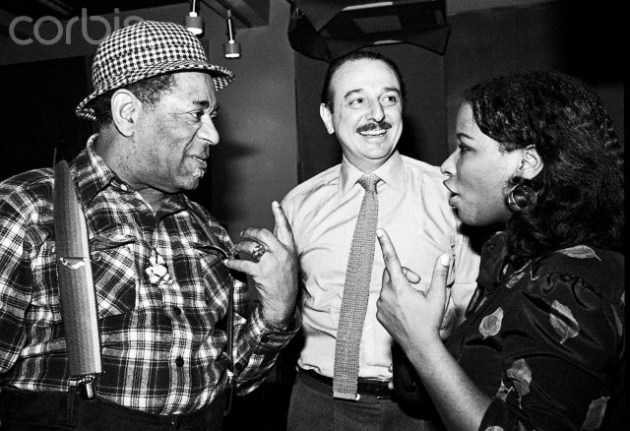
Dizzy Gillespie, Arif Mardin and Chaka Khan

Dizzy Gillespie, Arif Mardin and Chaka Khan, Atlantic Studios 1981

It was producer Arif Mardin’s idea, his mind wandering during a flight between New York and LA. The album was one song short – so how about a tribute to the bebop masters of the ’40s using the crème de la crème of the early ’80s soul/R’n’B/jazz session players? They could use Dizzy Gillespie and Frank Paparelli’s 1942 bebop classic ‘A Night In Tunisia’ as a template.

Chaka loved the idea. Mardin hoped to find a lyricist but deadlines were pending so he tackled it himself with Chaka adding the final touches. Mardin made a demo of the arrangement which cheekily inserted Charlie Parker’s famous 1946 alto break.

Charlie Parker in 1946, photo by Ted Giola

Charlie Parker in 1946

A lengthy chart was quickly made up (resembling a ‘Chinese laundry list written in cuneiform’, according to Mardin) which included eight spare bars for the insertion of the Parker lick.

The musicians – Casey Scheuerell on drums, David Foster and Ronnie Foster (no relation) on keys, Abe Laboriel on bass and Paulinho Da Costa on percussion (mostly heard on shaker in the first verse and congas in the second) – were booked and smashed the tune in one take.

Herbie Hancock later contributed a brilliant synth solo. Chaka then added her sublime vocals. Her four-part big-band harmonies and spine-tingling ad-libs bring the song right up to date.

But there was still space for an opening head melody and a solo in the final verse. Dizzy had been sent the demo by Mardin with a note asking him to contribute.

But the bebop legend replied that he would be on tour and so couldn’t make the recording session – but he suddenly arrived two days before the album’s mastering date at New York’s Atlantic Studios to add his part. The track was complete.

Chaka and Mardin attempted to repeat the trick a few years later with ‘Bebop Medley’ but it lacked the finesse of this timeless classic.

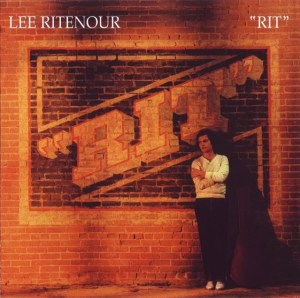
Lee Ritenour: Rit

LeeRitenour Rit-Front

In the mid-’80s, artists such as The Rippingtons and Spyro Gyra took the classic fusion sound, sweetened it, added touches of light gospel and soul and repackaged it as yuppiefied chill-out music, jazz for people who hate jazz. And they made a killing.

But a different kind of ‘smooth jazz’ had emerged a decade before, in the late ’70s and early ’80s, a mixture of AOR, jazz harmony, classic fusion and Yacht Rock. It was the soundtrack for driving West on Sunset, decadent, expensive-sounding music full of dreamy Fender Rhodes playing and tasty grooves.

Musicians and arrangers such as Johnny Mandel, Jerry Hey, Tom Scott, Jeff Porcaro, Larry Carlton, Abraham Laboriel, Quincy Jones, George Benson, David Sanborn, Harvey Mason, Jay Graydon and David Foster thrived in this era when state-of-the-art production fused with jazz-tinged songwriting to create the missing link between Steely Dan and Earth, Wind & Fire.


The unofficial headquarters of the sound was The Baked Potato, a nightclub in Studio City, LA, and one of the key musicians was guitarist Lee Ritenour (ironically one of the figureheads of the late-’80s Smooth Jazz scene proper).

His 1981 album Rit is a classic of its kind alongside George Benson’s Give Me The Night, Larry Carlton’s Friends, David Sanborn’s Hideaway, Casino Lights, Randy Crawford’s Secret Combination and Steely’s Gaucho.

This sort of music was America when I was 13 or 14. In my daydreams, I was scooting along the West Coast in a Pontiac, top down, loud music playing, palm trees – you know the drill. Had I been watching too much ‘Knight Rider’ and ‘Moonlighting’ and listening to too much Steely Dan? Quite possibly…

Although early Ritenour albums had been tricksy fusion, more in line with what George Duke or Alphonso Johnson were doing, Rit saw him concentrate on collaborations with gifted Stevie-meets-Fagen vocalist/songwriter Eric Tagg.

To this writer’s ears, George Michael very definitely checked out Mr Tagg. The track ‘Is It You’ got to #15 in the singles charts and features one of the great middle-eights of the era:

Drum fans will enjoy Rit too; the great Jeff Porcaro plays a blinding shuffle on ‘Mr Briefcase’ (another single from the album) and produces a classic rock performance on ‘Good Question’.

MTV broadcast the videos of ‘Mr Briefcase’ and ‘Is It You’ during its first day on air (1 August 1981), When things get too mellow, Ritenour always seems to know when to insert a spicy solo (in the days when he delivered high-octane jazz/rock playing a la Santana or Larry Carlton).

The instrumentals are an appealing mixture of early ’80s technology (Linn LM-1 abundant) and the sparky funk of Abe Laboriel’s bass playing and Don Grusin’s soulful Fender Rhodes.

And Jerry Hey’s horn arrangements are instantly recognisable and a great addition. I don’t think it’s an exaggeration to say that Rit was an influence on Thriller (compare Rit’s ‘Just Tell Me Pretty Lieswith Jacko’s ‘Baby Be Mine’and various other Quincy productions later in the decade.