‘File under: Victims Of A Cruel Medical Experiment’.
That was Q magazine’s memorable verdict on What Price Paradise, CC’s 1986 studio album. They had a point – it was producer team Langer & Winstanley’s unfathomable attempt to turn the Liverpudlians into Madness.
But when Steely Dan co-founder/co-songwriter Walter Becker came back onboard for ’89’s Diary Of A Hollow Horse, released 30 years ago today, normal service was resumed. It now sounds like a perfect follow-up to the 1985 classic Flaunt The Imperfection.
Becker was reluctant to record in England so persuaded the band to convene at George Benson’s Lahaina studio in Maui, Hawaii. He brought engineer Roger Nichols along for the sessions too, famous for his painstaking work on Steely Dan’s Aja and Gaucho. Nichols apparently taught all of the band how to scuba dive during their time off.
It’s hard to know what sort of expectations Virgin Records had for this album. What they ended up with is a kind of chamber pop, mainly the sound of a great, super-tight band playing live in the studio. The best tracks frequently evoke Steely Dan’s Katy Lied. The only concessions to ’80s music are the teeniest bit of reverb on the drums and the occasional synth overdub, adding colour in lieu of a horn section.
Becker’s real contribution seems to be on the arrangement side (typified by the tasty modulation for the guitar solo and flute arrangements on the vaguely ‘Deacon Blue’-esque ‘Sweet Charity In Adoration’), and he also brings in great backing singers Maxine Waters, Myrna Matthews and Linda Harmon, saxist Jim Horn, guitarist (and Countdown To Ecstasy engineer) Tim Weston and percussionist Paulinho Da Costa, who presumably used up most of the recording budget but is almost inaudible.
Virgin obviously computed the ‘hits’ as ‘Red Letter Day’ and ‘St Saviour Square’, summarily canning Becker’s versions of the songs and bringing in Mike Thorne to ‘re-produce’ them – the ploy didn’t work – the singles stiffed at #84 and #81 respectively, and they stick out like a sore thumb on the album. You can listen to all of the versions on YouTube.
Hollow Horse also didn’t work commercially, only reaching #58 in the UK album charts. But this was a period when some great pop/rock by the likes of Danny Wilson, It Bites, Love & Money and David Sylvian (all Virgin acts except for one…) also failed to find a big audience.
CC’s album sales diminished as the quality of their work increased – the game was up in terms of major-label support, but amongst fans of quality ’80s pop Hollow Horse has only gained status over the years.
The lads reproduced the album perfectly at London’s Dominion Theatre in spring 1989, a gig whose details elude me apart from the late Kevin Wilkinson’s superb drumming (and ahead-of-its-time, side-on kit placement) and vocalist Gary Daly proudly saying ‘That’s a good one, tha’!’ after ‘Day After Day’.
He had good reason to feel chuffed – Diary Of A Hollow Horse still sounds like a minor classic 30 years on.
A major trope of ’80s or ’80s-set movies, novels and plays was the insane or morally unsound banker, broker or trader.
‘Wall Street’, ‘American Psycho’, ‘9 1/2 Weeks’, ‘Glengarry Glen Ross’, ‘Bonfire Of The Vanities’, ‘The Wolf Of Wall Street’. But in Jon Jost’s ‘All The Vermeers In New York’, actor Stephen Lack, best known for his unique performance in David Cronenberg’s cult classic ‘Scanners’, delivered a nuanced, highly original take on the character.
His middle-aged broker Mark is lonely, strange, poetic, neurotic and in possession of a serious death wish. He’s kind of a Zen Patrick Bateman, without the serial killing.
So it’s just his bad luck when he becomes obsessed with French acting student Anna (Emmanuelle Chalet), whom he believes looks just like the woman in Vermeer’s painting ‘Study Of A Young Girl’.
Stephen Lack in ‘All The Vermeers In New York’
The film – which I managed to record onto VHS during its one and only showing on Channel Four in the mid-1990s – is kind of ‘Eyes Wide Shut’ meets Mike Leigh, a classic New York art-house movie with its quiet bars, art galleries (Mark finds Anna in the Met, in a scene reminiscent of Brian De Palma’s ‘Dressed To Kill’) and plush interiors, but one that also relies on ‘naturalistic’ performances and mostly improvised dialogue.
Jon English’s avant-jazz score is also superb, with more than a hint of Charles Mingus about it. ‘All The Vermeers In New York’ is also weirdly au courant, about the commodification of art and sex, and the all-powerful money-mind.
We only see fragments of the characters’ troubled, conflicted lives – the teenager who worries about the unethical companies her rich daddy is putting her name to, the heroin-addicted artist refused money by his gallery-owning friend, Mark wearily intoning about his lonely apartment looking out on a building that could be ‘street-level Europe’.
Roger Ebert gave ‘All The Vermeers In New York’ a decent review on its release. To some, the film will seem like pretentious twaddle, to others a refreshing voyage into a dream world à la ‘Blow Up’, ‘Dead Ringers’, ‘The Music Of Chance’. movingtheriver revisits it every three years or so and takes something new from it each time.
Director Jost seems to have a very sketchy rep, described online variously as an indie movie pioneer and pretentious waste of space. Yes, ‘All The Vermeers In New York’ probably belongs in an art gallery rather than a movie theatre, but it’s a fascinating ride.
Here it is: Madonna’s artistic breakthrough, the first album of hers that was really geared to the CD-buying audience, and a fresh start after the distinctly dodgy years of 1987 and 1988.
Like A Prayer (weird title: didn’t someone in the Warner Bros. marketing department say, ‘Hey, it’s a bit similar to Like A Virgin‘?) was released 30 years ago this week.
It topped the US and UK charts, spawned six hit singles and has sold around 15 million copies to date.
It was a revelation on a few levels – Madonna’s singing voice had more range and richness. Her lyrics were getting personal. There were two songs about her marriage to Sean Penn, and three zoning in on family relationships.
She co-wrote and co-produced all the songs; by all accounts she knew exactly what she wanted and was present at all the tracking sessions, finding ever new ways of inspiring the performances she was after (see below).
She hooked up with co-producer/co-songwriter Pat Leonard to great effect. It was a classic double act – she provided melodies, street smarts and lyrics, he provided the classically-trained piano and arrangement skills. The result was her Sgt Pepper’s, a varied, ambitious, major work.
But how does Like A Prayer stack up these days? Here’s a track-by-track rundown of arguably Madonna’s greatest album.
‘Like A Prayer’: The lead-off single, a US and UK #1, once described by Rolling Stone magazine as ‘as close to art as pop music gets’. It was also highly controversial in its allusions to oral sex and an apparent conflation between religious/sexual ecstasy, not to mention the envelope-pushing video.
‘Express Yourself’: Great feminist party pop/funk tune co-written with Stephen Bray, inspired by Sly And The Family Stone and anchored by JR Robinson’s crisp grooving. Shep Pettibone’s single remix subsequently usurped the album version. David Fincher’s video cost a reported $5 million.
‘Love Song’: This duet with Prince was a curious meeting of pop giants, musically in the Lovesexy/Batman mould but lacking a great hook, though apparently they did initially write it eye to eye, Prince programming drums and Madonna donning a synth. Tapes were then worked on individually and sent back and forth between LA and Minneapolis. Whilst interesting, it’s nearer to a Prince B-side than something really memorable.
‘Til Death Do Us Part’: A coruscating portrait of her marriage breakup to Sean Penn, made even more poignant by its sprightly Scritti-style pop. Bassist Guy Pratt was the recipient of Madonna’s unique production style on this track. ‘What did you think of that?’ she asked him after one take. ‘Um… I think it was OK…’ was his response. ‘Did it make your d*ck hard?’ Madonna shot back!
‘Promise To Try’: A powerful ballad, featuring an uncharacteristically emotional vocal. According to Madonna, it was written completely spontaneously: ‘He (Leonard) just sat down and started playing, and I started singing.’
‘Cherish’: More Scritti-inspired pop fun, all major chords and twinkling synths, looking at happier times with Sean. Jeff Porcaro’s trademark shuffle is his one and only drumming appearance on the album.
‘Dear Jessie’: An inspired take on late-’60s psychedelia, almost like a children’s lullaby. A very cool, unexpected track.
‘Oh Father’: A gorgeous ballad in 6/4 with music by Leonard and lyrics by Madonna, written in a tiny rehearsal studio in the garment district of New York when Madonna was in ‘a very, very dark place’ during her tenure in the David Mamet play ‘Speed-the-Plow’. Madonna: ‘”Oh Father” is not just me dealing with my father. It’s me dealing with all the authority figures in my life’. The song’s intro alone can put a big lump in this writer’s throat. Madonna apparently coaxed the band through the song, telling bassist Pratt and drummer Jonathan Moffett in no uncertain terms where not to play. Apart from string section and guitar overdubs, they got it on the second full take, including Madonna’s live vocal. During the sessions, Moffett also asked her when he should come in. ‘You come in when I do this’, she replied, lifting up her blouse!
‘Keep It Together’: Another Stephen Bray co-write, this Go-Go-inspired ode to family togetherness, featuring some brilliant Randy Jackson bass, became a mainstay of her ‘Blond Ambition’ tour. If you play it loud you can also really hear the superb backing vocals of her regular live duo Niki Haris and Donna DeLory.
‘Pray For Spanish Eyes’: The point where Like A Prayer starts to run out of steam. A corny, soft-rock version compendium of Spanish clichés, complete with castanets and weary acoustic guitar, and a weirdly unmemorable melody.
‘Act Of Contrition’: And here’s the other stinker. Madonna free-associates awkwardly over a reversed version of the title track, with Prince’s backwards guitar track also ladled on to no great consequence.
Further reading: ‘Songwriters On Songwriting’ by Paul Zollo
The citizens of Punxsutawney have the groundhog to tell them whether there’ll be an early spring (much to Phil Connors’ disgust).
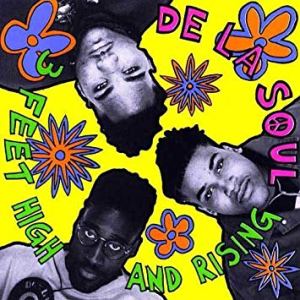
But my yardstick is generally: is it time to listen to 3 Feet High And Rising yet? Perhaps prompted by the recent freakishly-warm weather in London, the answer is a resounding yes.
Because De La Soul’s debut album, released 30 years ago today, can refresh the most jaded of pop palettes and may be the ultimate summer record.
At my school, it was all the rage and a relief from the incessant INXS, Simple Minds and U2. Probably because De La Soul were from the suburbs of Long Island rather than the inner city, they brought a playful spirit and much-needed humour to hip-hop.
It also reminded older music fans (or – let’s be honest – music critics) of that other ‘summer of love’ anthem, Sgt Pepper, even if the band denied any knowledge of that album.
To my ears, it was the first time sampling was used to bring about a truly surreal vision of music. This was a carefree world where it was perfectly normal for a ‘how to speak French’ lesson to accompany The Turtles’ ‘You Showed Me’, or for Sly Stone’s ‘Poet’ to back up some nursery-rhyme rapping.
Liberace, The Headhunters, Fats Domino; they were all fair game (though controversial – see below). If it sounded good, it was good.
There’s a silly-but-funny fake quiz show schtick running through the album and it’s not often you hear a whispered rap. Almost every track is under three minutes.
There are rhymes about school, haircuts and soap, and if you don’t like one song, there’ll be another one along very shortly.
3 Feet High And Rising was the gateway to some brilliant retro music too, especially for my generation who were too young or not even born the first time around.
A theory: it single-handedly led to a resurgence of interest in Hall & Oates, Steely Dan, early Michael Jackson and Funkadelic.
At the time of writing, the album is unavailable on streaming platforms, pending a stand-off between the band and Tommy Boy Records. Is it karmic payback for the boys being so trigger-happy with the samples? Who knows.
But it doesn’t stop 3 Feet High And Rising being a classic of the ’80s or any other decade.
I’ll never forget it. Circa 1990, I was on holiday with my parents in Kent, near the Cliffs of Dover.
A summer storm was chucking it down. Holed up inside, I flicked through some French music stations on my longwave radio.
Suddenly I heard this absolutely ridiculous guitar playing – deafeningly loud, hysterical, but totally precise, with great phrasing and notes that spluttered out in absurdly wide intervals.
The tone was heavily distorted but the feel was closer to jazz/rock than metal. And the rhythm section didn’t sound too shabby either.
By this time, I had heard Allan Holdsworth, Paul Gilbert, Yngwie Malmsteen, John McLaughlin, some pretty outrageous guitarists, but this was different. Who the hell was it? I strained my ears and just about heard the French DJ utter the words ‘Frank Gambale’.
Yes, it was the Italian-Australian wunderkind, the man who introduced so-called ‘sweep picking’ to a wider audience than before. And the album was revealed to be Live!, released 30 years ago this week and recorded at LA’s jazz/rock haven The Baked Potato on 21st August 1988.
What was really weird was that I had heard Gambale with the Chick Corea Elektric band before this, and even seen them live a few times, but he seemed pretty anonymous in that band.
Not here. To this day, ‘Credit Reference Blues’, ‘Fe Fi Fo Funk’, ‘Touch Of Brasil’ and ‘The Natives Are Restless’ sound like guitar landmarks.
But he was way more than a chops phenomenon – he’s an excellent composer too, clearly influenced by Chick Corea and Larry Carlton but with some moves all of his own.
The album also introduced me to the fantastic Joey Heredia on drums, a completely original player who can do fiery jazz/rock, spicy Latin and Police-style rock, sometimes all in the space of one tune. And the excellent keyboard player Kei Akagi was moonlighting with Miles Davis while playing some sh*t-hot stuff on this album.
Frank Gambale Live! was a key artefact in the golden age of shred guitar, and it gained him some crossover success with metal fans and lots of coverage in guitar magazines.
Sadly his solo career refused to fire after this release, with only moments of 1990’s Thunder From Down Under subsequently holding much interest for me, but this was a sporadically brilliant live jazz/rock album – and one of the best. (It has to be said, there’s not much competition – Larry Carlton’s Last Nite, Weather Report’s 8:30, Jeff Beck With The Jan Hammer Group Live!, Mahavishnu’s Between Nothingness And Eternity, and…er…)
Apart from some brief sojourns in the ’90s, the last time I was really into rawk was during that incredible wave of bands who hit their straps in the late-’80s – Faith No More, Living Colour, Fishbone, 24/7 Spyz, Mr Bungle.
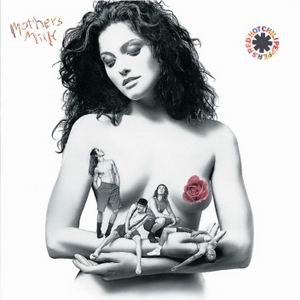
And this lot. Mother’s Milk, released by EMI Records in August 1989, is rock all right, channelling Led Zep and various LA punk heroes, but these boys had some serious funk chops too.
You knew they’d studied P-Funk, James Brown, The Meters, Fela Kuti, Hendrix. This immediately separated them from a lot of second-rate imitators.
After the death of great original guitarist Hillel Slovak and drummer issues to rival even Spinal Tap, they’d finally hit on two top-notch permanent members (don’t ask about the initiation rituals…). John Frusciante channels Hendrix, Jimmy Nolen and Adrian Belew (and even dares to take the p*ss out of Slash at the end of ‘Punk Rock Classic’) and contributes serious songwriting chops.
Chad Smith is an excellent groove player. And Mother’s Milk is one of the great bass albums of the ’80s: take a bow, Flea AKA Michael Balzary. The album screams: YOUTH! Listening back now after 10 years or so, it’s an extremely enjoyable listen and a real contact high for my teenage years of 1989/1990.
The issue for producer Michael Beinhorn was capturing the band’s incredible energy in the studio. In general, he achieves it; it explodes out of the traps, though its gated snares, multiple guitar overdubs and occasionally dodgy Anthony Kiedis vocals overpower it from time to time.
But it’s hard to think of any other band of the era who could pull off the controlled mayhem of ‘Magic Johnson’, ‘Stone Cold Bush’, Subway To Venus’ and ‘Nobody Weird Like Me’. The ‘pop’ tracks ‘Taste The Pain’ and ‘Knock Me Down’ work fine too, and have something to say.
Mother’s Milk has the feeling of ‘last chance saloon’ – various band members explain that they were sure it would be their last album. But it was just successful enough, going gold in the US although failing to chart in the UK.
The boys had bought themselves some time. They signed a shiny new deal with Warner Bros in 1990 and then made their magnum opus Blood Sugar Sex Magik, the one that truly fulfilled their potential.
In the late summer of 1989, Madonna held a series of dance auditions for her Blond Ambition world tour, eventually choosing seven virtually unknown male artists: Luis Camacho, Oliver Crumes III, Salim Gauwloos, José Gutierez, Kevin Stea, Carlton Wilborn and Gabriel Trupin.
Camacho and Gutierez were possibly the best known of the group, members of the Harlem House Ball that became famous for ‘voguing’ (as seen in the ‘Paris Is Burning’ documentary and Madonna’s ‘Vogue’ video).
The heightened environment of the Blond Ambition tour forged a bond between Madonna and the dancers but also conjured up some demons. ‘In Bed With Madonna‘ (AKA ‘Madonna: Truth Or Dare’), Alex Keshishian’s hugely successful 1991 film of the tour, had ramifications for the dancers too – three filed a lawsuit against Madonna, claiming she had invaded their privacy.
A fine new documentary ‘Strike A Pose’ catches up with six of the dancers nearly 30 years on (Trupin sadly died of an AIDS-related illness in 1995), investigating the impact that instant fame had on their lives and unveiling the deep, personal traumas that haunted many of them before, during and after the tour.
Co-directed by Ester Gould and Reijer Zwaan, it’s a powerful, sometimes moving meditation on ageing, artistic integrity, celebrity and identity. I caught up with Gould to chat about the film.
MP: Where did the original idea for ‘Strike A Pose’ come from and was it easy getting the funding?
EG: The original idea was co-director Reijer Zwaan’s: he was 11 when he first saw ‘In Bed With Madonna’ and was immediately blown away by these seven dancers and the film’s bold, liberating message. For the first time in mainstream media, there was this wild, loud, fun-loving troupe of dancers who were being themselves – gay and happy. Over the years, Reijer wondered what had happened to those men. When he told me about the idea for the film, I immediately loved it. We did some online research and found out that there was an entire generation out there thanking these guys for helping them dare to be themselves. At the same time, it wasn’t till we met each of them separately in summer 2013 that we knew we had a film. Our premise was that these paragons of pride and self-expression had each, in their own way, struggled with shame and self-doubt. We always wanted ‘Strike A Pose’ to be more than a ‘where are they now?’ story. We were looking for a larger narrative. It took us about 18 months to finance the film mostly with Dutch government funds. There were questions about whether Madonna would be on board and how she’d be depicted; it’s strange that when there’s a celebrity in the picture there are always forces who want to attack or uncover some dirt. For us, it was never about that.
Was it difficult tracking down Luis, Oliver, Salim, Jose, Kevin and Carlton? And were they easily sold on the idea?
Thanks to social media it wasn’t that hard to find them, but it took some time to get some of them on board, specifically José and Luis. They were tired of people asking them to gossip about Madonna – how could they know we were any different? There was also some fear going back down memory lane perhaps because it had been so hard to move on with their lives after such an impactful experience. What persuaded them was our genuine interest in telling their stories.
The film is a powerful statement about the devastating physical and mental issues around HIV and AIDS, and also the social stigmas surrounding them. In that respect, ‘Strike A Pose’ feels just as relevant today as ‘In Bed With Madonna’ felt in 1991. Was it your intention to make a ‘statement’ or just tell an interesting story about these attractive, fascinating people?
We did want to make a statement, but for us that statement isn’t solely about HIV and AIDS. It was about the emotional consequences of hiding a part of yourself, of feeling unworthy of being loved. It’s really hard to dare to be yourself, to fully accept yourself, if you feel different for whatever reason. Because we all want to belong – it’s deeply engrained in human nature. Of course, gay rights and AIDS awareness have improved since the early ’90s. On another level, it’s one thing to be loud and provocative when you’re young, it’s another to accept yourself on a deeper level when you get older and reality kicks in.
Reijer Zwaan and Ester Gould at the ‘Strike A Pose’ premiere, Tribeca Film Festival, New York City, April 2016
At any point did you seek a contribution from Madonna for the film, and has she made any public or private comment?
We did successfully reach out to her management and lawyers to secure the rights to use fragments of the original film. We also thought a lot about asking her to be part of ‘Strike A Pose’ but always felt like her presence could overshadow the whole film. In a strange way, she was the elephant in the room, because even if she had turned up at the reunion dinner, wouldn’t that somehow ruin the point that these young dancers have moved on, matured and become grown men? We did have one specific scene in mind, almost a title sequence at the end, which was to see these men and Madonna performing ‘Vogue’ once more on stage. We wrote to her about the scene but never got a reply. We do know that she has seen the film and liked it.
What’s your favourite scene in the movie and why?
My favourite scene is the one with José, his mother and her disappointment that he never managed to buy her a house. It’s really hard-hitting and there’s something painfully beautiful about the fact that José is translating what his mum is saying in Spanish, and at the same time he’s moved by what she’s saying, by her sadness that he’s messed up his professional career. We see two broken people and it’s such an honest scene about shattered dreams.
I agree. Your film reminded me a little of ‘Anvil! The Story Of Anvil’ in its depiction of fast fame and then the return to ‘normal life’, but you don’t go into much detail about the dancers’ professional lives after the Blond Ambition tour – was that a conscious decision or one forced by time constraints?
I would say it was mostly forced by time constraints but also for us it was more about this larger narrative that the individual facts. We wanted the film to be cathartic but it was quite hard to interweave all these individual life stories into one film. Also, the reunion of the dancers kind of got in the way of shedding more light on their current lives. Hopefully you do understand that they all still dance or teach dance and have overcome their darker moments. We end with the power of dance rather than talk about their lives today.
‘Strike A Pose’ has enjoyed a limited but successful run at the Dochouse in London but what’s next for the film? Will there be a DVD release?
The film will very soon be released on digital platforms in the UK. And then later this year it’ll be on Netflix, so there are lots of chances to see it.
This is a golden era for documentaries and ‘Strike A Pose’ is a fitting addition. Have you got another project in the pipeline?
I’ve just finished a six-part documentary series for Dutch public television, co-directed by Sarah Sylbing, which was a great success. It’s about the debt problem. We set out to make it as exciting and compelling as fiction, looking at ‘The Wire’ for inspiration. I’m still busy with the impact of that series. I’m also cooking up new ideas but it’s too early to say anything concrete. What I can say is that I love documentary filmmaking and have a lot of faith in its narrative power to reach audiences, especially since there is much more freedom now with genre and form.
The 1980s are littered with bands who started out with the noblest of indie intentions, but then got seduced and/or corralled into major-label action.
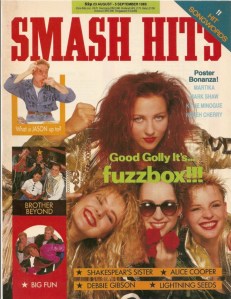
And they didn’t come much more indie than We’ve Got A Fuzzbox And We’re Gonna Use It, the Birmingham-born-and-bred, all-female, John Peel-endorsed quartet which formed in 1985.
By 1988, though they had enjoyed a lone top 40 single, you probably wouldn’t have put much money on them making a claim for serious stardom. But against all odds, they spent most of 1989 as proper pop stars.
Too young to appreciate their early stuff, I had only ever known their ‘pop’ period. But I hadn’t thought about them for over 25 years until the other day when I heard their 1989 single ‘Self’ on Absolute 80s.
I was immediately impressed and intrigued; an irresistible slice of post-Frankie, everything-but-the-kitchen-sink pomp-pop, ‘Self’ features swooning synths, powerhouse drums, strident, Claudia Brucken-esque vocals, a brilliant chorus and even a saucy Brian May guitar solo. How did they do that?
It was all so different back in ’86. Their first UK single, a double A-side of ‘XX Sex’ and ‘Rules And Regulations’, appeared on Vindaloo Records and reached number 41 in March of that year. In December, debut album Bostin’ Steve Austin was released, spawning hilarious first UK Top 40 single ‘Love Is The Slug’.
Further single releases included ‘Rocking With Rita (Head To Toe)’, featuring a version of ‘Itsy Bitsy Teenie Weenie Yellow Polka Dot Bikini’ on the B-side, and even a cover of ‘Spirit In The Sky’.
Clearly a change of direction was needed. Apparently it was WEA A&R gurus Rob Dickins and Bill Drummond who masterminded the band’s assault on the charts, recommending a shortening of their name to Fuzzbox, bringing in songwriter Liam ‘Walk Like An Egyptian’ Sternberg, putting more focus on lead singer Vickie Perks and recruiting session keyboard player Andy Richards to produce the Big Bang album.
Richards’ credentials were exemplary – prior to ’89 he had played on no less than eight ’80s UK number ones: Frankie’s ‘Relax’ and ‘Two Tribes’, George Michael’s ‘Careless Whisper’, Chris De Burgh’s ‘Lady In Red’ and the Pet Shop Boys’ ‘It’s A Sin’, ‘Always On My Mind’ and ‘Heart’. He had also recently produced Prefab Sprout’s ‘Hey Manhattan’.
And, in the short-term, Richards did a sterling job – Big Bang went top 5 and Fuzzbox were pop stars. Three singles from the album got into the top 30 – the infuriatingly-catchy Sternberg co-writes ‘Pink Sunshine’ and ‘International Rescue’ as well as ‘Self’. But the fourth single, a cover of Yoko’s ‘Walking On Thin Ice’, flopped, as did later stand-alone single ‘Your Loss My Gain’. Warners pulled the plug, probably prematurely.
But the story doesn’t end there. Fuzzbox made a comeback in 2010 with a spiffing cover of M’s ‘Pop Muzik’ but sadly lost founding member Jo Dunne in October 2012. After a brief hiatus, they reformed again in 2015 and have just finished touring with The Wonder Stuff. Their YouTube channel claims they are officially the most successful British all-female band. Dispute it at your peril…
It can’t hurt a record label to have a USP, a recognisable visual concept and/or sound. It has certainly stood Blue Note, Impulse and 4AD in good stead.
When one thinks of ECM, images of fjords, mountains or trees probably come to mind, alongside a certain sonic quality, a kind of rarefied ambience (producer/owner Manfred Eicher and his house engineers’ choice of reverb units are apparently almost as ‘secret’ as Colonel Sanders’ chicken recipe…).
The ECM formula worked for two decades. But then along came Terje Rypdal’s The Singles Collection in 1989 to throw a spanner in the works. Though the title is a joke – there are no ‘singles’ on the album – you wish more pop music was as bold as this collection which explores hard rock, early-’60s-style balladry, techno-fusion and even Prince-influenced funk to exciting and sometimes amusing effect.
The shorter tracks start out sounding a bit like Living In A Box jamming with Jeff Beck, before completely changing gear a minute in and turning into dark, introspective mood pieces with Messiaen chords and ethereal fretless bass.
Rypdal chucks in the whole kitchen sink, as if desperate to avoid a boring listening experience. The ploy works. Yes, this is the ECM album whose first track is titled ‘There Is A Hot Lady In My Bedroom And I Need A Drink’… It’s Lovesexy meets Ligeti.
The Singles Collection was the third album in a row where Rypdal hooked up with The Chasers, a cracking bass and drums team comprising of Bjorn Kjellemyr and Audun Kleive. The latter is thinking more Manu Katche and Stewart Copeland than Jon Christensen on this album, and the music is much better for it (no disrespect to the excellent Jon).
But a vital ingredient is the addition of keyboardist Allan Dangerfield who contributes three compositions and all manner of weird textures, Synclavier drum/sequencer patterns and unhinged, hysterical Hammond organ solos very much in the Prince style.
‘Sprøtt’ (Norwegian for ‘crazy’) sounds like an outtake from Jeff Beck’s Guitar Shop album with its chugging rockabilly rhythms and blistering lead guitar. Luscious noir ballad ‘Mystery Man’ will be familiar to fans of the Michael Mann movie ‘Heat’. If Mann hadn’t bagged it, you can bet David Lynch wouldn’t have been far behind. Maybe Dave can still put the gorgeous, glacial ‘Somehow, Somewhere’ to good use.
Elsewhere, ‘U’n’I’ fuses rockabilly and free-jazz beats with fusion bass, Ligeti chords and Van Halen guitar styles to thrilling effect. ‘Steady’ features some serious funk/rock riffing and another nutty Dangerfield solo. All in all, a striking, fascinating album.
Here’s a late, almost completely forgotten contender for the pretty short ‘film better than the book’ list.
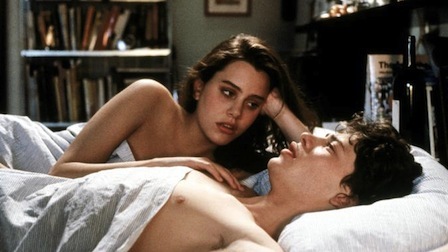
Writer/director (and son of Richard) Damian Harris’s ‘The Rachel Papers’, based on Martin Amis’s 1973 debut novel, crept out in May 1989 to mediocre reviews and underwhelming business.
At the time, the post-‘Mission’, pre-‘Four Weddings’ British film industry was in its latest rut, unsure of its place in the global marketplace and reeling from massive government cuts.
But somehow ‘The Rachel Papers’ movie remains true to Amis’s irreverent, adolescent, sweary, very ‘London’ vision, while understandably playing down the overt racism, sexism and druggier aspects of the novel.
The plot centres around Charles Highway, a precocious, upper-middle-class tyke on the cusp of his 20th birthday. He’s no virgin (the title alludes to the secret ‘research files’ he keeps on all his previous conquests) but is desperate to sleep with an older woman before he hits his twenties.
The lovely, intelligent, well-bred Rachel seems to fit the bill perfectly, but Charles gets a lot more than he bargains for when he pursues her. Falling in love wasn’t part of the plan, etc, etc… He also has to contend with Rachel’s on/off American boyfriend DeForest. Charles does a fair bit of learning and ‘growing’, but with an agreeable lightness of touch. Most importantly, the movie rattles along at a good lick.
Ione Skye and Dexter Fletcher
I came across ‘The Rachel Papers’ completely by chance in the early ’90s when I was almost exactly Charles’s age, and it rang a lot of bells. Watching it again recently, I was pleased how well it stands up whilst obviously being very much of its time. The movie lives or dies by the casting of the Charles character – Dexter Fletcher does his best but wouldn’t seem a natural fit for the role. For a start, he looks barely older than 15. Where was Hugh Grant when Harris needed him?
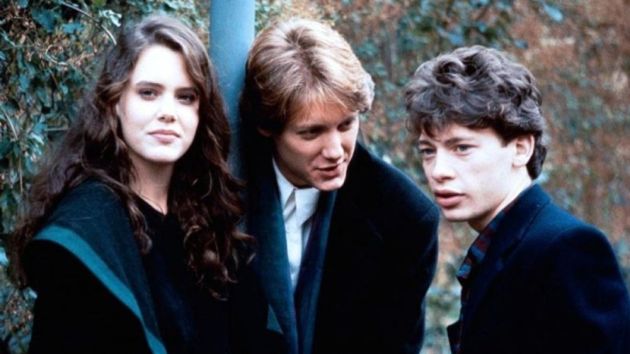
Often breaking the fourth wall and speaking directly to camera, Charles is a fusion of Ferris Bueller and Alfie, basically a cocky, rather spoilt little prick with, as it turns out, a few deep-rooted insecurities. In Amis’s book, Rachel isn’t American – the casting of Ione Skye was apparently a studio-imposed decision, but it doesn’t upset the balance of the film at all. She does a great job in an underwritten role. She’s a fresh, natural, uplifting presence, carrying on from where she left off in the classic ‘Say Anything’. James Spader delivers a typically superb performance as DeForest, mining the same smarmy, condescending schtick he so memorably employed in ‘Pretty In Pink’.
Skye, Spader, Fletcher
The film is also chock-a-block with other memorable character turns – Jonathan Pryce, Michael Gambon, Lesley Sharp, Aubrey Morris, Gina McKee and Claire Skinner do some great work, particularly Gambon as an amusingly-off-hand university interviewer. Ian Dury’s right-hand-man Chaz Jankel does a decent job with the soundtrack on top of some choice contributions from Shakespears Sister and John Martyn.
Jonathan Pryce in ‘Rachel’
In the final analysis, ‘The Rachel Papers’ is the only Brit romcom I’ve seen that approaches something like ‘The Sure Thing’.
It’s irreverent and unpretentious but certainly not dumb, a fairly accurate portrait of late-’80s London, bringing an appealing cheerfulness to the city without resorting to picture-postcard clichés (there’s not a shot of Big Ben or Trafalgar Square in sight). The sexual politics and shenanigans are also refreshingly upfront.
It’s surely due a remake – the recent ‘Don John’ seems to touch on similar areas but looks like somewhat of a disaster area if the trailer is anything to go by. Don’t judge ‘The Rachel Papers’ by the trailer either, though, by the way…

 ‘File under: Victims Of A Cruel Medical Experiment’.
  A major trope of ’80s or ’80s-set movies, novels and plays was the insane or morally unsound banker, broker or trader.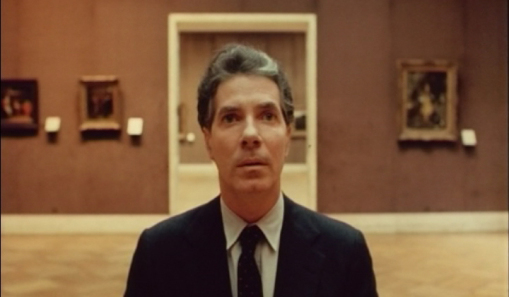


 The citizens of Punxsutawney have the groundhog to tell them whether there’ll be an early spring (much to Phil Connors’ disgust).




 movingtheriver.com