Kelis, Al Jarreau, Michael Gregory Jackson & ‘Blurred Lines’: Does Pharrell Have Form?

KelisSo it’s official – Pharrell Williams and Robin Thicke ripped off Marvin’s ‘Got To Give It Up’ when they wrote ‘Blurred Lines’ in just one hour (though Thicke denies having any input into the writing of the song).

And The Guardian reports that Pharrell’s ‘Happy’ may now be in the Gaye family’s sights too due to its alleged similarity to ‘Ain’t That Peculiar’.

Trumpet player, composer and blogger Nicholas Payton has also written eloquently and passionately about the whys and wherefores of the ‘Blurred Lines’ case.

But maybe all of this shouldn’t be surprising – Pharrell seems to have previous. Let’s investigate the track ‘Roller Rink’ from Kelis’s 1999 album Kaleidoscope which, according to the credits, was co-written by Pharrell, Chad Hugo and Kelis:

Now compare that with ‘No Ordinary Romance’, credited to Michael Gregory, which features on his 1983 album Situation-X and also Al Jarreau’s L Is For Lover from 1986, both produced by Nile Rodgers:

Kelis/Pharrell/Chad haven’t even bothered to change key. They’ve just ‘replayed’ Gregory’s original. Their version arguably comes up a better top-line melody in the verses, but the chorus just lifts the catchy synth motif from both the Gregory and Jarreau versions.

Michael+Gregory+Jackson+michaelgregory2

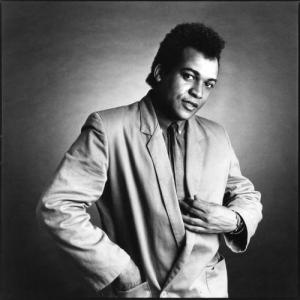
Michael Gregory Jackson circa 1983

Michael Gregory Jackson was a first-call guitarist in the New York avant-garde jazz scene during the mid-’70s. Later in the decade, he reinvented himself as a singer-songwriter and did a pretty job of it, his 1987 solo album What To Where (sadly not currently available on streaming platforms) getting rave reviews in Q Magazine and a few other influential rags at the time.

My 1999 Kaleidoscope CD credits state that ‘Roller Rink’ was ‘written by K Rogers/P Williams/C Hugo’, with no mention of Gregory Jackson’s name or sample permissions etc. So one wonders how much publishing income he has been denied, though Kaleidoscope wasn’t a huge hit album and ‘Roller Rink’ wasn’t released as a single.

We continue to follow this story with great interest.

(Update, May 2023: Michael Gregory Jackson has written his own article in response to the above – read it here.)

Where ’80s Pop Went Wrong (In Five Songs)

screaming-man-with-headphonesAt some point in the ’80s pop parade, the subtle became bloated, the charmingly-naive became coarse and the modest became overblown.

As the decade’s greats and not-so-greats limbered up for Live Aid, artistic judgement started getting skewed, recording budgets sky-rocketed and egos rampaged out of control.

The blueprints were drawn up for pop travesties of the future. We present, in chronological order, the five singles which illustrate where things went wrong in ’80s pop. (How the hell could Nile Rodgers have produced two of these?! Ed.)

5. Duran Duran: The Wild Boys
Released 26 October 1984

The sound of money. And not in a good way. Aiming for a Frankie Goes To Hollywood-style sex-groove, the dandy Brummies contrive to create a ramshackle piece of over-produced, under-performed pub-funk. Nick Rhodes plays like he’s just been taught a few minor chords and Le Bon’s vocal is consistently just out of tune (why didn’t they change the song’s key before recording?). And we haven’t even got to the drummer’s ‘solo’ yet. Even Nile’s production can’t save this one.

4. Thompson Twins: Revolution
Released 29 November 1985

This was the worst song performed during Live Aid. And that’s really saying something. It’s murder, sacrilege, an aural travesty. It’s even worse than Paul Young’s version of ‘Love Will Tear Us Apart’. Tom Bailey delivers the lyrics like a sozzled Stoke middle-manager on karaoke night. Guitars are ladled on willy-nilly and multiple percussion effects merely serve to drive one to distraction. A triumph of vapid tastelessness. What was Nile thinking?

3. The Police: Don’t Stand So Close To Me ’86
Released October 1986

A weary exercise in career suicide and musical emasculation. Copeland phones in his programmed drum pattern (he broke a collarbone just before the recording). Summers’ once-vibrant, nuanced sound has become a post-Edge blur. Sting’s considerable bass skills are booted into touch in favour of a crude, mushy-sounding sample. Depressing synths chart the chord changes like clouds eclipsing the sun while Mr Sumner succeeds in removing all emotion from his vocal. ‘Dark’ doesn’t begin to cover it. Why why why?

2. U2: With Or Without You
Released 21 March 1987

The barely-scanning, bet-hedging lyric (‘You give yourself away’? How? With your eyes, your body? Something you said? What, what?!) aims for a kind of Bowie/Ferry mystique but is basically meaningless and the precursor to all those Snow Patrol/Coldplay list songs that crowbar in increasingly-inane words to fit a flimsy melody. Adam Clayton’s remedial bassline, badly played at that, slavishly outlines a dull chord sequence which should never have left the rehearsal room. Bono attempts the first verse in a sub-Bowie croon, but you can tell he’s just itching to hike it up an octave. And when he does it’s no better than Tony Hadley. The song runs out of steam at around the three-minute mark but then aimlessly drags on for another two minutes in the vain search for ‘dynamics’.

1. Michael Jackson: Bad
Released 7 September 1987

Where to begin? The crude, obviously looped bass vamp (close listening reveals the ‘joins’ at the beginning of every two bars); poor Michael’s adolescent lyrics displaying a wronged teenager’s obsession with point-scoring and fisticuffs, a videogamer’s take on violence; a poor verse melody which never engages followed by the endless repetition of a weirdly unmemorable chorus; Quincy Jones trying to throw a ‘Beat It’-style curveball by getting jazz legend Jimmy Smith in for a Hammond organ solo which barely registers. Michael’s vocals are powerful but comparing this track to almost anything on Thriller reveals a sad indictment of late-’80s pop.

12 Reasons Why The ’80s Were The Greatest Ever Music Decade

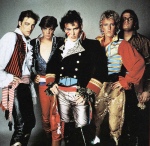
Adam_and_the_Ants_198112. Fun Fun Fun
Your baby-boomer parents might claim that the Swinging ’60s were pretty much a non-stop laugh riot but the early ’80s trump them for sheer musical ebullience. There was a tangible feeling of positivity in the air despite Thatch, inner-city rioting, The Troubles, African famine and the Falklands War. Music was forward-looking and celebrated life, love and happiness (despite state-of-the-world addresses like ‘Ghost Town’ and ‘The Message’), and no one even thought of buying older stuff because there was something new and exciting coming along every week. Live Aid proved a kind of Year Zero for ’80s pop but up until then artists like Culture Club, Dexy’s, Wham!, ABC, The Associates, Frankie, Adam Ant, Madonna, Thompson Twins, Bananarama, Jacko, Altered Images and Fun Boy Three brought unlimited colour and energy to the party.

11. The return of quality British songwriting
How about Squeeze, Morrissey/Marr, Roddy Frame, David Sylvian, Kirsty MacColl, Mark Hollis, Pet Shop Boys, The Associates, Edwyn Collins, Julian Cope, Sting, XTC, Mark E Smith, Thomas Dolby, the Cocteaus, Green Gartside, Boy George, Eurythmics, Peter Gabriel, Elvis Costello, Nick Heyward, Lloyd Cole, Madness, Paddy McAloon, Paul Weller, Robert Smith, UB40, Siouxsie and Kate Bush for starters? Yes, their formative years were the late ’70s but they did their best work in the ’80s, with the possible exceptions of Weller and Costello. The result was a glorious display of chart-bothering, musically-ambitious British songwriting talent not seen since the late-’60s.

10. Band Aid/USA For Africa/Live Aid/Sir Bob
Maybe it wasn’t the most musically edifying series of projects in the world, but who cares? At last count, Live Aid has raised well over £150 million. Anyway, there were some brilliant pop moments – Boy George’s vocals, Phil C’s electrifying drum performance and Bowie’s spoken word interlude on ‘Do They Know It’s Christmas’, Queen, Bowie, Jagger, Tina Turner and Madonna at Live Aid and all the soloists on USA For Africa (except Tina Turner, Huey Lewis and Kenny Loggins…). Live Aid may have killed off New Pop (represented by Adam Ant, Spandau and Duran etc.) and ushered in the AOR-era of Q Magazine and Dire Straits, but maybe that wasn’t such a bad thing.

9. Goodbye Dad Rock – Hello pan-sexual/pan-musical New Pop!
A quick glance at the charts during the ‘1981-’83 peak of Post-Punk/New Pop/Second British Invasion might tempt one to say that Lad/Glam/Punk Rock had all but been wiped out. Artists like Human League, Kid Creole, Wham, The Associates, Orange Juice, Talking Heads, Altered Images, Wham, Culture Club, UB40, Pigbag, Everything But The Girl, Eddy Grant, The Clash, Madness, The Belle Stars and Level 42 took elements of synth pop, free jazz, ska, Burundi Beat, Go-Go, electro, calypso, hip-hop, funk, reggae and Afrobeat to the top of the charts, leading some commentators to proclaim the death of rock. By the mid-’80s, Big Country, Simple Minds, U2, The Mission and Springsteen had brought back the Big Bam Boom, but it was fun while it lasted.

8. Sisters Doin’ It For Themselves
Chrissie Hynde, Bananarama, Siouxsie, Donna Summer, Belinda Carlisle, Carly Simon, The Pointer Sisters, Alison Moyet, Grace Jones, Sade, Bjork, The Bangles, Sheila E, Annie Lennox, Janet Jackson, Joan Jett, Salt-N-Pepa, Laurie Anderson, Whitney Houston, kd lang, Tina Turner, Bonnie Tyler, Gloria Estefan (!), Jane Siberry, Regina Belle, Aretha Franklin, Anita Baker, Teena Marie, Jill Jones, Lisa Stansfield, Cyndi Lauper, Wendy and Lisa, Tracey Thorn, Helen Terry, Chaka Khan, Kirsty MacColl, Suzanne Vega, Tracy Chapman, Julia Fordham, Tanita Tikaram, Madonna… You don’t have to be Camille Paglia to note that this was a great decade for strong, successful female musicians.
on-u sound7. Great Independent Labels
4AD, Rough Trade, Beggars Banquet, Relativity, Factory, On-U, Demon, Creation, Some Bizzare, Big Beat, Mute and Postcard were vital for the music industry and all hit their peaks in the ’80s. Up to around 1985, the Independent Chart actually meant something and was a badge of honour for the kinds of Peel-patronised artists who were going up against the corporate biggies, long before today’s web renegades. By the mid-’80s, ‘indie’ had became a musical style rather than a raison d’etre and labels like ZTT and Blanco y Negro were tributaries of major labels, but at least the lunatics had taken over the asylum for a while.
smash hits6. The peak of Music Journalism
This great musical decade certainly got the journalism it deserved. Again, the roots were laid down in the NME/Sounds/Melody Maker punk years but writers such as Ian Penman, Mark Ellen, Paul Du Noyer, Ben Watson, Tom Hibbert, David Toop, David Hepworth, Mick Wall, Richard Cook and John Fordham flourished big-time and graced the great bastions of ’80s writing such as Smash Hits, Kerrang!, The Wire and Q. Sprinkle in some of the most outspoken, politicised and downright lairy musicians of all time and you have the ingredients for a brilliant decade of music journalism.

5. Michael Jackson, Prince and Madonna?
They were almost exactly the same age but can all three really have hit their straps in the same decade? Ambassador, you are spoiling us…

4. Music TV flourishes
The Tube, Top of the Pops, Going Live, No. 73, The Late Shift, The Oxford Road Show, Sounds of Surprise, More Bad News, Whistle Test, The Chart Show, Wired – howzat for a partial list of ’80s music shows? There was a commitment to all music genres across all the terrestrial channels. Forget Jools’s Later luvvie fest or the simpering One Show – in the ’80s you could watch The Smiths on Saturday morning kids TV, Blancmange at teatime and Ornette Coleman late at night. The burgeoning Channel Four has to take a lot of credit (and had a lot to prove) – The Tube was a brilliant statement of intent and later in the decade Sounds of Surprise and The Late Shift showcased superb jazz and blues documentaries.

3. ’80s Pop Tribes
Again, the watchword is variety; music and fashion pretty much went hand-in-hand in the ’80s to the detriment of neither. New Romantics, Goths, Soulboys, Ravers, Casuals, Psychobillies, Brosettes, Durannies, metal kids – they all had an instantly-recognisable uniform and ethos. The DIY punk spirit had came to the fore again, but this time with added musical spice. And this time there was so much to go around that no-one could be accused of being a fashion victim.

2. Music Video comes of age
The Beatles’ Hard Day’s Night and The Monkees laid the foundations but the music video was raised to an art-form in the ’80s. The great clips of the decade – ‘Sledgehammer’, ‘Thriller’, ‘Walk This Way’, ‘House of Fun’, ‘Stand and Deliver’, ‘Smalltown Boy’, ‘Land of Confusion’, ‘Take On Me’, ‘New Frontier’, ‘Once In a Lifetime’ – sometimes used the latest technical innovations, sometimes delighted in their DIY, no-frills approach and sometimes ‘borrowed’ from conceptual art/movies, but all became virtually inseparable from the songs.

1. Black Music goes mainstream
Motown and the ‘early 70s pioneers laid the foundations but Run DMC, Sade, Cameo, SOS Band, Robert Cray, John Lee Hooker, Prince, Tone Loc, Salt-N-Pepa, Bobby Brown, Miles Davis, Rick James, Anita Baker, Courtney Pine, Miles Davis, The Pointer Sisters, Whitney Houston, Albert Collins, Shalamar, De La Soul, Janet and Michael, Al Jarreau, Luther Vandross, Teddy Pendergrass, Prince, Maze, Buddy Guy, Grandmaster Flash, Chaka Khan, Imagination, Lionel Richie, Dionne Warwick, Diana Ross and Fatback all smashed it in the ’80s. Blues, soul, funk, jazz, electro, go-go, house and hip-hop were setting the agenda. It’s quite astonishing now to think that a song like Houston’s ‘Saving All My Love For You’, an R’n’B ballad with jazzy chord changes, could power to number one in 1985.

Level 40-Who? True Confessions Of A Tribute Band Drummer

level 42

Boon Gould, Phil Gould, Mark King, Mike Lindup, London 1982

I first became aware of the legendary jazz/funk/pop band Level 42 in January 1983 when I saw them on ‘Top Of The Pops’ miming to their hit single ‘The Chinese Way’.

I was just another young music fan and burgeoning drummer enjoying the Second Golden Age of British Pop, but this was different: the band was tight, soulful, and yet somehow otherworldly.

And their musicianship was superior to other chart acts of the day. For a few years, they were my band.

Cut to 2000. I was embarking on a career as a session drummer. However, all the gigs I’d been offered had been with sub-Stone Roses indie bands or smooth jazz acts. Then I saw an ad in Loot magazine: ‘Drummer Wanted for Level 42 tribute band. Call Nick on…’ My mind started racing. This was the dream gig.

I rang Nick – playing the ‘role’ of famous bassist/vocalist Mark King – immediately. I managed to impress him by mentioning that it would be fun to play ‘The Return Of The Handsome Rugged Man’, an obscure B-side that sounded like Jeff Beck jamming with Weather Report.

Nick had also recruited Peter, a keyboard player, and the three of us met for a drink, sharing Level 42 stories and trivia. These were the halcyon days. We were all buoyed by a shared love of the band’s music.

Nick was an amiable, meat-and-potatoes kind of guy. He did have a passing resemblance to Mark King, but also had the rather distressing habit of calling all the drummers he had ever worked with ‘w*nkers’…

The first few rehearsals went well. Nick was a capable bass player and, vocally, a passable Mark King impersonator. Peter did a good job of aping the band’s trademark keyboard sounds. I was trying to replicate Phil Gould’s drum parts to the letter and doing a reasonable job. We named ourselves Level It Up, a pun on the band’s 1983 hit ‘The Sun Goes Down (Living It Up)’.

After only a few rehearsals, Peter got us a gig at a Level 42 convention in a huge hotel off the A303. We were nowhere near ready to be playing live, but felt we might recruit a much-needed guitarist and backing vocalist at the venue.

The initial omens were not good – I had contracted laryngitis the day before the gig. By the time we arrived at the hotel, I was almost incapable of speech.

I looked at the live stage and immediately noticed something: no drums. Suddenly two assistants appeared and an Ikea-like structure was erected next to the keyboard rig: the dreaded, electronic V-Drums, with all of their naff connotations to the ‘boooo!’ sounds heard on terrible disco records. I had never played them before in my life, and the chances of Phil Gould ever playing them were miniscule.

We were told we would be playing at 9pm. I peered at the clock. It was 4pm. Somehow we got through the afternoon with regular toilet breaks and watching bass players trying to play exactly like Mark King in a soundalike competition.

Suddenly the raffle was over and we were on. I sat behind the V-drums tentatively and peered out into the crowd. There was silent expectation. Opening number ‘Almost There’ went by without any big hitches. There was even an enthusiastic reception at the end. They knew we were trying our best.

‘Out Of Sight, Out Of Mind’, conversely, was an unmitigated disaster. My V-drums started faltering halfway through the track and suddenly cut out completely. Had someone pulled the plug?

The stage manager rushed on to fiddle with the wiring while I tried to hide behind the keyboards. ‘It’s never happened before,’ he growled, throwing me an angry glance as the small crowd chatted amongst themselves. My throat tightened painfully as I tried to respond.

A dilapidated acoustic kit was summoned from an anteroom and hastily set up. We resumed playing but the thrill had gone and we couldn’t recover. This was the first real omen that our little tribute band was heading for the skids but I still didn’t heed the warnings.

Nick’s sister sang with us for a rare gig at his local and we got someone in to play guitar – he papered over the cracks for a while, but wasn’t the main problem.

The problem was that my relationship with Nick was starting to echo the real, troubled relationship between the people we were ‘impersonating’ in the tribute band – Phil Gould and Mark King – whose falling out precipitated the breakup of the original Level 42 lineup.

Was life imitating art? Maybe all tribute bands eventually start to ape their heroes in ways other than musical. Maybe it’s a kind of self-fulfilling prophecy. If you spend many hours in a rehearsal room trying to copy another band’s music with all the management skills and forced intimacy that entails, do you naturally take on the roles that characterised the original band?

All I knew was that whereas I once looked forward to rehearsals, now I dreaded them. That’s when reality finally kicked in. It was time to leave the cut-throat world of the tribute band.

Sure, we’d ridden on the crest of a wave for a while, but let’s face it, the odds were stacked against us. Yes, we might have played The Railway Tavern in Andover once a month, The Green Man in Guildford now and again, The Old Red Lion in Carshalton if there was a last-minute opening.

But the phone wasn’t ringing, and, anyway, as I found out later, there was already a Level 40-Who doing that circuit.

‘Level 42: Every Album, Every Song’ by Matt Phillips is out now.