The Face Magazine: Culture Shift @ National Portrait Gallery, London

Any British music fan who came of age during the 1980s must surely have a soft spot for The Face magazine.

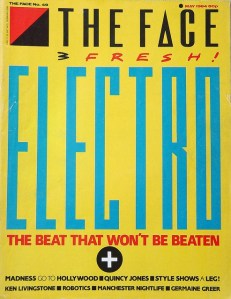
Launched by Smash Hits founder/NME editor Nick Logan in May 1980, the monthly rag – so named because of its Mod allegiances – quickly become known as a first-rate style mag (it covered fashion, music, culture, clubbing and cinema too), with its many famous covers reaching the level of high-quality pop art.

Indeed, looking again at issue #1, it’s remarkable how many of its listed writers and photographers would turn out to be key documentors of the decade – Janette Beckman, Julie Burchill, Gary Crowley, Anton Corbijn, Ian Cranna, Jill Furmanovsky, David Hepworth, Tony Parsons, Sheila Rock, Pennie Smith (and that issue alone features iconic photos of Madness, The Specials, The Clash, John Lydon and Paul Weller, amongst others).

It was also unique amongst 1980s music mags in paying as much attention to reggae, hip-hop, electro, house, rare groove and jazz as it did to post-punk, 2-Tone and sophistipop.

But movingtheriver also remembers it most for its superb long-form interviews: I still have issues featuring in-depth pieces on Miles Davis, Trouble Funk, Dennis Hopper, David Sylvian, David Byrne, Robert Smith, Daryl Hall and Ken Russell.

The Face’s iconic imagery is celebrated at the excellent if compact new exhibition at London’s National Portrait Gallery. Predictably it’s photos from those post-punk/New Pop salad days of 1980-1983 which produce the most smiles of recognition/pleasure – Bowie in Japan, Adam Ant, Phil Oakey, John Lydon, Annie Lennox.

But there are great pics/stories from later in the decade too – Bros with their mum at home in Peckham, Shane MacGowan, Sade, Nick Kamen, Felix et al. There’s also a great chronology of 1980s clubbing, from Goth to Acid House, and a focus on long- lost London nightspots.

As the 1980s became the 1990s, The Face arguably reflected a gradual coarsening of the culture with more focus on fashion and lifestyle – but you knew that anyway. But this exhibition is a must-see for any music fan who loved the 1980s, and it was also refreshing to see such a broad range of ages attending.

The Face Magazine: Culture Shift runs at the National Portrait Gallery until 18 May 2025.

10 years of movingtheriver.com & The Future

It was ten years to the day that I published my inaugural articles for movingtheriver, pieces on Prefab Sprout, Marcus Miller/Miles Davis, Peter Gabriel , Keith LeBlanc, Prince and Level 42.

The site was a few years in the planning but really only became a reality during an enforced period of reclusion via illness.

Anyone who sets up a project as a labour of love knows how quickly it becomes both a lifeline and passion. Over the past ten years, it’s also been great fun sharing stories and opinions with readers, writers, musicians and bloggers alike.

I’m not sure what the future holds for the site. Substack and YouTube beckon and WordPress has its issues (some of you may have mistakenly been sent a test post by the WP backroom bods recently…).

But the keyword is enjoyment. So hope to see you in ten years…

1984: David Bowie’s Worst Year?

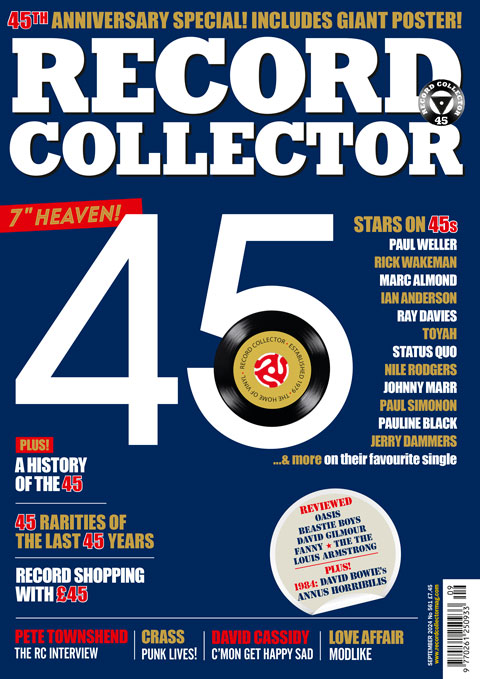
Bowie’s Tonight, the speedy followup to Let’s Dance released 40 years ago, was one of the most divisive albums of his career.

For some, it was over-produced pap. For others, it was a great little pop/rock album. In the September issue of Record Collector magazine, I reassess it, rounding up some of the usual and unusual 1980s suspects in the process.

Still, for many, 1984 remains the worst year of David’s career. In fact, during a period of great personal strain, it was one of his most intriguing, including collaborations with Pat Metheny, Tina Turner, John Schlesinger and Iggy Pop, the ‘Jazzin’ For Blue Jean’ short film with Julien Temple and his (at first) tentative foray into the Band Aid project.

Read all about DB’s 1984 in the new RC. Top breeders recommend it.

Spotify Guilt (Part Deux)

Morris Levy

‘When we win a Golden Globe, it helps us sell more shoes.’
Amazon founder Jeff Bezos, 2016

The Spotify weirdness continues, as does movingtheriver’s ambivalence about the platform (its only real draw seems to be convenience, like everything else in the tech game. After all, music is only ‘content’, or at least that’s how it was recently described by MD Daniel Ek.)

As Ted Gioia has pointed out, Spotify’s current modus operandi seems to be: cut costs (staff redundancies), raise prices for customers, and play games (create AI music so the ‘human element’ can be ruled out and composers not paid.)

One’s reminded of that line in Robert Altman’s ‘The Player’, when Tim Robbins’ stressed movie exec, answering the charge that anyone could write a script simply based on the headlines in the morning papers, says something like: ‘Great – remove the screenwriter and we might really have something going here.’

If you ever get a job with one of the ‘big three’ music companies (Warner, Sony, Universal), you’ll probably have to undergo an ‘introduction to the music business’ course which emphasises the noble goal of collecting royalties for musicians and songwriters. But the more money at stake, the less this seems to happen. One’s reminded of Morris Levy’s stock riposte to disgruntled musicians and songwriters: ‘If you want royalties, go to Buckingham Palace’.

But then it’s important to remember labels like Blue Note, Virgin and Island, and people like Alfred Lion, Simon Draper and Chris Blackwell, who were always music fans first and foremost. Ditto almost everyone I’ve come across working in niche genres (jazz, classical etc.).

As for Spotify’s marketing pitch about discovering new music? I can’t think of any new music I’ve discovered via Spotify (but have discovered some good new podcasts). My discovery of new music comes from the old gatekeepers – magazines, radio programmes, music books, blogs, press releases. I probably use Spotify like a lot of other people – to ‘organise’ and compile mostly old music that I’ve previously owned or hired from the library etc. etc.

Then there’s the staff redundancy issue, as above. Anyone who follows Spotify on LinkedIn will see them posting all kinds of strange techie jobs. You can be sure that almost none are focused on music. Very occasionally you notice a half-decent functionality upgrade (most recently, finally you can move a track up or down a playlist without too much faff, but there are still a myriad of problems – this video highlights them very well) but it’s probably safe to assume they are mainly seeking newer and better ways to snoop on their users.

So the Spotify conundrum continues. When will I finally give up my Premium subscription? When it goes up to £12.99 a month? When a whole load of catalogue starts to go ‘missing’? Watch this space.

Women In Revolt (Art And Activism In The UK 1970-1990) @ Tate Britain

Behind the shiny, fun, tabloid version of the 1980s, there was an undercurrent of protest, upheaval and misogyny.

In the latter camp, how about the following astonishing UK laws still enshrined at the dawn of the decade: men had a right to have sex with their wives without consent. Welfare benefits were paid to married women via their husbands.

A fascinating new exhibition at London’s Tate Britain investigates the woman artists and activists whose work was a reaction to these and other issues. There’s a strong presence for punk, post-punk and industrial musicians: Gina Birch of The Raincoats, Throbbing Gristle’s Cosey Fanni Tutti and Poly Styrene of X-Ray Spex. We see fanzines, posters, gig excerpts.

There’s groundbreaking video art – Vivienne Dick’s ‘Two Little Pigeons’ and Birch’s scream are particularly memorable. We see banners, collages, sculptures and newsletters produced by the women who marched from Cardiff to Greenham Common in September 1981, challenging the decision to house 96 nuclear missiles on the site.

There’s a focus on the British Black Arts Movement, a group of artists who gathered in the wake of various uprisings in the early 1980s, from Toxteth to Brixton, and also Four Indian Women Artists, the first UK exhibition organised by and exclusively featuring women of colour.

Margaret Thatcher cut arts funding drastically in the mid-’80s, a decision which ushered in corporate sponsorship and prompted a backlash from many woman artists who began to show their work in local spaces, community centres, libraries, cafes and homes. We see much of this material and learn about its contexts.

And then of course there are the famous sexist advertising billboards, wittily defaced.

The exhibition constantly undermines Thatcher’s comment to Woman’s Own magazine in 1987 that ‘there’s no such thing as society’. And there’s a surprise around every corner. It’s moving, amusing, disturbing and educational in equal measures, and a reminder that protest and assemblage can create change. But the exhibition is also very large and probably takes two visits to really appreciate.

Women In Revolt! runs at the Tate Britain until 7 April 2024. A new podcast interviews some of the key artists.

Then Jerico: Now That’s What I Call…Not Bad

Of course it was just teenage aggro/jealousy, but my schoolmates and I were always a bit suspicious of those late-‘80s pop acts who were much fancied by our female friends: Morten Harket, Richard Marx, Jason Donovan, the Goss brothers, Marti Pellow, Nathan out of Brother Beyond, those blokes from Big Fun.

But Mark Shaw of Then Jerico was probably their favourite, instantly putting his band’s music into the dumper, even though we probably all had a soft spot for their 1987 hit ‘The Motive’.

Listening back now on a good system, it’s a superb-sounding single – impactful, clean and shiny, with great instrument separation. It typified late-1980s British pop/rock helmed by excellent producers who had learnt their trade in the golden age of commercial recording studios, people like Tim Palmer, Rhett Davies, Peter Henderson, Andy Richards, Jon Kelly, Rick Nowels, Mike Shipley, Bruce Lampcov, Peter Collins, Julian Mendelsohn, Gary Langan et al.

Of course Trevor Horn was an overarching influence, representing the gold standard. It Bites’ Francis Dunnery mocked ‘Big Area’ (see below) producer Langan (collaborator with Horn on Yes’s 90215, Malcolm McLaren’s Duck Rock and FGTH) in a 2021 interview for PROG magazine: ‘Everyone who had ever walked past Horn was given a record to produce. I think Trevor’s milkman produced Then Jerico and had a hit!’

Yes, there was a fair amount of turd-polishing but these producers inspired the late-1980s rock comeback, generating hits for Breathe, Fuzzbox, Cutting Crew, Paul Young, Love & Money, Deacon Blue, Killing Joke, All About Eve, The Mission.

And Then Jerico. Maybe they were actually pretty good. Their best songs – ‘Sugar Box’, ‘The Motive’, ‘Big Area’ – marry a sort of U2/Simple Minds/Tears For Fears ‘thing’ with Shaw’s tremulous vocals to strirring effect, something akin to the sound of falling in love. When any of them come onto ‘Forgotten 80s’, it’s impossible to turn off. Though one is still slightly reticent about checking out a whole album in one sitting.

And guess what – Shaw has reformed the band, and they’re touring extensively this year. And he has rather a juicy/chequered recent past to tell of too.


The CD Cull

New year, new CD collection.

December 2022 saw the Second Annual CD Cull, not quite as drastic as the Great Cull Of 2021 but still pretty ‘brutal’ (can we please ban the use of that word in 2023 unless it refers to human atrocities?!).

In this annual period of reinvention and rebirth, some people throw out clothes, books and furniture – these days I look with fear and pity at my overburdened CD shelves.

CDs have lots of pros: sound quality, liner notes, cover artwork. But they are heavy, take up space, and looking at my stash is also a tacit admission of guilt at not getting to record shops as much as I used to.

But which CDs to keep? Of course there are the untouchables, in my case: Steely, John McLaughlin, Weather Report/Jaco/Wayne, Level 42, Jeff Beck, Syd, Ornette, Monk, Joni, Miles, Prefab, Little Feat, Marvin, Zappa, Scritti, Faith No More/Mr Bungle, It Bites, Danny Wilson et al.

Then there were the CDs I’m not altogether sure about but aren’t available on any other formats. So it’s a stay of execution for:

Lil Louis’ From The Mind Of Lil Louis
Robin Eubanks’ Karma

Then there are ones I haven’t listened to for ages. So I listened to them. Did I still want the below? Yes. They all screamed ‘classic’ pretty much from the first bar:

Human League’s Dare
Morphine’s Like Swimming
Brad Mehldau’s Places
Geri Allen: The Gathering
Brecker Brothers Collection Vols. 1 and 2
Gary Clail’s Dreamstealers

Little Axe’s The Wolf That House Built
Lonnie Liston Smith’s Cosmic Funk
Albert Collins & The Icebreakers’ Live ’92-’93
Blur’s Blur
Flaming Lips’ The Soft Bulletin
D’Angelo’s Brown Sugar

But stuff has to go, so you need a system. There were soundtrack albums with one or two superb vocal tracks but which otherwise flattered to deceive:

Isaac Hayes’ Shaft
Marvin’s Trouble Man

There were compilation albums that were badly put together, inconsistent or lacking decent liner notes/info. So it’s goodbye to:

Roy Ayers’ A Shining Symbol
The Jimi Hendrix Concerts
Living Colour: Pride
On-U Sound’s Pay It All Back Vol.4
Ian Dury & The Blockheads’ Reasons To Be Cheerful
Peaches: The Very Best Of The Stranglers

Then there were the studio albums that had just a few good tracks and/or no musician details etc.:

Robert Palmer’s Double Fun
Angela Bofill: Love In Slow Motion
Propaganda’s Wishful Thinking
Red Hot Chili Peppers’ Freaky Styley
Randy Newman’s Bad Love
Dee-Lite’s World Clique
Blur’s 13 (also in retaliation at Graham Coxon’s constant/irritating ‘shaming’ of the 1990s in recent interviews)
Van Halen’s Women And Children First/1984/Diver Down/Fair Warning
Zawinul Syndicate’s Lost Tribes
John Coltrane: ‘58/Both Directions At Once
D’Angelo’s Black Messiah

Finally, there are those CDs that are just appallingly remastered:

XTC’s Nonsuch/English Settlement
Bill Bruford’s One Of A Kind (2018 version)

I’ve probably left quite a few out here. Yes I’ll probably rue getting rid of some of ‘em. But it had to be done. I hope they have gone to a good home. Now, which CDs will kick the bucket in YOUR gaff…? (And a tip of the hat to the excellent Reckless Records in Soho, who always offer good prices/friendly service. )

Spotify Guilt/How The LP Saved Our Lives

Reading David Hepworth’s ace book ‘A Fabulous Creation: How The LP Saved Our Lives’ brought back memories of a lifetime’s album-buying.

As he says, if you were a music fan and under 30 in the 1970s, 1980s or 1990s, you probably spent every penny of your disposable income on albums. And there were serious decisions to be made. If you were in the HMV Megastore and found a couple of US rarities but only had enough cash for one, it was a very big call. Mike Stern’s Time In Place or Lyle Mays’ Street Dreams? Better choose right, it might be a few months before you could afford another cassette.

If you were awaiting a new album, after spotting the release date in Q or the Melody Maker, it wasn’t abnormal to visit your nearest record shop twice in a few days to check if it had arrived. In my teens, I remember enduring a 30-minute bus ride (each way) to my local Our Price specifically to buy It Bites’ Eat Me In St Louis and Larry Carlton’s Last Nite.

There were definitely a lot of moody ‘High Fidelity’-style shop keepers (always men), but some were more friendly/forthcoming. In a classic discounted store in Soho, I think Sister Ray’s, I remember handing over my Prefab Sprout Protest Songs and Van Halen Women And Children First CDs and the assistant grinning and saying, ‘I thought I was the only person in the world who liked both of these albums!’

So I gave the record business a huge amount of my money in the latter half of the 1980s and 1990s. And, as we keep reading, ‘old’ music is hugely outselling ‘new’ music in 2022. Which brings us to my troubled relationship with Spotify. I’m hardly buying any new physical music at the moment. Convenient as it is, Spotify Premium is a lazy option.

I scour the music mags (these days mainly JazzTimes and Classic Pop) and always take the time to listen to every album that piques my interest. But unless it’s an absolute corker, I fillet the two or three good tracks onto a playlist, just as in the 1990s when I used to make cassette tapes of brilliant songs from less-than-brilliant albums. I’ve rounded a lot of them up on this playlist.

I’ve also recently bought a very long audio cable which connects my laptop to the big speakers in my living room, so I can listen properly to this stuff, albeit with all the attendant audio quality issues, but it still gives the illusion that I’m listening to an album ‘as the artist intended’. Balls. The artist is making close to no money from Spotify, unless the streaming numbers are in their multimillions.

So my troubled relationship with Spotify continues, especially as the cost of living rises and rises. Yes we take music where we find it and pay for ‘convenience’ but a far more conscious decision is needed to save ‘new’ stuff. And of course it would help if artists made sure every album track was a winner. Great artwork wouldn’t hurt too.

movingtheriver.com wants YOU!

Putting together movingtheriver.com has been a real blast over the last six years or so.

We’ve spaffed reviews, interviews, lists, theories, trivia, jokes and all kinds of gubbins up the wall, to get us through this thing called…life. And it’s always been fun chewing the fat with readers and fellow bloggers alike.

But now, in somewhat of a crunch time, it would be hugely appreciated if you would consider supporting the site, either with a one-off or regular donation. It’ll take just a minute and can be done here.

It’s tough for a lot of people in the music world at the moment, and not much different for your correspondent.

What’s in it for you, I hear you ask. Any donations will go towards reducing ads on the site and starting a movingtheriver podcast. You’ll also make an old man very happy and garner his undying gratitude. But hey, I’ll carry on producing three or four articles/podcasts a month, come what may!

So see you further down the trail, and thanks.

Happy 5th Birthday To Me

Can it really be five years ago today that a piece on Prefab Sprout’s Swoon kicked off this whole damn movingtheriver.com experiment?

Yes it ruddy well can, and it’s been a fun ride.

Even though there are some weeks when it seems the well has truly run dry, ’80s music and movies (to mix metaphors) turn out to be the gifts that keep on giving – there are always old sounds that continue to surprise and new avenues to explore.

So thanks for checking in and contributing now and then. You’ve made an old man very happy. My friend Spike Jones probably says it best: