Musicians and writers have long puzzled over a definition of Harmolodics, the musical system invented by Ornette Coleman.
The man himself was famously coy on the subject, his brief liner note on the back of the Dancing In Your Head LP possibly the nearest he ever got to an outright definition: ‘Rhythms, harmonics and tempos are all equal in relationship’.
Of all the Ornette collaborators who developed their own take on Harmolodics, Ronald Shannon Jackson, who died in October 2013, probably came up with the most accessible version.
He had played with avant-garde pioneers Albert Ayler, Ornette, James Blood Ulmer and Cecil Taylor in the 1970s, but developed into a fine bandleader/composer in the ’80s, fronting a red-hot band featuring guitarist Vernon Reid (Living Colour), bassist Melvin Gibbs (Rollins Band), trombonist Robin Eubanks and saxophonist Zane Massey. (Shannon’s version of Harmolodics was so successful it possibly even influenced Ornette’s Virgin Beauty.)
My dad used to get sent a lot of music in his capacity as a programme consultant for Channel 4 TV’s music arm back in the mid-1980s. A surprising amount of it would come in home-compiled cassette format. One such tape was simply called ‘Dance Music’ – I’ve still got it somewhere.
Most of it was fairly standard Brazilian and Blue Note stuff but one track stood out a mile and became somewhat of an obsession for my brother and I: Shannon’s ‘Behind Plastic Faces’, from the 1985 album Decode Yourself. It was the beginning of my love affair with his music and drumming.
He lays down one of his patented military grooves on Simmons drums underneath slithering fretless bass, chattering Reid guitar and Onaje Allan Gumbs’ summery keyboards. But then the track suddenly changes gear halfway through and turns into a Afro-Funk/No-Wave rave-up, with Shannon moving over to the acoustic drums and Eric Person rhapsodising on alto sax.
The track and attendant album were recorded at Electric Lady Studios in New York and produced by Bill Laswell. Decode Yourself seems very difficult to find on physical formats these days, like many of Shannon’s numerous other ’80s albums, but thankfully it is on streaming platforms.
Shannon Jackson was born and brought up in Forth Worth, Texas, just like Ornette. His father’s jukebox introduced him to BB King, Howlin’ Wolf, Charlie Parker and Dave Brubeck, but there were many other influences in the mix too, as he told writer Gary Giddins in 1985:
‘You’d wake up and hear hillbilly music on the radio. In school, we’d play (Wagner’s) “Lohengin”, at night we’d hear Bo Diddley or Bobby “Blue” Bland. On Sunday, we’d hear gospel. It was a total black community, and music wasn’t categorised as jazz or pop – nobody told you you weren’t supposed to like something.’
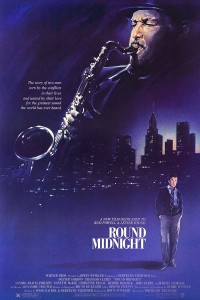
‘Round Midnight’ turns 30 today, and its status as one of the great jazz movies was confirmed at a birthday screening last night at the Cine Lumiere in South Kensington.
Whilst the recent ‘Whiplash’ and ‘Miles Ahead’ were moderate commercial successes, they were subject to withering criticism in some quarters – I was with the naysayers regarding the former but, after watching the trailer, couldn’t even drag myself to the latter.
So until Woody Allen makes his long-promised big-budget ‘birth of jazz’ film, ‘Round Midnight’ is probably the best we’re gonna get. Its success even ushered in a short-lived Hollywood jazz revival – Clint Eastwood produced the wonderful ‘Thelonious Monk: Straight No Chaser’ (1987) and directed the Charlie Parker biopic ‘Bird’ (1988), followed by Bruce Weber’s acclaimed Chet Baker documentary ‘Let’s Get Lost’ (1988) and Spike Lee’s ‘Mo Better Blues’ (1990).
‘Round Midnight’ is loosely based on the memoir/biography ‘Dance Of The Infidels’ by Francis Paudras, a Parisian graphic designer who befriended legendary bebop pianist Bud Powell – and became his carer, business manager and confidante – during Bud’s expat period. The film focuses mainly on the relationship between Francis and Dale Turner, a fictional mash-up of Powell and saxophonist Lester Young.
Put simply, the film ‘gets’ jazz; it’s immediately obvious that almost everyone involved loves the music and its players. Despite an incredibly slow, dark (as in: you can’t really see what’s going on) opening 20 minutes, ‘Round Midnight’ finally delivers the grandeur, romance and tragedy of America’s classical music.
Dexter Gordon’s Oscar-nominated lead performance still thrills, 30 years on. Though his character mainly spends the first half of the film trying to get wasted, we can forgive him anything, especially when we hear of the beatings and racist abuse regularly doled out during his time in the army (this dialogue, according to director/co-writer Bertrand Tavernier, was pure autobiography on Gordon’s part).
Elsewhere, Martin Scorsese has some fun with his portrayal of the fairly sleazy New York booking agent Goodley, while Francois Cluzet gives a strong, touching performance as the quick-tempered though loyal Francis.
Tavernier has finally found a way to represent jazz on screen, and it couldn’t be simpler – just round up the best players available (including Tony Williams, Bobby Hutcherson, Billy Higgins, Wayne Shorter, Herbie Hancock, Ron Carter, Freddie Hubbard, most of whom also have speaking parts), get them to play live and capture a performance in one take if possible.
It’s no great surprise that Herbie’s soundtrack won the Academy Award for Best Original Score in 1987, though the film’s original music arguably never quite evokes the high-energy rush of prime late-’50s bebop-tinged jazz. No matter: both ‘Round Midnight’ and its score have aged pretty damn well.
Recorded at Angel Studios, North London, 21-23 July 1986
UK album chart position: #39
Gifted saxophonist Courtney Pine‘s career is one of British jazz’s great success stories. Starting out in the early ‘80s as a sideman with reggae act Clint Eastwood & General Saint and various Britfunk bands, he became disillusioned with the outlawing of jazz as a respected, popular music in the climate of the early ’80s London scene.
As he memorably put it in the BBC’s excellent ‘Jazz Britannia’ doc, ‘I would add different notes in the scale the way Sonny Rollins did and people would say, “No man, we don’t want that.” They were saying to me, “If you’re black and you want to play jazz in this country, you’d better go and live somewhere else!”’
But all that changed when he caught US trumpeter Wynton Marsalis on TV one afternoon. Marsalis’s professionalism and dynamism were a revelation to Pine (not to mention his youthfulness); if Marsalis could bring jazz to a wide audience, he could too.
A period of intense woodshedding paid off – soon Courtney was guesting with Art Blakey’s Jazz Messengers and The Charlie Watts Big Band, blowing all over the ‘Angel Heart‘ soundtrack and blowing people away with his solos in Gary Crosby’s groundbreaking Jazz Warriors and Jazz Jamaica groups.
Island Records came calling, and Journey To The Urge Within made the Top 40 in the UK, an almost-unheard-of state of affairs for a jazz album. This writer fondly remembers the day when, on opening the NME, he unexpectedly found Pine and Miles Davis sharingthe album chart. Happy days.
It can’t hurt a record label to have a USP, a recognisable visual concept and/or sound. It has certainly stood Blue Note, Impulse and 4AD in good stead.
When one thinks of ECM, images of fjords, mountains or trees probably come to mind, alongside a certain sonic quality, a kind of rarefied ambience (producer/owner Manfred Eicher and his house engineers’ choice of reverb units are apparently almost as ‘secret’ as Colonel Sanders’ chicken recipe…).
The ECM formula worked for two decades. But then along came Terje Rypdal’s The Singles Collection in 1989 to throw a spanner in the works. Though the title is a joke – there are no ‘singles’ on the album – you wish more pop music was as bold as this collection which explores hard rock, early-’60s-style balladry, techno-fusion and even Prince-influenced funk to exciting and sometimes amusing effect.
The shorter tracks start out sounding a bit like Living In A Box jamming with Jeff Beck, before completely changing gear a minute in and turning into dark, introspective mood pieces with Messiaen chords and ethereal fretless bass.
Rypdal chucks in the whole kitchen sink, as if desperate to avoid a boring listening experience. The ploy works. Yes, this is the ECM album whose first track is titled ‘There Is A Hot Lady In My Bedroom And I Need A Drink’… It’s Lovesexy meets Ligeti.
The Singles Collection was the third album in a row where Rypdal hooked up with The Chasers, a cracking bass and drums team comprising of Bjorn Kjellemyr and Audun Kleive. The latter is thinking more Manu Katche and Stewart Copeland than Jon Christensen on this album, and the music is much better for it (no disrespect to the excellent Jon).
But a vital ingredient is the addition of keyboardist Allan Dangerfield who contributes three compositions and all manner of weird textures, Synclavier drum/sequencer patterns and unhinged, hysterical Hammond organ solos very much in the Prince style.
‘Sprøtt’ (Norwegian for ‘crazy’) sounds like an outtake from Jeff Beck’s Guitar Shop album with its chugging rockabilly rhythms and blistering lead guitar. Luscious noir ballad ‘Mystery Man’ will be familiar to fans of the Michael Mann movie ‘Heat’. If Mann hadn’t bagged it, you can bet David Lynch wouldn’t have been far behind. Maybe Dave can still put the gorgeous, glacial ‘Somehow, Somewhere’ to good use.
Elsewhere, ‘U’n’I’ fuses rockabilly and free-jazz beats with fusion bass, Ligeti chords and Van Halen guitar styles to thrilling effect. ‘Steady’ features some serious funk/rock riffing and another nutty Dangerfield solo. All in all, a striking, fascinating album.
Though he had recorded the very successful You’re Under Arrest and was in some of his best trumpet lip of the ’80s, his relationship with Columbia Records was at an all-time low.
For one, the label’s other star trumpeter Wynton Marsalis was at his peak of popularity, and, as far as Miles was concerned, Columbia boss Dr George Butler only had eyes for Wynton.
Then Miles felt that Columbia had procrastinated over releasing his cover of the Cyndi Lauper song ‘Time After Time‘ as a single. At the time, with typical mordant humour, Miles said, ‘He (George Butler) ignored it because he’s so busy with Wynton Marsalis. He heard us do it at the Montreux Jazz Festival last year and said “We gotta do it! We gotta do it!” I said, “George, I told you man. We already did it!” And he still didn’t release it…’
And the final nail in the coffin seemed to be Columbia’s unwillingness to put any financial clout behind Miles’s stunning collaboration with Danish trumpeter/composer Palle Mikkelborg, Aura, recorded at the beginning of 1985. For unknown reasons, the music didn’t see the light of day until 1989.
Again, in contemporary interviews, Miles rounded up the usual suspects: ‘I wanted $1400 for a digital remix and Columbia wouldn’t pay it. And then George Butler calls me up. He says to me, “Why don’t you call Wynton?” I say, “Why?” He says, “Cos it’s his birthday!” That’s why I left Columbia.’
Later reports had Miles carrying out Butler’s request, barking ‘Happy Birthday!’ to Marsalis and then slamming down the phone.
Miles officially became a Warner Bros. artist in autumn 1985. House producer Tommy LiPuma was delighted to get him – but what to do with him? Miles first took his touring band into the studio and embarked on a kind of You’re Under Arrest part two, covering tunes by Mr Mister, Nik Kershaw and Maze.
But this project was quickly abandoned, and Miles contacted various musicians including Prince (who supplied the rather humdrum ‘Can I Play With U’, later replaced by Marcus Miller’s ‘Full Nelson’), George Duke, Bill Laswell, Paul Buckmaster and Toto’s Steve Porcaro. He was desperate for new music and a new direction.
But he finally settled on an old contact, Randy Hall, the young Chicago multi-instrumentalist who had worked on his comeback album The Man With The Horn back in 1981.
Around a dozen tracks were completed between October and December 1985 in what was now known as the Rubber Band project. However, again for unknown reasons, the project was shelved, LiPuma quoted as saying, ‘I didn’t hear anything. To me, it didn’t sound like nothing was going on.’
Other collaborators were quickly suggested and then discarded including keyboardists Lyle Mays and Thomas Dolby. So Miles went back to George Duke. Their paths had crossed many times over the years, particularly when Duke was playing keyboards with Cannonball Adderley in the early ’70s.
As Duke remembers, ‘When Miles called, I initially thought it was a prank, one of my friends impersonating him. So I didn’t do anything, and a week later he called again. I said, “Who is this?” and he started swearing at me, “Mother****er, write me a song!”‘
It seems finally that George Duke’s demo of ‘Backyard Ritual‘ was deemed a direction worth pursuing by Miles and LiPuma. A strong, drum-heavy track put together by Duke using a Synclavier digital sampler with a simple but memorable main motif, he never intended it to be used as a final version, highlighted by the rather cheesy sampled alto sax solo.
But Miles eventually used almost the whole demo for Tutu, embellishing it only with some slithering percussion by Steve Reid and Paulinho Da Costa and of course his own pristine trumpet playing.
Miles’s take on it was that he respected a quality arrangement, demo or not: ‘A guy like George Duke, he writes a composition, it’s all there. All you have to do is play on it and respect that man’s composition’, he told writer and musician Ben Sidran.
And Duke revealed that he had even played a ‘sampled’ trumpet solo on the original demo, which tickled Miles. Duke: ‘He said to me, “You think that’s the way I play trumpet?” And I said, “That’s the way it sounds to me!”‘
At the beginning of 1986, Marcus Miller phoned Tommy LiPuma out of the blue. The bassist and composer had of course played in Miles’s comeback band from 1981 to 1983.
He had since made two solo albums and worked with a huge variety of artists, from Luther Vandross and Aretha Franklin to Bryan Ferry and Carly Simon, and was aware that Miles had migrated to Warner Bros and wondered if he was looking for new songs.
LiPuma sent him the ‘Backyard Ritual’ demo; Miller was instantly inspired: ‘I thought, “Wow, if Miles is willing to use drum machines and stuff, let me show my take on that.” I wasn’t directly musically influenced by George’s track but it gave me a direction.’
Miller wrote and recorded demos for ‘Tutu‘, ‘Portia‘ and ‘Splatch‘ back-to-back, playing all the instruments himself. Previewing the tracks with Miles and LiPuma in LA in March 1986, he got an immediate green light to turn this into an album project – this was the direction they had been looking for.
Miller began recording the final versions of the three tunes immediately with the help of keyboardist and programmer Adam Holzman.
There’s been a lot of speculation as to why none of Miles’s touring band were invited to play on the Tutu sessions, with opinions differing as to who made the decision. Miller insists, ‘I wasn’t party to the decision not to use the live band but Tommy didn’t push me in any direction. He let me do my thing.’
Miles seemed to resign himself to the convenience of the situation, saying, ‘Rather than get myself, the working band and Tommy into all kinds of hassles by trying to bring my band in the studio to record music I might like, but Tommy doesn’t, we do it this way.’
Consequently, although some choice session players appear on the album, such as drummer Omar Hakim and the aforementioned Paulinho Da Costa, as well as some of Miller’s trusted friends and collaborators like keyboardist Bernard Wright, synth programmer Jason Miles and electric violinist Michal Urbaniak, there’s a unified sound to Tutu that comes directly from Miller’s contributions on fretted and fretless basses, keyboards, drum programming and occasional live drums.
His soprano sax acts as Miles’s main instrumental foil on the album, particularly evident on the call-and-response phrases in ‘Tomaas’.
Once the backing tracks had been laid down, LiPuma and Miller documented Miles’s trumpet playing as spontaneously as possible without resorting to too many ‘comp’d’ takes (final versions made up of several performances).
Apart from this being a necessity as Miles didn’t like to do more than two takes, it was also an intelligent arrangement idea serving as a contrast to the painstaking and meticulous piecing together of the backing tracks.
According to legend, Miles’s solos on the title track and ‘Portia’ are complete takes from beginning to end. Miller found himself performing on soprano sax at the same mic as Miles during the recording of ‘Portia’. He called it ‘one of the most tense experiences I’d ever had’.
But, by most accounts, Miles was a receptive and willing participant in the creative process, once telling Miller, ‘Come on, man, I don’t mind a little bit of direction! You wrote the tunes. Tell me where you want me to play.’ Again, Miles demonstrates his total respect for the composer.
Miles was also reportedly responsible for the inclusion of one of the more controversial cuts on the album, the Scritti Politti cover tune ‘Perfect Way‘. Miles apparently cajoled Miller into recording the song, believing it had the potential to be the new ‘Time After Time’, and even wanted to call the album ‘Perfect Way’ until just before release.
But Miller expressed reservations about replicating Scritti’s legendary ‘Swiss watch’ arrangements, and with good reason – the Tutu version does sound rather laboured and weedy compared to the original. But Miles remained a big Scritti fan and two years later made a memorable guest appearance on their ‘Oh Patti’ single.
So has Tutu stood the test of time? The title track, ‘Portia’ and ‘Tomaas’ would surely be right at home on any Miles best-of, with their majestic themes, engaging harmonies, slinky grooves and strong trumpet playing.
‘Full Nelson‘ remains a great tribute to Prince’s sound circa Parade and Sign Of The Times, while ‘Don’t Lose Your Mind‘ is a classy approximation of Sly and Robbie‘s mid-’80s collaborations. But ‘Perfect Way’, ‘Backyard Ritual’ and ‘Splatch’ unfortunately now sound suspiciously like beautifully-produced filler.
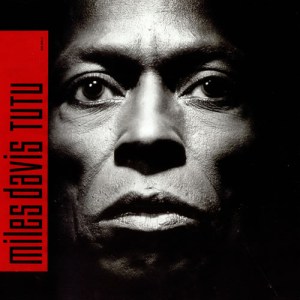
But, taken as a whole, Tutu is a very important album whose success was helped immeasurably by Irving Penn‘s striking cover portrait. It crystallised Miles’s interest in funk, soul and R’n’B more successfully than Decoy or You’re Under Arrest, whilst retaining a crucial ‘jazz’ flavour.
It was also a statement of political intent and black pride, significantly referencing both Archbishop Desmond Tutu and Nelson Mandela in its song titles. And – perhaps most crucially – it was a hit, introducing a whole new generation to Miles’ unique trumpet sound.
For much more on Tutu and Miles’s ’80s work, check out George Cole’s great book ‘The Last Miles’ and also Paul Tingen’s ‘Miles Beyond’.
Some improvised music hits you at just the right age, to the extent that 30 years later you can still hum along to all the solos.
Baby boomers were lucky enough to have Kind Of Blue, Time Out or Mingus Ah Um but jazz fans brought up on Weather Report and 1980s Miles had albums like Magnetic.
In 1986, recording and instrument technology was moving quickly, maybe too quickly. This development influenced all kinds of music, from rock to fusion, and, in the wrong hands, led to a lot of grossly-overproduced, unmemorable stuff that barely holds up today. As a few people have said, 1986 may be the worst music year of the decade.
But that year also somehow produced some memorable fusion music. Smooth Jazz (AKA The Wave) was just a twinkle in some bored record exec’s eye and the ever-reliable Japanese market was keeping quality electric jazz alive; Lyle Mays, Mike Stern, Wayne Shorter, John Abercrombie, Miles, Bireli Lagrene, John Scofield, Bill Frisell and John McLaughlin were going strong.
Though Steps Ahead’s Magnetic album embraces technology to a full extent, even more so than on ’84’s Modern Times, given the writing and playing talent (Michael Brecker, Peter Erskine, Mike Mainieri) it’s no great surprise that they pull it off with so much aplomb, aided by formidable ex-Weather Report bassist Victor Bailey.
A timeless classic it ain’t, but Magnetic isn’t any old ‘what does this button do?’ mid-’80s studio creation. Though the sound and mastering are superb, emphasised by the presence of Brothers In Arms producer Neil Dorfsman on engineering duties alongside future back-room stars James Farber and Tom Lord-Alge (fresh from Steve Winwood’s Back In The High Life), the compositions very definitely come first and the audio ‘experiments’ second.
Despite all this, Magnetic is definitely the least-heralded Steps Ahead album amongst jazz critics, probably because it’s a real onslaught of styles and sounds, closer to a ‘pop’ album in concept. The melodic themes are strong without ever getting too sugary and each track has a unique flavour.
It’s hard to believe the same band can come up with ‘Something I Said’ (featuring one of Brecker’s great ballad performances) and also the coruscating avant-fusion of ‘Beirut’ (developed from a band jam session).
Hiram Bullock plays one of his many classic solos on ‘Trains’, adding some much-needed grit, while George Duke co-produces the weird but exciting contemporary R’n’B of ‘Magnetic Love’ featuring some outrageous sampled Brecker tenor lines and killer Dianne Reeves lead vocals (and great backups from Jocelyn Brown, Janice Pendarvis and Diva Gray).
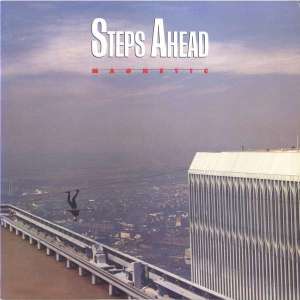
A synthesized cover of Ellington’s ‘In A Sentimental Mood’ proves Steps’ link to the past masters and features some astonishing EWI (an electronic instrument with the same fingering as a sax that looks like an elongated metal lollipop) from Brecker. There’s even time for some banjo-playing on ‘Cajun’, powered along by Erskine’s superb ride cymbal work. Yellowjackets were definitely listening to that. Oh, and is that Philippe Petit on the sneakily-doctored album cover?
It’s weird seeing Steps Ahead playing this material live. They had obviously worked a bit on their stage ‘presentation’ between 1984 and 1986, maybe influenced by Chick Corea’s shenanigans. Peter Erskine and Victor Bailey had left to join Joe Zawinul’s Weather Update tour, so ex-Journey drummer Steve Smith, Sting/Miles bassman Darryl Jones and Stern came in, adding some big-name clout and a much tougher sound.
Magnetic was the last major-label action for Steps Ahead. Brecker and Erskine jumped ship but Mike Mainieri would continue with the name over the next few decades fronting a multitude of line-ups. He even fronted a ‘reunion’ tour in 2016 with a formidable band including pianist Eliane Elias and sax player Donny McCaslin.
I’ve always had a somewhat ‘troubled’ relationship with Toto’s music, to put it mildly…
Toto IV (1982) was obviously a classic of its kind, Hydra (1979) had its moments and there are other classy tracks dotted around, but I’ve generally thought: David Hungate, David Paich, Jeff Porcaro and Steve Lukather are fantastic musicians who have played on some of the greatest albums of all time – so what are they doing in this band, writing these songs?
But I found a solution of sorts when I came across a track buried at the end of their lacklustre Fahrenheit album from 1986. ‘Don’t Stop Me Now’ is a cracking instrumental with nice chord changes, a great melody, gorgeous bridge, slick playing from co-writers Paich and Lukather and a memorable guest spot from Miles Davis.
Of course Miles was no stranger to the world of Toto and the LA session elite in general. He was tight with Quincy Jones, producer of Michael Jackson’s Thriller, an album that heavily featured Jeff Porcaro, Paich and Lukather.
Miles had also covered Thriller‘s ‘Human Nature’ (co-written by Toto keyboardist Steve Porcaro) on his You’re Under Arrest album the previous year. He was also apparently a big fan of Jeff Porcaro’s painting, not to mention his drumming, so a full-scale Miles/Toto collaboration was surely always on the cards.
But the recording of ‘Don’t Stop Me Now’, which took place at Jeff Porcaro’s home studio in early 1986, wasn’t a walk in the park, as Steve Lukather told George Cole in the excellent ‘Last Miles: The Music of Miles Davis, 1980-1991’:
‘We cut the track and left the melody off – we just left open spaces. When Miles got there, we ran it down together with him and he wasn’t really playing the melody. So we figured, we’re not going to tell Miles Davis what to play, so we said, “Miles, we have a take of this, would you mind just giving it a listen and play whatever you want?” He says, “Okay, I’ll play like that. You like that old shit, right?” So he gets out the Harmon mute and he played it – one take. We’re all stood there completely freaked out – it was unbelievable. At the end, the song just kind of fades out, but he just kept playing the blues. I was sitting there with chicken skin on my arms – it was an unbelievable moment. And that’s how we ended the record, with just Miles blowing. Later on, David Sanborn came down to play on a different tune on the record and he’d heard that we had cut a tune with Miles. He said: “I gotta hear it!”, so we played it and he flipped and said, “Please just let me be on the track!” He doubled the melody and played a couple of flurries. So we got Sanborn, Miles and us on one track – that was pretty cool!’
But Steve Porcaro alluded to the wider issue of including a ‘jazz’ track on a ‘heavy rock’ album when he told George Cole: ‘I don’t know how thrilled the record company or our managers were, but for us working with Miles was a major feather in our cap.’
But that kind of political scene didn’t affect Miles: he loved ‘Don’t Stop Me Now’ and quickly integrated it into his own live set. It remained a staple of his concerts from 1986 right up until 1990, the year before his death. It’s a beautiful piece of work. But while we’re at it, has anyone got a lead sheet of the tune? I want the chords…
I’ve just had the absolute pleasure of writing the liner notes for a brand new Steve Khan 2-CD reissue featuring his three classic albums of the early ’80s, Eyewitness, Modern Times and Casa Loco, just released on BGO Records.
It was an honour to work with Steve on this project. He couldn’t have been more generous with his time/memories and hopefully the package does justice to the quality of the music.
Here’s an excerpt from the liner notes, giving some background to the three albums and also the legendary Eyewitness band:
Acclaimed guitarist/composer Steve Khan’s three classic albums of the early ’80s – Eyewitness, Modern Times and Casa Loco – came about seemingly against all the odds. By the end of the 1970s, the jazz/rock boom had come to an end, and the record industry was entering a major post-Punk/post-Disco recession.
Khan’s tenure with Columbia Records – which had produced three well-received solo albums, and a ‘Best Of’ compilation – ended in early 1980. Acts such as Weather Report, John McLaughlin, Return To Forever and Herbie Hancock, all of whom had been signed to Columbia before Khan, were no longer selling the same quantities of records, and the ‘Young Lions’, Neo-Bop boom of the early ’80s was just around the corner.
Khan’s response was to go back to basics. The stripped-down masterpiece Evidence (1980) was a one-man-band project featuring an arsenal of multi-tracked acoustic guitars; the album showcased excellent takes on Lee Morgan, Joe Zawinul, Wayne Shorter and Horace Silver as well as the famous ‘Thelonious Monk Medley’.
The purity of the acoustic guitar sound on the album inspired a new approach to his electric playing too: “In 1981, I was still searching for a direction on the electric guitar, and it led me to go back to the most basic sound, the one I began with when I was 19 years old at UCLA: just plug into an amp with a Gibson, dial in a little reverb, and play!”
The time was also right to move away from classic song-form and branch out into more improvised music-making. “I was ready to surround myself with a totally different group of players in conjunction with a new spirit of making music, something much looser, something not so married to having everything perfectly placed and played. Phone calls were made to three special and very unique players. We got together and the experiment began.”
Drummer Steve Jordan and bassist Anthony Jackson were two of the most in-demand musicians on the New York scene and first-call rhythm section on numerous high-profile sessions including John Scofield’s Who’s Who album. Jackson had also recently joined Khan on the recording of Steely Dan’s Gaucho while Jordan had been busy working with a huge variety of world-class artists as part of David Letterman’s ‘World’s Most Dangerous Band’.
And when Khan hooked up with ex-Weather Report percussionist Manolo Badrena during the recording of Mike Mainieri’s Wanderlust album, the final piece of the jigsaw clicked into place. Khan, Jackson, Jordan and Badrena began to jam regularly at Steve Jordan’s Chelsea loft.
It was quickly clear to Khan that something very significant was happening during those informal get-togethers. “I’m still not certain just what to call what we did”, he says today. “We would begin to play ideas that didn’t seem to have a place in any other musical setting. Here you had four very distinct perspectives on music-making, and four of the most stubborn maniacs one could gather in a room, but somehow it was working. It was magical!”
Khan recorded the sessions on a cheap cassette player and, listening back to them at home, quickly realised that the music should be recorded, “before we actually figured out what it was that we were doing!”
In the experimental era of King Crimson’s Discipline, Japan’s Tin Drum and Peter Gabriel’s Melt, the Eyewitness band began with very basic sounds and concepts but over the course of its existence came to use some fairly unique instrumentation to produce music that was complex but always accessible.
Jordan’s hybrid drum set included a cowbell, a broken splash cymbal, two hi-hats, two snare drums (tuned slightly differently) and a Simmons bass drum. Jackson developed, designed and played a state-of-the-art six-string bass, while Badrena’s constantly-mutating percussion kit included a turtle shell, timbales, congas and eventually Pearl’s Syncussion synthesizer. He also employed a multitude of eerie vocal effects. This clearly was not your standard ‘fusion’ band.
Co-produced by Khan and Doug Epstein, Eyewitness was recorded at Mediasound Studios over a single weekend in November 1981. It has the spontaneity of a great jazz album and the high production values of a contemporary pop album…
To hear the three albums and read the full article, check out the 2-CD reissue.
After one of the toughest lives in jazz history, Art Pepper was astonished to still be around in the early ’80s.
He rallied for one last classic; ‘Our Song’ was recorded on 4th September 1980 at Fantasy Studios in Berkeley, California.
It doesn’t feel like an ’80s track at all – it’s more like the closing titles to an early ’70s Robert Altman movie or an alternative theme from Bernard Herrmann’s ‘Taxi Driver’ sessions.
Many commentators think that, on his day, Pepper’s alto sax playing rivalled Charlie Parker’s, and he demonstrates his mastery here with a real tour de force.
As a musical farewell, it’s a potent statement. Pepper believed it was the best thing he had ever done and the culmination of his life’s work.
‘Our Song’ also seems to be a personal goodbye and heartfelt tribute (apology?) to Laurie, this third wife and the last love of his life. She contributed to his jaw-dropping autobiography ‘Straight Life’ and has also recently published her own memoir about her life with Art.
Anyone who got into jazz in the 1980s must surely have a soft spot for the legendary anarcho-big band Loose Tubes.
I saw them play live sometime around 1986 in one of those great community-run London venues (Logan Hall? Shaw Theatre? Camden Arts Centre?) that appeared quickly, burnt brightly and then disappeared.
I don’t recall much about the music but do remember the crowd; the jazz revival was in full flight so there were lots of very hip people wearing chinos, black polo-necks and sometimes even berets dancing unashamedly.
Then, a bit later, Loose Tubes played on Saturday-evening primetime TV wearing very loud clothes, dancing idiotically and generally clowning around with the audience. It was youthful and different and gave Big Band Jazz a much-needed makeover.
Of course there’s always the chance that some people just didn’t think of their music as ‘jazz’ at all, and their clowning may well have put a lot of potential punters off. But the band probably weren’t too bothered about that.
In a way, the Loose Tubes could only have originated in the ’80s, emerging as it did from composer and educator Graham Collier‘s community big band workshops.
There was no ‘leader’ per se (although keyboards/French horn man Django Bates was occasionally seen conducting in very syncopated sections) and any member of the band was free to submit compositions.
Consequently, Loose Tubes’ music touched on anything that took its composers’ fancy – samba, heavy metal, folk, Weather Report-style fusion, flamenco, Hi-Life, blues, reggae, free jazz.
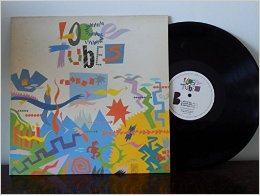
Their first self-titled album came out in the summer of 1985 and it was a really nice distillation of their sound (and featured one of my favourite UK drummers, Nic France, who left soon after the recording to join Working Week).
Django Bates’ composition ‘Yellow Field’ remains a classic. The followup Delightful Precipice is probably their best known album, and the final studio recording was 1988’s Teo Macero-produced Open Letter.
It was probably a miracle that such a huge band lasted as long as it did (six years) but Loose Tubes was also a superb career springboard for Bates, saxophonists Iain Ballamy, Julian Arguelles and Tim Whitehead, guitarist John Parricelli, flautist Eddie Parker, drummers Nic France/Steve Arguelles and ‘bone man Ashley Slater, all of whom are going strong today.
And guess what – they reformed in 2014, playing concerts at the Cheltenham Jazz Festival, Brecon Jazz Festival and a sold-out week at London’s Ronnie Scott’s. Two live album have also recently been released, Sad Afrika and Dancing On Frith Street, both of which featured music from their original farewell gig at Ronnie’s in September 1990.


 ‘Round Midnight’ turns 30 today, and its status as one of the great jazz movies was confirmed at a birthday screening last night at the Cine Lumiere in South Kensington.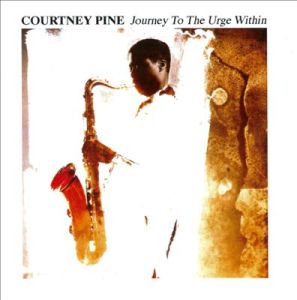

 I’ve always had a somewhat ‘troubled’ relationship with Toto’s music, to put it mildly…
 After one of the toughest lives in jazz history, Art Pepper was astonished to still be around in the early ’80s.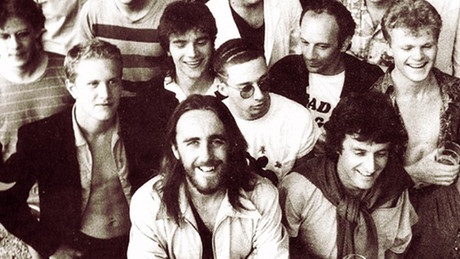
 movingtheriver.com