Five Great 1980s Madonna Moments

5. Late Night With David Letterman, 1 July 1988
Though her most famous Letterman appearance was probably 1994’s swearfest, here she comes off more like a naughty big sister than an established star. Madonna and Sandra Bernhard laugh off Dave’s temper tantrums and seem to have stepped out of a ’50s B-movie (video removed by YouTube…).

4. Live Aid
This footage from La Ciccone’s Philadelphia appearance on 13 July 1985 gives a great insight into the atmosphere on the day and the adrenalin (and other substances?)-fuelled panic of the artist soundchecks. Live Aid came just a week after Madonna’s pre-fame topless pictures were leaked to the press. Her response was to wear lots of layers and silence the cat-calls with style, humour and an irrepressible joie de vivre.

3. ‘Crazy For You’
My favourite Madonna tracks are ballads (‘This Used To Be My Playground’, ‘Take A Bow’, ‘Something To Remember’, ‘Oh Father’, ‘Promise To Try’) but this is possibly the pick of the bunch. Beautifully arranged by Rob Mounsey, it was transformed from just another song in a so-so movie into a UK #2 and US #1 in March 1985.

2. The 1984 MTV Awards
Imagine the reactions of the Armani-suited execs in the stalls. Madonna and Joni Mitchell have both spoken publicly about the chauvinistic attitudes that prevailed in the music industry of the mid-’80s. This was a brave response.

1. The ‘Desperately Seeking Susan’ club scene
For many people, this was her only decent movie performance, and I wouldn’t argue with that (though I need to see Abel Ferrera’s ‘Snake Eyes’ again…). Roman Polanski paid homage to this scene ten years later in ‘Bitter Moon’, starring Hugh Grant, to similarly comic effect.

No Brown M&Ms: Great Backstage Riders Of The ’80s

brown-milk-chocolate-m-m-1-poundYou know you’ve made it in the music biz when your gig rider raises eyebrows.

The rider: a contract drawn up by the promoter stipulating a band’s concert requirements including ‘dressing room extras’ – food, drink and drugs to you and me. And, if the general tenor of the 1980s was extravagance and exuberance, many artists’ backstage demands were no different. Here are five corkers:

5. Howard Jones
He had barely registered a hit and was only undertaking a modest college tour of the UK during summer 1983, but his backstage demands included ‘eight pounds of brown rice, six large aubergines, three pounds of courgettes, three green peppers, one head of garlic, three pounds of fresh tomatoes, twelve mixed yogurts and twelve bananas.’ He also requested that security not have ‘guns or dogs’, that the dressing room possess a ‘sweet-smelling ambience’ and that he must have ‘physical contact with the audience’. And you thought he was just a slightly vapid though ultimately harmless pop guy…

4. Van Halen
They famously often requested ‘large bowls of M&Ms with the brown ones taken out’ but their legendary 1984 Monsters Of Rock show at Castle Donington also required ‘eight litre bottles of Jack Daniels, eight litre bottles of brandy, eight litre bottles of vodka, 16 cases of domestic beer and a worldwide selection of cheeses’. Those boys knew how to partay. And were also rather fond of continental cheeses.

3. Iggy Pop
Late great musician/writer Ian Carr once described seeing Miles Davis come offstage and collapse into the arms of two specially-placed roadies as soon as he was out of the audience’s sight, but that’s nothing compared to The Iggster’s post-show routine. His rider for a 1983 UK tour stipulated ‘it is absolutely essential at the end of the show that there is a nurse in attendance with two cylinders of oxygen and masks’. Presumably Iggy wanted the ‘nurse’ for a bit more than ‘oxygen’…

2. David Thomas
The portly Pere Ubu frontman demanded meticulous sandwich preparation for a University of London show in the early ’80s: ‘A sandwich is defined as three pieces each of meat and/or cheese, one-inch thickness of lettuce, a half-inch thickness of onion, mayonnaise, two slices of three-quarters of an inch of tomato, all between two thick slices of wholemeal bread. NO BUTTER. AND I WILL REPEAT: NO BUTTER OR MARGARINE. PERIOD.’ It’s as if punk never happened…

1. Aerosmith
The Bad Boys From Boston didn’t leave anything drug-related to chance when putting together their backstage rider for a particularly blitzed tour in the early ’80s. The stand-out clause read: ‘No snow, no show’! Well, at least they were honest.

A tip of the hat to Simon Garfield’s excellent book ‘Expensive Habits’.

Seven More Great ’80s Album Openers

7. David Bowie: ‘It’s No Game (Part 1)’ from Scary Monsters (1980)
Weird doesn’t cover it. We hear tape spooling around the reels and the machine being turned on, followed by drummer Dennis Davis whirling around a football rattle and counting us in in his best Cyborg voice. After this, Robert Fripp’s deranged solo and Michi Hirota’s strident Japanese outbursts sound almost normal.

6. De La Soul: ‘Intro’ from 3 Feet High And Rising (1989)
A whole generation of pop kids hadn’t heard anything like this before, and yet somehow it bears repeated listening. It’s just as fresh and original as anything The Small Faces or The Beatles tried 20 years before and arguably started off the whole ‘intro’ concept on hip-hop albums.

5. Genesis: ‘Behind The Lines’ from Duke (1980)
In musical theatre, I believe it’s called an overture. This bombastic piece previews many of the themes that will reverberate through the album. Tony Banks’ keys and Phil’s drums have seldom sounded brighter or tighter.

4. Lil Louis: ‘I Called U’ from From The Mind Of Lil Louis (1989)
This classic piece of bunny-boiler house is funny and arresting.

3. It Bites: ‘Positively Animal’ from Eat Me In St Louis (1989)
Watch that volume dial. The underrated four-piece jolt you out of complacency with a flashy, these-go-to-11 opener. Audacious and very un-English.

2. The Police: ‘Don’t Stand So Close To Me’ from Zenyatta Mondatta (1980)
Another moody classic. A brooding Oberheim bass-throb, a fudged Andy Summers lick, a hint of click track and then that brilliant, patented half-time groove. The full-length version hints at the darker themes of the lyric.

1. Talking Heads: ‘And She Was’ from Little Creatures (1985)
Leaving behind the art-funk of Speaking In Tongues, this sprightly opener introduces a new stripped-down pop sound in no uncertain terms.

Six Great ’80s Album Openers

vinyl-goldSequencing an album can be a real headache but it’s surely one of the dark arts of the music business.

One thing’s for sure: the lead-off track is key. You know the old A&R cliché – ‘You gotta grab ’em from the first bar!’ But sometimes quiet and enigmatic can be just as effective as loud and arresting.

Repeated listening and nostalgic reverie possibly cloud the issue but it’s almost impossible to imagine some albums with different opening tracks. Revolver kicking off without ‘Taxman’? Rubber Soul without ‘Drive My Car’? Pretzel Logic without ‘Rikki Don’t Lose That Number’? Unthinkable.

So here are six of my favourite album-openers from the ’80s:

6. Phil Collins: ‘In The Air Tonight’ from Face Value (1981)
Love or hate Phil, no one can deny this is one of the killer intros. He programmes his own ‘Intruder’ beat on a Roland CR-78 drum machine, adds some slabs of heavy guitar, some moody chords (in D minor, the saddest of all keys…) and chills all and sundry.

5. Yes: ‘Owner Of A Lonely Heart’ from 90125 (1983)
A blast of sampled Alan White drums (later co-opted for Art Of Noise’s ‘Close To The Edit’) and we’re away! Trevor Rabin’s gargantuan power-chord intro became an MTV mainstay and gave the prog-rock survivors their only US number one single. But, arguably, they shot their load too early – the rest of the album never comes close to this lavish opener.

4. Simple Minds: ‘Up On The Catwalk’ from Sparkle In The Rain (1984)
I’m a sucker for drummer count-ins and this is one of the best. There’s a lovely contrast between the unproduced timbre of Mel Gaynor’s yelp and stick-clicks and the subsequent blizzard of gated drums and Yamaha CP-70 piano in the classic Gabriel/Lillywhite/Padgham style.

3. Tears For Fears: ‘Woman In Chains’ from The Seeds Of Love (1989)
A less-than-great song from a less-than-great album, but messrs Olazabal and Smith weave a rather delicious, Blue Nile-influenced intro that promises great things, before Phil Collins’s stodgy drums and some chronic over-production buries it in bombast.

2. PiL: ‘FFF’ from Album (1986)
‘Farewell my fairweather friend!’ bawls Johnny over a cacophony of gated drums (played by jazz legend Tony Williams, fact fans) and angry guitars.

1. The Blue Nile: ‘A Walk Across The Rooftops’ from A Walk Across The Rooftops (1984)
Another one that asks, ‘Hang on, is there something wrong with this CD?’ Subtle synths ruminate in near-silence before some found sounds (coins being inserted into a slot machine?) and a lonesome trumpet gently prod a classic album into life.

Omar Hakim, Drummer Of The ’80s: Seven Of The Best

omarhakim3Of the all-time-great drummers who emerged in the ’80s – a list that would have to include Manu Katche, Dave Weckl, Dennis Chambers and Trilok Gurtu – you could argue that Omar Hakim was the main man. His hip, funky, vibrant style typified all that was good about the music of the era.

Effortlessly versatile, endlessly creative and always musical, Hakim emerged from the early ’80s New York jazz and fusion scene and quickly became the drummer of choice for David Sanborn, David Bowie, Dire Straits, John Scofield, Weather Report and Sting. He could play everything from straight jazz to heavy rock’n’roll with total ease, great feel and a beautifully light touch.

I first became aware of Omar when he demonstrated his ‘Children’s Crusade’ beat on BBC TV’s ‘Rock School’. I was a major fan from that day on.

Here are seven great Omar performances from the ’80s:

7. Sting: ‘I Burn For You’ (1985)
Drum legend Jeff Porcaro waxed lyrical about this performance which appears in the 1985 film ‘Bring On The Night’. One of Omar’s specialities is soloing over a static vamp, and he really takes it out about as far as it can go here.

6. Dire Straits: ‘So Far Away’ (1985)
Omar can do slick, clean, laidback rock too, as heard on this Brothers In Arms opener. Check out his lovely fills, layered in at the end of each chorus, bringing the playing of Motown star Benny Benjamin into the ’80s.

5. David Sanborn: ‘Rush Hour’ (1982)
Omar dusts off a much-imitated ghost-note-inflected groove for this track from the As We Speak album, possibly influenced by the late great Little Feat sticksman Richie Hayward. Only Hayward could have nailed this with as much panache, drive and subtlety.

4. Weather Report: ‘Db Waltz’ (1984)
Omar pulls out all the stops on this ingenious 3/4 (or is it 6/8?) groove, the centrepiece of the Domino Theory album, falling somewhere between a swing feel and straight feel just the way the old guys used to do it on the R’n’B hits of the ’50s. He also demonstrates some jaw-dropping chops towards the end.

3. Special EFX: ‘Sabariah’ (1988)
The music comes uncomfortably close to smooth jazz on this opening track from the Confidential album but Omar’s grooving is just sublime. The controlled energy explodes from his kit.

2. David Bowie: ‘Neighbourhood Threat’ (1984)
Omar could also play heavy rock with the best of them as demonstrated by this underrated track from Tonight. And not even Jeff Porcaro could have conceived of the floor-shaking fill at 2:14.

1. John Scofield: ‘Techno’ (1985)
The lead-off track from the classic Still Warm album, this perfectly illustrates Omar’s intricate hi-hat playing, as distinctive as Stewart Copeland’s almost a decade before. I dig the way he takes the tune out with some sick china cymbal/snare combinations.

Where ’80s Pop Went Wrong (In Five Songs)

screaming-man-with-headphonesAt some point in the ’80s pop parade, the subtle became bloated, the charmingly-naive became coarse and the modest became overblown.

As the decade’s greats and not-so-greats limbered up for Live Aid, artistic judgement started getting skewed, recording budgets sky-rocketed and egos rampaged out of control.

The blueprints were drawn up for pop travesties of the future. We present, in chronological order, the five singles which illustrate where things went wrong in ’80s pop. (How the hell could Nile Rodgers have produced two of these?! Ed.)

5. Duran Duran: The Wild Boys
Released 26 October 1984

The sound of money. And not in a good way. Aiming for a Frankie Goes To Hollywood-style sex-groove, the dandy Brummies contrive to create a ramshackle piece of over-produced, under-performed pub-funk. Nick Rhodes plays like he’s just been taught a few minor chords and Le Bon’s vocal is consistently just out of tune (why didn’t they change the song’s key before recording?). And we haven’t even got to the drummer’s ‘solo’ yet. Even Nile’s production can’t save this one.

4. Thompson Twins: Revolution
Released 29 November 1985

This was the worst song performed during Live Aid. And that’s really saying something. It’s murder, sacrilege, an aural travesty. It’s even worse than Paul Young’s version of ‘Love Will Tear Us Apart’. Tom Bailey delivers the lyrics like a sozzled Stoke middle-manager on karaoke night. Guitars are ladled on willy-nilly and multiple percussion effects merely serve to drive one to distraction. A triumph of vapid tastelessness. What was Nile thinking?

3. The Police: Don’t Stand So Close To Me ’86
Released October 1986

A weary exercise in career suicide and musical emasculation. Copeland phones in his programmed drum pattern (he broke a collarbone just before the recording). Summers’ once-vibrant, nuanced sound has become a post-Edge blur. Sting’s considerable bass skills are booted into touch in favour of a crude, mushy-sounding sample. Depressing synths chart the chord changes like clouds eclipsing the sun while Mr Sumner succeeds in removing all emotion from his vocal. ‘Dark’ doesn’t begin to cover it. Why why why?

2. U2: With Or Without You
Released 21 March 1987

The barely-scanning, bet-hedging lyric (‘You give yourself away’? How? With your eyes, your body? Something you said? What, what?!) aims for a kind of Bowie/Ferry mystique but is basically meaningless and the precursor to all those Snow Patrol/Coldplay list songs that crowbar in increasingly-inane words to fit a flimsy melody. Adam Clayton’s remedial bassline, badly played at that, slavishly outlines a dull chord sequence which should never have left the rehearsal room. Bono attempts the first verse in a sub-Bowie croon, but you can tell he’s just itching to hike it up an octave. And when he does it’s no better than Tony Hadley. The song runs out of steam at around the three-minute mark but then aimlessly drags on for another two minutes in the vain search for ‘dynamics’.

1. Michael Jackson: Bad
Released 7 September 1987

Where to begin? The crude, obviously looped bass vamp (close listening reveals the ‘joins’ at the beginning of every two bars); poor Michael’s adolescent lyrics displaying a wronged teenager’s obsession with point-scoring and fisticuffs, a videogamer’s take on violence; a poor verse melody which never engages followed by the endless repetition of a weirdly unmemorable chorus; Quincy Jones trying to throw a ‘Beat It’-style curveball by getting jazz legend Jimmy Smith in for a Hammond organ solo which barely registers. Michael’s vocals are powerful but comparing this track to almost anything on Thriller reveals a sad indictment of late-’80s pop.

12 Reasons Why The ’80s Were The Greatest Ever Music Decade

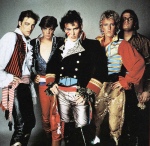
Adam_and_the_Ants_198112. Fun Fun Fun
Your baby-boomer parents might claim that the Swinging ’60s were pretty much a non-stop laugh riot but the early ’80s trump them for sheer musical ebullience. There was a tangible feeling of positivity in the air despite Thatch, inner-city rioting, The Troubles, African famine and the Falklands War. Music was forward-looking and celebrated life, love and happiness (despite state-of-the-world addresses like ‘Ghost Town’ and ‘The Message’), and no one even thought of buying older stuff because there was something new and exciting coming along every week. Live Aid proved a kind of Year Zero for ’80s pop but up until then artists like Culture Club, Dexy’s, Wham!, ABC, The Associates, Frankie, Adam Ant, Madonna, Thompson Twins, Bananarama, Jacko, Altered Images and Fun Boy Three brought unlimited colour and energy to the party.

11. The return of quality British songwriting
How about Squeeze, Morrissey/Marr, Roddy Frame, David Sylvian, Kirsty MacColl, Mark Hollis, Pet Shop Boys, The Associates, Edwyn Collins, Julian Cope, Sting, XTC, Mark E Smith, Thomas Dolby, the Cocteaus, Green Gartside, Boy George, Eurythmics, Peter Gabriel, Elvis Costello, Nick Heyward, Lloyd Cole, Madness, Paddy McAloon, Paul Weller, Robert Smith, UB40, Siouxsie and Kate Bush for starters? Yes, their formative years were the late ’70s but they did their best work in the ’80s, with the possible exceptions of Weller and Costello. The result was a glorious display of chart-bothering, musically-ambitious British songwriting talent not seen since the late-’60s.

10. Band Aid/USA For Africa/Live Aid/Sir Bob
Maybe it wasn’t the most musically edifying series of projects in the world, but who cares? At last count, Live Aid has raised well over £150 million. Anyway, there were some brilliant pop moments – Boy George’s vocals, Phil C’s electrifying drum performance and Bowie’s spoken word interlude on ‘Do They Know It’s Christmas’, Queen, Bowie, Jagger, Tina Turner and Madonna at Live Aid and all the soloists on USA For Africa (except Tina Turner, Huey Lewis and Kenny Loggins…). Live Aid may have killed off New Pop (represented by Adam Ant, Spandau and Duran etc.) and ushered in the AOR-era of Q Magazine and Dire Straits, but maybe that wasn’t such a bad thing.

9. Goodbye Dad Rock – Hello pan-sexual/pan-musical New Pop!
A quick glance at the charts during the ‘1981-’83 peak of Post-Punk/New Pop/Second British Invasion might tempt one to say that Lad/Glam/Punk Rock had all but been wiped out. Artists like Human League, Kid Creole, Wham, The Associates, Orange Juice, Talking Heads, Altered Images, Wham, Culture Club, UB40, Pigbag, Everything But The Girl, Eddy Grant, The Clash, Madness, The Belle Stars and Level 42 took elements of synth pop, free jazz, ska, Burundi Beat, Go-Go, electro, calypso, hip-hop, funk, reggae and Afrobeat to the top of the charts, leading some commentators to proclaim the death of rock. By the mid-’80s, Big Country, Simple Minds, U2, The Mission and Springsteen had brought back the Big Bam Boom, but it was fun while it lasted.

8. Sisters Doin’ It For Themselves
Chrissie Hynde, Bananarama, Siouxsie, Donna Summer, Belinda Carlisle, Carly Simon, The Pointer Sisters, Alison Moyet, Grace Jones, Sade, Bjork, The Bangles, Sheila E, Annie Lennox, Janet Jackson, Joan Jett, Salt-N-Pepa, Laurie Anderson, Whitney Houston, kd lang, Tina Turner, Bonnie Tyler, Gloria Estefan (!), Jane Siberry, Regina Belle, Aretha Franklin, Anita Baker, Teena Marie, Jill Jones, Lisa Stansfield, Cyndi Lauper, Wendy and Lisa, Tracey Thorn, Helen Terry, Chaka Khan, Kirsty MacColl, Suzanne Vega, Tracy Chapman, Julia Fordham, Tanita Tikaram, Madonna… You don’t have to be Camille Paglia to note that this was a great decade for strong, successful female musicians.
on-u sound7. Great Independent Labels
4AD, Rough Trade, Beggars Banquet, Relativity, Factory, On-U, Demon, Creation, Some Bizzare, Big Beat, Mute and Postcard were vital for the music industry and all hit their peaks in the ’80s. Up to around 1985, the Independent Chart actually meant something and was a badge of honour for the kinds of Peel-patronised artists who were going up against the corporate biggies, long before today’s web renegades. By the mid-’80s, ‘indie’ had became a musical style rather than a raison d’etre and labels like ZTT and Blanco y Negro were tributaries of major labels, but at least the lunatics had taken over the asylum for a while.
smash hits6. The peak of Music Journalism
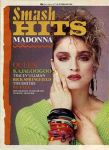
This great musical decade certainly got the journalism it deserved. Again, the roots were laid down in the NME/Sounds/Melody Maker punk years but writers such as Ian Penman, Mark Ellen, Paul Du Noyer, Ben Watson, Tom Hibbert, David Toop, David Hepworth, Mick Wall, Richard Cook and John Fordham flourished big-time and graced the great bastions of ’80s writing such as Smash Hits, Kerrang!, The Wire and Q. Sprinkle in some of the most outspoken, politicised and downright lairy musicians of all time and you have the ingredients for a brilliant decade of music journalism.

5. Michael Jackson, Prince and Madonna?
They were almost exactly the same age but can all three really have hit their straps in the same decade? Ambassador, you are spoiling us…

4. Music TV flourishes
The Tube, Top of the Pops, Going Live, No. 73, The Late Shift, The Oxford Road Show, Sounds of Surprise, More Bad News, Whistle Test, The Chart Show, Wired – howzat for a partial list of ’80s music shows? There was a commitment to all music genres across all the terrestrial channels. Forget Jools’s Later luvvie fest or the simpering One Show – in the ’80s you could watch The Smiths on Saturday morning kids TV, Blancmange at teatime and Ornette Coleman late at night. The burgeoning Channel Four has to take a lot of credit (and had a lot to prove) – The Tube was a brilliant statement of intent and later in the decade Sounds of Surprise and The Late Shift showcased superb jazz and blues documentaries.

3. ’80s Pop Tribes
Again, the watchword is variety; music and fashion pretty much went hand-in-hand in the ’80s to the detriment of neither. New Romantics, Goths, Soulboys, Ravers, Casuals, Psychobillies, Brosettes, Durannies, metal kids – they all had an instantly-recognisable uniform and ethos. The DIY punk spirit had came to the fore again, but this time with added musical spice. And this time there was so much to go around that no-one could be accused of being a fashion victim.

2. Music Video comes of age
The Beatles’ Hard Day’s Night and The Monkees laid the foundations but the music video was raised to an art-form in the ’80s. The great clips of the decade – ‘Sledgehammer’, ‘Thriller’, ‘Walk This Way’, ‘House of Fun’, ‘Stand and Deliver’, ‘Smalltown Boy’, ‘Land of Confusion’, ‘Take On Me’, ‘New Frontier’, ‘Once In a Lifetime’ – sometimes used the latest technical innovations, sometimes delighted in their DIY, no-frills approach and sometimes ‘borrowed’ from conceptual art/movies, but all became virtually inseparable from the songs.

1. Black Music goes mainstream
Motown and the ‘early 70s pioneers laid the foundations but Run DMC, Sade, Cameo, SOS Band, Robert Cray, John Lee Hooker, Prince, Tone Loc, Salt-N-Pepa, Bobby Brown, Miles Davis, Rick James, Anita Baker, Courtney Pine, Miles Davis, The Pointer Sisters, Whitney Houston, Albert Collins, Shalamar, De La Soul, Janet and Michael, Al Jarreau, Luther Vandross, Teddy Pendergrass, Prince, Maze, Buddy Guy, Grandmaster Flash, Chaka Khan, Imagination, Lionel Richie, Dionne Warwick, Diana Ross and Fatback all smashed it in the ’80s. Blues, soul, funk, jazz, electro, go-go, house and hip-hop were setting the agenda. It’s quite astonishing now to think that a song like Houston’s ‘Saving All My Love For You’, an R’n’B ballad with jazzy chord changes, could power to number one in 1985.