Protest Songs @ 40: Prefab Sprout’s Best Album?

Speedily recorded 40 years ago this autumn at Newcastle’s Lynx Studios, Protest Songs was intended to be the no-frills, lo-fi, rush-released, ‘answer’ album to Prefab’s Steve McQueen.

Fans who attended the Two Wheels Good UK tour of October and November 1985 were given leaflets advertising its release on 2 December for one week only.

But then ‘When Love Breaks Down’ reached #25 at the third attempt, earning the band spots on ‘Top Of The Pops’ and ‘Wogan’, and the album was shelved (though apparently a few hundred white labels ‘escaped’ from CBS and are out there somewhere…)

Protest Songs was eventually held back until June 1989, but proved well worth the wait and reached a respectable #18 on the UK chart. This writer would put it right up there with Steve, From Langley Park To Memphis and Jordan, maybe even above them…

The album was produced by the band and – apart from the last-minute addition ‘Life Of Surprises’ – mixed by Richard Digby Smith, once a staff engineer at Island Records who served his apprenticeship under the likes of Arif Mardin, Phil Spector, Muff Winwood and Chris Blackwell.

Protest also showed that Patrick Joseph McAloon was turning into a really decent keyboard player (he later claimed that every song on Langley Park was written on keyboards) and that – massively helped by drummer Neil Conti – Prefab were becoming a really good live band.

But most importantly Protest is a moving, razor-sharp suite of songs. Paddy was operating at the absolute top of his game, with some of the anger which had initially been so attractive to Thomas Dolby (also detectable in this recently discovered interview).

The only thing tongue-in-cheek about it is its title. These were not protests against nuclear power or war, but rather against deprivation and, just six months on from the miners’ strike, the general media condescension about provincial English life (particularly in the McAloon brothers’ native North East) under Thatcher.

‘Til The Cows Come Home’ may be the killer track. If you’re in the mood, it can be a real heartbreaker. The superb lyrics deftly change perspective mid-thought and allude to how unemployment affects generations:

Aren’t you a skinny kid?
Just like his poppa
Where’s he workin’?
He’s not workin’…

Why’re you laughin’?
You call that laughin’?
Wearing your death head grin
Even the fishes are thin…

He can’t have his coffee with cream

Meanwhile ‘Diana’ was revamped from the ‘When Love Breaks Down’ B-side (Deacon Blue definitely listened to THAT), slowed down and with a few new chords added. Conti expertly marshals proceedings with his tasty Richie Hayward-style half-time groove.

‘Dublin’ showcases Paddy’s lovely sense of chord movement, with a little influence from bossa nova (here’s Paddy playing a different studio take). ‘Life Of Surprises’ and ‘The World Awake’ are shiny, synth-laden, mid-period 4/4 Prefab but with stings in their tails:

Never say you’re bitter, Jack
Bitter makes the worst things come back

You don’t have to pretend you’re not cryin’
When it’s even in the way that you’re walkin’…

The hilarious ‘Horsechimes’ investigates school-day piss-taking, with a large dollop of Salingeresque satire. Meanwhile it’s hard to think of a more perfect marriage of words and melody than ‘Talking Scarlet’ (also drastically slowed down from the early demo), while ‘Pearly Gates’ closes out the album in moving style, like a dimly-remembered hymn from school days, a rare 1980s ‘death disc’.

The only partial misfire is the jaunty ‘Tiffany’s’, with its comically poor guitar solos, but its inclusion was totally understandable. Happy birthday to a classic.

Blitz: The Club That Shaped The 80s @ Design Museum, 27 September 2025

England, 1979: punk is out, sus laws and Thatcher are in. Nightclubs are closing down and youth violence and political unrest are on the rise (as are movements like Rock Against Racism).
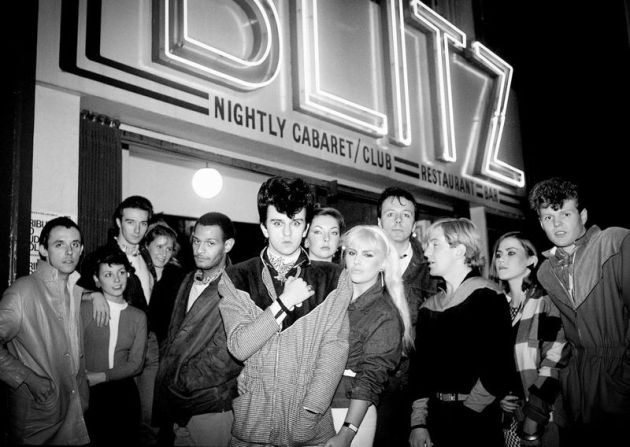
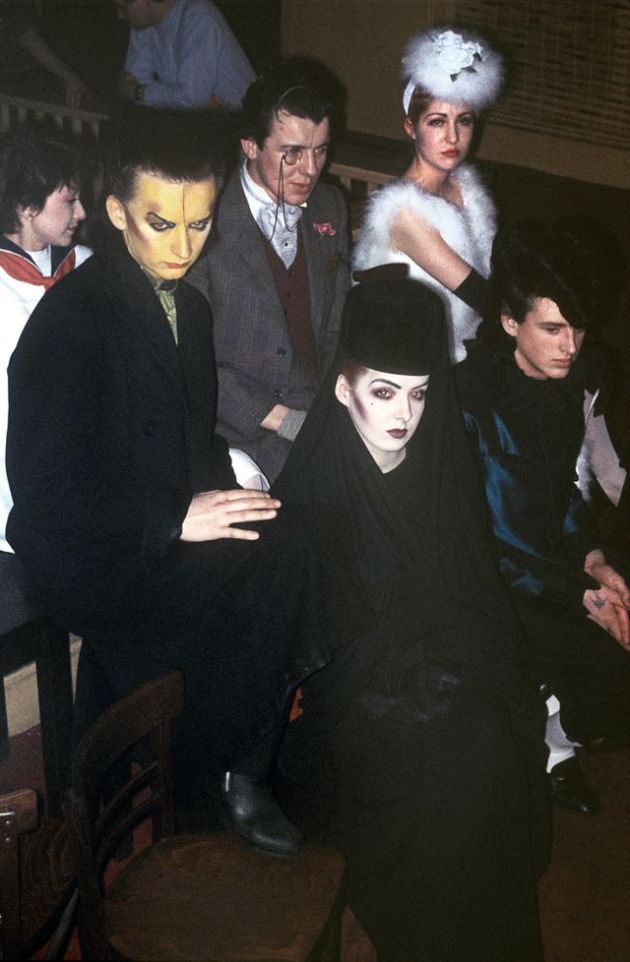
But, in a curious echo of punk five years before, something is stirring in the London suburbs. Young Roxy, Bowie and Kraftwerk fans from Bromley, Burnt Oak and Basildon are dressing up in style (Zoot and toy-soldier suits, cummerbunds, bolero hats, geometric haircuts) and flocking to clubs like Covent Garden’s famous Blitz, now the subject of an engaging exhibition running until 29 March 2026 at the Design Museum

It was the apex of a scene which encompassed fashion, graphic design, journalism, electronic dance music, squatting and a New Pop sensibility which would soon sweep the charts. In short, it’s arguably the best of the 1980s, and this fascinating exhibition neatly incorporates most of it.

Blitz Kids including Midge Ure, Steve Strange, Billy Currie and Rusty Egan

We see the original flyers and posters which wittily and stylishly trailed the Blitz club nights, and there are many items of vintage clothing. The rarely-seen photos are worth the price of admission alone, many contributed by original scenesters like Boy George, Siobahn Fahey, Robert Elms and Marilyn, including a priceless shot of David Bowie with Toni Basil (we also get the full story of Bowie’s recruitment of Strange et al for the ‘Ashes To Ashes’ video).

But the jewel in the exhibition’s crown is probably the recreation of the Blitz itself, with an AI Rusty Egan on the decks and Spandau Ballet performing ‘To Cut A Long Story Short’ on the ‘live stage’ (elsewhere Elms has donated his embarrassing handwritten poem which he used to announce their debut gig at the club).

Rusty Egan, Gary Kemp, Fiona Dealey and Robert Elms in the exhibition’s recreated Blitz. Photo by PA Media

The exhibition widens out to encompass other fascinating early 1980s artefacts, like the posters advertising Sade’s pre-fame Ronnie Scott’s gigs – well over a year before Diamond Life was released – and evidence of the media’s generally condescending attitude towards The Cult With No Name/New Romantics/Blitz Kids.

Then there are the textiles, hats and magazines galore (the exhibition dovetails slightly with the Portrait Gallery’s recent Face exhibition), and even the first all-electronic drum set, a Simmons SDS-V, as used by Kajagoogoo, Flock Of Seagulls, Ultravox etc.

This is an engaging, fun exhibition curated by people who were there and/or obviously care about this stuff. And there’s just enough social/political context for it to be educational too – it was good to see so many youngsters enjoying it with their parents. Highly recommended.

The Blitz in 1980, with Boy George (left)

Sting: The Dream Of The Blue Turtles @ 40 (Part 2)

In part one of this 40th anniversary celebration, we looked at the origins and recording of The Dream Of The Blue Turtles.

But now to the music – how does it stand up in 2025?

‘If You Love Somebody Set Them Free’ was a ‘corrective’ for ‘Every Breath You Take’, an anti-surveillance, anti-control relationship song, with a neat groove (Sting’s demo apparently sampled Omar’s snare from Bowie’s ‘Let’s Dance’, much to the drummer’s amusement…) and some great Sting rhythm guitar in the middle eight.

It was the lead-off single from the album but only reached #26 in the UK (but #3 in the States), despite a superb Godley and Creme-directed video.

‘Love Is The Seventh Wave’ was a last-minute jam (with Sting on bass?) and the album’s second single (missing the top 40 completely), while ‘Shadows In The Rain’ was the first thing the band recorded at Eddy Grant’s studio while waiting for Marsalis to show up – during the saxist’s overdub, reportedly he wasn’t told anything about the track, just told to start playing. Apparently Sting mumbles ‘A-minor’ when asked by Branford what key the song’s in…

Sting has gone on record as saying that ‘Russians’ was supposed to be an ‘ironic’ song in the Randy Newman/Mose Allison mold, and it was the only decent hit in the UK (#12) when released as a Christmas single in December 1985.

Though particularly well-sung (but with an annoying slap-back echo), it sadly misses with its annoyingly on-the-nose lyrics and Kirkland’s cheapo synth backing. This song really needed the Trevor Horn, Steve Lipson or even Hugh Padgham treatment, as did ‘We Work The Black Seam’.

But there’s much better stuff elsewhere. ‘Children’s Crusade’ was reportedly a second take, recorded totally live, with Sting replacing his vocals later. He taught ‘Consider Me Gone’ to the band in the studio. Reportedly they tried a few unsuccessful takes, then Eddy Grant brought in the president of Guyana to say hello. They nailed it immediately afterwards. Sting’s voice is superb here, on the edge of hysteria.

The brief, Thelonious Monk-like title track (also with Sting on bass?) features a mind-bending Kirkland piano solo which amazed me as kid. I didn’t understand its ingenious polyrhythms at all. I almost do now but it still sounds brilliant.

‘Moon Over Bourbon Street’ (Sting on bass?) is musically heavily influenced by the jazz standard ‘Autumn Leaves’ and lyrically inspired by Anne Rice’s book ‘Interview With A Vampire’. Kirkland’s synth oboes are a bit naff – couldn’t Sting afford real ones? It missed the top 40 when released as the album’s fourth and final single.

‘Fortress Around The Heart’ marries a stunning chorus to some seriously tricky verse modulations (Rick Beato’s great video runs them down). One can take or leave the rather heavy-handed symbolism of the lyric, guaranteed to wind up the post-punk critics, but at least Sting was stretching himself. The album’s third single, ‘Fortress’ also missed the top 40 (Sting has always been a surprisingly unsuccessful solo artist with regard to the UK singles chart).

Ultimately Turtles is a bitty album, evidently put together very quickly. Every song is different and it seems a template for potential future projects (arguably Sting only really got his solo career on track with the followup …Nothing Like The Sun) rather than a confident debut. The playing is predictably great though. Everyone gets their chance to shine…expect Darryl Jones, who is weirdly anonymous.

Sting was apparently obsessed with the Synclavier digital sampler during 1984 but admirably resisted a machine-tooled, over-produced album. Still, for someone so keen to distance himself from The Police, maybe it’s odd that he rerecorded a Police song for the album and also named his next album/film after a Police song….

Sting and band did some ‘secret’ gigs at the Theatre Mogador in Paris just before the album release on 17 June 1985, and if memory serves this writer bought it the week it came out. It was one of many exciting buys during that landmark summer of 1985 (see below for more).

Turtles was immediately a big hit, reaching #3 in the UK and #2 in the States. It also earned a Grammy nomination for Album of the Year (and, admirably, Sting didn’t play any songs from it during his Live Aid appearance in July).

Then, in a turn of events that must have amused him, readers of Rolling Stone magazine voted Sting #2 jazz artist of 1985 (after Wynton Marsalis) and voted Turtles #2 album of the year (after Brothers In Arms). He was also #2 male singer and #2 songwriter, both behind Springsteen, and #2 bassist, despite the fact that he probably didn’t pick up a bass during 1985…

Then of course there was the ‘Bring On The Night’ tour, album and movie, of which much more soon.

(PS – What a stunning series of album releases during summer/autumn 1985: Boys And Girls, Cupid & Psyche ‘85, Turtles, A Physical Presence, A Secret Wish, Hounds Of Love, Around The World In A Day, Brothers In Arms, Steve McQueen, You’re Under Arrest, Dog Eat Dog etc. etc…)

Sting: The Dream Of The Blue Turtles @ 40 (Part 1)

At the end of 1984, Sting seemed hellbent on erasing (albeit temporarily) any traces of The Police.

Buoyed by his happy relationship with Trudie Styler, he was falling back in love with music (but not, apparently, the bass guitar) and studying Brecht and Weill. ‘I cry a lot. I’m moved easily by a chord progression,’ he told Musician mag around the time.

He was also developing some solo material. But there was no band. He moved FAST. In late 1984, he asked his friend, musician and writer Vic Garbarini, to put some feelers out in New York City.

By January 1985, saxophonist Branford Marsalis was recruited (helped by the fact that Sting had heard that The Police were his favourite band) and some audition workshops were set up, attended by some of the hottest young fusion and funk musicians in the city.

Then, during a dinner break near AIR Studios in Montserrat while working on Dire Straits’ ‘Money For Nothing’, Sting met drummer Omar Hakim for the first time, who was another quick shoo-in (Omar apparently jokingly auditioned with knife and fork at the table).

At New York’s SIR rehearsal studios in January 1985, Sting, sitting in front of his Synclavier, with a Fender Tele at his side, bassist Darryl Jones (who was still playing with Miles Davis), Hakim and keyboardist Kenny Kirkland jammed on Police songs ‘One World’, ‘Demolition Man’ and ‘Driven To Tears’.

Sting then set them to work on a new song, ‘Children’s Crusade’, playing the demo over the studio speakers. He had found his band (Sting also found time to guest on Miles’s ‘One Phone Call’ during this time).

Sting, Marsalis, Hakim, Kirkland and Jones did a few surprise gigs at The Ritz club in New York City in late February. By early March 1985, after an aborted try at Compass Point Studios in Nassau, they were recording The Dream Of The Blue Turtles at Eddy Grant’s Blue Wave Studios in Barbados. Pete Smith was engineering and co-producing, who had impressed Sting while helping record his Synchronicity demos.

But Sting was panicking about his voice, and the fact that he was going right outside his comfort zone. With good reason. This new music, light and drawing on jazz, funk and folk forms, was nothing like The Police. A&M Records were depending on a hit. There wouldn’t be one note of distorted guitar on the album. It was more in line with Sade or Simply Red (but of course the musicianship was on a different planet to those artists). And the production and arrangements were very minimalist by mid-‘80s standards.

Next time: the album, track by track – and has it stood the test of time?

Bryan Ferry: Boys And Girls @ 40

Bryan Ferry’s one and only UK #1 album to date (and biggest-selling record in the US) was released 40 years ago this month.

The Antony Price/Simon Puxley cover is seductive, the Bob Clearmountain mix is delicious, the grooves are pleasant, there’s an array of great players, and this writer can’t resist playing his vinyl copy every year or so.

So why is Boys And Girls always a strangely underwhelming listen?

Despite its big sales and Ferry’s watertight reputation, it has also failed to garner any posh anniversary write-ups in the monthly music mags and didn’t even make Classic Pop mag’s 2015 readers poll of the 100 best 1980s albums. Maybe it could/should have been Ferry’s Let’s Dance (and one wonders why he didn’t enlist Nile Rodgers to produce?).

Ferry completed the album just as he was mourning the death of his father (reflected in the lyrics to ‘The Chosen One’?) but started work back in summer 1983 with producer/engineer Rhett Davies, veteran of Roxy’s Avalon as well as the classic King Crimson double of Discipline and Beat (Davies left the music business for 20 years soon after working on Boys And Girls…). They devised drum-machine beats and laid down keyboard beds while Ferry outlined vague lyric/melody ideas.

Work mostly took place at The White House on London’s King’s Road (meanwhile, less than a mile away in Stanhope Gardens, David Sylvian was devising his own mid-1980s triptych, arguably a far more successful fusion of pop, white funk, ambient and jazz…), a demo studio owned by Ferry’s manager Mark Fenwick. Musicians were then brought in to overdub onto those eight-track demos – seven studios and 30 musicians/singers are credited!

The songs have various nods to the Avalon era. ‘Windswept’ (named by Ferry in a 2003 interview as one of his six favourite songs, the others being ‘Do The Strand’, ‘Avalon’, ‘In Every Dream Home A Heartache’ and ‘Mother Of Pearl’) seems inspired by B-side ‘Always Unknowing’, ‘Slave To Love’ obviously nods to ‘Avalon’ while ‘Sensation’ is built around a melodic motif embedded in ‘Take A Chance With Me’.

The piecemeal recording process affects the material though – Boys And Girls desperately misses the quirkier aspects of Avalon, with those vital contributions of messrs Manzanera and Mackay (not to mention bassist Alan Spenner).

David Gilmour, Mark Knopfler, David Sanborn, Nile, Marcus Miller and Andy Newmark are vaguely familiar now and then, but other big players are anonymous. Ferry’s patented piano work is almost entirely absent.

‘Slave’ is a case in point (though does feature some of that Ferry piano). Built around one of the hoariest old chord progressions in commercial music (incidentally very similar to the verses of ‘Dance Away’ but without that song’s interesting key change or atmosphere…), Ferry doesn’t bother with a bridge (or what Americans call the ‘pre-chorus’) or interesting chorus, just repeats the verse chords again and adds the chanted vocals.

He generally eschews bridges and modulations on Boys And Girls, sticking mainly to two-chord vamps (Avalon, in contrast, featured several ONE-chord songs, apparently influenced by Miles’s On The Corner and James Brown, but they really worked…).

The title track drearily cycles E-min/B-min, while ‘Stone Woman’ sticks rigidly to a very dull D-min/B-flat. Both songs are mercifully/abruptly cut short, Ferry unable to elevate the material with strong melodies.

Still, the music is beguiling and beautifully-appointed (though side A seems much too long, my stylus really struggling to get through ‘Windswept’) and yes, this time next year movingtheriver will probably be reaching for the vinyl, saying ‘Maybe this time’…

1980s Rock/Pop Acts I Should Like But Don’t

Everyone knows a few: those acts that got great reviews, named some of your favourite bands as influences and sold a few records in the process, but there was just something about their music that you couldn’t hack.

Maybe it was their vocals, their outlook, their politics, their songwriting, or a mixture of all four.

Well I know some too. Here’s a totally subjective, wildly judgemental – no offence intended – list of 1980s pop and rock artists who leave me cold, despite most being critical and commercial successes. Believe me, I’ve tried. Like they could care less…

King’s X
My muso mates waxed lyrical about their tricky riffs and tight musicianship but I’ve never got beyond the guy’s not very good singing, their weirdly unmemorable songs and rather naff pomp-rock tendencies.

World Party
Perpetually spoken about in hushed tones of reverence when I was at college but their music singularly failed to grab, despite the Beatles/XTC/Prince influences, possibly due to Karl Wallinger’s rather wimpy voice. See also: Crowded House, REM, Waterboys

The Blow Monkeys
Somehow got filed under the ‘sophistipop’ banner courtesy of their flirtation with ‘slinky’ grooves and soul influences, but for me Dr Robert’s absurd voice and the lack of songwriting imagination never got them past first base. See also: Kane Gang, Simply Red, Johnny Hates Jazz, Black, The Big Dish.

Marillion
Decade-ending Season’s End had some brilliant moments but for me most of the Fish era was a succession of quite badly-played/badly-sung rip-offs of Gabriel-era Genesis. It Bites did it better and added some much-needed pizzazz and groove. See also: IQ, Jadis, Tony Banks/Chris Squire/Mike Rutherford solo albums…

Deacon Blue
I liked the soppier/poppier elements of their debut album Raintown but the game was up when the truly irritating ‘Wages Day’ and ‘Real Gone Kid’ swept the airwaves at the end of the decade. They took Prefab Sprout’s basic concept to the bank whilst shaving off the weird edges.

Paul McCartney
Sheer melodic brilliance time and time again of course, but for me his 1980s work generally flatters to deceive, outside of a few random favourites (‘Pipes Of Peace’, ‘Once Upon A Long Ago’). Yes, even the album he did with Elvis Costello (of whom more below…).

The Style Council
Only a musical moron would deny the power of ‘You’re The Best Thing’ and ‘Walls Come Tumbling Down’ and you have to admire Paul Weller’s songcraft, politics, guitar playing and ability to laugh at himself, but generally it was hard to shake off the naffness. Mick Talbot must take a lot of the blame…

Mick Jagger
He employed some of my favourite producers and musicians (Jeff Beck, Sakamoto, Bill Laswell, Herbie Hancock, Doug Wimbish, Simon Phillips etc. etc.) but failed to produce even one memorable or interesting single or album track during the 1980s. See also: Pete Townshend, Eric Clapton, Nick Heyward, Jerry Harrison

Pages
This yacht rock supergroup had a great singer (Richard Page) and sh*t-hot musicians (Vinnie Colaiuta, Jay Graydon, Jeff Porcaro, Steve Lukather etc.) but the songs weren’t strong or memorable enough. See also: most of Toto, Mr Mister

Elvis Costello
Weirdly his ‘Less Than Zero’ was one of the first singles I loved as a kid, but his desperation to be a serious ’80s ‘artist’ fell on deaf ears despite the fact that he obviously knew a lot of chords and retained some of that new-wave angst (but even I couldn’t resist his fine run of 1990s form, from the superb ‘London’s Brilliant Parade’ to Bacharach). See also: The Cars, The The, Squeeze.

Van Morrison
To my ears his 1980s music is like Joni Mitchell and John Martyn without the melodic/harmonic/lyrical depth, apart from the sublime ‘Rave On John Donne’. People tell me he always uses great bands though, but they often barely register…

Todd Rundgren
I’m more of a fan of his 1980s producing work (Pursuit Of Happiness, XTC etc) than his solo music. Never bought into this whole ‘he’s a genius’ thing, save the wonderful ‘The Verb To Love’ – but that’s from the 1970s, innit…? See also: Lenny Kravitz.

Depeche Mode
Yes they’ve got a few pop hooks, the Mute Records cred and ‘edgy’ image but never been able to shake off an ineffable naffness for me. And despite being ‘synth pioneers’, they didn’t seem to push the sonic envelope much in the 1980s at all. ‘Everything Counts’ was superb though and I got on board later with Ultra. See also: Kraftwerk, New Musik, Visage, Ultravox, New Order, Howard Jones

Pink Floyd
If you want to put me to sleep, put on any of Pink Floyd’s 1980s work. Bring back Syd. See also: Fleetwood Mac, Pink Floyd solo projects, except Nick Mason’s Fictitious Sports, which is brilliant…

Bad Brains
Dub/thrash/funk pioneers and a huge influence on bands I really like such as Living Colour, Fishbone and 24-7 Spyz, but their music seems a little amateurish to me and, again, their singer was not blessed with a great set of pipes (unlike the singers of bands above).

Housemartins
Fondly remembered until you actually hear those singles again – ‘Build’, ‘Happy Hour’, ‘Caravan Of Love’. Annoying, a bit puny, and apparently the more irritating side of the C-86 generation.

The Jesus and Mary Chain
Bowie summed them up well for me: ‘I tried the Jesus and Mary Chain but I just couldn’t believe it. It’s awful! It was so sophomoric – like the Velvets without Lou. I just know that they’re kids from Croydon! I just can’t buy it…’

10 Classic 1980s Singles Featuring Brushes

Some brushes, yesterday

When you think of 1980s pop music, which drum sounds come to mind?

They’re probably pretty loud and the infamous gated snare possibly looms large: ‘Let’s Dance’, ‘In The Air Tonight’, ‘Hey Mickey’, ‘Uptown Girl’, ‘A Town Called Malice’, ‘Born In The USA’.

But there’s a whole alternative world of 1980s hits where the drummer played very quietly, with brushes rather than sticks. Stuff like Buddy Holly’s ‘Raining In My Heart’, The Beatles’ ‘When I’m 64’ and Lou Reed’s ‘Walk On The Wild Side’ probably laid down the gauntlet, but you can’t imagine any producers or focus groups demanding that the drummer play brushes to create a hit (and when was the last hit that featured brushes?).

Here are some classic 1980s singles that somehow got away with it (all chart placings from the UK).

10. Echo & the Bunnymen: ‘Killing Moon’
Powered by Pete de Freitas’s subtle and unexpected brushwork, the classic single got all the way to #9 in early 1984.

9. George Michael: ‘Kissing A Fool’
The seventh and final single from Faith, written back in 1984, reached the top 20 and was initially mooted to be the title track of that 1987 album. Session player Ian Thomas, soon to play with everyone from Robbie Williams to Scott Walker, overdubbed some brushes on the snare after first recording a pass with sticks.

8. The Cure: ‘The Lovecats’
This stand-alone single was also the band’s first top ten hit, peaking at #7 in October 1983. Drummer Andy Anderson began his career with Hawkwind’s Nik Turner and Steve Hillage, then ended up on Robert Smith and Steve Severin’s The Glove side project. He found himself recording this song in Paris then joined the band for a year, playing on 1984 album The Top and playing brushes on another B-side, ‘Speak My Language’. He then toured with Iggy Pop throughout 1987. Anderson died in 2019.

7. Alison Moyet: ‘That Ole Devil Called Love’
This stand-alone single reached a heady #2 during March 1985, produced by ’18 With A Bullet’ singer Pete Wingfield. But who’s the drummer? Answers on a postcard please.

6. Robert Wyatt: ‘Shipbuilding’
Not much is known about drummer Martin Hughes, but he did a nice job on this classic single which reached #35 in April 1983.

5. Chris Rea: ‘Driving Home For Christmas’
Written in 1978, it was originally intended for Van Morrison. Rea first recorded it as a B-side to the 1986 single ‘Hello Friend’, with drummer Dave Mattacks playing almost with a country feel. But the most famous version features on Rea’s 1988 New Light Through Old Windows compilation album with drums by Martin Ditcham, best known for his percussion work.

4. Chris Isaak: ‘Wicked Game’
Kenney Dale Johnson played some very subtle drums on this classic single released in July 1989, going on to become a huge sleeper hit in the US and UK.

3. Elton John: ‘Blue Eyes’
Recorded at AIR Studios in Montserrat, this touching ballad was the lead-off single from John’s Jump Up! album, reaching the top ten in 1982. The very slow 6/8 groove was beautifully marshalled by Jeff Porcaro. See also Toto’s ‘Don’t Stop Me Now’ and Ray Charles’ ‘Still Crazy After All These Years’ for some classic Porcaro brushwork.

2. Fairground Attraction: ‘Perfect’
It reached UK #1 in May 1988 – is it the only chart-topper to feature a drummer playing brushes? London jazzer Roy Dodds did the honours on this.

1. Rain Tree Crow: ‘Blackwater’
Cheating a bit here. It wasn’t released until 1991 but was recorded in December 1989 at Chateau Miraval in Southern France. It was the reformed Japan’s only single, reaching #62. In the band biography ‘Cries And Whispers’, drummer Steve Jansen makes the remarkable claim that his whole performance was pieced together using samples. Weird…

Any other 1980s hits that feature brushes? Drop us a line below.

Gig Review: Nik Kershaw @ Shepherds Bush Empire, 16 October 2024

As the male solo artist with the most weeks on the UK singles chart during 1984, it’s not surprising Nik Kershaw is celebrating that year with a lengthy European tour, playing his two top 10 albums Human Racing and The Riddle in their entirety.

He’s still able to command big audiences for his solo gigs, and with good reason – his vocals are if anything much improved since his mid-‘80s heyday and his songs are built to last, with their bold melodies, crafty harmonies and intricate arrangements. But then regular readers already know movingtheriver is a big fan.

So Kershaw’s back catalogue is an embarrassment of riches but also presents some potential problems for a five–piece ‘rock’ band – for a start, how to recreate those dense textures and sequence-heavy arrangements? Thankfully he generally didn’t scrimp on any of that, mostly using the same audio stems and keyboard sounds from the 1980s. There was little or no ‘reimagining’ during this gig, hugely enjoyed by a packed house.

‘Roses’, whose lyrics are still relevant today, was the surprise but effective first song, the band (all middle-aged white guys dressed in black, but then you don’t go to a Kershaw gig expecting bells and whistles) arriving onstage to the opening percussion loop.

‘Know How’ and ‘Wild Horses’ (a favourite of Miles Davis) sounded fantastic, benefitting from bassist Paul Geary’s beefy tone and Kershaw’s fluid guitar lines.

He delivered a great vocal on ‘Wide Boy’, while ‘City Of Angels’ – written about ‘a city I’d never been to’ – featured a lovely laidback performance from drummer Bob Knight, though at times during the gig he lacked the dynamics and smooth grooves of original Human Racing/Riddle sticksman Charlie Morgan.

Geary had his work cut out aping Mark King on ‘Easy’, but he did a pretty good job if somewhat lacking the Level 42 man’s precise percussiveness and syncopated slides. Impressively, keys player Phil Peckett seemed to take care of all the track’s fast sixteenth-notes in real time rather than relying on a sequencer. The whole band did pretty much the same on ‘Don Quixote’.

Self-deprecating to the last (he’s always claimed he’s just a ‘muso’ who was thrust into the limelight), Kershaw played down his Green credentials before ‘Save The Whale’, claiming it had been written as a last-minute ‘rent-an-issue’ song for The Riddle.

The excellent ‘You Might’ featured ‘too many chords’, according to Kershaw, while the first set closed with the album’s perennially popular title track, featuring tasty duel lead guitars though with a rather stiff ‘rock’ feel compared to the slinky sixteenth-note groove of the original.

Set two featured Human Racing in its entirety, and this is where the now rather dated zaniness of Kershaw’s early stuff became apparent, the superbly sung title track and ‘Wouldn’t It Be Good’ aside, though the latter was played surprisingly early in the set.

There was a lengthy tribute to and applause for producer Peter Collins who passed away in June before Kershaw closed up Human Racing with ‘I Won’t Let The Sun Go Down On Me’, rescued by the frontman’s lengthy Holdsworth-like guitar solo.

He seemed genuinely delighted by the ecstatic crowd reaction, signing off with a breezy ‘You’ve made an old man very happy’, before encoring with mass singalongs ‘When A Heart Beats’ (complete with superb note-for-note solo from second guitarist Adam Evans), should-have-been-a-hit ‘The Sky’s The Limit’ and ‘The One And Only’.

A great night of classy music and enjoyable nostalgia. Who knows – maybe Nik will amaze us with Radio Musicola @ 40 in 2026.

Bronski Beat: ‘Smalltown Boy’ @ 40

40 years ago, gay artists weren’t just occasional visitors to the British pop charts – they were leading the agenda.

A famous top three of August 1984 featured George Michael at #1, Frankie Goes To Hollywood at #2 and Bronksi Beat’s ‘Smalltown Boy’ at #3.

Remarkably, the latter was also the Bronskis’ debut single, coming from debut album The Age Of Consent. And what a trailblazing/timeless classic it is, danceable and tearjerking, with a once-in-a-lifetime vocal performance from Jimmy Somerville and that winning chord sequence.

Bernard Rose’s sombre video (which has had 121 million YouTube views at the time of writing) was obviously a huge part of the song’s success, combining the ‘realist’ style of Mike Leigh and Ken Loach with a few poetic touches to brilliant and moving effect.

Producer Mike Thorne’s role on the track is often undervalued too – there was a touch of his ‘Tainted Love’ in his bass sound and extensive use of top-end on synths and drums, and he also gets a pat on the back for leaving in a few mistakes (check out the shockingly-played synth lead line in the first 30 seconds, a section that also seems to speed up a lot).

The legacy of ‘Smalltown Boy’ is rather sad though – writers/co-founders Steve Bronski and Larry Steinbachek have both died recently, deaths that seems to have been somewhat under-reported in the media.

Madonna @ The MTV Video Music Awards: 40 Years On

40 years ago this weekend, Madonna stunned the music biz with her premiere performance of ‘Like A Virgin’ on the MTV Awards at the Radio City Music Hall, NYC.

Not a household name at the time, she sung live in full wedding regalia, perched atop a giant cake, before shedding her shoes and veil and ending up writhing around the stage, her underwear exposed.

In terms of landmark pop TV moments, some have compared it to The Beatles on ‘The Ed Sullivan Show’ or Michael Jackson’s moonwalking on ‘Motown 25’. Others saw it as summing up the coarsening of popular culture.

But Madonna’s stylist Maripol later claimed to Classic Pop magazine that MTV ‘tried to destroy her that day…they put the camera under her skirt.’ And it’s hard to see the performance outside the context of Prince’s highly sexualised ‘Purple Rain’ movie (released in the US two months earlier) and attendant live shows.

It’s also widely forgotten that this performance came a month before ‘Like A Virgin’ was released as a single, so this was the first time most people had heard the song (‘Borderline’, from Madonna’s self-titled debut album, was only just peaking in Europe in September 1984). Bravely, Madonna refused to perform either ‘Borderline’ or ‘Holiday’ for MTV.

Still, manager Freddy DeMann was reportedly furious with Madonna, believing the performance to be career suicide. But of course it was just the opposite, helping propel her to megastardom. Happy birthday to a groundbreaking moment of 1980s pop.

(Postscript: As for the MTV Awards, they’re still going strong – Madonna spawned quite a monster…)