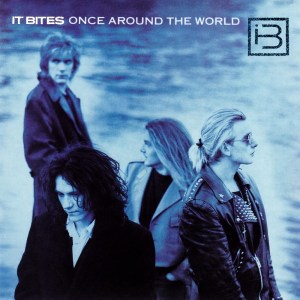
Classic Prog’s Last Hurrah: It Bites’ Once Around The World

it bitesEveryone has their favourite summer music and the brilliant Once Around The World is an album I always turn to at this time of year.

It’s a feast of resplendent chord changes, audacious song structures, good grooves, blistering lead guitar lines and uplifting, unusual melodies.

As a music-mad 15-year-old, this was the album I was really waiting for. I had recently become slightly obsessed by their debut The Big Lad In The Windmill and couldn’t wait to hear what the talented Cumbrian four-piece would come up with next.

For some reason, I didn’t buy OATW on its first week of release, but my schoolmate Jem Godfrey did. I would badger him for details in the playground. Me: ‘Are there any instrumentals on it?’ Jem: ‘No.’ Me: ‘What’s it like then?’ Jem: ‘It’s bloody brilliant, just get it!’

In 1988, the world didn’t need a dose of beautifully-recorded, full-on prog lunacy, but they got it anyway and the UK music scene was all the better for it. There were murmurs of a ‘prog revival’ at the time but It Bites (and to a certain extent Marillion) were streets ahead of the pack because they blended superb musicianship with great hooks and catchy songs.

Hats off to Richard Branson and Virgin for throwing some money at this album because it turned out to be classic prog’s last hurrah. Mainly recorded at The Manor in Oxfordshire (where rumour has it singer/guitarist Francis Dunnery gained access to Richard Branson’s bountiful wine cellar on the band’s first night of recording with disastrous consequences…), OATW is essentially one side of beautifully-produced pop/rock songs (mainly helmed by Virgin prog survivor Steve Hillage), and another of completely brilliant, barmy prog/pop pieces.

The Manor

‘Midnight’ and ‘Kiss Like Judas’ are lean, mean, well-crafted pop/rock songs with good hooks and meaty grooves, but both just missed the UK Top 40.

‘Plastic Dreamer’ fits an unbelievable amount of material into its four minutes, including a vocal harmony section that would make Roy Thomas Baker drool, a stunning guitar solo from Dunnery, some spooky Alice In Wonderland atmospherics and preposterous lyrics (very much inspired by Peter Gabriel’s Genesis output).

They repeat the trick on ‘Hunting The Whale’ and make good use of the Manor swimming pool in the process. The 14-minute title track, whilst owing a few licks and lyric ideas to Genesis’s ‘Supper’s Ready’, is nevertheless astoundingly ambitious and brilliantly realised considering it was recorded in the same year as Kylie’s ‘I Should Be So Lucky’.

(There are other nods to early Genesis throughout the album: the last few minutes of ‘Old Man And The Angel’ brilliantly revisits the rhythm games of ‘The Battle Of Epping Forest’; the main hook of ‘Hunting The Whale’ is very similar to Steve Hackett’s ‘Dancing With The Moonlit Knight’ central riff; the middle-eight of ‘Midnight’ uses Tony Banks’ opening chords to ‘Watcher Of The Skies’.)

They could play all this stuff live too, and with great elan (they played the whole of OATW at the much-missed London Astoria circa May 1988, and I also caught them a few months before that at Brunel University). Their range and ability was simply stunning.

John Beck’s keyboard textures have possibly dated a bit in comparison with what, say, Trevor Horn and David Sylvian were doing with synths at the time (though his voicings and arrangement ideas are always inventive), but people often forget what an amazing rhythm section (Dick Nolan on bass, Bob Dalton on drums) It Bites had.

There’s a ‘swing’ there that suggests that they were always influenced by much more than just progressive rock, and Dunnery’s guitar playing and vocals have incredible bite. Here’s some great footage of them recording the title track:

Though It Bites were turning into a very popular live draw throughout Europe, the album stalled at #43 in the UK – a big surprise and disappointment to the band. The lads’ music subsequently took a heavier direction, but OATW is the standout in their short but excellent career, showing off a brilliant band at its peak.

Gratifyingly, the album is gaining fans as the years go by. And check out this great interview with Francis Dunnery and John Beck about the making of Once Around The World

Francis Dunnery also did this interview after their first support gig with Robert Plant in April 1988.

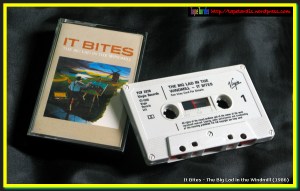
 

It Bites: The Big Lad In The Windmill

It+Bites+The+Big+Lad+In+The+Windmill+452664

In the slipstream of Live Aid, when Stock, Aitken and Waterman ruled the charts, house and techno were warming up and ‘indie’ (Housemartins, Smiths, Cure) was thriving, this gifted pop/prog four-piece from Cumbria crept under the radar and even managed to secure a big hit with their second single ‘Calling All The Heroes’.

It Bites blended their influences – Gabriel-era Genesis, Weather Report, Yes, Japan, Level 42, Steve Arrington, George Benson – superbly, creating an excellent debut and minor hit album.

My mate Nige and I loved The Big Lad. The soundtrack to our after-school games of pool would either be Sting’s Bring On The Night or this, and I quickly grew to love its pristine production, challenging song structures, brilliant guitar playing and cool chord sequences.

As a teenager, I’d listen to it on my Walkman very loudly while studying David O’Connor’s superb, enigmatic cover art or reading Stephen King’s Christine… What larks.

it-bites-the-big-lad-in-the-windmill-1986

Singer/guitarist Francis Dunnery once labelled The Big Lad ‘nutter’s music’, an apt description when you listen to songs like ‘Turn Me Loose’ and ‘I Got You’ which are almost pop but then pull the carpet from under your feet with bizarre, brilliant, extravagant middle sections and Dunnery’s off-mic vocal histrionics.

Producer Alan Shacklock – once the guitarist in Babe Ruth and future helmer of Chesney Hawkes’ ‘The One And Only’ – delivers a vibrant, state-of-the-’80s sound, with huge, gated drums and punchy bass.

It Bites’ early career as a souped-up pop covers band served them well – melody and groove are their priorities, and of course they were always a superb live act too.

Dunnery was (and is) also a very underrated Brit guitar hero whose playing could consistently deliver the sound of surprise with fluid legato, furious speed picking, dissonant intervals and whammy-bar abandon.

His solo on ‘You’ll Never Go To Heaven’ is a thrilling marriage of Allan Holdsworth and John McLaughlin and one of the great bits of over-the-top playing in Brit Rock.

He also delivered marvellously insane breaks on the Michael Jackson-meets-Duran Duran ‘Wanna Shout’ and barmy soft-rock ballad ‘Cold, Tired and Hungry’. Also worth checking out is B-side ‘Strange But True’ which, in its full version, becomes a vehicle for Dunnery’s increasingly demented solos.

‘Calling All The Heroes’ is actually a pretty good distillation of It Bites’ sound with Bob Dalton’s ingenious ‘reverse’ tom fills, Dunnery’s excellent melodies, John Beck’s intricate keyboards and Dick Nolan’s super-tight bass playing.

It was their only big hit though; other singles ‘All In Red’ and ‘Whole New World’ were catchy pop tunes with interesting instrumental flourishes and inventive vocal harmonies but neither troubled the charts.

itbites

The music magazines of the time generally ignored It Bites. If they did get a mention, it was generally to mock their unfashionably-superb musicianship or lack of London street-cred.

I remember Dunnery making an emotional pre-song announcement onstage at a London Astoria gig in 1988 lambasting the ‘trendy’ music press.

The Big Lad wasn’t a huge hit but did just well enough, peaking at #35 in the UK. It Bites were up and running and their best was yet to come.

Hardcore fans alert: a very nice person has posted all the Big Lad demos on YouTube.

English Snapshot: Peter Gabriel III

peter gabrielSo was my gateway Gabriel album, as it probably was for many teenagers in the 1980s.
But, in 1986, I don’t think I had a clue about his Genesis past or earlier self-titled records. So I went back and checked them out.

The cover artwork snagged me but initially I really struggled with Melt. The deceptively dry, claustrophobic mix, extensive use of processing, Gabriel’s animalistic yelps and the barmy Fairlight sound effects seemed very forbidding compared to So (elements drastically souped-up and ‘normalised’ by the superb 2002 CD remaster).

The opening ‘Intruder’, with its liberal use of flatted-fifth chords and Gabriel’s schizophrenic vocal, was exceptionally unsettling to a teenage lad in leafy south-west London. Forget Black Sabbath, this sounded genuinely dangerous, in a particularly English way.

The question is, of course, what an ostensibly happy, settled, middle-class young man such as Gabriel was doing digging around in the dirt in such spectacular fashion. But thank goodness he did. He extended ‘character’ songwriting – also used to memorable effect by the likes of Randy Newman, Sting, Steely Dan and The Beatles – far beyond the range of Genesis, conjuring up a memorable parade of the bungled and botched operating on the edges of society.

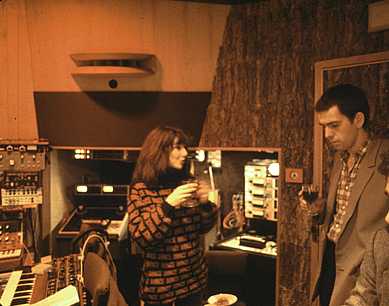
Musically, Gabriel apparently instructed producer Steve Lillywhite and engineer Hugh Padgham that nothing ‘normal’ was acceptable. Hence the famous cymbal ban, the layering of Kate Bush’s ethereal backing vocals and seemingly out-of-control processing and phasing.

kate bush peter gabriel

Kate Bush and PG recording at The Townhouse, London

The album’s themes seem to be the moral trapdoors of late-20th century urban life (mental illness, sexual violence, political assassinations, terrorism, the dehumanisation of war, social isolation).

You could argue that at the time of the Yorkshire Ripper, Bristol riots and IRA bombings, this was the perfect soundtrack.

‘Intruder’ subtly probes the sexual connotations of ‘breaking and entering’, equating a petty criminal’s intrusion with other kinds of violation, suggesting – controversially – some kind of tacit consent or ‘understanding’ by the victim.

On the epic, affecting ‘Family Snapshot’, Gabriel somehow manages to make us feel empathy for a fame-obsessed political assassin, especially in the closing ‘All turned quiet, I’ve been here before…’ section (which It Bites ‘paid homage to’ on fine 1988 B-side ‘Staring At The Whitewash’).

I used to think the protagonist of ‘Lead a Normal Life’ (‘eating with a spoon, they don’t give you knives’) was stuck in a borstal, but now I’m sure it’s far worse than that. And is the narrator of ‘I Don’t Remember’ an imprisoned political dissident or someone in an abusive relationship? It’s certainly not going to end well judging from Gabriel’s indecipherable whispers over the mechanized hum of the Fairlight in the outro, suggesting meek (drugged?) capitulation or even death.

It took me ten years or so to fully appreciate the album. But now it’s by far my favourite work by PG. Some fantastic UK session players play as if their lives depended on it, especially Dick Morrissey on sax and bassist John Giblin. Tony Levin delivers one of the greatest and most influential basslines in rock on ‘I Don’t Remember’ and single-handedly invigorates interest in the Chapman stick.

And, in my opinion, Padgham and Lillywhite have never done better work. Check out their stunning sound design on ‘And Through The Wire’; the mix subtly develops the drums with a little more room reverb in each successive chorus until the explosive last one when Marotta’s snare and Paul Weller’s brutal guitar threaten to destroy your speakers.

And the gradual building of ‘Biko’ and ‘No Self Control’, the latter with some distinctly Steve Reich-inspired marimbas played by Morris Pert, remains an aural treat. This fantastic album still challenges and surprises after all these years. 10/10.