Movie Review: Spinal Tap II (The End Continues)

The question is not so much why they’re back for a big-screen sequel, but why it’s taken so long.

But, after various copyright problems, the wait is over. ‘Tap II’ is here. And it’s worth the wait.

One of the many good portents for ‘Tap 2’ was the fact that Rob Reiner was returning to direct and co-star as Marty DiBergi. You know you’re in the hands of a master. Then there’s the fact that all surviving original cast members are present and correct, and that their improvisational modus operandi is basically intact.

Your correspondent is not going to reveal any of the many pleasant surprises from the movie, such as the return of various secondary characters from the first film (and appearances from four or five big rock stars), but suffice it to say that the plot is a little like ‘Anvil! The Story Of Anvil’.

A contract clause dictated by band manager Ian Faith before his death states that Tap must do one final comeback concert. The only problem is that the three surviving members of Tap (Nigel Tufnel, David St Hubbins, Derek Smalls) are at loggerheads and haven’t seen each other for years.

We find Nigel selling cheese and guitars in Berwick-upon-Tweed (just the sight of him wearing shopkeeper’s hat and overall is worth the price of admission alone), David making ‘on-hold’ music and Derek running a glue museum.

Various scenes from the first film are mirrored here, and they even use the same font for the onscreen graphics. Thank goodness too they mostly stay away from ‘dark’ comedy. There are few concessions to identity politics, and the humour is basically quite sweet (but agreeably foul-mouthed). These are some seriously old dudes trying to rock out again.

The casting once again nods to a richly-observed Anglophilia with Chris Addison hilarious as the hapless/humourless marketing man, a mixture of Simon Cowell and Simon Fuller, and Kerry Godilman doing fine as Ian Faith’s Sharon Osbourne-like daughter.

Once again they’ve got the music spot-on too, showing the detail you’d expect from real music fans and good musicians – you won’t find any poorly-sync’d snare hits from the drummer here. It looks like they played and sung everything live with multiple cameras running.

One small gripe? The actual band reunion scene is a bit flat and looks like it may have been the victim of some rather severe editing. But that’s nitpicking, isn’t it?

So Tap fans – there’s nothing to fear here. Go to ‘The End Continues’ with confidence. At 80 minutes, it’s a perfect length and sticks in the head afterwards. There’s little ‘learning’, just laughs. This writer chuckled approximately every 20 seconds. Looking forward to the DVD extras, there must be hours of extra improvisations.

1980s Rock/Pop Acts I Should Like But Don’t

Everyone knows a few: those acts that got great reviews, named some of your favourite bands as influences and sold a few records in the process, but there was just something about their music that you couldn’t hack.

Maybe it was their vocals, their outlook, their politics, their songwriting, or a mixture of all four.

Well I know some too. Here’s a totally subjective, wildly judgemental – no offence intended – list of 1980s pop and rock artists who leave me cold, despite most being critical and commercial successes. Believe me, I’ve tried. Like they could care less…

King’s X
My muso mates waxed lyrical about their tricky riffs and tight musicianship but I’ve never got beyond the guy’s not very good singing, their weirdly unmemorable songs and rather naff pomp-rock tendencies.

World Party
Perpetually spoken about in hushed tones of reverence when I was at college but their music singularly failed to grab, despite the Beatles/XTC/Prince influences, possibly due to Karl Wallinger’s rather wimpy voice. See also: Crowded House, REM, Waterboys

The Blow Monkeys
Somehow got filed under the ‘sophistipop’ banner courtesy of their flirtation with ‘slinky’ grooves and soul influences, but for me Dr Robert’s absurd voice and the lack of songwriting imagination never got them past first base. See also: Kane Gang, Simply Red, Johnny Hates Jazz, Black, The Big Dish.

Marillion
Decade-ending Season’s End had some brilliant moments but for me most of the Fish era was a succession of quite badly-played/badly-sung rip-offs of Gabriel-era Genesis. It Bites did it better and added some much-needed pizzazz and groove. See also: IQ, Jadis, Tony Banks/Chris Squire/Mike Rutherford solo albums…

Deacon Blue
I liked the soppier/poppier elements of their debut album Raintown but the game was up when the truly irritating ‘Wages Day’ and ‘Real Gone Kid’ swept the airwaves at the end of the decade. They took Prefab Sprout’s basic concept to the bank whilst shaving off the weird edges.

Paul McCartney
Sheer melodic brilliance time and time again of course, but for me his 1980s work generally flatters to deceive, outside of a few random favourites (‘Pipes Of Peace’, ‘Once Upon A Long Ago’). Yes, even the album he did with Elvis Costello (of whom more below…).

The Style Council
Only a musical moron would deny the power of ‘You’re The Best Thing’ and ‘Walls Come Tumbling Down’ and you have to admire Paul Weller’s songcraft, politics, guitar playing and ability to laugh at himself, but generally it was hard to shake off the naffness. Mick Talbot must take a lot of the blame…

Mick Jagger
He employed some of my favourite producers and musicians (Jeff Beck, Sakamoto, Bill Laswell, Herbie Hancock, Doug Wimbish, Simon Phillips etc. etc.) but failed to produce even one memorable or interesting single or album track during the 1980s. See also: Pete Townshend, Eric Clapton, Nick Heyward, Jerry Harrison

Pages
This yacht rock supergroup had a great singer (Richard Page) and sh*t-hot musicians (Vinnie Colaiuta, Jay Graydon, Jeff Porcaro, Steve Lukather etc.) but the songs weren’t strong or memorable enough. See also: most of Toto, Mr Mister

Elvis Costello
Weirdly his ‘Less Than Zero’ was one of the first singles I loved as a kid, but his desperation to be a serious ’80s ‘artist’ fell on deaf ears despite the fact that he obviously knew a lot of chords and retained some of that new-wave angst (but even I couldn’t resist his fine run of 1990s form, from the superb ‘London’s Brilliant Parade’ to Bacharach). See also: The Cars, The The, Squeeze.

Van Morrison
To my ears his 1980s music is like Joni Mitchell and John Martyn without the melodic/harmonic/lyrical depth, apart from the sublime ‘Rave On John Donne’. People tell me he always uses great bands though, but they often barely register…

Todd Rundgren
I’m more of a fan of his 1980s producing work (Pursuit Of Happiness, XTC etc) than his solo music. Never bought into this whole ‘he’s a genius’ thing, save the wonderful ‘The Verb To Love’ – but that’s from the 1970s, innit…? See also: Lenny Kravitz.

Depeche Mode
Yes they’ve got a few pop hooks, the Mute Records cred and ‘edgy’ image but never been able to shake off an ineffable naffness for me. And despite being ‘synth pioneers’, they didn’t seem to push the sonic envelope much in the 1980s at all. ‘Everything Counts’ was superb though and I got on board later with Ultra. See also: Kraftwerk, New Musik, Visage, Ultravox, New Order, Howard Jones

Pink Floyd
If you want to put me to sleep, put on any of Pink Floyd’s 1980s work. Bring back Syd. See also: Fleetwood Mac, Pink Floyd solo projects, except Nick Mason’s Fictitious Sports, which is brilliant…

Bad Brains
Dub/thrash/funk pioneers and a huge influence on bands I really like such as Living Colour, Fishbone and 24-7 Spyz, but their music seems a little amateurish to me and, again, their singer was not blessed with a great set of pipes (unlike the singers of bands above).

Housemartins
Fondly remembered until you actually hear those singles again – ‘Build’, ‘Happy Hour’, ‘Caravan Of Love’. Annoying, a bit puny, and apparently the more irritating side of the C-86 generation.

The Jesus and Mary Chain
Bowie summed them up well for me: ‘I tried the Jesus and Mary Chain but I just couldn’t believe it. It’s awful! It was so sophomoric – like the Velvets without Lou. I just know that they’re kids from Croydon! I just can’t buy it…’

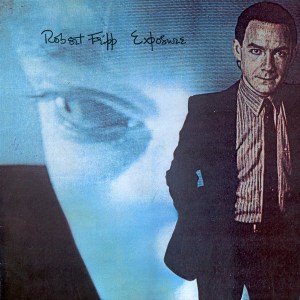
Robert Fripp: Exposure (The Definitive Edition) @ 40

Fripp’s debut solo album, originally recorded at New York’s Hit Factory between January 1978 and January 1979, has endured endless tinkering from the artist including various remixes/reversions.
But his 1985 (or should that be 1983?) remix, carried out at London’s Marcus Studios alongside Brad Davies, is the best.

But calling Fripp completists: is this version of Exposure even available on any format apart from the original cassette? (Thank goodness I still have my copy, signed by Fripp at the Virgin Megastore circa 1988, because I bought the noughties CD version to find that it featured completely different vocal takes, and the current streaming version is just as obtuse…).

The 1985 version of Exposure adds some sonic wallop to the drums, pushes Barry Andrews’ keyboards way back in the mix, comps the best of Daryl Hall and Peter Hammill’s vocals and features arguably Peter Gabriel’s best ever version of ‘Here Comes The Flood’ (with Frippertronics prelude).

It’s also a completely personal album, Fripp’s Face Value, the musings of an uptight Englishman in NYC, a prog/fusion version of ‘Annie Hall’. There are funny vocal interjections/indiscretions from his mother (‘You never remember happy things’), Fripp himself (‘Incredibly dismal, pathetic chord sequence’) and Eno (‘Can I play you some new things that I think could be commercial?’).

Gabriel fluffs the opening of ‘Here Comes The Flood’, Hall layers his vocals in strikingly avant-garde fashion, JG Bennett’s words are often layered in (with permission from his widow), arguments are eavesdropped upon and there are striking ‘audio verite’ sections. And lots of Frippertronics.

Fripp also uses silence to great effect. Don’t play this album too loud. But then there are the gorgeous ballads, ‘North Star’, featuring delightful pedal steel from Sid McGinnis and wonderful Hall vocals, and ‘Mary’, featuring Terre Roche (she also screams away on the cool reversion of Gabriel/Fripp’s title track).

And drummers: you gotta hear this album. Forget Narada Michael Walden’s playing with Weather Report, Jeff Beck, Tommy Bolin and the Mahavishnu Orchestra – this is his most outrageously brilliant drumming on record. Phil Collins plays well too, as do Allan Schwartzberg and Jerry Marotta.

1985 was a good year for Fripp. Alongside this fantastic Exposure remix, he met future wife Toyah, recorded some brilliant stuff with David Sylvian and also set up his ‘study group’ The League Of Crafty Guitarists.

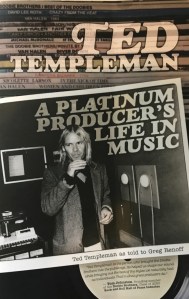
Book Review: A Platinum Producer’s Life In Music by Ted Templeman (as told to Greg Renoff)

You should never judge a person by their name.
movingtheriver assumed Ted Templeman – a favourite producer back in the day courtesy of his work with Van Halen, Little Feat, Doobie Brothers and more – was your typical seasoned/grizzled rock’n’roll journeyman.

But nothing could be further from the truth. Reading his enjoyable memoir (and looking at the cover), he turns out to be a mild-mannered jazz drumming prodigy turned pretty-boy frontman with late-‘60s baroque pop band Harpers Bizarre.

His story takes us from post-war Santa Cruz, California, to the upper echelons of the US music biz during boom time, when Templeman was a house producer for Warner Bros. (alongside Gary Katz, Michael Omartian, Jay Graydon and Lenny Waronker), becoming one of the wealthiest and best respected record execs of his era.

We learn about his youth studying the Cool School jazzers, then his pop band Harpers Bizarre gets signed by Warners and he’s mentored by Waronker, quickly learning what A&R actually means – choosing the right songs for the artist and assessing their commercial strengths and weaknesses. He also witnesses first-hand the weird action around the Doors, Beach Boys and Phil Spector.

But he quickly realises he’s not cut out for fronting a band, and moves on to being Warner Bros’s tape listener, hanging around Frank Sinatra sessions and getting the nod from Waronker to produce his pet project, the Doobie Brothers.

Then there are some fascinating sections on working with Van Morrison – he sees the frustrations of being a co-producer at first hand when they release the ‘wrong’ mix of ‘Tupelo Honey’. But he also sees Morrison’s more humorous side – during the recording of the live album It’s Too Late To Stop Now, Ted, sitting in the mobile studio outside The Rainbow, hears Van frequently saying, ‘Didja get that, Ted?’ into the mic between songs.

Templeman forges a long-term relationship with his engineer Donn Landee and starts working with Little Feat. He sparks a great friendship with their mainman Lowell George and is fascinated to find that he is a model airplane fan. But when pushed, Lowell claims he’s just learning about them so he he can fly in drugs from Mexico. He also learns a lot about drums working in Sunset Sound studio 1 with Richie Hayward.

Then there’s recording Carly Simon on Another Passenger, and her relationship with James Taylor, before Templeman first comes across Van Halen via a concert in Pasadena. They quickly become his second obsession, though he’s deeply unsure about Dave Lee Roth’s vocals and general attitude (the book is full of strikingly honest reflections, and he’s quick to admit when he’s wrong).

The main chunk of the book deals with recording Van Halen, from the classic debut to the painfully laboured 1984. He even confesses to initial scepticism about ‘Jump’, kvetching to Eddie: ‘I signed a heavy metal band’! But he somehow enlists Eddie to guest on rollerskating freak Nicolette Sheridan’s ‘Can’t Get Away From You’.

Templeman eventually becomes a great fan of Lee Roth, though advises him not to leave Van Halen and try to be a movie star (though still ends up producing Crazy From The Heat). He also worries about getting Sammy Hagar into VH, suggesting they change their name to Van Hagar, and refuses to produce 5150.

There’s an amusing meeting with Prince at Sunset Sound and the Purple One’s reaction to Templeman’s suggestion that Quincy Jones produce Purple Rain. And then there’s Allan Holdsworth, a Warner Bros. signing coming via Eddie Van Halen’s recommendation. Eddie and Templeman are contracted to co-produce Road Games, but Holdsworth refuses to allow them in the studio together while he’s recording! A baffled Eddie bows out, and then Holdsworth demands that a few tracks feature vocals against Templeman’s best advice (of course Allan has his own take on the Road Games debacle…).

The mild-mannered Michael McDonald is a regular character in the book, uncharacteristically going ballistic for not getting co-writing credit for Van Halen’s ‘I’ll Wait’. We learn about Aerosmith drummer Joey Kramer’s opinion of Templeman’s work on their comeback album Done With Mirrors, and Eric Clapton’s reaction to being told that his guitar tone sucks.

The last section of the book regards Templeman’s work on the ‘Wayne’s World’ soundtrack and then losing his job at Warners, leading to depression and alcoholism.

It’s one of those rare music books that takes you right into the process of trying to get quality, commercial performances from some of the biggest stars in the music business, and it’s full of good advice about producing/arranging and interesting musical/technical observations.

Sadly though, its message may fall on deaf ears these days when Pro Tools and bedroom recordings are all the rage, musicianship less so, but still it’s a fun, informative look at the peak of the studio scene. Highly recommended.

Bill Bruford: The Comeback

Pop musicians make comebacks all the time – in jazz or jazz/rock, it’s almost unheard of.

Reading King Crimson/Yes/Genesis/Earthworks drum legend Bill Bruford’s fine autobiography, there was no doubt he’d had his fill of the music business when he officially retired from performance on 1 January 2009 (his last headlining gig took place the previous July).

Away from the kit, in recent years he’s achieved a PhD from the University of Surrey, curated an excellent YouTube channel and released the occasional reissue or compilation, the latest of which is The Best of Bill Bruford.

But, as they say in sporting circles, you’re a long time retired. So it’s thrilling to report that Bruford is making tentative steps back to public performance – in a recent interview he described his return to playing as ‘explosive, unexpected, and very sudden’.

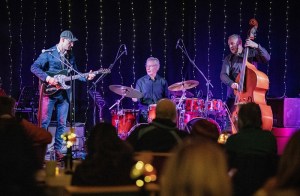
He turned up at the John Wetton tribute gig last year, performing ‘Let’s Stick Together’ alongside Phil Manzanera and Chris Difford, and now he’s joined up with his old drum tech, German ex-pat guitarist Pete Roth, plus bassist (usually on acoustic but here on electric) Mike Pratt, for some low-key trio gigs.

His recent show at the 606 was the busiest your correspondent had seen Chelsea’s treasured jazz club for years. Roth’s website describes his music as ‘jazz without borders’, and it’s a pretty good summary – they generally avoid fusion clichés like the plague, sounding more like John Abercrombie’s organ trio than anything Bruford recorded with Allan Holdsworth.

His kit was a return to his youth – two tom-toms, angled snare, two cymbals. And he still has that prodigious, propulsive technique on the hi-hats and ride cymbal, even if his snare drum no longer particularly has that distinctive ‘clang’.

‘Billie’s Bounce’ featured Bruford’s trademark figures between the tom-toms and snare drum, and Roth’s organ patch and octave pedal were a novel touch. ‘How Insensitive’ developed from a freeform rubato opening into an Abercrombie-esque mood-jazz piece, though Pratt’s strident bass seemed a little out of place.

‘If Summer Had Its Ghosts’, first recorded by Bruford with Eddie Gomez and Ralph Towner, meshed odd-time fun with the blues, Roth’s guitar at its more Scofield-like. ‘Summertime’ came with a tricky vamp which Pratt and Roth rushed somewhat – never a problem for Bruford, while a section from Dvořák’s Symphony No. 9 was a slowburn success. Meanwhile band composition ‘Trio of Five’ (or was it ‘Fun’?) was another attractive if a little harmonically inert, vamp-based piece in their favourite 5/4.

Though there were times when Bruford seems to have lost a little of the fluidity of old, it seems churlish to judge a performance thus when the performer and loyal crowd are having so much fun.

The trio play at the Oxford Spin club later this month, and for some other selected dates next year – don’t miss. What an unexpected pleasure to see Bruford back.

Rockin’ Jimmy & The Brothers Of The Night (1982)

In this day and age, it’s weirdly reassuring to recommend an album which resolutely refuses to appear on streaming platforms or even CD.

So, at the time of writing, it has always ever been just a 1982 vinyl release for Rockin’ Jimmy & The Brothers Of The Night (widely available on Discogs).

Fronted by bespectacled Rockin’ Jimmy Byfield, they were a Tulsa-based bar band with country, blues and R’n’B influences, prowling similar territory as late Little Feat, JJ Cale, mid-‘70s Eric Clapton (who covered Byfield’s ‘Little Rachel’ on There’s One In Every Crowd), early Dire Straits, late-‘70s Ry Cooder and even ZZ Top at their most laidback.

Championed by Alexis Korner on his fabled Radio 1 show, Rockin’ Jimmy’s second and final album was one of the first ‘rock’ albums your correspondent remembers enjoying. It appeared on the small but influential, Notting Hill-based Sonet Records. Based around Byfield’s pleasant voice and Chuck DeWalt’s fat beats, the band eschewed distorted guitars and blues/rock cliches in favour of catchy, melodic songs and neat ensemble work.

The album’s beautifully recorded, with no concessions to early 1980s production (thanks to Brit helmer Peter Nicholls, best known for his work with Joe Cocker and Leon Russell). ‘Rockin’ All Nite’, ‘Angel Eyes’ and ‘It’s A Mystery’ have staying power. The rest of the album hasn’t dated much either.

Sadly the band split after this second record, but they did apparently tour a little until the end of 1982, as this clip attests, and may still occasionally play around Tulsa (correct?). The cover’s quite cool too – which meeting of which ‘brotherhood’ is Byfield about to attend? The shadow knows…

Van Halen @ Monsters Of Rock, Donington Park: 40 Years On

40 years ago this month, Van Halen were the penultimate act at Monsters Of Rock, Castle Donington, part of what is generally considered the greatest ever bill at the illustrious rock festival.

And now some sizzling side-of-stage footage from Saturday 18 August 1984 has emerged (but sadly has been removed from YouTube as of March 2025…), shot by Ross Halfin, showing the first iteration of the band at their commercial peak (they would break up in acrimony shortly after, and this was their last ever British concert).

The sound is not brilliant and some fans have complained about the setlist and length of both the Van Halen brothers’ solos, but it’s instructive and exciting to see exactly what goes down backstage/onstage.

Lee Roth is a superb master of ceremonies, singing well, dancing his tail off and firing off some amusing bits of banter: ‘Don’t stick your tongue out at me unless you’re gonna use it… If you wanna throw something at me, I’m gonna come down there and f*ck your girlfriend!’ etc. etc.

Though the footage starts off with Lee Roth and Alex Van Halen sharing a laugh (in a recent Classic Rock piece about the gig, Halfin claims the former was ‘stoned’ throughout), tensions among the band were high and nobody present was very surprised when they went their separate ways shortly after.

But it’s quite a thrill to get such a close-up view of such a legendary gig. The tempos are brisk but everything has VH’s inimitable swing and swagger.

Peter Gabriel: i/o

Despite his reputation as a sonic groundbreaker and technological wiz, Peter Gabriel arguably hasn’t done anything much good on record since 1992, even as his live shows gain popularity.

1986’s So was of course the huge pop breakthrough, and that album has been the template for his subsequent, rather predictable solo career – he generally switches between atmospheric ballads a la ‘Mercy Street’ or ‘Don’t Give Up, ‘dark’, vaguely industrial rock tracks, and ‘funky’ one-chord grooves with poppy hooks and emotional lyrics, typified by ‘Sledgehammer’.

i/o is his first album of new material since 2002 and sadly it cannot reverse the trend, despite Gabriel’s always excellent, ageless vocals. It mostly meanders by in a fog of ugly snare drums, dry guitars and keyboards (some by Eno), digital treatments/loops pitched somewhere around 1998, and not much air at all. It seems the multi-layered triumphs of ‘Lead A Normal Life’ and ‘Family Snapshot’ are long gone.

Elsewhere Tony Levin’s bass and stick parts are prominent but they can’t produce anything as immediate and catchy as ‘Sledgehammer’. ‘Four Kinds Of Horses’ sums up the problem – a fairly uninteresting half-time groove underpins a fairly uninteresting vocal melody, while a rather irritating piano loop burbles away in the background. It never should have left the rehearsal room and many other (mostly overlong) tracks replicate that formula.

But Gabriel does deliver a pretty good, harmonically-rich ballad – ‘Playing For Time’ – which some other reviewers have very generously compared to Randy Newman’s best work. It’s this album’s ‘Washing Of The Water’.

In conclusion, the main problem with i/o is that it sounds exactly like you think it will. Maybe Gabriel is working with the wrong people, maybe the wrong software. Maybe he needs to get back to recording ‘as live’, embedded in a really good five-piece band. Paging Bob Ezrin, Larry Fast, Robert Fripp and/or Hugh Padgham…

(postscript: I’ve recently invested in the definitive 2007 CD remaster of Genesis’s Lamb Lies Down On Broadway – it sounds absolutely fantastic and I feel 18 again…)

Yngwie J Malmsteen: Rising Force 40 Years On

When movingtheriver started playing guitar and buying muso magazines in the late 1980s, the name Yngwie J Malmsteen seemed to inspire awe throughout the whole ‘scene’.

But there was no way you could just happen upon Malmsteen’s music in the UK unless you listened to ‘The Friday Rock Show’ with Tommy Vance.

Then my interest was piqued again when It Bites’ Francis Dunnery mentioned him in a Guitarist magazine interview from October 1989. Almost immediately after that I found Malmsteen’s debut solo album Rising Force – released 40 years ago this month – in a bargain bin at the Richmond Our Price.

You could make an argument that the Swede – born Lars Lannerback! – was THE rock guitarist of the 1980s, having as much of an impact as Eddie Van Halen did five years before. Rising Force was a perfect bridge between the UK, Genesis and Yes albums I was investigating and the heavier influences coming in from Steve Vai and Van Halen.

But, as with any freaky guitar virtuoso, the main issue was finding the right musical context. Rising Force has its duff songs (though always with brilliant guitar playing) but delivers two of the most stunning instrumentals in rock history, ‘Black Star’ and ‘Icarus Dream Suite Op.4’. And to think he was just 20 when he recorded them.

With Malmsteen’s scalloped Strat and nods to Paganini, Bach, Albinoni and Mozart, he achieved (and achieves) a remarkable control of vibrato, both via fingers and whammy bar – demonstrating possibly influences from Allan Holdsworth and Al Di Meola at this early stage – and superb tone, plus a mastery of those baroque passing chords.

I saw Yngwie live once at The Marquee on Charing Cross Road on 11 June 1994. It was thrilling seeing him at such close quarters but I kept wanting the singer to shut up. Eventually said vocalist got into a spat with someone at the front and smashed the mic stand down on his head.

Yngwie then set his Strat alight, kicked it to pieces and chucked the neck towards the sound desk, just missing my head and landing about 15 feet away. The venue was evacuated, and as we chatted nervously outside, a laughing kid ran past brandishing the smoking neck. Wonder where it/he is now.

I no longer have the CD of Rising Force for some reason – wish I had held onto it because the album is not on any streaming platforms at the time of writing. Malmsteen’s career continues at great pace – he’s just played two gigs in London and done a great interview with Rick Beato.

And for those who like reaction videos, The Daily Doug has put together a neat musical analysis of ‘Icarus Dream Suite’ here.

John Lennon/Yoko Ono: Milk and Honey @ 40

Milk and Honey – planned as the followup to Double Fantasy long before John Lennon’s death on 8 December 1980 – was finally released 40 years ago this weekend, on 27 January 1984.

I believe it was the second vinyl album owned by movingtheriver – the first was The Beatles’ Magical Mystery Tour soundtrack.

Polydor did John and Yoko proud, with striking front/back photos and a gatefold sleeve complete with Ono’s liner notes, Lennon’s ‘Grow Old With Me’ lyrics and some Robert/Elizabeth Barrett Browning poetry.

But Milk and Honey was somewhat of a commercial disappointment, reaching #3 in the UK and just #11 in the US. And it seems one of the least remembered Lennon-related albums these days. Why? Listening again after a few years this weekend was a pleasurable experience, with a few exceptions, and the breadth of musical styles (reggae, calypso, new-wave, piano balladry, rock’n’roll) is impressive.

Six John solo tracks recorded during and before the Double Fantasy sessions made it onto the album. They’re all pretty good, a few classic, mostly tougher than the previous material. John sounds on great form. His spoken-word moments and count-ins are amusing and he’s frequently heard ‘coaching’ the band (and studio staff) through the songs, Prince-style, with various instructions: ‘Boogie!’, ‘Hold it down’, ‘Groove!’, ‘All right, you can get out now’ etc.

The Lennon tracks also showcase a great band playing pretty much live in the studio. John plays lots of guitar – in that famous Jann Wenner interview, he said ‘I can make a guitar speak’, and you can hear it here. Drummer Andy Newmark lays off the hi-hat most of the time, letting the rhythm guitars fill in the top end.

Three UK singles were released from the album, with diminishing returns: ‘Nobody Told Me’ got to #6, ‘Borrowed Time’ (studio sessions reveal that John used an interesting reference source for the song) #32 and ‘I’m Stepping Out’ #88.

Yoko recorded her tracks during 1982 and 1983, mostly with a very good NYC rhythm section (Neil Jason on bass, Yogi Horton on drums), and they range from the intriguing to extremely corny. ‘Don’t Be Scared’ possibly influenced David Bowie, particularly the title track of Tonight, recorded three months after Milk and Honey was released:

Yoko also enlisted some ‘remix engineers’ who apparently added a lot of post-production effects to John’s vocals, the drums and guitars (she had fallen out with Double Fantasy producer Jack Douglas over unpaid royalties and refused to credit him on the album).

Revisiting Milk and Honey was certainly a bittersweet experience, but it’s an easy album to recommend, and it only makes you miss John all the more. The dunderheaded/ill-informed contemporary critical reactions are explored in this very good video: