The Wackiest Guitar Solos Of The 1980s

eddie_van_halen_at_the_new_haven_coliseum_2Pop music has always featured its fair share of brilliantly ‘inappropriate’ instrumental solos, from the (uncredited) honking tenor break on Frankie Lymon & The Teenagers’ ‘Why Do Fools Fall In Love’ and Tony Peluso’s brilliant fuzz-guitar feature on The Carpenters’ ‘Goodbye To Love’ to Jeff ‘Skunk’ Baxter’s unreconstructed rampage through Donna Summer’s ‘Hot Stuff’.
And then of course there are the jazz solos that occasionally enhance ‘pop’ material – Sonny Rollins lighting up the Stones’ ‘Waiting On A Friend’, Ronnie Ross’s memorable break on Lou Reed’s ‘Walk On The Wild Side’ and Phil Woods/Wayne Shorter/Pete Christlieb’s tasty leads on some of Steely Dan’s best work.

In the ’80s, there was a lot of demand for the wacky solo, often thrown in to pep up some pretty light/fairly inconsequential material. One in particular really set the benchmark for the decade, and it’s naturally where we start our rundown…

6. Michael Jackson – ‘Beat It’ (Solo by Eddie Van Halen)
Eddie’s shock-and-awe break was a perfect distillation of all his trademark techniques: lightning-fast picking, close-interval tapping routines, whammy-bar divebombs and even a cheeky Jimi Hendrix ‘All Along The Watchtower’ homage.

5. Michael Sembello – ‘Maniac’ (1983)
Sembello, hitherto best known as a very able jazz/R’n’B session player for the likes of Stevie Wonder, David Sanborn and George Duke, unleashed this overblown post-‘Beat It’ solo (starting at 2:50) which sounds like it belongs to a completely different song. Maybe he should have stuck to the jazz and R’n’B…

4. Bros – ‘Chocolate Box’ (Solo by Paul Gendler)
Gendler was a respected UK-based session player (and member of Modern Romance!) before getting the call from the Goss boys. He tosses off a Francis Dunnery-esque, way-too-good-for-the-charts solo at 2:40 on this wafer-thin but very catchy single.

3. Europe – ‘The Final Countdown’ (Solo by John Norum)
This song is obviously crying out for a widdly guitar solo, but Norum’s brilliant Malmsteen-esque playing goes beyond the call of duty even by the standards of a mid-’80s hair-metal band.

2. Al Jarreau – ‘Telepathy’ (Solo by Nile Rodgers)
Nicely set up by Steve Ferrone’s wrongfooting half-bar drum fill, Nile plays all the notes he knows and a few more too in this seriously weird but rather brilliant harmonized/double-tracked break (starting at 2:05) from the L Is For Lover album.

1. Allan Holdsworth – ‘In The Mystery’ (1985)
Jazz/rock guitar genius Holdsworth inexplicably saved some of his wackiest solos for vocal-based, ‘commercial’ material. This one is fairly astonishing and, arguably, totally wasted on the song… (Bassist Jimmy Johnson also deserves a mention for his frenetic, Red-Bull-sponsored performance.)

Georgios Kyriacos Panayiotou (1963-2016)

george_michael_at_antwerp_bravo

George Michael in Antwerp, 14 November 2006

Sometime in the late 1980s, ‘doing a George Michael’ became music-biz parlance for leaving a ‘boy band’ and going on to become a credible, popular solo artist.

It was many a record exec’s Holy Grail. George pulled it off with great aplomb and deceptive ease but it proved elusive – many others tried but very few, if any, cracked it.

George was surely the most successful and revered British solo artist to emerge during the 1980s, selling over 100 million albums and winning the Ivor Novello Songwriter Of The Year award in 1985 and 1989.

He also possessed one of the all-time-great pure-pop voices.

Some mocked Wham! in their early days, but looking beyond the Lady Di hair and tight tennis shorts, it was always clear that the young George had some serious songwriting chops – ‘Wham Rap! (Enjoy What You Do)’ and ‘Young Guns (Go For It)’ married amusing lyrics (‘Death by matrimony!’) with a slick Chic-meets-Britfunk groove.

Everyone at my primary school loved ‘Bad Boys’. It was, to coin a phrase, the Sound of a Bright Young Britain.

Wham!’s second album Make It Big continued to wrong-foot the critics, featuring a parade of timeless, brilliant pop singles – ‘Freedom’, ‘Wake Me Up Before You Go-Go’, ‘Everything She Wants’ and ‘Careless Whisper’ (labelled as a George Michael UK solo single when released in July 1984). Love or loathe the latter, it’s impossible to dismiss the loveliness of that famous sax motif.

Solo albums Faith and Listen Without Prejudice Vol. 1 were monster hits on both sides of the Atlantic. If Madonna was the self-proclaimed Queen of Heartbreak, George was surely the King – to these ears, no other contemporary artist, not even Prince, could top the sublime late-’80s ballads ‘One More Try’, ‘Praying For Time’, ‘A Different Corner’, ‘Father Figure’, ‘Cowboys And Angels’, ‘Mother’s Pride’ and ‘Kissing A Fool’.

1996’s Older was another career highlight, the first album in UK chart history to feature six Top 3 singles. (Arguably, George’s music and songwriting were in terminal decline after Older, but that probably says more about the state of modern British pop than anything else.)

He became a solo artist of great integrity. Usually the first name on the team sheet for any high-profile charity gigs, he usually said yes but resolutely refused to play his own material, performing only cover versions at Live Aid and also his Prince’s Trust, Nelson Mandela Birthday and Freddie Mercury Tribute appearances.

He was a quiet philanthropist, giving a lot of money, time and energy to issues close to his heart, and he also became a vociferous anti-war campaigner. Ripped off in his early Wham! days, he went to war with Sony Records, inspiring other artists (including Prince) to study their contracts carefully.

Far from derailing him, his very public ‘outing’ in 1998 unleashed a new, outrageous side of his personality with candid interviews (a Q magazine piece in late 1998 being particularly memorable) and self-mocking videos aplenty.

March 2017 will see the release a new documentary about George’s life called ‘Freedom’, and also the re-release of Listen Without Prejudice Vol. 1. What a shame he won’t live to see the release of Volume 2.

He is survived by his father and his two sisters, Melanie and Yioda.

George Michael (Georgios Kyriacos Panayiotou), singer and songwriter, born 25 June 1963; died 25 December 2016

David Bowie & The Snowman

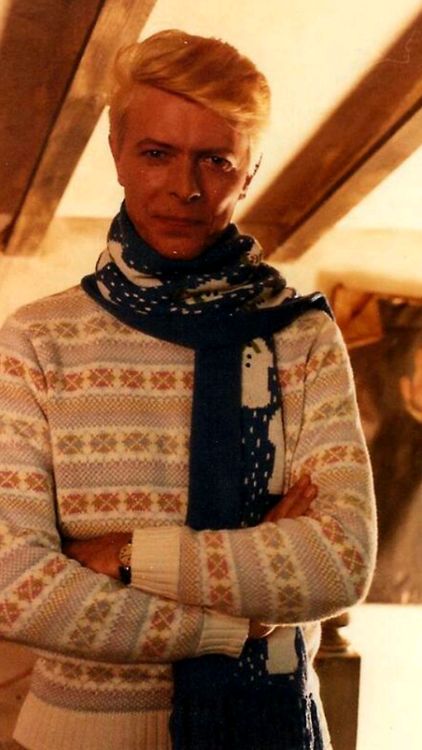
bowieDavid Bowie’s 1977-1985 period was one of his most fascinating and contradictory.

On the one hand, there were the ‘adult’ themes embedded in Heroes, Lodger, Scary Monsters, ‘The Elephant Man’, ‘Christiane F’, ‘Cat People’, ‘Merry Christmas Mr Lawrence’, ‘Baal’ and ‘The Hunger’.

But then there were the projects that were, on the face of it, more typical of a well-respected, part-of-the-furniture ‘family entertainer’; the 1977 Bing Crosby TV duet, the 1978 recording of Prokofiev’s children’s classic ‘Peter And The Wolf’, the ‘unthreatening’ pure pop of Let’s Dance and Tonight, the ‘Labyrinth’ movie and soundtrack, the huge investment of time and effort in various Band Aid/Live Aid ventures.

Were these karmic ‘atonements’ for those bleak Los Angeles and Berlin periods of the mid-’70s? Possibly, though his work had always touched on childhood themes, and he was apparently also very keen, whenever possible, to take on projects his young son could enjoy.

snowman

So, in early December 1983, when Bowie was – albeit briefly – probably the biggest ‘rock’ star on the planet, he found time to contribute a touching, heartfelt introduction to Dianne Jackson’s film of Raymond Briggs’ ‘The Snowman’.

First shown on British TV 33 years ago today (I can remember how much of an event it was in my house), it’s yet another fascinating piece of early-’80s Bowie ephemera, and his involvement was surely quite a coup for the film-makers.

Though ‘The Snowman’ has become a perennial Christmas favourite, it is often transmitted without the introduction. So here it is in all its glory. Merry Christmas.

Stevie Nicks says Happy Birthday

cakeTwo years ago to the day, I published movingtheriver.com’s first piece on Prefab Sprout’s SwoonAuspicious beginnings, you know what I mean?

But seriously, folks, it’s been fun to focus on lots of good (and not so good) music, movies and TV shows, and also to share stories and comments with readers and fellow music-heads. So thanks for dropping by this year.

A quick message from our sponsors:

The Cult Movie Club: Round Midnight (1986)

round_midnight_xlg‘Round Midnight’ turns 30 today, and its status as one of the great jazz movies was confirmed at a birthday screening last night at the Cine Lumiere in South Kensington.

Whilst the recent ‘Whiplash’ and ‘Miles Ahead’ were moderate commercial successes, they were subject to withering criticism in some quarters – I was with the naysayers regarding the former but, after watching the trailer, couldn’t even drag myself to the latter.

So until Woody Allen makes his long-promised big-budget ‘birth of jazz’ film, ‘Round Midnight’ is probably the best we’re gonna get. Its success even ushered in a short-lived Hollywood jazz revival – Clint Eastwood produced the wonderful ‘Thelonious Monk: Straight No Chaser’ (1987) and directed the Charlie Parker biopic ‘Bird’ (1988), followed by Bruce Weber’s acclaimed Chet Baker documentary ‘Let’s Get Lost’ (1988) and Spike Lee’s ‘Mo Better Blues’ (1990).

‘Round Midnight’ is loosely based on the memoir/biography ‘Dance Of The Infidels’ by Francis Paudras, a Parisian graphic designer who befriended legendary bebop pianist Bud Powell – and became his carer, business manager and confidante – during Bud’s expat period. The film focuses mainly on the relationship between Francis and Dale Turner, a fictional mash-up of Powell and saxophonist Lester Young.

Put simply, the film ‘gets’ jazz; it’s immediately obvious that almost everyone involved loves the music and its players. Despite an incredibly slow, dark (as in: you can’t really see what’s going on) opening 20 minutes, ‘Round Midnight’ finally delivers the grandeur, romance and tragedy of America’s classical music.

Dexter Gordon’s Oscar-nominated lead performance still thrills, 30 years on. Though his character mainly spends the first half of the film trying to get wasted, we can forgive him anything, especially when we hear of the beatings and racist abuse regularly doled out during his time in the army (this dialogue, according to director/co-writer Bertrand Tavernier, was pure autobiography on Gordon’s part).

Elsewhere, Martin Scorsese has some fun with his portrayal of the fairly sleazy New York booking agent Goodley, while Francois Cluzet gives a strong, touching performance as the quick-tempered though loyal Francis.

Tavernier has finally found a way to represent jazz on screen, and it couldn’t be simpler – just round up the best players available (including Tony Williams, Bobby Hutcherson, Billy Higgins, Wayne Shorter, Herbie Hancock, Ron Carter, Freddie Hubbard, most of whom also have speaking parts), get them to play live and capture a performance in one take if possible.

It’s no great surprise that Herbie’s soundtrack won the Academy Award for Best Original Score in 1987, though the film’s original music arguably never quite evokes the high-energy rush of prime late-’50s bebop-tinged jazz. No matter: both ‘Round Midnight’ and its score have aged pretty damn well.

UB40: Promises & Lies

Scene of the band's first Birmingham gig

Scene of the band’s first Birmingham gig

Sometimes a decent music documentary can really open up a subject like a good book or movie.

The Dexys/KeRowland film ‘Nowhere Is Home’ did the job recently, and last weekend’s ‘Promises & Lies’ does it superbly too.

It lets the protagonists speak for themselves purely in interview format without any ‘I’m-going-on-a-journey’, narrator-led BBC guff.

Like Simply Red, Madness or The Beautiful South, UB40 are so much part of the ’80s UK chart furniture (39 Top 40 singles including three number ones to date – surely only Shakin’ Stevens and Madness bettered them during the decade?) that it’s quite hard to listen to their music objectively these days.

By the mid-1980s, they had essentially become a stadium reggae band, exemplified by their joyous Nelson Mandela 70th birthday duet with early mentor Chrissie Hynde (she headhunted them at a London Rock Garden gig in 1980 for a big US tour

UB40’s huge success has possibly obscured their great passion for the music – singer/guitarist Ali Campbell claims several times in the film that they were always promoting reggae rather than seeking fame, and the claim rings true.

But their amazing hit-rate was somewhat of a smokescreen for some serious inter-band issues, culminating in a disastrous schism between vocalist/guitarist brothers Ali and Robin in 2008 that makes the Gallagher boys’ break-up look like a petty family tiff.

It was arguably always on the cards. A very tight-knit bunch of Brummies in their early days, UB40 had always split all their performance and songwriting royalties eight ways, a decision which created financial ‘situations’ (millions missing) that would have given even Billy Joel and Leonard Cohen serious cause for concern.

The resentments, claims and counterclaims piled up, and now in 2016 there are two bands gigging as UB40, one almost unbelievably fronted by another Campbell brother, Duncan.

James 'Jimmy' Brown

James ‘Jimmy’ Brown

‘Promises & Lies’ gleans strikingly honest interviews from everyone involved – no punches are pulled. And despite lots of fascinatingly-grim stuff, the documentary shows all band members to be an incredibly resilient, exceptionally talented, somewhat stubborn bunch.

Drummer James ‘Jimmy’ Brown gets an especially bad ride in the film, apparently the chief social-media ‘Ali-hater’, but his playing sounds great throughout (no less an ’80s pop personage than The Police’s Stewart Copeland once named him as his favourite rock drummer), as do almost all of UB40’s classic ’80s anthems.

I’ll be looking more closely into a band I’d mainly ‘dismissed’ as a singles act. Catch ‘Promises & Lies’ while you can on the BBC iPlayer.

Mick Lynch R.I.P.

Stump featuring Mick Lynch (second from left)

Stump featuring Mick Lynch (second left)

Big bottom
Swing big bottom
Swing-a-linga
It’s blubbery Burberry, baby
It’s blubbery Burberry
Big bumpy-bump
Big bumpy
Bop-a-lula
In terylene tartan, lady
How much is the fish? How much is the fish? How much is the chips?
Does the fish have chips?

I don’t want a drink but I’ll go to the bar
I’d go for a walk but I ain’t got a car
Exclamation mark, click-click-click…
I like when it’s different but it’s just not the same
The weather is perfect except for the rain
Immaculate molars, baby
How much is the fish?
Don’t mention hamburgers, Harry…
How do I get off the bus?

‘Buffalo’ by Stump, lyrics by Mick Lynch

I was planning a piece about the 30th anniversary of Stump’s marvellous mini-album Quirk Out recently when inadvertently came across the sad news that their singer and main lyricist Mick Lynch had passed away on 17th December 2015.

He was one of those fascinating, unique, highly-intelligent music-biz characters that could only have emerged during the ’80s.

Stump’s inclusion on the fabled ‘C86’ NME cassette (alongside Primal Scream, The Soup Dragons, Half Man Half Biscuit and The Wedding Present) was many people’s first exposure to the band, but it was their November 1986 video performance on ‘The Tube’ that will forever be etched on my memory.

Lynch’s Tintin quiff, bulging eyeballs and brilliantly rubbery dance moves couldn’t obscure the fact that ‘Buffalo’ was a warped pop gem.

Lynch’s lyrics were some of the 1980s’ greatest, channelling Flann O’Brien, Beckett and Joyce, with a soupcon of Mike Leigh, to depict the more surreal aspects of Irish immigrant life in London.

There were tales of dodgy landlords, bit-part actors, disastrous booze-ups, gormless American tourists (see above), pirates, part-time strippers, coffin-followers and even a classic song about Charlton Heston filming a Biblical epic (‘Lights! Camel! Action!’). Many lyrics still make me laugh out loud, his melodies were great and he was also a brilliant frontman.

stump

In a very rare interview with The Quietus, Lynch once said, ‘My lyrics are essentially ballads, I write in ballad time and still do to this day. Stump had no love songs. Everything was from a very oblique angle. “Boggy Home” would be closest to a love song. It was about being in London but desperately wishing to be on top of a mountain in Kerry!’

Though Stump’s tenure was short – consisting of only two studio albums and a handful of tours between 1984 and 1988 – but their impact was powerful.

In the early 1990s, Lynch moved from London back to his hometown of Cork where he was a founding member of Dowtcha Puppets, a children’s puppet theatre company. Stump reunited for a one-off Cork gig in May 2015. Would love to have seen that.

Mick will be missed. He is survived by three sisters, Julianne, Noreen and Marie.

Recommended listening: ‘Stump: The Complete Anthology’ CD

‘Lights! Camel! Action! The Story Of Stump’ podcast

Grace Jones: Inside Story 30 Years On

Grace

Flicking through Grace’s well-received memoir recently, I noticed that she rates Inside Story as her favourite album – pretty surprising considering the likes of Nightclubbing and Living My Life nestling in her discography.

But close reading of the small print reveals why it’s her most personal project – she co-wrote every track (with ex-Camera Club/’Slave To The Rhythm’ co-writer Bruce Woolley) and also co-produced the album with Nile Rodgers.

And while hardly a classic, Inside Story‘s a much more wholehearted and successful record than the previous year’s Slave To The Rhythm.

It seems pretty inevitable that Nile would end up collaborating with Grace. They were long-time acquaintances on the NY party scene since the Studio 54 days. On paper, he would seem the perfect fit for her, though she barely gets a mention in his excellent memoir ‘Le Freak’ (though he has promised a sequel which will presumably feature her a lot more).

Inside Story‘s lead-off single ‘I’m Not Perfect (But I’m Perfect For You)’ surprisingly didn’t make much impact on the US or UK charts but was a minor hit all over Europe. Its Keith Haring-directed video is particularly striking though, featuring cameos from Andy Warhol and a load of other NY art figures, and there was also an interesting 12″ mix by early house pioneer Larry Levan.

The album is great when it sticks to short, sharp, frivolous pop tunes but comes a bit unstuck when going for something more ambitious.

‘White Collar Crime’ is very much the son of ‘Slave To The Rhythm’, sneaking in a few of that song’s chords and an almost identical two-note verse, but it’s let down by asthmatic synths, a puny drum machine and Nile’s sketchy bass playing, though Lenny Pickett’s punchy horn arrangement is a winner.

The title track is weirdly reminiscent of Leonard Cohen’s ’80s output while ‘Victor Should Have Been A Jazz Musician’ is possibly the standout, namechecking Nina Simone and featuring some lovely Wes Montgomery-style guitar from Rodgers.

Inside Story‘s rhythm section sounds in general are slightly disappointing – Rodgers’ guitar is too low in the mix and a Linn machine takes care of all the drum parts. This suits the mechanized grooves of ‘Barefoot In Beverly Hills’ (almost an example of early house music), ‘Party Girl’ and ‘Scary But Fun’.

But the jazzier tracks are crying out for a real drummer. I wonder why Nile didn’t enlist the services of Mr Steve Ferrone, seeing as they’d recently worked together to superb effect on Al Jarreau’s L Is For Lover and Duran Duran’s Notorious.

Inside Story was not a hit, reaching only #61 in the UK album chart and #81 in the US. It’s unlikely to ever get the re-release/remaster treatment, but sounds pretty good these days.

Hiram Bullock’s From All Sides: 30 Years Old Today

hiramIn the mid-’80s, London seemed to be Hiram Bullock’s second home.

The late great New York-based guitarist was in David Sanborn’s band at the Wembley Arena in November ’84 (alongside Marcus Miller, Don Grolnick and Steve Gadd, one of my first ever gigs) and also appeared in town regularly with Carla Bley and Gil Evans during this period.

At a Sanborn Hammersmith Odeon gig in February 1987 (see the comments section below), Hiram embarked on a solo, and, with the aid of a wireless unit, promptly jumped off the stage to serenade the stalls.

He then vacated the auditorium, soloing all the while, and a few minutes later appeared in the front row of the balcony, still blazing away, illuminated by a single spot. Such shenanigans would earn himself column inches in the jazz magazines and a cult following but sometimes overshadow the fact that he was one of the great guitarists of the ’80s or any other decade, effortlessly mixing up the blues, funk, bebop and rock. You might even call him the Jaco of guitar.

By mid-1986, he had enjoyed ten years as a first-call session player (Steely Dan, Chaka Khan, Brecker Brothers et al) as well as being part of the famous ‘Saturday Night Live’ and ‘Late Night With Letterman’ bands.

He had also recently hooked up with his one-time bass student Jaco in the PDB trio (with drummer Kenwood Dennard) and produced Mike Stern’s excellent Upside Downside (guitar-wise, they have a lot in common).

In short, he had paid his dues. It was time for a solo album. Though From All Sides is in many ways a classic ‘journeyman’ record, covering all the bases from funky fusion (‘Window Shoppin’, ‘Cactus’, written by Randy Brecker) through R’n’B (‘Funky Broadway’) to smooth Sinatra-influenced balladry (‘Really Wish I Could Love You’), it’s never boring, helped also by some good guest spots – Kenny Kirkland supplies a classy solo to ‘Window Shoppin’ while Sanborn lights up ‘Say Goodnight, Gracie’.

On the witty ‘state of the world’ blues ‘Mad Dog Daze’, Bullock even comes over a bit like a Johnny Guitar Watson for the ’80s. The album also benefits greatly from mostly sticking to the same excellent rhythm section – Charley Drayton on drums, Will Lee on bass, Clifford Carter on keys – which gives some consistency from tune to tune.

Hiram plays some brilliant solos, even on somewhat cheesy material such as ‘When The Passion Is Played’ and ‘Until I Do’. The production is state-of-the-art for ’86, ie. extremely high on treble and compression but short on low-end.

But From All Sides is still mostly a blast, driven on by Hiram’s irrepressible energy and good vibes, though the followup Give It What U Got was a big improvement – more on that later.

Victor Bailey (1960-2016)

800px-victor_bailey

Victor in 2008

I was really sad to hear of Victor Bailey’s passing today.

Born in 1960, he was part of the illustrious Philly bass fraternity alongside such luminaries as Christian McBride, Alphonso Johnson and Stanley Clarke.

He replaced Jaco in Weather Report at the age of just 21, teaming up with Omar Hakim to make one of THE great bass/drums team in music history. They featured on the albums Procession, Domino Theory, Sporting Life and This Is This, and appeared regularly on each other’s solo projects. They also toured with Madonna together in the mid-1990s.

I’m pretty sure I saw Victor five times in concert – first in an outrageous Weather Report gig at the Dominion Theatre (26 June 1984), then in a very cool jazz/funk/groove unit with drummer Lenny White at the Subterania, twice at Ronnie Scott’s with an electrifying Zawinul Syndicate, and finally about ten years ago in a trio with Larry Coryell and White at the Jazz Cafe. At all times, Victor’s playing was tasty, expressive, exciting.

I was pleased when he was recently the subject of a long, excellent feature in JazzTimes magazine in which he talked frankly about music, his bass playing and illness. I hoped the piece might be the start of a healthy, fruitful period for Victor. Sadly it wasn’t to be.

Victor Bailey (27 March 1960 – 11 November 2016)