The John Scofield Interview: Sco in the ’80s, from Miles to Blue Matter

You could put forward a pretty good case that John Scofield was THE guitarist of the 1980s.

Probably best known for his incendiary playing in Miles Davis’s band between 1982 and 1985, he also enjoyed a distinguished solo career.

Whilst focusing on straightahead jazz during the early part of the decade, his stellar ‘fusion’ period between 1984 and 1988 – encompassing classic albums Electric Outlet, Still Warm, Blue Matter, Pick Hits Live and Loud Jazz – featured excellent original compositions and formidable players such as David Sanborn, Don Grolnick, Omar Hakim, Darryl Jones, Dennis Chambers, Hiram Bullock and George Duke.

In the meantime Sco was much in demand as a sideman, playing with everyone from Terri Lyne Carrington to Tommy Smith (this playlist gathers some of his greatest music of the 1980s) whilst also teaming up with fellow guitarist Bill Frisell, drummer Peter Erskine and bassist Marc Johnson in the latter’s Bass Desires project that produced two classic albums on ECM Records: Bass Desires and Second Sight.

Immediately recognisable with his chorus/overdrive sound and molten, legato style – always informed by the blues – Scofield’s solo career has since gone from strength, and we now find him ensconced in a highly productive spell on ECM, his latest album being Uncle John’s Band.

movingtheriver caught up with John to talk about his wonderful 1980s as he prepared for a European tour with keyboardist John Medeski – he’s ever the road warrior and seems full of energy and good humour.

MTR: I’d love to know a little about how/when you signed with Gramavision Records, and did you consider other options for your mid-‘80s solo career such as ECM?

JS: I signed with Gramavision shortly before I recorded Electric Outlet. They were very interested and made us a good deal when no one else had contacted me. After I met (ECM founder/producer) Manfred Eicher at the Bass Desires recording session he expressed interest but I had already signed a multi-record contract with Gramavision. After that I stayed with other New York-based companies (Blue Note and Verve) because I met those people here at home and they were major international labels. I’m quite happy now that I’ve found a home at ECM that is aligned with my current musical direction.

Drummer Steve Jordan plays some wonderful stuff on Electric Outlet – was he overdubbed at the end after you’d tracked everything with a drum machine?

Yes, exactly. I had bought a Roland drum machine and used it to make a four-track demo at home with me playing guitars and bass. I recreated that in the studio and had Steve overdub on all the tunes. He was incredible and nailed them so quickly. We’d played together a bit before – he was on my Who’s Who album in 1978.

I’m fascinated by the work you did with saxophonist George Adams during the 1980s, especially More Sightings (1984) – can you tell me how that came about?

I had played with George in New York on gigs with the Gil Evans Orchestra and then did a tour and album as a guest with the George Adams/Don Pullen band. Then George wanted to do the tour with Hannibal Marvin Peterson. They invited me and we ended up recording a live show in Zürich. I loved George’s playing and we were friendly. I even got him to come in to record with Miles for Columbia in 1983, but it seems that that recording session was lost somehow. I believe it was at The Hit Factory on Broadway. When they were putting together some CBS tapes for reissue, I was told by Michael Cuscuna that they didn’t find anything from that session… That’s all I know. It was Miles‘s band but with George on saxophone. (Adams is understood to have guested with Miles’s band in the studio on 16 June 1983 and also in concert at the Avery Fisher Hall in NYC on 26 June 1983, and was also part of the big band which played with Miles at Montreux in 1991 – Ed.)

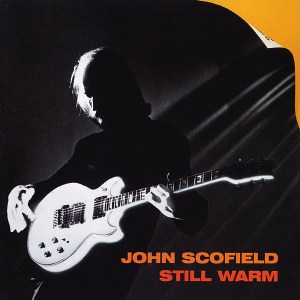
Is it true that Kenny Kirkland was supposed to play keyboards on Still Warm but didn’t show at the last minute? And please tell me how the fabulous Omar Hakim came to play on the album.

Yes, Kenny was a friend and I was lucky enough to get to play with him a bunch, but somehow he didn’t show up at rehearsal so I asked Don Grolnick. I think Kenny just had his dates mixed up maybe? I’m not sure. It was a real loss that he died so young. Omar and Darryl Jones were playing with Sting at that time and I knew Omar although I had never played with him but I thought that he and Darryl could really lock it in. They sounded fantastic together.

So was Still Warm recorded just after you left Miles?

I think it was before the last tour. The last stuff I did with Miles was later in the summer in Europe and then Japan.

How much rehearsal time did you get with the bands in general for Still/Blue/Loud? Or did you give the band demos to learn in advance? Because a few of these compositions are treacherous, I’m thinking of stuff like ‘Trim’ and ‘Loud Jazz’ – how did Dennis learn them (he famously doesn’t read music – Ed.)?

For Still Warm, I think we probably had one rehearsal, then one in the studio. I think I made demos of the tunes to give everybody, but I can’t remember. By Blue Matter and Loud Jazz we were a working band. I had been playing some of the Blue Matter songs with a different keyboardist and drummer along with Gary Grainger. Gary recommended Dennis and I guess he learned the songs at rehearsal. Maybe I made demos… I just remember Dennis trying a go-go beat on ‘Blue Matter’ which I hadn’t tried before. I think I wrote that song just before the session and had never played it live. Then we played a week at Fat Tuesday before going into the studio with Dennis and Mitch Forman. For Loud Jazz, we rehearsed but also played the tunes live on tour before the recording.

Regarding producer Steve Swallow’s role, did he select material? The albums have stood the test of time so well because they’re generally free of 1980s production clichés.

Steve has been a friend and mentor to me since the ‘70s. He was interested in production and multi-track recording and I knew he would be great at it. Although he didn’t select the material, he probably helped me with selecting my own tunes. He was really involved in mixing and had suggestions for the arrangements. Because Gramavision had their own studios, we were allowed to mix for many hours and treated mixing more like we would for a pop record. We were really lucky to have the great engineer Joe Ferla, to whom we deferred for many of the mix ideas. Along with Steve, he was responsible for the sound.

Can you tell me a bit more about the tune ‘Gil B643’ – presumably it’s a tribute to Gil Evans? And was the title at all influenced by the movie ‘THX 1138’?

B643 was Gil‘s apartment number! We lived at the same building in Manhattan.

I’d love to know a bit more about ‘Picks And Pans’ and its 6/8 feel, it strikes me that it’s a very influential tune in ‘fusion’ but was it influenced by Joe Zawinul’s ‘The Juggler’ (from Weather Report’s Heavy Weather)?

I liked Joe’s tune but I don’t think I got the beat especially from that…but there were other examples of that kind of beat. Probably lots of them. Maybe it first came from Afro-Cuban music like Mongo Santamaria’s ‘Afro Blue’. Or you can take a jazz waltz and just put a backbeat in there!

Which is your favourite of the two terrific Bass Desires albums and why?

I can’t say that I really have a favourite, but I just remember the chemistry for the first record was really exciting and it was great when we realized we could play together and that the group had a different sound, largely because of Bill Frisell and his unique approach. Also the sound with the two of our styles working together. That’s not to take anything from Marc and Peter, who really contributed so much and brought in material and if it weren’t for Marc having the idea of putting us all together, it would never have happened. I remember we played some gigs together before we went in the studio as well as rehearsing. I think we played a strange cabaret club in New York City. I can’t remember the name of the place and we probably also played a gig in Boston as well before we went into the studio with Manfred Eicher.

How did Dennis Chambers and Gary Grainger come onboard for the Blue Matter band – did you headhunt them, did they audition, or a bit of both?

I was looking for an electric bass player and my friend, the keyboard player Marc Copland, recommended Gary who he had played with in Washington DC. He said Gary could play anything on electric bass and it turned out he was absolutely correct. I then played with Gary in another configuration and he recommended Dennis. Gary and Dennis grew up together in Baltimore and were old friends. I had heard about Dennis with The P-Funk All Stars and was so surprised to learn that he was looking to play more jazz/fusion. Actually, Darryl Jones had played me a great board tape and said, ‘Isn’t this drummer fantastic?’ But we didn’t know who it was. I found out later that it was Dennis so I was a fan already even though I didn’t know it!

Hiram Bullock is an inspired rhythm-guitar choice on Blue Matter – was he a Steve Swallow recommendation?

No, I knew Hiram was great. I knew him from the New York scene and we were friends. I wanted rhythm guitar on that one track and I thought he would do a better job than I did – I think he did.

Was ‘Blue Matter’ influenced by Miles’s ‘Tutu’ (composed by Marcus Miller)?

I just had a generic triplet-ish backbeat in mind. It had no relation to ‘Tutu’ – not at all. ‘Tutu’ sounds a bit like (Burt Bacharach tune) ‘The Look Of Love’, right?!

How did you achieve the final minute of ‘Time Marches On’ where you solo over that ‘drone’ – was it a slowed down tape loop?

No, we just did it in real time.

I’d love to know your favourite guitarists of the 1980s, any genre…

Mainly I liked the jazz guys Wes Montgomery, Jim Hall, George Benson, Pat Martino. But I always loved the blues guys starting with Hendrix and Clapton back in the ’60s, plus Otis Rush, Albert King and BB King. I always admired my contemporaries Metheny, Stern, Frisell, Abercrombie, Mick Goodrick… I went in the fusion direction because of my experience with Miles. If it wasn’t for him, I probably would’ve been just playing bebop and giving guitar lessons!

The only time I saw the Blue Matter band in London was a really weird but brilliant gig in the East End in summer 1987 I think, maybe it was called the Mile End Theatre? Do you remember that? And in general do you have good memories of touring the UK and Europe?

Was that the Half Moon Theatre? I’ll never forget the gig. The late John Cumming brought us to London and I played many gigs subsequently for him. Maybe it was my first one in London as a leader? Not sure? That band was so strong. We really had some success in UK/Europe in those days.

Did Miles ever give you feedback on your 1980s solo career, or did you ever seek it out?!

I know he liked my tunes because I wrote ‘You’re Under Arrest’ for him and gave him a demo of a bunch of other stuff, some of which ended up on my records. He said he was gonna record everything but then when I quit the band in order to go out on tour with Blue Matter, I didn’t get a chance to do any of that with Miles. He had moved on to Tutu. I remember I played him some of Blue Matter for him once and he was really blown away by Dennis’s playing…

Finally, how do you look back on your 1980s career in general? Was it a great era for guitar-based music?

It was an incredible time. It was great because of getting to play with Miles and all the exposure it got me, and then starting my own career, playing funk/jazz with those guys. I was so influenced by Miles and his direction in the ‘80s. But, for me, Weather Report and Herbie’s Head Hunters were the greatest. I think it was a really good era for guitar when you think of Holdsworth, Stern, Metheny, Robben Ford and so many more. And of course the classic rockers like Clapton and Beck were around. Pop music in general had some pretty hot-shot guitar stuff in there, and funk was really everywhere. Thanks to Sly…

Thanks John and good luck on the European tour…

John Scofield at the Cape Town Jazz Festival, 2003. Photo by William Ellis

Special thanks to William Ellis, George Cole and Jan Lohmann for their help with this piece.

Gig Review: Bill Frisell @ Cadogan Hall, 25 October 2024

Though the American guitarist’s 1980s sonic explorations with the likes of John Zorn, Power Tools and on solo albums such as Before We Were Born are long gone, Frisell’s fascinating (and much quieter) late-career boom continues abound.

He’s a regular visitor to the Big Smoke but, revelling in his newfound freedom at Blue Note Records, this Cadogan Hall gig felt like his most ‘jazz’ outing for years.

That’s chiefly due to the presence of A-list collaborators, in concert and on recent album Four: Gerald Clayton on piano, Gregory Tardy on various reed instruments and Johnathan Blake on drums. Close readers will notice one word notable by its absence: bass. It’s a credit to Frisell that the instrument wasn’t really missed here, nor did he or Clayton particularly resort to vamps to make up for the absent low-end.

Consequently, the meticulously arranged and rehearsed set, strongly foregrounding collective improvisation, had a lovely ‘floating’ atmosphere. (Two touchstones may be Louis Armstrong’s Hot Five and The Jimmy Guiffre 3, the latter of course featuring Frisell hero Jim Hall on guitar.)

Themes came and went, with many segues. Somewhat sombre recent compositions such as ‘Waltz For Hal Willner’ and ‘Claude Utley’ – both named for recently departed friends of Frisell – bumped up against familiar pieces such as Paul Motian’s ‘Conception Vessel’ (taken at a very leisurely clip) and Bacharach/David’s ‘What The World Needs Now’, as well as two fast bebop-style heads which nodded to Ornette Coleman (though the Monk-ish treat ‘Holiday’ was sadly missing).

In short, it was business as usual for Frisell, who unapologetically places melody at the heart of everything he does, whether playing ‘60s pop, country, avant-garde or bebop. Hall really does seem to be his totem these days, though he still knows when to add disconcertingly witty moments of found sounds and dissonant loops via his pedal board.

And while the ensemble occasionally felt like it was kept on unusually tight leash, Clayton added much-needed harmonic colour and elaborate flourishes, touching variously on stride piano, systems music and glorious call-and-response lines reaching back to Tatum and Hines. Tardy brought the blues feeling, laying down three or four fantastic solos, while Blake – the man with the lowest drum set in the world, barely above his knees – played at a perfect volume in the very boomy Cadagon Hall, and with great taste.

All in all, this quartet has legs. One would hope they could gather for another album on Blue Note, and we might get another enjoyable gig like this too. The standing ovation seemed to come as quite a surprise to this most modest master of the electric guitar.

McCoy Tyner/Freddie Hubbard Quartet: Live At Fabrik

These two giants of their instruments – Tyner on piano, Hubbard on trumpet/flugelhorn – crossed paths many times in the 1960s, particularly on three of the latter’s most famous Blue Note albums. (Tyner of course is probably best known for his work with the fabled John Coltrane Quartet.)

So it was only natural that they should co-headline a powerful touring quartet in the mid-1980s. And now we can hear it in all its glory courtesy of this 2-CD/streaming package, a complete radio broadcast from an 18 June 1986 gig in Hamburg, Germany.

And it’s a classic – full of cogent lines, attractive melodies, power and poise, here’s an album to play to people who say they hate jazz. And tell ‘em we sent you.

It may even be the most impactful live ‘jazz’ album this correspondent has heard since 1977’s epochal VSOP The Quintet (which also featured Hubbard, alongside Herbie Hancock, Tony Williams, Wayne Shorter and Ron Carter).

It’s a very ‘hot’ concert recording, with a lot of presence and ‘room’. You can hear everything, including members of the band frequently urging each other on. It helps that the crowd is so respectful – silent when the band take things down, loud when things get intense.

The quartet were apparently unaccountably late onto the stage that night, Hubbard apologising after the first tune – irritatingly not explained in the liner notes. But the tardiness might help explain the players’ agitated impatience which definitely serves the music. ‘Inner Glimpse’ features a remarkable Hubbard tour de force of rhythmic intensity and characteristically wide intervals. The audience, appropriately, go mad.

On Tyner’s majestic ‘Latino Suite’, Avery Sharpe treats his acoustic bass like an electric, slapping it, popping it and even playing power chords, Stanley Clarke-style. ‘Body And Soul’ kicks off with a striking, unaccompanied, two-minute Hubbard flugelhorn statement. Then, after what sounds like an edit, there’s a further eight-minute solo – it’s edge-of-the-seat stuff. He was really cutting loose from the mostly pretty staid studio albums made for Blue Note during this period. Drummer Louis Hayes accompanies with a lot of fire, channelling both Billy Cobham and Tony Williams but with an original soloing style.

Only one minor gripe: a few tracks are too long, an obvious/excusable liability when an entire gig is documented. But what a specimen. And what a shame that these two giants of the music are gone, and also that such intense live jazz albums are so few and far between.

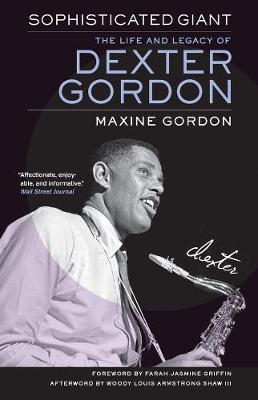
Book Review: Sophisticated Giant (The Life And Legacy Of Dexter Gordon) by Maxine Gordon

Jazz books written by ‘jazz widows’ are pretty rare. Only a few come to mind: Laurie Pepper’s ‘Art: Why I Stuck With A Junkie Jazzman’, Sue Mingus’s ‘Tonight At Noon’ and Jo Gelbart’s ‘Miles And Jo: Love Story In Blue’.

But, as Val Wilmer’s ‘As Serious As Your Life’ demonstrated some 50 years ago, behind a great jazzman is often a great jazzwoman, and usually one equally worthy of a tome.

And so it proves with Maxine Gordon’s excellent ‘Sophisticated Giant’. She was the wife and tour manager of Dexter Gordon – bebop pioneer, Blue Note saxophone great and Oscar-nominated actor – in the years leading up to his death in 1990.

The book serves as a gripping biography and much more besides. It came about as a direct result of Dexter’s unfulfilled ambition to publish his autobiography. He wrote periodically throughout his life, and many illuminating excerpts are included here.

The early pages portray an oft-neglected, Los Angeles-centred survey of how the swing scene developed into the bebop revolution; we get an inside story of Dexter’s work with the Louis Armstrong Orchestra and famous Billy Eckstine Band, hothouse for future stars Art Blakey, Gene Ammons and Sonny Stitt.

We move onto Dexter’s productive spell with fellow bebop pioneer and close friend Dizzy Gillespie, and then his famous Savoy and Dial sessions (though there are sobering details of the contracts he signed throughout his life).

We get the story of Dexter’s dark years from 1955 to 1960, when he had frequent struggles with addiction and crime. He considered them ‘un’ years and planned to leave them out of his autobiography completely.

But things very much look up with his signing for Blue Note Records on 7 November 1960. This is the most gripping section of the book and the one that will hook most jazz fans. We learn about the recording of classic albums Our Man In Jazz and Go, and read many touching letters that Dexter sent label owners Alfred Lion and Francis Wolff while on tour.

We learn about Dexter’s move to Paris and subsequent settlement in Copenhagen, Denmark, where he was resident for 12 years and became a much-loved local face, frequently visible riding his bicycle around the city.

Maxine then explores Dexter’s triumphant return to New York in 1977, when he was welcomed back like a hero with a shiny new Columbia record deal and a host of memorable albums and gigs.

Finally there’s a long, arresting section on the making of classic 1987 jazz film ‘Round Midnight’, which almost gave Dexter a Best Actor Oscar and earned him plaudits from none other than Marlon Brando.

‘Sophisticated Giant’ slots right into the canon of great jazz books, a must for the general fan and anyone who loves Dexter’s Blue Note sides or performance in ‘Round Midnight’. It’s also notable for featuring some previously unseen photos, including a beautiful shot of Dexter, Alfred Lion and Francis Wolff, taken by Rudy Van Gelder.

‘Sophisticated Giant’ by Maxine Gordon is published by the University Of California Press.

Bill Evans: Living In The Crest Of A Wave/The Alternative Man

When people say ‘I hate jazz’, I sometimes wonder if they’re really saying they know a crap composition when they hear one.

Legions of talented jazz sidepeople have been given solo record contracts only to deliver music that proves they can’t write decent tunes.

A case in point is saxophonist and William Hurt-lookalike Bill Evans. He’s had a very solid career but his solo work is distinctly underwhelming.

(And then there’s the name. If you play jazz, you probably need a stage name if you have exactly the same moniker as a bona fide legend from decades gone by – the pianist Bill Evans died in 1980.)

But give Sax Bill some credit – he was an absolutely vital figure in Miles Davis’s 1980s comeback, a good friend and carer of the trumpeter and player of several gritty solos on record (Star People is a good place to start). But by 1983 Bill found himself inexplicably frozen out, barely getting any solo space from Miles.

He got the message and jumped ship to join John McLaughlin in the new Mahavishnu Orchestra and also embark on a solo career which kicked off with 1984’s Living In The Crest Of A Wave, a pretty anodyne collection of new-agey fusion. Let’s call it The Metheny Effect. Many tried and failed to ape that guitarist’s mixture of Ornette Coleman-inspired melodicism, Latin flavours and down-home, Midwestern, open-sky simplicity.

With its folky themes, puny production, emphasis on soprano sax, fretless bass, ride cymbals and an ‘environmental’ bent, LITCOAW could almost have come out on Windham Hill. Only the closing title track works up any kind of energy or interest, when Evans finally busts out the tenor and blows up a storm over Adam Nussbaum’s frenetic jazz/rock groove.

Evans’ followup, 1985’s The Alternative Man, was his first record for the illustrious Blue Note Records and as such should have been a celebration. Unfortunately it was an object lesson in how not to use technology, and just the kind of ‘80s ‘jazz’ album that illustrates what a brilliant job Marcus Miller did on Miles’s Tutu.

Evans in the main stumbles around with ugly Linn Drum patterns, electric drums, blaring synth pads and raucous hair-metal guitar solos, all topped off with some fairly insipid soprano playing. A few tracks and you’ll be wanting to break out the Albert Ayler or David Murray albums, and fast.

The only interest predictably comes with two more open, organic offerings, the excellent ‘Miles Away’ which reunites Evans with his Miles colleagues Al Foster on drums and Miller on bass. And ’Let The Juice Loose’ is fun, a cool bebop head featuring some enjoyably un-PC Strat-mangling from the late great Hiram Bullock.

But hey – some of this music brings back good memories, when I was digging around the Record And Tape Exchange and Our Price for bargains and closely monitoring the personnel on the back of my favourite Miles and McLaughlin albums.

These albums also definitely represent a weird time for ’80s jazz, when established labels were signing all and sundry, fishing around for the next Young Lion or Metheny.

And thankfully a few dodgy early solo records didn’t hurt Evans’ career much, as he’s gone on to be one of the most respected players on the scene.

Bireli Lagrene on Blue Note: Inferno/Foreign Affairs

It’s fair to say that many excellent jazz and jazz/rock guitar players emerged during the 1980s.

But arguably none – with the possible exception of Stanley Jordan – made as much of an impact as Bireli Lagrene.

He’s hardly a household name but Bireli recorded a few fine albums for Blue Note Records and toured extensively with Jaco Pastorius just before the bassist’s tragic death.

The French guitarist was seen in many circles as the natural heir to Django Reinhardt at the outset of the ’80s. The teenage prodigy wowed everyone with a few independent releases (initially in a manouche style) and European tours.

The key to his sound seemed to be absolute freedom. Like Jaco and Django, he has no fear. He tries things, always pushing himself. To paraphrase John McLaughlin, he’s swinging before he even starts playing.

Inferno, his debut Blue Note album, featured some excellent, freewheeling electric playing – more Mike Stern and Van Halen than Reinhardt – but the musical settings were a bit stilted and it suffered from too many changes in personnel.

But Bireli found a great foil in producer and fellow guitarist Steve Khan, and their 1988 follow-up Foreign Affairs was a big improvement.

I was mildly obsessed with this album for about a month during spring 1989 – I remember buying it on the same day as seeing ‘Rain Man’ in the cinema, fact fans…

There was far more of a ‘band’ vibe on this sophomore effort, and what a band: monster drummer Dennis Chambers is in Weather Report mode, with Zawinul-style half-time shuffles (‘Josef’) and fast Latin/fusion grooves (‘Senegal’).

And check out his burning solo at the end of the title track. Keyboardist Koono is a huge find and also obviously a big Zawinul fan, and recently departed bassist Jeff Andrews plays as tastily as ever.

Possibly as a result of his sad death in September 1987, Jaco’s influence is all over this album, particularly on the catchy opener ‘Timothee’ which features a mischievous, brilliant fretless bass solo by Bireli in tribute to his friend and mentor.

Elsewhere, Bireli’s sometimes outrageous guitar playing is typified by the screaming octave leap at the end of ‘St Jean’, and he uses a lot more tonal colours than on the debut album.

Tunes wise, Foreign Affairs‘ formula is not really that much different to the classic Blue Note albums of the ’60s – a few originals, a few sideman compositions and a few covers (Herbie Hancock’s ‘Jack Rabbit’ and Ira Gershwin/Vernon Duke’s ‘I Can’t Get Started’).

The latter in particular exemplifies a great production job by Khan, always getting a warm, ambient sound. Foreign Affairs is almost impossible to find on CD or vinyl these days but it’s just been added to streaming platforms, featuring some extra solo acoustic guitar tracks not on the original album. Bireli stayed with Blue Note for a couple more albums in the early ’90s, but they were far more traditional propositions.