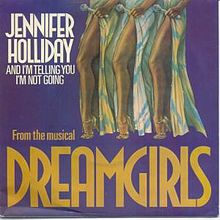
Jennifer Holliday: And I’m Telling You I’m Not Going

At this late stage of the game, it’s very rare to hear a piece of music that has you gripped from bar one.

But that happened recently when Jennifer Holliday’s ‘And I’m Telling You I’m Not Going’ turned up on Forgotten 80s.

The song was vaguely familiar. Then the penny dropped – I was a big fan of ‘The Larry Sanders Show’ and always loved Jim Carrey’s performance on the final episode (see below) in 1998, but didn’t have a clue at the time that it was a cover version.

But back to Jennifer Holliday. She first performed ’And I’m Telling You I’m Not Going’ at the age of just 20 when she took on the role of Effie Wright in the musical ‘Dreamgirls’, which opened on 21 December 1981 at the Imperial Theatre on Broadway. Written by Tom Eyen and Henry Krieger, the song ends Act One with a dramatic flourish.

Released as a David Foster-produced single in 1982, it got to #22 on the Billboard Hot 100 and won a Best Female R’n’B Vocal Performance Grammy for Holliday. It’s an electrifying vocal performance, fusing soul and gospel and injecting a touch of humour to boot.

Holliday was subsequently one of the first signings to the Geffen label, her first solo album Feel My Soul produced and co-written by Earth, Wind & Fire mainman Maurice White – it reached #31 on the Billboard pop chart and was Grammy-nominated. She also got a Grammy nomination for Best New Artist.

Holliday was then featured vocalist and arranger of The New Jersey Mass Choir on Foreigner’s #1 single ‘I Want To Know What Love Is’, a performance which reportedly reduced the song’s co-writer/guitarist Mick Jones to tears when recorded at New York’s Right Track Studios during summer 1984

Less successful was a second album for Geffen, 1987’s Get Close To My Love, but Holliday has continued to perform to this day in both secular and non-secular formats. More power to her elbow, and bravo for an absolutely spellbinding vocal performance (Jim’s not bad either, sounding occasionally a bit like Mike Patton).
 

The Yacht Rock Revolution (1980-1983)

Say ‘fusion’ to most music fans and it’s the classic early-‘70s jazz/rock of Miles or The Mahavishnu Orchestra that would probably come to mind.
But a decade later another kind of fusion was taking place, a mainly-American sound that drew on influences from R’n’B, jazz, pop, funk, AOR and MOR.

Yacht Rock was upwardly-mobile, multi-layered, widescreen, moneyed, beautifully-produced music, usually involving a string section, Fender Rhodes and/or horns, generally West Coast-originated, driven by the lush production style of the time and effortless brilliance of the musicians involved.

The Yacht House Band generally centred around a few key members of the band Toto: Jeff Porcaro on drums, David Paich on keyboards and Steve Lukather on guitar. You’d also have to factor in guitarists Jay Graydon, Lee Ritenour and Larry Carlton, keyboard players David Foster, Michael Omartian, Robbie Buchanan and Greg Phillinganes, drummers John ‘JR’ Robinson and Steve Gadd, bassists Louis Johnson and Abe Laboriel, percussionist Paulinho Da Costa, horn arranger Jerry Hey, string arranger Johnny Mandel and a whole host more.

These were the greatest ‘rock’ musicians in the world, brought up on The Beatles, Beach Boys, Hendrix, Miles, McLaughlin and James Brown, making up their parts on the spot with the studio meter running, embellishing the basic chord changes with their own unique feel and voicings and bringing to life jazz-influenced compositions by some of the great songwriters of that or any other era: Kenny Loggins, Burt Bacharach, Michael McDonald, Carole Bayer Sager, Rod Temperton, Fagen and Becker, David Foster, Jay Graydon et al.

All kinds of singers got sucked into this vibe, dialling down the operatics and dialling up the melody and behind-the-beat phrasing: George Benson, Patti Labelle, Michael Franks, Randy Crawford, The Four Tops, Michael Jackson, Manhattan Transfer, Leon Ware, Lionel Richie.

Even a few Brits got onboard – George Michael’s ‘Careless Whisper’ and Cliff Richard’s ‘Carrie’ are great stabs at the sound.

With a few notable exceptions, it was all over by 1984. The technology started running the show. Everyone was looking for the right drum machine, budgets were slashed and the great session musicians moved into production and songwriting. Stanley Clarke/George Duke’s heroic ‘Atlanta’ was somewhat of a finale for this kind of music; it’s quite affecting in a way.

Of course this stuff is way too laidback for some, the sound of clock-watching session musicians producing aural cotton candy, too close to muzak for comfort. It would be totally understandable to reach for the Throbbing Gristle after a while. But if it’s your bag you can really get lost in it – it’s pure comfort music, and brilliant for headphones.

Here’s a selection of the finest 1980s Yacht Rock artefacts for your listening pleasure. Ahoy there mateys, and wishing you a smooth sail.

This article is dedicated to James Quentin Broad.

Eric Tagg: Six Of The Best

Probably best known for his work with guitarist Lee Ritenour on the Rit and Rit 2 albums, Tagg possesses a soulful, velvety voice, pitched somewhere between Stevie Wonder and Donald Fagen (some have also drawn comparisons to David Pack and George Michael).
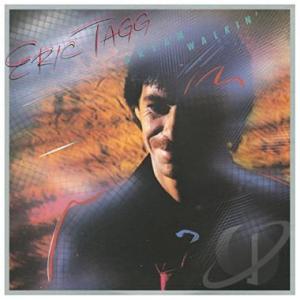
To these ears, his compositions also sound superior to a lot of similar material. He released three solo albums in the ’70s/early ’80s, the best of which (Dreamwalkin’) was produced by Ritenour.

Tagg was born in Chicago but spent his formative musical years in Holland singing with Dutch bands Rainbow Train and Beehive. Gravitating to LA in the mid-’70s, he embarked on a solo career and joined Ritenour for their successful double act.

But over the last 30 years he’s slowly retreated from public life, mainly devoting himself to writing Christian songs from his Texas base. Let’s go back to that golden time for West Coast music, the early ’80s, and focus on six of Eric’s best from the era.

Warning: the following tunes may contain soothing harmonies, cool chords, smooth melodies…

6. ‘Marianne (I Was Only Joking)’ (1982)
Subtle, mellow composition with a superb vocal, from Tagg’s ‘Dreamwalkin‘ solo LP.

5. ‘Is It You?’ (1981)
Released as a single under Lee Ritenour’s name in April 1981, it reached the dizzy heights of #15 on the US pop charts. A classic slow jam with one of the best middle-eights of the ’80s.

4. ‘Promises Promises’ (1982)
Funky bit of pop/soul with Bill Champlin on back-ups. Wouldn’t have sounded out of place on The Dude or even Thriller.

3. ‘Mr Briefcase’ (1981)
A classic drum performance from Jeff Porcaro on another single from Rit.

2. ‘Marzipan’ (1982)
This gorgeous slice of pop/soul, with a winning set of chord changes in the verse, was recently covered (pretty well) by US neo-soul crooner Eric Roberson.

1. ‘Just Another Dream’ (1982)
Another richly-chorded delight with more than a hint of ‘My Cherie Amour’ about it. Sublime keyboard work from David Foster, a sax solo from Tom Scott and a great arrangement.


The Tubes: The Completion Backward Principle

tubesEven as a teenager, I picked up something faintly illicit (and excellent) about this band.

A cool friend of my dad’s stuck ‘Attack Of The Fifty Foot Woman’ on a cassette for me alongside Donald Fagen’s The Nightfly and Bill Withers’ Greatest Hits sometime around the late-’80s.

I loved it, though it would take me a good few years to find out who had recorded it. A lot of detective work was called for – The Tubes weren’t exactly big in the UK.

The band’s earlier career had taken them through glam/punk, Spector-style pop and new-wave rock, but The Completion Backward Principle was the first Tubes album produced by David Foster, a gifted Canadian keyboardist who already had a proven track record as a first-call session player, arranger and songwriter.

He had worked extensively on Earth Wind & Fire’s I Am (co-writing the megahit ‘After The Love Has Gone’), Lee Ritenour’s Rit and Boz Scaggs’ Middle Man.

According to most accounts, as a producer he was a pretty hard taskmaster, demanding absolute perfection. He wasn’t above telling a band member to go home early and calling in a name session player in his place (which he frequently did during the recording of Chicago 17).

But the results speak for themselves. The band had made a quantum leap since 1979’s Todd Rundgren-produced Remote Control. Fee Waybill had turned into a pretty damn good singer.

Drummer Prairie Prince is hardly the subtlest player in the world (Jeff Porcaro was surely waiting in the wings) but he’s every bit the human metronome on these songs and plays a blinder on the brilliant ‘Think About Me’.

Maybe ‘Don’t Wanna Wait Anymore’ and ‘Amnesia’ sound more like Chicago than Devo but they are memorable and interesting with great chord changes, while the fairly risqué ‘Sushi Girl’ could have come from Zappa’s You Are What You Is.

‘Let’s Make Some Noise’ even taps into the kind of pop/funk that Let’s Dance took to the bank a few years later. The album is also beautifully recorded, engineered and mastered, sounding superb on my original vinyl copy.

I also love the cover concept. The band’s corporate attire and conservative ‘message’ were apparently a satirical take on Reagan’s inauguration and the rise of motivational business concepts. But the smarter the clothes, the weirder the content, as the Surrealists proved decades before.

According to this interview with Fee Waybill, The Tubes imploded a few years later after The Completion Backward Principle when David Foster suggested that only he, Waybill and a few outside songwriters should compose singles for the band.

He would appear to have a point, that team having co-written ‘Talk To Ya Later’, the Top 40 hit ‘Don’t Want To Wait Anymore’ and the number 10 hit a few years later, ‘She’s A Beauty’.

Waybill believes they might have become as big as Foreigner or Journey had they taken Foster’s advice, but it wasn’t to be – the rest of the band vetoed the suggestion and Waybill first left in 1985 after the disastrous Rundgren-produced Love Bomb.

However, they have continued to be a successful live band to this day. I loved seeing them in 2000 at the much-missed London Astoria. Talk to ya later…

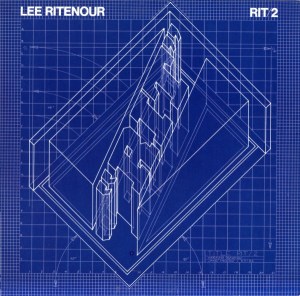
Lee Ritenour: Rit 2

ritenourSequels are seldom a good idea in the movie business, and thankfully they’re a lot less prevalent in the music game.

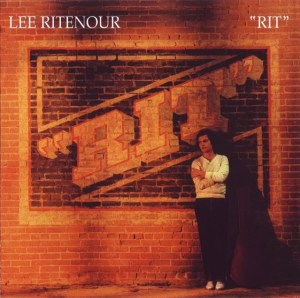
But one of the most successful ‘franchises’ of the ’80s was guitarist Lee Ritenour’s Rit/Rit 2 combo, now re-released by Cherry Red on a single CD, and they’re two of the best-sounding albums of the era.

Of course that shouldn’t be a huge surprise when you notice the presence of names such as Humberto Gatica, David Foster, Harvey Mason, Jeff Porcaro, Jerry Hey, Abe Laboriel, Alex Acuna and Greg Philinganes on the song credits, but then again a lot of albums at that time featured all the right ‘names’ but didn’t deliver the goods.


But if 1982’s Rit 2 is not quite in the same league as its predecessor, it’s still another classic piece of sumptuously-produced, blissed-out West Coast AOR with touches of jazz and soul, helped by the excellent vocals, keyboards and songwriting of Eric Tagg.

To these ears, it sounds as if Quincy Jones had produced Toto and got a good singer and a few decent songwriters in.’Promises Promises’ is superior disco/funk/rock and wouldn’t sound out of place on Quincy’s The Dude or Jacko’s Thriller.

‘Dreamwalkin’ is kind of the ‘happy’ version of Earth Wind & Fire’s ‘After The Love Has Gone’ and would make a great theme song for a an early-’80s, California-set Chevy Chase/Goldie Hawn vehicle. Ditto ‘Keep It Alive’.

‘Tied Up’ and ‘Voices’ initially seem like standard AOR fare, but reveal their superiority with interesting, layered vocal arrangements and surprising chord changes (and a classic bit of Porcaro drums on the latter).

But the real standout is killer instrumental ‘Road Runner’ featuring Harvey Mason’s incredibly intricate hi-hat work, a spicy Jerry Hey horn arrangement, some tasty Fender Rhodes from Philinganes and a corking set of solos from Ritenour.

Ritenour tried to repeat the formula on ’84’s less successful Banded Together before embarking on a decade of underwhelming instrumental smooth jazz with the occasional high point.

But Rit and Rit 2 are classics of their kind and belong alongside Steely’s Gaucho, Randy Crawford’s Secret Combination, Quincy’s The Dude, Michael Jackson’s Thriller and George Benson’s Give Me The Night as key albums of the era.

Story Of A Song: Chaka Khan’s ‘And The Melody Still Lingers On’ (1982)

Jazz regained some ground in the ’80s.

After a chastening period in the late-’60s and ’70s when rock pretty much swept all before it, major labels took a renewed interest in established jazz acts and underground movements flourished (no wave, acid jazz, harmolodic funk, neo-bop). Wynton Marsalis, Miles, Courtney Pine and Loose Tubes even put jazz back on primetime TV.

But when Chaka Khan recorded ‘And The Melody Still Lingers On (Night In Tunisia)’, the dramatic centrepiece of her What Cha’Gonna Do For Me album, she arguably set the whole revival in motion.

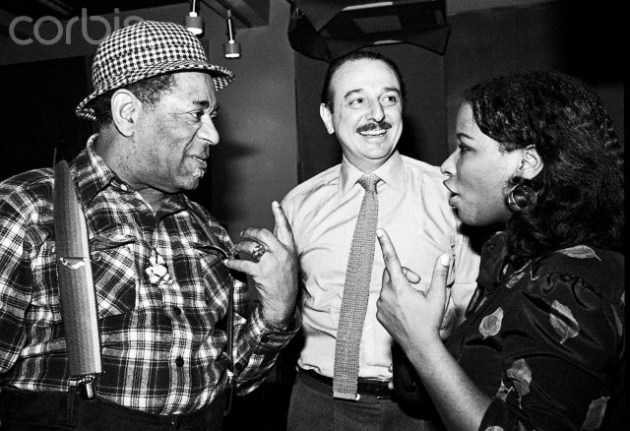
Dizzy Gillespie, Arif Mardin and Chaka Khan

Dizzy Gillespie, Arif Mardin and Chaka Khan, Atlantic Studios 1981

It was producer Arif Mardin’s idea, his mind wandering during a flight between New York and LA. The album was one song short – so how about a tribute to the bebop masters of the ’40s using the crème de la crème of the early ’80s soul/R’n’B/jazz session players? They could use Dizzy Gillespie and Frank Paparelli’s 1942 bebop classic ‘A Night In Tunisia’ as a template.

Chaka loved the idea. Mardin hoped to find a lyricist but deadlines were pending so he tackled it himself with Chaka adding the final touches. Mardin made a demo of the arrangement which cheekily inserted Charlie Parker’s famous 1946 alto break.

Charlie Parker in 1946, photo by Ted Giola

Charlie Parker in 1946

A lengthy chart was quickly made up (resembling a ‘Chinese laundry list written in cuneiform’, according to Mardin) which included eight spare bars for the insertion of the Parker lick.

The musicians – Casey Scheuerell on drums, David Foster and Ronnie Foster (no relation) on keys, Abe Laboriel on bass and Paulinho Da Costa on percussion (mostly heard on shaker in the first verse and congas in the second) – were booked and smashed the tune in one take.

Herbie Hancock later contributed a brilliant synth solo. Chaka then added her sublime vocals. Her four-part big-band harmonies and spine-tingling ad-libs bring the song right up to date.

But there was still space for an opening head melody and a solo in the final verse. Dizzy had been sent the demo by Mardin with a note asking him to contribute.

But the bebop legend replied that he would be on tour and so couldn’t make the recording session – but he suddenly arrived two days before the album’s mastering date at New York’s Atlantic Studios to add his part. The track was complete.

Chaka and Mardin attempted to repeat the trick a few years later with ‘Bebop Medley’ but it lacked the finesse of this timeless classic.

Lee Ritenour: Rit

LeeRitenour Rit-Front

In the mid-’80s, artists such as The Rippingtons and Spyro Gyra took the classic fusion sound, sweetened it, added touches of light gospel and soul and repackaged it as yuppiefied chill-out music, jazz for people who hate jazz. And they made a killing.

But a different kind of ‘smooth jazz’ had emerged a decade before, in the late ’70s and early ’80s, a mixture of AOR, jazz harmony, classic fusion and Yacht Rock. It was the soundtrack for driving West on Sunset, decadent, expensive-sounding music full of dreamy Fender Rhodes playing and tasty grooves.

Musicians and arrangers such as Johnny Mandel, Jerry Hey, Tom Scott, Jeff Porcaro, Larry Carlton, Abraham Laboriel, Quincy Jones, George Benson, David Sanborn, Harvey Mason, Jay Graydon and David Foster thrived in this era when state-of-the-art production fused with jazz-tinged songwriting to create the missing link between Steely Dan and Earth, Wind & Fire.


The unofficial headquarters of the sound was The Baked Potato, a nightclub in Studio City, LA, and one of the key musicians was guitarist Lee Ritenour (ironically one of the figureheads of the late-’80s Smooth Jazz scene proper).

His 1981 album Rit is a classic of its kind alongside George Benson’s Give Me The Night, Larry Carlton’s Friends, David Sanborn’s Hideaway, Casino Lights, Randy Crawford’s Secret Combination and Steely’s Gaucho.

This sort of music was America when I was 13 or 14. In my daydreams, I was scooting along the West Coast in a Pontiac, top down, loud music playing, palm trees – you know the drill. Had I been watching too much ‘Knight Rider’ and ‘Moonlighting’ and listening to too much Steely Dan? Quite possibly…

Although early Ritenour albums had been tricksy fusion, more in line with what George Duke or Alphonso Johnson were doing, Rit saw him concentrate on collaborations with gifted Stevie-meets-Fagen vocalist/songwriter Eric Tagg.

To this writer’s ears, George Michael very definitely checked out Mr Tagg. The track ‘Is It You’ got to #15 in the singles charts and features one of the great middle-eights of the era:

Drum fans will enjoy Rit too; the great Jeff Porcaro plays a blinding shuffle on ‘Mr Briefcase’ (another single from the album) and produces a classic rock performance on ‘Good Question’.

MTV broadcast the videos of ‘Mr Briefcase’ and ‘Is It You’ during its first day on air (1 August 1981), When things get too mellow, Ritenour always seems to know when to insert a spicy solo (in the days when he delivered high-octane jazz/rock playing a la Santana or Larry Carlton).

The instrumentals are an appealing mixture of early ’80s technology (Linn LM-1 abundant) and the sparky funk of Abe Laboriel’s bass playing and Don Grusin’s soulful Fender Rhodes.

And Jerry Hey’s horn arrangements are instantly recognisable and a great addition. I don’t think it’s an exaggeration to say that Rit was an influence on Thriller (compare Rit’s ‘Just Tell Me Pretty Lieswith Jacko’s ‘Baby Be Mine’and various other Quincy productions later in the decade.