

Captain Sensible, AKA…
During the punk era, musicians often chose stage names so that the dole office wouldn’t identify them from album covers or gigs.
One wonders how much of an issue that was for Gordon Sumner, Paul Hewson and David Evans, AKA Sting, Bono and The Edge, but you never know.
But as the 1980s wore on and the post-punk era became the hip-hop era, a whole new generation of rappers, DJs, producers and musicians felt the need to create pseudonyms.
But what did their mums call them? Here, for your dubious pleasure, are some of the most intriguing real names. It’s fair to assume that most probably don’t like being reminded of these, for various reasons.
YOU go taunting Ice-T with his real name (Tracy Marrow). But, on the other hand, kudos to The Cure’s Robert Smith for not using a pseudonym…
Suggs: Graham McPherson
Cher: Cheryl Sarkisian
Iggy Pop: James Osterburg
Buster Bloodvessel (Bad Manners frontman): Douglas Trendle
Jona Lewie (‘Stop The Cavalry’/’In The Kitchen At Parties’ singer): John Lewis
Chaka Khan: Yvette Stevens
David Essex: David Cook
Elton John: Reginald Dwight
Cliff Richard: Harry Webb
Roxanne Shante (rapper): Lolita Shante Gooden
The Real Roxanne (rapper): Adelaida Martinez
Scott Walker: Noel Scott Engel
Green Gartside (Scritti Politti frontman): Paul Julian Strohmeyer
Terminator X (Public Enemy DJ): Norman Rogers
Jet Black (Stranglers drummer): Brian Duffy
W. Axl Rose: William Bruce Rose Jr.
Divine: Glenn Milstead
Henry Rollins: Henry Garfield
MC Lyte: Lana Moorer
Kate Bush: Catherine Bush
Sun Ra: Herman Blount
Sade: Helen Folasade Adu
Adam Ant: Stuart Goddard
Ozzy Osbourne: John Michael Osbourne
Genesis P-Orridge (Throbbing Gristle/Psychic TV frontperson): Neil Megson
Cosey Fanni Tutti (Throbbing Gristle co-founder): Christine Newby
Jamaaladeen Tacuma (Ornette Coleman bassist): Rudy McDaniel
Howard Devoto (Magazine singer/solo artist): Howard Trafford
Wilko Johnson: John Wilkinson
Jah Wobble: John Wardle (named by a drunken Sid Vicious, whose real name is John Ritchie…)
Prairie Prince (Tubes/XTC drummer): Charles Lempriere Prince
Sydney Youngblood (‘If Only I Could’ singer): Sydney Ford
Yazz (‘The Only Way Is Up’): Yasmin Evans
Belouis Some (‘Imagination’ singer): Neville Keighley
Hollywood Beyond (‘What’s The Colour Of Money’ singer): Mark Rogers
Tommy Vance (legendary DJ): Richard Anthony Crispian Francis Prew Hope-Weston
Melle Mel: Melvin Glover
John Martyn: Iain McGeachy
Tom Verlaine (Television frontman): Thomas Miller
Johnnie Walker (DJ): Peter Dingley
Kim Wilde: Kim Smith
Midge Ure: James Ure
Elvis Costello: Declan MacManus
Adrian Belew: Robert Steven Belew
Princess (London soul singer of ‘Say I’m Your Number One’ fame): Desiree Heslop
Dweezil Zappa: Ian Donald Calvin Euclid Zappa (The LA hospital nurse wouldn’t let Gail and Frank name him ‘Dweezil’ so FZ named him after his early collaborators Ian Underwood, Captain Beefheart, Carl Schenkel and ‘Motorhead’ Sherwood. Dweezil’s name was legally changed when he was five years old.)
Mick Mars (Motley Crue guitarist): Robert Alan Deal
John Foxx: Dennis Leigh
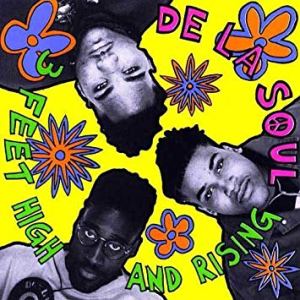
Trugoy (De La Soul rapper): David Jolicoeur
Cheryl Baker (Bucks Fizz vocalist): Rita Crudgington
Grandmaster Flash: Joseph Saddler
Kidd Creole (Furious Five rapper): Nathaniel Glover
KRS-One: Lawrence Parker
Pauline Black (Selecter singer): Belinda Magnus
Siouxsie Sioux: Susan Ballion
Geddy Lee: Gershon Eliezer Weinrib
Sebastian Bach (Skid Row singer): Sebastian Bierk
Marilyn (‘Calling Your Name’ singer): Peter Robinson
Don Was (Was Not Was co-founder/superstar producer): Don Fagenson
Falco (‘Rock Me Amadeus’ one-hit wonder): Johann Holzel
Steve Severin (Siouxsie and the Banshees bassist): John Bailey
Budgie (Siouxsie drummer): Peter Clarke
Dave Vanian (Damned singer): David Lett
Lydia Lunch: Lydia Koch
Flavor Flav: William Drayton
LL Cool J: James Smith
Tone Loc: Anthony Smith
Bonnie Tyler: Gaynor Hopkins
Yngwie Malmsteen: Lars Lannerback
Young MC: Marvin Young
Ice Cube: O’Shea Jackson Sr.
Shakin’ Stevens: Michael Barratt
Donna Summer: LaDonna Gaines
Captain Sensible: Raymond Burns
Rat Scabies (Damned drummer): Christopher Millar
Vanilla Ice: Matthew Van Winkle
MC Hammer: Stanley Burrell
DJ Kool Herc (hip-hop pioneer): Clive Campbell
Duke Bootee (hip-hop pioneer): Edward Fletcher
Afrika Bambaataa: Lance Taylor
Nikki Sixx (Motley Crue bassist): Franklin Ferrana
Skip McDonald (On-U Records/Sugar Hill guitarist): Bernard Alexander
Billy Idol: William Broad
Bill Wyman: William Perks
Fish: Derek Dick
Fee Waybill (Tubes vocalist): John Waldo
Billy Ocean: Leslie Charles
Posdnuous (De La Soul rapper): Kelvin Mercer
Maseo (De La Soul rapper): Vincent Mason Jr.
Chris De Burgh: Christopher Davidson
Kool Moe Dee: Mohandas Dewese
Dee C Lee (Style Council vocalist/’See The Day’ solo artist): Diane Sealey
Steve Strange (Visage frontman/Blitz pioneer): Stephen John Harrington
Youth (Killing Joke bassist/superstar producer): Martin Glover
Geordie (Killing Joke guitarist): Kevin Walker
Doug E Fresh: Douglas Davis
 The citizens of Punxsutawney have the groundhog to tell them whether there’ll be an early spring (much to Phil Connors’ disgust).
  movingtheriver.com