Essential 1980s Jazz/Rock Albums (Part 1)

1980s jazz/rock generally gets the side-eye these days.

But it wasn’t all the Chick Corea Elektric Band prancing around the stage in tracksuits or pitiful WAVE-style smooth jazz.

The 1970s jazz/rock pioneers were mostly going strong and if some were too tempted by synths and drum machines, the best music was made by sticking pretty rigorously to the tried-and-tested real drums/bass/guitar/keys lineup favoured by Miles, Weather Report, Return To Forever et al.

So here’s a selection of 1980s jazz/rock albums that have consistently gripped movingtheriver, most of which he queued up to buy at the HMV or Virgin Megastore, or found in an Our Price bargain bin. (These are not proggy or funky. So no Herbie, Brecker Brothers, David Sanborn or David Torn, but there are elements of R’n’B/Latin/soul/whatever mixed in with the jazz).

Bireli Lagrene: Foreign Affairs (1988)
Just 21 years old when he recorded it with producer Steve Khan, the French guitarist’s second Blue Note album is a cohesive gem and massive improvement on the debut, with terrific contributions from keyboardist Koono and drummer Dennis Chambers.

Ornette Coleman: Virgin Beauty (1988)
One of the most ‘accessible’ albums of the master’s career, with memorable melodies, a brilliantly expressive bassist (Al McDowell) and some decidedly odd guest appearances from Jerry Garcia.

Tribal Tech (Scott Henderson/Gary Willis): Nomad (1988)
Recorded in April 1988 but not released until early 1990, guitarists were rightly wowed by Henderson’s brilliance, a mixture of Michael Brecker, Allan Holdsworth and Stevie Ray Vaughan, while the rhythm section is groovy and propulsive and both Henderson and Willis’s compositions are excellent. And ‘Tunnel Vision’ may feature the perfect guitar solo…

John McLaughlin: Mahavishnu (1984)
OK there are some question marks in the keyboard and sax departments, and a few mediocre tracks, but Billy Cobham has rarely sounded better and John contributes three or four classic compositions and a few brilliant solos to this reunion album of sorts.

Marc Johnson’s Bass Desires: Second Sight (1987)
Wonderful interplay between guitarists John Scofield and Bill Frisell, plus some classic compositions including Scofield’s surf-rock-meets-jazz ‘Twister’, Frisell’s Monk-like ‘1951’ and Johnson’s moving ‘Hymn For Her’.

Larry Carlton: Last Nite (1987)
Guitarists of all stripes were blown away by Carlton’s playing in the 1980s, and here’s the best evidence, captured live at LA’s Baked Potato club with Alex Acuna, Abe Laboriel and JR Robinson.

Human Chain: Cashin’ In (1988)
This Brit jazz/rock classic, released on EG Records, had elements of the Canterbury sound, West Coast cool jazz and 1980s Weather Report, featuring Django Bates’ fantastic keys and French horn and some weirdly impressive guitar and fretless bass from Stuart Hall (who he?).

Hiram Bullock: Give It What U Got (1988)
All the fun of the fair from this gifted but troubled guitarist: raunchy funk/rock, instrumental Steely Dan, Brecker Brothers horns, classic fusion and an Al Jarreau guest appearance on a Sam Cooke tune, but all shot through with jazz chords and Hiram’s lyrical playing.

Ronald Shannon Jackson: Mandance (1982)
Ornette-style harmolodics and Mingus-like ensemble work meet NYC punk-jazz on the drummer’s intriguing and powerful album, recorded live in the studio, featuring future Living Colour axeman Vernon Reid.

Weather Report: Sportin’ Life (1985)
It was a toss-up between this and Night Passage, both classics, but this gets the nod courtesy of the newly-minted rhythm section of Omar Hakim and Victor Bailey, plus a few classic Wayne Shorter tunes including ‘Face On The Barroom Floor’ which reportedly Joni Mitchell was particularly smitten by.

Wayne Shorter: Atlantis (1985)
Wayne again, fronting this fascinating, complex song-cycle featuring Alex Acuna on drums and Joni’s husband Larry Klein on bass. Takes some time to digest, but like a good wine gets better every year.

Allan Holdsworth: Secrets (1989)
A toss-up between this and Metal Fatigue, this gets in because of his delicious guitar tone and the inspired contributions of drummer Vinnie Colaiuta – ‘City Nights’, ‘Spokes’, ‘Peril Premonition’ and ‘Joshua’ are musical landmarks. Fiery, exciting, unmissable.

Steps Ahead: Modern Times (1984)
Messrs Brecker, Erskine, Mainieri, Gomez and Bernhardt were embracing some new technology but they never let it overshadow the mostly excellent compositions with telling solos, particularly from Brecker.

John Scofield: Still Warm (1985)
Take your pick between this, Blue Matter and Loud Jazz, all fantastic pieces of work, but Still Warm gets the nod courtesy of its dynamite rhythm section (Darryl Jones and Omar Hakim) and arguably John’s best writing of the ’80s.

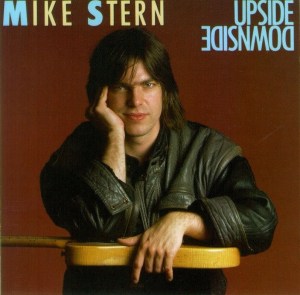
Mike Stern: Upside Downside (1986)
Produced by Hiram Bullock and featuring a crack band including Dave Weckl on drums, it showcases Stern’s finest/fieriest playing on record to date and also one of Jaco Pastorius’s last notable appearances. Still the best Stern solo album and quite extreme in its own way.

(If you’re new to any of these albums and they float your boat, please consider buying physical copies to support the artists.)

Bill Bruford’s Earthworks: 30 Years On

earthworks

Some musicians have a unique touch – you can identify them within a few notes.

In Bill Bruford’s case, his snare drum is his main audio imprint. But he also always had a highly-original composing style before his retirement in 2009, and both are very much in evidence on the excellent Earthworks album.

Bruford had spent the mid-’80s winding down Crimson and duetting with ex-Yes keyboardist Patrick Moraz, mostly in spontaneous improvisation mode, but now a new musical approach was called for.

He had based his career on defying expectations and he did it again in 1986, forming a quartet made up two young jazz tyros best known for their work in big-band-extraordinaire Loose Tubes (keys man Django Bates and saxist Iain Ballamy) plus acoustic bassist Mick Hutton.

bruford-inside

Bruford chose well: Bates and Ballamy were excellent and prolific composers too. Also key to this new band was Bruford’s development of a very advanced electric/acoustic kit whereby he could play chords and melodic ideas alongside a ‘standard’ jazz setup.

This approach also chimed well with Bates’ propensity on both acoustic piano and synth. On the latter instrument, he was fast becoming almost as recognisable as Jan Hammer, Joe Zawinul, Chick Corea or George Duke.

All the ingredients add up to one of the key British jazz albums of the ’80s, showcasing a band equally at home playing Weather Report-style fusion, Eastern themes and odd-time prog as they were with ECM-flavoured chamber jazz of the type played by obvious heroes Kenny Wheeler and John Taylor.

Ballamy’s opener ‘Thud’ (inspired by the Rosenhan psychology experiment?) almost has a ska feel – if Madness had tried their hand at quirky instrumental jazz/rock, they might come up with something like this. ‘Pressure’ is possibly the album’s standout, a superb mini-suite featuring some classic odd-time Bruford mischief and lyrical piano playing from Bates.

Ballamy’s ballad ‘It Needn’t End In Tears’ still sounds like a jazz-standard-in-waiting to this writer, though its possibly a bit saccharine for some. Bruford unleashes a fine drum solo on ‘My Heart Declares a Holiday’ while Bates’ ‘Emotional Shirt’ veers humourously between an early hip-hop groove and free-jazz freakout. ‘Bridge Of Inhibition’ fuses Turkish modes with high-speed bebop.

Buoyed by state-of-the-art production (maybe a bit too state-of-the-art) and stylish packaging, Earthworks was a palpable hit by ‘jazz’ standards, selling well and turning up in several ‘best of 1987’ lists. Some critics were of course suspicious of Bruford’s jazz credentials, but he probably couldn’t have cared less; he had always considered himself a jazz drummer anyway and knew he was onto a winner with Bates, Ballamy and Hutton.

The latter wouldn’t last beyond this first album, but Earthworks (the band) would continue to make some excellent music throughout the rest of the ’80s and for two decades beyond that. Bruford had successfully defied expectations yet again.

Big Band Revolutionaries: 30 Years Of Loose Tubes

loose-tubes102_v-panorama

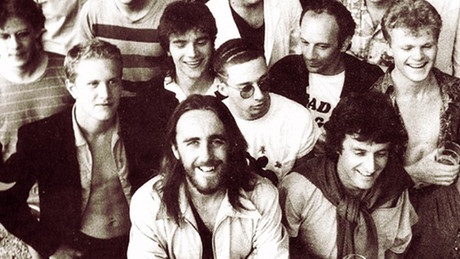
A small segment of Loose Tubes, 1985

Anyone who got into jazz in the 1980s must surely have a soft spot for the legendary anarcho-big band Loose Tubes.

I saw them play live sometime around 1986 in one of those great community-run London venues (Logan Hall? Shaw Theatre? Camden Arts Centre?) that appeared quickly, burnt brightly and then disappeared.

I don’t recall much about the music but do remember the crowd; the jazz revival was in full flight so there were lots of very hip people wearing chinos, black polo-necks and sometimes even berets dancing unashamedly.

Then, a bit later, Loose Tubes played on Saturday-evening primetime TV wearing very loud clothes, dancing idiotically and generally clowning around with the audience. It was youthful and different and gave Big Band Jazz a much-needed makeover.

Of course there’s always the chance that some people just didn’t think of their music as ‘jazz’ at all, and their clowning may well have put a lot of potential punters off. But the band probably weren’t too bothered about that.

loose tubes

In a way, the Loose Tubes could only have originated in the ’80s, emerging as it did from composer and educator Graham Collier‘s community big band workshops.

There was no ‘leader’ per se (although keyboards/French horn man Django Bates was occasionally seen conducting in very syncopated sections) and any member of the band was free to submit compositions.

Consequently, Loose Tubes’ music touched on anything that took its composers’ fancy – samba, heavy metal, folk, Weather Report-style fusion, flamenco, Hi-Life, blues, reggae, free jazz.

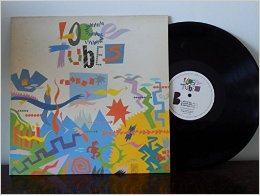
Their first self-titled album came out in the summer of 1985 and it was a really nice distillation of their sound (and featured one of my favourite UK drummers, Nic France, who left soon after the recording to join Working Week).

Django Bates’ composition ‘Yellow Field’ remains a classic. The followup Delightful Precipice is probably their best known album, and the final studio recording was 1988’s Teo Macero-produced Open Letter.

It was probably a miracle that such a huge band lasted as long as it did (six years) but Loose Tubes was also a superb career springboard for Bates, saxophonists Iain Ballamy, Julian Arguelles and Tim Whitehead, guitarist John Parricelli, flautist Eddie Parker, drummers Nic France/Steve Arguelles and ‘bone man Ashley Slater, all of whom are going strong today.

And guess what – they reformed in 2014, playing concerts at the Cheltenham Jazz Festival, Brecon Jazz Festival and a sold-out week at London’s Ronnie Scott’s. Two live album have also recently been released, Sad Afrika and Dancing On Frith Street, both of which featured music from their original farewell gig at Ronnie’s in September 1990.