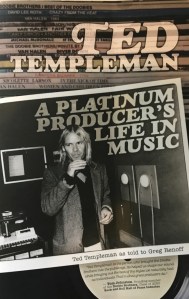
Book Review: A Platinum Producer’s Life In Music by Ted Templeman (as told to Greg Renoff)

You should never judge a person by their name.

movingtheriver assumed Ted Templeman – a favourite producer back in the day courtesy of his work with Van Halen, Little Feat, Doobie Brothers and more – was your typical seasoned/grizzled rock’n’roll journeyman.

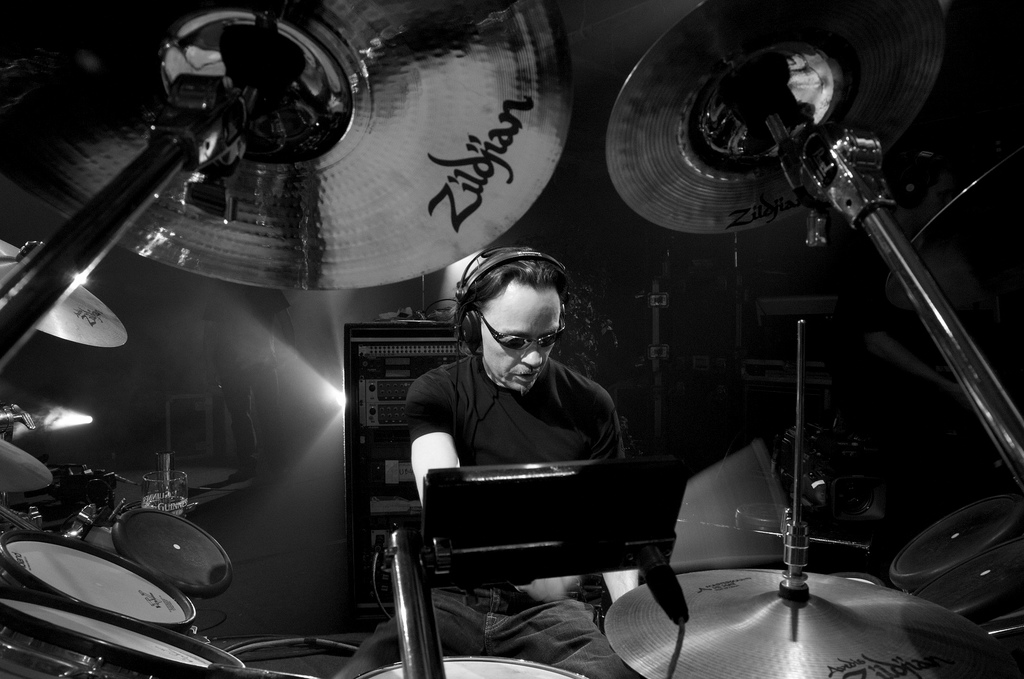
But nothing could be further from the truth. Reading his enjoyable memoir (and looking at the cover), he turns out to be a mild-mannered jazz drumming prodigy turned pretty-boy frontman with late-‘60s baroque pop band Harpers Bizarre.

His story takes us from post-war Santa Cruz, California, to the upper echelons of the US music biz during boom time, when Templeman was a house producer for Warner Bros. (alongside Gary Katz, Michael Omartian, Jay Graydon and Lenny Waronker), becoming one of the wealthiest and best respected record execs of his era.

We learn about his youth studying the Cool School jazzers, then his pop band Harpers Bizarre gets signed by Warners and he’s mentored by Waronker, quickly learning what A&R actually means – choosing the right songs for the artist and assessing their commercial strengths and weaknesses. He also witnesses first-hand the weird action around the Doors, Beach Boys and Phil Spector.

But he quickly realises he’s not cut out for fronting a band, and moves on to being Warner Bros’s tape listener, hanging around Frank Sinatra sessions and getting the nod from Waronker to produce his pet project, the Doobie Brothers.

Then there are some fascinating sections on working with Van Morrison – he sees the frustrations of being a co-producer at first hand when they release the ‘wrong’ mix of ‘Tupelo Honey’. But he also sees Morrison’s more humorous side – during the recording of the live album It’s Too Late To Stop Now, Ted, sitting in the mobile studio outside The Rainbow, hears Van frequently saying, ‘Didja get that, Ted?’ into the mic between songs.

Templeman forges a long-term relationship with his engineer Donn Landee and starts working with Little Feat. He sparks a great friendship with their mainman Lowell George and is fascinated to find that he is a model airplane fan. But when pushed, Lowell claims he’s just learning about them so he he can fly in drugs from Mexico. He also learns a lot about drums working in Sunset Sound studio 1 with Richie Hayward.

Then there’s recording Carly Simon on Another Passenger, and her relationship with James Taylor, before Templeman first comes across Van Halen via a concert in Pasadena. They quickly become his second obsession, though he’s deeply unsure about Dave Lee Roth’s vocals and general attitude (the book is full of strikingly honest reflections, and he’s quick to admit when he’s wrong).

The main chunk of the book deals with recording Van Halen, from the classic debut to the painfully laboured 1984. He even confesses to initial scepticism about ‘Jump’, kvetching to Eddie: ‘I signed a heavy metal band’! But he somehow enlists Eddie to guest on rollerskating freak Nicolette Sheridan’s ‘Can’t Get Away From You’.

Templeman eventually becomes a great fan of Lee Roth, though advises him not to leave Van Halen and try to be a movie star (though still ends up producing Crazy From The Heat). He also worries about getting Sammy Hagar into VH, suggesting they change their name to Van Hagar, and refuses to produce 5150.

There’s an amusing meeting with Prince at Sunset Sound and the Purple One’s reaction to Templeman’s suggestion that Quincy Jones produce Purple Rain. And then there’s Allan Holdsworth, a Warner Bros. signing coming via Eddie Van Halen’s recommendation. Eddie and Templeman are contracted to co-produce Road Games, but Holdsworth refuses to allow them in the studio together while he’s recording! A baffled Eddie bows out, and then Holdsworth demands that a few tracks feature vocals against Templeman’s best advice (of course Allan has his own take on the Road Games debacle…).

The mild-mannered Michael McDonald is a regular character in the book, uncharacteristically going ballistic for not getting co-writing credit for Van Halen’s ‘I’ll Wait’. We learn about Aerosmith drummer Joey Kramer’s opinion of Templeman’s work on their comeback album Done With Mirrors, and Eric Clapton’s reaction to being told that his guitar tone sucks.

The last section of the book regards Templeman’s work on the ‘Wayne’s World’ soundtrack and then losing his job at Warners, leading to depression and alcoholism.

It’s one of those rare music books that takes you right into the process of trying to get quality, commercial performances from some of the biggest stars in the music business, and it’s full of good advice about producing/arranging and interesting musical/technical observations.

Sadly though, its message may fall on deaf ears these days when Pro Tools and bedroom recordings are all the rage, musicianship less so, but still it’s a fun, informative look at the peak of the studio scene. Highly recommended.

David Sanborn: Hideaway

It’s no coincidence that alto saxist/composer David Sanborn’s purple patch (1980-1982) came about just when genres (yacht rock, soul, funk, jazz, R’n’B) were breaking down to create one of the most egalitarian musical eras.

Hideaway, his fifth studio album, was the breakthrough, and I love it. Released in February 1980, it made #2 on the Jazz chart, hung around in the Urban Contemporary charts for over a year and was nominated for a Best R&B Instrumental Performance Grammy.

For some, Sanborn’s solo material will always be ‘smooth jazz’, but I’d point to four aspects of his music that elevate it above similar material, particularly on Hideaway – his tone and his note choices, both born of the ‘50s and ‘60s St. Louis jazz and R’n’B scenes; his writing; and also the playing of top-notch guests. On Hideaway, the stars are drummer Steve Gadd (Gadd fans, this is the album for you), bassist Neil Jason and keyboard player Don Grolnick.

The title track remains a classic. Sanborn lays down rich Fender Rhodes soul chords while Gadd constructs a perfectly judged post-disco drum part heavily involving cross-stick and floor tom, laying just behind the beat, with an unexpected, explosive fill just before the fade. Jason is given free rein and comes up with an outrageous bass performance.

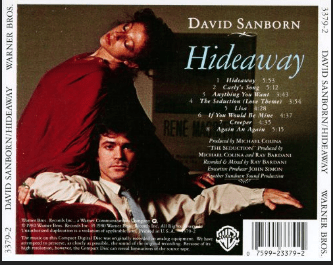
Hideaway also benefits from Steely/Doobies man Michael McDonald co-writing two tracks. Sanborn doesn’t have anything much catchier than ‘Anything You Want’ and ‘Again An Again’ in his repertoire. ‘Carly’s Song’ and ‘Lisa’ are memorable ballads with beguiling harmony, while Gadd provides another brilliant commentary on ‘If You Would Be Mine’.

Rick Marotta appears to expertly marshal ‘Creeper’ through its slow half-time groove – guitarist and frequent Sanborn collaborator Hiram Bullock was so taken with it he later wrote a sequel called ‘Son Of Creeper’.

Hideaway’s packaging helps too – its minimalist cover is a winner, as is the photo featuring Dave reclining in his apartment with a Magritte over his left shoulder and paramour draped over his right. Warner Bros. were just realising he wasn’t the worst looking guy in the world.

The only downside: in a classic bit of Warners penny-pinching, they add the very dull (and certifiably smooth-jazz) ‘The Seduction’ from the ‘American Gigolo’ soundtrack to the streaming and CD versions but in the process edit down ‘Anything You Want’ and the title track to ‘single’ length. Best try to find Hideaway on vinyl.

Hal Willner (1956-2020)

Duke Ellington famously said that there are only two types of music: good and ‘the other kind’.

Hal Willner spent most of his professional life living that maxim. The producer, curator and soundtrack composer, who died aged 64 on 7th April 2020, was way ahead of the game.

His never-boring albums were like cross-genre playlists, 30 years before Spotify.

In his world, it was totally natural to pair Todd Rundgren with Thelonious Monk, Lou Reed with Kurt Weill, The Replacements with Walt Disney, Chuck D with Charles Mingus.

Inspired by his mentor Joel Dorn, Orson Welles’ radio productions and albums like A Love Supreme, Sketches Of Spain, The White Album, Satanic Majesties, Yusef Lateef’s Part Of The Search and Rahsaan Roland Kirk’s Case Of The 3-Sided Stereo Dream, he became fascinated by telling stories with sound.

During the 1980s, Willner was somewhat of a ‘Zelig’ figure on the New York scene. In 1981, he became the long-time musical director of ‘Saturday Night Live’ (while driving a cab during the day) and put together tribute albums to Fellini’s favourite composer (Amacord Nino Rota) and Kurt Weill (Lost In The Stars), the latter beginning a long, fruitful association with Lou Reed.

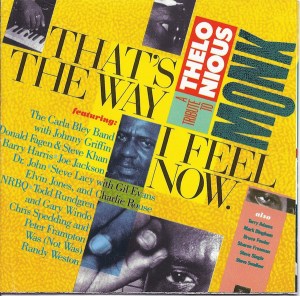
Then there was That’s The Way I Feel Now (still missing from streaming services… I’m working on it…) from 1984, inspired by Willner’s trip to a Thelonious Monk tribute concert at Carnegie Hall, as he related to writer Howard Mandel: ‘The jazz people playing Monk’s music were making it boring. Monk’s music was never boring. When Oscar Peterson came on, that was it – he had even put Monk down.’

Hal fought back with a brilliant Monk tribute album featuring Was (Not Was), Donald Fagen, Dr John, Todd Rundgren, Elvin Jones, Joe Jackson, Bobby McFerrin and Carla Bley. (Fact fans: Elton John chose the below track as one of his ‘Desert Island Discs’ in 1986, singling out Kenny Kirkland’s superlative piano solo.)

1988’s Stay Awake repeated the trick, a positively psychedelic voyage through the music of Walt Disney’s movies and TV shows.

The stand-outs were legion but included James Taylor, Branford Marsalis and The Roches’ ‘Second Star To The Right’, Sun Ra’s ‘Pink Elephants On Parade’, The Replacements’ ‘Cruella de Vil’, Harry Nilsson’s ‘Zip-A-Dee-Doo-Dah’ and Ringo’s ‘When You Wish Upon A Star’.

Willner was at it again with ‘Night Music’, the much-missed, short-lived TV show fronted by David Sanborn which brought esteemed musical guests in to jam with a crackerjack house band (usually Omar Hakim, Marcus Miller, Hiram Bullock and Don Alias).

It’s quite moving to see often-overlooked greats of American music (Van Dyke Parks, Pharoah Sanders, Elliott Sharp, Sonny Rollins, Slim Gaillard) getting their due and sharing the stage with the likes of Leonard Cohen, Randy Newman, Mark Knopfler, Richard Thompson and John Cale.

So Willner did a superb job, but if only Jools Holland’s invitation to co-host had got lost in the mail…

In the 1990s, Hal worked on Robert Altman’s movie masterpieces ‘Short Cuts’ and ‘Kansas City’, and then came possibly this writer’s favourite album of the decade, Weird Nightmare: Meditations On Mingus, a sprawling, kaleidoscopic audio journey through the jazz great’s work featuring Robbie Robertson, Bill Frisell, Keith Richards, Julius Hemphill, Henry Rollins, Vernon Reid and Elvis Costello. The Kinks’ Ray Davies also directed a superb documentary about the making of the album:

Willner also helmed Marianne Faithfull’s well-received 1987 comeback album Strange Weather. More recently, he curated many special ‘theme’ concerts, including a memorable gig at the Royal Festival Hall in 2012 dedicated to the Freedom Riders of the civil rights movement, featuring Antony Hegarty, Nona Hendryx, Tim Robbins and Eric Mingus. Hal was also instrumental in bringing Reed’s ‘Berlin’ multimedia show to the stage for the first time.

Farewell to a real one-off. Music needs a lot more like him.

Hal Willner (6 April 1956 – 7 April 2020)

Book Review: More Songwriters On Songwriting by Paul Zollo

51o7o-ad4l-_sx329_bo1204203200_For students of songwriting, there’s been an embarrassment of riches on the book front recently – in the last few years we’ve had the groundbreaking ‘Isle Of Noises’, entertaining ‘Complicated Game’, and lengthy autobiographies by the likes of Elvis Costello, Bruce Springsteen, Robbie Robertson, Chrissie Hynde, Neil Young, Brian Wilson and Phil Collins.

And now here comes Paul Zollo’s ‘More Songwriters On Songwriting’, the weighty sequel to his landmark 1991 volume, comprising new, indepth interviews with famous composers from the worlds of pop, rock, country, R’n’B and jazz.

When the book catches fire, tasty anecdotes come thick and fast: Kenny Gamble delivers a powerful statement on his hopes for America’s future; Joe Jackson discusses his love of Duke Ellington and Steely Dan; Bryan Ferry reveals that the lyrics for ‘Avalon’ (the song) were written in no less than four different countries.

Elvis Costello talks about trying (and failing) to collaborate with legendary lyricist Sammy Cahn; Rickie Lee Jones discusses how caring for her sick mother reignited her music mojo; Chrissie Hynde describes in visceral detail how her views on animal rights inform her songwriting.

Ringo talks about how George helped him write ‘Octopus’s Garden’; Dave Stewart recalls the thrill of writing ‘Sweet Dreams (Are Made Of This)’ with Annie Lennox in double-quick time; James Taylor waxes lyrical about Paul McCartney; Don McLean reveals the unusual inspiration behind ‘American Pie’.

And that’s just scratching the surface. Zollo always knows the right questions to ask and the conversations flow unpredictably. Highly recommended.

‘More Songwriters On Songwriting’ is published by Da Capo Press.

UB40: Promises & Lies

Scene of the band's first Birmingham gig

Scene of the band’s first Birmingham gig

Sometimes a decent music documentary can really open up a subject like a good book or movie.

The Dexys/KeRowland film ‘Nowhere Is Home’ did the job recently, and last weekend’s ‘Promises & Lies’ does it superbly too.

It lets the protagonists speak for themselves purely in interview format without any ‘I’m-going-on-a-journey’, narrator-led BBC guff.

Like Simply Red, Madness or The Beautiful South, UB40 are so much part of the ’80s UK chart furniture (39 Top 40 singles including three number ones to date – surely only Shakin’ Stevens and Madness bettered them during the decade?) that it’s quite hard to listen to their music objectively these days.

By the mid-1980s, they had essentially become a stadium reggae band, exemplified by their joyous Nelson Mandela 70th birthday duet with early mentor Chrissie Hynde (she headhunted them at a London Rock Garden gig in 1980 for a big US tour

UB40’s huge success has possibly obscured their great passion for the music – singer/guitarist Ali Campbell claims several times in the film that they were always promoting reggae rather than seeking fame, and the claim rings true.

But their amazing hit-rate was somewhat of a smokescreen for some serious inter-band issues, culminating in a disastrous schism between vocalist/guitarist brothers Ali and Robin in 2008 that makes the Gallagher boys’ break-up look like a petty family tiff.

It was arguably always on the cards. A very tight-knit bunch of Brummies in their early days, UB40 had always split all their performance and songwriting royalties eight ways, a decision which created financial ‘situations’ (millions missing) that would have given even Billy Joel and Leonard Cohen serious cause for concern.

The resentments, claims and counterclaims piled up, and now in 2016 there are two bands gigging as UB40, one almost unbelievably fronted by another Campbell brother, Duncan.

James 'Jimmy' Brown

James ‘Jimmy’ Brown

‘Promises & Lies’ gleans strikingly honest interviews from everyone involved – no punches are pulled. And despite lots of fascinatingly-grim stuff, the documentary shows all band members to be an incredibly resilient, exceptionally talented, somewhat stubborn bunch.

Drummer James ‘Jimmy’ Brown gets an especially bad ride in the film, apparently the chief social-media ‘Ali-hater’, but his playing sounds great throughout (no less an ’80s pop personage than The Police’s Stewart Copeland once named him as his favourite rock drummer), as do almost all of UB40’s classic ’80s anthems.

I’ll be looking more closely into a band I’d mainly ‘dismissed’ as a singles act. Catch ‘Promises & Lies’ while you can on the BBC iPlayer.