Book Review: Into The Groove by Justin Lewis

If you’re looking for a good stocking-filler for the 1980s music fan in your life, you could do a lot worse than Justin Lewis’s ‘Into The Groove’.

He’s an experienced rock writer who’s come up with a deceptively simple book idea – take each day (or at least most of them) of the 1980s and document a key music event, reporting them in chronological order.

And it’s mostly fascinating stuff; he’s unearthed some really tasty morsels of 1980s music trivia. Who knew that ‘Stars On 45’ (the Dutch novelty act specialising in disco medleys) led to ‘answer’ tracks from Orange Juice, Squeeze and The Portsmouth Sinfonia? Or that Annie Lennox had to show MTV her birth certificate to prove she was not a ‘decadent transvestite’ before they permitted Eurythmics’ ‘Sweet Dreams’ video to be shown on the channel?

Or that Wham!’s biggest early influence was Level 42? (Apparently they loved Level’s combination of funk and ‘unfunky’ lyrics – presumably it was tracks like ‘Almost There’ and ‘Starchild’ that floated their boat…)

Who knew that the full-length version of George Michael’s ‘Faith’ begins with a church organ playing Wham!’s ‘Freedom’, that Adrian Edmondson was a prolific video director in the ‘80s, or that a UK top 5 from October 1986 was the first time that every song was performed by a female vocalist?

The book also serves as a good compendium of ‘making-of’ song stories. For example, we get the full background of Paul Hardcastle’s ‘19’, including all the copyright issues and the fact that Mike Oldfield, of all people, is now the recipient of a writing credit(!).

You’ll need YouTube at the ready too for fascinating curios, like Tom Waits’ disastrous appearance on live British TV in 1983 alongside Ian Hislop and Peter York. ‘Into The Groove’ also gets credit for expanding its purview beyond rock and pop – there’s interesting info about African, country and blues music too, but very little jazz.

There are some downsides – there’s no index or list of references, and Lewis tries hard to be impartial but his ‘rock snob’ credentials inevitably creep out, Costello, XTC and McCartney etc. getting the rare plaudits.

But no matter – this is a gripping read, amusing and informative, full of tasty trivia treats, a surprise on every page. Highly recommended.

‘Into The Groove’ is published by Elliott and Thompson.
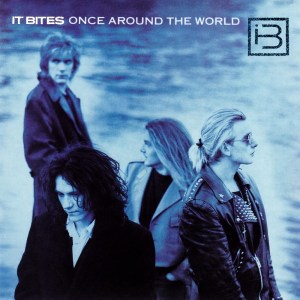
Classic Prog’s Last Hurrah: It Bites’ Once Around The World

it bitesEveryone has their favourite summer music and the brilliant Once Around The World is an album I always turn to at this time of year.

It’s a feast of resplendent chord changes, audacious song structures, good grooves, blistering lead guitar lines and uplifting, unusual melodies.

As a music-mad 15-year-old, this was the album I was really waiting for. I had recently become slightly obsessed by their debut The Big Lad In The Windmill and couldn’t wait to hear what the talented Cumbrian four-piece would come up with next.

For some reason, I didn’t buy OATW on its first week of release, but my schoolmate Jem Godfrey did. I would badger him for details in the playground. Me: ‘Are there any instrumentals on it?’ Jem: ‘No.’ Me: ‘What’s it like then?’ Jem: ‘It’s bloody brilliant, just get it!’

In 1988, the world didn’t need a dose of beautifully-recorded, full-on prog lunacy, but they got it anyway and the UK music scene was all the better for it. There were murmurs of a ‘prog revival’ at the time but It Bites (and to a certain extent Marillion) were streets ahead of the pack because they blended superb musicianship with great hooks and catchy songs.

Hats off to Richard Branson and Virgin for throwing some money at this album because it turned out to be classic prog’s last hurrah. Mainly recorded at The Manor in Oxfordshire (where rumour has it singer/guitarist Francis Dunnery gained access to Richard Branson’s bountiful wine cellar on the band’s first night of recording with disastrous consequences…), OATW is essentially one side of beautifully-produced pop/rock songs (mainly helmed by Virgin prog survivor Steve Hillage), and another of completely brilliant, barmy prog/pop pieces.

The Manor

‘Midnight’ and ‘Kiss Like Judas’ are lean, mean, well-crafted pop/rock songs with good hooks and meaty grooves, but both just missed the UK Top 40.

‘Plastic Dreamer’ fits an unbelievable amount of material into its four minutes, including a vocal harmony section that would make Roy Thomas Baker drool, a stunning guitar solo from Dunnery, some spooky Alice In Wonderland atmospherics and preposterous lyrics (very much inspired by Peter Gabriel’s Genesis output).

They repeat the trick on ‘Hunting The Whale’ and make good use of the Manor swimming pool in the process. The 14-minute title track, whilst owing a few licks and lyric ideas to Genesis’s ‘Supper’s Ready’, is nevertheless astoundingly ambitious and brilliantly realised considering it was recorded in the same year as Kylie’s ‘I Should Be So Lucky’.

(There are other nods to early Genesis throughout the album: the last few minutes of ‘Old Man And The Angel’ brilliantly revisits the rhythm games of ‘The Battle Of Epping Forest’; the main hook of ‘Hunting The Whale’ is very similar to Steve Hackett’s ‘Dancing With The Moonlit Knight’ central riff; the middle-eight of ‘Midnight’ uses Tony Banks’ opening chords to ‘Watcher Of The Skies’.)

They could play all this stuff live too, and with great elan (they played the whole of OATW at the much-missed London Astoria circa May 1988, and I also caught them a few months before that at Brunel University). Their range and ability was simply stunning.

John Beck’s keyboard textures have possibly dated a bit in comparison with what, say, Trevor Horn and David Sylvian were doing with synths at the time (though his voicings and arrangement ideas are always inventive), but people often forget what an amazing rhythm section (Dick Nolan on bass, Bob Dalton on drums) It Bites had.

There’s a ‘swing’ there that suggests that they were always influenced by much more than just progressive rock, and Dunnery’s guitar playing and vocals have incredible bite. Here’s some great footage of them recording the title track:

Though It Bites were turning into a very popular live draw throughout Europe, the album stalled at #43 in the UK – a big surprise and disappointment to the band. The lads’ music subsequently took a heavier direction, but OATW is the standout in their short but excellent career, showing off a brilliant band at its peak.

Gratifyingly, the album is gaining fans as the years go by. And check out this great interview with Francis Dunnery and John Beck about the making of Once Around The World

Francis Dunnery also did this interview after their first support gig with Robert Plant in April 1988.