Eight 1980s Stock, Aitken & Waterman Tracks That Aren’t Crap

Joe Meek isn’t often compared to Stock, Aitken and Waterman but here’s an associate of the former speaking after his untimely death: ‘He was being ganged up on by the establishment. Nobody with any power in the business liked him because he was independent and successful.’

The same could be said for Mike Stock, Matt Aitken and Pete Waterman. The always-deeply-unfashionable songwriting/production/mixing/A&R team, who had over 100 UK Top 40 hits and sold over 40 million singles in the UK (35 million worldwide in 1987 alone),  found their feet in the hi-NRG scene, then detoured into classy soul before emerging with a late-‘80s formula that combined both approaches and made superstars out of Kylie, Jason and Rick Astley.

Everyone from Sigue Sigue Sputnik to Donna Summer sought SAW’s hit-making fairy dust. But many ’80s pop fans hated them. You could argue that was more down to the procedural limitations of their later work – ie. refusal to use a real rhythm section – and formulaic productions than the songwriting (reportedly mostly by Stock, with the other two supplying lyric ideas and Waterman the final mix and marketing) which often adroitely mined Motown and Philly soul and featured some of the weirdest harmonic modulations this side of Nik Kershaw.

But have their best tracks stood the test of time? Here are eight SAW singles that are not routinely turned off by movingtheriver when they come on the radio:

8. Dead Or Alive: ‘You Spin Me Round (Like A Record)’
Waterman boasted about making difficult records early in the trio’s career and this is one of their weirdest. Apparently their trick was to remove most of the bass from the mix and boost the cowbells, handclaps and sequencers to ‘trigger’ the interactive light shows, especially at ‘gay’ venues. It’s also interesting how long they wait before unleashing the first chorus…

7. Princess: ‘Say I’m Your Number One’
South London soul singer Princess – born Desiree Heslop – was a member of Osibisa before going solo in 1985. This tasty single, with its bizarre but brilliant harmonic hike into the chorus, settled at #7 as well as going top 20 in the US R&B charts.

6. Brother Beyond: ‘The Harder I Try’
Weirdly, this fine Motown pastiche was the FIFTH single released from their second album, but still made #2 in the UK.

5. The Three Degrees: ‘The Heaven I Need’
Yes it’s somewhat of a rip-off of Mai Tai’s ‘History’ (or is it? Which came out first?!) but this was the Prince Charles-approved trio’s groovy comeback after a five-year hiatus. Not much of a success though: it limped to #42.

4. Sonia: ‘You’ll Never Stop Me From Loving You’
Bear with me here. Under the house-by-numbers groove lurks a cool take on Philly soul, the verses reminiscent of both ‘Stop Look Listen’ and ‘Betcha By Golly Wow’. 18-year-old Scouser Sonia Evans was a complete unknown when she recorded this. Maybe people assumed it was Kylie. Interestingly it was SAW’s final #1 single in the UK, though they’d already had SEVEN during 1989!

3. Rick Astley: ‘Whenever You Need Somebody’
Just a brilliantly weird sequence of melodic hooks, and another strange key change going into the chorus. Astley’s vocal phrasing is a treat too.

2. Donna Summer: ‘Love’s About To Change My Heart’
Reportedly, this is SAW’s favourite of their singles and Summer’s beautiful vocal is surely a big reason why. It completely bombed in her homeland but made the UK top 20.

1. Brilliant: ‘Love Is War’
Killing Joke’s Youth and future KLF man Jimmy Cauty were involved with this great bit of post-Cupid & Psyche pop/soul, but it still stiffed in the UK.

Any other good SAW tracks? Deep cuts from Kylie albums? It’s unlikely but you never know (and no, ‘Roadblock’ is NOT a great single…).

Further reading: ‘Good Vibrations: The History Of Record Production’ by Mark Cunningham
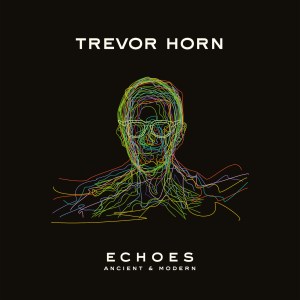
Trevor Horn: Echoes – Ancient & Modern

Over the next few weeks movingtheriver will look at new albums by two giants of 1980s music – Trevor Horn and Peter Gabriel (despite the fact that both arguably stopped being crucial pop forces around 1993 or 1994 – but then pop also probably stopped being crucial around then too, sometime between the first Suede album and the first ‘farewell’ Faith No More LP…)

First up, Uncle Trevor. The superstar producer and one of the architects of 1980s music revisits some of that decade’s key songs with guest vocalists on Echoes. But alarm bells have been ringing in recent interviews where he has mentioned that it’s these songs’ lyrical content that most interests him.

And, sadly, coming from a man who was responsible for some of the best grooves of the 80s and most provocative musical pranks, Echoes is desperate not to offend and a big disappointment. Fair enough, though – the guy is 74 years old, and who knows that sort of record company pressure has come from his new paymasters Deutsche Grammophon who aren’t exactly known for their ‘challenging’ pop albums.

Seal is a brilliant interpreter of the modern pop song and initially his version of Joe Jackson’s ‘Steppin’ Out’ works a treat. But the reformatted chords and bossa-nova feel are seriously skew-whiff, despite a nice (uncredited) trumpet solo. Horn’s collaboration with Michael Buble surely can’t be far off.

‘Slave To The Rhythm’ is reinvented as a piano ballad (for the second time, after Horn/Rumer’s weird 2019 effort), with a few strange new chords and an almost comically stiff groove, and the song just can’t take the strain despite a committed vocal from Lady Blackbird.

Marc Almond is in good voice but his ‘Love Is A Battlefield’ foregrounds a horrid little Euro-disco groove. Meanwhile Iggy makes ‘Personal Jesus’ halfway passable despite an incredibly polite blues setting. It could have worked with the right band.

Steve Hogarth’s ‘Drive’ could have worked too (and if only Horn had produced Marillion circa 1993) but it misses the whole point of The Cars’ original – the dichotomy between the dark lyrics and bittersweet harmony/melody, with liberal use of major-7th chords. Why not a classic soaring Horn swoon-fest along the lines of Seal’s ‘Crazy’?

The key of ‘Owner Of A Lonely Heart’ has been changed to accommodate Rick Astley’s smooth mid-range vocals and he does a passable job but, again, the groove and arrangement are simplistic and not a little irritating.

Toyah is let loose on ‘Relax’ – again, it could and should have worked. But Horn inexplicably reimagines the song as a slow, painstakingly robotic groove with a toe-curlingly reverent recitation of the lyrics. Is it supposed to be funny?

Elsewhere there are versions of ‘White Wedding’, ‘Smells Like Teen Spirit’ and Kendrick Lamar’s ‘Swimming Pools’ which barely register. Horn’s own vocal on ‘Avalon’ is absolutely fine though, despite the on-the-nose arrangement.

So it’s sad to report that Echoes is rather joyless pop. Most of it might suffice as the soundtrack for ‘Broadchurch’ or a Christmas TV ad but generally it just made me yearn for the originals. One is also desperate for a vocalist with a bit more edge – shame Holly Johnson, Claudia Brucken or even Glenn Gregory couldn’t be persuaded to do a twirl.

What Is ‘1980s Music’?

It’s a question that has been obsessing your correspondent over the last few days – which music epitomises the 1980s?

If, in 500 years, someone demanded to hear a song that represented the decade, which piece would best encapsulate it? And is ‘1980s Music’ a genre?

A website called movingtheriver.com should be able to pin down what makes a quintessentially 1980s track, but it’s not easy. So let’s begin with a process of elimination.

A lot of 1980s music was influenced by previous genres – Motown, punk, glam, psych, prog, metal, disco, jazz/funk, singer/songwriter, folk, reggae, ’70s electronica, minimalism, funk, blues. So we need tracks that jettison those tropes.

Many bands used synths in a way that was influenced by 1970s pioneers Kraftwerk, Tangerine Dream and Giorgio Moroder (Japan, OMD, Pet Shop Boys, The Art Of Noise etc.), so wouldn’t qualify as uniquely 1980s. We’re after artists that used sequencers and synths in a more ‘progressive’/melodic way, mainly to aid songwriting.

Huge 1980s acts like Wham!, ABC, Madonna, Simply Red and Culture Club obviously tapped into Motown, R’n’B and Chic-style disco/funk. Eurythmics were inspired by everything from the Stones to Kraftwerk. So they won’t do.

Tina Turner, MJ, Genesis, Peter Gabriel, Bruce, Prince and Hall & Oates all blossomed in the 1970s, while Cyndi Lauper’s songs and style had elements of that decade too, as did many Goth acts. Production styles came and went, and of course there were common tropes like the gated snare drum and synth bass, but again they don’t particularly define the decade.

The sweet spot seems to be around 1984/1985. Musicians and songwriters were leaving behind post-punk, classic soul, blues and ‘rock’ (though of course all would return with a vengeance by the end of the decade) and forging a quintessentially 1980s sound.

I’d put forward the following as completely 1980s, born and bred in that decade, with no apparent antecedents from any well-worn styles (‘bluesy’ chord progressions, ‘folky’ singing) or particular era, with the possible exceptions of Sting and Associates (and of course one could have chosen some other tracks by these artists). In short, for better or worse, it’s pretty hard to work out their influences:

18. Bros: ‘I Owe You Nothing’

17. Rick Astley: ‘Whenever You Need Somebody’

16. Go West: ‘We Close Our Eyes’

15. The System: ‘You Are In My System’

14. Dollar: ‘Videotheque’

13. Tears For Fears: ‘Shout’

12. Propaganda: ‘Duel’

11. Frankie Goes To Hollywood: ‘Two Tribes’

10. Colonel Abrams: ‘Trapped’

9. Erasure: ‘Sometimes’

8. Alison Moyet: ‘Ordinary Girl’

7. Scritti Politti : ‘All That We Are’

6. Prefab Sprout: ‘Don’t Sing’

5. The Smiths: ‘Heaven Knows I’m Miserable Now’

4. Sting: ‘Fortress Around Your Heart’

3. Associates: ‘Party Fears Two’

2. Wang Chung: ‘Dance Hall Days’

1. Nik Kershaw: ‘The Riddle’