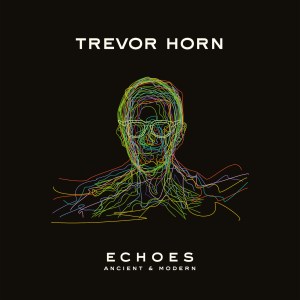
Trevor Horn: Echoes – Ancient & Modern

Over the next few weeks movingtheriver will look at new albums by two giants of 1980s music – Trevor Horn and Peter Gabriel (despite the fact that both arguably stopped being crucial pop forces around 1993 or 1994 – but then pop also probably stopped being crucial around then too, sometime between the first Suede album and the first ‘farewell’ Faith No More LP…)

First up, Uncle Trevor. The superstar producer and one of the architects of 1980s music revisits some of that decade’s key songs with guest vocalists on Echoes. But alarm bells have been ringing in recent interviews where he has mentioned that it’s these songs’ lyrical content that most interests him.

And, sadly, coming from a man who was responsible for some of the best grooves of the 80s and most provocative musical pranks, Echoes is desperate not to offend and a big disappointment. Fair enough, though – the guy is 74 years old, and who knows that sort of record company pressure has come from his new paymasters Deutsche Grammophon who aren’t exactly known for their ‘challenging’ pop albums.

Seal is a brilliant interpreter of the modern pop song and initially his version of Joe Jackson’s ‘Steppin’ Out’ works a treat. But the reformatted chords and bossa-nova feel are seriously skew-whiff, despite a nice (uncredited) trumpet solo. Horn’s collaboration with Michael Buble surely can’t be far off.

‘Slave To The Rhythm’ is reinvented as a piano ballad (for the second time, after Horn/Rumer’s weird 2019 effort), with a few strange new chords and an almost comically stiff groove, and the song just can’t take the strain despite a committed vocal from Lady Blackbird.

Marc Almond is in good voice but his ‘Love Is A Battlefield’ foregrounds a horrid little Euro-disco groove. Meanwhile Iggy makes ‘Personal Jesus’ halfway passable despite an incredibly polite blues setting. It could have worked with the right band.

Steve Hogarth’s ‘Drive’ could have worked too (and if only Horn had produced Marillion circa 1993) but it misses the whole point of The Cars’ original – the dichotomy between the dark lyrics and bittersweet harmony/melody, with liberal use of major-7th chords. Why not a classic soaring Horn swoon-fest along the lines of Seal’s ‘Crazy’?

The key of ‘Owner Of A Lonely Heart’ has been changed to accommodate Rick Astley’s smooth mid-range vocals and he does a passable job but, again, the groove and arrangement are simplistic and not a little irritating.

Toyah is let loose on ‘Relax’ – again, it could and should have worked. But Horn inexplicably reimagines the song as a slow, painstakingly robotic groove with a toe-curlingly reverent recitation of the lyrics. Is it supposed to be funny?

Elsewhere there are versions of ‘White Wedding’, ‘Smells Like Teen Spirit’ and Kendrick Lamar’s ‘Swimming Pools’ which barely register. Horn’s own vocal on ‘Avalon’ is absolutely fine though, despite the on-the-nose arrangement.

So it’s sad to report that Echoes is rather joyless pop. Most of it might suffice as the soundtrack for ‘Broadchurch’ or a Christmas TV ad but generally it just made me yearn for the originals. One is also desperate for a vocalist with a bit more edge – shame Holly Johnson, Claudia Brucken or even Glenn Gregory couldn’t be persuaded to do a twirl.

Marillion: Seasons End 30 Years On

Prog fans – perhaps understandably – are not generally known for their benevolence when a favourite band undergoes a personnel change.
Steve Howe has talked publicly about the poor reception Trevor Horn received when the latter made his debut as Yes’s new vocalist during their North American tour of 1980.

Phil Collins still believes some Genesis fans were convinced he was scheming to take Peter Gabriel’s place as the band’s singer.

But Marillion fans seem a far more amiable bunch. When Steve Hogarth was installed as their new frontman in 1989, he seems to have been welcomed pretty much with open arms (if this superb televised gig from only his second UK tour is anything to go by).

Seasons End, (no apostrophe?), released 30 years ago this week, was a weirdly assured debut from Hogarth and easily this writer’s favourite Marillion album (1989 was a bit of a Year Zero for me in terms of the band, the Fish era barely appearing on my radar).

Hogarth’s melodies are fresh and exciting and his vocals always strong. It helped of course that he was a triple threat, a proven singer/songwriter with mid-’80s bands The Europeans and How We Live (though he was apparently eyeing a job as a milkman when the latter wound down in early 1988) and possessing some decent keyboard chops.

His natural magnetism as a frontman didn’t hurt too, and he even brought a few gimmicks to the party, like the magic gloves and musical cricket bat (a tribute to Ian Faith? Ed.).

So how does Seasons End stack up these days? Pretty well. The singles ‘Easter’ (UK #34), ‘The Uninvited Guest’ (UK #53) and ‘Hooks In You’ (UK #30) were distinctive, well-arranged and featured soaring guitar playing from Steve Rothery.

Ian Mosley is that rare rock drummer, solid but expressive, and capable of great subtlety. Keyboardist Mark Kelly had become a superb texturalist too, as demonstrated on the Steve Reich-esque second half of the title track, plus ‘Holloway Girl’ and ‘The Space’.

Marillion, Genesis and It Bites were flying the UK prog/pop flag at this point, and their late-’80s careers make for interesting comparison. As for Seasons End, it did very nicely, touching down at #7 in the UK album chart and ensuring a long, fruitful career for the band’s new line-up.

Good guys, good record.

1980s Pop: The Worst Bits

We’ve looked at some of the great bits before, but what about the worst bits of ’80s pop, those moments that have you screaming at the radio?

Those randomly-generated solos, irritating choruses, ill-advised technological experiments or disastrous vocal sojourns?

Sometimes crap bits can ruin a perfectly decent song. But whose fault are they? You can often feel the band ‘spokesperson’ putting his oar in, going against the journeyman producer who probably wanted to get some session players in anyway.

And are there recurring themes? The dodgy sax solo is an ’80s staple. There are definitely repeat offenders (hello Midge). And maybe there are types of music that lend themselves to crap bits too (soft rock, mid-’80s techno-pop).

So roll up, roll up! Join us for the worst bits of 1980s pop…

15. Herb Alpert’s trumpet solo on Janet Jackson’s ‘Someday Is Tonight’
Searching for some Miles-style, brooding sexiness, label boss Herb luxuriates in Jam and Lewis’s delicious soundworld for a few seconds, picks up his trumpet and…

14. The chorus of Level 42’s ‘Running In The Family’
The most anodyne single of their glittering career, not helped by some creepy lyrics and a yukky, somewhat out-of-tune chorus.

13. The sax solo on Aztec Camera’s ‘Somewhere In My Heart’

12. The ‘false ending’ to T’Pau’s ‘China In Your Hand’

11. Lisa Stansfield’s spoken-word intro to ‘All Around The World’
Pass the sick bag. Yes, the song is an unashamed ‘tribute’ to Bazza White’s eroto-soul, but Lisa probably should have parked the sexy-as-a-dentist-chair, American-accented spoken-word opening of this UK number one (she should have done it in her Rochdale accent… – Ed.).

10. The guitar solo on Philip Bailey/Phil Collins’ ‘Easy Lover’
It’s crying out for some widdly Van Halen-inspired techno flash, but unfortunately Daryl Steurmer can only manage a tepid, weirdly unmemorable pass…

9. The sax solo on Spandau Ballet’s ‘True’
A classic ’80s single, almost ruined by Steve Norman’s dire feature. He sounds like a kid who’s just been given an alto sax for Christmas.

8. Steve Hogarth’s piano solo on The The’s ‘Heartland’
Much beloved in some circles but always sounds a bit tentative and formless to these ears.

7. The chorus of Duran Duran’s ‘Wild Boys’

6. The sampled vocal bits in Kylie Minogue’s ‘I Should Be So Lucky’
A horrible song from top to tail, but the keyboard ‘solo’ puts the tin lid on it. See also Rick Astley’s ‘Never Gonna Give You Up’ and Mel & Kim’s ‘Respectable’.

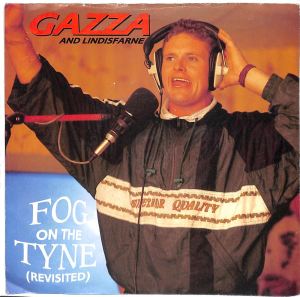
5. Gazza’s rapping on ‘Fog On The Tyne (Revisited)’

4. Billy Joel’s ‘We Didn’t Start The Fire’
Just the whole song. Period.

3. The chorus of Ultravox’s ‘Dancing With Tears In My Eyes’
If you look up ‘bombastic’ in the dictionary, you’ll see a little thumbnail of Midge.

2. The chorus of Midge Ure’s ‘If I Was’
See above.

1. The spoken bits on Michael Jackson’s ‘The Girl Is Mine’
This one divides opinion. Macca and Jacko’s little tete-a-tete has been the cause of much merriment, but it somehow fits the song. Still rubbish though…

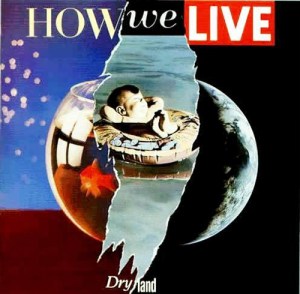
How We Live: Dry Land 30 Years On

How+We+Live+Dry+Land+554632Madchester aside, the late-’80s may be the least-heralded period of British pop, but the era also produced a surprising amount of intelligent, original bands that arguably never got their commercial due: Love And Money, Danny Wilson, The Bible, The Lilac Time, It Bites, Stump…

The list of ‘under-achievers’ is long and varied. But one name often forgotten is How We Live.

Most famous for featuring a pre-Marillion Steve Hogarth on vocals and keyboards, the band emerged from the ashes of new-wave popsters The Europeans to release their one and only album Dry Land in 1987.

Originally appearing on CBS offshoot Portrait Records but now given a shiny new remaster by Esoteric/Cherry Red, the album certainly ticks lots of ‘quality 1980s pop’ boxes: it was recorded at Crescent Studios in Bath with XTC/Peter Gabriel producer David Lord and The The/Deacon Blue engineer Warne Livesey, and features Tears For Fears’ drummer Manny Elias on a few tracks. Peter Gabriel and XTC get a thank-you on the inside cover.

Colin Woore and Steve Hogarth

Colin Woore and Steve Hogarth

Malcolm Dome’s incisive liner notes for this re-release outline the record-company shenanigans which dramatically shortened How We Live’s lifespan, whilst also acknowledging how Hogarth and fellow ex-European Colin Woore’s songwriting was very much informed by the other quality British pop of the time – Talk Talk, David Sylvian, Gabriel, Hue & Cry (Hogarth apparently being a big fan of Pat Kane’s vocals), Kate Bush.

And while it’s tempting to view Dry Land as the prelude to Marillion’s second phase, it’s pretty clear that Hogarth already had an extremely strong presence as a singer, songwriter and keyboard player long before he joined the Brit-prog behemoths.

Dry Land‘s opening 1-2-3 of ‘Working Girl’, ‘All The Time In The World’ and the title track (latter taken into the top 40 by Marillion) is pure dream-pop bliss. The latter benefits from a dramatic string arrangement, missing from the Marillion version, though connoisseurs might rue the big snare-drum sound.

‘Working Girl’ is simply a classic, with a haunting verse and swooning, truly uplifting chorus. How that and ‘All The Time’ didn’t crack the top 40 is still a mystery, though, according to manager Mark Thompson, CBS were spending most of their time and money trying to break Deacon Blue during this period.

Whilst the rest of Dry Land can’t quite maintain the quality of the first three tracks, there are plenty of other pleasures: ‘Games In Germany’ is a fine fusion of late-’80s PiL and Season’s End-era Marillion, a crashing new-wave groove with a fabulous, wrong-footing chorus.

Classy ballad ‘Lost At Sea’ is somewhat reminiscent of David Sylvian’s work of the same period, while ‘In The City’ takes a left turn into jazzy pop with great aplomb; its shimmering synths, swinging groove and catchy trumpet melody bring to mind such late-’80s movie soundtracks as ‘The Big Blue’ and ‘Betty Blue’.

‘India’ is unfortunately a bit more Chris De Burgh than It Bites, though Dave ‘Taif’ Ball’s elegant fretless bass impresses, as it does throughout Dry Land. ‘The Rainbow Room’ is perhaps the most ‘prog’ track on the album, powered along by an intricate keyboard sequence and guitar motif.

Unfortunately Dry Land was a dead end for How We Live – it stalled outside the top 40, and, although there were some big gigs including a Munich show on the same bill as Eurythmics and Tina Turner in front of 100,000 people, they called it a day in late 1987.

Hogarth was enquiring about becoming a milkman when he heard from his publisher that Marillion had been in touch. He was back in business, and remains so to this day. But Dry Land is a fascinating and worthwhile precursor.

Dry Land is out now on Esoteric/Cherry Red.