Blitz: The Club That Shaped The 80s @ Design Museum, 27 September 2025

England, 1979: punk is out, sus laws and Thatcher are in. Nightclubs are closing down and youth violence and political unrest are on the rise (as are movements like Rock Against Racism).

But, in a curious echo of punk five years before, something is stirring in the London suburbs. Young Roxy, Bowie and Kraftwerk fans from Bromley, Burnt Oak and Basildon are dressing up in style (Zoot and toy-soldier suits, cummerbunds, bolero hats, geometric haircuts) and flocking to clubs like Covent Garden’s famous Blitz, now the subject of an engaging exhibition running until 29 March 2026 at the Design Museum

It was the apex of a scene which encompassed fashion, graphic design, journalism, electronic dance music, squatting and a New Pop sensibility which would soon sweep the charts. In short, it’s arguably the best of the 1980s, and this fascinating exhibition neatly incorporates most of it.
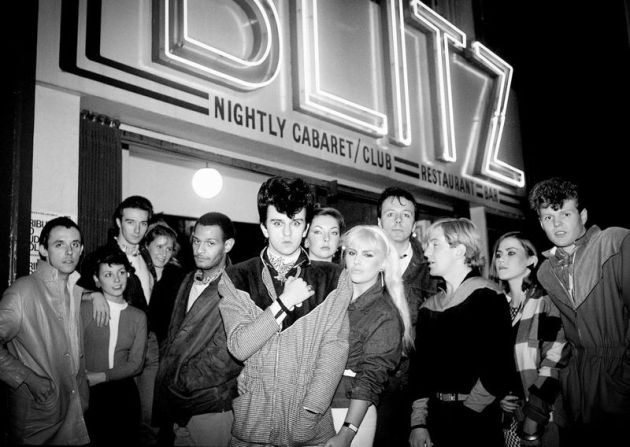
Blitz Kids including Midge Ure, Steve Strange, Billy Currie and Rusty Egan

We see the original flyers and posters which wittily and stylishly trailed the Blitz club nights, and there are many items of vintage clothing. The rarely-seen photos are worth the price of admission alone, many contributed by original scenesters like Boy George, Siobahn Fahey, Robert Elms and Marilyn, including a priceless shot of David Bowie with Toni Basil (we also get the full story of Bowie’s recruitment of Strange et al for the ‘Ashes To Ashes’ video).

But the jewel in the exhibition’s crown is probably the recreation of the Blitz itself, with an AI Rusty Egan on the decks and Spandau Ballet performing ‘To Cut A Long Story Short’ on the ‘live stage’ (elsewhere Elms has donated his embarrassing handwritten poem which he used to announce their debut gig at the club).

Rusty Egan, Gary Kemp, Fiona Dealey and Robert Elms in the exhibition’s recreated Blitz. Photo by PA Media

The exhibition widens out to encompass other fascinating early 1980s artefacts, like the posters advertising Sade’s pre-fame Ronnie Scott’s gigs – well over a year before Diamond Life was released – and evidence of the media’s generally condescending attitude towards The Cult With No Name/New Romantics/Blitz Kids.

Then there are the textiles, hats and magazines galore (the exhibition dovetails slightly with the Portrait Gallery’s recent Face exhibition), and even the first all-electronic drum set, a Simmons SDS-V, as used by Kajagoogoo, Flock Of Seagulls, Ultravox etc.

This is an engaging, fun exhibition curated by people who were there and/or obviously care about this stuff. And there’s just enough social/political context for it to be educational too – it was good to see so many youngsters enjoying it with their parents. Highly recommended.
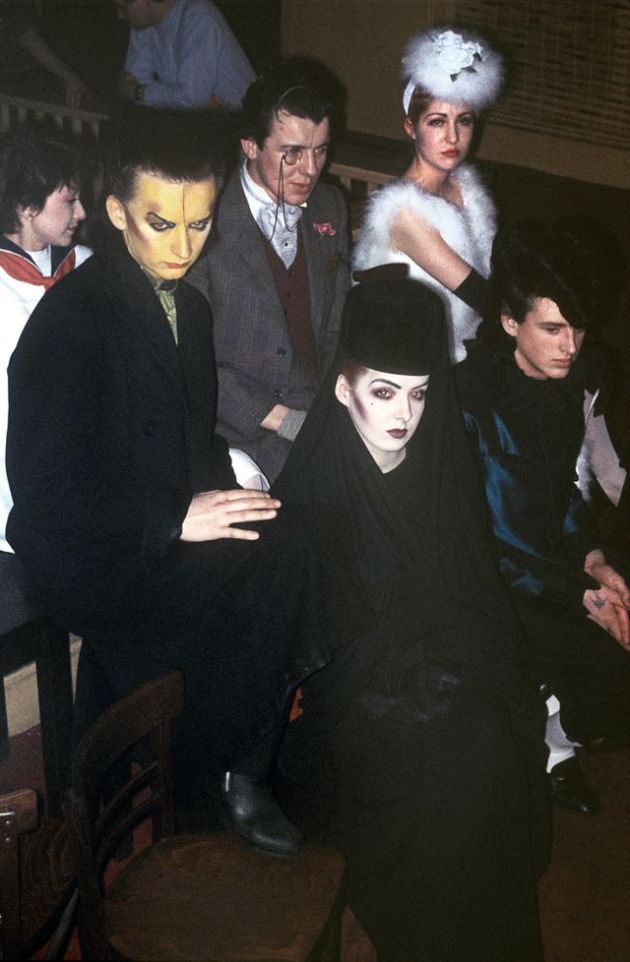
The Blitz in 1980, with Boy George (left)
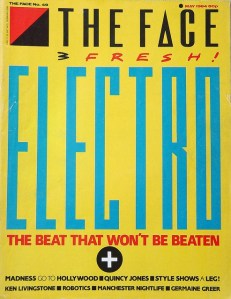
The Face Magazine: Culture Shift @ National Portrait Gallery, London

Any British music fan who came of age during the 1980s must surely have a soft spot for The Face magazine.

Launched by Smash Hits founder/NME editor Nick Logan in May 1980, the monthly rag – so named because of its Mod allegiances – quickly become known as a first-rate style mag (it covered fashion, music, culture, clubbing and cinema too), with its many famous covers reaching the level of high-quality pop art.

Indeed, looking again at issue #1, it’s remarkable how many of its listed writers and photographers would turn out to be key documentors of the decade – Janette Beckman, Julie Burchill, Gary Crowley, Anton Corbijn, Ian Cranna, Jill Furmanovsky, David Hepworth, Tony Parsons, Sheila Rock, Pennie Smith (and that issue alone features iconic photos of Madness, The Specials, The Clash, John Lydon and Paul Weller, amongst others).

It was also unique amongst 1980s music mags in paying as much attention to reggae, hip-hop, electro, house, rare groove and jazz as it did to post-punk, 2-Tone and sophistipop.

But movingtheriver also remembers it most for its superb long-form interviews: I still have issues featuring in-depth pieces on Miles Davis, Trouble Funk, Dennis Hopper, David Sylvian, David Byrne, Robert Smith, Daryl Hall and Ken Russell.

The Face’s iconic imagery is celebrated at the excellent if compact new exhibition at London’s National Portrait Gallery. Predictably it’s photos from those post-punk/New Pop salad days of 1980-1983 which produce the most smiles of recognition/pleasure – Bowie in Japan, Adam Ant, Phil Oakey, John Lydon, Annie Lennox.

But there are great pics/stories from later in the decade too – Bros with their mum at home in Peckham, Shane MacGowan, Sade, Nick Kamen, Felix et al. There’s also a great chronology of 1980s clubbing, from Goth to Acid House, and a focus on long- lost London nightspots.

As the 1980s became the 1990s, The Face arguably reflected a gradual coarsening of the culture with more focus on fashion and lifestyle – but you knew that anyway. But this exhibition is a must-see for any music fan who loved the 1980s, and it was also refreshing to see such a broad range of ages attending.

The Face Magazine: Culture Shift runs at the National Portrait Gallery until 18 May 2025.

Nick Kamen (1962-2021)

What a sad, strange bit of news to hear that Nick Kamen has died at the age of just 59.

It suddenly makes one feel very old. The singer, songwriter and model was such a quintessential 1980s figure, famously first appearing on the cover of The Face magazine in early 1984.

I remember seeing Nick and a few pals walking down London’s iconic King’s Road circa 1987. He looked great, wearing chinos, black polo neck and dark blue blazer. He literally stopped the traffic! It was a perfect late-80s moment.

His much-parodied 1985 Levi’s 501 ad might not have done much for jeans sales but it had the opposite effect on boxer shorts and also gave Marvin Gaye’s ‘I Heard It Through The Grapevine’ a new lease of life.

He gave a great, outrageously flirtatious interview to Paula Yates on ‘The Tube’ on the eve of his first single ‘Each Time You Break My Heart’, written and co-produced (with Stephen Bray) by Madonna. It was a hit.

Nick’s brother Chester was in the meantime carving out a successful career as session guitarist and Bryan Ferry’s go-to axeman – you can watch him in action with Bryan at Live Aid.

Nick may have not enjoyed the rigmarole of the pop business but he did it pretty well. Though the UK press mocked (see below), he actually had two further UK top 40s, ‘Loving You Is Sweeter Than Ever’ and ‘Tell Me’, also featuring Madonna on backing vox, which spent nine weeks at #1 in Italy during 1988.

Esteemed producer and Madonna/Stanley Clarke collaborator Patrick Leonard helmed Nick’s second album Us. Nick had several further hits all over Europe – ‘I Promised Myself’ was one of 1990’s best selling singles in Europe (#1 in Austria and Sweden, top 5 in Germany, Holland, Belgium and Switzerland) but just missed the UK top 40.

By 1993, though, Nick was sick of the pop game. He died of bone cancer at his Notting Hill home. Madonna and Boy George led the heartfelt tributes. RIP to a bona fide 1980s star.

Ivor Neville ‘Nick’ Kamen (15 April 1962 – 5 May 2021)

Good Names/Bad Names

Are band names important? Discuss.

Arguably, a good (or at least memorable) name has never been as important as now, if only to catch the eye amongst endless streaming lists.

Many excellent acts of the 1980s certainly had very bad names (I’ve lost count of the times people have asked: ‘Why are they called Prefab Sprout?’), but a lot hit the jackpot too.

So, in the spirit of much-missed WORD magazine, let’s round up the good, bad and ugly monikers of the ’80s:

Good Things with Good Names: Scritti Politti, Talking Heads, Jamaladeen Tacuma, Half Man Half Biscuit, Stump, Fields Of The Nephilim, Virgin Prunes, The Screaming Blue Messiahs, Magnus Pyke, Los Lobos, De La Soul, Arvo Part, Shut Up ‘N Play Yer Guitar, Valentin Silvestrov, Public Enemy, LL Cool J, Tone Loc, Derek B, Monie Love, Gaye Bikers On Acid, Betty Boo, They Might Be Giants, ‘The Citadel Of Chaos’, ‘The Forest Of Doom’, ‘Codename Icarus’, Chevy Chase, Kim Basinger, Adrian Belew, Trevor Horn, Mike Patton, We’ve Got A Fuzzbox And We’re Gonna Use It, The Slits, Tackhead, Boo Hewerdine, ‘Slave To The Rhythm’, Robbie Shakespeare, Green Gartside, Paddy McAloon, Donna Summer, Terence Trent D’Arby, Echo And The Bunnymen, 808 State, All About Eve, Killing Joke, Steve Vai, Dweezil Zappa, Ben Volpeliere-Pierrot, Skylarking, Cleo Rocos, ‘Variations On The Carlos Santana Secret Chord Progression’, Hipsway, Loose Tubes, Cocteau Twins, ‘In-A-Gadda-Stravinsky’, Desperately Seeking Fusion, Shelleyan Orphan

Good Things with Bad Names: Prefab Sprout, The The, Yngwie Malmsteen, Dire Straits, Adam Ant, Boy George, Bow Wow Wow, Talk Talk, The Thompson Twins, A Guy Called Gerald, Herb Alpert, Faith No More, Dan Aykroyd, Cosey Fanni Tutti, Throbbing Gristle, It Bites, The Bible, Frankie Goes To Hollywood, Danny Wilson, Tears For Fears, Red Hot Chili Peppers, Living Colour, 24-7 Spyz, Bucks Fizz, Wham!, The Dream Of The Blue Turtles, Anvil, A Certain Ratio, 23 Skidoo, Deacon Blue, Curiosity Killed The Cat, The Hooters, John Cougar Mellencamp, Bryan Adams, Luther Vandross, Steve Stevens, Ozric Tentacles, The Teardrop Explodes

Bad Things with Good Names: Zodiac Mindwarp And The Love Reaction, Butthole Surfers, New Model Army, Twisted Sister

Bad Things with Bad Names: Jane’s Addiction, Johnny Hates Jazz, Then Jerico, The Blow Monkeys, Cactus World News, Pee-Wee Herman, Ned’s Atomic Dustbin, Pop Will Eat Itself, Jesus Jones, Yazz And The Plastic Population, Diesel Park West, Insane Clown Posse, Milli Vanilli, Vanilla Ice, Kajagoogoo, Enuff Z’Nuff, Kenny G, Dr And The Medics, Del Amitri, Bruce Hornsby And The Range, Sigue Sigue Sputnik, Megadeth, Duran Duran, Spandau Ballet, U2, Mike And The Mechanics, Inspiral Carpets, James

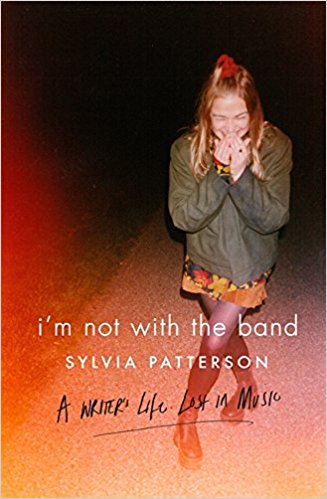
Book Review: I’m Not With The Band (A Writer’s Life Lost In Music) by Sylvia Patterson

Music writer Sylvia Patterson’s hugely enjoyable memoir had me at page 28:

‘The post-punk era, roughly ’78 to ’83, was arguably the most richly dynamic of all musical time, an era defined by a cultural geyser of creative freedom and political indignation – all stoked, crucially, by the incendiary spark of jokes…’

It helps that Patterson is first and foremost a music fan (between 1980 and 1983, she describes herself consecutively as a Mod, Massive Goth, Moody Art-School Dreamer and Indie Kid).

She is also a highly respected journalist who cut her teeth writing for Smash Hits during its million-readers-an-issue peak and has also contributed to the NME, Face, Big Issue, Glamour and Observer.

She has been a witness to how music journalism (and the wider recording industry) has become run by the lawyers, PR people and gossip mags.

And she knows where the bodies are buried, locating the beginning of the decline in the 1990s when ‘tot pop’ (Christina Aguilera, S Club 7, Britney etc.), boy/girl bands, reality TV, corporate branding, celebrity culture and the internet ran roughshod.

She writes brilliantly about the surreal pop boom of the late 1980s, when Kylie, Jason, Big Fun, Guns N’ Roses, Phil Collins, Tiffany, Debbie Gibson, Enya, Deacon Blue, Milli Vanilli, Brother Beyond (or The ‘Yond, in Smash Hits-speak), Bananarama, Salt ‘N Pepa and especially Bros ruled the waves.

But in 1990, as the music biz hits a recession, Patterson opts to go freelance – an interview with Stock/Aitken/Waterman pop poppet Sonia is apparently the straw that breaks the camel’s back…

A few months later she’s on the dole, drinking too much, struggling to pay the rent, mourning her father and brother and rueing the deterioration of her relationship with an alcoholic, mentally-ill mother. Cue the second half of the book and the second half of her sometimes troubled life.

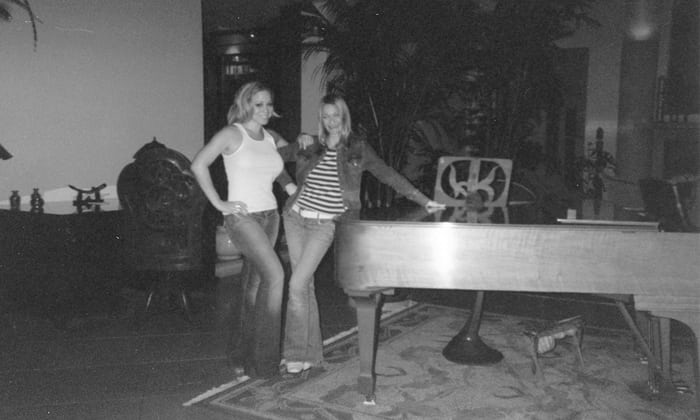
Mariah Carey and Sylvia

‘I’m Not With The Band’ outlines what it’s like to live and breathe music. It has certainly been tough remaining true to her school.

But in documenting her journey Patterson also reaches the places other music biogs don’t reach. She’s like a big sister reporting from the front line of the pop biz – you’re always rooting for her, no matter how dark things get.

She also raids her cassette box to sprinkle in hilariously candid interviews with almost all the major pop players of the last four decades: Barney Sumner, Mick Hucknall and George Michael in the 1980s, Richey Edwards, Liam Gallagher, Shaun Ryder, Blur, Jarvis Cocker, Paul Heaton, Bobby Gillespie, Westlife, Page/Plant, Madonna and Prince in the ’90s, U2, Johnny Cash, Beyoncé (sample question: ‘Now you’re working with Jay Z and loads of tough guys, you’re hanging out with ex-drug dealers – how does your mum feel about Jay Z’s background?’), Kylie, Mariah, Britney, Eminem, Lily and Amy in the noughties. She captures exactly what it’s like to meet these people and asks all the difficult questions.

Witty and humane, never boring, occasionally hilarious, at times deeply affecting, Patterson’s book is up there with Giles Smith’s ‘Lost In Music’ (perhaps consciously referenced in the title) in documenting a troubled love affair with this thing we call…pop. We await Mike Leigh’s film adaptation.

‘I’m Not With The Band (A Writer’s Life Lost In Music)’ is published by Sphere/littlebrown.