Essential 1980s Jazz/Rock Albums (Part 2)

Continuing our look at some of the finest jazz/rock albums of the 1980s. You can find part 1 here.

Jaco Pastorius: Twins (1982)
A classic double album (an edited version was released as Invitation) recorded live in Japan just after the bass pioneer left Weather Report. Jaco’s brand of fusion took in jazz, Cuban, soul and R’n’B – no guitars here, but brilliant bass playing and powerful solos from Toots Thielemans, Lew Soloff, Jon Faddis and Bob Mintzer.

Frank Gambale: Live! (1989)
The Australian guitarist’s outrageous live debut was recorded at the Baked Potato in LA, and it finally showed just what he’s capable of – electrifying, original solos. His compositions are memorable too and there’s fantastic Latin/fusion drumming from Joey Heredia.

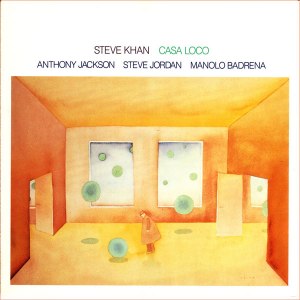
Steve Khan: Casa Loco (1983)
An album which still amazes musicians the world over. Arguably guitarist Khan, bassist Anthony Jackson, drummer Steve Jordan and percussionist Manolo Badrena have never done better work – that’s saying something considering who they’ve all played with.

Bill Bruford’s Earthworks: Dig? (1989)
Both of Bruford’s 1980s Earthworks albums were really good but this gets the nod due to Django Bates being given free reign, contributing superb keyboard solos, a cool reimagining of Petula Clark’s ‘Downtown’ and classic composition ‘Dancing On Frith Street’.

Paquito D’Rivera: Why Not! (1984)
An underrated album from the Cuban alto sax and clarinet star, also featuring Claudio Roditi on trumpet, Michel Camilo on keys and a wonderful performance from drummer Dave Weckl on the opening ‘Gdansk’.

Lyle Mays: Street Dreams (1988)
The Metheny Group keyboard player chucks in everything he knows on this big-budget project – ambient post-jazz, widescreen fuzak, big-band swing and Fagen-style fusion, and it’s all good. Some, like this writer, may also prefer the more red-blooded guitar playing of Bill Frisell to Metheny.

Pat Metheny Group: American Garage (1980)
No one is too sure if this came out in late 1979 or early 1980 but it’s this writer’s favourite Metheny album, though the guitarist himself seems to have almost disowned it. He loosens up and opens himself up to some rock and Steely Dan influences, driven along by Danny Gottlieb’s superb drums.

Level 42: A Physical Presence (1985)
A lot of it’s not strictly ‘fusion’, of course, but any album featuring such brilliant live versions of ‘Mr Pink’, ‘Foundation And Empire’ and ‘88’ has to make this list.

Mark King: Influences (1984)
The Level 42 mainman amazes with his 18-minute fusion classic ‘The Essential’, plus an eerily assured tribute to early Return To Forever called ‘There Is A Dog’. Plus he played almost everything on it.

John Patitucci: On The Corner (1989)
Both of the bassist’s 1980s solo albums were good but this gets the nod courtesy of the sheer variety of grooves from drummers Vinnie Colaiuta, Dave Weckl and Alex Acuna, and the leader’s exciting solos and excellent compositions, all memorable.

John Abercrombie: Getting There (1988)
A rare excursion into jazz/rock for ECM Records, the guitarist’s most dynamic ‘80s album featured Michael Brecker on sax, a hefty ‘rock’ mix courtesy of James Farber and arguably drummer Peter Erskine’s heaviest recorded performance to date.

Joni Mitchell: Wild Things Run Fast (1983)
She littered the album with influences from the Police but the main driver was the brilliant jazz/rock musicianship of bassist Larry Klein, drummers Colaiuta and John Guerin, saxist Wayne Shorter and keys player Russell Ferrante. ‘Moon At The Window’, ‘Be Cool’, ‘Ladies Man’ and ‘You’re So Square’ smuggled fusion into the album charts.

Miles Davis: Star People (1983)
Blues, blazing jazz/rock, chromatic funk and general weirdness combine for arguably Miles’s most exciting album of the decade, featuring all-time great guitar from Mike Stern and John Scofield.

John Martyn: Glorious Fool (1981)
John’s music was now bringing in influences from Weather Report, Latin music and spiritual jazz, and Phil Collins, keyboard player Max Middleton, percussionist Danny Cummings and bassist Alan Thompson made for a fantastic rhythm section.

Bruford: Gradually Going Tornado (1980)
Any album featuring ‘Gothic 17’, ‘Land’s End’, ‘Joe Frazier’ and ‘Palewell Park’ has to be on this list. Epochal work from bassist Jeff Berlin, keys man Dave Stewart and the drummer himself.

Bubbling under:
Terje Rypdal: The Singles Collection (1988)
Power Tools: Strange Meeting (1987)
Stanley Clarke: If This Bass Could Only Talk (1988)
Terri Lyne Carrington: Real Life Story (1989)
Chick Corea Elektric Band: Eye Of The Beholder (1988)
Bill Frisell: Before We Were Born (1989)
Loose Tubes (1984)
Players (Jeff Berlin, Scott Henderson, Steve Smith, T Lavitz) (1986)

(PS. If you like the sound of any of these albums, please consider buying them in physical formats to best support the artists.)

Essential 1980s Jazz/Rock Albums (Part 1)

1980s jazz/rock generally gets the side-eye these days.

But it wasn’t all the Chick Corea Elektric Band prancing around the stage in tracksuits or pitiful WAVE-style smooth jazz.

The 1970s jazz/rock pioneers were mostly going strong and if some were too tempted by synths and drum machines, the best music was made by sticking pretty rigorously to the tried-and-tested real drums/bass/guitar/keys lineup favoured by Miles, Weather Report, Return To Forever et al.

So here’s a selection of 1980s jazz/rock albums that have consistently gripped movingtheriver, most of which he queued up to buy at the HMV or Virgin Megastore, or found in an Our Price bargain bin. (These are not proggy or funky. So no Herbie, Brecker Brothers, David Sanborn or David Torn, but there are elements of R’n’B/Latin/soul/whatever mixed in with the jazz).

Bireli Lagrene: Foreign Affairs (1988)
Just 21 years old when he recorded it with producer Steve Khan, the French guitarist’s second Blue Note album is a cohesive gem and massive improvement on the debut, with terrific contributions from keyboardist Koono and drummer Dennis Chambers.

Ornette Coleman: Virgin Beauty (1988)
One of the most ‘accessible’ albums of the master’s career, with memorable melodies, a brilliantly expressive bassist (Al McDowell) and some decidedly odd guest appearances from Jerry Garcia.

Tribal Tech (Scott Henderson/Gary Willis): Nomad (1988)
Recorded in April 1988 but not released until early 1990, guitarists were rightly wowed by Henderson’s brilliance, a mixture of Michael Brecker, Allan Holdsworth and Stevie Ray Vaughan, while the rhythm section is groovy and propulsive and both Henderson and Willis’s compositions are excellent. And ‘Tunnel Vision’ may feature the perfect guitar solo…

John McLaughlin: Mahavishnu (1984)
OK there are some question marks in the keyboard and sax departments, and a few mediocre tracks, but Billy Cobham has rarely sounded better and John contributes three or four classic compositions and a few brilliant solos to this reunion album of sorts.

Marc Johnson’s Bass Desires: Second Sight (1987)
Wonderful interplay between guitarists John Scofield and Bill Frisell, plus some classic compositions including Scofield’s surf-rock-meets-jazz ‘Twister’, Frisell’s Monk-like ‘1951’ and Johnson’s moving ‘Hymn For Her’.

Larry Carlton: Last Nite (1987)
Guitarists of all stripes were blown away by Carlton’s playing in the 1980s, and here’s the best evidence, captured live at LA’s Baked Potato club with Alex Acuna, Abe Laboriel and JR Robinson.

Human Chain: Cashin’ In (1988)
This Brit jazz/rock classic, released on EG Records, had elements of the Canterbury sound, West Coast cool jazz, English folk music and 1980s Weather Report, featuring Django Bates’ fantastic keys and French horn and some weirdly impressive guitar and fretless bass from Stuart Hall (who he?). Also injects a healthy dose of much-needed humour to the ’80s jazz world.

Hiram Bullock: Give It What U Got (1988)
All the fun of the fair from this gifted but troubled guitarist: raunchy funk/rock, instrumental Steely Dan, Brecker Brothers horns, classic fusion and an Al Jarreau guest appearance on a Sam Cooke tune, but all shot through with jazz chords and Hiram’s lyrical playing.

Ronald Shannon Jackson: Mandance (1982)
Ornette-style harmolodics and Mingus-like ensemble work meet NYC punk-jazz on the drummer’s intriguing and powerful album, recorded live in the studio, featuring future Living Colour axeman Vernon Reid.

Weather Report: Sportin’ Life (1985)
It was a toss-up between this and Night Passage, both classics, but this gets the nod courtesy of the newly-minted rhythm section of Omar Hakim and Victor Bailey, plus a few classic Wayne Shorter tunes including ‘Face On The Barroom Floor’ which reportedly Joni Mitchell was particularly smitten by.

Wayne Shorter: Atlantis (1985)
Wayne again, fronting this fascinating, complex song-cycle featuring Alex Acuna on drums and Joni’s husband Larry Klein on bass. Takes some time to digest, but like a good wine gets better every year.

Allan Holdsworth: Secrets (1989)
A toss-up between this and Metal Fatigue, this gets in because of his delicious guitar tone and the inspired contributions of drummer Vinnie Colaiuta – ‘City Nights’, ‘Spokes’, ‘Peril Premonition’ and ‘Joshua’ are musical landmarks. Fiery, exciting, unmissable.

Steps Ahead: Modern Times (1984)
Messrs Brecker, Erskine, Mainieri, Gomez and Bernhardt were embracing some new technology but they never let it overshadow the mostly excellent compositions with telling solos, particularly from Brecker.

John Scofield: Still Warm (1985)
Take your pick between this, Blue Matter and Loud Jazz, all fantastic pieces of work, but Still Warm gets the nod courtesy of its dynamite rhythm section (Darryl Jones and Omar Hakim) and arguably John’s best writing of the ’80s.

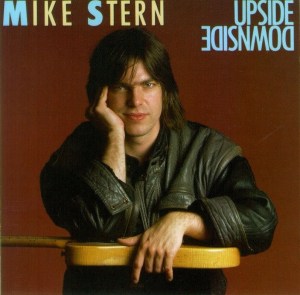
Mike Stern: Upside Downside (1986)
Produced by Hiram Bullock and featuring a crack band including Dave Weckl on drums, it showcases Stern’s finest/fieriest playing on record to date and also one of Jaco Pastorius’s last notable appearances. Still the best Stern solo album and quite extreme in its own way.

(If you’re new to any of these albums and they float your boat, please consider buying physical copies to support the artists.)

The Cult Movie Club: Being There (1979)

It’s hard to think of a movie that better captures an end-of-the-1970s/beginning-of-the-1980s vibe than ‘Being There’.

Directed by Hal Ashby (‘Shampoo’, ‘Harold & Maude’, ‘Coming Home’) and starring Peter Sellers, it was released on the same day as Steven Spielberg’s ‘1941’ just before Christmas 1979 and became one of the first critical and commercial successes of the ’80s.

Based on Jerzy Kosinski’s book (the Polish author became somewhat of a celebrity in the States before he committed suicide in 1991), ‘Being There’ is a political satire, the story of a simpleton who moves effortlessly to within spitting distance of the very highest echelons of American power.

Still, despite featuring one of the most famous final shots in cinema history, some classic catchphrases and Sellers’ penultimate screen performance as Chance the gardener (for which he was Oscar-nominated), ‘Being There’ inexplicably now seems somewhat forgotten.

Not round these parts. A recent re-watching was a revelation – it’s far better than I remembered it. It’s also surely another one for the relatively small ‘the film’s better than the book’ file. Here’s what I wrote in my notebook:

Shirley MacLaine
She barely gets a mention in all the literature I’ve read about ‘Being There’. A shame, because she delivers a fine comedy performance. Yes, the ‘I like to watch’ sequence is embarrassing and often subject to critical scrutiny, but it’s Sellers who is really the focus of that scene. You’ll certainly never think of Fred Rogers in the same way.

Stanley Kubrick
With its beautiful widescreen compositions, deep, rich colours, iconoclastic/irreverent humour and a brilliant central performance from Sellers, it’s surely a film of which Mr K would approve (and visitors to ‘Being There’ during Christmas 1979 would also have seen a teaser trailer for Kubrick’s ‘The Shining’). This guy’s interesting video finds a link between ‘Being There’ and ‘2001: A Space Odyssey’. Also, close viewing reveals that there’s a shot in ‘Being There’ of a TV – being watched by Chance – which doesn’t have a plugged-in cable, just like the similar shot in ‘The Shining’. Coincidence?

The Oscars
Sellers apparently channelled Stan Laurel for his blanked-out, mid-Atlantic accent, and worked diligently on line readings in the mirror. He was nominated for a Best Actor Oscar, but lost out to Dustin Hoffman for ‘Kramer vs. Kramer’. Sellers looks unwell, pale and drawn (he died just six months after the film’s release), but apparently surprises both himself and the actors around him with his wonderful comic creation.

Modern Culture
The film has a lot to say about where popular culture was headed. It’s no coincidence that Chance has been ‘brought up’ on television. When he appears on a chat show, Chance is told by the producer: ‘You’ll be seen by more people tonight than have been to the theatre in the last 40 years’. The movie relentlessly emphasises the more inane elements of TV throughout its duration.

Tom Cruise
Promoting the new ‘Mission Impossible’ film in a recent Sunday Times interview, Cruise recently said he would hitherto only make movies that audiences immediately understood – no puzzles, fables or anything demanding too much thought. No more ‘Eyes Wide Shut’s. Or ‘Being There’s. There’s not an iceberg’s chance in hell that this film would get made today.

Chance
How does Chance the gardener get so far up the totem pole so quickly? The film emphasises that you can get a very long way by ‘looking the part’ and having friends in high places. And of course there’s luck. But there are still one or two anomalies – why does he unquestioningly leave the house in which he has lived all his life just because the lawyers tell him he’s going to be evicted? Would he really have a clue what an eviction was? It seems more likely that he would stay put for as long as possible.

Washington DC
As Chance leaves his house, there’s a famous, striking montage of his sojourn through DC soundtracked by Deodato’s ‘Also Sprach Zarathustra’. We are initially shocked to realise that, despite his natty threads and luxurious pad, he’s been living in the poor part of town. We see a graffito which reads: ‘America ain’t shit cos the white man’s got a God complex’, later referenced by Public Enemy (the film in general has a lot to say about racial issues in America, superbly summarised by this video). Then there’s the famous shot of Chance walking down Pennsylvania Avenue, the moment we realise this is going to be rather a special movie.

Minor Characters
‘Being There’ is full of memorable secondary characters, each with a very specific role, from the lawyers to newspaper/magazine editors, TV producers, elevator orderlies and doctors. And fans of John Carpenter’s ‘The Thing’ will relish seeing Richard Dysart and David Clennon playing key roles.

The President
The President isn’t a sympathetic character – in fact he is a boorish, somewhat weak buffoon who doesn’t seem to have much power. But still, there’s plenty of evidence that he’s onto Chance from the beginning. The film ends with an internal cabal about to oust the president and move the government much further to the Right, possibly a portent of the upcoming Reagan years. The film also spends an inordinate amount of time on the more ‘fascistic’ elements of the US – the all-white, thrusting security detail and Secret Service operatives, the ridiculous vehicle cavalcades, the huge government properties in the countryside that look eerily like Nazi strongholds. Also watch out for the Eye of Providence on Ben Rand’s burial pyramid. A YouTube comment: ‘This movie tells us how the world really works’.

Vinnie Colaiuta
The drummer/composer released a great ‘tribute’ to Chance (or Chauncey, as he is mistakenly named by Eve Rand in the film) on his 1994 solo album, featuring Sting on bass.

Joni Mitchell: Wild Things Run Fast 40 Years On

joni_mitchell-wild_things_run_fast(4)Joni entered the ’80s in a despondent state: ‘Everyone realised at the brink of the decade that it was going to be a hideous era…’, she reported to Q magazine.
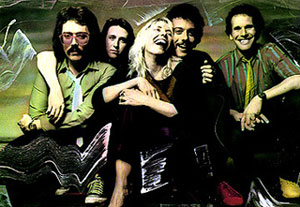
It didn’t help that her beloved ’69 Bluebird had been stolen from outside Tower Records on Sunset Boulevard on New Year’s Eve 1979.

She was also sued by her cleaning lady and then found herself headhunted by old friend David Geffen for his new record label, though their relationship were never easy.

Then there were Thatcher and Reagan and a simmering Cold War. But Joni’s new songs avoided politics completely (she’d make up for that later). Instead, buoyed by her relationship with new bassist Larry Klein and beguiled by The Police and Talking Heads she was hearing on the radio, she produced possibly her most romantic, upbeat album to date, released 40 years ago this month.

But while there are some concessions to hard rock, new-wave and reggae, Wild Thing‘s best tracks are the ones that most closely resemble the shimmering, jazzy, almost psychedelic tracks of the mid-to-late-’70s.

Larry Klein and Joni, 21st November 1982

Larry Klein and Joni on their wedding day, 21 November 1982

It helped that many of her ’70s ‘repertory company’ were still in place at the dawn of the ’80s – singer James Taylor, percussionist Victor Feldman, drummer John Guerin, saxist Wayne Shorter and guitarist Larry Carlton.

Her new recruits were the new generation of hotshot session players: guitarists Mike Landau and Steve Lukather, keyboardists Larry Williams and Russell Ferrante, formidable ex-Zappa drummer Vinnie Colaiuta.

My point of entry for this album was superb lead-off track ‘Chinese Cafe/Unchained Melody’, the first music I’d ever heard by Joni. I was immediately a fan. It’s a moving meditation on love and loss with a haunting piano/bass motif and intricate Guerin drum part.

‘Be Cool’ and ‘Moon At The Window’ are classic Jazzy Joni. On the former, Klein stakes his claim as a worthy successor to Jaco while Shorter offers a witty, beautifully judged commentary on the latter. Klein in general gets a lot of space on the album – as much as Jaco got on Mingus – but he’s a totally different player (and doesn’t play fretless). His contributions make Wild Things one of the great bass records of the 1980s.

Larry Carlton plays a sublime accompaniment in the left channel on the elegant ‘Ladies’ Man’ (featuring more than a hint of Steely Dan’s ‘Third World Man’), while Joni surveys her lover’s ‘cocaine head games’ – one of several drug references on the album.

Some tracks are a curious but engaging mixture of hard rock and fusion – the title track, ‘You’re So Square’ and ‘Solid Love’ feature some dynamic, chops-infused interplay between Colaiuta and Klein, and it’s exciting hearing Joni pushing her vocals, singing with a lot of bite, though she probably should have left reggae well alone.

The closing ‘Love’ – appropriating Corinthians 13 11-13 – encapsulates all that’s good about Wild Things Run Fast: a beautiful vocal, superb and sensitive guitar playing from Steve Lukather and empathetic textures from Shorter and Colaiuta.

TourProgram83RefugeGroup

The 1983 touring band: Vinnie Colaiuta, Mike Landau, Joni, Larry Klein, Russell Ferrante

Joni toured Wild Things extensively with a band consisting of Colaiuta, Landau, Klein and Ferrante, dropping in to London’s Wembley Arena in 1983. Wish I had been there. Thankfully we have YouTube (see below).

The album was a minor hit, reaching #32 in the UK and #25 in the States, and the single ‘You’re So Square’ reached #47 in the US.

One’s appreciation of it probably depends on when you were born. People who adore Blue and For The Roses probably loathe this. But as my first exposure to Joni’s music, I hold it very dear.

1980s Podcasts Ya Know, 1980s Podcasts Ya Don’t

One of the legacies of the wretched last few years is that everyone and their little brother has started a podcast.
Of course there’s a lot of flim-flam but the good news for fans of 1980s music and movies is that many of the decade’s big names are getting involved. They are in bullish, talkative mood, still full of ideas and enthusiasm.

Elsewhere podcasters of all stripes are revisiting key (and not-so-key) works of the 1980s and beyond, offering fresh perspectives. Here’s a selection of podcasts that have held movingtheriver’s attention over the last few years.

Electronically Yours is helmed by Human League/Heaven 17 co-founder and producer/synth pioneer Martyn Ware. He opens his formidable address book to speak to some big names as well as influential but less well-known figures who helped shape 1980s music. Ware seems an amiable fellow and he extracts some intriguing revelations from his guests, sometimes even getting closure on issues that affected his career 40 years ago (see the Bob Last and Simon Draper interviews).

Though he occasionally sounds a bit like Gareth Keenan of ‘The Office’ during one of his Health & Safety seminars, Edward Russell’s podcast Inside the Groove takes an indepth, entertaining look at Madonna’s music and career. There are intriguing bits of studio gossip and great chances to hear exposed multi-tracks of the hits – ‘Borderline’ and ‘Open Your Heart’ are doozies.

Smersh Pod is a look at the Bond films and their connections, expanding out to discuss notoriously cruddy cult movies such as ‘Bullseye’ and ‘Death Wish II’. John Brain presents with vigour and chats with a lot of amusing guests mainly from the comedy world.

Breakfast With Vinnie is the unique podcast of drum hero Vinnie Colaiuta. He generally eschews celeb interviews (though John McLaughlin makes a lovely appearance) in favour of philosophical musings about music, society and culture.

Rockonteurs, co-helmed by Spandau man Gary Kemp and Floyd/Bryan Ferry bassist Guy Pratt, is a series of informal chats with friends and colleagues. Their repartee is sometimes a little grating but interviews with Level 42’s Mark King, Boy George, Trevor Horn and key Madonna/Ferry collaborator Patrick Leonard are particularly memorable.

Word in Your Ear is the brainchild of ‘Whistle Test’ presenters and founders of Q/The Word magazines Mark Ellen and David Hepworth. It won’t surprise anyone that it’s witty, entertaining, opinionated and always worth a listen.

Bass Culture UK is a valuable portrait of the movers and shakers of British reggae and soundsystem culture, featuring excellent interviews with key figures like Don Letts and Dennis Bovell.

For you jazzheads out there, Guitarwank, Jazz United and Jazz Bastard have been consistently entertaining.

But – drum roll – the movingtheriver.com Podcast of the Year is… 80sography. It’s mostly a series of extended interviews with key producers of the decade and a must for anyone who wants to know what went on in studios during the 1980s. It also serves as a good ‘making of’ many classic albums. The Stephen Hague, Langer/Winstanley, Hugh Padgham and Stephen Lipson interviews are all entertaining and comprehensive.

Any other cool related podcasts? Leave a comment below.

Frank Zappa: ‘I Don’t Wanna Get Drafted’ 40 Years On

Recently, I was pleased and very surprised to hear a youngish (30s?) sales assistant playing Zappa’s Apostrophe while guarding the till at a local charity bookshop.

A quick and enjoyable conversation led us to agree that of all the major music figures who emerged during the ’60s and ’70s, FZ may be the least respected/understood these days.

You’ll seldom see a major piece about him in the heritage rock magazines, and the family estate keep a close eye on such, but if you do, it’ll probably focus on the ‘golden’ era – i.e. the late 1960s.

Many were turned off by Zappa’s unapologetic, un-PC lyrical stance as the ’70s turned into the ’80s. But his musical intelligence is beyond question and pretty much unprecedented in the ‘rock’ era.

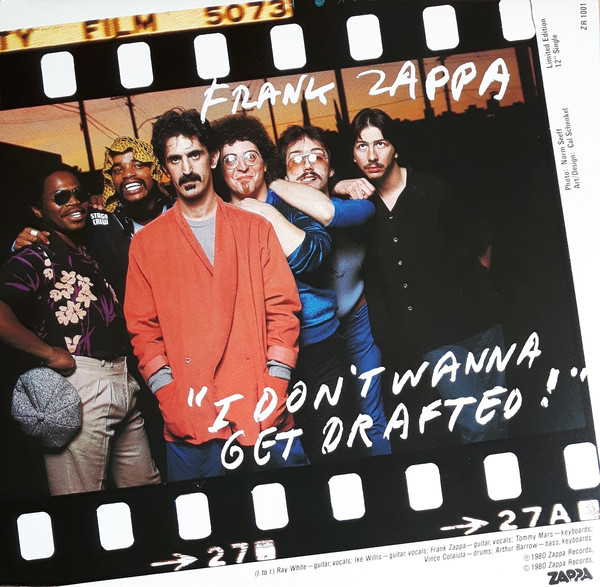
Frank kicked off the decade with the release of the stand-alone ‘I Don’t Wanna Get Drafted’ single, recorded on 16 and 17 February 1980 at Ocean Way in Los Angeles and released 40 years ago this month. A satirical comment on the draft policy of the Carter administration, it was the first product issued on his own Barking Pumpkin label – and reached #3 in the Swedish singles chart!

The single kicked off an incredibly busy decade for FZ. Two major albums – Francesco Zappa and Thing-Fish – were even released on the same day in 1984. Then there were the two albums of guitar solos (one triple and one double), three major orchestral works and hundreds of instrumental pieces for the Synclavier. Not forgetting many other studio/live albums, compilations, and two books, ‘Them Or Us’ and ‘The Real Frank Zappa Book’, though both contained some previously-published material.

In the live arena, Zappa embarked on major tours in 1980, 1981, 1982, 1984 and 1988. Now that he, Miles Davis and Joe Zawinul are gone, it’s hard to imagine that any other major artist will ever again play such virtuosic, challenging music in front of large crowds, whilst also blooding young musicians in the process. Author Ben Watson memorably described FZ’s final 1988 tour as ‘the wildest and most speculative music…heard in rock arenas since the days of Cream, Hendrix and the Mothers Of Invention’.

One of the only pleasures of lockdown has been discovering some ’80s FZ works I hadn’t heard (Francesco Zappa, London Symphony Orchestra Vols. 1 and 2) via Charles Ulrich’s excellent book ‘The Big Note’.

What struck me again is the lack of sentimentality in his music (off the top of my head, only three ’80s tracks feature those major-seventh chords: ‘I Don’t Wanna Get Drafted’, ‘Jumbo Go Away’ and ‘Jesus Thinks You’re A Jerk’), something else that seems to drive ‘rock’ critics crazy.

It ain’t all good, but the best of Zappa’s ’80s output is absolutely superb, and it really pays to have a root around in his discography. I’ve tried to separate the wheat from the chaff here. There’ll never be anyone like FZ again.

Nik Kershaw: The Works 30 Years On

It was goodbye to Basildon and Braintree, hello to Bel Air and Beverly Hills.

Kershaw had always threatened the big-budget, US-recorded album, and in 1989 he delivered it. And, to no-one’s great surprise, it was an excellent collection, one of the best ‘Brit-Goes-Stateside’ pop records of the decade.

Recorded over four months in LA, The Works – released 30 years ago this week – saw Kershaw put together some of his best material to date with two top-notch drummers (Vinnie Colaiuta and Jeff Porcaro) in tow, the great Jerry Hey on horn arrangements, Paulinho Da Costa on percussion, ex-Zappa keyboardist Peter Wolf producing and backing vocals from Michael McDonald and Siedah Garrett.

And yet it was also the straw that broke the camel’s back, underselling drastically, cutting ties with MCA Records and leading Kershaw into decades of back-room writing and producing. But maybe he was happier that way (and he did write the enormo-hit ‘The One And Only’ for Chesney Hawkes a few years later).

But from August to December 1987, Kershaw was hob-nobbing with Rod Temperton, Quincy Jones and Toto, flirting with the kinds of scenes that he had mocked on ‘Radio Musicola’ and ‘City Of Angels’. Reportedly he didn’t get on very well with Wolf, virtually re-recording the entire album back in London alongside Australian producer Julian Mendelsohn (Level 42’s World Machine).

But hey, the hard work paid off. There’s nothing else in the ’80s pop canon quite like the techno/pop/fusion flash of ‘Don’t Ask Me’, ‘Wounded Knee’ and ‘Cowboys and Indians’, and Colaiuta’s extraordinary drum performances had players rushing to their practice rooms. In particular, the former track has that fill… If only Vinnie had played on a few of the other machine-driven tracks. And Kershaw coaxes Porcaro to play a classic half-time shuffle on the superb ‘Walkabout’.

It’s still hard to believe that ‘One Step Ahead’ and ‘Elisabeth’s Eyes’ (very influenced by Scritti) completely flopped as singles (though I would have gone with ‘Lady On The Phone’). They still sound great today, with brilliant choruses and nice grooves. ‘Burning At Both Ends’ may be the standout of the album, with its Middle-Eastern-flavoured hook and superb Siedah Garrett backup vox. Slightly less impressive are ‘Take My Place’ and ‘One World’; both could be Climie Fisher or Robbie Nevil.

The album disappeared without trace both in the UK and US. As far as solo pop success was concerned, the game was up. But it’s a shame that the kind of intelligent, superbly-played pop heard on The Works was unsustainable by the end of the ‘80s. As Nik so succinctly puts it on his website:

Los Angeles for four months with producer Peter Wolf. Get to record with some legends: Jerry Hey, Larry Williams, Paulinho Da Costa, Jeff Porcaro, Vinnie Colaiuta. House in Nichols Canyon; Rented Mustang; Earthquake. Constantly bumping heads with Peter. End up finishing album myself in London. More record company upheaval; another MD; another A&R person. Not looking good. European tour with Elton John. Goodbye MCA. Time for a break...”

Great Drumming Albums Of The 1980s (Part One)

Dennis Chambers

It was a good decade to pick up the sticks.

Inspiration was easy to come by; the early ‘80s delivered brilliant drum-centric hits like The Jam’s ‘A Town Called Malice’, Bow Wow Wow’s ‘I Want Candy’, Adam and the Ants’ ‘Ant Rap’ and Phil Collins’ ‘In The Air Tonight’. Drums were sounding like DRUMS again – the days of dead-sounding kits seemed (almost) over.

Exciting fusions were everywhere: avant-gardists combined free-funk and free-jazz; art-popsters brought ideas from minimalism, Africa and the Far East; jazz/rock masters of the 1970s moved into production and arrangement; dub and World music thrived.

Post-punks fused rock and reggae; the ‘Young Lions’ embraced and sometimes extended the drum worlds of Art Blakey, Philly Joe Jones and Max Roach; funk and R’n’B got precise and spicy; metal players took double-kick playing to extraordinary extremes. And of course there was also the sudden development of technology: some drummers shrunk from the challenge, others rose to it.

So, to celebrate movingtheriver.com’s third anniversary, here’s a personal selection of the decade’s finest drum performances, in no particular order.

46. Loose Tubes: Loose Tubes (1985)
Drummer: Nic France
France marshals this big band through jazz/rock, Latin and African vibes with a sparky, lively studio sound, something like a Brit version of Dave Weckl.

45. Lee Ritenour: Earth Run (1986)
Drummer: Carlos Vega
The album may be the beginning of Ritenour’s descent into bona fide smooth jazz but the best tracks feature brilliant playing by the underrated Vega.

44. Prefab Sprout: Protest Songs (1989)
Drummer: Neil Conti
Conti’s classy playing provided a subtle, always stylish counterpoint to Paddy McAloon’s pithy, complex songs about poverty, childhood and the social mores of the early ’80s.

43. Robert Plant: Shaken ‘N’ Stirred (1985)
Drummer: Richie Hayward
Little Feat were a tough act to follow from a drumming point of view but Hayward settled into the 1980s with this superb performance, showcasing a bright, expressive style on Plant’s quirky, Peter Gabriel-influenced art-rock.

42. Frank Gambale: Live! (1989)
Drummer: Joey Heredia
LA-based Heredia combined slinky funk/fusion, Police-style rock/reggae and Latin grooves to spectacular effect on this classic live album. His sparring with a terrifyingly unhinged Gambale on ‘Credit Reference Blues’ and ‘Touch Of Brazil’ is essential listening.

41. Al Jarreau: L Is For Lover (1986)
Drummer: Steve Ferrone
The ex-Average White Band ex-pat Brit takes us on a journey through the art of groove on this nearly-forgotten Nile Rodgers-produced minor classic. He gives James Gadson a run for his money with his killer 16th-note hi-hats, crisp snare and nifty footwork.

40. Eddie Gomez: Mezgo (1986)
Drummer: Steve Gadd
On this Japan-only album (which is still waiting for a CD release), Gadd was at his most expressive, navigating the bebop flavours of ‘Puccini’s Walk’ and quirky fusion stylings of ‘Me Two’ with great aplomb. And no one else could have played a samba the way Gadd does on ‘Caribbean Morning’.

39. Miles Davis: We Want Miles! (1982)
Drummer: Al Foster
In combination with bassist Marcus Miller, the underrated Foster laid down some highly original rhythm section work on Miles’s only live album of the 1980s. Listening to his ‘bouncing ball’ dynamics on ‘Kix’, you’d swear that the very fabric of time was being messed with.

38. Rockin’ Jimmy & The Brothers Of The Night (1982)
Drummer: Chuck DeWalt
Here’s one out of left-field from a Tulsa bar band who I first heard yonks ago on Alexis Korner’s fabled early-’80s Radio One blues show. DeWalt had a Ringo-esque knack for coming up with simple but memorable drum parts, with a great feel and nice use of space.

37. Living Colour: Vivid (1988)
Drummer: Will Calhoun
Calhoun’s whip-crack snare and natty ride cymbal/hi-hat combinations knocked a lot of drummers’ socks off in 1988. He was just as comfortable with the half-time, Bonhamesque rock of ‘Cult Of Personality’ as he was with the funk and go-go grooves of ‘Funny Vibe’ and ‘Broken Hearts’.

36. INXS: Kick (1987)
Drummer: Jon Farriss
If it’s funky pop you’re after, Farriss is your man. His dynamics, ghost notes and weird accents on ‘New Sensation’ and ‘Need You Tonight’ are worth the price of admission, while ‘Never Tear Us Apart’ sounds a bit like Ringo if he had a few more chops.

35. Hiram Bullock: Give It What U Got (1987)
Drummer: Charley Drayton
NYC-native Drayton delivered a cutting snare, subtle cymbal work and exciting two-hi-hat grooves on this impeccable slice of late-’80s funk/fusion. No one else – not even his buddy Steve Jordan – could have done a better job.

34. Sting: …Nothing Like The Sun (1987)
Drummer: Manu Katche
Overproduced? It’s a moot point when the playing’s as delicious as this. His independence between kick drum and hi-hat on ‘Rock Steady’ is fairly mind-boggling, while no one apart from Copeland and Colaiuta has perfected the high-speed reggae groove with such aplomb.

33. Narada Michael Walden: Divine Emotions (1988)
The ’70s fusion hero turned ’80s producer extraordinaire still had time to deliver this forgotten classic featuring tasty, tight, propulsive grooves and a return to blazing jazz/rock on the hysterical closer ‘We Still Have A Dream’.

32. John Scofield: Electric Outlet (1984)
Drummer: Steve Jordan
The NYC tyro had already turned heads with the Blues Brothers and ‘Saturday Night Live’ bands but this album perfectly captured his more expansive side. Two hi-hats, crisp snare, gorgeous K Zildjians and some spry kick drum work, particularly on ‘Pick Hits’, ‘Big Break’ and the title track.

31. Nik Kershaw: The Works (1989)
Drummer: Vinnie Colaiuta
We knew that Vinnie could unleash some jaw-dropping chops, but this album perfectly demonstrates his groove side. Check out how he navigates the 6/4 time of ‘Cowboys And Indians’ and hot-wires mid-tempo rocker ‘Wounded Knee’. And then there’s THAT fill in ‘Don’t Ask Me’…

30. Billy Cobham: Powerplay (1986)
An album that finally captured what it’s like to stand a few feet away from the master, featuring a lovely acoustic drum sound, shorn of any studio effects. There was incredible clarity to his playing even if the material wasn’t quite as strong as on the previous year’s album Warning.

29. Japan: Oil On Canvas (1983)
Drummer: Steve Jansen
Jansen was always looking at new ways to play a 4/4 beat and came up with five or six classics on this live retrospective. ‘Visions Of China’, ‘Canton’ and ‘Sons Of Pioneers’ still sound like unique drum statements in the history of recorded music.

28. Stanley Clarke: Rocks, Pebbles And Sand (1980)
Drummer: Simon Phillips
Beautifully recorded by Dennis Mackay, his drums have never sounded better or bigger. From the driving rock’n’roll of ‘Danger Street’ to highly technical prog-fusion of ‘She Thought I Was Stanley Clarke’, the London maestro delivered a superb performance throughout.

27. Bireli Lagrene: Foreign Affairs (1988)
Drummer: Dennis Chambers
Many to choose from in Dennis’s repertoire but I’ve plumped for this hard-to-find fusion classic. With a fatter snare than usual, he anchors the band beautifully on Weather Report-style jams ‘Josef’ and ‘Senegal’ and unleashes a trademark 6/8 groove and killer solo on the title track.

26. Van Halen: 1984
Drummer: Alex Van Halen
If he had only ever recorded the freaky double-bass workout ‘Hot For Teacher’, his place in the drum pantheon would be assured. But this breakthrough album also featured a host of other treats, not least ‘Jump’, plus the most identifiable snare drum in hard rock.

25. John Abercrombie: Getting There (1987)
Drummer: Peter Erskine
Difficult to choose one from possibly the jazz drummer of the decade but I’ve gone for this mid-career classic. Erskine busts out his Elvin Jones chops on ‘Furs On Ice’ and rocks hard on the epic title track which almost approaches avant-rock.

24. John Martyn: Glorious Fool (1981)
Drummer: Phil Collins
A fascinating companion piece to Phil’s Face Value and Genesis’s Duke during arguably his best period of drumming. He brings out lots of lovely ghost-noted grooves in the Little Feat style, some brutal rock on ‘Amsterdam’ and even spicy fusion on ‘Didn’t Do That’.

23. China Crisis: Diary Of A Hollow Horse (1989)
Drummer: Kevin Wilkinson
Wilkinson was (he sadly took his own life in 1999) kind of an English Jeff Porcaro, a tasty groovemeister who always played exactly what was right for the song – with lots of elan. Check out the subtleties of ‘St Saviour’s Square’, ‘In Northern Skies’ and ‘Red Letter Day’.

22. Toto IV (1982)
Drummer: Jeff Porcaro
It would almost be sacrilege not to include this. Some of the greatest rock drumming in history, with feel, finesse, style, a rich, full sound and lovely time-feel (though he famously claimed ‘my time sucks’!).

21. Pat Metheny: 80/81 (1981)
Drummer: Jack DeJohnette
DeJohnette was always a class act on ECM’s ’80s projects and he sounds sparkling on this double album. But I include it mainly for his performance on ‘Every Day I Thank You’, goosing saxophonist Michael Brecker into one of his finest sax solos on record.

20. Stanley Clarke Band: Find Out! (1985)
Drummer: Rayford Griffin
There are definitely shades of Cobham in his exuberant style (and he set himself up left-handed on a right-handed kit like Billy) but also grooves aplenty on this underrated album. His lopsided funk on ‘Born In The USA’ is balanced out by chops-fests ‘Campo Americano’ and ‘My Life’. This guy has technique to burn but also does what’s right for the song.

The countdown continues here.

Allan Holdsworth (1946-2017)

With the sad death of Allan Holdsworth, we have lost another guitar great and one of the UK’s most singular musicians.

There’s an old muso cliché that seems to lend itself to guitarists more than other players – ‘he/she’s a musician who just happens to play the guitar’.

It certainly applies to Allan. He came up with an entirely original soundworld, feted by the likes of Eddie Van Halen, Frank Zappa, Joe Satriani, Steve Vai and John McLaughlin.

From a young age, Holdsworth always revered horn players – particularly Cannonball Adderley, Charlie Parker, Eric Dolphy, John Coltrane and Michael Brecker – above guitarists, but, given a guitar by his father as a teenager, decided to pursue his love of music using that tool. In doing so, he revolutionised the instrument, fashioning a unique legato technique.

The aim was a smooth, soaring sound which lent itself to horn-like improvisation, allowing him to play fiery, exciting solos with huge intervallic leaps. His chord work was underrated and equally innovative, using close-interval voicings and ridiculously large stretches. He came up with an entirely personal series of ‘chord scales’, loathing standard chord shapes and even calling them ‘disgusting’ on his instructional video!

The first time I heard Allan’s playing was his extraordinary solo on Stanley Clarke’s ‘Stories To Tell’ from the album If This Bass Could Only Talk, but it took me a while to identify him since my cassette didn’t list the personnel… To my ears, it was just a remarkable solo; I didn’t even particularly ‘hear’ it as a guitar.

In the late 1980s, as I started reading various American muso mags, Allan’s name popped up frequently – it was time to explore his career in more depth. In the early to mid-1970s, he guested with Soft Machine, Nucleus, Tempest and Gong. Master drummer Tony Williams came calling, and he hot-footed it over to New York for 18 months of recording and touring with the New Lifetime band.

He then joined Bill Bruford in one of the greatest ever fusion units alongside Jeff Berlin and Dave Stewart, then formed prog supergroup UK with Bruford, Eddie Jobson and John Wetton (playing a legendary solo on ‘In The Dead Of Night’). He also forged a brief but fruitful musical relationship with violinst Jean-Luc Ponty.

An early solo album, 1976’s Velvet Darkness, was virtually disowned by Allan despite featuring Narada Michael Walden on drums and Alphonso Johnson on bass. But he spent the 1980s embarking on a far more fruitful solo career.

Endorsed by Eddie Van Halen and Frank Zappa, mainstream success beckoned in the mid-’80s, but a high-profile Warner Bros contract came and went very briefly with only an EP Road Games to show for it.

It didn’t hold him back though; in fact it led to probably his most commercially successful period – Metal Fatigue, Atavachron and Sand were all important statements.

The period between 1988 and 1994 was arguably Allan’s peak – superb solo albums like Secrets, Then!, Hard Hat Area and Wardenclyffe Tower came out and he contributed striking guest spots to albums by Level 42 (Guaranteed), Stanley Clarke and Chad Wackerman (Forty Reasons). He was even lured to share the stage with Level for a month-long Hammersmith Odeon residency in 1990.

Like fellow ex-pats Richard Thompson and Morrissey, he made California his home, moving there in the early 1980s and forging valued musical relationships with Vinnie Colaiuta, Jimmy Johnson and Scott Henderson.

Henderson spoke of his incredible generosity in the studio. Drummer Kirk Covington – who recorded with Allan on the ‘standards’ album None Too Soon – reported that sessions at his home studio were always curtailed at 7pm at which point Allan would hand out pints of his home-brewed cask ale.

The complexity of his style meant that Allan influenced relatively few guitarists, though for my money Henderson and Francis Dunnery adapted some of his techniques to great effect. Fellow Yorkshireman John McLaughlin once said, ‘I’d steal everything Allan was doing if only I could figure out what he was doing!’

I saw Allan several times in concert; at the Bloomsbury Theatre, Jazz Cafe, Ronnie Scott’s, Queen Elizabeth Hall and twice with Level 42 at Hammersmith. He was notoriously self-critical, but to my ears achieved a remarkable consistency in the live context.

A 12-CD career-spanning box set The Man Who Changed Guitar Forever has just been released on Manifesto Records. Allan was also working on a long-awaited new studio album at the time of his death. He spoke about both projects in this recent podcast.

Farewell to a master. We won’t see his like again.

Allan Holdsworth, guitarist and composer, born 6 August 1946, died 15 April 2017

Allan, Chad Wackerman and Jimmy Johnson in concert

Joni Mitchell: Dog Eat Dog 30 Years Old Today

joni_mitchell-dog_eat_dog(2)Most music fans of a certain age probably had their favourite ‘Walkman albums’, those cassettes that worked perfectly on headphones, revealing intricacies (weird panning effects, funky little motifs, stereo drum kits) rarely noticed when played on normal speakers.

As much as I had loved Joni Mitchell’s music ever since my dad played me ‘Chinese Cafe (Unchained Melody)’ in 1983, I’d never have predicted that the superb Dog Eat Dog – released on 30 October 1985 – would turn into one of my top headphone albums. A clue, of course, was the presence of Thomas Dolby as co-producer and keyboard player, master of quirky soundscapes and synth textures.

joni

Though initially he might seem a weird choice of collaborator, with hindsight it’s not that much of a surprise that Joni and co-producer/bassist/hubbie Larry Klein should enlist his services. Joni admitted in contemporary interviews that she ‘could use a hit’. But they didn’t get along particularly well in the studio, Dolby not enamouring himself to her by blithely calling her ‘Joan’ between takes.

But the Englishman contributes a lot to Dog Eat Dog – interesting audio effects like Wayne Shorter’s sampled soprano throughout ‘Lucky Girl’, beats, dub textures here and there (‘Shiny Toys’) and of course the odd spoken word intrusion (maybe it was his idea to use Rod Steiger on ‘Tax Free’?).

One of the key aspects of Dog Eat Dog is Joni’s anger at the state of the world, both lyrically and vocally. Her cover pose says it all – throwing her hands up in the air with indignation and/or helplessness. As she puts it, the album is a portrait of ‘a culture in decline’. She takes aim at TV evangelists, consumerism, lawyers, yuppies and Reaganites with equal candour, letting fly with an F-bomb on the superb ‘Tax Free’.

The album also features some of Joni’s strongest singing on record. Her melodies are sometimes resplendent too, particularly on the title track and ‘Lucky Girl’. It’s also interesting to hear her trying out a slightly more minimalist lyric-writing approach on ‘Fiction’ and ‘Tax Free’, marrying her short, sharp lines to Klein’s music.

‘Good Friends’, initially a brooding piano ballad in demo form, kicks the album off in fine style, an AOR classic with more interesting chord changes than the usual and a typically distinctive guest spot from Michael McDonald. It was a bold though unsuccessful attempt at a hit, far too good for the charts. Joni even sung it live on ‘Wogan’ with a McDonald impersonator!

The elegant, stately ‘Impossible Dreamer’ is described by Joni as ‘a tribute to Martin Luther King, John Lennon, and Robert Kennedy – all those who gave us hope and were killed for it.’ It also features some sparkling soprano sax from Wayne Shorter. Master drummer Vinnie Colaiuta is mainly reduced to providing drum samples for Dolby, though plays some lovely stuff on ‘Shiny Toys’, the second single from the album and subject to a great 12″ mix by Francis Kevorkian

The ’80s weren’t particularly easy on Joni and her contemporaries Don Henley, Neil Young, Bob Dylan, Linda Ronstadt and Robbie Robertson. As she put it, ‘I made four albums for Geffen. For one reason or another, they were viewed as being out of sync with the ’80s. But I was out of sync with the ’80s. Thank God! To be in sync with these times, in my opinion, was to be degenerating both morally and artistically. Materialism became a virtue; greed was hip.’

A lot of people would probably have liked her to carry on making Blue for the rest of the ’70s and ’80s, but she was moving on. Every album was different and this may be the one most in need of critical reassessment. Some tracks would possibly benefit from acoustic reinvention, but hey… It’s Joni.