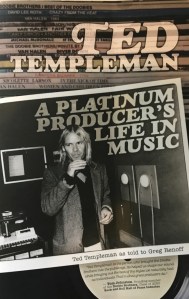
Book Review: A Platinum Producer’s Life In Music by Ted Templeman (as told to Greg Renoff)

You should never judge a person by their name.

movingtheriver assumed Ted Templeman – a favourite producer back in the day courtesy of his work with Van Halen, Little Feat, Doobie Brothers and more – was your typical seasoned/grizzled rock’n’roll journeyman.

But nothing could be further from the truth. Reading his enjoyable memoir (and looking at the cover), he turns out to be a mild-mannered jazz drumming prodigy turned pretty-boy frontman with late-‘60s baroque pop band Harpers Bizarre.

His story takes us from post-war Santa Cruz, California, to the upper echelons of the US music biz during boom time, when Templeman was a house producer for Warner Bros. (alongside Gary Katz, Michael Omartian, Jay Graydon and Lenny Waronker), becoming one of the wealthiest and best respected record execs of his era.

We learn about his youth studying the Cool School jazzers, then his pop band Harpers Bizarre gets signed by Warners and he’s mentored by Waronker, quickly learning what A&R actually means – choosing the right songs for the artist and assessing their commercial strengths and weaknesses. He also witnesses first-hand the weird action around the Doors, Beach Boys and Phil Spector.

But he quickly realises he’s not cut out for fronting a band, and moves on to being Warner Bros’s tape listener, hanging around Frank Sinatra sessions and getting the nod from Waronker to produce his pet project, the Doobie Brothers.

Then there are some fascinating sections on working with Van Morrison – he sees the frustrations of being a co-producer at first hand when they release the ‘wrong’ mix of ‘Tupelo Honey’. But he also sees Morrison’s more humorous side – during the recording of the live album It’s Too Late To Stop Now, Ted, sitting in the mobile studio outside The Rainbow, hears Van frequently saying, ‘Didja get that, Ted?’ into the mic between songs.

Templeman forges a long-term relationship with his engineer Donn Landee and starts working with Little Feat. He sparks a great friendship with their mainman Lowell George and is fascinated to find that he is a model airplane fan. But when pushed, Lowell claims he’s just learning about them so he he can fly in drugs from Mexico. He also learns a lot about drums working in Sunset Sound studio 1 with Richie Hayward.

Then there’s recording Carly Simon on Another Passenger, and her relationship with James Taylor, before Templeman first comes across Van Halen via a concert in Pasadena. They quickly become his second obsession, though he’s deeply unsure about Dave Lee Roth’s vocals and general attitude (the book is full of strikingly honest reflections, and he’s quick to admit when he’s wrong).

The main chunk of the book deals with recording Van Halen, from the classic debut to the painfully laboured 1984. He even confesses to initial scepticism about ‘Jump’, kvetching to Eddie: ‘I signed a heavy metal band’! But he somehow enlists Eddie to guest on rollerskating freak Nicolette Sheridan’s ‘Can’t Get Away From You’.

Templeman eventually becomes a great fan of Lee Roth, though advises him not to leave Van Halen and try to be a movie star (though still ends up producing Crazy From The Heat). He also worries about getting Sammy Hagar into VH, suggesting they change their name to Van Hagar, and refuses to produce 5150.

There’s an amusing meeting with Prince at Sunset Sound and the Purple One’s reaction to Templeman’s suggestion that Quincy Jones produce Purple Rain. And then there’s Allan Holdsworth, a Warner Bros. signing coming via Eddie Van Halen’s recommendation. Eddie and Templeman are contracted to co-produce Road Games, but Holdsworth refuses to allow them in the studio together while he’s recording! A baffled Eddie bows out, and then Holdsworth demands that a few tracks feature vocals against Templeman’s best advice (of course Allan has his own take on the Road Games debacle…).

The mild-mannered Michael McDonald is a regular character in the book, uncharacteristically going ballistic for not getting co-writing credit for Van Halen’s ‘I’ll Wait’. We learn about Aerosmith drummer Joey Kramer’s opinion of Templeman’s work on their comeback album Done With Mirrors, and Eric Clapton’s reaction to being told that his guitar tone sucks.

The last section of the book regards Templeman’s work on the ‘Wayne’s World’ soundtrack and then losing his job at Warners, leading to depression and alcoholism.

It’s one of those rare music books that takes you right into the process of trying to get quality, commercial performances from some of the biggest stars in the music business, and it’s full of good advice about producing/arranging and interesting musical/technical observations.

Sadly though, its message may fall on deaf ears these days when Pro Tools and bedroom recordings are all the rage, musicianship less so, but still it’s a fun, informative look at the peak of the studio scene. Highly recommended.

Madonna @ The MTV Video Music Awards: 40 Years On

40 years ago this weekend, Madonna stunned the music biz with her premiere performance of ‘Like A Virgin’ on the MTV Awards at the Radio City Music Hall, NYC.

Not a household name at the time, she sung live in full wedding regalia, perched atop a giant cake, before shedding her shoes and veil and ending up writhing around the stage, her underwear exposed.

In terms of landmark pop TV moments, some have compared it to The Beatles on ‘The Ed Sullivan Show’ or Michael Jackson’s moonwalking on ‘Motown 25’. Others saw it as summing up the coarsening of popular culture.

But Madonna’s stylist Maripol later claimed to Classic Pop magazine that MTV ‘tried to destroy her that day…they put the camera under her skirt.’ And it’s hard to see the performance outside the context of Prince’s highly sexualised ‘Purple Rain’ movie (released in the US two months earlier) and attendant live shows.

It’s also widely forgotten that this performance came a month before ‘Like A Virgin’ was released as a single, so this was the first time most people had heard the song (‘Borderline’, from Madonna’s self-titled debut album, was only just peaking in Europe in September 1984). Bravely, Madonna refused to perform either ‘Borderline’ or ‘Holiday’ for MTV.

Still, manager Freddy DeMann was reportedly furious with Madonna, believing the performance to be career suicide. But of course it was just the opposite, helping propel her to megastardom. Happy birthday to a groundbreaking moment of 1980s pop.

(Postscript: As for the MTV Awards, they’re still going strong – Madonna spawned quite a monster…)

The Cult Movie Club: The Exorcist @ 50

William Friedkin and William Peter Blatty’s horror masterpiece received its premiere 50 years ago today – Boxing Day, 1973.

I’ll never forget my first viewing of the film. My dad suggested we go to a late-night Friday screening at a nightclub-cum-cinema called Options in deepest Kingston-upon-Thames sometime during late summer 1988.

I was 15 years old. I didn’t have a clue what lay in store for me. I’d seen ‘The Fog’, ‘Halloween’ and ‘An American Werewolf In London’ but this was a completely different kettle of fish.

The house was absolutely packed and the print was awful – this was years before ‘The Exorcist’ got a posh Warner Bros. re-release. But the graininess of the picture actually suited this truly ‘forbidden’ movie; it was still banned on video in 1988 and had the cache of a lost cult classic.

If memory serves, I spent most of the film completely terrified while my dad frequently laughed at it, possibly to mitigate my reactions and make me realise ‘it’s only a movie’ – or because he was scared too.

I still vividly recall the hideous demon face (which haunted my dreams for a few weeks afterwards) and the scraping/scratching soundtrack. And then the panic of the penultimate scene followed by moving/disturbing denouement, with Regan’s very visible facial scars, before being cut loose from the film, battered and bleeding, and hearing Salt-N-Pepa’s ‘Push It’ incongruously booming out from the nightclub below as we left the cinema. It also wouldn’t be an exaggeration to say that the movie got me thinking seriously about spiritual matters for the first time.

Watching ‘The Exorcist’ recently for the first time in five years or so, I was again mesmerised by the masterful first hour, with Friedkin’s documentary-style brilliance, fast pacing and wonderful performances from Jason Miller, Ellen Burstyn, Linda Blair and Lee J Cobb. It still makes the likes of ‘The Omen’ and ‘Rosemary’s Baby’ look fairly ridiculous.

But a few things rankled – the abuse of Regan by various male ‘authority’ figures. And, speaking from experience, in my view it would still be madness to show this film to under-18s.
Also where were the press/paparazzi at the McNeil house while all of this hooey was going on? After all, Ellen Burstyn is supposed to be playing a world-famous actress.

And take your pick of the scenes controversially excised by Friedkin to trim the film down to two hours, but I really could have done with the so-called ‘Casablanca’ ending. But the power of ‘The Exorcist’ is undiminished after 50 years. Happy birthday to a classic and RIP director William Friedkin.

Little Feat: Let It Roll 35 Years On

If memory serves I was given the cassette of Little Feat’s Let It Roll for my 16th birthday.

I loved their cocktail of blues, acid-rock, funk, fusion, country, Cajun and Tex-Mex. And they – along with Steely Dan – seemed to represent everything exciting and glamorous about America to me, also introducing exotic-sounding place names like Georgia, Atlanta (!), Tupelo and Juarez.

A burgeoning drummer, I also particularly dug their skinsman Richie Hayward who belongs in the same bracket of 1970s groovemasters as James Gadson, Jeff Porcaro, Jim Keltner, Jim Gordon, Earl Young, Bernard Purdie et al.

I was excited to listen to Let It Roll – which recently turned 35 – after many years, so I looked for my old cassette. Gone. I must have got rid of it years ago. Why? All shall become clear…

Recorded at The Complex, the LA studio owned by EW&F’s Maurice White, it was the band’s comeback album, their first since the death of chief singer/songwriter/slide guitarist Lowell George in 1979.

Of course the absence of George is palpable. Despite new vocalist Craig Fuller’s vague similarity to George in both vocal and slide guitar departments, the days of lyrics like: ‘Onomatopoetry symmetry in motion/They heard about that girl across the ocean’ (‘Down Below The Borderline’) or ‘Heard you got an infection/Just before your lewd rejection’ (‘The Fan’) were long gone.

(According to Hayward, George’s musical influence was also palpable, regularly suggesting fill ideas and rhythms, and frequently telling the drummer that he played too many notes!) Fuller also brings more of a country influence to the band, and there’s less of the ‘white boy got the whoo-whoos!’ (Van Dyke Parks’ analysis of George’s vocal style).

But most of all Let It Roll is inconsistent both song and sound-wise. The good stuff first: opener ‘Hate To Lose Your Lovin’ is a passable pastiche of the classic Feat sound, Second-Line meets funky country, while ‘Cajun Girl’ and the title track are very catchy. ‘Business As Usual’ has a few intriguing harmonic moves and riffs.

Elsewhere there’s too much rather bland AOR, Bruce Hornsby and Steve Winwood apparently the touchstones. Most of the band’s kinks have been ironed out, though Hayward still sounds fantastic, inspired by his new drum hero Manu Katche. Let It Roll could have used some decent mastering too – the volume levels are all over the place.

Surprisingly, the album didn’t chart in the UK but was a very good seller in the US, making #36 on the Billboard Hot 100 and earning a gold disc (they followed it up with 1990’s Representing The Mambo, which I confess I’ve still never heard).

They played a triumphant gig at London’s Town & Country Club in December 1988 though, with special guest Bonnie Raitt on guitar and vocals, and I’m not sure why I wasn’t there. I had to wait until 11 September 2000 to see this brilliant band at the same venue. And, despite the loss of George, Hayward and guitarist Paul Barrere, they’re still an occasional live entity.

(If you’re not acquainted with the band, try Little Feat in their pomp on Feats Don’t Fail Me Now, The Last Record Album or Time Loves A Hero).

The Cult Movie Club: Handgun (1983)

British writer/producer/director/actor Tony Garnett – who died in 2020 – was probably best known for his work with Ken Loach on groundbreaking projects like ‘Cathy Come Home’, ‘Kes’ and ‘Up The Junction’.
But his move to America in the early 1980s – after his debut, Birmingham-set feature ‘Prostitute’ – produced a quintessential ‘forbidden’ cult film, barely seen, not clipped on YouTube, poorly received/marketed and just squeaking out once on Channel 4 in the UK during the mid 1980s (the chances of it showing up on that terrestrial channel these days are precisely nil…).

But ‘Handgun’ – released 40 years ago this week – is also a fascinating, disturbing, gripping film, well worth reappraisal despite its notorious reputation. Garnett embarked on the movie after a period researching gun laws in Texas. He settled on the story of an open-hearted, homesick young teacher named Kathleen who has moved from the East Coast to Dallas. She meets a local guy – a lawyer – who rapes her at gunpoint (an attack that we don’t see). What follows is controversial but also somewhat unexpected.

The film features strikingly naturalistic performances in classic Garnett style, actors (including excellent leads Karen Young, later to turn up in ‘9 1/2 Weeks’, and Clayton Day) mingling with non-actors to disarming effect. Accordingly, Garnett mixes ‘classic’ filmmaking with near documentary footage. Meanwhile, Mike Post’s austere music adds grandeur. He’d just finished work on ‘The A Team’, ‘Magnum PI’ and ‘Hill Street Blues’!

Garnett intends to provoke. ‘Handgun’ very pointedly begins on Dealey Plaza, and the film looks at the role of the gun at the centre of American culture and its implied role in the subjugation of women and Native Americans. Note also the photo of John Lennon above Kathleen’s bed.

Some reviewers including ‘Time Out’ described ‘Handgun’ as exploitative. It’s actually a resolutely untitillating, moral movie which has resonance today in both the personal and political realms. But it certainly seems to have been let down with its marketing, including the dodgy poster above which takes it more into ‘I Spit On Your Grave’/’Ms. 45’ territory (but when did you last hear a woman’s voiceover on a movie trailer?)

‘Handgun’ got a paltry release in the UK and then crawled out a year later in the US with a strange new title ‘Deep In The Heart’, Warner Bros. focused on their other ‘rape revenge’ film, Clint Eastwood’s wretched ‘Sudden Impact’. But it lives on courtesy of a very good DVD print, one to look out for. Garnett moved back to Blighty at the end of the 1980s and went on to helm other brilliant TV shows such as ‘This Life’ and ‘The Cops’.

Further reading: ‘The Day The Music Died’ by Tony Garnett.

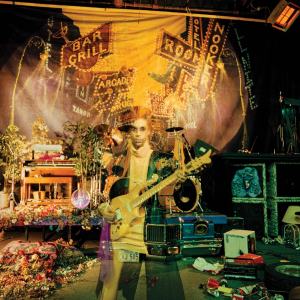
Prince: Sign “O” The Times Revisited

It’s possible that ‘Sign “O” The Times’ (the single) had the same effect on one generation of music lovers as ‘Waterloo Sunset’, ‘Arnold Layne’, ‘Purple Haze’ or ‘Penny Lane/Strawberry Fields’ (all released between March and May 1967) did on another.

Released on 13 March 1987, it’s hard to think of another top 10 single of the 1980s with as much as space in it (and uncharacteristically deep reverb on Prince’s vocals, presumably utilising the famous Sunset Sound echo chamber). Apart from his guitar and voice, it was all performed on a Fairlight synth/sampler.

Adorned with a back cover featuring Cat Glover, the single drew lyrical inspiration from various news items read in The LA Times during the week of Monday 14 July 1986: Reagan’s ‘Star Wars’ program, the AIDS crisis, the investigation into January’s space shuttle disaster and the inner-city drug wars.

Lisa Coleman reports that she heard Prince’s amazing programmed drum groove blasting out of the venue speakers during a soundcheck in Denver in early July 1986.

Famously barred from releasing a three-album set by Warner Bros. – a process outlined in detail in Duane Tudahl’s wonderful recent book – Prince regrouped, quickly creating new material and then making the title track his new double album’s centrepiece.

Sign became the sound of summer 1987 in my corner of west London. Prince had been on my radar before – Parade was a definite sleeper – but this was it. And yet it still seems one of those ‘classic’ albums that gets talked about more than listened to.

So I listened to it. In one sitting. Probably for the first time in about five years. It’s probably even better than I remembered it. Has anyone ever captured a ‘party in the studio’ vibe better than Prince on ‘Housequake’ and ‘Play In The Sunshine’? And usually he only had Susannah Melvoin and engineer Susan Rogers for company. Of course this was in a sense a throwback to classic Little Richard and Chuck Berry, as well as James Brown tracks such as ‘Get Up Offa That Thing’.

He begins each side with groundbreaking tracks for him that took a while to record. We’ve discussed ‘Sign’. Then there was ‘It’, actually his first song exclusively using the Fairlight (apart from his guitar and vocals). Then ‘U Got The Look’, which was drastically sped up at the eleventh hour, ratcheted up a few semitones. Then ‘The Cross’, written and recorded the day after the infamous Los Angeles earthquake of 12 July 1986. Prince’s drums on this track speed up a lot – Rogers reportedly noticed but decided not to point it out.

Rogers also reports that she occasionally badgered Prince about the seemingly ‘lo-fi’ nature of these recordings, but he didn’t budge, and the album benefits from that ‘unfinished’ quality, even if it features a lot less bass than most modern music.

Sign features probably Prince’s greatest music, but we could all debate which tracks could have been left off. I could do without ‘It’, ‘Forever In My Life’, ‘Slow Love’, ‘The Cross’, ‘Adore’ (and would have preferred ‘Power Fantastic’, ‘Dream Factory’, ‘Crucial’, ‘Sexual Suicide’ and ‘Good Love’, but Prince had long jettisoned them by early 1987…).

Also why does the superb album design get short shrift? It’s a key part of the package. Hail photographer Jeff Katz and graphic designer Laura (niece of Tommy) LiPuma.

ZZ Top: Eliminator @ 40

So here we are. ZZ Top’s breakthrough album, 20 million sales and counting. Not bad for a lil’ ole blues’n’boogie trio from Texas.

But Eliminator, released 40 years ago this week, also carries some controversy around with it. As they say: where there’s a hit, there’s a writ.

Along with Sgt. Pepper’s, Roxy’s Flesh & Blood and a few others, it was one of the first albums your correspondent remembers enjoying all the way through. And, if you were a burgeoning drummer, ‘Gimme All Your Lovin’’ was the one all your schoolmates wanted you to play.

It’s a lesser known bit of 1980s muso gossip that ZZ guitarist/chief vocalist Billy Gibbons was one of the first major figures to get hold of a Fairlight synth/sampler. He experimented with it on the band’s 1981 album El Loco, but that was a stiff, selling half as many copies as 1979’s Deguello.

It was time for a rethink. First port of call – the beats. It wasn’t easy to dance to ZZ. Gibbons asked chief engineer Terry Manning to research new grooves, so he hit the discos. Inspired by OMD, Devo, Human League, Depeche Mode et al, Manning bought an Oberheim DMX drum machine and the band started working up new material in their Memphis bolthole.

Moving to drummer Frank Beard’s home studio in Houston, a chap called Lindon Hudson helped a lot with the new technology and songwriting (uncredited on Eliminator, he later won substantial damages after a lawsuit). He also claimed 124 beats-per-minute was the sweetspot.

A move to Memphis’s Ardent Studios saw Gibbons hit the city’s after-hours joints. ‘TV Dinners’ was apparently inspired when a woman entered a club wearing a white jumpsuit with those words emblazoned on the back. He also claimed that ‘I Got The Six’ was inspired by a visit to peak-punk London in 1977.

All in all, Eliminator took about a year to make. It still has many pleasures, Gibbons’ blues soloing and frequent surreal vocal interjections/lyrics chief amongst them. Gibbons and Dusty Hill also play in some strange, unguitar-friendly keys, possibly because some of the material was written on keyboards. Try playing along.

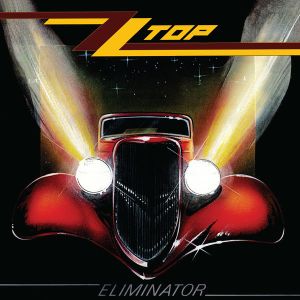
Gibbons’ 1933 Ford coupe on the cover was a tax write-off and helped to make Tim Newman’s vids for ‘Legs’, ‘Sharp Dressed Man’ and ‘Gimme’ bona fide 1980s classics. The band’s nine-month world tour kicked off in May 1983, aided by Manning’s beefy sound mix courtesy of the album’s four-track masters.

It’s fair to say that Eliminator massively influenced Prince, the Stones, Van Halen and Def Leppard, and arguably changed the way rock artists used technology forever.

Happy 40th birthday to a 1980s classic. But hey, don’t forget to credit Manning and Hudson…

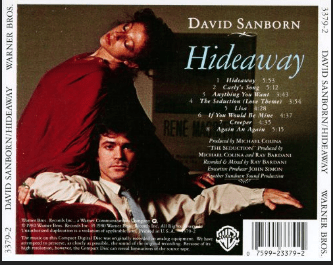
David Sanborn: Hideaway

It’s no coincidence that alto saxist/composer David Sanborn’s purple patch (1980-1982) came about just when genres (yacht rock, soul, funk, jazz, R’n’B) were breaking down to create one of the most egalitarian musical eras.

Hideaway, his fifth studio album, was the breakthrough, and I love it. Released in February 1980, it made #2 on the Jazz chart, hung around in the Urban Contemporary charts for over a year and was nominated for a Best R&B Instrumental Performance Grammy.

For some, Sanborn’s solo material will always be ‘smooth jazz’, but I’d point to four aspects of his music that elevate it above similar material, particularly on Hideaway – his tone and his note choices, both born of the ‘50s and ‘60s St. Louis jazz and R’n’B scenes; his writing; and also the playing of top-notch guests. On Hideaway, the stars are drummer Steve Gadd (Gadd fans, this is the album for you), bassist Neil Jason and keyboard player Don Grolnick.

The title track remains a classic. Sanborn lays down rich Fender Rhodes soul chords while Gadd constructs a perfectly judged post-disco drum part heavily involving cross-stick and floor tom, laying just behind the beat, with an unexpected, explosive fill just before the fade. Jason is given free rein and comes up with an outrageous bass performance.

Hideaway also benefits from Steely/Doobies man Michael McDonald co-writing two tracks. Sanborn doesn’t have anything much catchier than ‘Anything You Want’ and ‘Again An Again’ in his repertoire. ‘Carly’s Song’ and ‘Lisa’ are memorable ballads with beguiling harmony, while Gadd provides another brilliant commentary on ‘If You Would Be Mine’.

Rick Marotta appears to expertly marshal ‘Creeper’ through its slow half-time groove – guitarist and frequent Sanborn collaborator Hiram Bullock was so taken with it he later wrote a sequel called ‘Son Of Creeper’.

Hideaway’s packaging helps too – its minimalist cover is a winner, as is the photo featuring Dave reclining in his apartment with a Magritte over his left shoulder and paramour draped over his right. Warner Bros. were just realising he wasn’t the worst looking guy in the world.

The only downside: in a classic bit of Warners penny-pinching, they add the very dull (and certifiably smooth-jazz) ‘The Seduction’ from the ‘American Gigolo’ soundtrack to the streaming and CD versions but in the process edit down ‘Anything You Want’ and the title track to ‘single’ length. Best try to find Hideaway on vinyl.

Linda Ronstadt: Canciones De Mi Padre

Great singing voices: you need ‘em, I need ‘em, the world needs ‘em.

Put me down for Mike Patton, Sarah Vaughan, Frank Sinatra, Marvin Gaye, Nat ‘King’ Cole, Chaka Khan, Lewis Taylor, Donny and Lalah Hathaway, Leon Thomas, Al Green, Phyllis Hyman, Johnny Gill, etc. etc.

And Linda Ronstadt too. I was a big teenage fan of her live cameo in cult movie ‘FM’ (though possibly for reasons other than musical), loved her guest spot with Randy Newman at this October 1984 TV special and her work with Neil Young on Freedom, but it was only when I heard her 1987 album Canciones de mi Padre that it all came together.

It’s a collection of traditional Spanish-language songs that she heard as a kid growing up in Tucson, Arizona, only 45 minutes from the Mexican border (her father was of German, English and Mexican ancestry).

Produced by long-time manager/producer Peter Asher and with arrangements by Ruben Fuentes, it’s a gorgeous selection, with Ronstadt’s majestic voice rising above trumpets, violins, acoustic guitar, string bass and mariarchi vocals.

The album was a deeply personal project, as she told MOJO magazine in December 2018:

‘I knew those songs all my life and I wanted to sing them. I didn’t know the lyrics to most of them but my dad did – he was a big part of my research – and although I knew roughly what they were about, I had to learn what the Spanish meant. I had to really, really work to get it up to speed.’

Canciones de mi Padre was a huge success, winning a Grammy for Best Mexican/American Performance, and sold approximately two million copies in the USA (and ten million copies worldwide), making it the biggest-selling non-English-language album in Billboard history.

That’s pretty good for a beautiful album that Linda considers herself lucky to have been allowed to make at all, claiming she was only given a green light by Warners after her Nelson Riddle-composed/arranged For Sentimental Reasons was unexpectedly a big hit. She subsequently toured Canciones across the States in theatres, revue-style, and also recorded two further Spanish-language albums.

Ronstadt sadly retired from public performance in 2009 after a Parkinson’s Disease diagnosis. The recent, moving documentary ‘Sound Of My Voice’ explores her ’70 and ‘80s music, including the great collaborations with Dolly Parton and Emmylou Harris, and focuses on the Spanish-language albums too.

Prince: Dirty Mind/Controversy

Picture the scene: It’s August 1980 at Warner Bros Records’ Los Angeles HQ. Prince’s manager Steve Fargnoli is playing the suits his charge’s new demos.

Both the artist and his manager want to release these rough recordings as the next album.

Fargnoli hits the play button, and these lyrics crawl out over a peppy – but distinctly lo-fi – new-wave groove:

I was only sixteen but I guess that’s no excuse
My sister was thirty-two, lovely and loose
She don’t wear no underwear
She says it only gets in her hair…

Major labels often – quite rightly – take a lot of flak, but Warner Bros deserves credit for taking on Dirty Mind (released 8 October 1980) and Controversy (released 14 October 1981).

It was a brave move by Prince too, an incredible volte face after it looked like he might be going down a big-budget, soft-rock/disco rabbit hole. Just compare the Prince and Dirty Mind covers: it was definitely one in the eye for Reagan’s new, ultra-conservative regime.

I first heard these albums circa 1988 via a compilation tape made by my schoolfriend Seb. I already knew and loved Parade and Sign O’ The Times but these older songs sounded like they’d been sent down from a different planet. I didn’t pay much attention to lyrics in those days but sensed something very odd going on.

In the Dirty Mind/Controversy era, Prince’s main modus operandi seems to be: shock at all costs. It’s a novel approach, because if he can express himself completely freely, and then deliver such a classic, ‘throwaway’ rock song like ‘When You Were Mine’, you never know what’s going to come next. Cue a long, great career.

Recorded very quickly during summer 1980 at his rather ramshackle home studio in Lake Minnetonka, Minneapolis (the drum kit apparently sat in a puddle of water surrounded by sand bags), Dirty Mind has more in common with the B-52s, Elvis Costello, Blondie and The Cars than it does Earth, Wind & Fire or REO Speedwagon.

It’s nasty, brutish and short. And of course what struck me listening to it again after five or six years, it’s remarkably stripped down compared to a great deal of modern music – hardly surprising when nearly all the noises are made by Prince. Only ‘Head’, ‘Partyup’ and ‘Uptown’ outstay their welcome, underwhelming grooves with slight vocal performances (though the former became a great live track).

My old vinyl version of Controversy sounds absolutely great. Of course it helps that the album’s only 37 minutes long, and also there’s a lot more bottom-end this time. On a decent turntable, various details emerge like the scuzzy synth bass escaping from the left channel during the Lord’s Prayer on the title track (can you guess it’s a Prince album yet?) and some low-octave backing vocals throughout.

It’s also a totally schizophrenic album again, with the title track and ‘Sexuality’ laying down a kind of free-love/free-speech manifesto, two rockabilly tunes (one a message to Reagan), a graphic seduction ballad and synthetic funk tune (‘Private Joy’) which marks Prince’s first use of the Linn LM-1 drum machine.

Weirdly, none of these songs made the PMRC’s Filthy 15 list. But they still sound totally fresh, especially the unclassifiable stuff like ‘Dirty Mind’, ‘Annie Christian’, ‘Jack U Off’, ‘Sexuality’ and ‘Ronnie Talk To Russia’.

Prince toured Dirty Mind and Controversy extensively, and there were three particularly infamous gigs during the period: his London debut at The Lyceum on 2 June 1981 and the two shows supporting The Rolling Stones at the Los Angeles Memorial Coliseum on 9 and 11 October 1981.