Mark Stewart (1960-2023)

‘I think a paranoid is someone who’s in possession of all the facts.’ Mark Stewart, 1996

In another terrible year for musician deaths, one of 2023’s most surprising and least welcome was the passing of post-punk pioneer Mark Stewart in April, of undisclosed causes.

Indeed it is almost uncanny, considering how full of life he seemed onstage last year during On-U Sound Records’ 40th anniversary rave-up at London’s Forum. And the fact that 2022 also saw one of his best ever collaborations, with KK Null.

His music and friendship helped pave the way for his Bristol mates Tricky, Gary Clail and Massive Attack, and his influence is detectable in such acts as Sleaford Mods and LCD Soundsystem.

I saw Mark live five or six times. His presentation was sometimes hilarious, sometimes disturbing, always thrilling. He would shamble onstage, often with a shopping bag of beers in tow, before exploding into action, a man with a lot on his mind. The fact that he was often playing with one of the slickest/funkiest American rhythm sections in history (Skip McDonald/Doug Wimbish/Keith LeBlanc) was a brilliant dichotomy.

He was interested in everything from the Dead Sea Scrolls to CIA Mind Control to the Gemstone Files and Operation Gladio. His thing was information – who controls it and how/why they conceal it.

The teenage, beanpole, 6’6” Mark – resplendent in zoot suit and brothel creepers – was a regular sight at clubs and gigs in mid-1970s Bristol as part of the Funk Army. After his first band The Pop Group split up, he pursued mad mash-ups of sound, sometimes using Walkmans to create his collages, plundering scary ‘50s sci-fi voices and even TV ads.

He gave good album title: Learning To Cope With Cowardice. As The Veneer Of Democracy Starts To Fade. He was never interested in slick, ‘funky’ beats – even his ‘band’ album, 1990’s Metatron, with Wimbish, McDonald and LeBlanc, is distinctly uneasy listening.

By 1996’s Control Data, the music world had finally caught up with him, the album’s mix of techno, dub and house more commercial than usual. But the extraordinary ‘Simulacra’, ‘Red Zone’ and ‘Digital Justice’ to this day sound unlike anything else. This trend continued through his occasional records of the noughties, particularly the excellent Edit (2009).

His vocals were generally low in the mix. You had to strain to hear his lyrics. Why? He claimed it was the influence of dub and funk. ‘So it’s not like making a f**king speech’, he told Simon Reynolds. But his words were often brilliant, as funny and peculiar as Mark E Smith or Morrissey. Check out ‘The Lunatics Have Taken Over The Asylum’, ‘Low Life, High Places’ or The Pop Group’s ‘Citizen Zombie’ (You’ve got that brainwashed look of an alien abductee/Maybe your mind has been wiped clean’).

Mark also made a lot of impact writing for other acts – Tackhead, Gary Clail, Living Colour (‘Sacred Ground’), Audio Active (‘Happy Shopper’). But I’ll always remember him passing the time of day with my brother in the audience immediately after the Forum gig last April. He always said his fans were just as interesting as the musicians onstage – another legacy of punk.

Farewell to a brilliant one-off.

Then Jerico: Now That’s What I Call…Not Bad

Of course it was just teenage aggro/jealousy, but my schoolmates and I were always a bit suspicious of those late-‘80s pop acts who were much fancied by our female friends: Morten Harket, Richard Marx, Jason Donovan, the Goss brothers, Marti Pellow, Nathan out of Brother Beyond, those blokes from Big Fun.

But Mark Shaw of Then Jerico was probably their favourite, instantly putting his band’s music into the dumper, even though we probably all had a soft spot for their 1987 hit ‘The Motive’.

Listening back now on a good system, it’s a superb-sounding single – impactful, clean and shiny, with great instrument separation. It typified late-1980s British pop/rock helmed by excellent producers who had learnt their trade in the golden age of commercial recording studios, people like Tim Palmer, Rhett Davies, Peter Henderson, Andy Richards, Jon Kelly, Rick Nowels, Mike Shipley, Bruce Lampcov, Peter Collins, Julian Mendelsohn, Gary Langan et al.

Of course Trevor Horn was an overarching influence, representing the gold standard. It Bites’ Francis Dunnery mocked ‘Big Area’ (see below) producer Langan (collaborator with Horn on Yes’s 90215, Malcolm McLaren’s Duck Rock and FGTH) in a 2021 interview for PROG magazine: ‘Everyone who had ever walked past Horn was given a record to produce. I think Trevor’s milkman produced Then Jerico and had a hit!’

Yes, there was a fair amount of turd-polishing but these producers inspired the late-1980s rock comeback, generating hits for Breathe, Fuzzbox, Cutting Crew, Paul Young, Love & Money, Deacon Blue, Killing Joke, All About Eve, The Mission.

And Then Jerico. Maybe they were actually pretty good. Their best songs – ‘Sugar Box’, ‘The Motive’, ‘Big Area’ – marry a sort of U2/Simple Minds/Tears For Fears ‘thing’ with Shaw’s tremulous vocals to strirring effect, something akin to the sound of falling in love. When any of them come onto ‘Forgotten 80s’, it’s impossible to turn off. Though one is still slightly reticent about checking out a whole album in one sitting.

And guess what – Shaw has reformed the band, and they’re touring extensively this year. And he has rather a juicy/chequered recent past to tell of too.


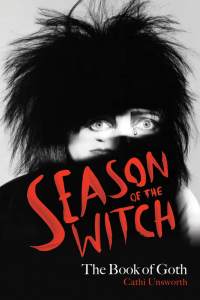
Book Review: Season Of The Witch (The Book Of Goth) by Cathi Unsworth

Goth is back. Siouxsie Sioux is reforming The Banshees and appearing on the cover of MOJO. An old-school Tim Burton TV series is imminent.

The tabloid image of the 1980s is one of glamour, fun and money, but Goth was just as much of a phenomenon during the decade, the dark underbelly of late-20th century pop culture, music and fashion.

And now novelist and esteemed music journalist Cathi Unsworth has put together a fulsome tribute, following Goth from its roots in the novels of Charlotte Bronte and Bram Stoker to the bands and artists who created a hugely popular music genre in its own right.

A labour of love, ‘Season Of The Witch’ features vivid depictions of growing up in late-1970s arable Norfolk with Sid and Nancy, hunger strikes, Thatcher’s rise (Unsworth is convinced she’s the antichrist!), National Front/anti-Nazi marches and the Yorkshire Ripper on the telly, and local ghost stories providing the village gossip.

It’s hardly surprising that she, along with legions of other young people, looked to the dark side and specifically those harbingers of doom, Dennis Wheatley, Nico, Juliette Greco, Jim Morrison, Alesteir Crowley, The Stooges, Black Sabbath, Robert Smith, Siouxsie, Howard Devoto, Nick Cave and the three Ians of Goth: Curtis, McCulloch and Astbury.

What emerges is essentially a timeline of Goth, with particular emphasis on the key music acts and outliers. Unsworth posits some remarkable theories – for example, aligning Killing Joke’s debut album with disenfranchised London Black youth of the early 1980s – but somehow pulls them off, and there’s also a great section on Psychobilly’s birth in a sweaty Victorian pub in Hammersmith.

The musical analysis is sound (though arguably a book like Simon Reynolds’ ‘Rip It Up’ covered similar territory and with a lot more brevity/impact) and there are the occasional revelatory factoids about a recording session or songwriting inspiration.

But ‘Season Of The Witch’ is at its best when filtering the music through the prism of current affairs, whether the miners strike, Falklands War, Brighton Tory Conference bombing or Rupert Murdoch’s rise and rise. Prescient and enjoyable as it is, I wanted much more personal stuff – there was the opportunity for this to be the Goth version of Sylvia Patterson’s ‘I’m Not With The Band’.

The enjoyable, pithy ‘Season Of The Witch’ ends with key depictions of Goths in literature and movies – a glaring omission from the latter is Katrin Cartlidge’s remarkable performance as Sophie in Mike Leigh’s 1993 film ‘Naked’, surely the ultimate Goth of British cinema.

Unsworth talks about the book in this recent WORD podcast.

XTC: Mummer 40 Years On

There can’t be many more pleasurable summer activities than reclining in an English garden.

But XTC’s chief songwriter/vocalist Andy Partridge cut somewhat of a sad figure during May and June 1982 as he sat hunched over his acoustic guitar, working on new compositions, detoxing from Valium addiction and contemplating the end of his concert career.

Still, those songs were some of his best ever. But they appeared on an extremely inconsistent album called Mummer, named for the silent actors (keeping ‘mum’) who travelled around 18th century Britain and Ireland, released 40 years ago this week and very nearly titled Fruits Fallen From God’s Garden.

Japan (Tin Drum) producer Steve Nye was summoned for the project, recorded at Martin Rushent’s Genetic Studios and The Manor – a strange choice. He is good with the close-mic’d, dry-sounding, beautifully recorded acoustic-based tracks but not the heavier ones which were later remixed by Phil Thornalley, while the legendary Alex Sadkin redid ‘Wonderland’.

But Nye had his work cut out – the album is schizophrenic to say the least. The best songs sound like a decent band playing pretty much live in the studio – ‘Love On A Farmboy’s Wages’ (has there been a better English pop song about poverty?), ‘Great Fire’, ‘Ladybird’ (Andy discusses his jazzier influences in this great video), ‘Me And The Wind’. All wonderful. Dave Gregory is coming into his own with superb contributions on guitar and keyboards.

But the worst songs are rhythmically plodding – it’s understandable that Andy was trying to get away from 4/4 rock drums but ended up with too many cyclical grooves (putting pay to Terry Chambers’ tenure on the kit) – and melodically extremely challenging. Colin Moulding is not in great writing form either, ‘Wonderland’ excepted, though that too might have benefitted from a simpler treatment.

Mummer was initially rejected by Virgin A&R agent Jeremy Lascelles, who demanded another single. The excellent ‘Great Fire’ was Andy’s last-minute response, produced by Haircut 100 helmer Bob Sargeant, but it disappeared without trace – Radio 1 reportedly played it only once!

Along with The Big Express, Mummer was XTC’s worst selling album, reaching a barely believable #51 in the UK album charts and doing little business elsewhere, just over a year after ‘Senses Working Overtime’. It has to be said it was also not served well by its awful cover. But it features plenty of great music.

Further reading: ‘XTC Song Stories’ by Neville Farmer