Aces Of 1980s Brit Bass (Part 2)

Kev Hopper

Some years ago, we showcased some of the British bass players who, mainly influenced by Bernard Edwards, Jaco Pastorius, Louis Johnson and Stanley Clarke, brought some of the freshest grooves to 1980s pop music.

It seemed that every half-decent post-punk, New Pop, New Romantic or Britfunk band had a good bassist, and the dancefloor was the main target.

But there was some great Brit bass players investigating other corners of music during the 1980s too – here are a few of them.

Martin McAloon
The Prefab Sprout man brought a meaty tone (often tuning down a half-step to accompany his brother Paddy’s guitar) and great hook-up with drummer Neil Conti. Deceptively simple bass parts which were little compositions in themselves. Key tracks: ‘Hey Manhattan!’, ‘When The Angels’, ‘When Love Breaks Down’, ‘Horsin’ Around’

Ged Grimes
The Danny Wilson man is the very definition of bass solidity, supplying endless well-composed parts especially in combination with drummer David Palmer (Grimes now plays with Simple Minds). Key tracks: ‘Mary’s Prayer’, ‘I Can’t Wait’, ‘I Was Wrong’, ‘Lorraine Parade’

Richard Nolan
The It Bites man had three distinct phases – there was the early poppy stuff, with a trebly WAL sound and light strings, the middle-period ‘rock’ sound, then the sophisticated six-string playing of the band’s late period. It was all good and others were listening – he was later recruited by Tony Banks and Ray Davies, with whom he works to this day. Key tracks: ‘Whole New World’, ‘Heartbreaker’, ‘Positively Animal’, ‘Midnight’, ‘Calling All The Heroes’

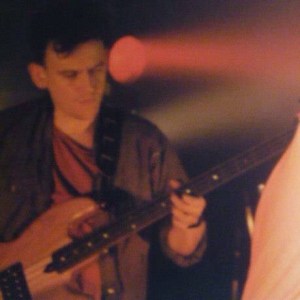
Steve Severin
The flanger/plectrum combo was invented for the Siouxsie & The Banshees man. Every track featured a good bassline or good idea. Key tracks: ‘Cascade’, ‘Monitor’, ‘Spellbound’.

Mo Foster
The London bass legend was a mainstay of the capital’s studios during the 1980s, playing with everyone from Cliff Richard to Scott Walker and contributing to many hits. He died in 2023. Key tracks: Jeff Beck’s ‘Space Boogie’, Dennis Waterman’s ‘I Could Be So Good For You’, Gary Moore’s ‘Empty Rooms’, Elkie Brooks’ ‘No More The Fool’, Howard Jones’ ‘No One Is To Blame’

Sting
In the early 1980s he came up with brilliant, memorable lines, often scrappily played, but returned for 1987’s …Nothing Like The Sun as a model of taste and groove. Key tracks: ‘Voices Inside My Head’, ‘Rehumanise Yourself’, ‘Secret Journey’, ‘Be Still My Beating Heart’, ‘Lazarus Heart’

Matthew Seligman
Cyprus-born Matthew played great bendy basslines with The Soft Boys, Thompson Twins and Thomas Dolby, and even ended up playing Live Aid with Bowie. He died in 2020. Key tracks: ‘Living In Europe’ by Thompson Twins, ‘Absolute Beginners’ by David Bowie, ‘Screen Kiss’ by Thomas Dolby, ‘Magic’s Wand’ by Whodini

John McKenzie
Son of actor Liz McKenzie (Mrs Brumby in ‘Get Carter’), the late London bassist played some fantastic stuff on the Morrissey Mullen album Life On The Wire, then worked extensively with Eurythmics. Pretenders, Five Star, Bob Dylan and Dexys Midnight Runners too. He died in 2020. Key tracks: ‘Wham Rap! (Enjoy What You Do)’

Alan Thomson
Another of the many great Scottish bassists of the decade, Glasgow-born Thomson excelled himself on the fretless during his valuable collaboration with John Martyn, and also played with Julia Fordham, Rick Wakeman, Robert Palmer and others. Key tracks: John Martyn’s ‘Blood Money’, ‘Couldn’t Love You More’, ‘Glorious Fool’, ‘Hiss On The Tape’, ‘John Wayne’, especially the BBC In Concert version…

Kev Hopper
Influenced by Brand X’s Percy Jones, Hopper only made a few full-length recordings with Stump during the decade but left his mark with fantastically bendy fretless sounds/effects and intrepid lines. Has gone on to make some enjoyably weird music to this day. Key tracks: ‘Tupperware Stripper’, ‘Our Fathers’, ‘Eager Bereaver’, ‘Buffalo’, and everything, really…

Camelle Hinds
Ipswich-born Hinds was a founder member of Britfunk band Central Line and often the go-to guy when you needed excellent slap bass in the 1980s. He played great stuff with Beggar & Co, The The, B.E.F., Style Council and Heaven 17. Key tracks: The Kane Gang’s ‘Looking For Gold’

Bobby Paterson
The late Glasgow-born Love And Money bassist added some of the funkiest grooves of the late 1980s on his Fender Precision and MusicMan. Key tracks: ‘Jocelyn Square’, ‘Strange Kind Of Love’, ‘Candybar Express’.

Ewen Vernal
His playing on the two Deacon Blue albums of the late 1980s featured excellent, nimble five-string playing with loads of memorable lines and he always made sure each note was given its full value. Key tracks: ‘Fergus Sings The Blues’, ‘Chocolate Girl’, ‘When Will You Make My Telephone Ring’.

Gary ‘Gazza’ Johnson
His tenure with China Crisis brought some memorable lines and grooves. He played fretless on their early hits and was an early adopter of the octave pedal for added depth/punch. Key tracks: ‘Working With Fire And Steel’, ‘The Highest High’, ‘Day After Day’, ‘Strength Of Character’, ‘Red Sails’, ‘King In A Catholic Style’

This playlist brings together some of their best work.
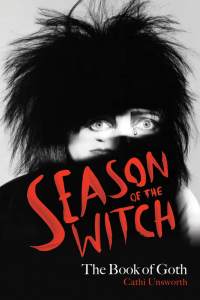
Book Review: Season Of The Witch (The Book Of Goth) by Cathi Unsworth

Goth is back. Siouxsie Sioux is reforming The Banshees and appearing on the cover of MOJO. An old-school Tim Burton TV series is imminent.

The tabloid image of the 1980s is one of glamour, fun and money, but Goth was just as much of a phenomenon during the decade, the dark underbelly of late-20th century pop culture, music and fashion.

And now novelist and esteemed music journalist Cathi Unsworth has put together a fulsome tribute, following Goth from its roots in the novels of Charlotte Bronte and Bram Stoker to the bands and artists who created a hugely popular music genre in its own right.

A labour of love, ‘Season Of The Witch’ features vivid depictions of growing up in late-1970s arable Norfolk with Sid and Nancy, hunger strikes, Thatcher’s rise (Unsworth is convinced she’s the antichrist!), National Front/anti-Nazi marches and the Yorkshire Ripper on the telly, and local ghost stories providing the village gossip.

It’s hardly surprising that she, along with legions of other young people, looked to the dark side and specifically those harbingers of doom, Dennis Wheatley, Nico, Juliette Greco, Jim Morrison, Alesteir Crowley, The Stooges, Black Sabbath, Robert Smith, Siouxsie, Howard Devoto, Nick Cave and the three Ians of Goth: Curtis, McCulloch and Astbury.

What emerges is essentially a timeline of Goth, with particular emphasis on the key music acts and outliers. Unsworth posits some remarkable theories – for example, aligning Killing Joke’s debut album with disenfranchised London Black youth of the early 1980s – but somehow pulls them off, and there’s also a great section on Psychobilly’s birth in a sweaty Victorian pub in Hammersmith.

The musical analysis is sound (though arguably a book like Simon Reynolds’ ‘Rip It Up’ covered similar territory and with a lot more brevity/impact) and there are the occasional revelatory factoids about a recording session or songwriting inspiration.

But ‘Season Of The Witch’ is at its best when filtering the music through the prism of current affairs, whether the miners strike, Falklands War, Brighton Tory Conference bombing or Rupert Murdoch’s rise and rise. Prescient and enjoyable as it is, I wanted much more personal stuff – there was the opportunity for this to be the Goth version of Sylvia Patterson’s ‘I’m Not With The Band’.

The enjoyable, pithy ‘Season Of The Witch’ ends with key depictions of Goths in literature and movies – a glaring omission from the latter is Katrin Cartlidge’s remarkable performance as Sophie in Mike Leigh’s 1993 film ‘Naked’, surely the ultimate Goth of British cinema.

Unsworth talks about the book in this recent WORD podcast.

Magick Moments: Siouxsie and the Banshees In The Early ’80s

Siouxsie_and_the_Banshees-3

Steve Severin, Siouxsie, Budgie

One of the nice things about immersing oneself in ’80s music is rediscovering stuff you’d once dismissed or were too young to really investigate.

I must have been vaguely aware of Siouxsie’s music at some point in the decade, but she didn’t really appear on my radar until I started to get interested in the Sex Pistols around the early ’90s (she was famously in the studio during the Pistols/Bill Grundy ‘swearfest’ and even had the misfortune of being ‘propositioned’ by the semi-sloshed presenter…).

Siouxsie in New York, 1980

Siouxsie in New York, 1980

In these days of twee, over-sharing singer-songwriters and soul-deadening ‘rock’ bands, what is immediately appealing about Siouxsie and the Banshees is their absolute earnestness, the total lack of irony. They mean it, maaaan.

These days, pop bands flirt with magickal images, shamanistic sounds and boundary-pushing lyrics, but the Banshees really were dark and truly an alternative (or reaction?) to shiny, aspirational Thatcherism. The song titles said it all: ‘Halloween’, ‘Nightshift’, ‘Voodoo Dolly’, ‘Arabian Knights’.

They also flew in the face of punk, totally rejecting the ‘DIY’ ethos. As bassist Steve Severin told Simon Reynolds in the excellent ‘Totally Wired: Post-Punk Interviews And Overviews’:

‘I never understood where that do-it-yourself ethic came from. It was so patently obvious that not everybody could do it. You had to have a modicum of talent and an original idea. But for one moment, the floodgates opened and everyone had their five minutes, put their single out, and then disappeared back to what they were destined to do in the first place.’

The Banshees began the decade with three classic albums of their kind: Kaleidoscope, Juju and A Kiss In The Dreamhouse (best album title ever?). It was no accident that they all featured one of the great British guitarists in John McGeoch, master of inventive chord voicings and creative layering.

The era spawned a raft of great singles: ‘Spellbound’, ‘Happy House’, ‘Christine’, ‘Slowdive’, ‘Fireworks’, ‘Israel’, ‘Dear Prudence’. Even as the post-punk era turned into fully-fledged Goth, they always retained a pop sensibility.

By 1982, though, it has to be said that they had also turned into a truly Bacchanalian outfit, with copious drug use, booze breakdowns and all kinds of weird rituals.

McGeoch was sacked after collapsing onstage in Madrid, apparently as a result of an alcohol-induced nervous breakdown. (He re-emerged with The Armoury Show before becoming a member of PiL between ’86 and ’92. He died in 2004.)

The Cure’s Robert Smith filled in on guitar when McGeoch left, as he had at various times between 1979 and 1983 (Polydor Records apparently tried and failed to ‘merge’ The Cure and The Banshees towards the end of this period).

He later said of his tenure in the Banshees: ‘It allowed me to go mad for a period of time. I had no responsibilities. I just had to turn up and play the guitar. Severin and I became good friends. Our friendship was based entirely on altered states. I’ve never felt as bad in all my life as when I was in the Banshees. I reached a point of total collapse in 1983.’

Siouxsie herself has revealed that she was on an LSD jag around ’82 and ’83, particularly inspiring the songs on Dreamhouse. Recently, she told MOJO magazine: ‘I seem to remember “Cocoon” being written whilst I was tripping. I was in a rented flat and if I didn’t have a notebook I used to write on the wallpaper.’

The band’s early ’80s period was also musically very influential. There were those effective, trademark tempo changes – usually a slowish intro that suddenly gathers momentum in the verse. As far as I know, no rock bassist had used a flanger pedal before Severin.

Budgie came up with some arresting tribal rhythms and all their guitarists pretty much wrote the post-punk rulebook. As Robert Smith once said, tongue firmly in cheek: ‘I just used to turn all the effects pedals on – your basic Banshees sound.’ And Siouxsie is always such a powerful vocal presence. You can hear her sound in everyone from the Cocteau Twins and Lush to PJ Harvey and Florence And The Machine.

So here we are. The Royal Albert Hall, 30th September 1983. Siouxsie in her Goth Princess pomp, Robert Smith (who, despite everything, is obviously an excellent guitarist), Steve Severin and Budgie. Wish I’d been there. Were you there (as Shaw Taylor used to say)?