Anthony Jackson (1952-2025)

Anthony during the recording session for Steve Khan’s ‘Eyewitness’ in 1981. Photo by David Tan

The brilliant Anthony Jackson, who has died aged 73, was a vital part of the early-1970s electric bass revolution, but arguably never got the same attention as contemporaries Stanley Clarke, Jaco Pastorius, Bootsy Collins, Louis Johnson and Alphonso Johnson (Chuck Rainey, Steve Swallow and Larry Graham are a bit older).

In a music world beset by fly-by-night chancers and one-trick ponies, he was a player of principle, something like the Allan Holdsworth of bass.

It was Anthony’s playing on Steve Khan’s ‘Guy Lafleur’ that first completely hooked movingtheriver – I remember thinking: who the hell is THAT?!

In two major ways, he changed the instrument as much as Jaco (though, in later years, pointedly called himself a ‘guitarist who plays a variation called the contrabass guitar’).

First there was his stretching of the instrument’s range below the standard low E (inspired by his love of Jimmy Smith’s Hammond organ playing) and above the standard top G, via his pioneering use of six-string basses, which he started playing exclusively in 1982 (Steve Khan thinks his superb ‘Casa Loco’ may have featured the debut of Anthony’s six-string).

Before that, Jackson had regularly detuned the low E string on his trusty Fender Precision, producing strikingly rich, deep timbres on work with Grover Washington Jr., Quincy Jones, Steely Dan, Chaka Khan and Earl Klugh, amongst hundreds of others (he prided himself on playing all kinds of music, working with everyone from Judy Collins and Peter, Paul & Mary to George Benson and Will Downing).

Then there was his use of effects, particularly the trademark flanger, often accompanied by the use of a pick, best heard on The O’Jays’ ‘For The Love Of Money’ and ‘Give The People What They Want’, and on his work with Al Di Meola. Oh, and then there’s a third factor – he ALWAYS sat down whilst playing, claiming that sitting down and wearing no strap was the way to go for bassists.

Jackson started playing music after seeing The Beatles on The Ed Sullivan Show in 1964, then became obsessed with other Brit invasion bands, Motown (via James Jamerson) and Jefferson Airplane’s Jack Casady, plus classical composers Olivier Messiaen and Paul Hindemith.

Regarding the latter two, their influence on Anthony’s playing is particularly noticeable on the live version of Khan’s ‘The Suitcase’, from 1994. Steve described this brilliant performance on his website.

One of Jackson’s first major gigs was in 1973, playing for a year in Buddy Rich’s sextet. He later called the drummer the only bona fide genius with which he had played. But then Anthony loved drummers. He enjoyed brilliant hook-ups with Steve Gadd, Buddy Williams, Steve Jordan, Harvey Mason, Simon Phillips, Steve Ferrone, Yogi Horton, Earl Young and many others.

But he lost work by refusing to ‘slap’ his bass during the disco era, and also very rarely solo’d unless he had something specific to say (to Steve Khan’s great annoyance!). Some of these concepts were laid down in his famously stern columns for Bass Player magazine.

But even Jackson wasn’t immune to some of the ‘proclivities’ of other great artists – for example, his performance was wiped from the title track of Steely Dan’s Gaucho! (Chuck Rainey’s pass got the nod instead.) But he played epochal stuff on ‘Glamour Profession’ and ‘My Rival’ from the same album, and excelled on Donald Fagen’s ‘IGY’ and ‘Ruby Baby’.

He was also fiercely loyal to artists he respected, enjoying long associations with Hiromi, Michel Camilo, Al Di Meola, Sadao Watanabe, Lee Ritenour, Grover Washington, Chick Corea, Khan and Michel Petrucciani.

In one of his rare interviews, he expressed a wish to play with Phil Collins, Ringo and Charlie Watts. Sadly it seems he didn’t achieve those ambitions. Farewell to a true pioneer and personal musical hero. Check out this playlist which brings together movingtheriver’s favourite Anthony performances.

Anthony Claiborne Jackson (23 June 1952 – 19 October 2025)

Protest Songs @ 40: Prefab Sprout’s Best Album?

Speedily recorded 40 years ago this autumn at Newcastle’s Lynx Studios, Protest Songs was intended to be the no-frills, lo-fi, rush-released, ‘answer’ album to Prefab’s Steve McQueen.

Fans who attended the Two Wheels Good UK tour of October and November 1985 were given leaflets advertising its release on 2 December for one week only.

But then ‘When Love Breaks Down’ reached #25 at the third attempt, earning the band spots on ‘Top Of The Pops’ and ‘Wogan’, and the album was shelved (though apparently a few hundred white labels ‘escaped’ from CBS and are out there somewhere…)

Protest Songs was eventually held back until June 1989, but proved well worth the wait and reached a respectable #18 on the UK chart. This writer would put it right up there with Steve, From Langley Park To Memphis and Jordan, maybe even above them…

The album was produced by the band and – apart from the last-minute addition ‘Life Of Surprises’ – mixed by Richard Digby Smith, once a staff engineer at Island Records who served his apprenticeship under the likes of Arif Mardin, Phil Spector, Muff Winwood and Chris Blackwell.

Protest also showed that Patrick Joseph McAloon was turning into a really decent keyboard player (he later claimed that every song on Langley Park was written on keyboards) and that – massively helped by drummer Neil Conti – Prefab were becoming a really good live band.

But most importantly Protest is a moving, razor-sharp suite of songs. Paddy was operating at the absolute top of his game, with some of the anger which had initially been so attractive to Thomas Dolby (also detectable in this recently discovered interview).

The only thing tongue-in-cheek about it is its title. These were not protests against nuclear power or war, but rather against deprivation and, just six months on from the miners’ strike, the general media condescension about provincial English life (particularly in the McAloon brothers’ native North East) under Thatcher.

‘Til The Cows Come Home’ may be the killer track. If you’re in the mood, it can be a real heartbreaker. The superb lyrics deftly change perspective mid-thought and allude to how unemployment affects generations:

Aren’t you a skinny kid?
Just like his poppa
Where’s he workin’?
He’s not workin’…

Why’re you laughin’?
You call that laughin’?
Wearing your death head grin
Even the fishes are thin…

He can’t have his coffee with cream

Meanwhile ‘Diana’ was revamped from the ‘When Love Breaks Down’ B-side (Deacon Blue definitely listened to THAT), slowed down and with a few new chords added. Conti expertly marshals proceedings with his tasty Richie Hayward-style half-time groove.

‘Dublin’ showcases Paddy’s lovely sense of chord movement, with a little influence from bossa nova (here’s Paddy playing a different studio take). ‘Life Of Surprises’ and ‘The World Awake’ are shiny, synth-laden, mid-period 4/4 Prefab but with stings in their tails:

Never say you’re bitter, Jack
Bitter makes the worst things come back

You don’t have to pretend you’re not cryin’
When it’s even in the way that you’re walkin’…

The hilarious ‘Horsechimes’ investigates school-day piss-taking, with a large dollop of Salingeresque satire. Meanwhile it’s hard to think of a more perfect marriage of words and melody than ‘Talking Scarlet’ (also drastically slowed down from the early demo), while ‘Pearly Gates’ closes out the album in moving style, like a dimly-remembered hymn from school days, a rare 1980s ‘death disc’.

The only partial misfire is the jaunty ‘Tiffany’s’, with its comically poor guitar solos, but its inclusion was totally understandable. Happy birthday to a classic.

Blitz: The Club That Shaped The 80s @ Design Museum, 27 September 2025

England, 1979: punk is out, sus laws and Thatcher are in. Nightclubs are closing down and youth violence and political unrest are on the rise (as are movements like Rock Against Racism).
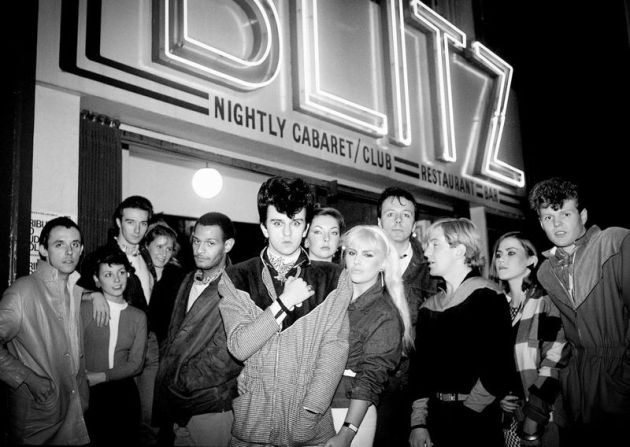
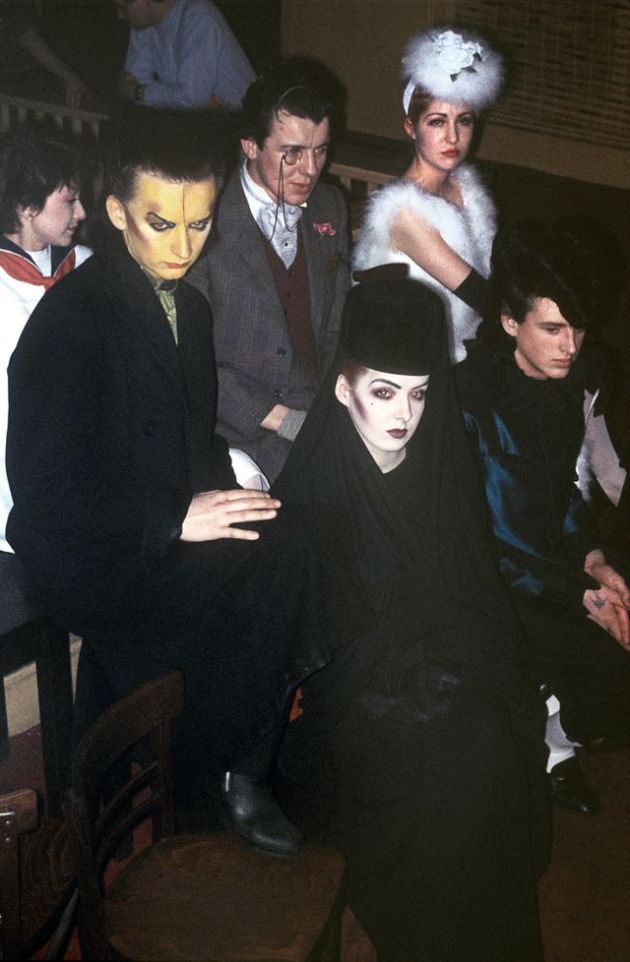
But, in a curious echo of punk five years before, something is stirring in the London suburbs. Young Roxy, Bowie and Kraftwerk fans from Bromley, Burnt Oak and Basildon are dressing up in style (Zoot and toy-soldier suits, cummerbunds, bolero hats, geometric haircuts) and flocking to clubs like Covent Garden’s famous Blitz, now the subject of an engaging exhibition running until 29 March 2026 at the Design Museum

It was the apex of a scene which encompassed fashion, graphic design, journalism, electronic dance music, squatting and a New Pop sensibility which would soon sweep the charts. In short, it’s arguably the best of the 1980s, and this fascinating exhibition neatly incorporates most of it.

Blitz Kids including Midge Ure, Steve Strange, Billy Currie and Rusty Egan

We see the original flyers and posters which wittily and stylishly trailed the Blitz club nights, and there are many items of vintage clothing. The rarely-seen photos are worth the price of admission alone, many contributed by original scenesters like Boy George, Siobahn Fahey, Robert Elms and Marilyn, including a priceless shot of David Bowie with Toni Basil (we also get the full story of Bowie’s recruitment of Strange et al for the ‘Ashes To Ashes’ video).

But the jewel in the exhibition’s crown is probably the recreation of the Blitz itself, with an AI Rusty Egan on the decks and Spandau Ballet performing ‘To Cut A Long Story Short’ on the ‘live stage’ (elsewhere Elms has donated his embarrassing handwritten poem which he used to announce their debut gig at the club).

Rusty Egan, Gary Kemp, Fiona Dealey and Robert Elms in the exhibition’s recreated Blitz. Photo by PA Media

The exhibition widens out to encompass other fascinating early 1980s artefacts, like the posters advertising Sade’s pre-fame Ronnie Scott’s gigs – well over a year before Diamond Life was released – and evidence of the media’s generally condescending attitude towards The Cult With No Name/New Romantics/Blitz Kids.

Then there are the textiles, hats and magazines galore (the exhibition dovetails slightly with the Portrait Gallery’s recent Face exhibition), and even the first all-electronic drum set, a Simmons SDS-V, as used by Kajagoogoo, Flock Of Seagulls, Ultravox etc.

This is an engaging, fun exhibition curated by people who were there and/or obviously care about this stuff. And there’s just enough social/political context for it to be educational too – it was good to see so many youngsters enjoying it with their parents. Highly recommended.

The Blitz in 1980, with Boy George (left)