The Cult Movie Club: Lenny Henry Live And Unleashed (1989)

In her book ‘Hooked’, legendary movie critic Pauline Kael said that the only fresh element in American films of the 1980s may have been what comedians (Robin Williams, Steve Martin, Bill Murray et al) brought to them.
Could we say the same about British films of the 1980s? Looking at ‘Supergrass’, ‘Eat The Rich’, ‘Morons From Outer Space’ and, er, Cannon & Ball’s ‘The Boys In Blue’, it would seem not. A shame, and strange in a way that the ‘Comic Strip’ generation couldn’t quite make the transition to the big screen.

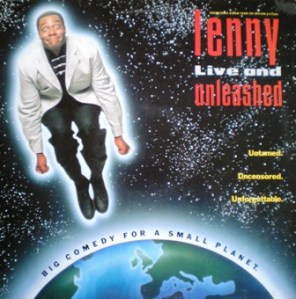
But Lenny Henry – best known as a British TV star in the 1980s – made a damn good fist at the stand-up concert movie with ‘Lenny: Live And Unleashed’, mostly shot at London’s Hackney Empire, taking on the Americans (Eddie Murphy’s ‘Raw’, Richard Pryor’s ‘Live On The Sunset Strip’ etc.) at their own game, complete with a posh credit sequence featuring brilliant impressions of Martin, Murphy and Pryor plus a not-very-funny skit with Robbie Coltrane as the most annoying taxi driver in the world (Why didn’t Lenny fit in another impression there? Couldn’t he have dusted off a De Niro?).

His flashes of surrealism evoke Alexei Sayle and Martin and also it’s clear that by 1989 Lenny had developed into a superb physical actor. He addresses political and racial topics head-on, beginning one skit with the simple statement: ‘We need to see more Black faces on British TV.’

There’s a great celebration of Black music (evidenced also in his appearance on the BBC’s Desert Island Discs just before this was filmed) with homages to Prince and Bobby McFerrin, a good bit on Michael Jackson’s ‘Bad’ tour, and the striking ‘Fred Dread’ section featuring Dennis Bovell’s natty dub soundtrack.

Other character favourites Delbert Wilkins, Deakus and the Teddy Pendergrass-lampooning Theophilus P Wildebeeste (you couldn’t do that sketch these days…) get a lot of stage time – superb portraits, with heart and soul. A new character, ageing blues singer Hound Dog Smith, gets a workout too, featuring an amusing guest spot from Jeff Beck (who also turned up in a few Comic Strip films around this time).

The box-office performance of ‘Lenny: Live And Unleashed’ is hard to uncover but does it have enough appeal to a non-British audience? Judge for yourself (and I must check out Henry’s next foray into the movie world, 1991’s ‘True Identity’, at some point…)…

McCoy Tyner/Freddie Hubbard Quartet: Live At Fabrik

These two giants of their instruments – Tyner on piano, Hubbard on trumpet/flugelhorn – crossed paths many times in the 1960s, particularly on three of the latter’s most famous Blue Note albums. (Tyner of course is probably best known for his work with the fabled John Coltrane Quartet.)

So it was only natural that they should co-headline a powerful touring quartet in the mid-1980s. And now we can hear it in all its glory courtesy of this 2-CD/streaming package, a complete radio broadcast from an 18 June 1986 gig in Hamburg, Germany.

And it’s a classic – full of cogent lines, attractive melodies, power and poise, here’s an album to play to people who say they hate jazz. And tell ‘em we sent you.

It may even be the most impactful live ‘jazz’ album this correspondent has heard since 1977’s epochal VSOP The Quintet (which also featured Hubbard, alongside Herbie Hancock, Tony Williams, Wayne Shorter and Ron Carter).

It’s a very ‘hot’ concert recording, with a lot of presence and ‘room’. You can hear everything, including members of the band frequently urging each other on. It helps that the crowd is so respectful – silent when the band take things down, loud when things get intense.

The quartet were apparently unaccountably late onto the stage that night, Hubbard apologising after the first tune – irritatingly not explained in the liner notes. But the tardiness might help explain the players’ agitated impatience which definitely serves the music. ‘Inner Glimpse’ features a remarkable Hubbard tour de force of rhythmic intensity and characteristically wide intervals. The audience, appropriately, go mad.

On Tyner’s majestic ‘Latino Suite’, Avery Sharpe treats his acoustic bass like an electric, slapping it, popping it and even playing power chords, Stanley Clarke-style. ‘Body And Soul’ kicks off with a striking, unaccompanied, two-minute Hubbard flugelhorn statement. Then, after what sounds like an edit, there’s a further eight-minute solo – it’s edge-of-the-seat stuff. He was really cutting loose from the mostly pretty staid studio albums made for Blue Note during this period. Drummer Louis Hayes accompanies with a lot of fire, channelling both Billy Cobham and Tony Williams but with an original soloing style.

Only one minor gripe: a few tracks are too long, an obvious/excusable liability when an entire gig is documented. But what a specimen. And what a shame that these two giants of the music are gone, and also that such intense live jazz albums are so few and far between.

Conspiracy Theories Of 1980s Music

Bob Carolgees and friend

‘Conspiracy theories’: you can’t move for ’em these days, and things aren’t much different here at movingtheriver.com.

The 1980s: a decade when uncredited ‘guest’ performances were many, Emulators and Fairlights ‘appropriated’ the sounds of acoustic instruments, producers demanded rip-offs of other musicians (a popular drummer joke* of the 1980s, with many variations: how many drummers does it take to change a lightbulb? Ten. One to change the bulb, nine to talk about how Steve Gadd would have done it…), hits came with writs and things were never quite what they seemed.

So it’s not surprising that conspiracy theories flourished during the 1980s. Here are some good ones. Bullsh*t or not? YOU decide. Maybe none are as famous as the ‘Paul Is Dead’ saga, but wtf…

8. Kirsty MacColl sings backup vocals on Dire Straits’ ‘Walk Of Life’
Uncredited of course, but these pre-chorus stacks, first heard at 1:19, sound very much like the much-missed vocalist.

7. Donna Summer performed all of Irene Cara’s vocals
Come on, they are interchangeable. Apologies to anyone in Cara’s family or Cara herself but she sounds freakily like Summer on ‘Fame’ and ‘Flashdance (What A Feeling)’.

6. George Michael wrote ‘Round And Round’ for Jaki Graham
In exchange for what? The classic single is just so in George’s ballpark, of course helped by Derek Bramble’s sparkly state-of-1985 production (he gets the songwriting credit too).

5. Adrian Edmondson of ‘The Young Ones’/The Comic Strip/’Bottom’ fame made the spoof 1984 jazz/funk classic ‘F*cking C*unt/Awkward Bastard’
Rumours abound that it’s Ade, or a few members of The Damned. No one is quite sure and no one has ever owned up, but it’s still brilliant.

4. The Dukes Of Stratosphear’s ‘Brainiac’s Daughter’ is actually a Paul McCartney joint
No one has done ‘Happy Macca’ circa 1968 as well as the Dukes, AKA XTC. But was this ACTUALLY a lost Beatles track?

3. John Bonham stuck around long enough to drum on Survivor’s 1982 hit ‘Eye Of The Tiger’
It’s just sounds so much like the Led Zep sticksman, who died in 1980. It’s the feel, and the sound of his kick and snare drums.

2. Level 42’s Mark King played bass on David Bowie’s ‘Tumble And Twirl’
Actually this one is probably ‘true’. He doesn’t get a credit on the album liners but King himself mentioned (in this podcast) doing a few sessions at the Townhouse Studios in Shepherds Bush around spring 1984 with producer/engineer Hugh Padgham so it’s quite probable. In any case it’s certainly right in his ‘Lopsy Lu’/’Heathrow’ comfort zone, and brilliant slap playing.

1. Bob Carolgees played the famous sax melody on George Michael’s ‘Careless Whisper’(That’s enough ‘conspiracy theories’, Ed…)

*Here’s a bonus drummer joke, because I’ve just read and loved it: What does a drummer use for contraception? His/her personality.

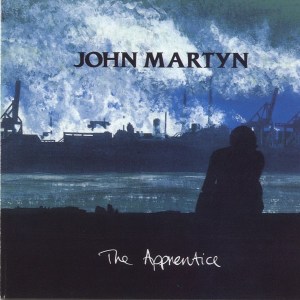
John Martyn: The Apprentice

Island Records undoubtedly did a lot of good for John Martyn but they also royally messed around with arguably his two best post-1970s albums.

First there was the delayed, eventually botched release of 1980’s Grace And Danger, then the complete rejection of The Apprentice when first delivered in 1988.

The album eventually saw the light of day on Permanent Records (owned by Martyn’s then-manager) in early 1990, after John finished it at his own expense at Glasgow’s Ca Va Studios. It immediately sold strongly and got a great review in Q magazine (alongside a memorable interview) amongst other rags.

But co-producer Brian Young reckons it could have done a lot better – the idea apparently had been to tout it around the major labels, but John’s manager decided to steer clear of the suits this time around. We’ll never know if that was wise (and sadly it’s currently on streaming platforms with completely the wrong artwork attached).

Most importantly, The Apprentice is full of memorable songs which easily offset the sometimes fairly flimsy production. He was expanding his harmonic horizons (and vocal range – this is probably his best singing on record) and there’s a strong Latin influence throughout, helped enormously by the return of Danny Cummings on all kinds of percussion.

‘Live On Love’, ‘Deny This Love’ and ‘Send Me One Line’ could have made cracking singles, the latter apparently penned for the movie ’84 Charing Cross Road’ but not used. ‘The Moment’ and ‘Patterns In The Rain’ suggest a hitherto unacknowledged influence from the Great American Songbook.

‘Look At That Girl’ is a gorgeous ballad for his daughter Mhairi, while the title track was a rare insight into Martyn’s political leanings, written from the point of view of a terminally-ill worker at the Sellafield nuclear plant. ‘Income Town’ may just be the standout, another attack on rampant capitalism featuring a meaty guitar solo.

In short, there was something for everyone. Long-term fans just had to accept that he wasn’t going to be playing the acoustic through an Echoplex anymore; but his collaboration with keyboard player Foss Patterson was hitting its peak, after promising beginnings on 1986’s Piece By Piece.

John sold out no less than eleven nights at London’s Shaw Theatre to promote The Apprentice, enlisting Dave Gilmour to guest on guitar (‘Which one’s Pink?’!), and then played at the Glasgow Big Day festival a few months later. 1990 turned out to be a pretty good year (reportedly followed by one of his worst, though I saw him live several times in 1991 and he was always superb) for Big John.

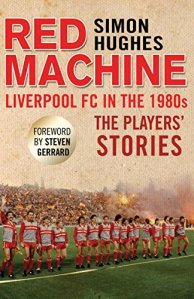
Book Review: Red Machine (Liverpool FC In The 1980s) by Simon Hughes

If Liverpool weren’t your favourite football team in the 1980s, they were probably your second or third team.

They set new standards with their ‘pass and move’ philosophy, brilliant goalscorers (Ian Rush, John Aldridge etc), probing wingers/midfielders and a famously tight defence (Alan Hansen, Mark Lawrenson et al).

But of course the team saw more than its fair share of tragedy during the decade too, the Heysel and Hillsborough stadium disasters looming large to this day.

Simon Hughes (namesake of the ex-cricketer/journalist) has interviewed many of the key players from that fabled 1980s Liverpool unit, plus notoriously strict coach Ronnie Moran, to create a candid, funny, sometimes touching account of the decade.

Aided by Hughes’s crisp, witty scene-setting, ‘Red Machine’ is chock-full of amusing anecdotes (frequently homesick Ian Rush’s nickname amongst the team was ‘E.T.’ – he was always phoning home…) and pithy observations.

It’s fair to say that many of these players have intriguing backstories. Bruce Grobbelaar (lest we forget, the most decorated goalkeeper in the history of English football) talks about fighting in the Rhodesian Bush War before his time at Liverpool, while John Barnes and Howard Gayle discuss their experiences of racism inside the game and outside it.

Craig Johnston’s life story would make a great movie, and many probably don’t know that he retired at the peak of his footballing career to care for his chronically-ill sister.

Heysel and Hillsborough are discussed in detail by all who were present, with player/manager Kenny Dalglish emerging as a hero. Margaret Thatcher’s regime and Liverpool’s social, economic and racial divisions are regular talking points.

Football-wise, Graeme Souness is frequently named as the team’s greatest player of the era (indeed many describe him as Europe’s best during the 1980s).

But ‘Red Machine’ also scores highly by offering the views of players who didn’t quite ‘make it’ – Michael Robinson, Gayle, Kevin Sheedy – and also exploring what it was like for a true southerner (Nigel Spackman) to establish himself on Merseyside.

I had also been looking for a decent history of English football in the 1980s – ‘Red Machine’ does that very nicely too. It’s highly recommended, and spawns memories of a great time to be a football fan, despite the obvious issues.

Story Of A Song: Ambrosia’s ‘Poor Rich Boy’ (1981)

Apart from Steely Dan reaction videos on YouTube, my other mini viewing obsession over the last year or so has been ‘Columbo’ repeats.

You expect amusing performances and ingenious plotting from the classic Peter Falk-fronted show; you don’t expect music tips.

But there it was – a great piece kicking off ‘Columbo Goes To College’, the first episode of the show’s tenth season, debuting on 9 December 1990.

A bit of detective work revealed that it was Ambrosia’s ‘Poor Rich Boy’, written for the Oscar-winning ‘Arthur’ soundtrack, the one headed up by Christopher Cross’s US #1 ‘Arthur’s Theme (Best That You Can Do)’. I’d never heard of the band but apparently they had some big hits at the tail end of the 1970s.

Co-written – like the rest of the soundtrack album – by Burt Bacharach (alongside band members David Pack and Joe Puerta) and produced by Val Garay (Kim Carnes’ ‘Bette Davis Eyes’), it taps into that great period at the dawn of the 1980s when yacht rock dovetailed with prog/AOR/new wave/whatever.

It’s mixed refreshingly dry, with barely any reverb, and features a treacherous arrangement that separates the men from the boys. It’s in 2/4 but has some very odd accents (especially in that deliciously long fade). Try playing along. Where’s ‘one’? There’s a nice use of the ‘flatted fifth’ in the verse and also a superb vocal by…who? Pack or Puerta?

The chorus lyric smartly lays out the film’s plot and concerns of Dudley Moore’s Arthur:

Life is more than time and money that’s easy to spend
When you know that she’s out there
Lookin’ for the girl whose eyes out-sparkle all of your gold
And a heart that’s bigger than Times Square

‘Poor Rich Boy’ was released as a single in 1981 but didn’t chart…

Tin Machine: The Final Gig 30 Years On

I wasn’t sure I was going to write about this but Bowie came to me in a dream a few days ago and said I must! I’m under orders…

30 years ago this month, on 17 February 1992, Tin Machine played their last ever gig at the NHK Hall in Tokyo. It was the final date of the ‘It’s My Life’ tour.

It had been a period of ups and downs – ups in late October 1991 when Bowie proposed to Iman Abdulmajid in Paris, downs due to the drug problems of one band member (with the initials HS).

Some people never ‘forgave’ Bowie for TM but for many others the band represented his ’80s rehabilitation. I was fascinated from the get-go and for my money it spawned a fair share of classic David (sometimes co-written with Reeves Gabrels) songs: ‘I Can’t Read’, ‘Under The God’, ‘Amazing’, ‘Baby Universal’, ‘You Belong In Rock’n’Roll’, ‘Amlapura’, ‘Shopping For Girls’, ‘Goodbye Mr Ed’.

And it’s doubtful we would have got that brilliant Buddha Of Suburbia/1. Outside/Earthling triptych without TM.

Bowie agreed: ‘Once I had done Tin Machine, nobody could see me any more which was the best thing that ever happened, because I was back using all the artistic pieces that I needed to survive and imbuing myself with the passion that I had in the late seventies.’

True to his word, the band lasted three albums, though Bowie hinted it may have gone on longer had drug problems not reared their ugly heads. But it’s still hard to get hold of the last two records (Tin Machine II, Oy Vey Baby).

Here’s the second, penultimate night at the NHK on 6 February 1992. The sound quality is superb, though the audio cuts out completely around 45 minutes in and doesn’t return.

Gabrels sounds great, Bowie (sporting a ‘Rock Against Racism’ T-shirt) does too and there are some nice bits of ‘amateurism’ including several fudged song openings (Bowie’s guitar tech has very kindly turned down the volume of his 12-string before the start of the gig!). Some of this material was used for the final album Oy Vey Baby.

The Movers & Shakers Of 1980s Music: Their Real Names Revealed

Captain Sensible, AKA…

During the punk era, musicians often chose stage names so that the dole office wouldn’t identify them from album covers or gigs.

One wonders how much of an issue that was for Gordon Sumner, Paul Hewson and David Evans, AKA Sting, Bono and The Edge, but you never know.

But as the 1980s wore on and the post-punk era became the hip-hop era, a whole new generation of rappers, DJs, producers and musicians felt the need to create pseudonyms.

But what did their mums call them? Here, for your dubious pleasure, are some of the most intriguing real names. It’s fair to assume that most probably don’t like being reminded of these, for various reasons. YOU go taunting Ice-T with his real name (Tracy Marrow). But, on the other hand, kudos to The Cure’s Robert Smith for not using a pseudonym…

Green Gartside (Scritti Politti frontman): Paul Julian Strohmeyer

Terminator X (Public Enemy DJ): Norman Rogers

Jet Black (Stranglers drummer): Brian Duffy

W. Axl Rose: William Bruce Rose Jr.

Divine: Glenn Milstead

Henry Rollins: Henry Garfield

MC Lyte: Lana Moorer

Kate Bush: Catherine Bush

Sun Ra: Herman Blount

Sade: Helen Folasade Adu

Adam Ant: Stuart Goddard

Ozzy Osbourne: John Michael Osbourne

Genesis P-Orridge (Throbbing Gristle/Psychic TV frontperson): Neil Megson

Cosey Fanni Tutti (Throbbing Gristle co-founder): Christine Newby

Jamaaladeen Tacuma (Ornette Coleman bassist): Rudy McDaniel

Howard Devoto (Magazine singer/solo artist): Howard Trafford

Wilko Johnson: John Wilkinson

Jah Wobble: John Wardle (named by a drunken Sid Vicious, whose real name is John Ritchie…)

Prairie Prince (Tubes/XTC drummer): Charles Lempriere Prince

Sydney Youngblood (‘If Only I Could’ singer): Sydney Ford

Yazz (‘The Only Way Is Up’): Yasmin Evans

Belouis Some (‘Imagination’ singer): Neville Keighley

Hollywood Beyond (‘What’s The Colour Of Money’ singer): Mark Rogers

Tommy Vance (legendary DJ): Richard Anthony Crispian Francis Prew Hope-Weston

Melle Mel: Melvin Glover

John Martyn: Iain McGeachy

Tom Verlaine (Television frontman): Thomas Miller

Johnnie Walker (DJ): Peter Dingley

Kim Wilde: Kim Smith

Midge Ure: James Ure

Elvis Costello: Declan MacManus

Adrian Belew: Robert Steven Belew

Princess (London soul singer of ‘Say I’m Your Number One’ fame): Desiree Heslop

Dweezil Zappa: Ian Donald Calvin Euclid Zappa (The LA hospital nurse wouldn’t let Gail and Frank name him ‘Dweezil’ so FZ named him after his early collaborators Ian Underwood, Captain Beefheart, Carl Schenkel and ‘Motorhead’ Sherwood. Dweezil’s name was legally changed when he was five years old.)

Mick Mars (Motley Crue guitarist): Robert Alan Deal

John Foxx: Dennis Leigh

Trugoy (De La Soul rapper): David Jolicoeur

Cheryl Baker (Bucks Fizz vocalist): Rita Crudgington

Grandmaster Flash: Joseph Saddler

Kidd Creole (Furious Five rapper): Nathaniel Glover

KRS-One: Lawrence Parker

Pauline Black (Selecter singer): Belinda Magnus

Siouxsie Sioux: Susan Ballion

Geddy Lee: Gershon Eliezer Weinrib

Sebastian Bach (Skid Row singer): Sebastian Bierk

Marilyn (‘Calling Your Name’ singer): Peter Robinson

Don Was (Was Not Was co-founder/superstar producer): Don Fagenson

Falco (‘Rock Me Amadeus’ one-hit wonder): Johann Holzel

Steve Severin (Siouxsie and the Banshees bassist): John Bailey

Budgie (Siouxsie drummer): Peter Clarke

Dave Vanian (Damned singer): David Lett

Lydia Lunch: Lydia Koch

Flavor Flav: William Drayton

LL Cool J: James Smith

Tone Loc: Anthony Smith

Bonnie Tyler: Gaynor Hopkins

Yngwie Malmsteen: Lars Lannerback

Young MC: Marvin Young

Ice Cube: O’Shea Jackson Sr.

Shakin’ Stevens: Michael Barratt

Donna Summer: LaDonna Gaines

Captain Sensible: Raymond Burns

Rat Scabies (Damned drummer): Christopher Millar

Vanilla Ice: Matthew Van Winkle

MC Hammer: Stanley Burrell

DJ Kool Herc (hip-hop pioneer): Clive Campbell

Duke Bootee (hip-hop pioneer): Edward Fletcher

Afrika Bambaataa: Lance Taylor

Nikki Sixx (Motley Crue bassist): Franklin Ferrana

Skip McDonald (On-U Records/Sugar Hill guitarist): Bernard Alexander

Billy Idol: William Broad

Bill Wyman: William Perks

Fish: Derek Dick

Fee Waybill (Tubes vocalist): John Waldo

Billy Ocean: Leslie Charles

Posdnuous (De La Soul rapper): Kelvin Mercer

Maseo (De La Soul rapper): Vincent Mason Jr.

Chris De Burgh: Christopher Davidson

Kool Moe Dee: Mohandas Dewese

Dee C Lee (Style Council vocalist/’See The Day’ solo artist): Diane Sealey

Steve Strange (Visage frontman/Blitz pioneer): Stephen John Harrington

Youth (Killing Joke bassist/superstar producer): Martin Glover

Geordie (Killing Joke guitarist): Kevin Walker

Doug E Fresh: Douglas Davis

Eddie Gomez: Mezgo/Power Play 35 Years On

Eddie Gomez’s excellent late-1980s albums Mezgo (later rereleased as Discovery) and Power Play were recorded for the Japanese arm of the Epic label.

Bassist/composer Gomez is probably best known for his stellar sideman work with pianists Bill Evans and Chick Corea, as well as being a co-founder of jazz/fusion supergroup Steps Ahead, but his solo work sometimes goes unheralded.

Perhaps most relevantly, both albums feature some of saxophonist Michael Brecker’s best-ever recorded work. And they are crucial items in drummer Steve Gadd’s discography too.

1986’s Mezgo is mainly a trio album, Gomez on bass and keys, Gadd on drums/percussion and Brecker on saxes and EWI. It’s a stunning potpourri of styles, starting with the Weather Report vibe of ‘Me Too’, calling in at the fast bebop number ‘Puccini’s Walk’ (poorly covered by Corea not once but twice!) with some superb Gadd, and ending with a very moving version of Henry Purcell’s ‘Cello Sonata In G Minor (1st Movement)’.

Power Play, released the following year, had more concessions to commercialism, with some romantic ballads featuring syrupy alto sax from Dick Oatts and a few Latin-style groovers featuring Jeremy Steig on flute.

But the title track was a stunner, featuring double drums from Gadd and Al Foster. There was also a superb duet with guitarist Jim Hall, ‘Amethyst’, and an excellent fast bop track ‘West 110 St.’ featuring Foster and Brecker.

Both of these albums are highly recommended, especially on physical formats.

1980s Albums That Always Appear In Charity/Secondhand Shops

So it’s official: old music is hugely outselling new music. And vinyl is the most popular physical format again.

Go into a record shop and likely you’ll be stunned at the price of secondhand vinyl, not to mention new catalogue LPs that can cost up to 25 quid for a posh reissue.

All of which might amuse/surprise music fans of my vintage who kept hold of their record players through the years and spent the noughties digging around the vinyl discount stores, often picking up ‘esteemed’ albums for anything between 10p and a quid (the price of a postage stamp, for readers outside the UK).

So what were those 1980s vinyls that were/are ALWAYS in secondhand shops and, by extension, still ever-present in charity shops? And why were they always there?

Most smack of the impulse buy by people who get one album a year, or the ‘difficult’ follow-ups to a smash. Some are tainted by an almost ineffable naffness. Most were deemed surplus on vinyl once CD became the format of choice, and most are weirdly genre-less.

Stacked high/sold cheap, you’d think they’d be reissue-proof, never to be seen again. But not so fast: ‘deluxe’ editions of these are probably on their way to a shop/streaming service near you, or have already arrived…

The Beautiful South: Welcome To The Beautiful South

U2: Rattle And Hum

Del Amitri: Waking Hours

Bros: Push

Hothouse Flowers: People

Michael McDonald: Sweet Freedom (The Best Of Michael McDonald)

T’Pau: Bridge Of Spies

Foreigner: Agent Provocateur

Michael Bolton: Soul Provider

Meat Loaf: Dead Ringer

John Cougar Mellencamp: The Lonesome Jubilee

Enya: Watermark

Five Star: Silk And Steel

Arcadia: So Red The Rose

Sade: Diamond Life

Chris Rea: The Road To Hell

Phil Collins: No Jacket Required

Bryan Ferry: Boys And Girls

Genesis: Invisible Touch

George Michael: Faith

Tracy Chapman: Tracy Chapman

Fleetwood Mac: Tango In The Night

Wet Wet Wet: Popped In, Souled Out

Fairground Attraction: The First Of A Million Kisses

Paul Young: No Parlez

Tom Petty: Full Moon Fever

Michael Jackson: Bad

Tina Turner: Private Dancer

Lionel Richie: Can’t Slow Down

Alison Moyet: Alf

Patti Labelle: Winner In You

Howard Jones: Human’s Lib

Simply Red: A New Flame

Whitney Houston: Whitney

Paula Abdul: Forever Your Girl

Bon Jovi: Slippery When Wet

Madonna: True Blue

Tears For Fears: Songs From The Big Chair