Peter Gabriel: i/o

Despite his reputation as a sonic groundbreaker and technological wiz, Peter Gabriel arguably hasn’t done anything much good on record since 1992, even as his live shows gain popularity.

1986’s So was of course the huge pop breakthrough, and that album has been the template for his subsequent, rather predictable solo career – he generally switches between atmospheric ballads a la ‘Mercy Street’ or ‘Don’t Give Up, ‘dark’, vaguely industrial rock tracks, and ‘funky’ one-chord grooves with poppy hooks and emotional lyrics, typified by ‘Sledgehammer’.

i/o is his first album of new material since 2002 and sadly it cannot reverse the trend, despite Gabriel’s always excellent, ageless vocals. It mostly meanders by in a fog of ugly snare drums, dry guitars and keyboards (some by Eno), digital treatments/loops pitched somewhere around 1998, and not much air at all. It seems the multi-layered triumphs of ‘Lead A Normal Life’ and ‘Family Snapshot’ are long gone.

Elsewhere Tony Levin’s bass and stick parts are prominent but they can’t produce anything as immediate and catchy as ‘Sledgehammer’. ‘Four Kinds Of Horses’ sums up the problem – a fairly uninteresting half-time groove underpins a fairly uninteresting vocal melody, while a rather irritating piano loop burbles away in the background. It never should have left the rehearsal room and many other (mostly overlong) tracks replicate that formula.

But Gabriel does deliver a pretty good, harmonically-rich ballad – ‘Playing For Time’ – which some other reviewers have very generously compared to Randy Newman’s best work. It’s this album’s ‘Washing Of The Water’.

In conclusion, the main problem with i/o is that it sounds exactly like you think it will. Maybe Gabriel is working with the wrong people, maybe the wrong software. Maybe he needs to get back to recording ‘as live’, embedded in a really good five-piece band. Paging Bob Ezrin, Larry Fast, Robert Fripp and/or Hugh Padgham…

(postscript: I’ve recently invested in the definitive 2007 CD remaster of Genesis’s Lamb Lies Down On Broadway – it sounds absolutely fantastic and I feel 18 again…)

Spotify Guilt (Part Deux)

Morris Levy

‘When we win a Golden Globe, it helps us sell more shoes.’
Amazon founder Jeff Bezos, 2016

The Spotify weirdness continues, as does movingtheriver’s ambivalence about the platform (its only real draw seems to be convenience, like everything else in the tech game. After all, music is only ‘content’, or at least that’s how it was recently described by MD Daniel Ek.)

As Ted Gioia has pointed out, Spotify’s current modus operandi seems to be: cut costs (staff redundancies), raise prices for customers, and play games (create AI music so the ‘human element’ can be ruled out and composers not paid.)

One’s reminded of that line in Robert Altman’s ‘The Player’, when Tim Robbins’ stressed movie exec, answering the charge that anyone could write a script simply based on the headlines in the morning papers, says something like: ‘Great – remove the screenwriter and we might really have something going here.’

If you ever get a job with one of the ‘big three’ music companies (Warner, Sony, Universal), you’ll probably have to undergo an ‘introduction to the music business’ course which emphasises the noble goal of collecting royalties for musicians and songwriters. But the more money at stake, the less this seems to happen. One’s reminded of Morris Levy’s stock riposte to disgruntled musicians and songwriters: ‘If you want royalties, go to Buckingham Palace’.

But then it’s important to remember labels like Blue Note, Virgin and Island, and people like Alfred Lion, Simon Draper and Chris Blackwell, who were always music fans first and foremost. Ditto almost everyone I’ve come across working in niche genres (jazz, classical etc.).

As for Spotify’s marketing pitch about discovering new music? I can’t think of any new music I’ve discovered via Spotify (but have discovered some good new podcasts). My discovery of new music comes from the old gatekeepers – magazines, radio programmes, music books, blogs, press releases. I probably use Spotify like a lot of other people – to ‘organise’ and compile mostly old music that I’ve previously owned or hired from the library etc. etc.

Then there’s the staff redundancy issue, as above. Anyone who follows Spotify on LinkedIn will see them posting all kinds of strange techie jobs. You can be sure that almost none are focused on music. Very occasionally you notice a half-decent functionality upgrade (most recently, finally you can move a track up or down a playlist without too much faff, but there are still a myriad of problems – this video highlights them very well) but it’s probably safe to assume they are mainly seeking newer and better ways to snoop on their users.

So the Spotify conundrum continues. When will I finally give up my Premium subscription? When it goes up to £12.99 a month? When a whole load of catalogue starts to go ‘missing’? Watch this space.

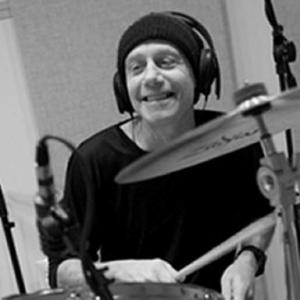
Keith LeBlanc (1954-2024)

‘No crap beats’ – if that wasn’t on Keith Leblanc’s business card, it should have been.

The man could just sit down at any kit – or program any drum machine – and make it sound rich and swinging, whether he was playing with Tackhead, Seal, Tina Turner, Nine Inch Nails, Depeche Mode, Bomb The Bass, ABC, Sugarhill Gang, Annie Lennox, Mark Stewart or Little Axe.

LeBlanc – who died in April – has to go down as a true beat innovator, embracing and developing drum technology and particularly developing a human/machine interface which always grooved beautifully and didn’t distract from the music.

Along with other key ’80s/’90s drummers Dennis Chambers, Jonathan Moffett, Ricky Wellman and Lenny White, he also had a killer right foot.

He grew up in Bristol, Connecticut, and was inspired to pick up the drum sticks after seeing The Beatles on TV. He was later influenced by what he called ‘pop’ music – James Brown, Cameo, Muscle Shoals, Gap Band, Parliament/Funkadelic – and became the house drummer for Sugar Hill Records in late 1979 and co-founder of grounbreaking funk/industrial/dub/rock outfit Tackhead alongside Skip McDonald, Doug Wimbish and Adrian Sherwood.

LeBlanc also recorded many solo albums, the best of which is probably Time Traveller, and played excellent live jazz/rock with Nikki Yeoh, Jonas Hellborg and Mano Ventura.

It’s sad to think one will never again hear that amazing LeBlanc/Wimbish bass and drums hook-up. Anyone who saw Mark Stewart, Little Axe or Tackhead live will remember how the first few minutes of every gig was usually just the two of them playing together. That lasted right through to the 2021 On-U Records anniversary shindig, though a masked Keith looked very frail.

movingtheriver had the pleasure of interviewing LeBlanc in 2010 for Jazz FM, and revisiting my notebook I found lots of interesting quotes I didn’t use in my original article:

On Sugarhill Records/co-owner Sylvia Robinson:
Sylvia was looking for Skip and Doug but they initially said no because they’d had a bad experience before. I was new to the band but I heard the words ‘recording studio’ and ‘money’ and bugged them until they said yes. The first Sugarhill Gang album was recorded in the Robinsons’ studio (H&L in Englewood Cliffs, New Jersey, down the road from Rudy Van Gelder’s famous studio) which was falling to bits! We’d cut a track on the Friday, drive home to Connecticut and hear it on the radio on the Monday. The whole industry was shaken up when rap started. It took them four years to catch up. But if the Robinsons had done 25% of the right thing, Sugar Hill Records would still be going. They screwed up. It was hard to watch the artists get ripped off and then watch those people flaunt money in front of them. We tried not to write anything because we knew how they were.

On playing live in the studio:
The first rap drummer was a white guy! Back then, playing live in the studio was normal. The arranger Jiggs Chase would get with the rappers, do an arrangement based on what they wanted to use and then give us charts. And then we’d add things. The musical ethic was really good at that time. You had to get it right or there’d be someone else in there recording the next day.

On hip-hop and drum machines:
After ‘Planet Rock’, anyone could make a rap record in their bedroom. When drum machines came out, I saw my job opportunities flying out of the window. They opened the door for everybody to do it. Then it dawned on me what I could program one of those better than any engineer. I did ‘No Sell Out’ just to see what I could do with drum machines.

On George Clinton/P-Funk:
I was offered the gig with Parliament – I asked Bernie Worrell if I should do it and he said, ‘Only if you want to chase the money all night!’

On his imitators:
The Red Hot Chili Peppers ripped us off, especially in the beat department. The drummer was checkin’ me hard!

On Prince:
Prince sabotaged my drum machine at First Avenue in Minneapolis. I was playing along and then the machine stopped and I heard this voice hissing through the monitor: ‘What’s the matter, can’t you keep time?’!

England v West Indies @ Lord’s 40 Years Ago Today

Sir Vivian Richards batting for West Indies in 1984

movingtheriver’s love of cricket was sparked during Botham’s Ashes in 1981, and then thrived during New Zealand’s visit to British shores in 1983.

But it was the summer 1984 England v West Indies series that really sealed the deal, boosted by a trip to Lord’s for the third one-day international which took place 40 years ago today. There was so much demand for tickets that my dad and I were put on the hallowed turf near the old Mount Stand, about five feet from the boundary rope (visible in the clip below).

We sat on the grass surrounded by noisy, friendly West Indies fans, in those golden days when drums, conch shells, whistles and whatever else were all permitted in the ground. So 4 June 1984 remains one of the most exciting days of live cricket I’ve ever seen, and we were also treated to a superlative display by arguably the greatest team of all time (no, I don’t mean England…) including a famous run-out by Roger Harper and a match-winning innings by Viv Richards.

Gig Review: China Crisis @ The Half Moon Putney, 17 May 2024

China Crisis in 2024

China Crisis in 2024 with Gary Daly (vocals) and Eddie Lundon (guitar), centre

It’s an interesting era for acts like China Crisis who were never massive but had significant singles success in the 1980s (five UK top 40 hits).

Though releasing only two albums of new music since 1994, they continue to tour successfully, playing both under their own steam and occasionally as part of big ‘80s-themed package dates such as Let’s Rock.

Now essentially a duo of Gary Daly on vocals and Eddie Lundon on guitars, plus Eric Animan on saxes and Jack Hymers on keyboards/programming, they remain a great live draw mainly due to Daly’s stage presence, pitch-perfect vocals and hilarious between-song anecdotes, plus the obviously excellent songcraft.

As Daly pointed out, China Crisis remain a singular, immediately identifiable band, completely different to other early ‘80s Liverpool acts (though they actually originate from nearby Kirkby) like Echo & the Bunnymen, The Teardrop Explodes and Frankie Goes To Hollywood.

They specialise in willowy, intriguing melodies, haunting synths, clever rhythm guitars, obtuse lyrics and slinky grooves, and, of course, Steely Dan’s Walter Becker produced their best two albums, Flaunt The Imperfection and Diary Of A Hollow Horse.

Their sold-out visit to the venerable, reliable old Half Moon in Putney saw them plugging a new collection of re-imagined old favourites. It was movingtheriver’s first visit to the great venue for at least ten years, though I have fond memories of gigging there regularly in the early 1990s.

Coming onstage to a synth overture featuring some of their most popular themes, CC started with low-key, atmospheric ‘The Soul Awakening’ (with its neat nod to ABC’s ‘SOS’) and ‘Here Comes A Raincloud’, before Daly exploded into life demanding that the house lights be turned on, deadpanning: ‘If I’m gonna play these small f*ckin’ venues, I want to see you all.’

After more amusing greetings, including unprintable tilts at Bono and random asides – ‘Don’t get me started on Phil Oakey’ – he previewed the superb ‘It’s Never Too Late’, originally recorded in 1983 but for some reason relegated to B-side status, by rightly pointing out that it should have been a massive hit single and also claiming that it ‘f*ckin’ is too late or we wouldn’t be playing venues like this’, and there were airings of lovely early torch songs ‘Temptation’s Big Blue Eyes’ and ‘Red Sails’.

Daly paid tribute to Becker – ‘he changed our lives and our music’ – with a killer double from Flaunt, ‘Strength Of Character’ and ‘Bigger The Punch I’m Feeling’. Daly claimed the latter was somewhat inspired by ‘The Love Boat’ TV theme and also that it was a vague tribute to one of the most popular bands in UK singles history: ‘Shut your f*ckin’ eyes and think Hot Chocolate’.

‘African And White’, with intricate new guitar voicings from Lundon, finally revealed the meaning behind the baffling chorus – ‘Life is a fever in Israel’ – another one for the misheard lyrics file. The big hits arrived with mass audience participation and general affection for this most likable of bands – ‘Arizona Sky’, ‘Best Kept Secret’, ‘Black Man Ray’, ‘King In A Catholic Style’ and ‘Christian’, Daly claiming the latter’s UK #12 chart position would have been much improved by a bagpipe solo.

He ended a hugely enjoyable gig with an impassioned speech paying tribute to the UK’s smaller, grassroots venues such as the Half Moon, and an attack on Tory attitudes to the arts and the North in general: ‘Levelling up, my f*cking arse’. China Crisis  continue to tour the UK during the rest of 2024 – don’t miss.

Billy Cobham @ 80: Five From The 1980s

The author with Billy Cobham, autumn 2000

Many happy returns to Mr Cobham who turned 80 this week. His drum mastery continues to inspire.

Movingtheriver pretty much learnt to drum by listening to Mr Cobham’s Spectrum, David Sanborn’s (RIP) Hideaway, Steely Dan’s Aja and a few more. His playing was sheer class, something to aim for. There was always an emphasis on technical excellence and good tuning – but the most important thing was the music, the groove.

I was fortunate enough to study with Mr Cobham at the Guildhall School of Music circa 2000. Unforgettable memories.

To celebrate his 80th birthday, here are five key moments from his 1980s. The early part of the decade saw Mr Cobham forge a new life in Switzerland, whilst fronting various bands featuring the likes of Mike Stern, Don Grolnick and Gil Goldstein. Then came the short-lived, controversial tenure in John McLaughlin’s revamped Mahavishnu Orchestra (explored in my book) which nonetheless produced some great music, and then a high-profile return to the solo career via Dave Grusin and Larry Rosen’s GRP Records.

5. Drum Clinic (Part 6), BBC TV, 1982 (?)
Here’s where it all started for movingtheriver. My dad caught it totally by chance on BBC2 and luckily recorded it onto a VHS. It blew the minds of many British drummers including Level 42’s Phil Gould who was reportedly present at the filming.

4. Billy Cobham/Herbie Hancock/Ron Carter: ‘Eye Of The Hurricane’, Lugano, Switzerland, 1983
A period when Billy embarked on various brilliant European collaborations. Still one of the most exciting, propulsive trios I’ve ever heard in acoustic jazz.

3. ‘The Dancer’ (1985)
If memory serves, I was given Mr Cobham’s Warning for my 13th birthday, alongside Joni Mitchell’s Dog Eat Dog and Steely Dan’s The Royal Scam. What a day that was. I still love this album and am glad I kept the vinyl.

2. ‘The Debate’ (1986)
Warning’s followup Power Play didn’t quite have the impact of his GRP debut but Billy’s drums have arguably never been better recorded.

1. Live In Cannes (1989)
A recent find this, worth watching for a rare look at Billy playing timbales (during the first song) and also his fine hookup with percussionist Nippy Noya.

Book Review: Absolute Beginner by Kevin Armstrong

Most fans of 1980s pop and rock will have come across the name Kevin Armstrong, guitarist with Iggy Pop, Morrissey, Sinead O’Connor, John Lydon, Propaganda, Tin Machine, Prefab Sprout, Thomas Dolby and Paul McCartney, and famously part of David Bowie’s band at Live Aid.

His enjoyable new memoir ‘Absolute Beginner’ is that rare thing – a book by a British session player who has borne witness to massive egos, occasional artistic triumphs and typical music biz disappointments, all the while trying to get a reasonable guitar sound.

But the book is anything but a polite/completist career overview – Armstrong knows where the bodies are buried and doesn’t hold back on salacious details. He’s also blatantly honest about his own perceived musical shortcomings and mental health issues.

Finally the book comes over as something like a cross between Giles Smith’s ‘Lost In Music’ and Guy Pratt’s ‘My Bass And Other Animals’, with just as many laughs as both.

We learn about his misspent youth in the relatively salubrious environs of Orpington, Kent, nurturing his increasing interest in the guitar and music of David Bowie, Yes, Zappa and Roxy Music (and ponders whether Eno’s squealing synths caused him some hearing loss issues when watching Roxy supporting Alice Cooper). There are superb passages about the power of listening to a great album while studying the sleeve and indulging in ‘mild hallucinogens’.

The punk era sees Armstrong squatting in Brixton, hanging out with The Slits and recording with Local Heroes (on Charlie Gillett’s record label) and The Passions. There’s a whole chapter on collaborating with Thomas Dolby, lots on laying down Steve McQueen with Prefab (fronted by the ‘emotionally fragile’ and ‘shy’ Paddy McAloon) and some hilarious stories about playing in Jonathan Ross’s house band for ‘The Last Resort’.

But the real meat and drink of the book is the fabulous section on Live Aid, particularly illuminating the strange realities of the music industry when he returns alone to his tiny West London flat soon after performing for two billion people. There are also fascinating, funny stories about recording ‘Absolute Beginners’ and ‘Dancing In The Street’.

His dealings with Bowie during the Tin Machine era are also as intriguing as you might expect (as is his story about being ‘let go’ before the release of that band’s debut album, also nixing the rumour that Bowie gave up booze a long time before 1989…), as are those with the mercurial McCartney, the superstitious, over-sensitive Morrissey and bizarre O’Connor.

There are many revelations too around touring with Iggy Pop, as well as some refreshingly honest opinions on some of his bandmates (especially – and surprisingly – drummer Gavin Harrison…) and a fascinating detour into joining a choir led by Eno.

But Armstrong saves most of his bile for his late entrée into the world of TV advertising: ‘Blind optimism and over-confidence drew me inexorably into the seedy and frightening world of production music…a world so steeped in bullshit and doublethink that it beggars belief’!

‘Absolute Beginner’ is one of the most enjoyable music memoirs movingtheriver has read over the last few years. Just when you think you know where it’s going, it delivers yet another zinger. It’s an absolute must for any fans of Bowie, Iggy, Dolby or Prefab, while offering the casual 1980s and 1990s music fan loads of tasty morsels.

The Blue Nile: A Walk Across The Rooftops 40 Years Old Today

‘Every record should be compared to silence. Silence is perfect. What are you going to put on it?’
Paul Buchanan, Blue Nile co-founder/singer/songwriter, 1984

The Blue Nile’s debut album A Walk Across The Rooftops – released 40 years ago today – embraced silence.

The first minute of the title track was a case in point. Buyers all over the UK were wondering if their tapes and records were faulty.

In a superb year for debut albums, the Scottish trio stole a march on David Sylvian, beating his Brilliant Trees by two months (Scott Walker’s Climate Of Hunter came out a few months before A Walk).

Both Sylvian and Walker reportedly adored A Walk, as did Peter Gabriel and Brian Eno.

But how does my original Linn/Virgin CD (catalogue number LKHCD1) sound 40 years on? Fantastic. Seldom have acoustic drums and pianos been better recorded, the songwriting is solid and every electronic noise has its place.

‘Tinseltown In The Rain’ and ‘Heatwave’ would make for superb hi-fi testers. Buchanan’s voice is original and affecting.

Lyrically, his speciality seems to be life-changing realisations in ordinary settings. The title track, for instance, was reportedly inspired by the view outside his Edinburgh kitchen window.

A Walk only got to #80 in the UK on release but became a formidable sleeper hit and has apparently sold way beyond the band’s wildest expectations.

They waited five years to release followup Hats, an album many believe is superior to A Walk. Not this writer though. It was a great debut album in a decade full of them.

Michael Hedges: Aerial Boundaries @ 40

Alternate guitar tunings were nothing new in 1984. Many flamenco and folk guitarists deviated from the standard EADGBE, and of course John Martyn and Joni Mitchell were innovators whose own ingenious tunings aided their compositions.

But when Sacramento-born guitarist Michael Hedges recorded the title track from his album Aerial Boundaries – released 40 years ago this weekend – he created something new under the sun.

For a start, it’s remarkable that all of this sound came from one guitarist – no overdubs. He used hammer-ons, pull-offs, tapping (often ‘clawed’ or barred with one finger), finger-picking and harmonics to build up layers of counterpoint. The independence of limb is pretty staggering. This guy must have been a great drummer. And all performed on a bog-standard steel-string acoustic guitar (reportedly with heavy strings and a very high action).

Other contemporary guitarists like Stanley Jordan and David Torn used tapping and hammering-on to a great extent too but arguably never to the smooth, rolling, melodic effect that Hedges achieves.

‘Aerial Boundaries’ is certainly a jewel in the Windham Hill Records’ crown, and sounds completely unlike any of the label’s other solo guitarists. Hedges called it a ‘systems’ piece, a la Steve Reich, Philip Glass etc. The tuning is CC(an octave higher)DGAD but he pretty much used a different one for every composition. Most guitarists try a common alternate tuning and then noodle around until they find something interesting. Not Hedges. It seems the music came first, then the tuning.

It’s a real challenge to play and has inspired many YouTube cover versions – this guy has nailed it. Hedges made it look ridiculously easy when he played it live and sometimes even added in a riff or two from Iron Butterfly’s ‘In-A-Gadda-Da-Vida’.

Hedges’ music is frequently described as ‘new age’ but he was actually a big Prince and Genesis fan who died in a car crash in 1997 at the age of just 43. Arguably he never topped ‘Aerial Boundaries’. Happy 40th birthday to a solo guitar masterpiece.

‘Top Gun’ And 33 Other ‘Classic’ 1980s Movies I’ve Never Seen

Which ‘non-classic’ 1980s movies are virtually impossible to switch off when they come onto the TV late at night, no matter how many times one has seen them?

In my case, it’s stuff like ‘Desperately Seeking Susan’, ‘Barfly’, ‘Innerspace’, ‘Hollywood Shuffle’, ‘The Man With Two Brains’, ‘Christine’, ‘Evil Dead II’, ‘Clockwise’, ‘Fletch Lives’, ‘Uncle Buck’, ‘Caddyshack’, ‘Class’, ‘The Sure Thing’, ‘Alligator’, ‘St. Elmo’s Fire’ etc. etc. – the list goes on and on.

But then there are the ‘classic’ 1980s movies which leave this writer totally cold. Most of the below are either multi-award-winners, critically-acclaimed cult favourites and/or films that made a huge splash in popular culture, but are hitherto completely unwatched in their entirety by movingtheriver, either by accident or design. I generally didn’t fancy seeing them during my teens, and the clips I’ve seen since haven’t changed my mind…

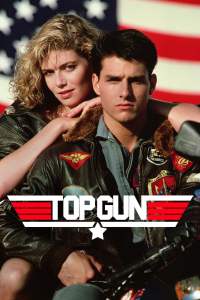
34. Top Gun (1986)
Smug, young Cruise is too much for this writer – see also ‘Risky Business’ – but that changed with ‘Rain Man’.

33. Reds (1981)

32. Arthur (1981)

31. Another Country (1984)

30. Porky’s (1982)

29. Woman On The Verge Of A Nervous Breakdown (1988)

28. My Beautiful Launderette (1985)

27. Mona Lisa (1986)

26. Dirty Dancing (1987)

25. The Mission (1986)

24. Beverly Hills Cop (1985)
I’m a big Eddie fan, but somehow haven’t been snared by the supporting cast/set-up of this.

22/23. First Blood (1982)/Rambo First Blood Part II (1985)

21. Splash (1983)

20. Repo Man (1984)
Emilio Estevez was part of a great ensemble cast in ‘St. Elmo’s Fire’ and ‘The Breakfast Club’, but carrying a whole movie?

19. Sophie’s Choice (1982)
Forever tarnished by Joan Smith’s takedown in her classic book ‘Misogynies’.

18. Wall Street (1987)

17. Platoon (1986)

16. The Lost Boys (1987)
Kiefer Sutherland directed by Joel Schumacher? No thanks… Great theme song by Gerald McMann though.

15. The Karate Kid (1987)

14. Ordinary People (1980)
Or ‘Ordinary Peepholes’, as memorably renamed in ‘The Fisher King’.

13. On Golden Pond (1980)

12. Stranger Than Paradise (1984)
Have never really got the Jim Jarmusch ‘thing’…

11. Wings Of Desire (1987)

10. The Last Emperor (1988)

9. Pauline At The Beach (1983)

8. River’s Edge (1986)

7. Gandhi (1982)

6. Out Of Africa (1985)

5. Driving Miss Daisy (1989)

4. Kiss Of The Spiderwoman (1985)

3. Mississippi Burning (1988)

2. Paris, Texas (1985)

1. Room With A View (1985)

(Postscript. The ‘classic’ 1980s films I do wanna see, but have somehow managed thus far to miss: My Dinner With Andre, Salvador, My Favourite Year, The Coal Miner’s Daughter, Silkwood, The Year Of Living Dangerously, Once Upon A Time In America…)