Gig Review: Thomas Dolby/Martin McAloon @ Shepherd’s Bush Empire, 21 May 2026

As gig introductions go, it was one of the best: ‘For those who’ve never seen me live before, I’m Martin McAloon from Deacon Blue.’

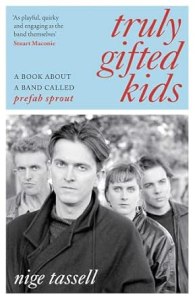
Of course Martin is the brother of fellow Prefab Sprouter Paddy McAloon, and for the past five years or so he’s been playing his bro’s fantastic compositions as a solo act.

And this was a potentially exciting double bill with Thomas Dolby, Prefab producer and a fine composer/musician in his own right.

Martin’s opening gambit was the first in a long line of zingers, but he’s also an obviously excellent guitarist, firing off Paddy’s not-at-all simple chords with ease. He managed to find ways of including all the tricky stuff: ‘Faron Young’ came complete with that wacky ascending outro, while the melody of ‘Appetite’ was outlined with some nice Wes-style octaves.

On ‘Goodbye Lucille #1 (Johnny Johnny)’ he even found a way of combining the guitar melody, chords and bassline simultaneously. Meanwhile ‘Looking For Atlantis’ was a very fast shuffle ‘in the style of Elvis, with a bar of 5/4 added for all you jazzers’.

His rather ramshackle presentation is definitely part of his charm (‘I forgot my setlist, but remembered to back it up on my iPhone, but I also forgot my glasses so I can’t read it’) and it was pleasing to hear the Steve McQueen material the way Thomas Dolby may have heard it in Paddy’s bedroom all those years ago.

‘Moving The River’ was indeed moving and the fun closer ‘King Of Rock’n’Roll’ managed to incorporate ‘The Reflex’, ‘Get It On’, ‘Yellow’ and ‘It’s Only Rock’n’Roll’.

But was it good music? For this writer, the jury is still out. It’s unlikely Paddy’s songs (often taken too fast) are going to wither on the vine anytime soon. And there’s no getting away from the rather utilitarian nature of Martin’s voice – the more tender Paddy material particularly suffered.

And sometimes you yearn for a bit more colour from his guitar tones and rhythms – a gentle bossa-nova-style strum seems to be the default for the 4/4 material, with a somewhat unforgiving, bright, dry Les Paul tone. But it’s definitely worth seeing Martin live for the banter and ’80s stories.

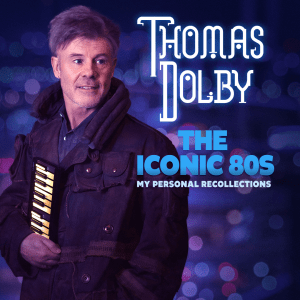
Dolby’s set was advertised as a ‘my personal recollections of the 1980s’ with a full live band promised – somewhat of a misnomer, as it turned out. He emerged onto the stage alone, greeting the audience very quietly before settling behind his bank of synths and playing a solo rendition of ‘The Flat Earth’ complete with tinnitus-inducing TR-808, some Martin Luther King Jr. spoken words and too loud vocals – though Dolby’s voice has got richer with age.

He revealed he was born less than a mile from Shepherd’s Bush, making this his home gig, but the ‘80s vibe was blown by his second track, 2011’s underwhelming ‘Evil Twin Brother’, though it segued neatly into Sting’s ‘Bring On The Night’ with which it shares a chord sequence.

photo by Adrian Sartain

Dolby then crowbarred Gary Numan’s ‘Cars’ into ‘One Of Our Submarines’, and he paid tribute to David Bowie with a somewhat ponderous take on ‘Heroes’ complete with back projection of his personal photos taken during Live Aid, and ‘virtual’ vocals from Bowie himself.

Dolby then introduced his rhythm section for the evening: Jakko Jakszyk on guitar, Matt Hector on drums and bassist Ana Pshokina, who had pre-recorded her parts and vocals to a click track at home in Ukraine after being refused entry into the UK, and was thus now appearing via the big screen.

Here’s where the evening really went downhill. Dolby revealed that he was working on a symphony which would feature his own songs mixed with elements of other ‘iconic’ 1980s hits, and had decided to preview it here.

So ‘Flying North’ inexplicably morphed into Pink Floyd’s ‘Comfortably Numb’, and ‘I Love You Goodbye’ into Talking Heads’ ‘This Must Be The Place’, complete with incorrectly played guitar motif by Jakszyk.

The guitarist was also responsible for a toe-curling rendition of ‘Little Red Corvette’, and then Dolby rehashed his ‘meeting Michael Jackson’ story yet again via seriously weird take on ‘Billie Jean’, complete with some unsettling AI dialogue.

Elsewhere there were snatches of Tears For Fears, Kate Bush, Billy Idol, Smiths and Foreigner hits. Dolby had mentioned trying to distance himself from the usual ‘Rewind 1980s nostalgia’ stuff but sadly this gig failed to achieve that.

What your reviewer really wanted to hear was Dolby’s mostly excellent songs played by a really good band. Where was guitarist Kevin Armstrong when we needed him?

When Dolby eased into U2’s ‘With Or Without You’, sad to report that your correspondent couldn’t take any more. All credit to him for going ahead with the show, but arguably the concept was always a hard sell.

Here’s hoping Thomas reforms The Lost Toy People and puts together an Aliens Ate My Buick @ 40 show for 2028, but it seems unlikely…

Shifty: the new Adam Curtis BBC doc

Those wanting to understand the mess in which Britain finds itself may get some answers from ‘Shifty’, Adam Curtis’s new BBC documentary series. It’s also a classic bit of 1980s reportage.

A rather po-faced press release announced the launch of the show on iPlayer (it’s also on YouTube) – Curtis has now been ‘moved on’ from terrestrial TV, and has alluded to the ‘freedom’ that streaming platforms give him.

But the new series certainly delivers, not a surprise given his track record of superb, unsettling docs such as ‘The Century Of The Self’, ‘The Mayfair Set’ and ‘HyperNormalisation’.

Using long- forgotten/lost BBC footage mainly shot during the 1980s, ‘Shifty’ traces the death of Britain’s role as a technological superpower, showing how the decimation/privatisation of national industries ushered in an uncertain era when dark, long-dormant secrets bubbled up to the surface, and the tabloid press ran riot.

We see how Thatcherism (read monetarism) was based on a false belief – that money always acts predictably. Meanwhile the privatisation of state industries (a policy invented by the Nazis) handed fortunes to private capitalists, a system which the Tory government knew would lead to industrial ’empires’ and the creation of huge private fortunes. They were essentially buying the support of the financial elites, and this has been convulsive.

Re-editing the work of those brilliant, groundbreaking (uncredited) TV directors and technicians who plied their trade at the dawn of the 1980s, Curtis uncovers the ‘real’ decade.

There are many striking juxtapositions; the death of a commercial airline pilot after a crash on the Isle of Sheppey uncovers tales of wartime mental distress. We see what the Falklands Islands looked like just before the 1982 invasion, a National Front rally in Brixton, the birth of video dating in London, dub sound systems in Birmingham, a pop lookalike competition of 1981 with hilarious Midge Ure. Freemasonry is debated openly on national terrestrial TV.

We see Thatcher during down time, pottering in the kitchen, schmoozing with Jimmy Savile, discussing her wardrobe, teenagers dancing to Bee Gees in Belfast and Hawkwind’s ‘Silver Machine’ in Kent, sex pests calling mental-health helplines, abject poverty in Bradford, the first known personal surveillance camera in North Kent, Sus operations in West London, Princess Di opening the Broadwater Farm Estate just six months before the deadly riots, Dodi Fayed interviewed about his father and producing movies such as ‘Chariots Of Fire’, Stephen Hawking as an undergraduate at Cambridge University.

All in all, ‘Shifty’ is a fascinating look at a mostly forgotten Britain and a great companion piece to Simon Reynolds’ ‘Rip It Up’ book and Steve McQueen’s ‘Small Axe’ films.

Despite its myriad issues, The Beeb is still doing a few things right but it’s a shame the series wasn’t given a cursory showing on terrestrial TV.

Book Review: Absolute Beginner by Kevin Armstrong

Most fans of 1980s pop and rock will have come across the name Kevin Armstrong, guitarist with Iggy Pop, Morrissey, Sinead O’Connor, John Lydon, Propaganda, Tin Machine, Prefab Sprout, Thomas Dolby and Paul McCartney, and famously part of David Bowie’s band at Live Aid.

His enjoyable new memoir ‘Absolute Beginner’ is that rare thing – a book by a British session player who has borne witness to massive egos, occasional artistic triumphs and typical music biz disappointments, all the while trying to get a reasonable guitar sound.

But the book is anything but a polite/completist career overview – Armstrong knows where the bodies are buried and doesn’t hold back on salacious details. He’s also blatantly honest about his own perceived musical shortcomings and mental health issues.

Finally the book comes over as something like a cross between Giles Smith’s ‘Lost In Music’ and Guy Pratt’s ‘My Bass And Other Animals’, with just as many laughs as both.

We learn about his misspent youth in the relatively salubrious environs of Orpington, Kent, nurturing his increasing interest in the guitar and music of David Bowie, Yes, Zappa and Roxy Music (and ponders whether Eno’s squealing synths caused him some hearing loss issues when watching Roxy supporting Alice Cooper). There are superb passages about the power of listening to a great album while studying the sleeve and indulging in ‘mild hallucinogens’.

The punk era sees Armstrong squatting in Brixton, hanging out with The Slits and recording with Local Heroes (on Charlie Gillett’s record label) and The Passions. There’s a whole chapter on collaborating with Thomas Dolby, lots on laying down Steve McQueen with Prefab (fronted by the ‘emotionally fragile’ and ‘shy’ Paddy McAloon) and some hilarious stories about playing in Jonathan Ross’s house band for ‘The Last Resort’.

But the real meat and drink of the book is the fabulous section on Live Aid, particularly illuminating the strange realities of the music industry when he returns alone to his tiny West London flat soon after performing for two billion people. There are also fascinating, funny stories about recording ‘Absolute Beginners’ and ‘Dancing In The Street’.

His dealings with Bowie during the Tin Machine era are also as intriguing as you might expect (as is his story about being ‘let go’ before the release of that band’s debut album, also nixing the rumour that Bowie gave up booze a long time before 1989…), as are those with the mercurial McCartney, the superstitious, over-sensitive Morrissey and bizarre O’Connor.

There are many revelations too around touring with Iggy Pop, as well as some refreshingly honest opinions on some of his bandmates (especially – and surprisingly – drummer Gavin Harrison…) and a fascinating detour into joining a choir led by Eno.

But Armstrong saves most of his bile for his late entrée into the world of TV advertising: ‘Blind optimism and over-confidence drew me inexorably into the seedy and frightening world of production music…a world so steeped in bullshit and doublethink that it beggars belief’!

‘Absolute Beginner’ is one of the most enjoyable music memoirs movingtheriver has read over the last few years. Just when you think you know where it’s going, it delivers yet another zinger. It’s an absolute must for any fans of Bowie, Iggy, Dolby or Prefab, while offering the casual 1980s and 1990s music fan loads of tasty morsels.

1981: Uprising & Blood Ah Go Run

40 years ago, I was a young football-and-music-mad whippersnapper living a relative life of Riley out on the South Coast of England, but my hometown of London was catching hell.

Not that I was particularly aware. For most sections of the media, summer 1981 was all about Prince Charles’ marriage to Lady Di and Ian Botham’s Ashes (his crushing 149 not out at Headingley, 40 years ago this month, was the first time I remember being totally gripped by live cricket).

But of course there was a whole other side to 1981, a world brilliantly evoked by The Specials on their epochal #1 ‘Ghost Town’, and by directors Steve McQueen and James Rogan in their important, sadly still-relevant ‘Uprising’ series of new BBC documentaries.

The gripping but shattering films show how the St Pauls riots in Bristol, New Cross Fire tragedy of January 1981 and policing policies during the Black Peoples Day of Action in March (and throughout the late-1970s and early-80s) sparked uprisings all over the country, from Brixton to Toxteth, 35 years before the formation of Black Lives Matter.

Co-opting footage from the late, groundbreaking London filmmaker Menelik Shabazz’s 1981 film ‘Blood Ah Go Run’ and featuring interviews with most of the survivors of the New Cross fire, plus Linton Kwesi Johnson and various activists, ‘Uprising’ is a vital – at times devastating – piece of social history. And of course it’s a brilliant London film.

It’s also a grave warning to governments about the tragic pitfalls of acquiescing to racists. Don’t miss – ‘Uprising’ is on iPlayer until July 2022 if you’re in the UK.