The Cult Movie Club: The Osterman Weekend (1983)

‘Straw Dogs’, ‘Bring Me The Head Of Alfredo Garcia’, ‘The Wild Bunch’, ‘Pat Garrett & Billy The Kid’, ‘Cross Of Iron’… One doesn’t forget Sam Peckinpah’s films in a hurry.

By the early 1980s, his career had hit rock-bottom, despite a random hit with ‘Convoy’ in 1978. But he was still hungry to work, though deemed unreliable and dangerous by the powers that be.

Salvation came in the form of his one-time mentor Don Siegel, with whom Peckinpah had worked on a few movies including ‘Invasion Of The Body Snatchers’. Siegel had a tricky action sequence to shoot for his Bette Midler vehicle ‘Jinxed’ – he persuaded Peckinpah to storyboard and direct the sequence, and Sam ended up sticking around for 12 days, impressing everybody with his ideas and – frankly – sobriety.

Suddenly Peckinpah was back in the game. He was quickly offered a Robert Ludlum espionage thriller ‘The Osterman Weekend’, adapted by ‘Night Moves’/’Ulzana’s Raid’ writer Alan Sharp, concerning a TV personality who becomes convinced that his best friends are Soviet agents.

The producers insisted Sam be on his best behaviour and he was also given other directives: no drastic re-writing, no casting approval (he wanted James Coburn but got Rutger Hauer) and no final cut.

But he did get his choice of DP – John ‘Straw Dogs’ Coquillon. The budget was $7 million. Peckinpah finished in January 1983 on time and on budget. The movie just about made back its costs (not helped by an appalling trailer, so instead let’s see Mark Cousins’ ‘Moviedrome’ introduction, as below) and became a hit in the burgeoning video market.

‘The Osterman Weekend’ got a critical mauling and is yet to receive a posh official restoration. But watching it now, it turns out to be yet another fascinating, unpredictable and weirdly gripping Peckinpah movie.

He throws down the gauntlet with a seriously unpleasant opening scene which gives new meaning to coitus interruptus (apparently excised from the original theatrical cut). The sets are fairly drab. John Hurt seems miscast despite a nice Pinteresque switcheroo late in the piece and most of the female characters are ‘problematic’ (with one notable exception).

But Peckinpah puts together two or three superb action sequences including a thrilling chase through the outskirts of LA. Hauer shows unexpected depth alongside the usual impressive athleticism and Craig T Nelson – best known for his role in ‘Poltergeist’ – is excellent, as are Meg Foster, a clearly ill Dennis Hopper and Chris Sarandon. It sounds like Lalo Schifrin gathered the cream of the LA session scene for his nice if strange Yacht Rock soundtrack.

It also seems that Peckinpah got in a naughty rewrite after all and was incapable of just phoning in an assignment – the film is deeply personal, about betrayal, surveillance and the disintegration of relationships in Reagan’s America. And it’s also about protecting the family unit – yes, it’s Peckinpah’s take on Steven Spielberg…

‘The Osterman Weekend’ became his final film – he died in December 1984 at just 59. His last professional act was to direct two videos for Julian Lennon, of all people: ‘Valotte’ and ‘Too Late For Goodbyes’. But ’Osterman’ is well worth a look, if you’ve got a strong stomach and a love of weird, unpredictable movies.

Further reading: If They Move, Kill ‘Em by David Weddle

Michael Jackson’s ‘Thriller’ Video Premiere: 40 Years Ago Today

“‘Thriller’ made MTV. ‘Thriller’ created the home video business. ‘Thriller’ created so many things.”
John Landis

It’s hard to overestimate the cultural impact of the ‘Thriller’ video. Frequently parodied and ripped-off but still powerful, it premiered on Channel 4 and MTV 40 years ago today.

In the UK, it was shown (without any end credits) during a special late-night edition of ‘The Tube’ just before midnight on Friday 2 December 1983. I recall being allowed to stay up and watch it. It was one of the most exciting things I’d ever seen on TV, and also one of the scariest… Here’s how the special ended:

Let’s rewind to July 1983. The Police’s Synchronicity had just bumped Jackson’s Thriller album off the top of the Billboard charts. Jackson’s label Epic quickly formulated a plan to reinstate Thriller, reluctantly suggesting that its title track be released as a single (executives reportedly believed it to be a ‘novelty’ record!).

The catalyst for the groundbreaking video, which was part-financed by MTV, was Jackson phoning director John Landis in August 1983. He professed his love for Landis’s ‘An American Werewolf In London’, told him about the impending single release of ‘Thriller’ and then uttered the immortal words: ‘Can I turn into a monster?’

The rest is history. The video helped double Thriller’s album sales almost overnight, arguably broke down racial barriers in popular entertainment and helped raised the music-video format into a serious art-form. It also has to be said: it’s probably the last time Michael seemed relatively ‘normal’ (though his line ‘I’m not like other guys’ still raises a titter…).

“The only video we ever paid for was ‘Thriller’. We were playing it every hour, and announcing when it would next air. It brought people to MTV for the first time, and it made them stay and watch it again and again. Now everybody was into MTV.”
Bob Pittman, MTV executive

“When MTV started, it wanted nothing to do with Black artists. I thought, Wow, are we gonna miss out on this? But then I gave them ‘All Night Long’ after Michael had broken down the door. And from then on I was on MTV.”
Lionel Richie

“Michael Jackson had taken hold of the video form and shown everyone what you’re supposed to do with it. We all thought: Oh, OK – dancing!
Rick Springfield

Let us know your memories of watching ‘Thriller’ for the first time.

All quotes are taken from the excellent book ‘I Want My MTV’.

Check out Anthony Marinelli’s YouTube channel for lots of great muso stuff on the making of the Thriller album.

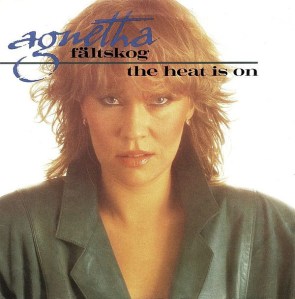
Agnetha Faltskog: The Heat Is On

One of the many pleasures of listening to the Forgotten 80s radio show is hearing a hit of which you have absolutely no memory whatsoever.

A classic example came on the air a few weekends ago. The intro featured a ramshackle, lumbering, almost-reggae groove with party voices, sleazy horns and a good bass player (revealed when listening on a decent system, but it’s almost impossible to find out which musicians played on the single) before a strident, excellent, slightly familiar voice took centre stage.

Eddi Reader? Basia? Debbie Harry? Lene Lovich? Wrong, wrong, wrong, wrong. I was gobsmacked to hear that it was actually the first solo single by Agnetha Faltskog of ABBA, released just over 40 years ago (her bandmate Frida had just had her own hit, ‘I Know There’s Something’s Going On’, produced by Phil Collins).

‘The Heat Is On’ got to #1 in Sweden, Denmark, Norway, Finland, and Belgium, #2 in The Netherlands and Germany, #29 in the USA and #35 in the UK.

The incredibly catchy number turns out to be a cover of a 1979 near-hit by Australian singer Noosha Fox. Written by Florrie Palmer and Tony Ashton, it was also massacred by Manfred Mann’s Earth Band in 1980 in a truly screwed up version retitled ‘On The Run’.

But back to Agnetha. Her version of ‘The Heat Is On’ was produced by Mike Chapman, on a particularly hot streak in early 1983 having just helmed Blondie’s biggest albums and Altered Images’ classic single ‘Don’t Talk To Me About Love’.

Faltskog’s accompanying album Wrap Your Arms Around Me is not so great but has apparently sold approximately 1.5 million copies worldwide to date (her second solo album, 1985’s Eyes Of A Woman, was produced by 10cc’s Eric Stewart). She has also been the subject of a BBC Four documentary (a dubious honour?) in the UK.

Now, got to get this damn song out of my head – almost an impossible task once heard a few times…

Level 42: Rockpalast 40 Years On

It’s not surprising that a lot of Level 42 fans cite 1983 as the peak of the band’s career.
Messrs. King, Lindup, Gould and Gould had just released their first UK top 10 album Standing In The Light (and arguably their greatest single ‘The Sun Goes Down’) but were still very much holding on to their jazz/funk/rock roots, despite Polydor Records wanting more hits and less instrumentals.

The band were also still very much an in-your-face live act in 1983, a year off adding sequencers, drum machines and a much more commercial sheen to their sound. They toured Standing extensively during the autumn, including a dynamite show filmed 40 years ago today in Bochum, Germany, recently released on DVD.

It’s Exhibit A for those who love the early days of the band. And, for Level fans like movingtheriver who only came onboard around 1985, discovering the broadcast was gold dust. Also it’s not every day you see a bass player laying down deliciously funky lines while dancing like Max Wall (at around 4:30 below) and telling the fans to ‘Clap, you sods!’.

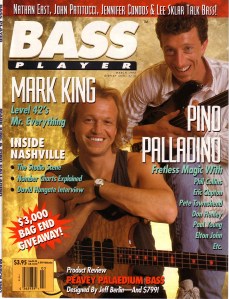
It’s interesting though that Mark King himself to this day strongly questions the live potency of the band during this era. In the March 1992 issue of Bass Player magazine, he came out with all guns blazing, discussing their November 1983 ‘Whistle Test On The Road’ appearance at the Brixton Ace (now the Academy):

‘I dug up an old one of us doing a live BBC programme… I thought, “Oh yeah, they were the good old days”. So I put on the video – and it was crap. The audience were fine, the lights were fine, the sound was fine. The band was crap. It was just so unsure, so uncertain…’

So which Level do you prefer? The choice is yours… In any case, it’s exciting to report that they’re currently in the middle of a UK tour celebrating 40 years of ‘The Sun Goes Down’.

Further reading: ‘Level 42: Every Album, Every Song’.

XTC: Mummer 40 Years On

There can’t be many more pleasurable summer activities than reclining in an English garden.

But XTC’s chief songwriter/vocalist Andy Partridge cut somewhat of a sad figure during May and June 1982 as he sat hunched over his acoustic guitar, working on new compositions, detoxing from Valium addiction and contemplating the end of his concert career.

Still, those songs were some of his best ever. But they appeared on an extremely inconsistent album called Mummer, named for the silent actors (keeping ‘mum’) who travelled around 18th century Britain and Ireland, released 40 years ago this week and very nearly titled Fruits Fallen From God’s Garden.

Japan (Tin Drum) producer Steve Nye was summoned for the project, recorded at Martin Rushent’s Genetic Studios and The Manor – a strange choice. He is good with the close-mic’d, dry-sounding, beautifully recorded acoustic-based tracks but not the heavier ones which were later remixed by Phil Thornalley, while the legendary Alex Sadkin redid ‘Wonderland’.

But Nye had his work cut out – the album is schizophrenic to say the least. The best songs sound like a decent band playing pretty much live in the studio – ‘Love On A Farmboy’s Wages’ (has there been a better English pop song about poverty?), ‘Great Fire’, ‘Ladybird’ (Andy discusses his jazzier influences in this great video), ‘Me And The Wind’. All wonderful. Dave Gregory is coming into his own with superb contributions on guitar and keyboards.

But the worst songs are rhythmically plodding – it’s understandable that Andy was trying to get away from 4/4 rock drums but ended up with too many cyclical grooves (putting pay to Terry Chambers’ tenure on the kit) – and melodically extremely challenging. Colin Moulding is not in great writing form either, ‘Wonderland’ excepted, though that too might have benefitted from a simpler treatment.

Mummer was initially rejected by Virgin A&R agent Jeremy Lascelles, who demanded another single. The excellent ‘Great Fire’ was Andy’s last-minute response, produced by Haircut 100 helmer Bob Sargeant, but it disappeared without trace – Radio 1 reportedly played it only once!

Along with The Big Express, Mummer was XTC’s worst selling album, reaching a barely believable #51 in the UK album charts and doing little business elsewhere, just over a year after ‘Senses Working Overtime’. It has to be said it was also not served well by its awful cover. But it features plenty of great music.

Further reading: ‘XTC Song Stories’ by Neville Farmer

Genesis: ‘Mama’ @ 40

If any more proof was needed as to how far the UK pop charts have declined since the mid-1990s, look no further than the fact that Genesis’s ‘Mama’ – released 40 years old this week – was their biggest hit, going all the way to #4.
Not bad for a nearly-seven-minute song without a proper chorus about a young man’s troubled relationship with a sex worker.

In my opinion, ‘Mama’ is one of the great singles of the 1980s, epic and menacing, and the last decent showing for post-Gabriel Genesis (I couldn’t/can’t get anywhere with its attendant 1983 self-titled album, nor any of their subsequent projects).

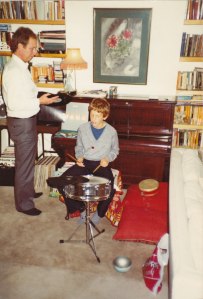
In autumn 1983, I was vaguely aware of Phil Collins, my ears having been piqued by my dad’s frequent playing of Face Value around the house. But when my uncle bought me the ‘Mama’ 12-inch single, I’m pretty sure I’d never heard of Genesis. But Uncle Jim wrote ‘Side A is the good side!’ on the front for guidance, knowing I’d love Phil’s immense drum sound (to these ears, still just as ‘shocking’ as ‘In The Air Tonight’). For me, this is the apex of Phil’s best era – roughly 1976 to 1983.

The author with his first snare drum, his dad the DJ about to put on ‘Mama’, circa autumn 1983

‘Mama’ was recorded at the band’s Farm studio near Chiddingfold, Surrey, and co-produced by Hugh Padgham. Phil set up in the new drum room modelled on the famous Townhouse Studio 2 in Shepherds Bush.

There are still so many pleasures – Phil’s sibilant, Lennon-influenced vocals (including a homage to Melle Mel), making full use of the slapback echo which went straight onto tape rather than being added later. Banks’s ominous synth layering and wacky lead tones. Mike Rutherford’s Linn drum programming, played through a guitar amp.

Also listen out for the way Phil avoids metal completely until the beginning of the fade, when his enormous crash cymbal is a huge release.


Frank Zappa: London Symphony Orchestra @ 40

In the last ten years of his life, Frank Zappa released a series of orchestral albums, now mainly forgotten by all but his most ardent fans. But they are vital constituents of his work, and may surprise listeners who only know him as a ‘rock’ musician.

A key artefact is the self-financed London Symphony Orchestra, the first volume of which was released 40 years ago (the second followed in 1987, before both were rereleased on CD and streaming platforms in 2012) and my pick of Frank’s ‘classical’ works.

It was recorded between 12-14 January 1983 at Twickenham Film Studios in South West London, on the banks of the Thames. The night before, on 11 January, the orchestra (plus Ed Mann and Chad Wackerman from Frank’s ‘rock’ band) performed the repertoire at the Barbican. Check out how the BBC reported that here.

Zappa has spoken candidly about the difficulties he had rehearsing and recording this music (percussionist Mann reports that the orchestra had a whole week of rehearsal – almost unheard of – at the Hammersmith Odeon and that he had been given his parts a month before rehearsals so that he could practice at home), and the myriad editing and studio tricks that had to be utilised before he was happy. ‘The Big Note’ tells the fascinating full story.

The music was split into premiere works and older material. The standout is probably ‘Bogus Pomp’, which reworks much of the orchestral stuff from ‘200 Motels’ to stunning effect. ‘Envelopes’ will be familiar to fans of the previous year’s Ship Arriving Too Late album.

It’s a blast of challenging, exciting music, even if you’re not a fan of ‘classical’ music. Excited by Varese, Boulez, Messiaen, Ives, Bartok and Stravinsky, amongst others, Zappa dealt in timbre and ‘blocks’ of sound, featuring big chords and big percussion sounds, bypassing cliché and having no truck with the notion that it was ‘difficult’ music. If you liked it, bitchin’. If you didn’t, there was a lot of other stuff out there.

Another bit of good news is that these two albums sound absolutely superb in their current incarnation on streaming services and CD, leaving the following year’s Perfect Stranger in the dust. All of those post-production tricks paid off. Thanks to Frank.

Peter Gabriel: Plays Live 40 Years On

PG’s first live album – released 40 years ago this week – touched down incongruously during 1983’s Summer of Fun, crashing into the UK chart at #9 alongside Let’s Dance and Thriller (but Japan’s posthumous live album Oil On Canvas did even better – it was the week’s highest new entry at #5).

Plays Live was ostensibly recorded during four dates of the American tour in December 1982. Gabriel had taken some choreography lessons and often ventured into the audience for ‘Lay Your Hands On Me’, sometimes ‘falling backwards’ from the stage in the manner of those corporate team-building/trust exercises.

But he was very transparent about there being a lot of ‘cheating’ on this album – many overdubs/vocal corrections were undertaken with the assistance of co-producer Peter Walsh (fresh from Simple Minds’ New Gold Dream) at Gabriel’s Ashcombe House studios near Bath.

Plays Live hangs together very well – it’s immaculately sequenced and you certainly get your money’s worth, clocking in at a shade under 90 minutes. The tracks taken from Peter Gabriel IV AKA Security are a huge improvement on the studio versions. ‘Humdrum’, ‘Not One Of Us’, ‘No Self Control’ and ‘DIY’ are similarly transformed to become radical, vital updates.

There’s even an excellent Melt outtake called ‘I Go Swimming’. And when the band are freed from the sequencers and drum machines, they really sound like a band – check out the ‘floating’ tempos of ‘Humdrum’ and a few other tracks.

Jerry Marotta’s huge drum sound and (quite advanced) used of drum machines were not everyone’s cup of tea – Bill Bruford was still kvetching about it to Modern Drummer magazine during a 1989 interview. Both Marotta and synthesist Larry Fast, a key collaborator, were given the boot by Gabriel at the end of 1983, to much consternation.

My entrée into Plays Live was the (remixed) single release of ‘I Don’t Remember’ courtesy of its video being shown on ‘The Max Headroom Show’ in 1985. Marcello Anciano’s disturbing clip featured nude dancers from the Rational Theatre Company and some figures inspired by the artist/sculptor Malcolm Poynter. It’s hardly surprising that it missed the top 40…

The Cult Movie Club: Handgun (1983)

British writer/producer/director/actor Tony Garnett – who died in 2020 – was probably best known for his work with Ken Loach on groundbreaking projects like ‘Cathy Come Home’, ‘Kes’ and ‘Up The Junction’.

But his move to America in the early 1980s – after his debut, Birmingham-set feature ‘Prostitute’ – produced a quintessential ‘forbidden’ cult film, barely seen, not clipped on YouTube, poorly received/marketed and just squeaking out once on Channel 4 in the UK during the mid 1980s (the chances of it showing up on that terrestrial channel these days are precisely nil…).

But ‘Handgun’ – released 40 years ago this week – is also a fascinating, disturbing, gripping film, well worth reappraisal despite its notorious reputation. Garnett embarked on the movie after a period researching gun laws in Texas. He settled on the story of an open-hearted, homesick young teacher named Kathleen who has moved from the East Coast to Dallas. She meets a local guy – a lawyer – who rapes her at gunpoint (an attack that we don’t see). What follows is controversial but also somewhat unexpected.

The film features strikingly naturalistic performances in classic Garnett style, actors (including excellent leads Karen Young, later to turn up in ‘9 1/2 Weeks’, and Clayton Day) mingling with non-actors to disarming effect. Accordingly, Garnett mixes ‘classic’ filmmaking with near documentary footage. Meanwhile, Mike Post’s austere music adds grandeur. He’d just finished work on ‘The A Team’, ‘Magnum PI’ and ‘Hill Street Blues’!

Garnett intends to provoke. ‘Handgun’ very pointedly begins on Dealey Plaza, and the film looks at the role of the gun at the centre of American culture and its implied role in the subjugation of women and Native Americans. Note also the photo of John Lennon above Kathleen’s bed.

Some reviewers including ‘Time Out’ described ‘Handgun’ as exploitative. It’s actually a resolutely untitillating, moral movie which has resonance today in both the personal and political realms. But it certainly seems to have been let down with its marketing, including the dodgy poster above which takes it more into ‘I Spit On Your Grave’/’Ms. 45’ territory (but when did you last hear a woman’s voiceover on a movie trailer?)

‘Handgun’ got a paltry release in the UK and then crawled out a year later in the US with a strange new title ‘Deep In The Heart’, Warner Bros. focused on their other ‘rape revenge’ film, Clint Eastwood’s wretched ‘Sudden Impact’. But it lives on courtesy of a very good DVD print, one to look out for. Garnett moved back to Blighty at the end of the 1980s and went on to helm other brilliant TV shows such as ‘This Life’ and ‘The Cops’.

Further reading: ‘The Day The Music Died’ by Tony Garnett.