Recently, I was honoured to be asked by photographer William Ellis to contribute to his One LP project where he asks musicians, writers and music business figures to speak about the album that has been most important to them.
Here’s what I said about Gone To Earth (with a few edits):
I was given the album by my parents on my 14th birthday. I had heard the single ‘Taking The Veil’ a few weeks before and it had struck me immediately as something I needed to check out. Concurrently, I was getting into Japan, Sylvian’s band from the early ’80s.
But Gone To Earth had a whole new influence: ECM-style jazz. Kenny Wheeler plays some beautiful solos, John Taylor features strongly on piano, and Harry Beckett blows all over ‘Wave’. Back in the mid-’80s, pop music embraced jazz with ease, but now it seems like the two worlds have completely diverged. Sylvian combines both elements really nicely.
When I delved deeper into Sylvian’s lyrics, I realised that they could be related to romantic affairs – there was a ‘pop’ element to them – but they could also be spiritual in nature, about ‘the other’ in general, touching on religious ideas, metaphysical ideas. That concept has fascinated me as I’ve got older.
Side two of Gone To Earth is completely instrumental. Sylvian loathed the term ‘new age’ and instead produced ambient music which was more environmental, geared towards self-reflection and an appreciation of nature. He once said, ‘If I didn’t live in a city, I wouldn’t need to make this music.’
On ‘The Healing Place’, German artist Joseph Beuys speaks about his vision of art. Another track features Robert Graves reciting his poem ‘The Foreboding’. The voice of JG Bennett makes a few appearances, familiar from Fripp’s Exposure.
And then, of course, there’s Sylvian’s voice. I think of it as an instrument. Some people find him a bit doomy, depressing, po-faced, but I’m always inspired by his melodies. He’s also a great, natural musician, very underrated/understated on keyboards and guitar.
The story goes that Virgin didn’t want to fund the second instrumental side. You can imagine, can’t you? They said, ‘This pop singer’s trying to an album of instrumentals? What’s going on?’, even though Bowie had done it ten years before. In this fascinating interview from 1986, Sylvian explains that he had to work on side two in his ‘spare’ time, away from Virgin’s watchful eye. I’m glad he did.
Musically, the album is also a guitarists’ dream: Robert Fripp, Phil Palmer, Bill Nelson and Sylvian himself contribute memorable, considered work. Nelson in particular is a revelation. Sylvian gives him space to sculpt and layer his parts, and he delivers some brilliant solos. BJ Cole adds some dreamy pedal steel.
In 1988, I saw Sylvian at the Hammersmith Odeon with a great band featuring Mark Isham on trumpet, David Torn on guitar and Steve Jansen on drums. It was tremendously exciting; there was a kind of ‘goth’ element at the gig which surprised me and lots of young women screaming for Sylvian!
He was still holding onto his ‘pop’ status – it’s no mean feat for an 80-minute, half-instrumental album to reach 24 in the charts. It was a time when pop music had a lot more mystique; you had to scan The Face, Wire, NME or Melody Maker to glean any snippets of information about artists of Sylvian’s calibre.
Every time I listen to Gone To Earth, I notice something new. It’s such a layered, beautiful piece of music, almost always to be enjoyed in one sitting, and it came out during an incredibly fertile period for Sylvian – the 1984-1987 run of Brilliant Trees, Gone To Earth and Secrets Of The Beehive surely matches any other artist in ’80s music…
Though he had recorded the very successful You’re Under Arrest and was in some of his best trumpet lip of the ’80s, his relationship with Columbia Records was at an all-time low.
For one, the label’s other star trumpeter Wynton Marsalis was at his peak of popularity, and, as far as Miles was concerned, Columbia boss Dr George Butler only had eyes for Wynton.
Then Miles felt that Columbia had procrastinated over releasing his cover of the Cyndi Lauper song ‘Time After Time‘ as a single. At the time, with typical mordant humour, Miles said, ‘He (George Butler) ignored it because he’s so busy with Wynton Marsalis. He heard us do it at the Montreux Jazz Festival last year and said “We gotta do it! We gotta do it!” I said, “George, I told you man. We already did it!” And he still didn’t release it…’
And the final nail in the coffin seemed to be Columbia’s unwillingness to put any financial clout behind Miles’s stunning collaboration with Danish trumpeter/composer Palle Mikkelborg, Aura, recorded at the beginning of 1985. For unknown reasons, the music didn’t see the light of day until 1989.
Again, in contemporary interviews, Miles rounded up the usual suspects: ‘I wanted $1400 for a digital remix and Columbia wouldn’t pay it. And then George Butler calls me up. He says to me, “Why don’t you call Wynton?” I say, “Why?” He says, “Cos it’s his birthday!” That’s why I left Columbia.’
Later reports had Miles carrying out Butler’s request, barking ‘Happy Birthday!’ to Marsalis and then slamming down the phone.
Miles officially became a Warner Bros. artist in autumn 1985. House producer Tommy LiPuma was delighted to get him – but what to do with him? Miles first took his touring band into the studio and embarked on a kind of You’re Under Arrest part two, covering tunes by Mr Mister, Nik Kershaw and Maze.
But this project was quickly abandoned, and Miles contacted various musicians including Prince (who supplied the rather humdrum ‘Can I Play With U’, later replaced by Marcus Miller’s ‘Full Nelson’), George Duke, Bill Laswell, Paul Buckmaster and Toto’s Steve Porcaro. He was desperate for new music and a new direction.
But he finally settled on an old contact, Randy Hall, the young Chicago multi-instrumentalist who had worked on his comeback album The Man With The Horn back in 1981.
Around a dozen tracks were completed between October and December 1985 in what was now known as the Rubber Band project. However, again for unknown reasons, the project was shelved, LiPuma quoted as saying, ‘I didn’t hear anything. To me, it didn’t sound like nothing was going on.’
Other collaborators were quickly suggested and then discarded including keyboardists Lyle Mays and Thomas Dolby. So Miles went back to George Duke. Their paths had crossed many times over the years, particularly when Duke was playing keyboards with Cannonball Adderley in the early ’70s.
As Duke remembers, ‘When Miles called, I initially thought it was a prank, one of my friends impersonating him. So I didn’t do anything, and a week later he called again. I said, “Who is this?” and he started swearing at me, “Mother****er, write me a song!”‘
It seems finally that George Duke’s demo of ‘Backyard Ritual‘ was deemed a direction worth pursuing by Miles and LiPuma. A strong, drum-heavy track put together by Duke using a Synclavier digital sampler with a simple but memorable main motif, he never intended it to be used as a final version, highlighted by the rather cheesy sampled alto sax solo.
But Miles eventually used almost the whole demo for Tutu, embellishing it only with some slithering percussion by Steve Reid and Paulinho Da Costa and of course his own pristine trumpet playing.
Miles’s take on it was that he respected a quality arrangement, demo or not: ‘A guy like George Duke, he writes a composition, it’s all there. All you have to do is play on it and respect that man’s composition’, he told writer and musician Ben Sidran.
And Duke revealed that he had even played a ‘sampled’ trumpet solo on the original demo, which tickled Miles. Duke: ‘He said to me, “You think that’s the way I play trumpet?” And I said, “That’s the way it sounds to me!”‘
At the beginning of 1986, Marcus Miller phoned Tommy LiPuma out of the blue. The bassist and composer had of course played in Miles’s comeback band from 1981 to 1983.
He had since made two solo albums and worked with a huge variety of artists, from Luther Vandross and Aretha Franklin to Bryan Ferry and Carly Simon, and was aware that Miles had migrated to Warner Bros and wondered if he was looking for new songs.
LiPuma sent him the ‘Backyard Ritual’ demo; Miller was instantly inspired: ‘I thought, “Wow, if Miles is willing to use drum machines and stuff, let me show my take on that.” I wasn’t directly musically influenced by George’s track but it gave me a direction.’
Miller wrote and recorded demos for ‘Tutu‘, ‘Portia‘ and ‘Splatch‘ back-to-back, playing all the instruments himself. Previewing the tracks with Miles and LiPuma in LA in March 1986, he got an immediate green light to turn this into an album project – this was the direction they had been looking for.
Miller began recording the final versions of the three tunes immediately with the help of keyboardist and programmer Adam Holzman.
There’s been a lot of speculation as to why none of Miles’s touring band were invited to play on the Tutu sessions, with opinions differing as to who made the decision. Miller insists, ‘I wasn’t party to the decision not to use the live band but Tommy didn’t push me in any direction. He let me do my thing.’
Miles seemed to resign himself to the convenience of the situation, saying, ‘Rather than get myself, the working band and Tommy into all kinds of hassles by trying to bring my band in the studio to record music I might like, but Tommy doesn’t, we do it this way.’
Consequently, although some choice session players appear on the album, such as drummer Omar Hakim and the aforementioned Paulinho Da Costa, as well as some of Miller’s trusted friends and collaborators like keyboardist Bernard Wright, synth programmer Jason Miles and electric violinist Michal Urbaniak, there’s a unified sound to Tutu that comes directly from Miller’s contributions on fretted and fretless basses, keyboards, drum programming and occasional live drums.
His soprano sax acts as Miles’s main instrumental foil on the album, particularly evident on the call-and-response phrases in ‘Tomaas’.
Once the backing tracks had been laid down, LiPuma and Miller documented Miles’s trumpet playing as spontaneously as possible without resorting to too many ‘comp’d’ takes (final versions made up of several performances).
Apart from this being a necessity as Miles didn’t like to do more than two takes, it was also an intelligent arrangement idea serving as a contrast to the painstaking and meticulous piecing together of the backing tracks.
According to legend, Miles’s solos on the title track and ‘Portia’ are complete takes from beginning to end. Miller found himself performing on soprano sax at the same mic as Miles during the recording of ‘Portia’. He called it ‘one of the most tense experiences I’d ever had’.
But, by most accounts, Miles was a receptive and willing participant in the creative process, once telling Miller, ‘Come on, man, I don’t mind a little bit of direction! You wrote the tunes. Tell me where you want me to play.’ Again, Miles demonstrates his total respect for the composer.
Miles was also reportedly responsible for the inclusion of one of the more controversial cuts on the album, the Scritti Politti cover tune ‘Perfect Way‘. Miles apparently cajoled Miller into recording the song, believing it had the potential to be the new ‘Time After Time’, and even wanted to call the album ‘Perfect Way’ until just before release.
But Miller expressed reservations about replicating Scritti’s legendary ‘Swiss watch’ arrangements, and with good reason – the Tutu version does sound rather laboured and weedy compared to the original. But Miles remained a big Scritti fan and two years later made a memorable guest appearance on their ‘Oh Patti’ single.
So has Tutu stood the test of time? The title track, ‘Portia’ and ‘Tomaas’ would surely be right at home on any Miles best-of, with their majestic themes, engaging harmonies, slinky grooves and strong trumpet playing.
‘Full Nelson‘ remains a great tribute to Prince’s sound circa Parade and Sign Of The Times, while ‘Don’t Lose Your Mind‘ is a classy approximation of Sly and Robbie‘s mid-’80s collaborations. But ‘Perfect Way’, ‘Backyard Ritual’ and ‘Splatch’ unfortunately now sound suspiciously like beautifully-produced filler.
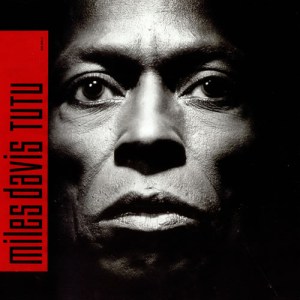
But, taken as a whole, Tutu is a very important album whose success was helped immeasurably by Irving Penn‘s striking cover portrait. It crystallised Miles’s interest in funk, soul and R’n’B more successfully than Decoy or You’re Under Arrest, whilst retaining a crucial ‘jazz’ flavour.
It was also a statement of political intent and black pride, significantly referencing both Archbishop Desmond Tutu and Nelson Mandela in its song titles. And – perhaps most crucially – it was a hit, introducing a whole new generation to Miles’ unique trumpet sound.
For much more on Tutu and Miles’s ’80s work, check out George Cole’s great book ‘The Last Miles’ and also Paul Tingen’s ‘Miles Beyond’.
DVD commentaries come and go, but among the best I’ve heard is for ‘Sideways’, Alexander Payne’s classic 2004 movie starring Paul Giamatti and Thomas Haden Church.
One scene, set at at the fictitious Frass Canyon winery, opens on the shot of a pale, very sincere acoustic guitarist playing a ‘tender’ ballad. On the commentary, Haden Church mutters: ‘Very Windham Hill-ish’, eliciting a chuckle from Giamatti.
You get the feeling that the term ‘Windham Hill’ is a code for something not entirely positive…
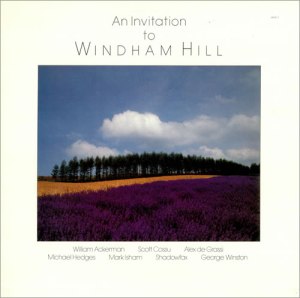
For a brief period in my teens, a cassette copy of An Invitation To Windham Hill was always near the family hi-fi.
It has since become one of those weird, unclassifiable albums that I can’t shake. Why is that? What is this kind of music really about once you subtract the nostalgia?
The Windham Hill label was founded in 1976 by Californian guitarist William Ackerman, who initially used the imprint to sell his own music out of a Palo Alto garage. Just down the road, Steve Jobs was establishing his Apple empire, and guess what: he was a big fan of Windham Hill, as Ackerman later recounted in an interview:
‘Steve fell in love with the aesthetic. All the Apple computers (played) Windham Hill music when you turned them on. It was such an exciting time. Anything seemed possible. People were making dreams come true, and I did feel part of that.’
Early on, the label emphasised solo acoustic instruments, eliciting a ‘back to nature’ vibe. Later, electronic music, contemporary bluegrass, smooth Latin/jazz and Celtic sounds were eased into the mix.
The stark, ‘natural’ style of their album covers was apparently influenced by ECM, as was some of the musical ethos; Keith Jarrett’s Koln Concert and the acoustic guitar work of Ralph Towner, John Abercrombie and Pat Metheny were certainly important to Windham Hill.
Also, in the same way that Jarrett’s album proved a huge sales breakthrough for ECM, a similar thing happened to Windham Hill – George Winston’s Autumn unexpectedly sold over a million copies and changed the label from a modest, regional imprint to nationally-known entity (and Autumn was the first of his seasonal-themed recordings!).
The whole Windham Hill package, both musically and visually, is very ‘white’, very ‘corporate’, very ‘Thirtysomething’. It contributed massively to the mid-’80s popularity of New Age music (and the eventual backlash against it). It also has a lot in common with the Minimalist movement (including geography).
But Ian MacDonald has written persuasively about the infantilising effects of this stuff in his brilliant ‘The People’s Music’:
‘Something happens to people who listen to too much minimalism. They begin to smile facetiously, display a genially indiscriminate omni-tolerance and put their feet on your furniture. Some start wearing dungarees and playing with frisbees’!
There is definitely that element to An Invitation To Windham Hill, but it does also highlight the work of two genuinely excellent artists: Mark Isham and Michael Hedges. Isham has been a first-call soundtrack composer for 30 years now but his 1983 debut album Vapour Drawings is an ambient/electronic classic (more on that to come).
Hedges, who died in 1997, blew guitarists’ minds with the release of his debut album Aerial Boundaries. Thetitle track manages to be both an amazing technical feat (it’s a solo piece for drastically detuned guitar sometimes featuring up to four intertwining melodies, achieved with a mixture of picking, tapping and hammer-ons) and also a substantial composition in its own right.
The other solo guitar tracks by Alex De Grassi and Ackerman are weirdly memorable, as are the solo piano pieces. In fact, the whole album is, and it might make a nice soundtrack to your wine-tasting evening or campfire gathering. Or it might not…
Track listing:
A1 George Winston ‘Thanksgiving’ (3:07),
A2 Alex De Grassi ‘Western’ (4:04),
A3 Mark Isham ‘Love Theme’ (From ‘Mrs. Soffel’) (4:11),
A4 William Ackerman ‘Visiting’ (6:07),
A5 Mark Isham ‘In The Blue Distance’ (4:07),
B1 Shadowfax ‘Angel’s Flight’ (4:00),
B2 Scott Cossu ‘Ohana’ (5:03),
B3 Michael Hedges ‘Aerial Boundaries’ (4:39),
B4 William Ackerman ‘The Bricklayer’s Beautiful Daughter’ (3:50)
B5 George Winston ‘Longing/Love’ (5:11)
Some improvised music hits you at just the right age, to the extent that 30 years later you can still hum along to all the solos.
Baby boomers were lucky enough to have Kind Of Blue, Time Out or Mingus Ah Um but jazz fans brought up on Weather Report and 1980s Miles had albums like Magnetic.
In 1986, recording and instrument technology was moving quickly, maybe too quickly. This development influenced all kinds of music, from rock to fusion, and, in the wrong hands, led to a lot of grossly-overproduced, unmemorable stuff that barely holds up today. As a few people have said, 1986 may be the worst music year of the decade.
But that year also somehow produced some memorable fusion music. Smooth Jazz (AKA The Wave) was just a twinkle in some bored record exec’s eye and the ever-reliable Japanese market was keeping quality electric jazz alive; Lyle Mays, Mike Stern, Wayne Shorter, John Abercrombie, Miles, Bireli Lagrene, John Scofield, Bill Frisell and John McLaughlin were going strong.
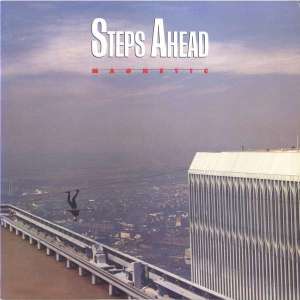
Though Steps Ahead’s Magnetic album embraces technology to a full extent, even more so than on ’84’s Modern Times, given the writing and playing talent (Michael Brecker, Peter Erskine, Mike Mainieri) it’s no great surprise that they pull it off with so much aplomb, aided by formidable ex-Weather Report bassist Victor Bailey.
A timeless classic it ain’t, but Magnetic isn’t any old ‘what does this button do?’ mid-’80s studio creation. Though the sound and mastering are superb, emphasised by the presence of Brothers In Arms producer Neil Dorfsman on engineering duties alongside future back-room stars James Farber and Tom Lord-Alge (fresh from Steve Winwood’s Back In The High Life), the compositions very definitely come first and the audio ‘experiments’ second.
Despite all this, Magnetic is definitely the least-heralded Steps Ahead album amongst jazz critics, probably because it’s a real onslaught of styles and sounds, closer to a ‘pop’ album in concept. The melodic themes are strong without ever getting too sugary and each track has a unique flavour.
It’s hard to believe the same band can come up with ‘Something I Said’ (featuring one of Brecker’s great ballad performances) and also the coruscating avant-fusion of ‘Beirut’ (developed from a band jam session).
Hiram Bullock plays one of his many classic solos on ‘Trains’, adding some much-needed grit, while George Duke co-produces the weird but exciting contemporary R’n’B of ‘Magnetic Love’ featuring some outrageous sampled Brecker tenor lines and killer Dianne Reeves lead vocals (and great backups from Jocelyn Brown, Janice Pendarvis and Diva Gray).
A synthesized cover of Ellington’s ‘In A Sentimental Mood’ proves Steps’ link to the past masters and features some astonishing EWI (an electronic instrument with the same fingering as a sax that looks like an elongated metal lollipop) from Brecker. There’s even time for some banjo-playing on ‘Cajun’, powered along by Erskine’s superb ride cymbal work. Yellowjackets were definitely listening to that. Oh, and is that Philippe Petit on the sneakily-doctored album cover?
It’s weird seeing Steps Ahead playing this material live. They had obviously worked a bit on their stage ‘presentation’ between 1984 and 1986, maybe influenced by Chick Corea’s shenanigans. Peter Erskine and Victor Bailey had left to join Joe Zawinul’s Weather Update tour, so ex-Journey drummer Steve Smith, Sting/Miles bassman Darryl Jones and Stern came in, adding some big-name clout and a much tougher sound.
Magnetic was the last major-label action for Steps Ahead. Brecker and Erskine jumped ship but Mike Mainieri would continue with the name over the next few decades fronting a multitude of line-ups. He even fronted a ‘reunion’ tour in 2016 with a formidable band including pianist Eliane Elias and sax player Donny McCaslin.
‘At the time of coming back, he had tremendous determination. He said do want to make it! I do want to succeed!” Instead of going along with the idea that he is different, special, unique, precious, So was about him saying, “F**k that! I’m going to allow myself to succeed.”’ Jill Gabriel, quoted in ‘Peter Gabriel’ by Spencer Bright
So was the Peter Gabriel album that put him – albeit very briefly – into The Big League, alongside the likes of Madonna, Michael Jackson, Phil Collins, Prince, Hall and Oates and Springsteen, leaving his ‘art-rock’ contemporaries (Laurie Anderson, Brian Eno, Peter Hammill, Robert Fripp) in the dust.
He opened himself up to mainstream success via more direct lyrics and music. And it worked a treat. So still sounds fantastic today; a near-perfect mix of art and commerce.
photo by Steven Toole
In interviews, Gabriel has described the ’83/’84’ period as a dark time in his life. He mixed and released an excellent live album and looked for solace in film soundtrack work, producing two fairly inconsequential tracks: ‘Walk Through The Fire’ from ‘Against All Odds’ and ‘Out Out’ from ‘Gremlins’.
Far more substantial was his soundtrack for Alan Parker’s ‘Birdy’, but, most importantly, it was the project that introduced him to So co-producer Daniel Lanois.
Gabriel later credited Lanois and his then wife Jill for steering him back towards more positive thoughts, and much more ‘up’ music and lyrics.
Gabriel came up with 20 new songs by early 1985. Lanois helped him whittle them down to 12, and then six months of pre-production began, focusing on song structures and arrangements. So was mainly recorded at Gabriel’s home studio, Ashcombe House near Bath.
Working at home was intended to save money on big studio fees and also speed up the creative process, but lyric-writing was still a big problem and a lack of words necessitated two missed release deadlines for So: 31st July 1985 and 14th December 1985.
Virgin were patient. Lanois once even nailed him into a back room to force him to come up with some lyrics – Gabriel was not amused, at least not for a few hours. ‘It is the most upset I’ve seen him at the studio,’ guitarist David Rhodes remarked. Lanois had made his point.
Musically, Gabriel very much leaned on tried-and-tested collaborators such as Rhodes and Tony Levin – it’s hard to imagine anyone else playing bass on So. He’s so much part of the music. Check out his ‘drumstick bass’ (later marketed as Funk Fingers!) on ‘Big Time’.
Joni Mitchell’s then husband Larry Klein also plays some lovely fretless on ‘Mercy Street’. French-African newcomer Manu Katche amazed everyone with his drumming, particularly on ‘That Voice Again’ and ‘In Your Eyes’. He had a new twist on Stewart Copeland’s style and also somehow found the time to fit occasional tom-tom flurries into his grooves too.
Migrant Mother by Dorothea Lange
‘Red Rain’ opens with some resplendent Copeland hi-hat work, and ends with the kind of piano/vocal coda that Simple Minds excelled at – the influences were now flowing both ways.
‘Don’t Give Up’ was inspired by a BBC TV documentary about the effect of unemployment on British family life, and also the photography of Dorothea Lange, portraying dust-bowl conditions during the Great Depression.
‘Mercy Street’, dedicated to poet Anne Sexton, shows evidence of Lanois’ influence; its opening ambient textures resemble Brian Eno’s ‘Under Stars’ which Lanois co-produced.
Gabriel’s low-octave vocals apparently had to be recorded first thing in the morning for maximum deepness. The song’s Brazilian/African groove predates Paul Simon’s Graceland by six months or so.
‘We Do What We’re Told (Milgram’s 37)’, concerning social psychologist Stanley Milgram’s infamous experiments, was originally recorded for Melt in 1980. While musically very rich and dark (I always think of Kate Bush’s ‘Running Up That Hill’ when I hear that opening minor chord), lyrically it is possibly a little half-baked.
‘Big Time’ is Gabriel’s amusing, self-mocking, Randy Newmanesque satire on success and celebrity – ‘This drive for success is a basic part of human nature and my nature’, he later said.
Musically, it’s a potent mixture of driving Copeland drums, treated rhythm guitar, synth bass, quasi-industrial samples and some great Hammond organ by Simon Clark.
Another much rockier version – featuring Jerry Marotta on drums – was also recorded but scrapped just before the mastering stage.
‘Sledgehammer’ was the last song written and recorded for So. Ironically, it dislodged Genesis’s ‘Invisible Touch’ to become a US number one single in July 1986.
A catalogue of sexual innuendos, it’s one of the weirder hits of the 1980s. Its odd cheerfulness may come from the fact that it’s mainly in a major key, a rarity for an R’n’B-influenced track. David Rhodes’ rhythm guitar part is eccentric and the Farfisa organ bizarre.
The opening sampled bamboo flute was copied by hundreds of keyboard players across the UK (or at least a few in my school). The groundbreaking video for the song, directed by Stephen Johnson (who had used similar techniques for Talking Heads’ ‘Road To Nowhere’ clip), required 100 hours of Gabriel’s time.
Apparently Gabriel was obsessed with the album’s sequencing: he made up endless cassettes featuring just song endings/beginnings, testing all the different permutations.
He always wanted ‘In Your Eyes’ to close So, but was persuaded otherwise when told that its drums and bass wouldn’t hold up very well at the end of a long side of vinyl (though it’s hard to ‘hear’ it anywhere else but at the beginning of side two…). He finally got it where he wanted it on the definitive remastered version.
Gabriel’s only concession to the record company was to name the album something apart from ‘Peter Gabriel’. So seemed suitably off-the-cuff – ‘It had a nice shape but very little meaning’, he later said.
He also decided that a simple cover shot would better suit the directness of the music and lyrics than some of the more disturbing covers of albums past. So‘s design and packaging still look fantastic today.
The album topped the charts on both sides of the Atlantic and by summer 1987 had sold over 5 million copies worldwide. Gabriel promoted the album extensively before embarking on Amnesty’s Human Rights Now! with Sting, Tracy Chapman and Bruce Springsteen in 1988.
He had a lot more than music on his mind – he waited a full six years before releasing the official follow-up to So. The commercial assault had paid off but at what cost to his long-term creativity?
I’ve always had a somewhat ‘troubled’ relationship with Toto’s music, to put it mildly…
Toto IV (1982) was obviously a classic of its kind, Hydra (1979) had its moments and there are other classy tracks dotted around, but I’ve generally thought: David Hungate, David Paich, Jeff Porcaro and Steve Lukather are fantastic musicians who have played on some of the greatest albums of all time – so what are they doing in this band, writing these songs?
But I found a solution of sorts when I came across a track buried at the end of their lacklustre Fahrenheit album from 1986. ‘Don’t Stop Me Now’ is a cracking instrumental with nice chord changes, a great melody, gorgeous bridge, slick playing from co-writers Paich and Lukather and a memorable guest spot from Miles Davis.
Of course Miles was no stranger to the world of Toto and the LA session elite in general. He was tight with Quincy Jones, producer of Michael Jackson’s Thriller, an album that heavily featured Jeff Porcaro, Paich and Lukather.
Miles had also covered Thriller‘s ‘Human Nature’ (co-written by Toto keyboardist Steve Porcaro) on his You’re Under Arrest album the previous year. He was also apparently a big fan of Jeff Porcaro’s painting, not to mention his drumming, so a full-scale Miles/Toto collaboration was surely always on the cards.
But the recording of ‘Don’t Stop Me Now’, which took place at Jeff Porcaro’s home studio in early 1986, wasn’t a walk in the park, as Steve Lukather told George Cole in the excellent ‘Last Miles: The Music of Miles Davis, 1980-1991’:
‘We cut the track and left the melody off – we just left open spaces. When Miles got there, we ran it down together with him and he wasn’t really playing the melody. So we figured, we’re not going to tell Miles Davis what to play, so we said, “Miles, we have a take of this, would you mind just giving it a listen and play whatever you want?” He says, “Okay, I’ll play like that. You like that old shit, right?” So he gets out the Harmon mute and he played it – one take. We’re all stood there completely freaked out – it was unbelievable. At the end, the song just kind of fades out, but he just kept playing the blues. I was sitting there with chicken skin on my arms – it was an unbelievable moment. And that’s how we ended the record, with just Miles blowing. Later on, David Sanborn came down to play on a different tune on the record and he’d heard that we had cut a tune with Miles. He said: “I gotta hear it!”, so we played it and he flipped and said, “Please just let me be on the track!” He doubled the melody and played a couple of flurries. So we got Sanborn, Miles and us on one track – that was pretty cool!’
But Steve Porcaro alluded to the wider issue of including a ‘jazz’ track on a ‘heavy rock’ album when he told George Cole: ‘I don’t know how thrilled the record company or our managers were, but for us working with Miles was a major feather in our cap.’
But that kind of political scene didn’t affect Miles: he loved ‘Don’t Stop Me Now’ and quickly integrated it into his own live set. It remained a staple of his concerts from 1986 right up until 1990, the year before his death. It’s a beautiful piece of work. But while we’re at it, has anyone got a lead sheet of the tune? I want the chords…
The birds are swaying, the trees are singing (to quote Dylan Moran) and a young man’s fancy turns to music (to misquote Tennyson).
We all have our favourite spring/summer tracks but in my gaff there isn’t an ’80s tune that does the job better than this gem.
Songwriters Mark Hollis and Tim Friese-Green pinpoint April 5th as the date when spring really kicks in, and this deceptively ramshackle, charmingly off-the-cuff track features elegant piano, Hammond organ, wobbly Variophon, Robbie McIntosh dobro, David Roach soprano sax, subtle percussion programming and a killer chord change.
It was probably the highlight of The Colour Of Spring and forerunner to classic TT post-rock albums Spirit Of Eden and Laughing Stock, highlighting improvisation, lots of space and a much more pastoral sound than before. It floats in like a half-remembered childhood dream and then floats away just as rapidly.
Here she comes Silent in her sound Here she comes Fresh upon the ground
Come gentle spring Come at winter’s end Gone is the pallor from a promise that’s nature’s gift
Waiting for the colour of spring Let me breathe Let me breathe the colour of spring
Here she comes Laughter in her kiss Here she comes Shame upon her lips
Come wanton spring, come For birth you live Youth takes its bow before the summer the seasons bring
Waiting for the colour of spring Let me breathe you
Rea has – a little unfairly – never quite been able to escape a slightly dodgy image here in the UK, but, along with George Michael, he was probably the most popular male British singer/songwriter of the late ’80s and early ’90s.
The breakthrough/breakdown was his 1989 single/album ‘The Road To Hell’, so close to the Dire Straits sound as to be almost parody. I preferred the more laidback, distinctive Rea of the mid-’80s.
He started out pushing the glossy AOR and light, folky pop, enjoying a huge US hit with ‘Fool If You Think It’s Over’ in 1978 (later claiming that early producer Gus Dudgeon had blunted the ‘bluesier’ elements of his sound).
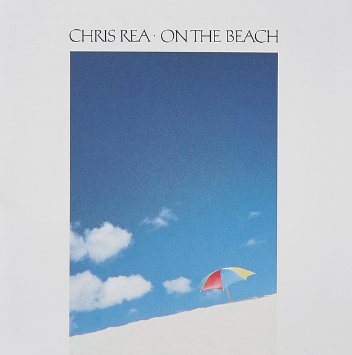
His career seemed to be hitting a cul-de-sac in the early ’80s, but On The Beach was one of the albums that turned things around, the beginning of his commercial era
It taps into the same kind of jazzy, introspective pop/soul sound that the likes of John Martyn, Joni Mitchell and Van Morrison were flirting with in the same period, helped by an excellent band including Fairport Convention/XTC drummer Dave Mattacks, Martin Ditcham on percussion and Max Middleton on keys. Rea also plays an impressive array of instruments himself, including fretless bass and synth.
Listening in one sitting to On The Beach again, the first thing that struck me is its almost relentlessly downbeat vibe. But the opening title track, with its lilting Latin-tinged groove and jazz chords, perfectly introduces the album’s themes of lost innocence and childhood reminiscences.
The moment when Mattacks lays into his fat snare drum for the first time is one of my favourite ’80s drumming moments.
‘Little Blonde Plaits’ is a vehicle for Middleton’s expressive Mini Moog, very redolent of his atmospheric playing on John Martyn’s Glorious Fool. There’s further ethereal jazziness on ‘Just Passing Through’, featuring a really lovely vocal performance and tasty solo guitar from Rea.
‘It’s All Gone’ ups the ante with some subtle Donald Fagen-style synths and excellent lyrics, and the groovy extended outro is close enough for jazz/funk with some empathetic Mattacks drums alongside Middleton’s fine Fender Rhodes solo.
On The Beach was a decent hit in the UK, reaching #11 in the album chart and selling over 300,000 copies. After this, Rea’s music became increasingly rootsy with elements of blues, country and rock’n’roll; he started channelling Dire Straits and ZZ Top rather than John Martyn and consequently enjoyed much more commercial success.
But On The Beach‘s four or five choice tracks are still my favourite Rea moments of the ’80s.
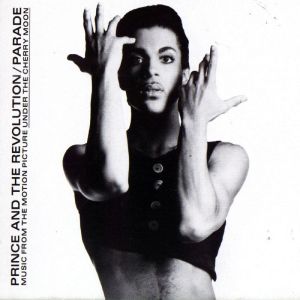
On 17 April 1985, just ten days after the end of the Purple Rain tour, Prince walked into LA’s Sunset Sound studios, sat at the drums, taped the lyrics of four new songs onto a music stand, picked up his sticks and instructed engineer Susan Rogers: ‘Don’t stop the tape when I stop playing. Just keep rolling.’
He then played through ‘Christopher Tracy’s Parade’, ‘New Position’, ‘I Wonder U’ and ‘Under The Cherry Moon’ without pausing. This guy worked fast. The recording sessions for Parade had begun.
The album would see Prince continue his extraordinary mid-’80s run of form, surely comparable to Stevie Wonder’s fabled 1972–1976 period. He couldn’t release albums fast enough and the wider world was waking up to just how prolific he really was.
His striking new horns-and-orchestra-driven sound, by turns jazzy, funky and psychedelic, lost him some fans in the States but made him a huge star in Europe. Parade showed off the amazing versatility of Prince (drums, bass, guitar and keyboards) and his main collaborators Wendy (guitar) & Lisa (keyboards).
It’s an anti-boredom album full of glorious contradictions – it features his first instrumental track but still contains four classic dancefloor singles; it’s his densest, most ‘produced’ ’80s album (alongside Lovesexy) and yet features his first all-acoustic track, recorded completely live in the studio; Clare Fischer’s orchestral arrangements are always high in the mix but rub shoulders with the Sunset Sound’s ancient sound effects library; Prince utilises ultramodern tech like a guitar synth and a Fairlight sampler, but the main solo instruments are Eric Leeds’ tenor and baritone sax. And there is zero electric lead guitar, barely 18 months after Purple Rain.
References this time around were The Beatles, ’80s Miles Davis, show tunes and funk-era James Brown. The biggest influence though is late-’70s Joni Mitchell. Parade is the nearest Prince ever got to the kaleidoscope range of her classic albums Don Juan’s Reckless Daughter and Hissing Of The Summer Lawns.
There were also more vocals in Prince’s music than ever before: Wendy, Lisa, Susannah (Wendy’s sister and Prince’s fiancée) and Sheila E all contributed massively to the occasional West Coast/Bangles sound.
By 2 June 1985, nine songs for Parade were in the can, though three would later be left off the final album – the spooky ‘Others Here With Us’, fantastic ‘All My Dreams’ and superfunky ‘Sexual Suicide’. Prince was also now working on not one but two other albums, Jill Jones and Mazarati’s debuts. By late June, he was also scouting locations in the south of France for the upcoming ‘Under The Cherry Moon’ movie. But, true to form, he couldn’t stop recording – he set up a makeshift recording studio in his Antibes hotel suite.
Parade‘s first three tracks – ‘Christopher Tracy’s Parade’, ‘New Position’ and ‘I Wonder U’ – pass by in the blink of an eye, gloriously odd, genuinely psychedelic funk miniatures. Very few have taken on the mantle of this style of music since 1986, though D’Angelo had a good go on the superb Voodoo album.
‘Under The Cherry Moon’ is almost a ’30s-style jazz number featuring asthmatic synths, fantastic piano playing and a daring melody line. I’d like to hear Tom Waits’ cover. If you listen very closely, you can hear the rattle of Prince’s necklace as he lays down the drum track.
‘Girls And Boys’ is a classic one-chord funk tune whose blaring guitar synth adds an engaging weirdness. Saxophonist Eric Leeds makes his mark on Prince’s music for the first time (though had already featured prominently on The Family’s album).
‘Life Can Be So Nice’ features fake harpsichord, sampled flute, piercing cowbell, some intricate acoustic guitar and a heavily-treated kick drum. It’s discordant and thrilling with an envelope-pushing vocal arrangement and some bizarre lyrics. The last minute of the song is a Latin/fusion jam in the Santana or Weather Report vein.
‘Venus De Milo’ is a sumptuous piece of symphonic muzak with some gorgeous trumpet from Matt Blistan (renamed Atlanta Bliss by Prince) while ‘Mountains’ is another classic single, largely penned by Wendy & Lisa. The 12” mix has to be heard. ‘Do U Lie’ is an intoxicating little slice of soft jazz with cocktail guitar, spoken word, strings and accordion.
‘Kiss’ is another effortless classic. It was the first single to be released from Parade, hitting US number one in April ’86, though apparently loathed by the Warner Bros suits. Initially given to the band Mazarati for their debut album, it was reclaimed by Prince when he realised the potential of the track. He kept their backing vocals and gave them some money.
‘Anotherloverholenyohead’, recorded on 16 December 1985, was the last track recorded for Parade. Lisa’s crystalline, densely-voiced piano sounds like it was recorded in a school assembly hall, and there’s more peculiar guitar synth and a few incredible bass runs from Prince. The full-length version made for another classic 12” single. Album-closer ‘Sometimes It Snows In April’ is Joni all the way. Its improvised, rubato prologue is very reminiscent of the opening to Mitchell’s ‘Cotton Avenue’.
Prince delivers an amazing lead vocal but the song needs a stronger chorus (‘Sometimes I feel so bad’) and Wendy & Lisa’s backing vox are extremely rough. The track divides opinion – some find it moving, some mawkish (I’m in the latter camp) – but it was a pretty brave choice to close such an important album.
The Parade sessions also spawned some fantastic B-sides: ‘Alexa De Paris’, ‘Sexual Suicide’, ‘Power Fantastic’, ‘4 The Tears In Your Eyes’, ‘Love Or Money’, ‘All My Dreams’ and the notorious ‘Old Friends 4 Sale’. All are well worth seeking out. Despite the success of ‘Kiss’ in the States, three follow-up singles peaked outside the top 50. Prince believed that Warner Bros’ choice of second single (‘Mountains’) was wrong – it should have been ‘Girls And Boys’.
Parade sold considerably less (1.8 million) in the States than Purple Rain (10 million) and Around The World In A Day (4 million). But in Europe, it was a huge hit. Then came the European tour. A funk revue. Horns, dance routines, backing vocals. Again, virtually no lead guitar. Europe loved him – there were riots in Holland – but the tour didn’t even make the States, which many insiders believe was a big mistake. Instead, there were several separate shows under the banner of the Hit & Run Tour.
But then it was all change: Wendy & Lisa were out of the band, Prince and Susannah had broken off their engagement and ‘Under The Cherry Moon’ had stiffed. But there were still a couple of amazing albums left in the tank before Prince’s ’80s were out.
By the release of The Colour Of Spring, there was barely any trace of Talk Talk’s previous synth-pop incarnation. Out went the Duran Duran, in came the Debussy, Traffic and Satie.
Instrumentation was generally centred around acoustic piano, acoustic guitar, Hammond organ, electric bass and drums, with the addition of quirky items like the Variophon, Mellotron, melodica, harp and dobro.
The core unit of singer/co-writer/co-producer/keyboardist Mark Hollis, co-writer/co-producer/keyboardist Tim Friese-Green, bassist Paul Webb and drummer Lee Harris distilled their sound to eliminate all but the essentials.
The opening 16 bars of the majestic, haunting ‘Happiness Is Easy’, a winning combination of man and machine (Lee Harris’s drums and a nifty bit of programming, followed a little later by Martin Ditcham and Morris Pert’s percussives) is surely one of the great album intros of the ‘80s. It hooked this writer immediately back in 1986.
The 1980s were full of albums whose big-name guest spots barely made a mark on the music. Not The Colour Of Spring; the session players are chosen with the precision of a good movie casting director.
‘I Don’t Believe In You’, a left turn into doomy, atmospheric rock, features one of the great guitar solos by Robbie McIntosh. David Rhodes’ deliciously swampy lick, with minor but important amendments, holds ‘Life’s What You Make It’ together.
Double bassist Danny Thompson’s tone is immediately recognisable on ‘Happiness Is Easy’, before ex-Average White Band man Alan Gorrie brings in some light funk for the piece’s second half.
Steve Winwood also adds some tasty Hammond to three tracks, while Friese-Green’s piano on ‘April 5th’ even brings to mind the great Bill Evans. We must also acknowledge James Marsh’s exquisite cover artwork, an auspicious start to his triptych of TT album designs.
Though to my ears The Colour Of Spring tails off around the middle of side two, the album was a hit, reaching #8 in the UK chart and #50 in the US, while ‘Life’s What You Make It’ remains one of the most original singles of the mid-‘80s.
Next stop was the post-rock magnum opus Spirit Of Eden – the retreat from pop would be almost complete.


 DVD commentaries come and go, but among the best I’ve heard is for ‘Sideways’, Alexander Payne’s classic 2004 movie starring Paul Giamatti and Thomas Haden Church.


 I’ve always had a somewhat ‘troubled’ relationship with Toto’s music, to put it mildly…

 movingtheriver.com