Scritti Politti’s Provision: 30 Years Old Today

A pop formula can be a dangerous thing. In Scritti mainman Green Gartside’s case, it was literally dangerous – dangerous to his physical and mental health.

He speaks of their 1988 album Provision with something akin to dread these days, lamenting the three-year recording process (no less than 10 studios are listed in the credits) and then ‘a year of hell’ – his words – promoting it (epitomised by the fairly dire ‘Boom! There She Was’ video).

A full-blown breakdown followed, and he now says he wished he’d had the guts to explore the hip-hop sounds that had begun to enthrall him around ’86/’87.

But, to these ears, Provision is an almost-perfect follow-up to the classic Cupid & Psyche ’85. There’s arguably more cohesion – Gartside and keyboard-playing cohort David Gamson co-wrote and co-produced all tracks (no Arif Mardin this time) and the guest spots from Miles Davis, Roger Troutman and Marcus Miller are expertly placed.

‘Sweetness’ is the word that seems to follows Scritti around. And despite containing two classic ballads (‘Overnite’, ‘Oh Patti’), Provision is unashamedly happy music – all the songs are in major keys – and for me it’s one of the ultimate summer albums (’88 was a great year in this regard, Provision sharing disc space with Thomas Dolby’s Aliens Ate My Buick, Prefab’s From Langley Park To Memphis, Prince’s Lovesexy and Joni’s Chalk Mark In A Rainstorm).

But Green’s lyrics are always subtly subversive. ‘Sugar And Spice’ may be about anal sex or drugs (or both!), ‘Boom’ references Immanuel Kant and a ‘pharmacopoeia’ (dictionary of drugs), amusingly lip-syched by Gartside in the video, while his interest in Marxism is never far from the surface of even the most seemingly-straightforward ‘boy/girl’ song.

And is there a Grammy award for arrangement? If so, Provision should have won. Gamson and Green do some intricate things here with backing vocals (check out ‘Bam Salute’), rhythm guitars and synth syncopation. No-one else has really explored similar areas, including the greats of ’80s R’n’B. No wonder Miles was a bit obsessed with Scritti.

Yes, the songs on side two are a bit too long and possibly point to a dearth of material, and the album could also do with a real drummer (Steve Ferrone, Vinnie Colaiuta?). Provision missed the top 100 in the States but made the top 10 in the UK (selling over 100,000 copies) and produced one top 20 hit in ‘Oh Patti’. Writer Nick Coleman gave the album a 9/10 rave in the NME, calling its songs ‘sweeties to rot your teeth and detonate your heart’.

Hear, hear. That ‘sweetness’ again…

Prince’s Lovesexy: 30 Years Old Today

Why is Lovesexy probably Prince’s least-heralded, least-mentioned album of the 1980s? Even Dirty Mind, Controversy and Batman seem to get a better rap these days.

The cover photo said it all – this was Prince’s ‘spiritual rebirth’ album, and you were either in or out.

Lovesexy was also a response to his alleged dabbling with psychedelic drugs (apparently taking place on 1 December 1987) that shook him to his core, and also a response to the highly sexualised, uncharacteristically angry Black Album. He once said, ‘I realised that if I released that album and died, that’s what people would remember me for. I could feel this wind and I knew I was doing the wrong thing…’

So Prince shelved The Black AlbumLovesexy was the speedily-recorded, musically-rich antidote. It’s one of the most challenging albums of Prince’s career but also one of the most rewarding. From the opening synth chords and Ingrid Chavez’s brief ‘poetry’, it’s clear that this is something pretty special. And different.

The horn arrangements are downright loopy throughout. Discordant, dissonant. Instruments are layered to sometimes disconcerting effect. Comparisons to Zappa are not inappropriate. Prince also dials in a lot of his spiritual concerns, with God competing against the Devil (or ‘Spooky Electric’), the purity of the spiritual life competing against the sins of the flesh. With a few jokes.

For many, including saxophonist Eric Leeds, the result was a bit of a mess: ‘I thought it was going to be a great album, but when I heard the final mixes, I was very disappointed. I thought he had completely over-produced the music…’

But the savvy so-and-so that Prince was, he was also careful to throw in three of his most irresistible, ‘throwaway’ pop tunes – ‘Alphabet Street’, ‘Dance On’ and ‘I Wish U Heaven’ – and one of the finest ballads of his career, ‘When 2 R In Love’.

At once scary, profound, silly, funny, romantic and outrageous, Lovesexy still sounds fantastic 30 years on. It was Prince’s first UK #1 album and spawned probably the best tour of his career.

The Cult Movie Club: Moviedrome

Watching ‘Halloween 2’ (1981) on the big screen the other night brought back lots of memories.

Apart from generating a few more good scares than I was expecting, it also reminded me of the very real excitement of the late-night cult movie. ‘Moviedrome’ wasn’t a cult movie but a series of cult movies transmitted on Sunday nights by the Beeb between 1988 and 2000.

Pre-internet, there was a real curiosity to this collection of lost classics. Your parents had gone to bed. It was just you and the TV. What forbidden wonders were about to be unfurled. ‘Moviedrome’ was initially presented by director Alex Cox (‘Sid And Nancy’, ‘Walker’, ‘Repo Man’), and just a glance at the running order of the first two series should excite movie fans of a certain hue:

1988:

The Wicker Man
Electra Glide in Blue
Diva
Razorback
Big Wednesday
Fat City
The Last Picture Show
Barbarella
The Hired Hand
Johnny Guitar
The Parallax View
The Long Hair of Death
Invasion of the Body Snatchers (1956)
The Fly (1958)
One From The Heart
The Man Who Fell To Earth
The Good, The Bad and The Ugly
One-Eyed Jacks

1989:

The Man With The X-Ray Eyes
Jabberwocky
D.O.A.
The Thing From Another World
The Incredible Shrinking Man
California Dolls
THX 1138
Stardust Memories
Night of the Comet
The Grissom Gang
The Big Carnival (Ace in the Hole)
Alphaville
Two-Lane Blacktop
Trancers
The Buddy Holly Story
Five Easy Pieces
Sweet Smell of Success
Sunset Boulevard

Many of these films are etched upon my brain 30 years on, particularly ‘THX 1138’, ‘Electra Glide In Blue’,  ‘The Man With X-Ray Eyes’, (‘Pluck it out! Pluck it out!’), ‘Five Easy Pieces’ and ‘The Parallax View’.

In later series, they showed uncut UK premieres of ‘Bad Timing’, ‘Scarface’ and ‘Pulp Fiction’, amongst others. Checking in to watch ‘Moviedrome’ on a Sunday night gave you the feeling that you were a member of a very small but select club.

Cox’s introductions were highly original bits of film criticism in themselves, with his arch sense of irony and keen eye for detail (bit-part actors, weird editing, striking set design). He even had the audacity to present his own movie ‘Walker’ during the series.

Later Mark Cousins brought a more serious tone, an intriguing accent and also some intelligent, subtle analyses. Watching a few of these intros just make me want to watch the movies again. If only there was such a widely-seen yet distinctly ‘cult’ film club as ‘Moviedrome’ these days.

Donald Fagen: Century’s End 30 Years On

Almost 30 years ago to the day, my brother arrived home from a Richmond shopping spree bearing strange cargo – a new Donald Fagen 12” single.
To say that this was a surprise would be an understatement. After all, it was six years since The Nightfly and the late ’80s were generally a Steely Dan wasteland apart from occasional guest spots (China Crisis, Rosie Vela, Love And Money, Yellowjackets).

‘I think we felt that a lot of the energy was missing so we kind of sat out the ’80s,’ Fagen once said.

But, in his book ‘Eminent Hipsters’, he went further, talking about ‘falling apart like a cheap suit’ towards the end of the decade, with panic attacks, antidepressants and shrinks abundant.

But at least he didn’t need the money – ‘What supported me was that when CDs came out at the beginning of the ’80s, people had to buy the albums again.’

Fagen’s movie-producing cousin Mark Rosenberg headhunted him to come up with some music for the film version of Jay McInerney’s celebrated yuppie-in-peril book ‘Bright Lights Big City’. Fagen was typically reluctant but apparently swayed by the quality of McInerney’s writing.

There was also something distinctly Steely-esque about this tale of a disillusioned twentysomething’s descent into a drug-addled, paranoid New York hell. So Fagen fashioned his version of the movie, co-writing the lyric with Timothy Meher.

There are touches of ‘Bonfire Of The Vanities’ and ‘Wall Street’ in there. AIDS too, and ‘American Psycho’ was of course just around the corner.

The opening scene finds our hungover hero lamenting the roar of the Monday-morning garbage trucks. Cut to the floor of the NY Stock Exchange, where our yuppie daydreams about a conquest of the female variety: ‘We cut to this blonde/Dancing on a mirror/There’s no disbelief to suspend….

The image brilliantly conjures up Marilyn Monroe on the subway grate. Madonna should also probably come to mind. ‘She’s the concept, more or less, of love in the city at century’s end…

Nothing and nobody is real – it’s all pose and high-concept. There’s no hope for redemption either: ‘Nobody’s holding out for heaven‘. Greed is good. But then the mystery blonde is using her ‘pirate radar’ to find a likely escort or – even better – a minor celebrity to latch onto.

But no-one materialises, so you’ll do, although you know you’re only the second choice. But still: ‘Let’s get to the love scene, my friend‘…

Musically, ‘Century’s End’ is yet another brilliant Fagen concoction, initially based around a typical minor vamp and groovy half-time shuffle groove shepherded by Yellowjackets’ ‘Jim’ Haslip on bass and drummer Leroy Clouden (submerged in one or two different bits of rhythm programming).

Michael Brecker and Lew Soloff lead the horn section, and the raft of uncredited backing vocalists sounds like it might include Patti Austin. Gary Katz co-produced the song at Chelsea Sound.

Fagen’s vocals have rarely been better – check out his phrasing in the chorus. The 12” and CD also came with ‘Shanghai Confidential’, a neat little fuzak instrumental starring Marcus Miller on bass and Steve Khan on guitar.

The movie, starring Michael J Fox, stiffed. The casting didn’t help. But ‘Century’s End’ seems to be a bit of a guilty secret in Fagen’s discography, ripe for rediscovery…

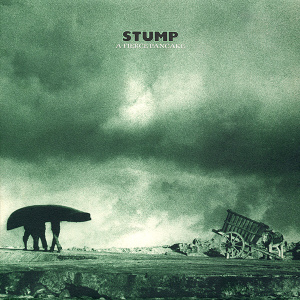
Stump: A Fierce Pancake 30 Years Old Today

The general consensus seems to be that Anglo/Irish late-1980s band Stump didn’t quite ‘make it’.

But maybe we should probably be thankful that they stayed together for as long as they did. They released one great mini album (Quirk Out) and just one full-length one, A Fierce Pancake (currently not on streaming platforms due to a contractual disagreement).

Released 30 years old today, the latter is probably in my 1980s top 10, and reportedly one of Faith No More/Mr Bungle frontman Mike Patton’s favourites too.

It was never going to be easy: the drummer (Rob McKahey) sounded like he belonged in Beefheart’s Magic Band or Ornette Coleman’s Prime Time, the fretless bassist (Kev Hopper) was into sampling, Pere Ubu and Brand X, the guitarist (Chris Salmon) sounded like a cross between Hank Marvin and Adrian Belew and brilliant frontman/lyricist (the late Mick Lynch) was more than likely to engage in a bit of onstage belly dancing.

But it somehow works. A Fierce Pancake is dedicated to the life and works of physician/psychoanalyst Wilhelm Reich and writer Flann O’Brien. It was released on Ensign Records, mainly known for breaking Irish acts like Sinead O’Connor and the Waterboys.

Recording sessions at Hansa in Berlin were apparently long and difficult – original producer Holger Hiller jumped ship halfway through and then ‘stabilising influence’ engineer Stephen Street got summoned away to work with Morrissey.

But the album’s sometimes hilarious (‘Bone’, ‘Charlton Heston’, ‘Chaos’, ‘Eager Bereaver’), sometimes touching (‘Alcohol’, ‘Boggy Home’) and always musically interesting, kind of a cross between Viz magazine and XTC. It’s a shame that they couldn’t maintain the John Peel-endorsed momentum of their early days. Their manager persuaded them to call it a day after a disastrous Camden Electric Ballroom gig supported by The Blue Aeroplanes on 21 December 1988.

A Fierce Pancake hadn’t come close to recouping its costs and the Rave scene was in full flow. It was all over, barring a one-off comeback gig in May 2015.

For more on the band, check out this excellent podcast.

The Cult Movie Club: Driving Me Crazy (1988)

In the ’70s and ’80s, documentarian Nick Broomfield’s focus was mainly on societal concerns – the British class system (‘Proud To Be British’), urban decay (‘Behind The Rent Strike’), juvenile delinquency (‘Tattooed Tears’) the US Army (‘Soldier Girls’), legalised prostitution (‘Chicken Ranch’). All are superb and worth seeking out.

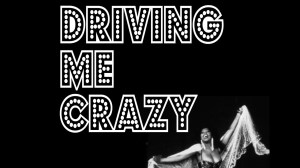
But 1988’s ‘Driving Me Crazy’ marked a lightening of tone and the birth of Broomfield’s post-modern style, where he became a ‘character’ in the film – and, it has to be said, often an irritant.

The movie came about when the financiers of big-budget, all-black musical ‘Body And Soul’ – booked for a six-month run in Munich – sought out Broomfield to make a ‘Fame’-style documentary about the extended rehearsal process in New York. All well and good, thought Broomfield. It was a chance to extend his range and do something different, a little more light-hearted.

But then it all went pear-shaped. The financiers reduced the documentary budget from $1.6 million to $300,000. They also wanted to incorporate a ‘fictional’ element into the film, with writer Joe Hindy and his agent playing themselves. Egos ran wild and sensibilities were messed with.

Broomfield considered bailing but decided to hang around and document the resulting drama. So ‘Driving Me Crazy’ became a film about not being able to make a film, in the tradition of ‘Waiting For Fidel’. The good news is that it’s one of the funniest but also most awkward movies of Broomfield’s career. ‘Body And Soul’ choreographers George Faison/Mercedes Ellington and assistant director Howard Porter don’t take kindly to the film crew and give them hell.

Broomfield almost becomes persona non grata. Though this must have sometimes been painful, he almost seems to relish it. He also flirts outrageously with the PA of show producer Andre Heller and there are uncomfortable suggestions of racism from some of the suits.

But Broomfield and his DoP Rob Levi also document some stunning rehearsal footage. There are memorable jazz, hip-hop, soul and doo-wop performances and beautiful images of late ’80s New York, with shades of ‘Fatal Attraction’ and ‘9 1/2 Weeks’. There’s a particularly notable panoramic cityscape shot towards the end, soundtracked by one of many fractious but funny Broomfield phone calls.

Entertaining, unsettling and sometimes exhilarating, the oft-neglected ‘Driving Me Crazy’ is well worth another look.

John Abercrombie: Getting There 30 Years On

Maybe John Abercrombie was the Andy Murray of jazz guitarists.

People say Murray was ‘unlucky’ to be playing tennis at the same time as Federer, Djokovic and Nadal; Abercrombie was arguably ‘unfortunate’ to have been forging a career at the same time as Pat Metheny, Mike Stern, John Scofield and Bill Frisell.

But a superb career he forged all the same. Starting out as somewhat of a John McLaughlin imitator playing unhinged jazz/rock with Billy Cobham and Dreams on ‘some of the worst fusion albums ever made’ (his words), by 1974 Abercrombie had settled into a long, intriguing career on ECM Records, where he could pursue all his interests, from acoustic guitar duos with Ralph Towner to organ trios with Jan Hammer and Jack DeJohnette.

But one of his best bands was this mid-1980s outfit with ex-Bill Evans/Lyle Mays sideman Marc Johnson on bass and legendary Peter Erskine on drums, often augmented by Michael Brecker on sax too.

Abercrombie was getting heavily into the guitar synth around this time, while also using loops and ethereal keyboard patches to beef up the studio sound.

’86’s Current Events was a fine ‘blowing’ record but followup Getting There – released 30 years ago this month – was arguably Abercrombie’s most commercial album. It’s big and bold but definitely no ‘fusion’ sell-out, and it distills its ideas into relatively short, concise statements.

It’s also somewhat of a rarity for the ECM label in that it’s not produced by Manfred Eicher – Lee Townsend is in charge here, assisted by James Farber.

The epic title track is loud and proud, almost approaching avant-rock with Erskine absolutely lamping his drums and a hysterical, exciting set of screaming guitar-synth solos. It gets near the approach of David Torn’s sometimes raucous Cloud About Mercury album.

Ethereal, gentle and gorgeous ‘Thalia’ (composed by Vince Mendoza) and ‘Chance’ are ambient/jazz masterpieces with shades of Mark Isham’s work.

Classic ballad ‘Remember Hymn’ initially sounds like a re-harmonisation of Sibelius’s ‘Valse Triste’ but slowly becomes a vehicle for Brecker’s haunting tenor. The latter also cleans up on the raucous two-chord blowout ‘Furs On Ice’, reminiscent of Johnson’s Bass Desires band, with Erskine at his most Elvin Jones-like.

Getting There predictably received a somewhat muted critical reaction (but did get a three-star review in Q Magazine). I wasn’t bothered about that – having been recommended Abercrombie by a guitar player friend, I bought it sight unseen from HMV Oxford Street on vinyl a few weeks after it came out. It’s still my favourite album by the guitarist.

But it would be the last time Abercrombie dipped his toe into ‘rockist’ waters – he quickly regrouped to continue his ever-eclectic, increasingly gentle career, and, to the best of my knowledge, never picked up the guitar synth again…

David Lee Roth: Skyscraper 30 Years Old Today

Diamond Dave hit the ground running with his 1986 solo debut Eat ‘Em And Smile.

That album had a raw, live-in-the-studio sound, courtesy of producer Ted Templeman and some of the greatest rock musicians of all time (Steve Vai, Billy Sheehan, Gregg Bissonette), but sophomore record Skyscraper – released 30 years ago today – was something completely different: a meticulous, layered, fussed-over project.

Vai was promoted to co-producer, Roth enjoying his energy and studio nous, and his influence is all over the record. Vai told Classic Rock magazine recently about their working relationship: ‘We got on really well. We were friends. He listens and doesn’t assume to know everything. But it was his band. He made all the executive decisions. I’m very good at assuming a role and knowing where the boundaries are. I expect that from other people when they’re working with me.’

Vai took his time doubling parts, sculpting solos and thinking of the songs orchestrally. His playing is absolutely brilliant. He forensically explores every chord and adds humour too, an aspect missing from 99% of rock guitarists. The more challenging compositions (‘Bottom Line’, ‘Hina’, the title track) rehearse the concepts that Vai would pursue on his breakthrough Passion And Warfare solo album.

So Skyscraper is musically rich but great fun too. Vocally, Roth has such a strong presence and he busts his butt trying to entertain. Lead single ‘Just Like Paradise’ – described by Dave as his tribute to The Beach Boys – reached an impressive #6 on the US Hot 100, ‘Perfect Timing’, ‘Damn Good’ and ‘Stand Up’ are pure pop, co-written by Roth and keyboard player Brett Tuggle.

‘Two Fools A Minute’ is quite unlike any hard rock this writer has heard, basically a live-in-the-studio take with a succession of nutty mini-solos by Vai and Sheehan. It’s something akin to a heavy-metal show tune, complete with ‘cheesy’ horn section. I love Dave’s little ‘Sizzlin’ to the top!’ exclamation before Vai’s solo and his increasingly weird comments as the track goes on: ‘Where’s the drummer?…Nah, we can’t let Stevie drive…’

There’s a distinct lack of low-end on Skyscraper though. Billy Sheehan’s number was up. He left after the album’s recording and didn’t take part in the hugely successful, ten-month world tour. But he would take a lot of this album’s approach to his next band project, Mr Big.

Skyscraper divided critical opinion on its release but was a big hit, reaching #6 in the US and #11 in the UK. Happy birthday to a fun-filled and oft overlooked minor classic of the ’80s.

The Crap Movie Club: Homeboy (1988)

One of the pleasures of reading Bob Dylan’s ‘Chronicles’ is following his trains of thought wherever they go, however obtuse.

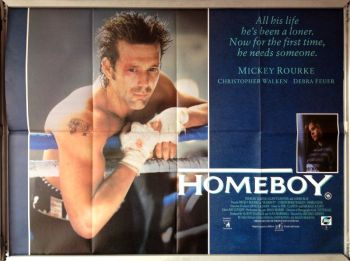
Possibly the most random is a mention of Mickey Rourke’s performance in the actor’s self-penned, almost totally forgotten 1988 film ‘Homeboy’, seen by Bob during the difficult Oh Mercy sessions:

‘He could break your heart with a look. The movie traveled to the moon every time he came onto the screen. Nobody could hold a candle to him. He was just there, didn’t have to say hello or goodbye.’

I’m a huge Mickey apologist, but I think Bob was way off the beam here. ‘Homeboy’ is irredeemable. It also signalled the beginning of Rourke’s 20-year slump.

Clearly a ‘vanity project’ for our star (he started writing it during the ‘Heaven’s Gate’ shoot in 1980), it’s the film where Mickey started to believe his own hype and play the sort of parts which echoed how badly he obviously felt about the movie business.

‘Homeboy’ is a weirdly masochistic (at times reminiscent of Brando’s similar explorations in that area), relentlessly downbeat, funereally-paced, vaguely camp melodrama.

The ‘plot’, such as it is, is almost identical to that of ‘The Wrestler’, the 2008 comeback that won Mickey his first Oscar.

He plays Johnny Walker, a punch-drunk, third-division-south pugilist reduced to hawking his wares around Asbury Park for a few bucks with his portly coach in tow.

Possibly Mickey’s character is supposed to have endured some kind of stroke, because he spends the whole film squeaking out of the side of his mouth, rendering his sparse dialogue almost inaudible.

Christopher Walken appears intermittently as the dodgy agent who wants Johnny’s assistance with a jewellery heist. Modelling a succession of deafening suits, he chews up the scenery a couple of times, dances a bit, sings a bit, clearly knowing this film is a heap of sh*t.

At times amusing but not enough to rescue the movie, it’s a dry run for his superior turns in ‘King Of New York’ and ‘Wild Side’.

Poor Debra Feuer – Mickey’s wife at the time – underwhelms in the almost non-existent role of Johnny’s love interest. Eric Clapton phones in an always-too-loud soundtrack, obviously tossed off during yet another Albert Hall run, adding a few tired licks but mainly employing bassist Nathan East to improvise some fairly half-baked solo cues.

Director Michael Seresin, previously the cinematographer on ‘Angel Heart’ (and recently one of the Harry Potter films), can’t seem to rustle up any convincing or memorable scenes. The final effect is sub-Golan-Globus.

Rourke has one great moment towards the end of the film though, possibly the one Dylan picked up on, where he peers up at his coach and tearfully asks (with shades of Brando again), ‘You think I coulda been good?’ But it’s too little too late. ‘Homeboy’ should probably have stayed in Development Hell.

The Manual: How To Have A Number One The Easy Way

I recently got hold of Jimmy Cauty and Bill Drummond’s ‘The Manual: How To Have A Number One The Easy Way’ for a quid in my local Amnesty bookshop.

Cheap at the price: written in 1988, the book purports to be a foolproof guide to creating a hit single.

But then you never can tell. It might not be wise to take it too seriously because Cauty and Drummond are very naughty boys.

The former was once in ’80s pop agitators Brilliant and Zodiac Mindwarp while the latter is of course an industry veteran, a member of Liverpool proto-punks Big In Japan (also featuring Holly Johnson, Budgie and Ian Broudie) and later the manager of Echo & The Bunnymen and The Teardrop Explodes.

The two pop pranksters got together and made some serious money from their genre-busting (read: nicking bits of other records and stitching them together), giant hits as The KLF, The Timelords and The Justified Ancients Of Mu-Mu, before announcing their retirement very publicly onstage at the 1992 BRIT awards in a hilariously inappropriate send-off.

Two years later, they burnt a million quid on an island off the west coast of Scotland to make a point about…something. Even they didn’t seem too sure, as evidenced by this interview with Gay Byrne on Irish television:

All bluster aside, these days ‘The Manual’ makes for fascinating and weirdly relevant reading. When it comes to the pop biz, it seems the more things change, the more they stay the same. Cauty and Drummond correctly predicted how chart music would turn out…forever. The following was written when the UK record industry was thriving and studios had never been more popular:

‘It’s obvious that in a very short space of time the Japanese will have delivered the technology and then brought the price of it down so that you can do the whole thing at home. Then you will be able to sod off all that crap about going into studios. A kid with a box of records, two Technics turntables, a sampler and drum machine can have a number one.’

Another aspect that jumps out is the section on ‘trademarking grooves’, especially in the light of the recent Pharrell Williams/Marvin Gaye ‘Got To Give It Up’ lawsuit controversy.

Cauty and Drummond claim that ‘copywright law…has been developed by whites of European descent – 50 percent for the lyrics, 50 percent for the top-line melody. Groove doesn’t get a look in. If copyright law had been in the hands of blacks of African descent, at least 80 percent would have gone to creators of the groove.’

Controversial and prescient stuff. But where are the lads now? They’re probably doing OK, although Drummond already looked pretty ‘ancient’ in 1994…