Bill Bruford’s Earthworks: 30 Years On

earthworks

Some musicians have a unique touch – you can identify them within a few notes.

In Bill Bruford’s case, his snare drum is his main audio imprint. But he also always had a highly-original composing style before his retirement in 2009, and both are very much in evidence on the excellent Earthworks album.

Bruford had spent the mid-’80s winding down Crimson and duetting with ex-Yes keyboardist Patrick Moraz, mostly in spontaneous improvisation mode, but now a new musical approach was called for.

He had based his career on defying expectations and he did it again in 1986, forming a quartet made up two young jazz tyros best known for their work in big-band-extraordinaire Loose Tubes (keys man Django Bates and saxist Iain Ballamy) plus acoustic bassist Mick Hutton.

bruford-inside

Bruford chose well: Bates and Ballamy were excellent and prolific composers too. Also key to this new band was Bruford’s development of a very advanced electric/acoustic kit whereby he could play chords and melodic ideas alongside a ‘standard’ jazz setup.

This approach also chimed well with Bates’ propensity on both acoustic piano and synth. On the latter instrument, he was fast becoming almost as recognisable as Jan Hammer, Joe Zawinul, Chick Corea or George Duke.

All the ingredients add up to one of the key British jazz albums of the ’80s, showcasing a band equally at home playing Weather Report-style fusion, Eastern themes and odd-time prog as they were with ECM-flavoured chamber jazz of the type played by obvious heroes Kenny Wheeler and John Taylor.

Ballamy’s opener ‘Thud’ (inspired by the Rosenhan psychology experiment?) almost has a ska feel – if Madness had tried their hand at quirky instrumental jazz/rock, they might come up with something like this. ‘Pressure’ is possibly the album’s standout, a superb mini-suite featuring some classic odd-time Bruford mischief and lyrical piano playing from Bates.

Ballamy’s ballad ‘It Needn’t End In Tears’ still sounds like a jazz-standard-in-waiting to this writer, though its possibly a bit saccharine for some. Bruford unleashes a fine drum solo on ‘My Heart Declares a Holiday’ while Bates’ ‘Emotional Shirt’ veers humourously between an early hip-hop groove and free-jazz freakout. ‘Bridge Of Inhibition’ fuses Turkish modes with high-speed bebop.

Buoyed by state-of-the-art production (maybe a bit too state-of-the-art) and stylish packaging, Earthworks was a palpable hit by ‘jazz’ standards, selling well and turning up in several ‘best of 1987’ lists. Some critics were of course suspicious of Bruford’s jazz credentials, but he probably couldn’t have cared less; he had always considered himself a jazz drummer anyway and knew he was onto a winner with Bates, Ballamy and Hutton.

The latter wouldn’t last beyond this first album, but Earthworks (the band) would continue to make some excellent music throughout the rest of the ’80s and for two decades beyond that. Bruford had successfully defied expectations yet again.

Grace Jones: Inside Story 30 Years On

Grace

Flicking through Grace’s well-received memoir recently, I noticed that she rates Inside Story as her favourite album – pretty surprising considering the likes of Nightclubbing and Living My Life nestling in her discography.

But close reading of the small print reveals why it’s her most personal project – she co-wrote every track (with ex-Camera Club/’Slave To The Rhythm’ co-writer Bruce Woolley) and also co-produced the album with Nile Rodgers.

And while hardly a classic, Inside Story‘s a much more wholehearted and successful record than the previous year’s Slave To The Rhythm.

It seems pretty inevitable that Nile would end up collaborating with Grace. They were long-time acquaintances on the NY party scene since the Studio 54 days. On paper, he would seem the perfect fit for her, though she barely gets a mention in his excellent memoir ‘Le Freak’ (though he has promised a sequel which will presumably feature her a lot more).

Inside Story‘s lead-off single ‘I’m Not Perfect (But I’m Perfect For You)’ surprisingly didn’t make much impact on the US or UK charts but was a minor hit all over Europe. Its Keith Haring-directed video is particularly striking though, featuring cameos from Andy Warhol and a load of other NY art figures, and there was also an interesting 12″ mix by early house pioneer Larry Levan.

The album is great when it sticks to short, sharp, frivolous pop tunes but comes a bit unstuck when going for something more ambitious.

‘White Collar Crime’ is very much the son of ‘Slave To The Rhythm’, sneaking in a few of that song’s chords and an almost identical two-note verse, but it’s let down by asthmatic synths, a puny drum machine and Nile’s sketchy bass playing, though Lenny Pickett’s punchy horn arrangement is a winner.

The title track is weirdly reminiscent of Leonard Cohen’s ’80s output while ‘Victor Should Have Been A Jazz Musician’ is possibly the standout, namechecking Nina Simone and featuring some lovely Wes Montgomery-style guitar from Rodgers.

Inside Story‘s rhythm section sounds in general are slightly disappointing – Rodgers’ guitar is too low in the mix and a Linn machine takes care of all the drum parts. This suits the mechanized grooves of ‘Barefoot In Beverly Hills’ (almost an example of early house music), ‘Party Girl’ and ‘Scary But Fun’.

But the jazzier tracks are crying out for a real drummer. I wonder why Nile didn’t enlist the services of Mr Steve Ferrone, seeing as they’d recently worked together to superb effect on Al Jarreau’s L Is For Lover and Duran Duran’s Notorious.

Inside Story was not a hit, reaching only #61 in the UK album chart and #81 in the US. It’s unlikely to ever get the re-release/remaster treatment, but sounds pretty good these days.

Hiram Bullock’s From All Sides: 30 Years Old Today

hiramIn the mid-’80s, London seemed to be Hiram Bullock’s second home.

The late great New York-based guitarist was in David Sanborn’s band at the Wembley Arena in November ’84 (alongside Marcus Miller, Don Grolnick and Steve Gadd, one of my first ever gigs) and also appeared in town regularly with Carla Bley and Gil Evans during this period.

At a Sanborn Hammersmith Odeon gig in February 1987 (see the comments section below), Hiram embarked on a solo, and, with the aid of a wireless unit, promptly jumped off the stage to serenade the stalls.

He then vacated the auditorium, soloing all the while, and a few minutes later appeared in the front row of the balcony, still blazing away, illuminated by a single spot. Such shenanigans would earn himself column inches in the jazz magazines and a cult following but sometimes overshadow the fact that he was one of the great guitarists of the ’80s or any other decade, effortlessly mixing up the blues, funk, bebop and rock. You might even call him the Jaco of guitar.

By mid-1986, he had enjoyed ten years as a first-call session player (Steely Dan, Chaka Khan, Brecker Brothers et al) as well as being part of the famous ‘Saturday Night Live’ and ‘Late Night With Letterman’ bands.

He had also recently hooked up with his one-time bass student Jaco in the PDB trio (with drummer Kenwood Dennard) and produced Mike Stern’s excellent Upside Downside (guitar-wise, they have a lot in common).

In short, he had paid his dues. It was time for a solo album. Though From All Sides is in many ways a classic ‘journeyman’ record, covering all the bases from funky fusion (‘Window Shoppin’, ‘Cactus’, written by Randy Brecker) through R’n’B (‘Funky Broadway’) to smooth Sinatra-influenced balladry (‘Really Wish I Could Love You’), it’s never boring, helped also by some good guest spots – Kenny Kirkland supplies a classy solo to ‘Window Shoppin’ while Sanborn lights up ‘Say Goodnight, Gracie’.

On the witty ‘state of the world’ blues ‘Mad Dog Daze’, Bullock even comes over a bit like a Johnny Guitar Watson for the ’80s. The album also benefits greatly from mostly sticking to the same excellent rhythm section – Charley Drayton on drums, Will Lee on bass, Clifford Carter on keys – which gives some consistency from tune to tune.

Hiram plays some brilliant solos, even on somewhat cheesy material such as ‘When The Passion Is Played’ and ‘Until I Do’. The production is state-of-the-art for ’86, ie. extremely high on treble and compression but short on low-end.

But From All Sides is still mostly a blast, driven on by Hiram’s irrepressible energy and good vibes, though the followup Give It What U Got was a big improvement – more on that later.

Hipsway!

hipswayThe 1980s spewed out a lot of cool baritone vocalists: Ian McCulloch, Ben V-P, Matt Johnson, James Grant, Nick Cave, Edwyn Collins, David Sylvian…

The list goes on. But one name that doesn’t exactly trip off the tongue is Hipsway’s Grahame Skinner, possibly because the Glaswegian band’s tenure was so short, consisting of just two studio albums and a few tours including a high-profile jaunt with Simple Minds.

hipsway-pim-skin-sf

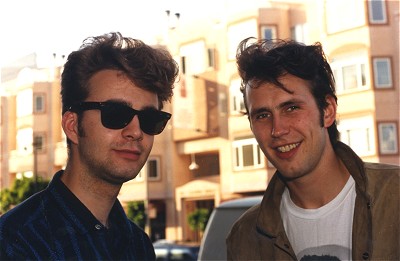
Hipsway’s Pim Jones and Grahame Skinner

A shiny new re-release of Hipsway’s 1986 debut album, complete with B-sides, outtakes, remixes and excellent Skinner liner notes, shows why they were briefly one of the most highly-regarded Scottish acts of their day, during a golden period for Caledonian pop.

It also shows Skinner to be one of the most distinctive vocalists of the era, apparently an influence on everyone from Mansun’s Paul Draper to Marti Pellow.

Hipsway’s star shone briefly but brightly, with one UK (#17) and US (#19) hit ‘The Honeythief’, a track that still sounds like a classic ’80s floorfiller. The accompanying debut album just sneaked into the US top 60 but was a bigger hit in the UK, reaching #42 and staying in the chart for 23 weeks.

‘The Honeythief’ still stands up 30 years on, but does the rest of the album? Yes and no. With producers Paul Staveley O’Duffy (Swing Out Sister, Was Not Was, Lewis Taylor, Amy Winehouse) and Gary Langan (ABC, Art Of Noise) onboard, a slick, pristine mix and selection of solid, attractive grooves are guaranteed. The wider problem is memorable hooks.

The good stuff first: ‘Long White Car’ is a richly-chorded, jazzy bossa-nova which sounds like a hit even now (it only got to #55 on initial release). The excellent ‘Broken Years’ ends with Skinner quoting from Talking Heads’ ‘This Must Be The Place (Naive Melody)’ while ‘Forbidden’ initially comes on like something akin to Frankie Goes To Hollywood on downers before breaking out into an unexpectedly resplendent pure-pop chorus.

‘Ask The Lord’ is also initially attractive and distinctive but lacks the killer hook that might have made it a hit. ‘Bad Thing Longing’, ‘Tinder’ and ‘Upon A Thread’ borrow Roxy Music’s Avalon template with their swooning synths and intricate bass/drums/percussion, but they are decidedly flimsy songs.

But overall this is an impressive debut album of funky mid-’80s pop and it’s worth a reappraisal.

Nik Kershaw: Radio Musicola @ 30

radio-musicola-527b885540974

The rather despairing NME headline during October 1986 said it all: ‘When The Little Girls Have All Grown Up…’

After releasing two albums in the space of barely six months, Kershaw took his time over the third. He settled in to North London’s Swanyard Studios for most of 1986 to work on the self-produced Radio Musicola, employing the cream of the English session scene (The Kick Horns, Charlie Morgan, Mark Brzezicki, Wix, Andy Richards, Simon Phillips etc).

Yes, Musicola was Kershaw’s chance to take on the Trevor Horns of this world and deliver a big-budget, endlessly-fussed-over studio ‘project’… Perhaps unsurprisingly, given his meteoric rise to fame, the main themes of the album are press intrusion and tabloid sensationalism.

And, in a neat irony, the rise of technology-led, assembly-line music was also in Kershaw’s sights, despite Musicola making liberal use of all the latest sampling and synthesizer technology. So let’s get Musicola‘s duff tracks out the way first – ‘What The Papers Say’, ‘Nobody Knows’ and ‘Running Scared’ are jarringly overproduced, though the latter had real potential.

But there are loads of treats elsewhere – ‘Life Goes On’ is a musically-rich, very pretty ballad with swooning chord changes and fine vocals from Kershaw. ‘LABATYD’ is pure class, a half-time shuffle with tasty Mark Brzezicki drums, an excellent Kick Horn arrangement and soaring synth by either Wix or Andy Richards.

The title track blew a lot of musicians’ minds back in 1986. It really was state-of-the art and still sounds pretty novel today, as striking as the title track of Level 42’s World Machine a year before. I remember eagerly tuning in to ‘The Tube’ to see Kershaw performing the song live. You can hear a lot of the ‘little girls’ turning off their TVs as he lays into the opening guitar solo…

‘Don’t Let Me Out Of My Cage’ is pretty damn ambitious fare for a pop album, a fast swing number featuring some cracking Phillips drums and effective close-harmony backing vox from Mrs Kershaw (Sheri). The excellent ‘James Cagney’ chugs along with a Level 42 groove (and features an interesting ‘New Man’ lyric) and great Felix Krish bass part that sounds uncannily like Mr King.

‘When a Heart Beats’, an excellent, intricate slice of pop/prog in the It Bites mould, gave Kershaw his last top 40 chart appearance (peaking at a disappointing #27) when it was released in November 1985.

The closing ‘Violet To Blue’ is possibly Kershaw’s finest and most ambitious recording to date, featuring some rousing vocals from the London Community Gospel Choir and superb, driving drum work from Phillips (much imitated in my music room back in the day).

kershaw-tour

An interesting album which clearly fell between the stools of art and commerce, Radio Musicola reached a barely believable #46 in the UK album chart, just over a year after Kershaw had played Live Aid. It disappeared without trace in the US.

The little girls had definitely grown up. Or maybe it was the new haircut. But 18 months is a long time to leave between albums when you’re hot, though Kershaw didn’t seem bothered about his new ‘selective’ popularity; in fact, he seemed genuinely relieved, but wondered how MCA were going to sell him now that he was focused on being a musician rather than a pop star.

Despite the poor album sales, Kershaw embarked on a sold-out UK tour in early 1987 including three nights at London’s Town & Country Club. And he would be back once more before the ’80s were out to deliver perhaps his finest solo album to date.

XTC: Skylarking 30 Years Old Today

xtcVirgin Records, released 27 October 1986

Produced by Todd Rundgren

Recorded at Utopia Studios, Woodstock, upstate New York

UK album chart position: #90 (!)
US album chart position: #70 (!)

terry-thomas

Terry-Thomas in ‘School For Scoundrels’

Side One:

1. ‘Summer’s Cauldron’

Andy Partridge (composer): ‘Something about the words reminded me of Dylan Thomas. Not that I’m saying I’m a Dylan Thomas. More of a Terry-Thomas, really…’

2. ‘Grass’

Colin Moulding (composer): ‘A lot of people think the song’s about marijuana – it isn’t. Todd said: “Don’t sing so deep. You sound like a bit of a molester.” So I just did the Bowie thing and added an octave above it…’

3. ‘The Meeting Place’

Moulding: ‘Because the riff was a bit like “Postman Pat”, we were just figures on a Toytown landscape viewed from above. It was me meeting her (future wife Carol) at the gates for a sandwich in The Beehive pub, embroidered with the suggestion of a lunchtime quickie…’

4. ‘That’s Really Super, Supergirl’

Partridge: ‘I’d go into his (guitarist Dave Gregory) little room, smelling of aftershave and guitar wax and dead mice, and he’d be rehearsing this solo over and over again. I can still see him playing it. I remember when we were recording the song that Todd was trying to master it on keyboard, and Dave whispered to me, “He’s got the chords wrong!” He thought the chords were major, and they’re not. I was hearing it a lot more clangorous…’

5. ‘Ballet For A Rainy Day’ (Partridge)

6. ‘1000 Umbrellas’

Partridge: ‘There was very little time to do the strings. They had one run-through and then recorded it. Their balls were on the line but they turned in a pretty fine performance…’

7. ‘Season Cycle’

Partridge: ‘I felt that I had maybe laid the ghost of Ray Davies ‘fore me and written a song that could stand up against “Shangri-La” or even, dare I suggest, “Autumn Almanac”.’

Side Two:

8. ‘Earn Enough For Us’ (Partridge)

9. ‘Big Day’

Moulding: ‘I’d been messing around with the chords of Labi Siffre’s “It Must Be Love” and, with a little moving around, it became this sort of fanfare to a big event, a ticker-tape parade for a big day.’

10. ‘Another Satellite’

Partridge: ‘I regret writing it because things turned out so marvellously with the person (Erica Wexler) it’s all about. The story had a happy ending because Erica and I finally got to express the emotional bond that was always there.’

11. ‘Mermaid Smiled’ (Partridge)

12. ‘The Man Who Sailed Around His Soul’

Partridge: ‘It just says you’re born, you live and you die. Why look for the meaning of life when all there is is death and decay? Todd said, “Let’s do a John Barry thing” and, literally overnight, came up with his arrangement with brass and flutes. It’s bang on. Cod spy music.’

13. ‘Dying’ (Moulding)

It frightens me when you come to mind
The day you dropped in the shopping line
And my heart beats faster when I think of all the signs, all the signs
When they carried you out your mouth was open wide
The cat went astray and the dog did pine for days and days
And I felt so guilty when we played you up
When you were ill, so ill
What sticks in my mind is the sweet jar on the sideboard
And your multicoulored tea cozy

What sticks in my mind is the dew drop hanging off your nose
Shrivelled up and blue
And I’m getting older, too
But I don’t want to die like you

14. ‘Sacrificial Bonfire’

Moulding: ‘There was a touch of “The Sorcerer’s Apprentice” and a bit of Arthur Brown’s “Fire” in it, I suppose. But I wasn’t moralising. It was just that this was an evil piece of music and good would triumph over it. (The strings) were a bit too Vivaldi for me, but it had to go somewhere, I suppose…’

Further reading: ‘XTC Song Stories‘ by Neville Farmer

‘Complicated Game’ by Todd Bernhardt/Andy Partridge

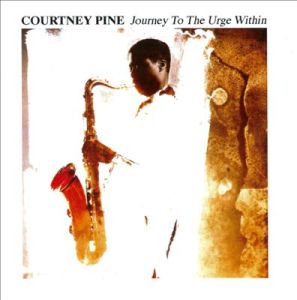
Courtney Pine’s Journey To The Urge Within: 30 Years Old Today

courtney-2Island Records, released 25 October 1986

Produced by Michael Cuscuna and Roy Carter

Recorded at Angel Studios, North London, 21-23 July 1986

UK album chart position: #39

Gifted saxophonist Courtney Pine‘s career is one of British jazz’s great success stories. Starting out in the early ‘80s as a sideman with reggae act Clint Eastwood & General Saint and various Britfunk bands, he became disillusioned with the outlawing of jazz as a respected, popular music in the climate of the early ’80s London scene.

As he memorably put it in the BBC’s excellent ‘Jazz Britannia’ doc, ‘I would add different notes in the scale the way Sonny Rollins did and people would say, “No man, we don’t want that.” They were saying to me, “If you’re black and you want to play jazz in this country, you’d better go and live somewhere else!”’

But all that changed when he caught US trumpeter Wynton Marsalis on TV one afternoon. Marsalis’s professionalism and dynamism were a revelation to Pine (not to mention his youthfulness); if Marsalis could bring jazz to a wide audience, he could too.

A period of intense woodshedding paid off – soon Courtney was guesting with Art Blakey’s Jazz Messengers and The Charlie Watts Big Band, blowing all over the ‘Angel Heart soundtrack and blowing people away with his solos in Gary Crosby’s groundbreaking Jazz Warriors and Jazz Jamaica groups.

Island Records came calling, and Journey To The Urge Within made the Top 40 in the UK, an almost-unheard-of state of affairs for a jazz album. This writer fondly remembers the day when, on opening the NME, he unexpectedly found Pine and Miles Davis sharing the album chart. Happy days.

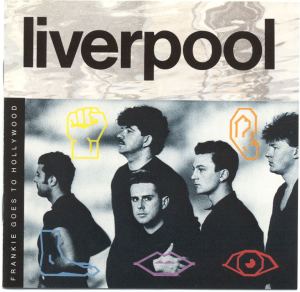
Frankie Goes To Hollywood: Liverpool 30 Years Old Today

frankie_1309776451It’s well known that FGTH’s deal with ZTT was one of the worst recording contracts in pop history (outlined in embarrassing detail in vocalist Holly Johnson’s ‘A Bone In My Flute’ autobiography).

But the band were already starting to show signs of subordination by late 1984 – they refused to record the Velvet Underground’s ‘Heroin’ as the B-side to ‘The Power Of Love’, part of ZTT ideas man Paul Morley’s bizarre plan* to get the label’s acts to write a history of pop through cover versions.

FGTH also scuppered ZTT’s plan for them to star in a sci-fi movie which was to be scripted by Martin Amis and directed by Nicolas Roeg (actually, that sounds brilliant…).

The band then insisted that they actually play on their second album Liverpool rather than let session players lay down the basic tracks, a request that seems to have been granted. Guest players this time were few and far-between, and it’s quite hard to identify Trevor Rabin, Steve Howe and Lol Creme.

Sensing trouble, Trevor Horn took the role of ‘executive producer’ and passed production duties over to the gifted Stephen Lipson, who clearly had his work cut out. A schism was opening up between Holly Johnson and the rest of the band, or ‘The Lads’, as he dubbed them (Lipson discusses the making of Liverpool in this excellent podcast).

Tensions were also running high in the UK – by mid 1986, unemployment had topped three million and anti-Thatcher feeling had reached its peak. Oxford University refused her an honorary degree. So the frivolity and epicurean excesses of Welcome To The Pleasuredome were definitely out.

frankie_say_war_hide_yourself-_t-shirt

Holly Johnson and Paul Rutherford

Still, Liverpool is a sumptuous-sounding album, with immense care taken over recording, mixing and mastering – apparently to the tune of a whopping £760,000.

It stands up pretty well today especially if taken as a separate entity to Pleasuredome, even if the songs – not surprisingly – are not as memorable as the debut’s.

Lipson pulls out all the stops, playing some superb fuzz-toned lead guitar, particularly on ‘Maximum Joy’ and ‘Rage Hard’, and piecing together an album of musically-rich, prog-influenced hard rock.

Synth players Andy Richards and Peter-John Vettese contribute intriguing intros and outros, often involving backing vocalist Betsy Cook too.

And though Liverpool is obviously a more ‘serious’ album than Frankie’s debut, there are still amusing spoken-word inserts in broad Scouse (‘In the common age of automation, where people might eventually work ten or twenty hours a week, man for the first time will be forced to confront himself with the true spiritual problems of livin”!).

‘Warriors Of The Wasteland’, ‘Rage Hard’ and ‘Kill The Pain’ are tough techno-rock tracks which wouldn’t have sounded out of place on It Bites’ debut album. ‘Rage Hard’ was also subjected to a fantastically overblown extended mix featuring Pamela Stephenson (doing her best Thatcher impersonation?) taking us on a tour of the 12” single.

‘Maximum Joy’ is superb; pure ZTT bliss, while ‘Lunar Bay’ is also brilliant, balls-out prog/pop in the style of Propaganda’s A Secret Wish.

‘For Heaven’s Sake’ is a completely barmy anti-Thatcher ballad (‘She should buy us all a drink’) in queasy 6/8 time, featuring a melody that wouldn’t be out of place in a classic Broadway musical, some Native American chanting by Holly and a weird music-hall middle section.

‘Is Anybody Out There’ is a fitting end to Frankie’s recording career, a majestic, distinctly Suede-like ballad (the guitar solo is totally Bernard Butler) with some beautiful Holly vocals and a subtle Richard Niles string arrangement.

The album was not a commercial disaster, reaching #5 in the UK album chart and the top 10 in many other European countries, but a disappointing #88 in the US. And Thatcher still had four years left in Downing Street.

*Morley’s influence was apparently running amok, evidenced by Liverpool‘s fairly ridiculous liner notes (‘Best wishes to Stan Boardman’) and a choice of album title that suggested he was pretty certain the band would soon be returning to their hometown, banished from pop’s high table. Holly apparently hated the title…

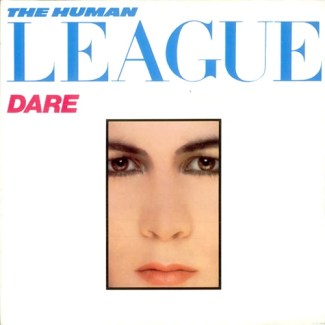
The Human League: Dare 35 Years Old Today

human-leagueVirgin Records, released 16 October 1981

Produced by Martin Rushent/The Human League

Recorded at Genetic Sound Studios, Reading, Berkshire, UK

UK album chart position: #1
US album chart position: #3

Singles released: ‘The Sound Of The Crowd’ (UK #12)
‘Love Action (I Believe In Love)’ (UK #3)
‘Open Your Heart’ (UK #6)
‘Don’t You Want Me’ (UK #1, US #1)

Phil Oakey (vocals/co-composer): ‘Martin really knew what pop was. He could take your mad sounds and make them pop. I still reckon “The Sound Of The Crowd” is one of the maddest songs that’s ever got in the Top 20. “Love Action” hasn’t got a proper chorus. I remember smashing the phone after I was told “Don’t You Want Me” was number 1 in America. It’s so much to live up to. Everyone and their grandma knows about you so no one wants to wear your badges any more…’

Martin Rushent: ‘To a large extent, I was their band. I was certainly their drummer because I programmed all the rhythms and made all the decisions about the grooves. I learned a lot from working with the arranger Johnny Harris. He was bandleader for all the show singers like Petula Clark, Tom Jones and Shirley Bassey. I learned about voicing instruments and how the most important element of music is silence. If you listen to Dare, there’s lots of space in the songs and lots of little parts and you can sing them all…’

King Crimson: Discipline 35 Years Old Today

crimson-cover14 April 1981: King Crimson – or Discipline, as they are currently named – are rehearsing new material in deepest Dorset.

But all is not well. Guitarist/de facto leader Robert Fripp is getting seriously ticked off with Bill Bruford’s drumming.

He outlines the pertinent issues in his diary (available to read in the remastered CD’s liner notes):

Bill is really getting to me, so I’m trying to understand how he works:
1. He’s a very busy player and doesn’t enjoy playing sparsely.
2. His parts have lots of fills and major changes of texture.
3. His fills are dramatic ie., they shock.

So Fripp comes up with some suggestions for Bruford:

1. Repeat yourself.
2. Take your time.
3. Leave room.
4. Listen to everybody else.
5. Develop a new set of clichés.
6. Develop a new vocabulary of drum sounds.
7. Listen to the sound of what you play.

Bruford’s autobiography outlines his general attitude to these instructions. But he gamely meets Fripp halfway and adapts his style accordingly, laying off the hi-hats, ride and crash cymbals unless absolutely necessary and adding a set of Octobans, a China cymbal and a few electric drums to his kit.

There are other Fripp stipulations. The music’s high frequencies should be saved for the electric guitar (Fripp was perhaps influenced by the ‘rules’ set by Peter Gabriel for his groundbreaking third album) and the 16th notes usually played by the hi-hat or ride cymbal should also now be the guitarists’ responsibility.

The formula was set. And one of the great albums (and bands) of the ’80s was born.

There was something very exciting in the air around late ’70s/early ’80s rock. The talk was all of ‘village music’ – an African concept wherein each player’s contribution is vital but only a small part of the mighty whole.

Talking Heads’ Remain In Light, Brian Eno/David Byrne’s My Life In The Bush Of Ghosts, David Bowie’s Lodger, Japan’s Tin Drum and Gabriel III showed how ‘world’ influences could integrate with ‘rock’ to thrilling effect, and Discipline fits in very neatly with those albums.

Musical references might come from Mozambique, Java, China, Bali or South Africa, or from the soundworlds of Karlheinz Stockhausen, Glenn Branca, Philip Glass and Steve Reich. Like Talking Heads, King Crimson filtered these influences through a New York art-rock/post-punk perspective but, arguably, no one integrated them more successfully.

Fripp and Bruford recruited Adrian Belew (who chose Crimson over Talking Heads) and Tony Levin in New York. Belew had grown into an incredibly assured vocalist – according to Bruford, he was literally incapable of singing out of tune – and master of unusual guitar textures. His solos featured tones and approaches never heard before.

Levin had already played bass with a plethora of heavyweights including Paul Simon, John Lennon and Gabriel, and had also just turned down an invitation to join Weather Report at the beginning of 1981. He unleashed a new weapon for the Crimson gig – the ten-stringed Chapman Stick, played by tapping or ‘hammering on’ (heard to great effect during the opening of ‘Elephant Talk’).

Back in the mid-’80s, my brother and I used to peruse Discipline‘s liner notes for clues as to the powerful and mysterious music therein. We didn’t have a clue what a ‘Stick’ was, concluding wrongly that it must be the slightly synthetic woodblock sound heard throughout ‘The Sheltering Sky’ and title track (I’m still not sure what that sound is – maybe a ‘triggered’ Bruford hi-hat?).

Tony Levin and Chapman Stick

Tony Levin and Chapman Stick

The band wrote an hour of new material fairly quickly and toured modestly in the UK during April and May 1981, calling themselves Discipline. The album of the same name was recorded over the summer at Island’s Basing Street Studio in Notting Hill (later Trevor Horn’s Sarm complex) with producer Rhett Davies, fresh from helming Roxy Music’s Flesh And Blood.

By September, pleasantly surprised by the quality of music in the can, Fripp was issuing a lengthy (and fairly incomprehensible) press release explaining why the band would henceforth be known as King Crimson.

As Bruford says in his book, ‘For a couple of years at the beginning of the ’80s, we were the right band in the right place at the right time – not to get hits, but to do useful, fascinating and right work.’

He also says that the Crimson drum stool was one of the three best rock gigs in the last few decades of the 20th century, naming the other two as Gabriel and Frank Zappa. Hard to argue with that.