Miles Davis & Marcus Miller: Siesta

miles_davis__marcus_miller-music_from_siesta_a

I came across this gem in a big crate of reduced cassettes in the old Our Price shop in Richmond town centre.

I was a huge fan of Miles and Marcus’s ’80s work but Siesta had somehow passed me by. It was hardly reviewed anywhere despite the fact that it was the official follow-up to Tutu, possibly because it was ‘just’ a movie soundtrack and – even worse – the soundtrack to a really terrible movie.

But it quickly became the soundtrack to my summer of 1988 along with Prefab Sprout’s From Langley Park to Memphis, Prince’s Lovesexy, Thomas Dolby’s Aliens Ate My Buick and Scritti Politti’s Provision. Its Spanish-tinged melancholia, beautiful playing by Miles and stunning bass/keyboard work and production by Miller drew me in immediately.

Miles’s stock was rising high at the beginning of 1987. He was healthy, enjoying critical and commercial success with Tutu and playing to packed concert halls. The question was, how would he follow Tutu? A film soundtrack was definitely not the predictable option.

Of course, Davis was no stranger to the world of movie scoring, even though his famous Ascenseur Pour L’échafaud (Lift to the Scaffold) soundtrack was mostly improvised in just two days, and his music for Jack Johnson was similarly spontaneous though subject to detailed post-production work by Teo Macero.

But when Davis got a call from the producers of Siesta after their request to use Sketches Of Spain on the film’s soundtrack was turned down, he turned to the trusted Miller for help. Miller was also on a roll at the beginning of ’87. Fresh from co-producing and co-composing Tutu, his career was branching out in all directions.

He hadn’t done any soundtrack work before and embraced the project, thrilled to work with Miles again and rightly sensing that the movie’s Spanish elements might open up some dramatic musical possibilities. But the clock was ticking, the budget was tight and time was of the essence.

Siesta is a fascinating companion piece to Tutu and it features some of the most arresting and spontaneous Miles trumpet playing from the last decade of his life. Indeed, some Davis-watchers such as critic Paul Tingen reckon it’s the pinnacle of Miller and Miles’s ’80s collaborations.

Miles sounds fit and strong, investing the material with both power and pathos, consistently providing a sound that someone once described as ‘a little boy looking for his mummy’. Apparently when Miller played the elegiac ‘Los Feliz‘ to an assembled cast and crew, several people broke down in tears.

Miles solos at length with glorious open horn on several tracks. The dramatic, flamenco-tinged ‘Conchita‘ was used by American ice skater Nancy Kerrigan for her 1992 Olympic routine – she got a bronze medal.

The ghost of Sketches of Spain/Miles Ahead arranger Gil Evans looms large and the album is dedicated to him, ‘The Master’. One can only imagine how ‘Los Feliz’, ‘Siesta’ or ‘Lost In Madrid‘ might have sounded with Evans’ full orchestral backing and arranging, but Miller and main collaborator Jason Miles consistently find just the right musical ingredients with gorgeous piano voicings, subtle synths and fretless bass.

As George Cole pointed out in his great book ‘The Last Miles‘, only Michel Legrand, Gil Evans and Miller’s names have shared a Miles Davis album cover, and that really proves how highly Miles rated Miller’s efforts. According to Miller, there is much more Siesta music residing in the Warner Bros vaults – here’s hoping the album gets the ‘Special Edition’ treatment soon.

Prince: The Family @ 30

the family

I’ve bought this album (still unavailable on streaming platforms at the time of writing) on almost every format since I found a cassette copy in the early ’90s, back when it was a pretty rare groove.

The Family came out during my favourite Prince period. He was embracing jazz, fusion, psychedelia, classic rock and even modern classical, mainly prompted by his collaboration with the very excellent Wendy and Lisa but also other associates Sheila E, saxists Eric Leeds and Eddie M and string arranger Clare Fischer.

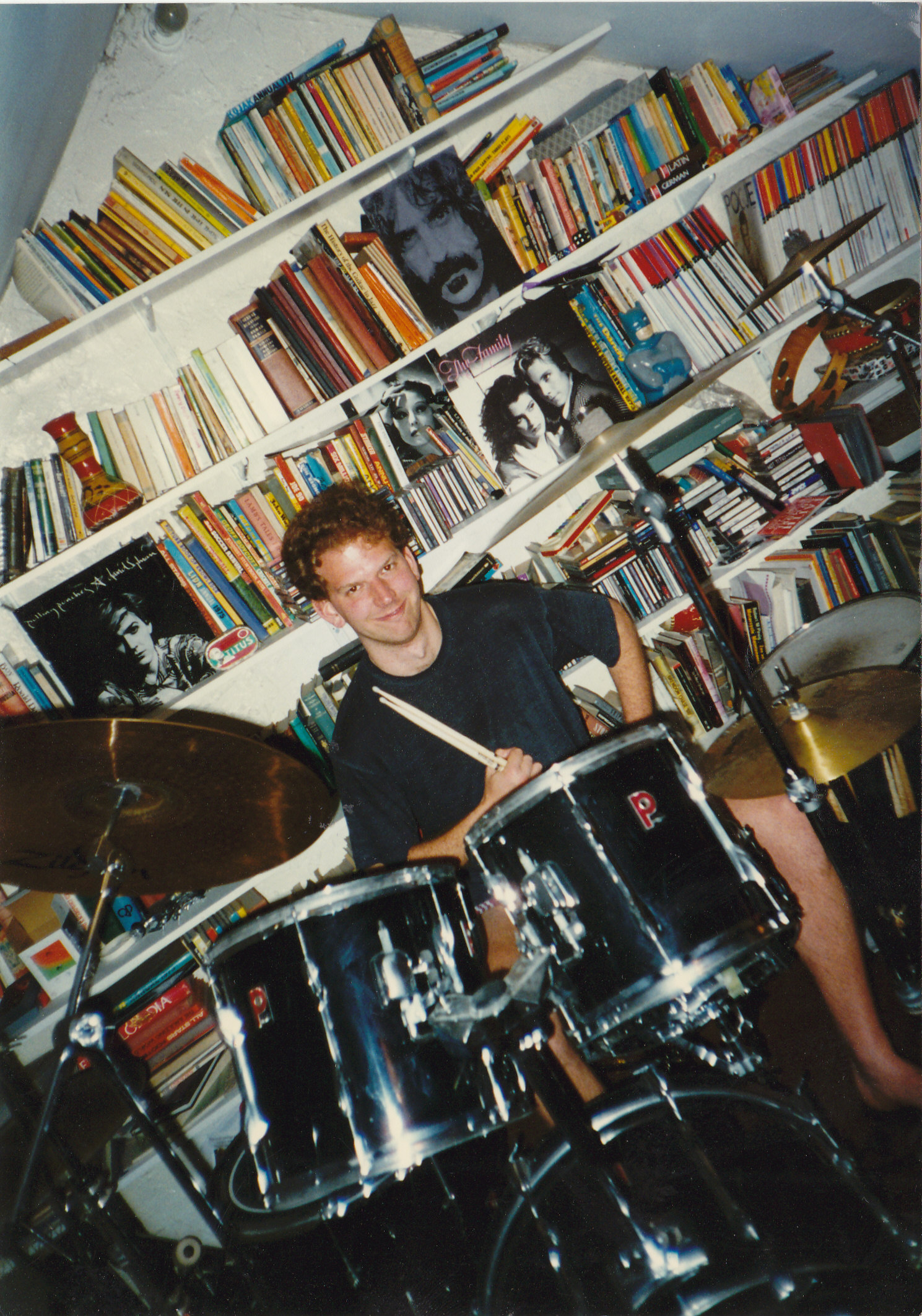
The author with The Family in background, summer 1991

This was my soundtrack to summer ’91. I instantly loved the retro Hollywood glamour of the cover artwork and the way it chimed with the whole Parade/Under The Cherry Moon concept.

The Family slipped out on Paisley Park Records in summer ’85 (just three months after Prince’s Around The World In A Day) to a very low-key critical and commercial reception. These days, the album is known mainly for including an early version of ‘Nothing Compares 2 U’.

But it’s full of far superior fare to that such as the killer opening funk medley, classic near-hit ‘The Screams of Passion’, charming pop of ‘Desire’ and especially instrumentals ‘Yes’ and ‘Susannah’s Pyjamas’ where Prince indulges in some fantastic Sly Stone-meets-Miles bass, guitar and drum grooves. This is the album that led Tutu producer Tommy LiPuma to recommend Prince to Miles as a possible collaborator and it’s easy to hear why.

The Family was put together by Prince when the first incarnation of his massively successful offshoot project The Time split up in the summer of 1984. The band’s keyboardist/vocalist Paul Peterson (renamed St Paul by Prince), drummer Jellybean Johnson and vocalist/dancer Jerome Benton were summoned to Prince’s house along with his then-fiancee (and sister of Wendy) Susannah Melvoin and Leeds.

A band concept was quickly ad-libbed by Prince, who, according to engineer David Rivkin (reported by Per Nilsen in his superb Prince: The First Decade book), issued them with the directive: ‘We gotta go after some of that Duran Duran money!’

the family

But what they ended up with was far from Duran Duran music. Prince wrote all the songs (except ‘River Run Dry’), played all instruments on the basic tracks and sang all the guide vocals.

Peterson and Melvoin painstakingly replaced Prince’s scratch vocals (and apparently took dance and acting lessons!), Leeds added his trademark baritone, tenor and flute and Fischer provided deliciously non-linear string arrangements.

Prince’s ‘no bass’ philosophy (as famously heard on ‘When Doves Cry’ and ‘Kiss’) seems well to the fore on The Family. I still have in my possession a cassette of demos from the album featuring Prince’s phenomenal bass playing on ‘High Fashion’ and ‘Mutiny’, presumably deleted at the last minute.

The Family was released without much fanfare or marketing. After just one gig at First Avenue in Minneapolis (rare footage of which was recently removed from Youtube), the project was put on hold when Prince recruited Melvoin, Benton and Leeds for his Under The Cherry Moon movie.

Peterson was put on a retainer, but, tired of waiting around for Prince to get back from filming in the south of France, served his notice by phone call. According to Per Nilsen, Prince was flabbergasted, believing that The Family’s time wasn’t far away and that St Paul was jumping ship too soon.

And, in a way, he was right – The Family album just won’t go away. At the request of Roots/D’Angelo/Erykah Badu drummer Amir ?uestlove Thomson, a long-time fan, the four-piece minus Prince delivered a mesmerising comeback performance at a pre-Grammys bash in 2007.

And then in 2012 a full-length album Gaslight was released under the new name fDeluxe (with considerable contributions from Wendy and Lisa) and a successful world tour followed (including a great Jazz Cafe gig in London). It proves that this band was much more than a Prince side project and are a pretty formidable funk/soul act in their own right.

Portrait Of Paddy As A Young Man: Prefab Sprout’s Swoon

prefab swoonPerhaps like a lot of Prefab fans, I came to Swoon some time after I’d bought and fallen in love with the later albums Steve McQueen, Protest Songs, From Langley Park to Memphis and Jordan The Comeback.

The dry, Thomas Dolby-less production came as a bit of a shock at the time but Swoon stands up pretty well today. Though some critics have compared it to Steely Dan, my contemporary reference points would be Lloyd Cole, The Smiths, Aztec Camera and Songs To Remember-era Scritti, though it’s basically impossible to locate Prefab’s influences.

It’s tempting to say that Swoon – released in March 1984 – sounds like the epitome of an ‘indie’ record, 1980s style, with its stripped-back production values and jagged edges. Prefab singer/songwriter Paddy McAloon recently told The Guardian that he thinks of it as more akin to Captain Beefheart, nicknaming the album ‘Sprout Mask Replica’!

Swoon definitely still sounds very much like a debut album; it’s perky, eager to please, naive, studenty. McAloon’s vocals occasionally resemble the ramblings of a slightly squiffy, randy teenager. But the album’s adolescent in a really good way with its literary flights of fancy, indulgent ruminations on romantic love and lots of audacious melodic flourishes.

paddy prefabIt sounds almost like rock, with solid 4/4 drums, always-inventive bass from Paddy’s brother Martin and ‘girlie’ backing vocals from Wendy Smith, and yet it resolutely refuses to ‘rock out’ with not a single power chord or jangly electric guitar in the mix.

Instead, the intrepid layering of synths and acoustic guitars (utilised to far greater effect on Steve McQueen and Jordan) probes the songs’ pressure points. And Smith’s pristine vocals give the music an enigmatic, otherworldly flavour.

Lyrically, Swoon reminds me of Joyce’s ‘Ulysses’; a survey of a young man’s hopes, dreams and romantic/professional disappointments. From a songwriting perspective, the words presumably came before the music, resembling stream-of-consciousness prose rather than traditional verse/chorus songcraft. Novelist/essayist Dave Eggers wrote a great piece about how much he was influenced by this golden generation of literate British songwriters.

As befitting a band from the North East, work (and the lack of it) is a recurring theme, particularly on ‘I Never Play Basketball Now’ and the extraordinary ‘Technique’. ‘Couldn’t Bear To Be Special’ is a classic Prefab ballad (though surely never the right choice for second single) and seems to offer a truly original take on the doomed love affair – the narrator simply doesn’t feel worthy to deserve the attentions of another. Very Nick Hornby-esque.

Future producer Thomas Dolby has talked about the shock of hearing ‘Don’t Sing’ when he was a guest reviewer on the Radio 1 ‘Round Table’ show.

‘Cruel’ is still a delicious piece of pop/bossa nova, more than a decade before the likes of Belle and Sebastian mined similar ground. Some of Paddy’s chords are gorgeous on this. Lyrically it’s original too, an expression of lust and affection from someone who is desperately afraid of offending his ‘enlightened’ paramour. A very modern love song. It was once covered by Elvis Costello.

Oh – and don’t forget to read the funny mock liner notes penned by McAloon in the guise of an over-exuberant music scribe.