XTC: Mummer 40 Years On

There can’t be many more pleasurable summer activities than reclining in an English garden.

But XTC’s chief songwriter/vocalist Andy Partridge cut somewhat of a sad figure during May and June 1982 as he sat hunched over his acoustic guitar, working on new compositions, detoxing from Valium addiction and contemplating the end of his concert career.

Still, those songs were some of his best ever. But they appeared on an extremely inconsistent album called Mummer, named for the silent actors (keeping ‘mum’) who travelled around 18th century Britain and Ireland, released 40 years ago this week and very nearly titled Fruits Fallen From God’s Garden.

Japan (Tin Drum) producer Steve Nye was summoned for the project, recorded at Martin Rushent’s Genetic Studios and The Manor – a strange choice. He is good with the close-mic’d, dry-sounding, beautifully recorded acoustic-based tracks but not the heavier ones which were later remixed by Phil Thornalley, while the legendary Alex Sadkin redid ‘Wonderland’.

But Nye had his work cut out – the album is schizophrenic to say the least. The best songs sound like a decent band playing pretty much live in the studio – ‘Love On A Farmboy’s Wages’ (has there been a better English pop song about poverty?), ‘Great Fire’, ‘Ladybird’ (Andy discusses his jazzier influences in this great video), ‘Me And The Wind’. All wonderful. Dave Gregory is coming into his own with superb contributions on guitar and keyboards.

But the worst songs are rhythmically plodding – it’s understandable that Andy was trying to get away from 4/4 rock drums but ended up with too many cyclical grooves (putting pay to Terry Chambers’ tenure on the kit) – and melodically extremely challenging. Colin Moulding is not in great writing form either, ‘Wonderland’ excepted, though that too might have benefitted from a simpler treatment.

Mummer was initially rejected by Virgin A&R agent Jeremy Lascelles, who demanded another single. The excellent ‘Great Fire’ was Andy’s last-minute response, produced by Haircut 100 helmer Bob Sargeant, but it disappeared without trace – Radio 1 reportedly played it only once!

Along with The Big Express, Mummer was XTC’s worst selling album, reaching a barely believable #51 in the UK album charts and doing little business elsewhere, just over a year after ‘Senses Working Overtime’. It has to be said it was also not served well by its awful cover. But it features plenty of great music.

Further reading: ‘XTC Song Stories’ by Neville Farmer

Frank Zappa: London Symphony Orchestra @ 40

In the last ten years of his life, Frank Zappa released a series of orchestral albums, now mainly forgotten by all but his most ardent fans. But they are vital constituents of his work, and may surprise listeners who only know him as a ‘rock’ musician.

A key artefact is the self-financed London Symphony Orchestra, the first volume of which was released 40 years ago (the second followed in 1987, before both were rereleased on CD and streaming platforms in 2012) and my pick of Frank’s ‘classical’ works.

It was recorded between 12-14 January 1983 at Twickenham Film Studios in South West London, on the banks of the Thames. The night before, on 11 January, the orchestra (plus Ed Mann and Chad Wackerman from Frank’s ‘rock’ band) performed the repertoire at the Barbican. Check out how the BBC reported that here.

Zappa has spoken candidly about the difficulties he had rehearsing and recording this music (percussionist Mann reports that the orchestra had a whole week of rehearsal – almost unheard of – at the Hammersmith Odeon and that he had been given his parts a month before rehearsals so that he could practice at home), and the myriad editing and studio tricks that had to be utilised before he was happy. ‘The Big Note’ tells the fascinating full story.

The music was split into premiere works and older material. The standout is probably ‘Bogus Pomp’, which reworks much of the orchestral stuff from ‘200 Motels’ to stunning effect. ‘Envelopes’ will be familiar to fans of the previous year’s Ship Arriving Too Late album.

It’s a blast of challenging, exciting music, even if you’re not a fan of ‘classical’ music. Excited by Varese, Boulez, Messiaen, Ives, Bartok and Stravinsky, amongst others, Zappa dealt in timbre and ‘blocks’ of sound, featuring big chords and big percussion sounds, bypassing cliché and having no truck with the notion that it was ‘difficult’ music. If you liked it, bitchin’. If you didn’t, there was a lot of other stuff out there.

Another bit of good news is that these two albums sound absolutely superb in their current incarnation on streaming services and CD, leaving the following year’s Perfect Stranger in the dust. All of those post-production tricks paid off. Thanks to Frank.

Peter Gabriel: Plays Live 40 Years On

PG’s first live album – released 40 years ago this week – touched down incongruously during 1983’s Summer of Fun, crashing into the UK chart at #9 alongside Let’s Dance and Thriller (but Japan’s posthumous live album Oil On Canvas did even better – it was the week’s highest new entry at #5).

Plays Live was ostensibly recorded during four dates of the American tour in December 1982. Gabriel had taken some choreography lessons and often ventured into the audience for ‘Lay Your Hands On Me’, sometimes ‘falling backwards’ from the stage in the manner of those corporate team-building/trust exercises.

But he was very transparent about there being a lot of ‘cheating’ on this album – many overdubs/vocal corrections were undertaken with the assistance of co-producer Peter Walsh (fresh from Simple Minds’ New Gold Dream) at Gabriel’s Ashcombe House studios near Bath.

Plays Live hangs together very well – it’s immaculately sequenced and you certainly get your money’s worth, clocking in at a shade under 90 minutes. The tracks taken from Peter Gabriel IV AKA Security are a huge improvement on the studio versions. ‘Humdrum’, ‘Not One Of Us’, ‘No Self Control’ and ‘DIY’ are similarly transformed to become radical, vital updates.

There’s even an excellent Melt outtake called ‘I Go Swimming’. And when the band are freed from the sequencers and drum machines, they really sound like a band – check out the ‘floating’ tempos of ‘Humdrum’ and a few other tracks.

Jerry Marotta’s huge drum sound and (quite advanced) used of drum machines were not everyone’s cup of tea – Bill Bruford was still kvetching about it to Modern Drummer magazine during a 1989 interview. Both Marotta and synthesist Larry Fast, a key collaborator, were given the boot by Gabriel at the end of 1983, to much consternation.

My entrée into Plays Live was the (remixed) single release of ‘I Don’t Remember’ courtesy of its video being shown on ‘The Max Headroom Show’ in 1985. Marcello Anciano’s disturbing clip featured nude dancers from the Rational Theatre Company and some figures inspired by the artist/sculptor Malcolm Poynter. It’s hardly surprising that it missed the top 40…

ZZ Top: Eliminator @ 40

So here we are. ZZ Top’s breakthrough album, 20 million sales and counting. Not bad for a lil’ ole blues’n’boogie trio from Texas.

But Eliminator, released 40 years ago this week, also carries some controversy around with it. As they say: where there’s a hit, there’s a writ.

Along with Sgt. Pepper’s, Roxy’s Flesh & Blood and a few others, it was one of the first albums your correspondent remembers enjoying all the way through. And, if you were a burgeoning drummer, ‘Gimme All Your Lovin’’ was the one all your schoolmates wanted you to play.

It’s a lesser known bit of 1980s muso gossip that ZZ guitarist/chief vocalist Billy Gibbons was one of the first major figures to get hold of a Fairlight synth/sampler. He experimented with it on the band’s 1981 album El Loco, but that was a stiff, selling half as many copies as 1979’s Deguello.

It was time for a rethink. First port of call – the beats. It wasn’t easy to dance to ZZ. Gibbons asked chief engineer Terry Manning to research new grooves, so he hit the discos. Inspired by OMD, Devo, Human League, Depeche Mode et al, Manning bought an Oberheim DMX drum machine and the band started working up new material in their Memphis bolthole.

Moving to drummer Frank Beard’s home studio in Houston, a chap called Lindon Hudson helped a lot with the new technology and songwriting (uncredited on Eliminator, he later won substantial damages after a lawsuit). He also claimed 124 beats-per-minute was the sweetspot.

A move to Memphis’s Ardent Studios saw Gibbons hit the city’s after-hours joints. ‘TV Dinners’ was apparently inspired when a woman entered a club wearing a white jumpsuit with those words emblazoned on the back. He also claimed that ‘I Got The Six’ was inspired by a visit to peak-punk London in 1977.

All in all, Eliminator took about a year to make. It still has many pleasures, Gibbons’ blues soloing and frequent surreal vocal interjections/lyrics chief amongst them. Gibbons and Dusty Hill also play in some strange, unguitar-friendly keys, possibly because some of the material was written on keyboards. Try playing along.

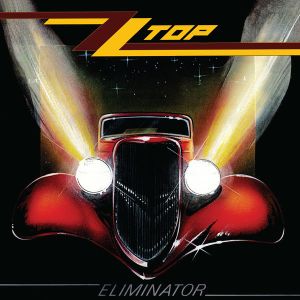
Gibbons’ 1933 Ford coupe on the cover was a tax write-off and helped to make Tim Newman’s vids for ‘Legs’, ‘Sharp Dressed Man’ and ‘Gimme’ bona fide 1980s classics. The band’s nine-month world tour kicked off in May 1983, aided by Manning’s beefy sound mix courtesy of the album’s four-track masters.

It’s fair to say that Eliminator massively influenced Prince, the Stones, Van Halen and Def Leppard, and arguably changed the way rock artists used technology forever.

Happy 40th birthday to a 1980s classic. But hey, don’t forget to credit Manning and Hudson…

Jeff Beck’s Guitar Shop With Tony Hymas & Terry Bozzio

Keyboard player Tony Hymas had one of the weirder music careers of the 1980s.

He began the decade helping to make There And Back one of Jeff Beck’s best albums, then popped up in a supergroup called PHD with singer Jim Diamond and drummer Simon Phillips, getting a classic UK one-hit wonder ‘I Won’t Let You Down’ (#2 in 1982!), then played on/wrote arguably the best track from Beck’s pretty poor 1985 album Flash, and then…not a lot for a while (read this excellent rare interview for more on Tony’s career).

But he was an absolutely vital part of Beck’s career comeback courtesy of Guitar Shop, released in October 1989. You might even call it Beck’s last great album, and arguably Bozzio’s too.

They recorded at Jimmy Page’s residential Sol Studios in leafy Cookham, Surrey (Beck later reported: ‘When we finished the album, I left me bike in his shed, so he got a bicycle out of it too…’!). The album ended up taking eight months to write and record because Hymas brought a chess board with him.

Beck took genres that he’d touched upon throughout his career – blues, reggae, rockabilly, metal, funk, fusion – and used them as a jumping-off points, working up material with Hymas and Bozzio in the studio.

And it’s very memorable material. On the title track Beck fondly mocks the gear obsession of guitar magazines, and goes through a range of tones and effects in the process, but…it all just sounds like Jeff. A Strat or Telecaster, distortion/delay pedals, and that’s it. It’s all in his fingers.

On the masterpiece that is ‘Where Were You’, he plays the lion’s share of the melody (reportedly very influenced by the Bulgarian State Radio & Television Female Vocal Choir AKA Les Voix Bulgares) with harmonics and very judicious use of the whammy bar, bending in and out of notes with just the right amount of wrist tension.

Bozzio plays a blinder – mostly reining in his formidable technique at the expense of groove and presence – but unleashes some seriously quick double-bass playing on ‘Sling Shot’. Thrash-metal drummers beware. And there’s THAT amazing fill at the end.

Hymas is a great accompanist – you hardly miss real bass and only very occasionally yearn for another instrumental foil for Beck. A couple of tracks on the album became live staples too, played in concert to this day – ‘Big Block’, ‘Where Were You’ and ‘Behind The Veil’.

Guitar Shop did OK in the States, making #49, but weirdly didn’t chart in the UK. But it did win a Best Rock Instrumental Grammy award in 1990. Their Hammersmith gig of 29 July that year was one of the loudest ever heard at the venue.

Beck talked up the possibility of a second album and tour but it never happened. They did reform for Jeff’s birthday party at the Royal Festival Hall in 2002 though. And El Becko even got on the BBC’s ‘Rapido’:


Miles Davis: The Bootleg Series Vol. 7 (That’s What Happened)

The heart always beats a little faster when there’s news of a ‘previously unreleased’ Miles project. And if it’s from the 1980s, even better.

The era is still one the least understood/lauded periods of Miles’s work, despite the stellar efforts of George Cole.

It also has not been served well posthumously, particularly by his final label Warners; in recent years there has been the weirdly undercooked/incomplete Rubberband project, and the appallingly-mastered/incomplete Warners Years box set.

So hopes were high for Sony’s new Bootleg Series 7, which takes in the years 1982 to 1985 and looks at the sessions that made up the (classic) albums Star People, Decoy and You’re Under Arrest. The packaging looks OK:

But what about the music? Before his death, Teo Macero, producer of many epochal Davis albums and also Star People, was very critical of the ‘complete sessions’ boxes that appeared after Miles’s demise. It’s safe to say he would not like this either.

We essentially get a collection of long studio jams, featuring the occasional familiar section – generally the best bit of the jam, expertly filleted by Teo. He really earned his money during this era of Miles music. There are also some alternative versions of You’re Under Arrest material, a few full-length, unedited versions of released tracks and one or two outtakes such as ‘What’s Love Got To Do With It’.

The full, unedited versions of ‘Freaky Deaky’ (Darryl Jones’ first recording with Miles) and ‘Katia’ (before Miles took his razor blade to John McLaughlin’s remarkable solo) are well worth hearing. Marcus Miller plays a brilliant bass solo on ‘Remake Of OBX Ballad’. There’s also a really strange duet featuring trombonist JJ Johnson and Miles on keyboards.

Unlike some of the previous Bootleg Series albums, there’s a lack of interesting studio chatter, which would have enlivened things (though there is the occasional brief Miles interjection). And there are still tracks that refuse to leave the vaults, such as the version of Nik Kershaw’s ‘Wild Horses’.

Disc one just contains too many formless jams, with Mike Stern, Miles and Bill Evans struggling to put together cogent solos (despite Al Foster’s beautiful drumming), and basically the band is crying out for John Scofield’s arrival in autumn 1982. He brings immediate relief, from both a soloing and compositional perspective. The live disc is serviceable and quite well recorded, but certainly not one of the best nights from the 1983 tour.

Essentially, we learn three things from the very uneven Bootleg Series 7: Scofield was a vital addition to Miles’s band and prolonged his career, Miller was Miles’s best bass player of the 1980s and Macero did a great job on Star People. But we probably knew all of that already.

So, basically, it’s another opportunity missed. I’ll stick to the original albums, with one or two exceptions. But you gotta check it out if you’re a fan of Miles’s 1980s music. George Cole covers the box in a lot more detail here.

David Sylvian/Holger Czukay: Plight & Premonition

As winter ghosts gather and Halloween approaches, Plight & Premonition makes for a great seasonal soundtrack.

David Sylvian reportedly hated the term ‘new age’ and wasn’t even that fond of ‘ambient’, preferring the phrase ‘environmental’ to describe his instrumental work of the ‘80s (he lived in South Kensington, a busy part of West London, and occasionally spoke of making music that would remind him of being in nature).

And what a body of work it is. Plight & Premonition is a great conjuring trick – it’s almost impossible to work out how it was done. Sylvian and Czukay concoct an intoxicating blend of tape loops, Dictaphone, acoustic piano, radio recordings, treated guitar and analogue synths which doesn’t sound remotely like anyone else’s ‘ambient’ music.

Sylvian arrived at Czukay’s massive studio near Cologne – an abandoned cinema – in autumn 1986 to work on the latter’s Rome Remains Rome album. But that work never materialised. Instead, after a dinner out, they returned to the studio and started messing about on Czukay’s many instruments.

Sylvian told writer Richard Cook more about the album’s genesis in ‘The Wire’ magazine:

I dislike studios immensely, but I like Holger’s studio because it’s all one room and it’s geared towards the musician. You never really know when you’re being recorded. There was three nights’ worth of improvising. ‘Plight’ was originally just a ten-minute piece of music which Holger worked on for six months afterwards, adding signals from short-wave radio and stuff, and finally turning it into the piece it is now. ‘Premonition’ is a piece we did at the end of the three days and it’s just as it stood.

The only thing we can be sure of is that ‘Plight’ is – tangentially – in E minor, whereas ‘Premonition’ is in E major. The former is disturbing, the latter uplifting. Apart from that it’s best to just let it wash over you.

The album emerged on Virgin’s burgeoning instrumental imprint Venture Records on 21 March 1988. Superbly, it also made an appearance in the UK album chart at #71 and sold well. Sylvian was still quite a draw in the slipstream of Secrets Of The Beehive.

However the current streaming/CD version of Plight & Premonition is an awful remix carried out by Sylvian in 2002 during his Everything And Nothing greatest hits period, when he was reassessing everything he’d done for Virgin (and not liking a lot of it).

He inexplicably removed all reverb (both real – via the studio echo chamber – and digital), leading to a fidgety, unpleasantly dry mix with very little depth or substance. Best to find the original 1988 release if you can, and you’ll also get Yuka Fujii’s delicious cover photo too.

David Sanborn: Hideaway

It’s no coincidence that alto saxist/composer David Sanborn’s purple patch (1980-1982) came about just when genres (yacht rock, soul, funk, jazz, R’n’B) were breaking down to create one of the most egalitarian musical eras.

Hideaway, his fifth studio album, was the breakthrough, and I love it. Released in February 1980, it made #2 on the Jazz chart, hung around in the Urban Contemporary charts for over a year and was nominated for a Best R&B Instrumental Performance Grammy.

For some, Sanborn’s solo material will always be ‘smooth jazz’, but I’d point to four aspects of his music that elevate it above similar material, particularly on Hideaway – his tone and his note choices, both born of the ‘50s and ‘60s St. Louis jazz and R’n’B scenes; his writing; and also the playing of top-notch guests. On Hideaway, the stars are drummer Steve Gadd (Gadd fans, this is the album for you), bassist Neil Jason and keyboard player Don Grolnick.

The title track remains a classic. Sanborn lays down rich Fender Rhodes soul chords while Gadd constructs a perfectly judged post-disco drum part heavily involving cross-stick and floor tom, laying just behind the beat, with an unexpected, explosive fill just before the fade. Jason is given free rein and comes up with an outrageous bass performance.

Hideaway also benefits from Steely/Doobies man Michael McDonald co-writing two tracks. Sanborn doesn’t have anything much catchier than ‘Anything You Want’ and ‘Again An Again’ in his repertoire. ‘Carly’s Song’ and ‘Lisa’ are memorable ballads with beguiling harmony, while Gadd provides another brilliant commentary on ‘If You Would Be Mine’.

Rick Marotta appears to expertly marshal ‘Creeper’ through its slow half-time groove – guitarist and frequent Sanborn collaborator Hiram Bullock was so taken with it he later wrote a sequel called ‘Son Of Creeper’.

Hideaway’s packaging helps too – its minimalist cover is a winner, as is the photo featuring Dave reclining in his apartment with a Magritte over his left shoulder and paramour draped over his right. Warner Bros. were just realising he wasn’t the worst looking guy in the world.

The only downside: in a classic bit of Warners penny-pinching, they add the very dull (and certifiably smooth-jazz) ‘The Seduction’ from the ‘American Gigolo’ soundtrack to the streaming and CD versions but in the process edit down ‘Anything You Want’ and the title track to ‘single’ length. Best try to find Hideaway on vinyl.

The Essential Nik Kershaw

Universal’s Nik Kershaw CD re-release program seems to have stalled after Human Racing and The Riddle emerged around ten years ago, a pretty scant return considering he spent more weeks on the UK singles chart during 1984 and 1985 than any other solo artist.

And though all four of his MCA albums are now on streaming platforms, there’s still no sign of decent physical versions of Radio Musicola or The Works (and absolutely nothing on vinyl yet), so we’ll have to make do with Essential Nik Kershaw, a new budget 3-CD compilation which, confusingly, has the same title as a similar one-CD comp that came out in 2000.

Back when his four 1980s albums were basically unavailable, Kershaw fans had to make do with fairly crappy CD compilations, so it’s a relief to report that this one’s pretty good. It’s two discs of original album tracks/singles plus one of remixes.

The good stuff first: the remastering is absolutely first-rate. The tracks have punch and not too much bass, usually the first sign of an overzealous tinkerer. The design is attractive, and the digipack very light but very solid.

There are a few decent B-sides I’d never heard: ‘When I Grow Up’ circa The Works could easily have been a single, and certainly should have appeared on the album. Instrumental ‘One Of Our Fruit Machines Is Missing’ gives the Chick Corea Elektric Band a run for their money in terms of insanely technical jazz/fusion.

Now for the not-so-good stuff: the track order is random, certainly not chronological, and there are songs missing that most fans would say are among his greatest: ‘Easy’, ‘City Of Angels’, ‘Walkabout’, ‘Lady On The Phone’, ‘LABATYD’, ‘Violet To Blue’.

The disc of remixes is a slog to get through, but it’s worth hearing ‘One Step Ahead’, ‘Radio Musicola’ and ‘Don Quixote’. There are also zero musician/producer credits and no liner notes.

But Essential Nik Kershaw a very good entry-level compilation and a treat to acknowledge again just how high the quality threshold was with this guy. I’ve also developed a real penchant for some material from the first album which I’d earlier dismissed, especially ‘Bogart’.

In recent interviews, both his engineer/mixer Julian Mendelsohn and keyboard player Andy Richards rate Kershaw as top of the list in terms of musical talent, pretty special when you consider the two have worked with Trevor Horn, Yes, George Michael, Level 42, Prefab Sprout and Paul McCartney.

(Mendelsohn also revealed that, much to producer Peter Collins’ annoyance, he spent a whole WEEK mixing ‘Know How’, so highly did he rate the track. His work definitely paid off…)


xPropaganda: The Heart Is Strange

Though not a big hit on its original release, Propaganda’s 1985 album A Secret Wish only seems to grow in stature as the years pass.

It was arguably the last meaningful release on the ZTT label, spawning two UK top 40 singles. More importantly it was a sonic treat, full of grandeur and drama, one of the great pop albums of the 1980s.

The Dusseldorf-formed band made a couple of botched attempts to reunite – the 1234 album in 1990, a Martin Gore/Tim Simenon-assisted try in 1998, then a partial gathering at Trevor Horn’s charity gig at Wembley Arena in 2004.

But now they’re back as xPropaganda (who knows the legal machinations behind that moniker). Founding members Michael Mertens and Ralf Dorper are not around this time but vocalists/songwriters Claudia Brucken and Susanne Freytag are, alongside Secret Wish producer/guitarist Steve Lipson.

Excitingly their album The Heart Is Strange is also on the newly reignited ZTT (Horn is credited as ‘Advisor’), via Universal Music Catalogue.

My expectations were high but then were slightly dashed with the choice of ‘Don’t You Mess With Me’ as lead-off single/trailer. It’s easily the least interesting track on the album.

Lush, cinematic opener ‘The Night’ definitely evokes memory of A Secret Wish’s epic track one ‘Dream Within A Dream’, even if Terry Edwards’ muted trumpet is incongruously ‘jazzy’ as opposed to the resplendent playing (by whom? Guy Barker? Steve Sidwell?) on the 1985 track. And there are too many vocal melodies to choose from, none particularly intriguing.

Elsewhere there are better tunes and the odd appealing lyrical zinger. And if synths are your bag, these sounds – mostly courtesy of Pete Murray – are fantastic, sometimes lush and ominous, sometimes intricate and ingenious. It’s great headphone music.

But there’s not enough memorable Lipson lead guitar on The Heart Is Strange and the drum programming is a bit flat. Paging Steve Jansen. Best track? The enigmatic closer ‘Ribbons Of Steel’, a nearly ten-minute spoken-word rumination on the end of a relationship with hints of the Pet Shop Boys and Prefab’s I Trawl The Megahertz.

The Heart Is Strange is a solid B+. Good in places but must try harder. Too many mid-tempo songs. Certainly not in the league of the freaky A Secret Wish (a lack of Mertens may have a lot to do with that?) and without that album’s pristine mastering, depth of sound, harmonic intrigue and wacky guest appearances, but some decent new material to play live. Maybe next time they’ll let their hair down a bit – and hopefully get Mertens involved again.

Brucken and Freytag speak about The Heart Is Strange in this podcast.

And Stephen Lipson deconstructs A Secret Wish and xPropaganda here.