Dreams By The Sea: Peter Gabriel & Kate Bush

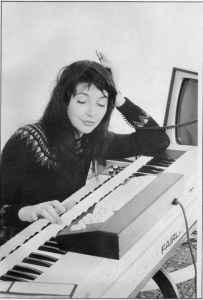
kate bushI’m certainly not alone in finding the seaside very evocative of childhood memories and, in turn, musical revelations gone by.

Walking on Devon’s Slapton Sands recently, I was taken back to family holidays at St Margaret’s Bay, a little village atop the famous White Cliffs of Dover on the English Channel.

Armed with my Walkman, I’d take off towards the creepy, deserted air-raid shelters, then scramble up the steep chalk track to enjoy the huge expanse of sea in all directions and the French coast in the distance.

The two tracks most redolent of that time – and two which somehow seem to capture something about the English fascination with all things nautical – are Kate Bush’s ‘And Dream Of Sheep’ and Peter Gabriel/Robert Fripp’s ‘Here Comes The Flood’. They are almost indistinguishable to me and will forever be connected to that coastline and the seaside in general.

Gabriel’s sea song was originally recorded for his 1976 debut album in a bombastic style. But in 1978, he laid down a much gentler, far superior piano/vocal version, to which Fripp later added Frippertronics and a spoken-word segment from his spiritual guide/Gurdjieff-protegee JG Bennett (who also turned up on David Sylvian’s Gone To Earth).
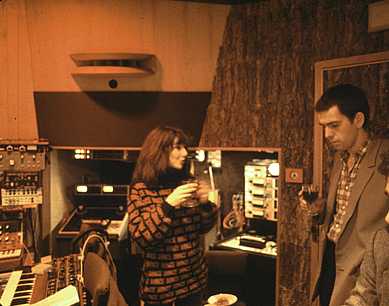
kate bush peter gabriel

Gabriel’s lyric seems to point towards the inhabitants of an island (England?) joining forces (telepathically?) to save themselves from a pending (apocalyptic?) tsunami. In doing so, the islanders taken on mystical, extra-sensory powers.

There are shades of the Genesis track ‘Supper’s Ready’, with its epic tale of good versus evil, and also elements of the research into ESP that Gabriel was apparently doing at the time.

Bush’s sea song kicks off the extraordinary Ninth Wave suite (and uses very similar chords to ‘Here Comes The Flood’: C#min, A and B) taking up the entire second side of her classic 1985 album Hounds Of Love. We are thrust unceremoniously into a psychic association with a female protagonist who finds herself in the middle of the sea after a shipwreck. Echoes of past/present obsessions, loves and losses float to the surface of her mind (including the Radio 4 Shipping Forecast), ostensibly to keep her awake so that she doesn’t drown.

The conclusion of the song cycle suggests that she’s now at peace and in a far more positive state of mind, either in death or safe at shore.

RIP Chris Squire (Updated)

In my recent piece on Chris’s sad passing and bass style, I put forward my half-arsed theories on his ’80s tunings.

I stand corrected, as the excellent video below shows. The whole thing is worth watching, but he gets into the issue of his five-string bass at around 12:10 (and also rattles off a nice demonstration of the ‘I’m Running’ riff).

Needless to say, his approaches to the five-string and tunings in general are as original as all his other musical ideas. Enjoy.

No Brown M&Ms: Great Backstage Riders Of The ’80s

brown-milk-chocolate-m-m-1-poundYou know you’ve made it in the music biz when your gig rider raises eyebrows.
The rider: a contract drawn up by the promoter stipulating a band’s concert requirements including ‘dressing room extras’ – food, drink and drugs to you and me. And, if the general tenor of the 1980s was extravagance and exuberance, many artists’ backstage demands were no different. Here are five corkers:

5. Howard Jones
He had barely registered a hit and was only undertaking a modest college tour of the UK during summer 1983, but his backstage demands included ‘eight pounds of brown rice, six large aubergines, three pounds of courgettes, three green peppers, one head of garlic, three pounds of fresh tomatoes, twelve mixed yogurts and twelve bananas.’ He also requested that security not have ‘guns or dogs’, that the dressing room possess a ‘sweet-smelling ambience’ and that he must have ‘physical contact with the audience’. And you thought he was just a slightly vapid though ultimately harmless pop guy…

4. Van Halen
They famously often requested ‘large bowls of M&Ms with the brown ones taken out’ but their legendary 1984 Monsters Of Rock show at Castle Donington also required ‘eight litre bottles of Jack Daniels, eight litre bottles of brandy, eight litre bottles of vodka, 16 cases of domestic beer and a worldwide selection of cheeses’. Those boys knew how to partay. And were also rather fond of continental cheeses.

3. Iggy Pop
Late great musician/writer Ian Carr once described seeing Miles Davis come offstage and collapse into the arms of two specially-placed roadies as soon as he was out of the audience’s sight, but that’s nothing compared to The Iggster’s post-show routine. His rider for a 1983 UK tour stipulated ‘it is absolutely essential at the end of the show that there is a nurse in attendance with two cylinders of oxygen and masks’. Presumably Iggy wanted the ‘nurse’ for a bit more than ‘oxygen’…

2. David Thomas
The portly Pere Ubu frontman demanded meticulous sandwich preparation for a University of London show in the early ’80s: ‘A sandwich is defined as three pieces each of meat and/or cheese, one-inch thickness of lettuce, a half-inch thickness of onion, mayonnaise, two slices of three-quarters of an inch of tomato, all between two thick slices of wholemeal bread. NO BUTTER. AND I WILL REPEAT: NO BUTTER OR MARGARINE. PERIOD.’ It’s as if punk never happened…

1. Aerosmith
The Bad Boys From Boston didn’t leave anything drug-related to chance when putting together their backstage rider for a particularly blitzed tour in the early ’80s. The stand-out clause read: ‘No snow, no show’! Well, at least they were honest.

A tip of the hat to Simon Garfield’s excellent book ‘Expensive Habits’.

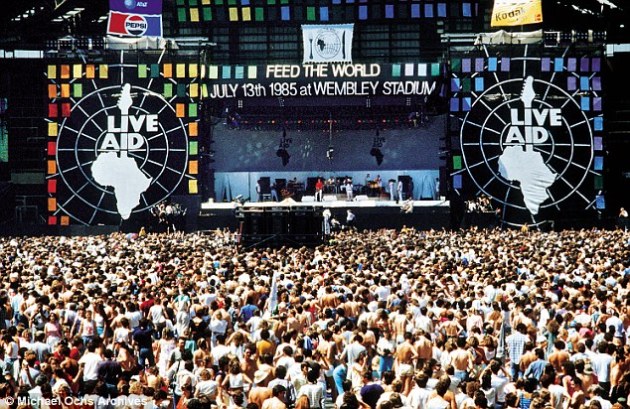
Live Aid: 30 Years Ago Today

live aidWith barely a mention in the media or press, Live Aid turns 30 today. 
I was a very excited 12-year-old pop fan on Saturday 13th July, 1985. The weather was hot and sunny and the whole nation seemed united. On the morning of Live Aid, my dad drove us up to the Virgin Megastore on Oxford Street where I bought cassettes of Level 42’s A Physical Presence and Scritti Politti’s Cupid And Psyche ’85 in preparation for the day. The streets were almost deserted. We got home around midday, turned the telly on and settled in for the afternoon.

That was then but this is now, as ABC sang. But how does the music from that day stand up in 2015?

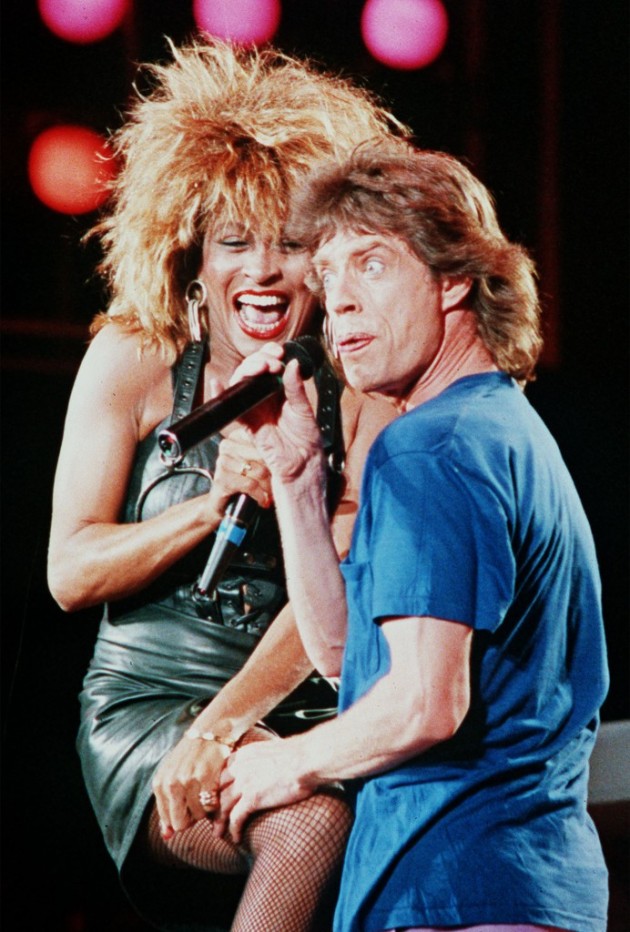
Though many of New Pop’s architects got in on the act, it was the older artists who – for better or worse – made the biggest impact on the day (Queen, Tina Turner, Phil Collins, Status Quo, Dylan, Led Zep, Dire Straits, The Who, Bowie, Jagger). Apart from Led Zep and Dylan’s hilariously dodgy turns, Live Aid reminded people that the oldies were still hungry and could still cut it live, and the event arguably ushered in the mainstream success of Peter Gabriel, Steve Winwood, Eric Clapton and Robbie Robertson.

mick jagger tina turner

Many of the youngsters fudged it: Spandau were shown up by their lack of musicianship and quality material, Adam Ant chose the wrong songs, Sade were dull, Style Council were shrill and under-rehearsed, Duran were hamstrung by LeBon’s famous vocal boo-boo, Paul Young and Alison Moyet cornily rehashed some very old soul-revue moves and The Thompson Twins sounded out of their depth despite backing from Madonna and Nile Rodgers.

Perhaps surprisingly, U2, Madonna, Howard Jones, George Michael and Nik Kershaw might just have been the best ambassadors of Pure Pop on the day with engaging performances and solid musicianship. Post-punkers such as Sting, Elvis Costello and The Cars were merely functional.

But maybe the biggest disappointment of the day was the lack of black superstars (Prince, Michael Jackson, Stevie, Miles?), female solo artists and Second British Invasion popsters (Culture Club, Eurythmics, Tears For Fears, Frankie Goes To Hollywood).

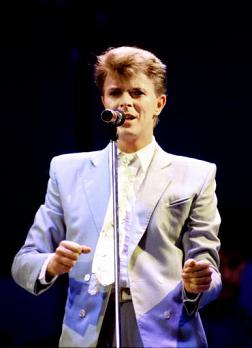
david bowie

Naysayers claim that most of the acts appeared simply to further their careers. Well, yes, surely that was a factor for the younger artists but it’s a crushingly cynical view. Anyway, did you buy ANY music as a direct result of seeing Live Aid on the box (Queen’s Greatest Hits doesn’t count)?

I just enjoyed it for what it was. Anyway, most of my favourite pop acts didn’t get anywhere near Live Aid (Scritti, Jacko, Propaganda, Level 42, Prefab). It’s hard to really complain when the event has raised over £150 million.

So three cheers to Bob Gandalf, as Joss Stone memorably called Geldof.


Ornette Coleman: Made In America

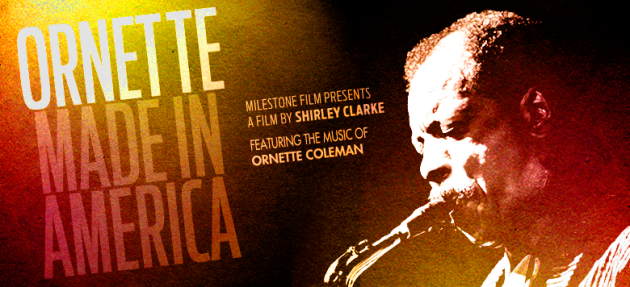
ornetteOrnette Coleman’s sad recent passing reminded me of a superb, almost totally forgotten ‘documentary’ that is begging for a DVD re-release (though it may be available in the US).
Shirley Clarke’s 1985 film ‘Ornette: Made In America’ centres around Coleman’s 1983 return to his hometown of Fort Worth, Texas, to receive the keys to the city from the mayor, open his Caravan Of Dreams venue and also perform astonishing orchestral work The Skies Of America (29 September 1983 was officially named Ornette Coleman Day).

The film weaves in re-imaginings of Coleman’s childhood in segregated Texas, surreal music-video images and talking-head tributes from scientists, writers, musicians, philosophers and William Burroughs about the impact and importance of Ornette’s music. Ornette himself is interviewed at length and we see him in conversation with family and friends.

It really is a trip (in the best sense of the word), and one of the great jazz films. I taped it off air from Channel Four in the UK when it got a one-off showing in the late-’80s. I’ll be watching it again in the next week or so – can’t wait.

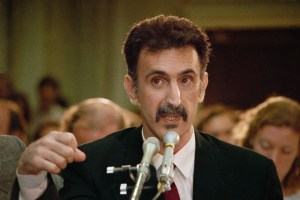
Frank Zappa v Corporate America: The PMRC 30 Years On

FZ at the 'Porn Rock' Senate Hearing, 19th September 1985

Zappa at the ‘Porn Rock’ US Senate Hearing, 19th September 1985

The Parents Music Resource Center or PMRC was formed in 1985 by Tipper Gore, wife of Senator and later Vice President Al Gore; Susan Baker, wife of Treasury Secretary James Baker; Pam Howar, wife of Washington realtor Raymond Howar; and Sally Nevius, wife of former Washington City Council Chairman John Nevius.

They proposed that albums carry a rating system and wanted certain songs – the so-called Filthy Fifteen – to be censored. Frank disagreed vehemently with the PMRC (despite not appearing in the Filthy Fifteen list) and appeared on US TV to argue his case with a journalist and…Donny Osmond. With memorable results.

He also included segments of the Senate hearing on his spooky track ‘Porn Wars‘ from the album Frank Zappa Meets The Mothers Of Prevention.

He also spent a lot of the mid-’80s fending off questions from lazy journalists about his ’60s ‘hero of the counterculture’ status. The fact is he was still making some outrageous, important music in the ’80s, but the mainstream media was more interested in asking him about The Mothers and Jimi Hendrix.

This fascinating, mostly uncomfortable interview shows that you’ve gotta do your research if you want to speak to FZ (he’s right up there with Keith Jarrett in this regard), and also you might find that he’ll mention ’embarrassing’ truths about your corporation and the music business in general. He’s much missed.

Red Wedge 30 Years On

red wedge

The Red Wedge gang including Paul Weller, Jimmy Somerville and Glenn Gregory meet Ken Livingstone and Labour leader Neil Kinnock, 1987

Some might say that music and politics should never mix. But it’s less than two weeks to the General Election here in England. Looking at the music press or listening to music radio, you’d never know it.

Is politics just terminally uncool? Do today’s musicians not give a damn about who gets into power? It seems to be a mixture of both, though I was intrigued to see Paloma Faith hand-picking the writer Owen Jones to open some of her recent gigs.

The deafening silence (apart from a recent Jazz For Labour event at the Barbican) can’t help but beg comparison to the state of play 30 years ago when the movement known as Red Wedge got underway.

Formed in 1985 initially as a Labour-supporting group to encourage young people to vote and get Margaret Thatcher out of office, it arguably politicised a second generation of music fans a decade after Rock Against Racism and punk. Though I was too young to fully understand Red Wedge’s aims (and too young to vote), I certainly took notice.

Red Wedge officially started on 21st November 1985 when Kirsty MacColl, Billy Bragg, Paul Weller and Strawberry Switchblade were invited to a reception at the Palace of Westminster by Labour MP Robin Cook.

Major tours followed in the next few years leading up to the 1987 General Election featuring additional artists such as The Communards, The Style Council, Junior, Jerry Dammers, Madness, The The, Bananarama, Prefab Sprout, Elvis Costello, Sade, The Beat, Lloyd Cole and the Commotions and The Smiths. In short, this was no Mickey Mouse setup.

Unfortunately, their efforts amounted to diddly squat; the 1987 election resulted in a third consecutive Conservative victory. But at least they tried and their message didn’t fall on deaf ears. And where is the new batch of protest songs and protest singers? Unfortunately the current crop of musicians are just like most of the politicians: bland, middle-of-the-road, lacking in ideas and desperate not to offend.

Seven More Great ’80s Album Openers

7. David Bowie: ‘It’s No Game (Part 1)’ from Scary Monsters (1980)
Weird doesn’t cover it. We hear tape spooling around the reels and the machine being turned on, followed by drummer Dennis Davis whirling around a football rattle and counting us in in his best Cyborg voice. After this, Robert Fripp’s deranged solo and Michi Hirota’s strident Japanese outbursts sound almost normal.

6. De La Soul: ‘Intro’ from 3 Feet High And Rising (1989)
A whole generation of pop kids hadn’t heard anything like this before, and yet somehow it bears repeated listening. It’s just as fresh and original as anything The Small Faces or The Beatles tried 20 years before and arguably started off the whole ‘intro’ concept on hip-hop albums.

5. Genesis: ‘Behind The Lines’ from Duke (1980)
In musical theatre, I believe it’s called an overture. This bombastic piece previews many of the themes that will reverberate through the album. Tony Banks’ keys and Phil’s drums have seldom sounded brighter or tighter.

4. Lil Louis: ‘I Called U’ from From The Mind Of Lil Louis (1989)
This classic piece of bunny-boiler house is funny and arresting.

3. It Bites: ‘Positively Animal’ from Eat Me In St Louis (1989)
Watch that volume dial. The underrated four-piece jolt you out of complacency with a flashy, these-go-to-11 opener. Audacious and very un-English.

2. The Police: ‘Don’t Stand So Close To Me’ from Zenyatta Mondatta (1980)
Another moody classic. A brooding Oberheim bass-throb, a fudged Andy Summers lick, a hint of click track and then that brilliant, patented half-time groove. The full-length version hints at the darker themes of the lyric.

1. Talking Heads: ‘And She Was’ from Little Creatures (1985)
Leaving behind the art-funk of Speaking In Tongues, this sprightly opener introduces a new stripped-down pop sound in no uncertain terms.

Six Great ’80s Album Openers

vinyl-goldSequencing an album can be a real headache but it’s surely one of the dark arts of the music business.

One thing’s for sure: the lead-off track is key. You know the old A&R cliché – ‘You gotta grab ’em from the first bar!’ But sometimes quiet and enigmatic can be just as effective as loud and arresting.

Repeated listening and nostalgic reverie possibly cloud the issue but it’s almost impossible to imagine some albums with different opening tracks. Revolver kicking off without ‘Taxman’? Rubber Soul without ‘Drive My Car’? Pretzel Logic without ‘Rikki Don’t Lose That Number’? Unthinkable.

So here are six of my favourite album-openers from the ’80s:

6. Phil Collins: ‘In The Air Tonight’ from Face Value (1981)
Love or hate Phil, no one can deny this is one of the killer intros. He programmes his own ‘Intruder’ beat on a Roland CR-78 drum machine, adds some slabs of heavy guitar, some moody chords (in D minor, the saddest of all keys…) and chills all and sundry.

5. Yes: ‘Owner Of A Lonely Heart’ from 90125 (1983)
A blast of sampled Alan White drums (later co-opted for Art Of Noise’s ‘Close To The Edit’) and we’re away! Trevor Rabin’s gargantuan power-chord intro became an MTV mainstay and gave the prog-rock survivors their only US number one single. But, arguably, they shot their load too early – the rest of the album never comes close to this lavish opener.

4. Simple Minds: ‘Up On The Catwalk’ from Sparkle In The Rain (1984)
I’m a sucker for drummer count-ins and this is one of the best. There’s a lovely contrast between the unproduced timbre of Mel Gaynor’s yelp and stick-clicks and the subsequent blizzard of gated drums and Yamaha CP-70 piano in the classic Gabriel/Lillywhite/Padgham style.

3. Tears For Fears: ‘Woman In Chains’ from The Seeds Of Love (1989)
A less-than-great song from a less-than-great album, but messrs Olazabal and Smith weave a rather delicious, Blue Nile-influenced intro that promises great things, before Phil Collins’s stodgy drums and some chronic over-production buries it in bombast.

2. PiL: ‘FFF’ from Album (1986)
‘Farewell my fairweather friend!’ bawls Johnny over a cacophony of gated drums (played by jazz legend Tony Williams, fact fans) and angry guitars.

1. The Blue Nile: ‘A Walk Across The Rooftops’ from A Walk Across The Rooftops (1984)
Another one that asks, ‘Hang on, is there something wrong with this CD?’ Subtle synths ruminate in near-silence before some found sounds (coins being inserted into a slot machine?) and a lonesome trumpet gently prod a classic album into life.

Omar Hakim, Drummer Of The ’80s: Seven Of The Best

omarhakim3Of the all-time-great drummers who emerged in the ’80s – a list that would have to include Manu Katche, Dave Weckl, Dennis Chambers and Trilok Gurtu – you could argue that Omar Hakim was the main man. His hip, funky, vibrant style typified all that was good about the music of the era.

Effortlessly versatile, endlessly creative and always musical, Hakim emerged from the early ’80s New York jazz and fusion scene and quickly became the drummer of choice for David Sanborn, David Bowie, Dire Straits, John Scofield, Weather Report and Sting. He could play everything from straight jazz to heavy rock’n’roll with total ease, great feel and a beautifully light touch.

I first became aware of Omar when he demonstrated his ‘Children’s Crusade’ beat on BBC TV’s ‘Rock School’. I was a major fan from that day on.

Here are seven great Omar performances from the ’80s:

7. Sting: ‘I Burn For You’ (1985)
Drum legend Jeff Porcaro waxed lyrical about this performance which appears in the 1985 film ‘Bring On The Night’. One of Omar’s specialities is soloing over a static vamp, and he really takes it out about as far as it can go here.

6. Dire Straits: ‘So Far Away’ (1985)
Omar can do slick, clean, laidback rock too, as heard on this Brothers In Arms opener. Check out his lovely fills, layered in at the end of each chorus, bringing the playing of Motown star Benny Benjamin into the ’80s.

5. David Sanborn: ‘Rush Hour’ (1982)
Omar dusts off a much-imitated ghost-note-inflected groove for this track from the As We Speak album, possibly influenced by the late great Little Feat sticksman Richie Hayward. Only Hayward could have nailed this with as much panache, drive and subtlety.

4. Weather Report: ‘Db Waltz’ (1984)
Omar pulls out all the stops on this ingenious 3/4 (or is it 6/8?) groove, the centrepiece of the Domino Theory album, falling somewhere between a swing feel and straight feel just the way the old guys used to do it on the R’n’B hits of the ’50s. He also demonstrates some jaw-dropping chops towards the end.

3. Special EFX: ‘Sabariah’ (1988)
The music comes uncomfortably close to smooth jazz on this opening track from the Confidential album but Omar’s grooving is just sublime. The controlled energy explodes from his kit.

2. David Bowie: ‘Neighbourhood Threat’ (1984)
Omar could also play heavy rock with the best of them as demonstrated by this underrated track from Tonight. And not even Jeff Porcaro could have conceived of the floor-shaking fill at 2:14.

1. John Scofield: ‘Techno’ (1985)
The lead-off track from the classic Still Warm album, this perfectly illustrates Omar’s intricate hi-hat playing, as distinctive as Stewart Copeland’s almost a decade before. I dig the way he takes the tune out with some sick china cymbal/snare combinations.