1980s Rock/Pop Acts I Should Like But Don’t

Everyone knows a few: those acts that got great reviews, named some of your favourite bands as influences and sold a few records in the process, but there was just something about their music that you couldn’t hack.

Maybe it was their vocals, their outlook, their politics, their songwriting, or a mixture of all four.

Well I know some too. Here’s a totally subjective, wildly judgemental – no offence intended – list of 1980s pop and rock artists who leave me cold, despite most being critical and commercial successes. Believe me, I’ve tried. Like they could care less…

King’s X
My muso mates waxed lyrical about their tricky riffs and tight musicianship but I’ve never got beyond the guy’s not very good singing, their weirdly unmemorable songs and rather naff pomp-rock tendencies.

World Party
Perpetually spoken about in hushed tones of reverence when I was at college but their music singularly failed to grab, despite the Beatles/XTC/Prince influences, possibly due to Karl Wallinger’s rather wimpy voice. See also: Crowded House, REM, Waterboys

The Blow Monkeys
Somehow got filed under the ‘sophistipop’ banner courtesy of their flirtation with ‘slinky’ grooves and soul influences, but for me Dr Robert’s absurd voice and the lack of songwriting imagination never got them past first base. See also: Kane Gang, Simply Red, Johnny Hates Jazz, Black, The Big Dish.

Marillion
Decade-ending Season’s End had some brilliant moments but for me most of the Fish era was a succession of quite badly-played/badly-sung rip-offs of Gabriel-era Genesis. It Bites did it better and added some much-needed pizzazz and groove. See also: IQ, Jadis, Tony Banks/Chris Squire/Mike Rutherford solo albums…

Deacon Blue
I liked the soppier/poppier elements of their debut album Raintown but the game was up when the truly irritating ‘Wages Day’ and ‘Real Gone Kid’ swept the airwaves at the end of the decade. They took Prefab Sprout’s basic concept to the bank whilst shaving off the weird edges.

Paul McCartney
Sheer melodic brilliance time and time again of course, but for me his 1980s work generally flatters to deceive, outside of a few random favourites (‘Pipes Of Peace’, ‘Once Upon A Long Ago’). Yes, even the album he did with Elvis Costello (of whom more below…).

The Style Council
Only a musical moron would deny the power of ‘You’re The Best Thing’ and ‘Walls Come Tumbling Down’ and you have to admire Paul Weller’s songcraft, politics, guitar playing and ability to laugh at himself, but generally it was hard to shake off the naffness. Mick Talbot must take a lot of the blame…

Mick Jagger
He employed some of my favourite producers and musicians (Jeff Beck, Sakamoto, Bill Laswell, Herbie Hancock, Doug Wimbish, Simon Phillips etc. etc.) but failed to produce even one memorable or interesting single or album track during the 1980s. See also: Pete Townshend, Eric Clapton, Nick Heyward, Jerry Harrison

Pages
This yacht rock supergroup had a great singer (Richard Page) and sh*t-hot musicians (Vinnie Colaiuta, Jay Graydon, Jeff Porcaro, Steve Lukather etc.) but the songs weren’t strong or memorable enough. See also: most of Toto, Mr Mister

Elvis Costello
Weirdly his ‘Less Than Zero’ was one of the first singles I loved as a kid, but his desperation to be a serious ’80s ‘artist’ fell on deaf ears despite the fact that he obviously knew a lot of chords and retained some of that new-wave angst (but even I couldn’t resist his fine run of 1990s form, from the superb ‘London’s Brilliant Parade’ to Bacharach). See also: The Cars, The The, Squeeze.

Van Morrison
To my ears his 1980s music is like Joni Mitchell and John Martyn without the melodic/harmonic/lyrical depth, apart from the sublime ‘Rave On John Donne’. People tell me he always uses great bands though, but they often barely register…

Todd Rundgren
I’m more of a fan of his 1980s producing work (Pursuit Of Happiness, XTC etc) than his solo music. Never bought into this whole ‘he’s a genius’ thing, save the wonderful ‘The Verb To Love’ – but that’s from the 1970s, innit…? See also: Lenny Kravitz.

Depeche Mode
Yes they’ve got a few pop hooks, the Mute Records cred and ‘edgy’ image but never been able to shake off an ineffable naffness for me. And despite being ‘synth pioneers’, they didn’t seem to push the sonic envelope much in the 1980s at all. ‘Everything Counts’ was superb though and I got on board later with Ultra. See also: Kraftwerk, New Musik, Visage, Ultravox, New Order, Howard Jones

Pink Floyd
If you want to put me to sleep, put on any of Pink Floyd’s 1980s work. Bring back Syd. See also: Fleetwood Mac, Pink Floyd solo projects, except Nick Mason’s Fictitious Sports, which is brilliant…

Bad Brains
Dub/thrash/funk pioneers and a huge influence on bands I really like such as Living Colour, Fishbone and 24-7 Spyz, but their music seems a little amateurish to me and, again, their singer was not blessed with a great set of pipes (unlike the singers of bands above).

Housemartins
Fondly remembered until you actually hear those singles again – ‘Build’, ‘Happy Hour’, ‘Caravan Of Love’. Annoying, a bit puny, and apparently the more irritating side of the C-86 generation.

The Jesus and Mary Chain
Bowie summed them up well for me: ‘I tried the Jesus and Mary Chain but I just couldn’t believe it. It’s awful! It was so sophomoric – like the Velvets without Lou. I just know that they’re kids from Croydon! I just can’t buy it…’

The CD Cull

New year, new CD collection.

December 2022 saw the Second Annual CD Cull, not quite as drastic as the Great Cull Of 2021 but still pretty ‘brutal’ (can we please ban the use of that word in 2023 unless it refers to human atrocities?!).

In this annual period of reinvention and rebirth, some people throw out clothes, books and furniture – these days I look with fear and pity at my overburdened CD shelves.

CDs have lots of pros: sound quality, liner notes, cover artwork. But they are heavy, take up space, and looking at my stash is also a tacit admission of guilt at not getting to record shops as much as I used to.

But which CDs to keep? Of course there are the untouchables, in my case: Steely, John McLaughlin, Weather Report/Jaco/Wayne, Level 42, Jeff Beck, Syd, Ornette, Monk, Joni, Miles, Prefab, Little Feat, Marvin, Zappa, Scritti, Faith No More/Mr Bungle, It Bites, Danny Wilson et al.

Then there were the CDs I’m not altogether sure about but aren’t available on any other formats. So it’s a stay of execution for:

Lil Louis’ From The Mind Of Lil Louis
Robin Eubanks’ Karma

Then there are ones I haven’t listened to for ages. So I listened to them. Did I still want the below? Yes. They all screamed ‘classic’ pretty much from the first bar:

Human League’s Dare
Morphine’s Like Swimming
Brad Mehldau’s Places
Geri Allen: The Gathering
Brecker Brothers Collection Vols. 1 and 2
Gary Clail’s Dreamstealers

Little Axe’s The Wolf That House Built
Lonnie Liston Smith’s Cosmic Funk
Albert Collins & The Icebreakers’ Live ’92-’93
Blur’s Blur
Flaming Lips’ The Soft Bulletin
D’Angelo’s Brown Sugar

But stuff has to go, so you need a system. There were soundtrack albums with one or two superb vocal tracks but which otherwise flattered to deceive:

Isaac Hayes’ Shaft
Marvin’s Trouble Man

There were compilation albums that were badly put together, inconsistent or lacking decent liner notes/info. So it’s goodbye to:

Roy Ayers’ A Shining Symbol
The Jimi Hendrix Concerts
Living Colour: Pride
On-U Sound’s Pay It All Back Vol.4
Ian Dury & The Blockheads’ Reasons To Be Cheerful
Peaches: The Very Best Of The Stranglers

Then there were the studio albums that had just a few good tracks and/or no musician details etc.:

Robert Palmer’s Double Fun
Angela Bofill: Love In Slow Motion
Propaganda’s Wishful Thinking
Red Hot Chili Peppers’ Freaky Styley
Randy Newman’s Bad Love
Dee-Lite’s World Clique
Blur’s 13 (also in retaliation at Graham Coxon’s constant/irritating ‘shaming’ of the 1990s in recent interviews)
Van Halen’s Women And Children First/1984/Diver Down/Fair Warning
Zawinul Syndicate’s Lost Tribes
John Coltrane: ‘58/Both Directions At Once
D’Angelo’s Black Messiah

Finally, there are those CDs that are just appallingly remastered:

XTC’s Nonsuch/English Settlement
Bill Bruford’s One Of A Kind (2018 version)

I’ve probably left quite a few out here. Yes I’ll probably rue getting rid of some of ‘em. But it had to be done. I hope they have gone to a good home. Now, which CDs will kick the bucket in YOUR gaff…? (And a tip of the hat to the excellent Reckless Records in Soho, who always offer good prices/friendly service. )

1980s Albums That Always Appear In Charity/Secondhand Shops

So it’s official: old music is hugely outselling new music. And vinyl is the most popular physical format again.

Go into a record shop and likely you’ll be stunned at the price of secondhand vinyl, not to mention new catalogue LPs that can cost up to 25 quid for a posh reissue.

All of which might amuse/surprise music fans of my vintage who kept hold of their record players through the years and spent the noughties digging around the vinyl discount stores, often picking up ‘esteemed’ albums for anything between 10p and a quid (the price of a postage stamp, for readers outside the UK).

So what were those 1980s vinyls that were/are ALWAYS in secondhand shops and, by extension, still ever-present in charity shops? And why were they always there?

Most smack of the impulse buy by people who get one album a year, or the ‘difficult’ follow-ups to a smash. Some are tainted by an almost ineffable naffness. Most were deemed surplus on vinyl once CD became the format of choice, and most are weirdly genre-less.

Stacked high/sold cheap, you’d think they’d be reissue-proof, never to be seen again. But not so fast: ‘deluxe’ editions of these are probably on their way to a shop/streaming service near you, or have already arrived…

The Beautiful South: Welcome To The Beautiful South

U2: Rattle And Hum

Del Amitri: Waking Hours

Bros: Push

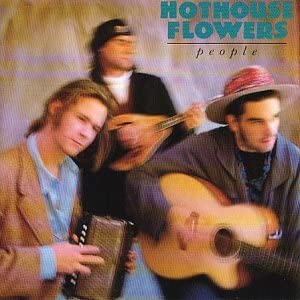
Hothouse Flowers: People

Michael McDonald: Sweet Freedom (The Best Of Michael McDonald)

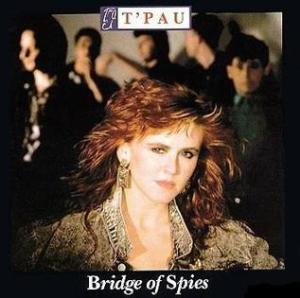
T’Pau: Bridge Of Spies

Foreigner: Agent Provocateur

Michael Bolton: Soul Provider

Meat Loaf: Dead Ringer

John Cougar Mellencamp: The Lonesome Jubilee

Enya: Watermark

Five Star: Silk And Steel

Arcadia: So Red The Rose

Sade: Diamond Life

Chris Rea: The Road To Hell

Phil Collins: No Jacket Required

Bryan Ferry: Boys And Girls

Genesis: Invisible Touch

George Michael: Faith

Tracy Chapman: Tracy Chapman

Fleetwood Mac: Tango In The Night

Wet Wet Wet: Popped In, Souled Out

Fairground Attraction: The First Of A Million Kisses

Paul Young: No Parlez

Tom Petty: Full Moon Fever

Michael Jackson: Bad

Tina Turner: Private Dancer

Lionel Richie: Can’t Slow Down

Alison Moyet: Alf

Patti Labelle: Winner In You

Howard Jones: Human’s Lib

Simply Red: A New Flame

Whitney Houston: Whitney

Paula Abdul: Forever Your Girl

Bon Jovi: Slippery When Wet

Madonna: True Blue

Tears For Fears: Songs From The Big Chair

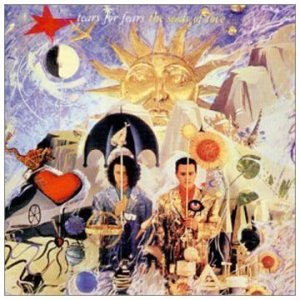
How Not To Follow Up A Hit Album #2: Tears For Fears’ The Seeds Of Love

courtney pine

Tears For Fears’ second album Songs From The Big Chair did the business.

A relatively cheap record to make, it sold millions and elevated the Bath boys into the big league. Early ‘80s technology, boy-band looks and some great hooks had carried TFF through the first two albums but now they felt they had to deliver a polished, ‘musicians’ album’ to match their heroes. Big mistake…

The Seeds Of Love was the result, and with it they tragically o’erreached themselves in the search to emulate their heroes Gabriel, Ferry and Sylvian. Four producers. Nine studios. Over a million pounds in studio costs. Broken marriages. Dozens of session musicians.

A famous Q article outlined the painful, sometimes embarrassing lengths the two protagonists Roland Orzabal and Curt Smith went to to complete Seeds.

Orzabal has said he wanted to make something musicians would love, something ‘world-class’. This over-egged curio shows what happened when pop stars tried to buy credibility in the late-‘80s, undeniably under a fair amount of record company pressure to follow up a monster.

The intro of ‘Woman In Chains’ still retains some Blue Nile-ish power before being obliterated by Phil Collins’ sledgehammer drums and overblown AOR guitars; Gabriel/Joni/Sting drummer Manu Katche plays a blinder on ‘Badman’s Song’ but the melodies barely register.

‘Sowing The Seeds Of Love’ still stands up though as a decent Beatles tribute complete with some lovely woozy drums from Big Chair producer and ex-Ant Chris Hughes and a very cool chord sequence.

‘Standing On The Corner Of The Third World’ is initially very attractive complete with Jon Hassell’s ethno-trumpet and some typically slinky fretless playing from Pino Palladino, but its grand atmosphere and ambience can’t obscure the lack of structure and good ideas.

Swords And Knives’ starts with an interesting piano/voice melody but quickly gets mired in a succession of annoying guitar solos and grandiloquent key changes.

‘Year Of The Knife’ (these boys are really interested in knives…) is a pretty ugly collision of gospel vocals and a sub-‘Broken Wings’ groove. Again, the song runs out of stream after two minutes and tries to cover it up with a fiddly string arrangement and weird avant-metal guitars. Even uber-drummer Simon Phillips sounds uninspired.

The Q article, September 1989

The Q article, September 1989

Orzabal almost achieves a Sylvian-ish level of sophistication on the closing ‘Famous Last Words’ but once again blows it, neglecting to supply a B section or cogent lyrics. Quiet/loud dynamics alone do not a good song make.

The album was a hit, going straight to number one in the UK and selling well in Europe and the States, but was it worth all the effort? Orzabal and Smith were barely on speaking terms and didn’t record together for over a decade after Seeds‘ completion. It was certainly a big and bold farewell to the ’80s from one of the decade’s success stories.

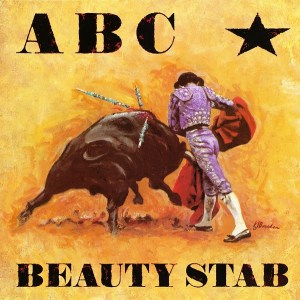
How Not To Follow Up A Hit Album #1: ABC’s Beauty Stab

abcThe ’80s were positively dripping with fine debut albums but equally cursed with a lot of substandard sophomore efforts.

As the music biz cliché goes, you have your whole life to come up with your first album but only six months to make the followup. ABC could hardly have got it more right with their 1982 debut Lexicon Of Love, a ravishing collection of string-drenched, post-disco torch songs, but they came seriously unstuck with Beauty Stab a year later.

Seen as ‘ABC go heavy metal’ by much of the music press at the time of release, these days Beauty Stab just sounds like a pretty tuneless but beautifully-produced rock/pop album with the odd ‘political’ lyric and barmy moment thrown in (the jazz-waltz interludes in ‘Love’s A Dangerous Language’, cacophonous finale to ‘That Was Then’, atonal strings that kidnap ‘Bite The Hand’, Martin Fry’s rhyming couplets throughout…).

Though not exactly heavy metal, the guitar playing is pretty unreconstructed throughout and seems to be searching in vain for some Fripp-style insanity. And the album is thankfully graced with Roxy/Lennon/Sly drummer Andy Newmark, whose playing is lovely, especially on the very Avalonesque ‘If I Ever Thought You’d Be Lonely’. Co-producer and future Art Of Noise member Gary Langan does a great job too, in the main eschewing ‘80s production values in favour of a dry, ballsy mix and some strikingly original touches.

The problem is, for all its undoubted craftsmanship, amusing lyrics and faux grittiness, the album is short on memorable choruses. ‘Hey Citizen’, ‘King Money’ and ‘Power Of Persuasion’ have classic ABC hooks but fail to deliver catchy B-sections.

A quick survey of the track titles and it’s almost impossible to remember a chorus, save the opening ‘That Was Then…’, and that spells trouble. Unsurprisingly the album works best when the guitars simmer down a bit and Fry’s vocals take centre stage, as on ‘By Default By Design’ and fine state-of-the-nation closer ‘United Kingdom’.

Commercially, Beauty Stab was not an outright disaster, reaching #12 in the UK album chart and selling over 100,000 copies, but it was a big disappointment after such a successful debut. Acclaimed music writer Simon Reynolds even went as far as to call it ‘one of the great career-sabotage LPs in pop history’.

In late-1983, Britain was turning its back on back on guitars and kitchen-sink lyrics; glamour and fun were back in, typified by Wham!, Howard Jones, Culture Club, Spandau Ballet, Duran Duran, even Bowie – all of whom cashed in on the vibe and musical exuberance of Lexicon Of Love. At the end of the year, Fry famously burnt his gold suit in protest.