The ‘Withnail’ cult shows no sign of waning. Writer/director of the 1987 movie Bruce Robinson spent some of lockdown discussing the film while co-star Richard E Grant posted regular line-readings on social media. And now there’s news of a long-awaited, Robinson-endorsed stage play.
So Toby Benjamin’s excellent ‘From Cult To Classic’ seems to have arrived at the perfect time. Authorised by Robinson and written with his full co-operation, it assembles a veritable cornucopia of ‘Withnail’ info.
The brilliantly blunt Robinson foreword almost had movingtheriver punching the air with excitement. Elsewhere letters from his personal collection show correspondence around the film’s financing and script editing. There are anotated script pages, detailed location administration and premiere tickets. We even see Robinson’s London to Cumbria train tickets for the shoot. Richard Curtis and Richard E also donate personal letters.
There are brilliant on-set photos, many by official snapper Murray Close, some donated by Robinson and the cast (including a great one of a clearly mullered Ringo Starr). All the main cast members give long, interesting interviews, as do many key bit-part players (The Irishman, the ‘Get in the back of the van!’ cop, Farmer Parkin) and the hairdresser, stills photographer, makeup artist, cinematographer, production manager, costume designer and soundtrack composers Rick Wentworth and David Dundas. We even hear from the owner of Crow Crag (Sleddale Hall).
There are a few minor quibbles – the book is dotted with ‘celebrity’ endorsements of the film but you’d be hard pressed to recognise any of them, outside of Matt Johnson, Charlie Higson and Diane Morgan, and no biographies are provided. Also the book’s ‘distressed’ interior design will probably divide opinion.
But if you’ve seen ‘Withnail’ more than once, you have to have this book. Absolutely unreservedly recommended to scrubbers and terrible c*nts everywhere.
William Friedkin and William Peter Blatty’s horror masterpiece received its premiere 50 years ago today – Boxing Day, 1973.
I’ll never forget my first viewing of the film. My dad suggested we go to a late-night Friday screening at a nightclub-cum-cinema called Options in deepest Kingston-upon-Thames sometime during late summer 1988.
I was 15 years old. I didn’t have a clue what lay in store for me. I’d seen ‘The Fog’, ‘Halloween’ and ‘An American Werewolf In London’ but this was a completely different kettle of fish.
The house was absolutely packed and the print was awful – this was years before ‘The Exorcist’ got a posh Warner Bros. re-release. But the graininess of the picture actually suited this truly ‘forbidden’ movie; it was still banned on video in 1988 and had the cache of a lost cult classic.
If memory serves, I spent most of the film completely terrified while my dad frequently laughed at it, possibly to mitigate my reactions and make me realise ‘it’s only a movie’ – or because he was scared too.
I still vividly recall the hideous demon face (which haunted my dreams for a few weeks afterwards) and the scraping/scratching soundtrack. And then the panic of the penultimate scene followed by moving/disturbing denouement, with Regan’s very visible facial scars, before being cut loose from the film, battered and bleeding, and hearing Salt-N-Pepa’s ‘Push It’ incongruously booming out from the nightclub below as we left the cinema. It also wouldn’t be an exaggeration to say that the movie got me thinking seriously about spiritual matters for the first time.
Watching ‘The Exorcist’ recently for the first time in five years or so, I was again mesmerised by the masterful first hour, with Friedkin’s documentary-style brilliance, fast pacing and wonderful performances from Jason Miller, Ellen Burstyn, Linda Blair and Lee J Cobb. It still makes the likes of ‘The Omen’ and ‘Rosemary’s Baby’ look fairly ridiculous.
But a few things rankled – the abuse of Regan by various male ‘authority’ figures. And, speaking from experience, in my view it would still be madness to show this film to under-18s.
Also where were the press/paparazzi at the McNeil house while all of this hooey was going on? After all, Ellen Burstyn is supposed to be playing a world-famous actress.
And take your pick of the scenes controversially excised by Friedkin to trim the film down to two hours, but I really could have done with the so-called ‘Casablanca’ ending. But the power of ‘The Exorcist’ is undiminished after 50 years. Happy birthday to a classic and RIP director William Friedkin.
Which 1980s movies have soundtracks that are better than the film? ‘Diva’? ‘Betty Blue’? ‘Risky Business’? ‘Blade Runner’? ‘The Hitcher’? ‘Blow Out’? ‘Friday 13th Part III’? ‘Absolute Beginners’?
You could probably raise an argument for Alan Parker’s 1987 neo-noir/horror ‘Angel Heart’ too. The baffling but intermittently excellent – mainly due to Mickey Rourke’s star turn – movie was scored by South African keyboardist Trevor Jones who had worked on ‘Excalibur’, ‘Runaway Train’ and ‘Labyrinth’ before getting the nod from Parker.
He puts together a jazzy, menacing, enticing original soundtrack featuring brooding synths, sampled vibraphone, acoustic bass and horns, plus some muscular blowing from tenor saxophonist Courtney Pine. Jones’s original music for ‘Angel Heart’ was also very influential, reverberating through the erotic thriller and neo-noir genres of the late 1980s and 1990s.
But it’s the official soundtrack album, released on Antilles/New Directions via Island, that really pulls out all the stops. It’s beautifully compiled, a hallucinatory, engaging 40 minutes of music with ingenious cross-fades and key dialogue lines sprinkled in, many of which still raise a smile (‘I got a thing about chickens…’).
The album is fleshed out with some great deep blues and gospel from LaVern Baker, Bessie Smith and Brownie McGhee, while Glen Gray’s chillingly effective crooner classic ‘Girl Of My Dreams’ (alluded to many times by Pine during his solos) nods to the use of similar in Stanley Kubrick’s ‘The Shining’.
Jones reunited with Parker for the following year’s ‘Mississippi Burning’, then worked on the Al Pacino vehicle ‘Sea Of Love’, and his last notable major film seems to have been Michael Mann’s ‘Last Of The Mohicans’. But what a shame this superb soundtrack album is not in full on streaming platforms (but is available from Discogs). Glad I kept hold of my cassette…
Based on David Grann’s non-fiction book about series of mysterious deaths among the Osage Native American tribe in 1920s Oklahoma, Martin Scorsese’s new three-and-a-half hour movie is currently in the middle of a brief cinema run before showing on Paramount +.
A new Scorsese movie is always an event. Co-starring Leonard DiCaprio, Robert De Niro and Lily Gladstone, ‘Killers Of The Flower Moon’ is another epic ‘creation of modern America’ movie (it references the oil boom of the 1920s and development of the FBI), the flipside of ‘Goodfellas’, ‘Casino’, ‘The Irishman’, ‘Once Upon A Time In America’ and ‘The Godfather’.
The first thing to address is the giant running time. It’s quite extraordinary – and sometimes quite a challenge – watching a three-and-a-half-hour movie in 2023.
And if, at times, it feels very much like an elongated TV show, its huge budget is all up there on the screen, with peerless attention to detail, meticulous mise en scene and truly hefty star performances.
You’re in the hands of a master, though Scorsese fans wanting elaborate camera movements and zippy set pieces will be disappointed – this is a sober, slow film, gaining its power from an accumulation of moods and images.
But ‘Killers’ is also a true story of such simple, unremitting horror that you may question why you are watching an exceptionally unpleasant, shameful episode in American history – all very apt in a long, non-fiction book or article, less so in a feature film of such extreme length.
One generally wants to look away from the casual, regular violence, unpleasantly forensic detail and focus on sometimes passive, unwell women. There’s exposure of intense anxiety and physical threat to child actors.
There are also many longeurs, often undercut by Robbie Robertson’s pretty much wall-to-wall music (influenced by Kubrick’s ‘Barry Lyndon’ and ‘The Shining’?) with occasional Daniel Lanois-esque ‘funky’ breakdowns and disconcerting inserts of blues and bluegrass.
But it’s the performances that linger longest in the mind after viewing. It’s thrilling watching intimate ‘behaviour’ played out in the midst of such an epic, sprawling movie.
There are two key De Niro/DiCaprio stand-offs – it’s a treat to see these two actors sparring on the big screen at such close quarters (De Niro gave Leo his first big break in ‘This Boy’s Life’).
For his part, DiCaprio channels Marlon Brando, jutting out his bottom jaw, desperate to dial down the joie de vivre, excellently portraying a weak man who just wants to be left alone to enjoy money and gambling but is drawn into evil deeds.
De Niro, in the meantime, seems to channel Trump. Gladstone burns very brightly during the first hour of the picture but fades fast, through no fault of her own, despite regrouping for a powerful final scene with DiCaprio.
There are shades of ‘Goodfellas’ and ‘The King Of Comedy’ in the film’s finale which summarises the hideous plot via a trite, ‘comic’ supper-theatre show, enjoyed by a middle-class audience and featuring a weird, uncharacteristically emotional cameo from the director.
So ‘Killers’ is not exactly Marty’s ‘Heaven’s Gate’ but a disappointment after ‘The Irishman’. Movingtheriver would put it alongside ‘Gangs Of New York’, ‘The Aviator’ and a few others in the ‘heroic failures’ camp.
But is it worth seeing on the big screen? Of course. And Scorsese turns 81 on 17 November.
It’s hard to think of a movie that better captures an end-of-the-1970s/beginning-of-the-1980s vibe than ‘Being There’.
Directed by Hal Ashby (‘Shampoo’, ‘Harold & Maude’, ‘Coming Home’) and starring Peter Sellers, it was released on the same day as Steven Spielberg’s ‘1941’ just before Christmas 1979 and became one of the first critical and commercial successes of the ’80s.
Based on Jerzy Kosinski’s book (the Polish author became somewhat of a celebrity in the States before he committed suicide in 1991), ‘Being There’ is a political satire, the story of a simpleton who moves effortlessly to within spitting distance of the very highest echelons of American power.
Still, despite featuring one of the most famous final shots in cinema history, some classic catchphrases and Sellers’ penultimate screen performance as Chance the gardener (for which he was Oscar-nominated), ‘Being There’ inexplicably now seems somewhat forgotten.
Not round these parts. A recent re-watching was a revelation – it’s far better than I remembered it. It’s also surely another one for the relatively small ‘the film’s better than the book’ file. Here’s what I wrote in my notebook:
Shirley MacLaine
She barely gets a mention in all the literature I’ve read about ‘Being There’. A shame, because she delivers a fine comedy performance. Yes, the ‘I like to watch’ sequence is embarrassing and often subject to critical scrutiny, but it’s Sellers who is really the focus of that scene. You’ll certainly never think of Fred Rogers in the same way.
Stanley Kubrick
With its beautiful widescreen compositions, deep, rich colours, iconoclastic/irreverent humour and a brilliant central performance from Sellers, it’s surely a film of which Mr K would approve (and visitors to ‘Being There’ during Christmas 1979 would also have seen a teaser trailer for Kubrick’s ‘The Shining’). This guy’s interesting video finds a link between ‘Being There’ and ‘2001: A Space Odyssey’. Also, close viewing reveals that there’s a shot in ‘Being There’ of a TV – being watched by Chance – which doesn’t have a plugged-in cable, just like the similar shot in ‘The Shining’. Coincidence?
The Oscars
Sellers apparently channelled Stan Laurel for his blanked-out, mid-Atlantic accent, and worked diligently on line readings in the mirror. He was nominated for a Best Actor Oscar, but lost out to Dustin Hoffman for ‘Kramer vs. Kramer’. Sellers looks unwell, pale and drawn (he died just six months after the film’s release), but apparently surprises both himself and the actors around him with his wonderful comic creation.
Modern Culture
The film has a lot to say about where popular culture was headed. It’s no coincidence that Chance has been ‘brought up’ on television. When he appears on a chat show, Chance is told by the producer: ‘You’ll be seen by more people tonight than have been to the theatre in the last 40 years’. The movie relentlessly emphasises the more inane elements of TV throughout its duration.
Tom Cruise
Promoting the new ‘Mission Impossible’ film in a recent Sunday Times interview, Cruise recently said he would hitherto only make movies that audiences immediately understood – no puzzles, fables or anything demanding too much thought. No more ‘Eyes Wide Shut’s. Or ‘Being There’s. There’s not an iceberg’s chance in hell that this film would get made today.
Chance
How does Chance the gardener get so far up the totem pole so quickly? The film emphasises that you can get a very long way by ‘looking the part’ and having friends in high places. And of course there’s luck. But there are still one or two anomalies – why does he unquestioningly leave the house in which he has lived all his life just because the lawyers tell him he’s going to be evicted? Would he really have a clue what an eviction was? It seems more likely that he would stay put for as long as possible.
Washington DC
As Chance leaves his house, there’s a famous, striking montage of his sojourn through DC soundtracked by Deodato’s ‘Also Sprach Zarathustra’. We are initially shocked to realise that, despite his natty threads and luxurious pad, he’s been living in the poor part of town. We see a graffito which reads: ‘America ain’t shit cos the white man’s got a God complex’, later referenced by Public Enemy (the film in general has a lot to say about racial issues in America, superbly summarised by this video). Then there’s the famous shot of Chance walking down Pennsylvania Avenue, the moment we realise this is going to be rather a special movie.
Minor Characters
‘Being There’ is full of memorable secondary characters, each with a very specific role, from the lawyers to newspaper/magazine editors, TV producers, elevator orderlies and doctors. And fans of John Carpenter’s ‘The Thing’ will relish seeing Richard Dysart and David Clennon playing key roles.
The President
The President isn’t a sympathetic character – in fact he is a boorish, somewhat weak buffoon who doesn’t seem to have much power. But still, there’s plenty of evidence that he’s onto Chance from the beginning. The film ends with an internal cabal about to oust the president and move the government much further to the Right, possibly a portent of the upcoming Reagan years. The film also spends an inordinate amount of time on the more ‘fascistic’ elements of the US – the all-white, thrusting security detail and Secret Service operatives, the ridiculous vehicle cavalcades, the huge government properties in the countryside that look eerily like Nazi strongholds. Also watch out for the Eye of Providence on Ben Rand’s burial pyramid. A YouTube comment: ‘This movie tells us how the world really works’.
Vinnie Colaiuta
The drummer/composer released a great ‘tribute’ to Chance (or Chauncey, as he is mistakenly named by Eve Rand in the film) on his 1994 solo album, featuring Sting on bass.
It’s a great era for jazz documentaries. The latest exhibit is Alain Gomis’s ‘Rewind & Play: Thelonious Monk’, based around some long-lost footage of the jazz piano giant filming a French TV special at the end of his 1969 European tour.
Some of the edited footage was shown on French TV as ‘Jazz Portraits: Thelonious Monk’ in 1970 (and used in Charlotte Zwerin’s classic 1989 Monk doc ‘Straight No Chaser’), but this film reinstates many outtakes.
We see a broadly-smiling Monk touching down at the airport, travelling by car to the TV studio with wife Nellie and tour manager Jules Colomby, nervously drinking in a hotel bar, petting a dog, eating a boiled egg.
Then Monk is interviewed in the studio by Henri Renaud, a section that is awkward, embarrassing, occasionally a little offensive. Monk answers the questions willingly, honestly and with no little humour. But, as endless retakes are suggested, he becomes frustrated, visibly tiring when no answer is deemed good enough without any explanation given.
(Robin D.G. Kelley has a far more sympathetic take on these proceedings in his peerless Monk biography, though he may well have not seen the outtakes we are privy too here.)
But the sections that really elevate ‘Rewind & Play: Thelonious Monk’ to classic status are the solo piano performances. There are superb renditions of ‘Reflections’, ‘Light Blue’, ‘Nice Work If You Can Get It’, ‘Blue Monk’, ‘Crepescule With Nellie’ and ‘Played Twice’.
Seen on the big screen, we get an oft-forgotten impression of the sheer weight of Monk’s playing, sweat pouring down his face. It’s moving, exciting, essential viewing if you are a fan or just a fan of great piano playing, and telling too: a few months later, he informed his wife that he was ‘really very ill’ and was never quite the same again.
British writer/producer/director/actor Tony Garnett – who died in 2020 – was probably best known for his work with Ken Loach on groundbreaking projects like ‘Cathy Come Home’, ‘Kes’ and ‘Up The Junction’.
But his move to America in the early 1980s – after his debut, Birmingham-set feature ‘Prostitute’ – produced a quintessential ‘forbidden’ cult film, barely seen, not clipped on YouTube, poorly received/marketed and just squeaking out once on Channel 4 in the UK during the mid 1980s (the chances of it showing up on that terrestrial channel these days are precisely nil…).
But ‘Handgun’ – released 40 years ago this week – is also a fascinating, disturbing, gripping film, well worth reappraisal despite its notorious reputation. Garnett embarked on the movie after a period researching gun laws in Texas. He settled on the story of an open-hearted, homesick young teacher named Kathleen who has moved from the East Coast to Dallas. She meets a local guy – a lawyer – who rapes her at gunpoint (an attack that we don’t see). What follows is controversial but also somewhat unexpected.
The film features strikingly naturalistic performances in classic Garnett style, actors (including excellent leads Karen Young, later to turn up in ‘9 1/2 Weeks’, and Clayton Day) mingling with non-actors to disarming effect. Accordingly, Garnett mixes ‘classic’ filmmaking with near documentary footage. Meanwhile, Mike Post’s austere music adds grandeur. He’d just finished work on ‘The A Team’, ‘Magnum PI’ and ‘Hill Street Blues’!
Garnett intends to provoke. ‘Handgun’ very pointedly begins on Dealey Plaza, and the film looks at the role of the gun at the centre of American culture and its implied role in the subjugation of women and Native Americans. Note also the photo of John Lennon above Kathleen’s bed.
Some reviewers including ‘Time Out’ described ‘Handgun’ as exploitative. It’s actually a resolutely untitillating, moral movie which has resonance today in both the personal and political realms. But it certainly seems to have been let down with its marketing, including the dodgy poster above which takes it more into ‘I Spit On Your Grave’/’Ms. 45’ territory (but when did you last hear a woman’s voiceover on a movie trailer?)
‘Handgun’ got a paltry release in the UK and then crawled out a year later in the US with a strange new title ‘Deep In The Heart’, Warner Bros. focused on their other ‘rape revenge’ film, Clint Eastwood’s wretched ‘Sudden Impact’. But it lives on courtesy of a very good DVD print, one to look out for. Garnett moved back to Blighty at the end of the 1980s and went on to helm other brilliant TV shows such as ‘This Life’ and ‘The Cops’.
It’s well documented that none of the so-called Brat Pack enjoyed a particularly easy ride – both professionally and personally – after their imperial 1983-1985 period (though many have made fascinating recent late-career comebacks, but that’s a whole ‘nother article…).
Demi Moore and Rob Lowe were less than a year on from the enormo-hit ‘St. Elmo’s Fire’ when they co-starred in ‘About Last Night…’, one of the least well-known but best films of their entire careers and a movie your correspondent returns to every three or four years and always enjoys.
Based on David Mamet’s 1974 play ‘Sexual Perversion In Chicago’ and directed by future ‘thirtysomething’ TV show co-creator Edward Zwick, it concerns the social lives of four young, fresh-out-of-college twentysomethings (erroneously described as ‘yuppies’ in some reviews of the film), struggling to commit to relationships while navigating AIDS and post-adolescence loneliness.
Lowe plays Dan, enjoying a relatively carefree existence of one-night stands, drinking games and weekend softball, spurred on by his constant, crass companion Bernie, excellently played by James Belushi (a part his brother John was originally pencilled in to play back in 1981, alongside Dan Aykroyd). That’s until Dan meets Debbie, nicely portrayed by Moore – he’s instantly smitten, totally tongue-tied.
The problem is they’re totally mismatched. The result is funny and sad, a kind of down-at-heel ‘When Harry Met Sally’ or freewheeling/comic ‘Nine Half Weeks’. The Chicago setting roots the movie in an agreeably specific milieu. Lowe acts his little socks off in surely the best performance of his career. Elizabeth Perkins, in her screen debut a few years before her big breakthrough with Tom Hanks in ‘Big’, is an absolute hoot as Debbie’s best friend.
Much of Mamet’s original dialogue is retained (though the role of Bernie is drastically reduced) resulting in several classic scenes and some coruscating one-liners. Sadly the movie doesn’t quite have courage of its convictions though – it occasionally cops-out with a few MTV-style montages and superfluous, ‘shocking’ nudity.
But ‘About Last Night…’ is extremely subtle in its depiction of a relationship that never really had a chance (or did it? Watch right through to the end…) and bears repeated viewings. The film was a success in the box office too, grossing nearly $40 million against a budget of $9 million, and earning glowing reviews from Roger Ebert and Pauline Kael.
Actor Ollie Reed became a bit of a media ‘sensation’ during the 1980s and early ‘90s, wheeled out on various chat-shows and late-night discussion programmes looking a bit worse for wear and usually causing embarrassment on various levels.
Look up ‘toxic masculinity’ in the Brewer’s Dictionary and you might see a picture of Ollie. To some he is just poisonous. His brand of industrial hellraising was born in the 1960s but definitely belonged more to the 1970s.
He presents so many ‘red flags’ – in the irritating modern parlance – that it’s a wonder his TV appearances and media pronouncements haven’t been consigned to the dustbin forever.
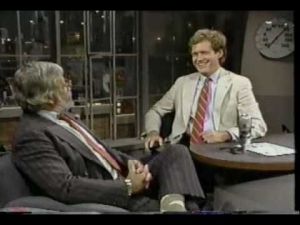
Thanks goodness they haven’t, because they make events like his live TV meeting with David Letterman on 5 August 1987 particularly fascinating (coming hot on the heels of equally controversial appearances with Michael Aspel and Des O’Connor in the UK).
In interviews, Reed often revealed a ‘quiet’, sensitive side – he was an avid writer of poetry – and claimed he was just giving the public what they wanted. No one could accuse him of being thick though – he makes the current crop of media regulars seem particularly one-dimensional.
But during this appearance – around the time that he was good mates with Alex ‘Hurricane’ Higgins, who once awoke in the sitting room of Reed’s home after a spectacular bender to find the actor brandishing an axe – Reed just seems hellbent on irritating Letterman, and does a superb job. The ‘Little Englander’ in me quite likes the way he sticks it to Dave (Reed reportedly referred to himself as ‘Mr England’!).
Is he doing a take-off of Sly Stallone, or generally ridiculing the all-American 1980s ‘action hero’? Who knows. He was chatting with Dave ostensibly to promote his 1987 movie ‘Castaway’ – another one that might seem fairly ‘toxic’ these days. ‘Enjoy’…
Of course it wasn’t as much of a flop as often thought (budget circa $15 million, US box office circa $20 million) but director John Carpenter was under no illusions as to how the studio (Universal) perceived his ‘Thing’ in the immediate aftermath of its 25 June 1982 release, not helped by the appearance of ‘E.T. The Extra-Terrestrial’ two weeks before.
Come to think of it, has there ever been a less suitable ‘summer movie’ than ‘The Thing’? Carpenter agreed – he reportedly virtually begged Universal to delay its release to Halloween 1982 and change the title to ‘Who Goes There’, to avoid comparisons with ‘E.T.’. They refused.
Then there was the changing nature of horror-film audiences to contend with. After a market-research screening, one teenager apparently approached Carpenter pleading complete ignorance regarding the ending. When the director responded that it was up to their imagination, the co-ed mumbled, ‘Oh, God, I hate that…’
With hindsight, maybe we can also point a finger at the marketing. The standard Hollywood thinking – as per Art Linson’s book ‘What Just Happened’ – was that the marketing people would always blame a film’s poor box office on anything but the marketing, and generally keep their jobs in the event of a bomb. That would definitely not be the case now…
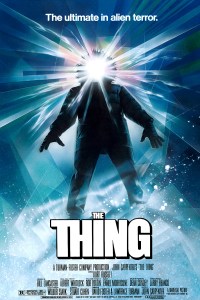
Above is the original poster – hardly a classic of its era, with very little if nothing to do with the film. The below VHS rental cover is surely what they should have gone with, complete with classic tagline and surreal main image.
Still, the movie is as fresh and troubling today as it was 40 years ago (and, watching it for probably around the tenth time recently, moves at a far swifter clip than I’d remembered), and anyone who hasn’t seen it should check it out ASAP, on as big a screen as possible. Happy birthday, Der Thing!

 The ‘Withnail’ cult shows no sign of waning. Writer/director of the 1987 movie Bruce Robinson spent some of lockdown discussing the film while co-star Richard E Grant posted regular line-readings on social media. And now there’s news of a long-awaited, Robinson-endorsed stage play.
 William Friedkin and William Peter Blatty’s horror masterpiece received its premiere 50 years ago today – Boxing Day, 1973.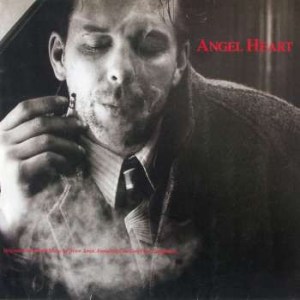
 Based on David Grann’s non-fiction book about series of mysterious deaths among the Osage Native American tribe in 1920s Oklahoma, Martin Scorsese’s new three-and-a-half hour movie is currently in the middle of a brief cinema run before showing on Paramount +.
 It’s hard to think of a movie that better captures an end-of-the-1970s/beginning-of-the-1980s vibe than ‘Being There’.
  It’s a great era for jazz documentaries. The latest exhibit is Alain Gomis’s ‘Rewind & Play: Thelonious Monk’, based around some long-lost footage of the jazz piano giant filming a French TV special at the end of his 1969 European tour.
 British writer/producer/director/actor Tony Garnett – who died in 2020 – was probably best known for his work with Ken Loach on groundbreaking projects like ‘Cathy Come Home’, ‘Kes’ and ‘Up The Junction’.
 It’s well documented that none of the so-called Brat Pack enjoyed a particularly easy ride – both professionally and personally – after their imperial 1983-1985 period (though many have made fascinating recent late-career comebacks, but that’s a whole ‘nother article…).
 Actor Ollie Reed became a bit of a media ‘sensation’ during the 1980s and early ‘90s, wheeled out on various chat-shows and late-night discussion programmes looking a bit worse for wear and usually causing embarrassment on various levels.
 Of course it wasn’t as much of a flop as often thought (budget circa $15 million, US box office circa $20 million) but director John Carpenter was under no illusions as to how the studio (Universal) perceived his ‘Thing’ in the immediate aftermath of its 25 June 1982 release, not helped by the appearance of ‘E.T. The Extra-Terrestrial’ two weeks before.
 movingtheriver.com