Words are hard to come by today. We pay tribute via one of the most beautiful songs of David’s unparalleled career. Our deepest sympathies to his family, friends and musical collaborators.

Words are hard to come by today. We pay tribute via one of the most beautiful songs of David’s unparalleled career. Our deepest sympathies to his family, friends and musical collaborators.
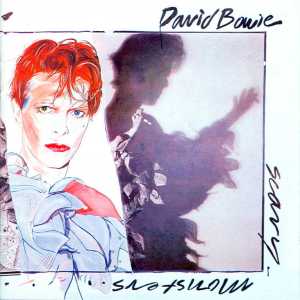 RCA Records, released 12 September 1980
10/10
‘Albums of the ’80s’ lists are all the rage these days. Scary Monsters (And Super Creeps) would easily be in the movingtheriver top ten. It might even be in my top one.
It’s a timeless, masterful work which, for me, can only ever be consumed in its totality. It’s also the collection that all subsequent Bowie albums have been measured against. I would put it over and above Low, Ziggy Stardust and Hunky Dory for its sheer consistency.
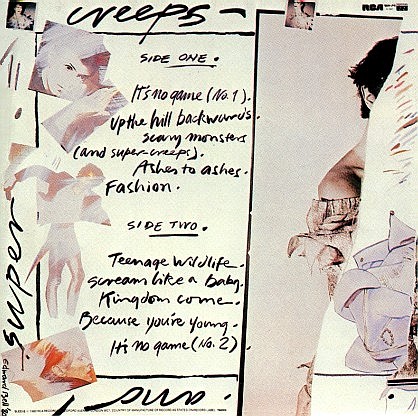
Here’s my case for the defence, track by track:
1. It’s No Game (Part 1)
I’ve previously written about this being one of the great ’80s album intros. Vocally, Bowie channels John Lydon and Peter Hammill to deliver a New York/New Wave anti-fascist tirade that ranks among his great performances. Producer Tony Visconti ‘f***s with the fabric of time’ to create a cavernous, Eventide-drenched mix and guitarist Robert Fripp delivers one of his most unhinged statements. Avant-rock heaven. Adapted from Bowie’s early demo ‘Tired Of My Life‘.
2. Up The Hill Backwards
A brilliant treatise on press intrusion and the wretchedness of celeb culture inspired by Bowie’s ‘dealings’ with the press during his failing marriage, with an ingenious central image of paparazza snapping away at their prey as they shuffle ‘up the hill backwards’. Endlessly catchy with a beautifully-realised unison vocal – the only track in the Bowie canon which doesn’t feature his solo singing.
3. Scary Monsters
Bowie revisits his finest Mockney accent to deliver a bleak, blanked-out, darkly funny tale of semi-stalking. There’s more Phil Spector-style brilliance from Visconti and another Fripp masterclass in balls-out guitar playing. The only minor criticism is that it possibly goes on for about a minute too long.
4. Ashes To Ashes
An instant classic with a very Bowie mix of child-like innocence and creeping malevolence as the hopelessly drug-addicted, world-weary Major Tom drifts off into the ether. Effortlessly superb songcraft with three or four memorable sections, boundary-pushing lyrics (‘Visions of Jap girls in synthesis’!) and a myriad of majestic hooks.
5. Fashion
The lameness of the style wars is in Bowie’s sights this time as he almost mumbles the ironic verse lyrics over a tough New York disco/funk/rock groove. And there’s more barking mad Fripp soloing. Danceable, amusing, timeless. Originally titled ‘Jamaica’ in demo form.
6. Teenage Wildlife
Initially coming across as slightly lumpy and leaden, the track builds and builds in intensity to deliver a powerful message to Bowie’s ‘mythical younger brother’ about keeping a sense of perspective as one gets older. His patented ‘histrionic’ vocal style is superbly realised and drummer Dennis Davis holds it all together with aplomb. Originally titled ‘It Happens Every Day’ in demo form.
7. Scream Like A Baby
Spooky dystopian fable about a future society’s outlawing of homosexuality and other ‘deviant’ behaviour. Bowie’s ingenious stuttering provoked many a schoolyard titter and the weird vocal doppler effects are perfectly realised. Revamped from the Bowie-written/produced ‘I Am A Laser‘ originally recorded by Ava Cherry/The Astronettes.
8. Kingdom Come
A superb cover of a track from Tom Verlaine’s debut album, Phil Spector is the obvious influence again with Davis’s booming, overdubbed tom fills and some anthemic, reverb-drenched backing vocals. Majestic, powerful, intriguing. Verlaine was apparently supposed to play guest guitar throughout the album but bowed out at the eleventh hour.
9. Because You’re Young
An ‘advice’ song to his son, Bowie offers the lessons he has learnt and looks back with great poignancy and not a little sarcasm on his carefree, youthful days. Peter Townshend strums along (apparently he arrived at the studio drunk and ready to party, but was stunned to find Visconti and Bowie sitting quietly at the recording desk like ‘two sober, little old men’!) and Bowie delivers a superb, kaleidoscopic lead/backing vocal combo.
10. It’s No Game (Part Two)
Carlos Alomar’s masterly rhythm guitar anchors this reprise, with Bowie doing his best Iggy croon and offering up images of world poverty, media saturation and dunderheaded political/cultural strategies. We hear the multitrack tape spool off its reels at the very end to close one of the great albums of the ’80s or any other decade.
A big nod to Nicholas Pegg.
 I’ve always had a penchant for good swearing in music. And long before those Parental Advisory stickers, there were some real humdingers.
Ian Dury’s oeuvre was of course an early landmark – his ‘Plaistow Patricia’ became a kind of forbidden, blasphemous classic as did Marianne Faithful’s coruscating ‘Why D’Ya Do It’. They both sounded like they really meant it.
David Bowie’s ‘It’s No Game (Part 2)’ would also have us in stitches. His rather random four-letter word, sung in Iggyish baritone, enlivened many a dull afternoon.
Even Prefab Sprout’s ‘Horsechimes’ somehow shocked with Paddy McAloon’s rather pristine vocals uttering the word ‘piss’.
But then my uncle (it’s always uncles) passed me the following curio (the Up Yaws video currently deleted/age-restricted by YouTube…) and the world of muso swearing was never quite the same again. Initially coming on like a first-rate pastiche of early-’80s UK jazz/funk as played by the likes of Shakatak, its gradual insertion of four-letter words and random insults never fails to provoke a titter.
It’s puerile, silly and childish, and I absolutely defend it as a piece of music. Rumours abound as to who’s responsible, some mentioning Adrian Edmondson, some The Damned… (If anyone knows for sure, please leave a message at the bottom of this post.)
Then there’s the whole subgenre of bands getting it wrong in the studio and swearing-alot. The Troggs Tapes is of course the industry standard, but a Culture Club outtake from 1983 recently came to light on a career-spanning box set (also recently removed from YouTube, sadly…).
It features our four heroes (plus poor pianist Phil Pickett) trying to record ‘Victims’ with the underlying pressures of expensive studio costs, an out-of-tune fretless bass and Boy George/Jon Moss’s corrosive love affair.
Suffice it to say, things don’t go too well. But imagine trying to ‘produce’ this lot. Come to think of it, producer Steve Levine is possibly the one voice we don’t hear. Had he given up the ghost or was he all-too-aware of not getting involved and spoiling an audio-verite ‘classic’?
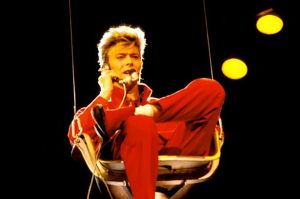 I was a 12-year-old pop fan when Let’s Dance hit, perfectly placed to love it and its usually-maligned follow-up Tonight.
I enjoyed almost everything Bowie did in ’85 and ’86 too, from ‘Dancing In The Street’ and ‘This Is Not America’ to ‘Absolute Beginners’ and ‘When The Wind Blows’.
But 1987 is another story altogether. Even as a 15-year-old, right from the start I sniffed something dodgy about Never Let Me Down and its accompanying Glass Spider tour. I’ve found a couple of things to love about the former in the years since (especially the great Lennonesque title track) but can’t find anything good about the latter.

Bowie at the Never Let Me Down/Glass Spider Tour London press conference, 20th March 1987
The show was certainly ahead of its time with its tightly-choreographed, narrative vignettes – just look at Prince’s Lovesexy and Madonna’s Blond Ambition tours for evidence of its influence.
If you’re a big Bowie fan, the opening moments are amusing if a bit tasteless – guitarist Carlos Alomar attempts some ill-advised, sub-Van Halen guitar pyrotechnics while an offstage David repeatedly screams ‘Shut up!’ in ‘It’s No Game’ style.
There then follows an outrageous opening medley featuring a bizarre, lip-synched version of ‘Up The Hill Backwards’ followed by a hilariously hammy spoken word section by Bowie which closely resembles Nigel Tufnel in Stonehenge mode. Is he taking the piss? Usually this question doesn’t cross your mind with Bowie, no matter how much he ‘tests’ his audience, but it does here.
Then there’s a brutal depiction of gang warfare juxtaposed with Bowie’s cheesy, reassuring grin, a typically unsettling mixture of menace and child-like innocence. But he seems generally uncomfortable throughout the show. His attempts at audience interaction are always awkward and nothing links the songs; almost all end in blackout before another lumbers into view.
The Glass Spider tour also features surely the most dated-sounding band in Bowie’s history, with huge, triggered drums, rambling synth solos, garish, unpleasant DX7 factory sounds and lots of cod-raunchy guitar from Alomar and Peter Frampton. This is a far too ‘muso’ bunch of musicians for Bowie. The fanfare of synth horns at the end of ‘Fame’ is just unforgivable.
‘Heroes’ is stripped of all romance and majesty and becomes a jaunty throwaway. ‘Sons of the Silent Age’ coasts in on a nicely Middle Eastern-ish vibe, a huge relief from the bombast, but is nearly ruined by Frampton’s nasal lead vocals. None of these versions come close to being definitive. Also the fact that Bowie only plays four tracks from the Never Let Me Down album just a few months after its release pretty much goes to show what he thinks of it.
Bowie famously burnt the huge stage set in a field at the end of the tour. He must have wished he’d never set eyes on it. But within a year, he’d hooked up with avant-metal guitarist Reeves Gabrels, started work with influential dance troupe La La La Human Steps and embarked on some very interesting new musical adventures.
7. David Bowie: ‘It’s No Game (Part 1)’ from Scary Monsters (1980)
Weird doesn’t cover it. We hear tape spooling around the reels and the machine being turned on, followed by drummer Dennis Davis whirling around a football rattle and counting us in in his best Cyborg voice. After this, Robert Fripp’s deranged solo and Michi Hirota’s strident Japanese outbursts sound almost normal.
6. De La Soul: ‘Intro’ from 3 Feet High And Rising (1989)
A whole generation of pop kids hadn’t heard anything like this before, and yet somehow it bears repeated listening. It’s just as fresh and original as anything The Small Faces or The Beatles tried 20 years before and arguably started off the whole ‘intro’ concept on hip-hop albums.
5. Genesis: ‘Behind The Lines’ from Duke (1980)
In musical theatre, I believe it’s called an overture. This bombastic piece previews many of the themes that will reverberate through the album. Tony Banks’ keys and Phil’s drums have seldom sounded brighter or tighter.
4. Lil Louis: ‘I Called U’ from From The Mind Of Lil Louis (1989)
This classic piece of bunny-boiler house is funny and arresting.
3. It Bites: ‘Positively Animal’ from Eat Me In St Louis (1989)
Watch that volume dial. The underrated four-piece jolt you out of complacency with a flashy, these-go-to-11 opener. Audacious and very un-English.
2. The Police: ‘Don’t Stand So Close To Me’ from Zenyatta Mondatta (1980)
Another moody classic. A brooding Oberheim bass-throb, a fudged Andy Summers lick, a hint of click track and then that brilliant, patented half-time groove. The full-length version hints at the darker themes of the lyric.
1. Talking Heads: ‘And She Was’ from Little Creatures (1985)
Leaving behind the art-funk of Speaking In Tongues, this sprightly opener introduces a new stripped-down pop sound in no uncertain terms.
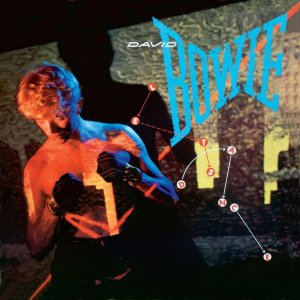 EMI America, released 14 April 1983
Produced by David Bowie and Nile Rodgers
Recorded at Power Station, New York City
UK Album Chart position: #1
Weeks in chart: 56
UK album sales: 842,000
Singles Released:
‘Let’s Dance’ (#1)
‘China Girl’ (#2)
‘Modern Love’ (#2)
‘Cat People (Putting Out Fire)’ (#26)
Bowie on Let’s Dance: ‘At the time, it was not mainstream. It was virtually a new kind of hybrid, using blues-rock guitar against a dance format. There wasn’t anything else that really quite sounded like that at the time. So it only seems commercial in hindsight because it sold so many. It was great in its way, but it put me in a real corner in that it fucked with my integrity! It was a good record, but it was only meant as a one-off project. I had every intention of continuing to do some unusual material after that. But the success of that record really forced me, in a way, to continue the beast. It was my own doing, of course, but I felt, after a few years, that I had gotten stuck…’

David at the 1983 Cannes Film Festival
 movingtheriver.com