Anthony Braxton: Quartet (England) 1985

Anthony Braxton has one of the largest discographies in music history, encompassing a huge variety of styles and formats: operas, pieces for two pianos, orchestras, solo saxophone, 100 tubas, jazz quartets, ‘found’ objects and many more.

The saxophonist/composer/teacher turned 80 in June, and has also just been inducted into the illustrious DownBeat Hall of Fame.

This writer has long championed ‘Forces In Motion’, Graham Lock’s excellent book about Braxton’s November 1985 tour of England, and a large portion of that tour can now be heard on a thrilling digital box set Quartet (England) 1985, for which Lock has provided new liner notes (he also recorded all the material on a portable cassette player).

The quartet, which comprised Braxton on various reed instruments, Marilyn Crispell on piano, Mark Dresser on double bass and Gerry Hemingway on percussion, was one of Braxton’s most active bands in the ’80s, but didn’t record in the studio until 1991.

Quartet (England) 1985 presents four complete concerts from Sheffield, Leicester, Bristol and Southampton (the London concert was officially recorded and broadcast by BBC radio). The original mono cassette recordings, captured by Lock as references for his book, have been restored by engineer Christopher Trent.

The package also features bonus recordings of the quartet playing John Coltrane’s ‘After the Rain’ and Miles Davis’s ‘Four’, plus soundcheck recordings of ‘All The Things You Are’ and ‘On Green Dolphin Street’. There are also previously unseen photos taken during the tour and a full list of the compositions played (the set was different every night).

Braxton (in borrowed coat), Dresser, Crispell and Hemingway at Stonehenge, 22 November 1985. Photo by Nick White

There’s no getting away from the fact that these are wild and woolly mono recordings, but pleased to report that Trent has done a superb job of cleaning up the tapes and the audio quality doesn’t hamper the listening experience one bit.

The music varies between good and excellent. ‘Free jazz’ barely covers it – the material is actually generally meticulously composed and arranged (featuring memorable, catchy melodies), though there are improvised sections which mainly serve as connecting interludes.

If you want to hear a collision between Sonic Youth, Ornette Coleman and Gyorgy Ligeti, enlist here. It’s a no-cliché zone, guaranteed to annoy the neighbours, and a valuable detox from the mainly safe, secure sounds of today. Quartet (England) 1985 is highly recommended and a fine 40th anniversary celebration of the 1985 tour.

(Postscript: for an impassioned defence of ‘spontaneous improvisation’, check out Stewart Lee’s appearance on the BBC’s ‘Great Lives’ discussing guitarist Derek Bailey.)

Sun Ra Arkestra: Lights On A Satellite

One of the unexpected treats of last year was a new – and excellent – album from the Sun Ra Arkestra: Lights On A Satellite.
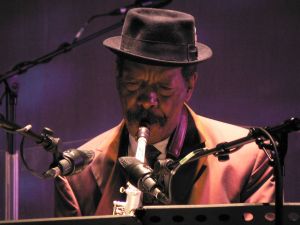
If you’re looking for an antidote to musical torpor, this could well be it. It draws on free jazz, classic big-band swing, spiritual jazz, gospel and light funk to create one of the most enjoyable collections of 2024.

Led by 100-year-old sax titan Marshall Allen, the Arkestra – celebrating the compositions of late, avant-garde legend Sun Ra, with a few other surprises thrown in – gathered at New York’s Power Station on 16 June 2024 under the jurisdiction of legendary engineer James Farber.

Notice is served by spellbinding opening title track which takes a simple chord sequence and then blows it to bits with a series of coruscating solos. One is then wrongfooted by the superbly played ‘traditional’ big-band melodies of ‘Dorothy’s Dance’ and ‘Big John’s Special’.

Vocals appear from time to time, most notably on the seriously strange cover of ‘Holiday For Strings’. Instrumentation frequently surprises, with snatches of harp, synth, violin and electric guitar sliding into the mix on occasion, such as on the wonderful ‘Tapestry From An Android’.

It is possible to stream the album but it’s worth forking out for the sumptuous gatefold CD or vinyl versions which come with a long essay and some excellent photos. And hey, while you’re at it, check out this excellent Don Letts-directed BBC doc about the remarkable Sun Ra. The first few minutes are worth the price of admission alone.


Gig Review: Bill Frisell @ Cadogan Hall, 25 October 2024

Though the American guitarist’s 1980s sonic explorations with the likes of John Zorn, Power Tools and on solo albums such as Before We Were Born are long gone, Frisell’s fascinating (and much quieter) late-career boom continues abound.

He’s a regular visitor to the Big Smoke but, revelling in his newfound freedom at Blue Note Records, this Cadogan Hall gig felt like his most ‘jazz’ outing for years.

That’s chiefly due to the presence of A-list collaborators, in concert and on recent album Four: Gerald Clayton on piano, Gregory Tardy on various reed instruments and Johnathan Blake on drums. Close readers will notice one word notable by its absence: bass. It’s a credit to Frisell that the instrument wasn’t really missed here, nor did he or Clayton particularly resort to vamps to make up for the absent low-end.

Consequently, the meticulously arranged and rehearsed set, strongly foregrounding collective improvisation, had a lovely ‘floating’ atmosphere. (Two touchstones may be Louis Armstrong’s Hot Five and The Jimmy Guiffre 3, the latter of course featuring Frisell hero Jim Hall on guitar.)

Themes came and went, with many segues. Somewhat sombre recent compositions such as ‘Waltz For Hal Willner’ and ‘Claude Utley’ – both named for recently departed friends of Frisell – bumped up against familiar pieces such as Paul Motian’s ‘Conception Vessel’ (taken at a very leisurely clip) and Bacharach/David’s ‘What The World Needs Now’, as well as two fast bebop-style heads which nodded to Ornette Coleman (though the Monk-ish treat ‘Holiday’ was sadly missing).

In short, it was business as usual for Frisell, who unapologetically places melody at the heart of everything he does, whether playing ‘60s pop, country, avant-garde or bebop. Hall really does seem to be his totem these days, though he still knows when to add disconcertingly witty moments of found sounds and dissonant loops via his pedal board.

And while the ensemble occasionally felt like it was kept on unusually tight leash, Clayton added much-needed harmonic colour and elaborate flourishes, touching variously on stride piano, systems music and glorious call-and-response lines reaching back to Tatum and Hines. Tardy brought the blues feeling, laying down three or four fantastic solos, while Blake – the man with the lowest drum set in the world, barely above his knees – played at a perfect volume in the very boomy Cadagon Hall, and with great taste.

All in all, this quartet has legs. One would hope they could gather for another album on Blue Note, and we might get another enjoyable gig like this too. The standing ovation seemed to come as quite a surprise to this most modest master of the electric guitar.

Book Review: American Drummers (1959-1988) by Val Wilmer

Val Wilmer has arguably been Britain’s leading jazz photographer (and writer of classic jazz book ‘As Serious As Your Life’) since she started taking pictures of musicians over 60 years ago.

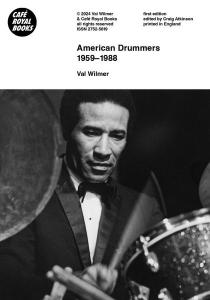
And now Café Royal Books have issued a lovely budget paperback of Wilmer’s photos entitled ‘American Drummers 1959-1988’, which does exactly what it says on the tin (though note ‘jazz’ doesn’t appear – possibly because it’s a word with which some of the musicians therein have expressed difficulty).

To my knowledge, it’s the first book of its kind. And – befitting a truly original artist – Wilmer’s work generally defies expectations. For example it’s nothing like Francis Wolff’s meticulous, pristine, famous photos of players such as Art Blakey and Elvin Jones.

Instead her general focus is on the minutiae of the working drummer’s life – we see Andrew Cyrille and Marquis Foster unloading kits from their cars, Denis Charles practicing on the steps of a New York tenement, Zutty Singleton chatting with Count Basie outside a bar, Papa Jo Jones in a drum store, Ed Blackwell chilling with a newspaper, Blakey backstage.

But of course showmanship is one of the chief tools in the drummer’s armoury, and as such there are exciting shots of all-time great players in performance including Billy Higgins, Tony Williams, Milford Graves, Max Roach, Ronald Shannon Jackson and Kenny Clarke.

And the kicker: this wonderful book retails at around just £6.99 in the UK (as do the other Café Royal titles) – don’t miss it.

Tony Williams, Hammersmith Odeon, London, 1967


Milford Graves (1941-2021)

One of the most memorable music documentaries broadcast in Britain during the late 1980s was ‘Speaking In Tongues’, directed by Doug Harris for German TV and originally shown in 1982.

It began with John Coltrane’s funeral on 21 July 1967, featuring music from drummer Milford Graves, trumpeter Donald Ayler and saxophonists Ornette Coleman and Albert Ayler, then mused on the mysterious death of the latter before opening up to focus on Graves’ extraordinary life and some coruscating duets with saxophonist David Murray.

Born 20 August 1941 in South Jamaica, Queens, New York, Milford Graves was a ‘drummer’, but, equally importantly, a truly evolved human being, a strict vegetarian, herbologist, acupuncturist, teacher and trained martial artist. He was famous locally for his backyard dojo and basement laboratory.

He began his career playing bongos and timbales, including a short-lived Latin-jazz band with a very young Chick Corea. At the urging of superstar percussionist Don Alias, he moved over to the drum kit in 1963 and found his true metier.

Alongside Sunny Murray, Andrew Cyrille, Ronald Shannon Jackson and a few others, he freed the drummer from purely a timekeeping role, introducing new melodic and tonal textures for the kit. But this wasn’t a po-faced, technical endeavour – it led to some of the most intense, high-volume work of the last 50 years. He described each of his limbs as playing ‘a different feeling’ (see below).

Legendary jazz writer Nat Hentoff apparently made a prediction in the late 1960s that the greats of the avant-garde jazz movement would eventually get lecturing jobs in universities, such was the importance and rigour of their conceptual flow.

It was true. Since 1973, Graves had been teaching at Bennington College in Vermont, a variety of courses including those touching on the healing aspect of music. He performed regularly across the world, including at a school for autistic children in Japan. From the late 1960s on, he eschewed nightclub and club gigs, restricting his live performances to festivals, community centres and outdoor shows.

He recorded astonishing duets with pianist Don Pullen, Andrew Cyrille (Dialogue Of The Drums) and David Murray on the classic 1991 album The Real Deal. He worked with Albert Ayler on various albums including Love Cry. He toured extensively during the 1980s, producing a sound as heavy as anything Black Flag or Metallica came up with.

Tragically, though he had studied the heartbeat as a source of rhythm since the 1970s, Milford died of congestive heart failure on 12 February. ‘It turns out, I was studying the heart to prepare for treating myself,’ he told The New York Times last year.

Last autumn, his life and work had just been subject to a residency at the ICA in Philadelphia, including a screening of ‘Speaking Of Tongues’ and a wide-ranging interview with Jason Moran.

RIP to a true one-off. To paraphrase Art Blakey, if jazz was about washing away the dust of everyday life, Milford Graves did it.

Milford Graves (20 August 1941 – 12 February 2021)

Further reading: ‘As Serious As Your Life’ by Val Wilmer


Bill Laswell: Baselines Revisited

Bill Laswell has carved out one of the most critic-proof careers in music.

He’s probably best known as the producer of distinctive pop hits (Herbie Hancock’s ‘Rockit’, PiL’s ‘Rise’, Sly & Robbie’s ‘Boops’) and rock/jazz legends in need of a makeover (Mick Jagger’s She’s The Boss, Iggy Pop’s Instinct, Sonny Sharrock’s Ask The Ages, Ronald Shannon Jackson’s Red Warrior).

He was the Miles Davis Estate’s go-to man for reimagining the trumpeter’s 1970s catalogue (Panthalassa) and also hugely important for bringing the P-funk sound into the ’80s and ’90s.

But Laswell is also a highly-original bassist in his own right and was a key figure of the late-’70s/early-’80s Downtown New York scene, featuring in bands like Massacre, Last Exit and Material (though he was pretty disparaging about the ‘scene’, once telling writer Bill Milkowski: ‘There never really was a Downtown community. All that means is that people don’t have enough money to get a better place to live…’).

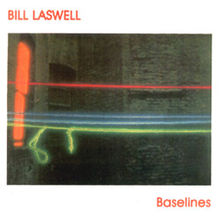
His solo career has been interesting too, latterly showcasing a fusion of ambient, world and dub styles. But it’s his debut album Baselines (released 14 June 1983 on Elektra/Asylum) that really floats my boat. He plays a lot more bass than usual, fusing the soundworlds of Bootsy and Ornette Coleman and doing cool things like sticking objects under the strings or digging out the old Mu-Tron pedal for some memorably funky lines.

To these ears, Baselines is also the project that gave him the perfect vehicle for all his interests – My Life In The Bush Of Ghosts-style found sounds, paranoid funk a la Talking Heads/King Crimson, Afrobeat, early hip-hop, avant-fusion, authentic jazz soloing and even post-punk white noise courtesy of future Chili Peppers/Soundgarden producer Michael Beinhorn.

I wasn’t in New York in 1983 but this album would seem to be a perfect amalgam of all the hippest sh*t that was going down at the time. It’s Laswell’s show, leading from the front on four/six/eight-string fretted and fretless basses and generally keeping the tracks short and sweet. Baselines is also beautifully recorded and produced – it’s easy on the ear despite some abrasive textures.

Shannon Jackson has never sounded better, supplying hilariously scattergun grooves and crunching fills. ‘Upright Man’ still inspires a kind of giggly menace, nearly 40 years on. Who supplies the scary spoken-word part? Whosampled doesn’t reveal, but the smart money’s on Fred Frith (who also plays some amusing violin on country-tinged curio ‘Lowlands’).

Baselines was certainly influential from a bass point of view too – you can bet Jah Wobble, Mick Karn, Stump and Human Chain had well-thumbed copies in their collections. But, to the best of my knowledge, Laswell has never returned to such a bass-led solo project since. A shame. He might have a future there…

Story Of A Song: David Sylvian’s ‘Pop Song’ (1989)

Sylvo is not particularly known for his sense of humour, but there was surely an element of black comedy about the release of the ‘Pop Song’ 12-inch single.

It’s hard to read it as anything other than his ironic response to being asked by Virgin Records to come up with something a little more ‘commercial’ to promote the Weatherbox limited-edition box set (a collection that, in the event, didn’t even contain ‘Pop Song’!).

Imagine the ashen faces of the management at Virgin HQ when the needle hit the vinyl. ‘OK, there’s some kind of groove, but hang on – the synth bass is out of tune, the drums sound like Tupperware boxes and the piano has been flown in from a different song altogether…’

Yes, this was David’s ‘Jugband Blues’. And it was brilliant (the B-sides are well worth tracking down too). Cooked up alongside regular co-producer Steve Nye at Marcus Studios, Fulham, West London, during late summer 1989, ‘Pop Song’ was Sylvian’s bitter farewell to the decade, a vision of late-’80s Britain as a nation of clock-watching factory workers numbed by banal pop music and Sunday supplements. It’s fair to say that it wasn’t your typical feelgood summer single…

Musically, it was Sylvian’s version of ‘pop’ and pretty amusing at that, with some gorgeous ‘found sounds’, deliciously tangential piano work from ECM regular John Taylor and underwater drums/queasy synth bass courtesy of Steve Jansen. Sylvian delivers a great vocal too, full of cool, jazzy phrasing (check out the ‘But the money goes/And the time goes too’ line).

I bought ‘Pop Song’ on the day it came out (30th October 1989), and my memory is that it created quite a stir amongst Sylvian fans. It registered briefly at #83 in the UK singles chart and then promptly disappeared. Was it ever actually played on the radio? One doubts it.

But if ‘Pop Song’ proved a strange detour for Sylvian, life was about to get even stranger – next stop was the Japan ‘reunion’ Rain Tree Crow, of which much more soon.

Ornette Coleman & Prime Time: Virgin Beauty 30 Years On

Who are the great pop and jazz melodicists?

Paul McCartney, Brian Wilson, Paddy McAloon, George Gershwin, Cole Porter, Stephen Sondheim, Burt Bacharach, Becker & Fagen, Miles, Paul Desmond, Charlie Parker?

Ornette has to make that list too. He’s virtually incapable of playing a fatuous phrase, even when his accompanists seem to be scrambling eggs.

Virgin Beauty, released 30 years ago, was and will now always remain a bit of an anomaly in his discography, a one-off album on CBS subsidiary Portrait Records (which also released Stanley Clarke’s If This Bass Could Only Talk) and marketed as ‘Ornette does fusion’.

Which is a bit like asking Miles to do ‘pop’: i.e. you can market it any way you want, but it’s gonna be a totally personal vision.

Ornette’s version of fusion contains elements of country and western, space-invader electro, early hip-hop and, of course, pure harmolodic hijinks.

I hadn’t heard Virgin Beauty for years but loved revisiting it this week. It’s on an old cassette sandwiched between Brian Eno’s Nerve Net and George Clinton’s Computer Games – perfect bedfellows.

First of all, it’s worth noting that this writer’s main reaction to hearing it again was pure amusement. It actually inspired a full-on giggling fit. Everything sounds a bit wonky; the Chick Corea Elektric Band it ain’t.

Ornette’s beautiful alto is always just out of tune (though his trumpet playing is surprisingly in tune) and Chris Walker’s fretless-bass intonation is far from perfect.

Two rhythm guitarists (Bern Nix and Charles Ellerbee) chatter away in different keys and Ornette’s son Denardo programs some drum machines, hits some acoustic drums, some electric drums and a slightly incongruous jazz ride cymbal. The Grateful Dead’s Jerry Garcia drops in for a few enjoyably ramshackle guitar solos.

The mix is also distinctly lacking in bass. It’s one of the first albums I’ve listened to in the past few years when I’ve had to turn the bass UP. Which is a good thing, because Al MacDowell’s playing is sometimes fairly astonishing. He even throws in a few quotes from ‘Yakety Sax’.

Virgin Beauty was the natural peak for Ornette’s Prime Time band but a bit of a cul-de-sac career-wise. It would be seven long years before his next solo studio album Tone Dialling. The record companies never got their ‘fusion’ record – thankfully.

Ronald Shannon Jackson: Behind Plastic Faces

ronald_shannon_jackson_06n5970

Shannon Jackson in 2012

Musicians and writers have long puzzled over a definition of Harmolodics, the musical system invented by Ornette Coleman.

The man himself was famously coy on the subject, his brief liner note on the back of the Dancing In Your Head LP possibly the nearest he ever got to an outright definition: ‘Rhythms, harmonics and tempos are all equal in relationship’.

Of all the Ornette collaborators who developed their own take on Harmolodics, Ronald Shannon Jackson, who died in October 2013, probably came up with the most accessible version.

He had played with avant-garde pioneers Albert Ayler, Ornette, James Blood Ulmer and Cecil Taylor in the 1970s, but developed into a fine bandleader/composer in the ’80s, fronting a red-hot band featuring guitarist Vernon Reid (Living Colour), bassist Melvin Gibbs (Rollins Band), trombonist Robin Eubanks and saxophonist Zane Massey. (Shannon’s version of Harmolodics was so successful it possibly even influenced Ornette’s Virgin Beauty.)

r-1084782-1190894488-jpeg

My dad used to get sent a lot of music in his capacity as a programme consultant for Channel 4 TV’s music arm back in the mid-1980s. A surprising amount of it would come in home-compiled cassette format. One such tape was simply called ‘Dance Music’ – I’ve still got it somewhere.

Most of it was fairly standard Brazilian and Blue Note stuff but one track stood out a mile and became somewhat of an obsession for my brother and I: Shannon’s ‘Behind Plastic Faces’, from the 1985 album Decode YourselfIt was the beginning of my love affair with his music and drumming.

He lays down one of his patented military grooves on Simmons drums underneath slithering fretless bass, chattering Reid guitar and Onaje Allan Gumbs’ summery keyboards. But then the track suddenly changes gear halfway through and turns into a Afro-Funk/No-Wave rave-up, with Shannon moving over to the acoustic drums and Eric Person rhapsodising on alto sax.

The track and attendant album were recorded at Electric Lady Studios in New York and produced by Bill Laswell. Decode Yourself seems very difficult to find on physical formats these days, like many of Shannon’s numerous other ’80s albums, but thankfully it is on streaming platforms.

Shannon Jackson was born and brought up in Forth Worth, Texas, just like Ornette. His father’s jukebox introduced him to BB King, Howlin’ Wolf, Charlie Parker and Dave Brubeck, but there were many other influences in the mix too, as he told writer Gary Giddins in 1985:

‘You’d wake up and hear hillbilly music on the radio. In school, we’d play (Wagner’s) “Lohengin”, at night we’d hear Bo Diddley or Bobby “Blue” Bland. On Sunday, we’d hear gospel. It was a total black community, and music wasn’t categorised as jazz or pop – nobody told you you weren’t supposed to like something.’