Level 42’s Mark King talks about his ‘Influences’

Mark_King_-_Influences

EXCLUSIVE! Level 42’s Mark King speaks to movingtheriver.com about his classic solo album Influences, released by Polydor in July 1984.

MP: Can you just briefly summarise the story behind Influences? Was it your idea or did Polydor come to you?

MK: I was signed to Polydor Records via Level 42 and had a young, heavily-pregnant wife and needed to buy somewhere to live. This was back in 1981 I hasten to add, so Influences showing up in 1984 was really down to my tardiness in addressing the fact that I had taken the advance (£5,000) and, apart from delivering a single ‘Freedom‘, had somehow neglected to fulfil my contractual obligations! Polydor were actually very sweet about it and just before the agreement was due to expire gently reminded me that I needed to deliver an album.

You’ve talked about having loads of ideas in the tank for the album but how did you piece them all together on ‘The Essential’? Did you have to demo all the different sections before recording?

I may have exaggerated the ‘loads of ideas in the tank’ bit, but when push came to shove I booked a few days at Chipping Norton Studio and dived in. The opening piece ‘The Essential’ began on the studio Hammond B3 which Mike Vernon informed me had been used on the Focus album Moving Waves. I’m no keyboard player, but I fired her up and just hit the notes. Next I programmed the drum machine with a pattern so I could lay down some bass and guitar, and the riff and melodies just wrote themselves really. I was jamming with myself I guess, ha! Anyway, that’s how all the sections came to be, and in the twinkling of an eye I was 20 minutes into the album.

What was it like getting back into drumming again for the album? ‘There Is A Dog’ is an amazing tour-de-force.

Ta. I never stopped drumming, that’s what I love to do!

Did you put your bass and guitar parts down with a drum machine first and then overdub your drums? Or did you record your drums first?

I laid the bass and drum box down first. I had an Oberheim DMX drum machine that sounded awful but was a great writing tool because you could programme some pretty accurate drum parts that were in time! You have to remember that these were early days in digital technology, so ears weren’t so tuned in to accurate tempo, but I loved the idea of being able to f*ck about all over the groove and lean on the drum box because it had the time nailed. I laid the drums down next, Gretsch incidentally. Speaking of time, the guy with the greatest meter I know is Gary Husband. He IS a human machine… The guy is a phenomenon with tempo. Never shifts. The Level 42 track ‘Take Care Of Yourself’ was a first take at The Summerhouse Studio played on some Ddrums. That is AWESOME! The great Bill Cobham quote sings to mind: ‘You are either in time or you are out of time.’ I’m usually out.

How did you come to work with producer Jerry Boys? ‘The Essential’ features some really effective edits and cross-fades between the different sections.

Jerry was a good friend and had engineered some Level 42 stuff, which is how we had met of course, and Polydor were keen for me to involve a third party to keep an eye on me as I was three years overdue already, so Jerry was the perfect choice. A really good engineer, plus I respected his opinions. I probably did a lot of the edits myself. I certainly did for the Level 42 stuff.

How did Drummie from Aswad come to play on ‘Clocks Go Forward’? That track has a lovely feel.

Aswad were working in the studio next door and I bumped into Drummie in the corridor. I had just been running over the parts for ‘Clock Go Forward’ with Mike Lindup so I had no hesitation in inviting Drummie in to play with us. The Gretsch kit I had hired had only just shown up in the studio, and there was no stool…aaaargh! But this didn’t faze Drummie at all; he just pulled up a plastic studio chair and got stuck in. The studio floor was highly-polished parquet and it was quite funny watching him sliding around as he played, hahaha! The song is called ‘Clocks Go Forward’ because that was the day we recorded it on.

You play some great lead guitar on Influences – who are your favourite players apart from John McLaughlin?

Cheers. I love JM of course, but Clapton, Hendrix, Gary Moore and Bill Connors are all in there somewhere. So many, really. I love Al Holdsworth too and working with him on Guaranteed was a real privilege.

You played a lot of Influences at an amazing Ronnie Scott’s gig a few years ago – what was it like playing it live?

A lot of fun actually. I was so chuffed at how the guys were able to recreate the sounds for me. Nathan (King) in particular was fantastic on all the guitar parts. It didn’t feel like we were playing music from nearly 30 years before, and having not listened to any of it since then I was quite proud of what I had created way back when.

Thanks, Mark!

Find out much more about Mark and Level 42 at level42.com

More about my history with Influences below.

mark king

Some of these basses and guitars were used during the making of ‘Influences’…

Even though I’d been a huge Level 42 fan from the day I bought A Physical Presence in 1985, I didn’t even know Influences existed until two or three years after its initial release. I came upon a cassette copy in a ramshackle shop near the Swanage seafront while on a family summer holiday. It would be an understatement to say I couldn’t get it onto the hi-fi quickly enough.

And it didn’t disappoint. The sharp crack of the snare drum on opener ‘The Essential’ led me to believe that Level’s Phil Gould was behind the kit. But a quick look at the album credits blew my mind: Mark was playing all the drums, guitars and bass? Yep. Influences takes the ‘one-man-band’ ethos and runs with it. Not for a second does one rue the lack of a conventional band; this music swings, snaps, crackles and pops.

With a few decades’ more listening experience, I now hear some of the ingredients that went into the Influences brew – Chick Corea’s Latin excursions, Spectrum-era Billy Cobham, Mahavishnu and also Stanley Clarke’s mind-bending prog/fusion – but Mark’s musical voice also comes through loud and clear. ‘There Is A Dog’ could almost have graced Return to Forever’s Light As a Feather album. ‘Clocks Go Forward’ and ‘Picture On The Wall’ are in a Level style and wouldn’t have sounded out of place on True Colours or Standing In The Light.

To date, Mark has not returned to such unhinged jazz/rock outside of the Level 42 ‘day job’ (apart from a fabulous gig at Ronnie Scott’s in 2012), but this is one of the great British fusion albums, or fusion albums period. Influences also deserves a place alongside Innervisions, Lewis Taylor’s self-titled debut and Prince’s Sign O’ The Times in the pantheon of great one-man-band albums.

Prince: The Family @ 30

the family

I’ve bought this album (still unavailable on streaming platforms at the time of writing) on almost every format since I found a cassette copy in the early ’90s, back when it was a pretty rare groove.

The Family came out during my favourite Prince period. He was embracing jazz, fusion, psychedelia, classic rock and even modern classical, mainly prompted by his collaboration with the very excellent Wendy and Lisa but also other associates Sheila E, saxists Eric Leeds and Eddie M and string arranger Clare Fischer.

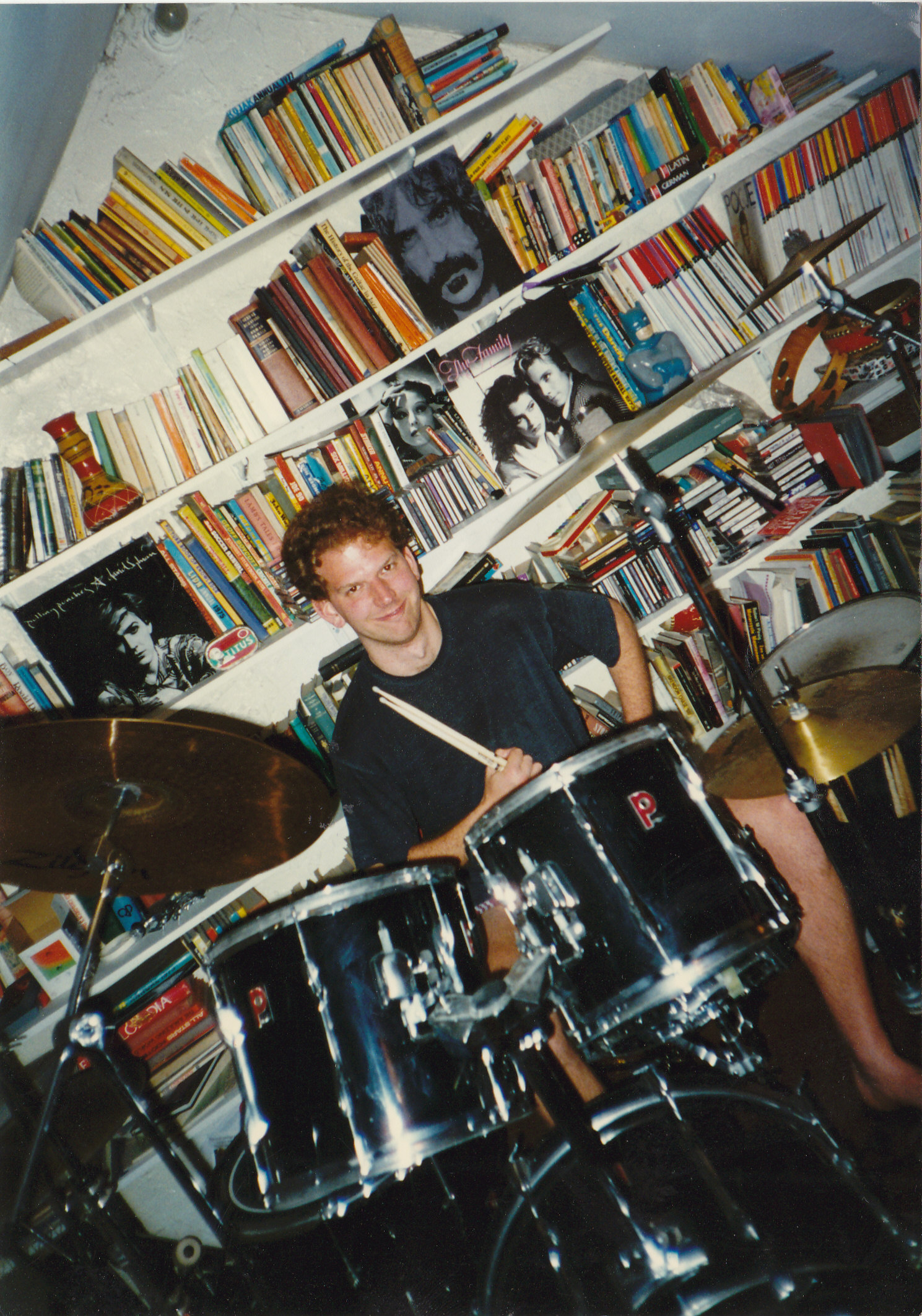
The author with The Family in background, summer 1991

This was my soundtrack to summer ’91. I instantly loved the retro Hollywood glamour of the cover artwork and the way it chimed with the whole Parade/Under The Cherry Moon concept.

The Family slipped out on Paisley Park Records in summer ’85 (just three months after Prince’s Around The World In A Day) to a very low-key critical and commercial reception. These days, the album is known mainly for including an early version of ‘Nothing Compares 2 U’.

But it’s full of far superior fare to that such as the killer opening funk medley, classic near-hit ‘The Screams of Passion’, charming pop of ‘Desire’ and especially instrumentals ‘Yes’ and ‘Susannah’s Pyjamas’ where Prince indulges in some fantastic Sly Stone-meets-Miles bass, guitar and drum grooves. This is the album that led Tutu producer Tommy LiPuma to recommend Prince to Miles as a possible collaborator and it’s easy to hear why.

The Family was put together by Prince when the first incarnation of his massively successful offshoot project The Time split up in the summer of 1984. The band’s keyboardist/vocalist Paul Peterson (renamed St Paul by Prince), drummer Jellybean Johnson and vocalist/dancer Jerome Benton were summoned to Prince’s house along with his then-fiancee (and sister of Wendy) Susannah Melvoin and Leeds.

A band concept was quickly ad-libbed by Prince, who, according to engineer David Rivkin (reported by Per Nilsen in his superb Prince: The First Decade book), issued them with the directive: ‘We gotta go after some of that Duran Duran money!’

the family

But what they ended up with was far from Duran Duran music. Prince wrote all the songs (except ‘River Run Dry’), played all instruments on the basic tracks and sang all the guide vocals.

Peterson and Melvoin painstakingly replaced Prince’s scratch vocals (and apparently took dance and acting lessons!), Leeds added his trademark baritone, tenor and flute and Fischer provided deliciously non-linear string arrangements.

Prince’s ‘no bass’ philosophy (as famously heard on ‘When Doves Cry’ and ‘Kiss’) seems well to the fore on The Family. I still have in my possession a cassette of demos from the album featuring Prince’s phenomenal bass playing on ‘High Fashion’ and ‘Mutiny’, presumably deleted at the last minute.

The Family was released without much fanfare or marketing. After just one gig at First Avenue in Minneapolis (rare footage of which was recently removed from Youtube), the project was put on hold when Prince recruited Melvoin, Benton and Leeds for his Under The Cherry Moon movie.

Peterson was put on a retainer, but, tired of waiting around for Prince to get back from filming in the south of France, served his notice by phone call. According to Per Nilsen, Prince was flabbergasted, believing that The Family’s time wasn’t far away and that St Paul was jumping ship too soon.

And, in a way, he was right – The Family album just won’t go away. At the request of Roots/D’Angelo/Erykah Badu drummer Amir ?uestlove Thomson, a long-time fan, the four-piece minus Prince delivered a mesmerising comeback performance at a pre-Grammys bash in 2007.

And then in 2012 a full-length album Gaslight was released under the new name fDeluxe (with considerable contributions from Wendy and Lisa) and a successful world tour followed (including a great Jazz Cafe gig in London). It proves that this band was much more than a Prince side project and are a pretty formidable funk/soul act in their own right.

Level 40-Who? True Confessions Of A Tribute Band Drummer

level 42

Boon Gould, Phil Gould, Mark King, Mike Lindup, London 1982

I first became aware of the legendary jazz/funk/pop band Level 42 in January 1983 when I saw them on ‘Top Of The Pops’ miming to their hit single ‘The Chinese Way’.

I was just another young music fan and burgeoning drummer enjoying the Second Golden Age of British Pop, but this was different: the band was tight, soulful, and yet somehow otherworldly.

And their musicianship was superior to other chart acts of the day. For a few years, they were my band.

Cut to 2000. I was embarking on a career as a session drummer. However, all the gigs I’d been offered had been with sub-Stone Roses indie bands or smooth jazz acts. Then I saw an ad in Loot magazine: ‘Drummer Wanted for Level 42 tribute band. Call Nick on…’ My mind started racing. This was the dream gig.

I rang Nick – playing the ‘role’ of famous bassist/vocalist Mark King – immediately. I managed to impress him by mentioning that it would be fun to play ‘The Return Of The Handsome Rugged Man’, an obscure B-side that sounded like Jeff Beck jamming with Weather Report.

Nick had also recruited Peter, a keyboard player, and the three of us met for a drink, sharing Level 42 stories and trivia. These were the halcyon days. We were all buoyed by a shared love of the band’s music.

Nick was an amiable, meat-and-potatoes kind of guy. He did have a passing resemblance to Mark King, but also had the rather distressing habit of calling all the drummers he had ever worked with ‘w*nkers’…

The first few rehearsals went well. Nick was a capable bass player and, vocally, a passable Mark King impersonator. Peter did a good job of aping the band’s trademark keyboard sounds. I was trying to replicate Phil Gould’s drum parts to the letter and doing a reasonable job. We named ourselves Level It Up, a pun on the band’s 1983 hit ‘The Sun Goes Down (Living It Up)’.

After only a few rehearsals, Peter got us a gig at a Level 42 convention in a huge hotel off the A303. We were nowhere near ready to be playing live, but felt we might recruit a much-needed guitarist and backing vocalist at the venue.

The initial omens were not good – I had contracted laryngitis the day before the gig. By the time we arrived at the hotel, I was almost incapable of speech.

I looked at the live stage and immediately noticed something: no drums. Suddenly two assistants appeared and an Ikea-like structure was erected next to the keyboard rig: the dreaded, electronic V-Drums, with all of their naff connotations to the ‘boooo!’ sounds heard on terrible disco records. I had never played them before in my life, and the chances of Phil Gould ever playing them were miniscule.

We were told we would be playing at 9pm. I peered at the clock. It was 4pm. Somehow we got through the afternoon with regular toilet breaks and watching bass players trying to play exactly like Mark King in a soundalike competition.

Suddenly the raffle was over and we were on. I sat behind the V-drums tentatively and peered out into the crowd. There was silent expectation. Opening number ‘Almost There’ went by without any big hitches. There was even an enthusiastic reception at the end. They knew we were trying our best.

‘Out Of Sight, Out Of Mind’, conversely, was an unmitigated disaster. My V-drums started faltering halfway through the track and suddenly cut out completely. Had someone pulled the plug?

The stage manager rushed on to fiddle with the wiring while I tried to hide behind the keyboards. ‘It’s never happened before,’ he growled, throwing me an angry glance as the small crowd chatted amongst themselves. My throat tightened painfully as I tried to respond.

A dilapidated acoustic kit was summoned from an anteroom and hastily set up. We resumed playing but the thrill had gone and we couldn’t recover. This was the first real omen that our little tribute band was heading for the skids but I still didn’t heed the warnings.

Nick’s sister sang with us for a rare gig at his local and we got someone in to play guitar – he papered over the cracks for a while, but wasn’t the main problem.

The problem was that my relationship with Nick was starting to echo the real, troubled relationship between the people we were ‘impersonating’ in the tribute band – Phil Gould and Mark King – whose falling out precipitated the breakup of the original Level 42 lineup.

Was life imitating art? Maybe all tribute bands eventually start to ape their heroes in ways other than musical. Maybe it’s a kind of self-fulfilling prophecy. If you spend many hours in a rehearsal room trying to copy another band’s music with all the management skills and forced intimacy that entails, do you naturally take on the roles that characterised the original band?

All I knew was that whereas I once looked forward to rehearsals, now I dreaded them. That’s when reality finally kicked in. It was time to leave the cut-throat world of the tribute band.

Sure, we’d ridden on the crest of a wave for a while, but let’s face it, the odds were stacked against us. Yes, we might have played The Railway Tavern in Andover once a month, The Green Man in Guildford now and again, The Old Red Lion in Carshalton if there was a last-minute opening.

But the phone wasn’t ringing, and, anyway, as I found out later, there was already a Level 40-Who doing that circuit.

‘Level 42: Every Album, Every Song’ by Matt Phillips is out now.

Women And Rhythm Section First: An Interview With Keith Leblanc

keith leblanc

Keith Leblanc

When late, great bass hero Jaco Pastorius was asked about his philosophy of music, he had a stock response – ‘Women and rhythm section first!’

In the world of black music, whether jazz, funk, R’n’B or soul, the hookup between the drummer and bass player has always been pivotal. As the cliché goes, a band is only as good as its engine room.

In jazz, you can’t do much better than Tony Williams with Ron Carter or Philly Joe Jones with Paul Chambers.

In funk, you can’t go wrong with Benny Benjamin with James Jamerson or Clyde Stubblefield with Bootsy. In fusion, you know it’s going to work if Dave Weckl/John Patitucci or Steve Jordan/Anthony Jackson are taking care of business.

But interestingly, possibly the most heralded rhythm section in recent black music hasn’t come out of jazz, funk or soul music (though these undoubtedly went into the mix), but rather hip-hop.

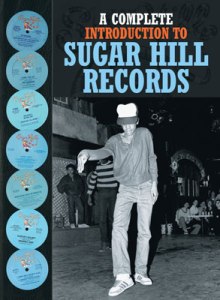
Drummer Keith Leblanc hooked up with bassist Doug Wimbish and guitarist Skip McDonald when they were summoned to work on the label set up by industry veterans Sylvia and Mickey Robinson to showcase the new hip-hop artists emerging from the Bronx and Brooklyn in the mid-’70s.

Just prior to that, Keith had briefly worked with Doug and Skip in the funk band Wood, Brass and Steel but when The Sugar Hill Gang’s controversial ‘Rapper’s Delight’ became a monster hit in ’79, the Robinsons were on the lookout for a house band to lay down the foundations for the follow-up.

sugar hill records

It seems the call was inevitable, according to Keith, speaking crisply and candidly down the line from his home in Connecticut:

‘Sylvia was looking for Skip and Doug but they initially said no because they’d had a bad experience with her before. But I was new to the band and when I heard the words “recording studio” and “money”, I bugged them until they said yes! And the day we all went up there, we started recording. I didn’t want to know about the business, I just wanted to record.’

The slick, dynamic fusion of funk, rock and jazz laid down by Leblanc, Wimbish and McDonald proved just the ticket for Sylvia and they were in. But in those very early days of hip-hop, the money was tight although luckily for Keith the musicianship was too.

‘I was brought up with James Brown, Muscle Shoals, Parliament/Funkadelic, Gap Band and Cameo, so playing the rap stuff wasn’t much of a stretch from what we were already doing. But the first Sugar Hill Gang album was recorded in the Robinsons’ studio which was falling to bits.’

They moved to the slightly more lugubrious surroundings of H&L Studios in Englewood Cliffs, New Jersey (also home to Rudy Van Gelder’s famous studio where so many classic Blue Note albums were recorded), and so began a golden period of recording characterised by great performances captured sometimes under great duress in the studio.

Extended jams like Funky Four Plus One’s ‘That’s The Joint’, The Sequence’s ‘And You Know That’ and Grandmaster Flash and the Furious Five’s ‘Freedom’ featured jazzy horn charts, challenging stop-and-go arrangements and extended solo sections that had more in common with Duke Ellington or Cab Calloway than Eminem and Jay-Z.

These tracks were not piecemeal studio confections; according to Keith, ‘Back then, playing live in the studio was normal. The arranger Clifton “Jiggs” Chase would get with the rappers and do an arrangement based on what they wanted to use and then make up a chart. Then we’d add things. The musical ethic was really good at that time. You had to get it right or there’d be someone else in there recording the next day.’

The work ethic was almost comparable to the famous Motown production line: ‘We’d cut a track on the Friday, drive home to Connecticut, drive back to New Jersey on the Monday and hear the track on the radio.’

In the time-honoured hip-hop tradition, sometimes sections from other records were ‘replayed’ to give tracks an air of familiarity, most notoriously on the Sugar Hill Gang’s ‘Rapper’s Delight’ which stole Chic’s ‘Good Times’ groove lock, stock and barrel. But this just provided yet another irresistible musical challenge to the young Leblanc: ‘Alot of the time, we were playing maybe a bar of someone else’s music. So we wanted to cut it better than the original!’

But then came the second seismic shift in hip-hop’s history – the release of ‘Planet Rock’, Afrika Bambaataa seminal track which was the first rap tune to properly utilise newly-affordable drum machines and sequencers.

And for Keith, it was both a blessing and curse: ‘When the drum machine first came out, I saw my job opportunities flying out of the window! Now anybody could make a rap record in their bedroom. But then it dawned on me that I could program a drum machine better than any engineer. I did “No Sell Out” just to see what I could do with the technology.’

Featuring a mash-up of Leblanc’s apocalyptic beats and segments of Malcolm X’s oration, the track led to many more intriguing fusions of man and machine in his recorded output and also prefigured the Tackhead project which teamed up Leblanc, Wimbish and McDonald with London dub mixologist Adrian Sherwood to thrilling effect.

Sadly, the Sugar Hill story wouldn’t be complete without reporting its demise – in less than honourable circumstances, according to Leblanc – with lots of law suits, claims and counter claims. But much of the music stands the test of time, particularly the extended jams of the ’80/’81 period which suggested a thrilling fusion of Duke Ellington, George Clinton and Trouble Funk.

Leblanc has continued to work with Doug Wimbish and Skip McDonald regularly over the years in projects such as Little Axe and Mark Stewart and the Maffia.